• Link to X
  • Link to Facebook
  • Link to Instagram
  • Link to TikTok
  • Link to Youtube
  • About
    • About Us
      • President
      • Board of Directors
      • Board of Advisors
      • Financials
      • Our Methodology
      • Success Tracker
      • Contact
  • Act Now
    • 30 Ways to Help
      • Email Congress
      • Call Congress
      • Volunteer
      • Courses & Certificates
      • Be a Donor
    • Internships
      • In-Office Internships
      • Remote Internships
    • Legislation
      • Politics 101
  • The Blog
  • The Podcast
  • Magazine
  • Donate
  • Click to open the search input field Click to open the search input field Search
  • Menu Menu

Archive for category: Global Poverty

Key articles and information on global poverty.

Global Poverty

Poultry for Poor: Chickens as a Solution to Poverty

Solution to PovertyIn 2016, Microsoft founder and philanthropist Bill Gates blogged about raising chickens as a solution to poverty, especially for those living in extreme poverty—$2 or less per day. He came to that conclusion as a result of his work in sub-Saharan Africa through the Gates Foundation. From his perspective, chickens are easy and cheap to take care of, are a good investment (by breeding and selling at a market price of $5 per chicken) and are a good source of nutrition (providing eggs or money earned from selling chicks).

But can raising chickens really solve global poverty?

Some are skeptical. Chris Blattman, a professor at the University of Chicago who studies poverty, violence, policy and politics in developing countries, wrote an open letter to Gates saying that giving chickens to the poor will only marginally reduce poverty. The laws of supply and demand, he argues, dictate that an increased supply of chickens will drive down prices, thereby cutting into profit margins of those who breed and sell them.

According to Blattman, giving cash might be a better, more versatile solution to poverty. People can invest it as they see fit. Some might buy chickens, but others may purchase fishing poles and lessons or open a shop. He sees a diversified boost to local economies as being more advantageous than a one-size-fits-all model.

The Research

One pilot effort, the Ultra Poor Graduation program, gave livestock (goats and chickens) and basic training to impoverished citizens in places like India, Pakistan, Ethiopia, Ghana, Honduras and Peru, among others. Programs in those six countries were evaluated by researchers from Innovations for Poverty Action (IPA), who found significant, lasting improvements in living conditions. Participating households earned an average of $80 a year more than those in control groups. The program was also cost-effective in five of six countries, with positive returns ranging from 133 percent in Ghana to 433 percent in India.

IPA researchers also studied the Women’s Income Generating Support (WINGS) program in Uganda, which gave impoverished women $150 cash grants along with basic training and mentorships to attain business skills. Here, households participating in the program earned an average of $202 a year more than those in control groups. In these cases, cash had a greater positive effect than chickens. In many areas, this kind of income boost is enough to bring people above the extreme poverty line.

The Bottom Line

Cash and chickens both seem to lend themselves to improving living conditions, but, as Blattman acknowledges, the definitive study comparing the two has yet to be done.

Divergent approaches to the poverty problem do not have to be in conflict: they can supplement and build on each other. Diversity allows different people, with different opinions, to test and apply various tactics to find a solution to poverty. Those solutions might work in tandem to cover each other’s blind spots and certain geographic areas may be more conducive to different approaches.

– Chuck Hasenauer

Photo: Flickr

October 24, 2017
https://borgenproject.org/wp-content/uploads/borgen-project-logo.svg 0 0 Borgen Project https://borgenproject.org/wp-content/uploads/borgen-project-logo.svg Borgen Project2017-10-24 01:30:072024-06-08 04:11:59Poultry for Poor: Chickens as a Solution to Poverty
Global Poverty, Refugees

Approaches for Helping Refugees Through Entrepreneurship

Helping RefugeesOne-fourth of the population in Lebanon is made up of Syrian refugees. War and political turmoil have forced these refugees to leave behind their lives and start from scratch in Lebanon. The initial humanitarian response to this problem was to supply short-term aid for the refugees until they could return to Syria. Many refugees have been in Lebanon for almost 10 years, so returning to Syria is unlikely.

Each year, $2.75 billion is needed to address the needs of these refugees, but less than half of that is available. Simply donating the bare necessities for survival to these refugees is not a sustainable solution.

Alfanar is a venture philanthropy organization that supports social entrepreneurs aiming to improve refugee life in Lebanon. A shift to helping refugees through entrepreneurship offers a viable long-term solution.

The Ana Aqra Association is an organization in Lebanon that provides educational support services to Syrian refugees and underprivileged Lebanese children. Programs are offered in literacy, accelerated learning and social and emotional development. In order to fund their efforts in public schools, the organization sells teacher training services to private schools and international NGOs.

Another sustainable solution is pioneered by the Nawaya Network, which connects refugees in Lebanon with the resources needed to develop their talents. The organization has developed a workshop to teach young people how to launch businesses to solve problems in their community.

The United Nations High Commissioner for Refugees works to create environments in which innovative ideas for helping refugees through entrepreneurship can emerge, some of which are social enterprises. An employee of the organization, Natalia Nahra, launched an app to provide refugees in Israel with the information needed for them to utilize services available.

Nahra noticed throughout her life that people without access to information cannot make informed choices, from U.S. workers being unaware of their rights to families in Southeast Asia sending young girls to big cities alone, unaware of the risk of human trafficking.

The problem also exists for refugees in Israel. Information for refugees is provided in English and Hebrew, which most refugees cannot read. In addition, information is scattered on Facebook or at various organizations. As a result, refugees seeking services waste frustrating amounts of time visiting organizations that cannot help them. With better access to information on services available, refugees could better access resources by only visiting organizations that have what they need.

Information such as reception hours and new policies change daily, so the information needs to be distributed quickly. Nahra launched her app in June 2017 with the hope of eliminating these unnecessary obstacles for refugees.

These solutions are examples of the viability of shifting from short-term aid to sustainable solutions for helping refugees.

– Kristen Nixon

Photo: Flickr

October 23, 2017
https://borgenproject.org/wp-content/uploads/borgen-project-logo.svg 0 0 Kim Thelwell https://borgenproject.org/wp-content/uploads/borgen-project-logo.svg Kim Thelwell2017-10-23 01:30:582024-05-29 22:27:43Approaches for Helping Refugees Through Entrepreneurship
Global Poverty

Addressing the Taiwan Poverty Rate

Taiwan Poverty RateTaiwan in a tropical country in East Asia, off the southeastern coast of China. Home to more than 23 million people, Taiwan has experienced fluctuating poverty lines in recent years. This has caused many working people to either lose benefits or become low-income. The Taiwan poverty rate is a changing gauge of how the country is doing economically and socially.

In 2011, under the Social Assistance Act, the government raised the poverty line in Taiwan, making 3.7 percent of the population eligible for social assistance. The baseline poverty rate is TWD 10,244, but for those making less than average, the accessibility of assistance is very low.

Many low-income families are forced to rely on welfare in order to support themselves. The government has been criticized in past years for not doing enough to help address the Taiwan poverty rate. However, in 2013, the government raised the low-income threshold once again, to accommodate more people for state aid. Since this shift in the poverty line, upwards of 29 percent of the population are dependent on state aid.

Taiwan’s economic growth has slowed and it has become harder for people to find jobs as the price of living has increased. Low-skilled workers cannot find sustainable jobs, and most factories have moved to China, so people are often forced to sell products on the street to make a living.

The changing culture in Taiwan has been considered a contributing factor to the rise in poverty as well. Families used to take care of one another at all costs. However, in recent times, grown children have moved away from taking care of their elders and divorced spouses don’t necessarily contribute to raising their children.

Criteria for state aid is still strict, however. The percentage of Taiwanese who qualify as poor has dropped to 1.78 percent of the population, making it hard for those who truly struggle to make ends meet. The government’s decision to raise the poverty line was to enable more people to qualify for welfare, but the country’s low tax rate makes it hard even for the government to provide welfare services.

In 2016, the Taiwanese government raised the poverty line again in order to accommodate low-income workers and the high cost of living. This time, the change impacted the capital city of Taipei, where the poverty line was raised from NT $15, 162 to NT $15,544, leaving anyone who makes less than 60 percent of the latter low-income. Because minimum wage in the country is TWD 22,000 per month, the poverty threshold is directly correlated with the high cost of living. In order to meet the rising number of people who qualify as low-income and needing government assistance, the Department of Urban Development is granting subsidies to the newly-qualified. The department projected that at least 3,000 households would be eligible for rent assistance and low-income subsidies. Households bringing in no income can receive a maximum subsidy of NT $15,162 per person each month.

In order to stabilize the Taiwan poverty rate, the government would need to raise the poverty line in tandem with wages, so that more people could afford the cost of living without relying on government assistance. Because a majority of the population reports that living costs are too high, perhaps the government will work to balance the poverty line by keeping wages higher and living costs lower.

– Olivia Cyr

Photo: Flickr

October 23, 2017
https://borgenproject.org/wp-content/uploads/borgen-project-logo.svg 0 0 Kim Thelwell https://borgenproject.org/wp-content/uploads/borgen-project-logo.svg Kim Thelwell2017-10-23 01:30:492024-06-05 02:12:17Addressing the Taiwan Poverty Rate
Global Poverty

What is Genocide?

What is Genocide?Answering the question “what is genocide?” can be done as easily as looking in the dictionary. The word comes from the Greek prefix genos, meaning race or tribe, and the Latin suffix -cide, meaning killing. Putting the prefix and suffix together, Merriam-Webster defines genocide as the deliberate and systematic destruction of a racial, political or cultural group.

While the dictionary definition is technically accurate, there is much more information and context necessary to truly answer the question “what is genocide?”

The term “genocide” was first coined in 1944 by Polish lawyer Raphäel Lemkin to describe the Holocaust. Lemken created the term to describe what the Nazis were doing to European Jews. During the war, Lemken saw every member of his family except his brother killed by the Nazis. More than six million Jews were killed by the Nazis in a targeted attempt to destroy the Jewish people.

After the war, Lemken fought to have genocide recognized as a crime under international law. During the Nuremberg trials, Nazi officials were charged with crimes against humanity, and genocide was used as a descriptive term for their actions. Genocide was recognized as a crime under international law by the U.N. General Assembly in 1946, and in 1948 the U.N. approved the Convention on the Prevention and Punishment of the Crime of Genocide (the Genocide Convention).

The Genocide Convention defines genocide as any of five acts committed with intent to destroy, in whole or in part, a national, ethnic, racial or religious group. These acts are killing members of the group, causing serious bodily or mental harm to members of the group, deliberately inflicting on the group conditions of life calculated to bring about its physical destruction in whole or in part, imposing measures intended to prevent births within the group and forcibly transferring children of the group to another group.

There are some critics who say that the U.N. definition is too narrow. It is incredibly difficult to prove “intent,” difficult to determine the definition of “in part,” and the definition does not include political groups, social groups or the destruction of a group’s environment. There are also complaints that the term “genocide” is overused and misused, often in relation to actions not meant to destroy a people group.

Asking the question “what is genocide?” should also lead to an understanding of why recognizing genocide matters. While genocide is not commonplace, its effects are devastating. The U.S. Holocaust Memorial Museum lists four instances of genocide since 1990. These occurred in Bosnia and Herzegovina, Rwanda, Sudan and Iraq. These four genocides resulted in a death toll in the millions. These high casualty counts demonstrate why recognizing and responding to genocide is a necessity.

Genocide continues to be an issue today, as many are accusing the Burmese government of genocide of the Rohingya population, a Muslim minority group in the country. International attention given to the situation in Myanmar is putting pressure on the Burmese government to account for what is happening. With one million Rohingya living in Myanmar, this example shows the continuing need to identify and prevent genocide.

– Erik Beck

Photo: Flickr

October 23, 2017
https://borgenproject.org/wp-content/uploads/borgen-project-logo.svg 0 0 Kim Thelwell https://borgenproject.org/wp-content/uploads/borgen-project-logo.svg Kim Thelwell2017-10-23 01:30:452024-05-29 22:27:43What is Genocide?
Global Poverty

Islamic Microfinance in Sudan Helping to Reduce Poverty

Innovation: Islamic Microfinance in Sudan Helping to Reduce PovertyMicrofinance has become a crucial poverty-alleviating tool over the years, as it provides small loans to impoverished people lacking access to traditional financial services. Across the globe, microfinance institutions work towards tackling poverty and aiding poor people to develop their small businesses, which later can provide them with a regular income and give them the ability to sustain themselves. Those financial services are meant to target poor borrowers who have no collateral and would not otherwise qualify for a standard bank loan.

However, one of the challenges faced by Microfinance institutions is providing Microfinance services to Muslim countries under sharia or Islamic law, which limits the amount of interest that can be charged on loans. Therefore, a vast majority of Muslims refuse using traditional microfinance services because they are not sharia-compliant, meaning they are not in line with sharia law. This has led to the creation of Islamic microfinance, which is slowly gaining recognition among Muslim communities for reducing poverty and promoting business development.

Islamic microfinance in Sudan has become a government-mandated rule, due to their banking system being fully Islamic. Some of the applied sharia principles include risk-sharing, leasing and interest-free “loans.” Since 2006, the Sudanese banking sector has experienced the implementation of 10 microfinance institutions, the establishment of microfinance “windows” in 12 banks and the creation of “micro” products available for poor clients in five insurance companies. All of these new innovations have led to positive outcomes within the Islamic economy.

One of the positive effects of Islamic microfinance is improving financial inclusion for small farmers in Sudan. In 2010, the World Food Program partnered with microfinance institutions to launch an initiative that linked 3,000 farmers to markets and sources of financing in three Sudanese states. Two years later, this program has increased its influence to nine states, which has helped a total of 150,000 farmers.

Islamic microfinance in Sudan has led to many successes for the Sudanese community and Muslim states in general. Some of the benefits include economic growth, poverty reduction and better financial inclusion for those deprived of financial services. Not only does it enable the development of small businesses for the poor, but it also helps meet the needs of Muslim communities who refuse to use conventional financial services for religious reasons. Islamic microfinance still has a long way to go, as it has not yet reached enough Muslim communities. For example, in Sudan, only eight percent of the total population – estimated at 7.2 million – is benefiting from sharia-compliant financial services. However, since it increased its reach dramatically in such a short span of time, this brings hope for the improved success of Islamic microfinance in the near future.

– Sarah Soutoul

Photo: Flickr

October 23, 2017
https://borgenproject.org/wp-content/uploads/borgen-project-logo.svg 0 0 Borgen Project https://borgenproject.org/wp-content/uploads/borgen-project-logo.svg Borgen Project2017-10-23 01:30:122020-04-04 08:11:08Islamic Microfinance in Sudan Helping to Reduce Poverty
Global Poverty

10 Facts About the Bosnian Genocide

10 Facts About the Bosnian GenocideThe Bosnian Genocide shocked the world. Bosnia and Herzegovina declared its independence from the former Yugoslavia in the spring of 1992. A census taken at this time recorded a population of 4 million, with 44 percent Bosniaks (Bosnian Muslims), 31 percent Serbs (Bosnian Orthodox Christians), 17 percent Croats (Bosnian Catholics) and 8 percent Yugoslavian.

Beyond the desire for independence, Bosnian Serbs wanted to forge a separate Serbian state within the bounds of this nation. This illegitimate state would be known as “Greater Serbia”. In order to attain this vision, the Serbs took brutal and violent action against both the Bosniaks and the Croats, with the intention to formally expel both ethnicities from the region they sought to control. The Serbs went so far as to displace, torture, rape and murder these two groups over the course of a three-year civil war—executing, at the war’s low point, what is known today as the Bosnian genocide. Here are 10 facts about the Bosnian genocide, and everything you should know about this atrocity.

Top Bosnian Genocide Facts:

  1. Before the breakup of the former Federal Republic of Yugoslavia, the Balkans were controlled by President Josip Broz Tito. Though many ethnic groups existed within his domain, he kept tensions at ease by dictating with an “Iron Fist” approach. He was described by many as a “benevolent dictator”; however, he left little room for cultural expression outside of Yugoslav nationalism. It was not until after his death in 1980 that this Yugoslav identity began to disperse into numerous ethnic factions.
  2. The intent of Serb brutality against the Bosniaks and the Croats during this civil war is termed “ethnic cleansing“. The Serbs’ motive was to remove a specific group from a geographical area, not for the sole purpose of ethnic destruction. This does not apply to the attack, or rather “shelling”, of Srebrenica in 1995, which was classified by the United Nations as a genocide in 2007.
  3. In 1993, the U.N. declared that three eastern Bosnian towns, Srebrenica, Zepa, and Gorazde would be safe havens, meaning that all three would be disarmed and under the protection of international peacekeepers.
  4. The Bosnian genocide refers to a low point of this civil war in July 1995, where the systemic extermination of a specific group of people did occur. In Srebrenica, one of the small mountain towns protected by the U.N. in Eastern Bosnia, Bosnian Serbs launched an invasion on July 11, overthrowing the Dutch peacekeeping forces meant to protect the region.
  5. Over the course of four days, 15,000 men were hunted by Serbian forces, ending in 8,000 men and boys being methodically killed and buried in hidden mass graves. Examination of these bodies after the fact showed signs of mutilation, as well as the binding of arms and feet prior to execution.
  6. During these same four days, an estimated 20,000 women and children were subject to forced evacuations out of their homes and sent to Serbian-controlled regions or camps where their Serbian aggressors used sexual violence as a weapon against them. Female victims of the Bosnian genocide varied in age, some being as young as 12 years old, and most have lived in silence regarding their experience over the past two decades.
  7. Over the course of three years, the civilian death toll reached 200,000. On top of this, another 2 million Bosnians were displaced from their homes and placed in dangerous environments.
  8. Despite its peacekeeping efforts, the international community has been criticized for its apathy towards the diabolical violence against the Bosniaks and Croats. However, in 1993 the U.N. Security Council set up an International Criminal Tribunal for the Former Yugoslavia. This was the first tribunal established since the Nuremberg Trials, and its intention was to prosecute the leaders of genocide, mass murder and the various other war crimes that occurred during the breakup of Yugoslavia.
  9. The leader of the Bosnian Serbs was a man named Radovan Karadzic, a native of Sarajevo. He was declared the president of the illegitimate nation Greater Serbia. Karadzic was found guilty by the U.N. for 10 out of 11 counts of crimes against humanity. Though little proof exists that he was a war criminal by his own hand, by taking this leadership role he accepted total moral responsibility for any violent act committed by his people. His conviction included the slaughter of thousands of Bosniaks and Croats. The trial lasted five years, and he was sentenced to 40 years in prison starting in March 2016.
  10. In order to prevent future atrocities like the Bosnian genocide, it is up to the international community and our own efforts to make genocide prevention a core value. The organization United to End Genocide emphasizes three main points in genocide prevention: demanding action, stopping the enablers and placing human rights at the forefront of foreign policy. One of the most disheartening aspects of the Bosnian genocide was that awareness was overwrought by ambivalence. The world knew the Bosniaks and Croats were vulnerable, and yet did little to stop the Serbs. In the future, the world must go beyond being aware and act on this awareness.

– Briana Fernald

Photo: Flickr

October 23, 2017
https://borgenproject.org/wp-content/uploads/borgen-project-logo.svg 0 0 Kim Thelwell https://borgenproject.org/wp-content/uploads/borgen-project-logo.svg Kim Thelwell2017-10-23 01:30:112024-05-29 22:27:4310 Facts About the Bosnian Genocide
Global Poverty

Design Thinking – A Powerful New Way to End Poverty

 ZambiaA famous quote about problem-solving goes, “If I had 60 minutes to solve a problem and my life depended on it, I’d spend 55 minutes determining the right question to ask.” When addressing poverty, organizations tend to answer the question of how poverty can be eliminated.

Design thinking demands to ask about the causes of poverty and targeting the root problem rather than its symptoms. Some causes of poverty that design thinkers consider include slavery, colonialism, resource plundering, structural adjustment programs and financial crises.

Unequal power structures are a common theme in the causes of poverty. Many nonprofits seeking to mitigate poverty do not address this fact, which limits their ability to provide sustainable solutions.

Poverty cannot be solved using the same logic that established it in the first place. A study of the language used on Twitter by antipoverty organizations revealed that poverty is commonly referred to as a disease, trap or enemy.

Each of these metaphors suggests that poverty is inevitable, and some imply that the poor are somewhat responsible for their condition. These misleading ways of thinking about poverty are not conducive to developing the best solutions.

The Millennium Development Goals rely on GDP growth to eradicate poverty. Even if a generous growth rate is assumed, 207 years will pass before everyone lives on more than $5 per day, which is the minimum income needed to reach normal human life expectancy.

Design thinking is a promising new way of approaching development issues, and IDEO is a global design company committed to using this approach to create a positive impact.

One of IDEO’s projects focuses on educating girls in Zambia about reproductive health. Aiming to shift the uneven power structure by providing women with access to information about their health, this project illustrates the power of addressing the root causes of poverty.

In Zambia, more than one-third of girls give birth before they are 18 years old. Access to safe, comprehensive health education provides the information girls need to finish school and be able to choose when to become mothers.

IDEO’s solution is the creation of Diva Centres, space for girls to do their nails and have casual conversations about boys and sex. When a girl is ready to receive more information on the topic, she receives counseling and access to several birth control methods.

In this friendly environment, girls learn about the importance of family planning for securing control over their life. IDEO’s human-centered approach allowed them to design a multi-touch system that effectively reaches teens and provides powerful information.

Marie Stopes Zambia, a traditional clinic that provides reproductive healthcare, rarely reached teenagers before IDEO’s help. Since adopting Diva Centres, 5,000 girls have received health education and 82 percent of them have started using some form of birth control.

Design thinking is a powerful new way of thinking about development issues. The movement towards addressing root causes and balancing unequal power structures will make great strides in eradicating poverty.

– Kristen Nixon

Photo: Flickr

October 22, 2017
https://borgenproject.org/wp-content/uploads/borgen-project-logo.svg 0 0 Borgen Project https://borgenproject.org/wp-content/uploads/borgen-project-logo.svg Borgen Project2017-10-22 07:30:272020-04-04 08:22:46Design Thinking – A Powerful New Way to End Poverty
Global Poverty

How to Help People in Comoros: Education and Development

How to Help Comoros: Education and Development

Comoros, a group of three islands in the Indian Ocean, has great scenic beauty, although the nation is poor. Skilled workers often go to France, hurting development and leaving Comoros with a consistently low gross domestic product. Since its independence in 1975, Comoros has slowly gained self-sufficiency in food production, with subsistence farming being the top employer in the region and making up the bulk of the economy. This means that poor harvests and the potential to run out of useful land are major issues in Comoros, and the need to help people in Comoros diversify the economy is becoming more and more time-sensitive.

The nation is not completely without help, however. France provides major financial support, and other countries provide some financial aid as well, including Saudi Arabia and Japan. But in order for Comoros to move away from a subsistence farming and fishing industry and towards a more developed economy, it needs to expand and find better solutions that do not rely on foreign lending. The World Bank is cautiously optimistic that the new government elected in 2016 is starting to implement policies that may prove successful in helping the GDP grow through “expanding the coverage of the electricity network and relaunching public investments.”

Upward Mobility and Higher Education

One of the ways to help people in Comoros is to boost its areas of success, namely, the agricultural sector. This may not improve the nation’s economy, but stimulating this sector will help the poor in the region, most of whom live in rural areas where the only employment opportunities are in the agricultural sector. Upward mobility for the poor is crucial, as the last household survey conducted in 2014 found that almost 18% of the population lives under the international poverty line, which is set at $1.90 per capita per day. Therefore, in order to have enough money to pursue more developed industries, the people of Comoros need to rely on higher-paying agricultural sector work first.

In the long-term, Comoros is in a position to develop through better education initiatives and public spending. While the government does not have much money to work with, one of their first goals should be to increase spending for better schooling and then provide monetary rewards for those educated citizens that come back to the islands after college. Only then, through an educated populace, can the country really diversify its industry enough to increase the GDP and stimulate the economy. The population is already set up for this kind of initiative, with 53% of the citizens being under the age of 20, the perfect age group to benefit from better education and trade industries.

The Tourism Industry

Another way for Comoros to get an economic boost is to increase its tourism industry. Although tourists do go to Comoros due to its beautiful beaches and natural forests, the nation remains relatively unknown. Making a deal with a nation like France to bring in tourists and open up transportation to the island, as well as commercializing a few of the nicest beaches would not only stimulate the economy but also provide new employment opportunities for the citizens of Comoros. This is not to say that the islands should be completely commercialized, as it would take away from their natural beauty and culture, as well as harm their subsistence farming and fishing industries. However, a moderate tourist industry could be enough of a boost to provide funding for other useful initiatives.

Ultimately, Comoros has a struggling economy and a lack of development that cannot be turned around quickly. However, through diversifying industry, educating the populace and opening the islands up to more tourists, Comoros will have less poverty and more opportunities for its citizens moving forward.

– Rachael Blandau

Photo: Flickr

October 22, 2017
https://borgenproject.org/wp-content/uploads/borgen-project-logo.svg 0 0 Borgen Project https://borgenproject.org/wp-content/uploads/borgen-project-logo.svg Borgen Project2017-10-22 07:30:222020-06-22 14:22:24How to Help People in Comoros: Education and Development
Global Poverty, Hunger

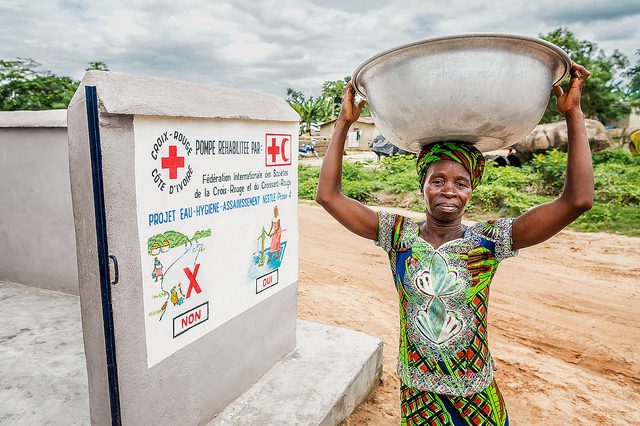
Addressing Food Security in Côte D’Ivoire

Addressing Food Security in Côte D'IvoireThe Côte d’Ivoire, or Ivory Coast, region of Africa is mainly known for being one of the world’s largest cocoa producers. The population of Côte d’Ivoire is roughly 22.7 million people, with the majority of those living below the poverty line. Recently, food security in Côte d’Ivoire and other countries in Africa has been worsened by conflict, violence and increasing poverty throughout the continent.

Since July 2016, there has been a rise in conflict in 17 countries in the world, including the Côte d’Ivoire region. In a statement from the World Food Programme executive director Ertharin Cousin and the U.N. Food and Agriculture Organization Director-General José Graziano da Silva, they classify violence and conflict as one of the leading causes of famine within Africa. The issue of conflict and violence in places like Africa increases the risk of famine, as it “undermines food security in multiple ways: destroying crops, livestock and agricultural infrastructure, disrupting markets, causing displacement, creating fear and uncertainty over fulfilling future needs, damaging human capital and contributing to the spread of disease among others.”

Liberian President Ellen Johnson-Sirleaf called for action at the African Revolution Forum, stating that while Africa missed the first Green Revolution, they must now “seize the moment and tackle food urgency” and food security in Côte d’Ivoire and other African countries. Since the rise of famine in Africa, Cote d’Ivoire has made great progress in the Green Revolution, yet they still have a long road ahead of them. Transforming the agriculture of conflicted areas and improving food security in Côte d’Ivoire and other countries in Africa can also be achieved with The Feed Africa Strategy, which will “create wealth, improve ties and secure the environment.”

Along with the Green Revolution working toward alleviating poverty and aiding food security in Côte d’Ivoire and other countries in Africa, the U.N. states that “addressing hunger can be a meaningful contribution to peacebuilding” and can be achieved with the 2030 Agenda, as it is a “vital threshold condition for development.” Other organizations like Action Against Hunger are addressing food security in Côte d’Ivoire by providing people with nutritional support, access to safe water and sanitation and the means for economic self-sufficiency. The Borgen Project is helping by advocating for support of the International Affairs Budget and the Economic Growth and Development Act directly to Congress.

– Jennifer Lightle

Photo: Flickr

October 22, 2017
https://borgenproject.org/wp-content/uploads/borgen-project-logo.svg 0 0 Kim Thelwell https://borgenproject.org/wp-content/uploads/borgen-project-logo.svg Kim Thelwell2017-10-22 07:30:102020-04-04 08:23:49Addressing Food Security in Côte D’Ivoire
Global Poverty

How to Help People in Cyprus Post Eurozone Financial Crisis

How to Help People in Cyprus

As a result of the 2008 financial crisis, the poverty rate in Cyprus swelled by more than 28 percent. The interrelated problems of a three-year recession, high unemployment and austerity measures combined to make Cyprus the country most affected—behind Greece—by the eurozone financial crisis.

The Cypriot crisis was just one domino in the global financial crisis that spread from the U.S. to the eurozone. After the Greek economy began collapsing under its own debt, millions of Greek euros were withdrawn from Cypriot coffers, causing a cyclical run on Cypriot banks.

To acquire the $10 billion necessary to “bail-in” its financial sector, the Cypriot government agreed to implement a number of austerity measures to balance the budget and ensure the repayment of loans to the International Monetary Fund, the European Central Bank and the World Bank.

These measures included capital controls, across-the-board cuts to social welfare and education spending, tax increases on individuals and companies and tax reductions on foreigners bringing capital to Cyprus. Altogether, these policies served to worsen the effects of unemployment and recession on the average Cypriot, leading to a spike in poverty.

Although the Cypriot financial sector quickly recovered with the help of loans and the overall economy began growing again in 2014, the scars on the average Cypriot are still being felt. Unemployment still rests at 10 percent and many families saw their savings vanish as a result of bank defaults and capital controls.

A number of organizations like the European Anti-Poverty Network (EAPN), the “Hope for Children” United Nations Convention on the Rights of the Child Policy Center, and Cans for Kids have been working on how to help people in Cyprus.

While EAPN has lobbied the European Union to support employment and social inclusion in Cyprus, and “Hope for Children” supports educational and health initiatives in Cyprus, Cans for Kids raises money for hospitalized youth. By supporting these organizations, anyone can have a direct impact on how to help people in Cyprus.

– Nathaniel Sher
Photo: Flickr

October 22, 2017
https://borgenproject.org/wp-content/uploads/borgen-project-logo.svg 0 0 Borgen Project https://borgenproject.org/wp-content/uploads/borgen-project-logo.svg Borgen Project2017-10-22 07:30:042024-05-29 22:27:42How to Help People in Cyprus Post Eurozone Financial Crisis
Page 1526 of 2165«‹15241525152615271528›»

Get Smarter

  • Global Poverty 101
  • Global Poverty… The Good News
  • Global Poverty & U.S. Jobs
  • Global Poverty and National Security
  • Innovative Solutions to Poverty
  • Global Poverty & Aid FAQ’s
Search Search

Take Action

  • Call Congress
  • Email Congress
  • Donate
  • 30 Ways to Help
  • Volunteer Ops
  • Internships
  • Courses & Certificates
  • The Podcast
Borgen Project

“The Borgen Project is an incredible nonprofit organization that is addressing poverty and hunger and working towards ending them.”

-The Huffington Post

Inside The Borgen Project

  • Contact
  • About
  • Financials
  • President
  • Board of Directors
  • Board of Advisors

International Links

  • UK Email Parliament
  • UK Donate
  • Canada Email Parliament

Get Smarter

  • Global Poverty 101
  • Global Poverty… The Good News
  • Global Poverty & U.S. Jobs
  • Global Poverty and National Security
  • Innovative Solutions to Poverty
  • Global Poverty & Aid FAQ’s

Ways to Help

  • Call Congress
  • Email Congress
  • Donate
  • 30 Ways to Help
  • Volunteer Ops
  • Internships
  • Courses & Certificates
  • The Podcast
Scroll to top Scroll to top Scroll to top