• Link to X
  • Link to Facebook
  • Link to Instagram
  • Link to TikTok
  • Link to Youtube
  • About
    • About Us
      • President
      • Board of Directors
      • Board of Advisors
      • Financials
      • Our Methodology
      • Success Tracker
      • Contact
  • Act Now
    • 30 Ways to Help
      • Email Congress
      • Call Congress
      • Volunteer
      • Courses & Certificates
      • Be a Donor
    • Internships
      • In-Office Internships
      • Remote Internships
    • Legislation
      • Politics 101
  • The Blog
  • The Podcast
  • Magazine
  • Donate
  • Click to open the search input field Click to open the search input field Search
  • Menu Menu

Archive for category: Global Poverty

Key articles and information on global poverty.

Global Poverty, Politics, Politics and Political Attention

Julián Castro’s Marshall Plan for Central America

Julián Castro’s Marshall Plan
Presidential candidate Julián Castro has introduced many policies that he would implement during his presidency revolving around protecting indigenous communities, policing and education reform. One of the most pressing policies that Castro proposed revolves around immigration. With a three-part plan, Julián Castro is attempting to create an immigration policy that focuses on reforming the system altogether. However, one of the more ambitious parts of the plan deals with something he has coined as a 21st Century Marshall Plan for Central America. Julián Castro’s Marshall Plan could be a major step in solving immigration issues in both the United States and Central America.

Meet Julián Castro

Castro is no stranger to the world of politics. At a young age, he watched his mother run for San Antonio’s city council as the first woman of Mexican descent to do so. He learned the values of hard work and dedication from both his mother and his grandmother, who was an immigrant from Mexico that started her family with a fourth-grade education and a job as a housekeeper.

However, Julián Castro’s political career did not start when he decided to run in the 2020 presidential election. At age 26, he entered the San Antonio city council. Not only did he make history as the youngest councilman elected in the city, but he began his path to public service that would result in him becoming mayor of San Antonio in 2009 and then the Secretary of Housing and Urban Development in 2014. Along the way, he even became the first Latino to give the keynote speech at the Democratic National Convention in 2012.

The Original Marshall Plan

In 1948, Europe had severly damaged infrastructure. World War II caused strain to Europe’s economies and disrupted agricultural production. To alleviate this issue, George C. Marshall created a plan to give roughly $15 billion to European countries. These countries used the money to rebuild cities and various economic industries for four years. In the process, these European countries and the U.S. created trade opportunities and development programs. The plan created substantial results across the continent. Industrial and agricultural production increased by over 37 percent and the overall balance of trade and economic stability improved as well.

The Marshall Plan differed from other aid programs during the time because it was a joint effort between many nations. The United States created the funding and programs that could benefit Europe, and the nations committed to implementing these programs. This plan benefitted Europe’s economic growth and reestablished the United States’ influence in the region after the war.

The Marshall Plan was also a way to test various programs concerning development and relief efforts. For example, the Economic Cooperation Administration’s model, designed to provide financial assistance to these European nations, was a model to create the U.S. Agency for International Development (USAID). Overall, the 20th century Marshall Plan was a major step in development programs that helped Europe drastically.

A Plan for Central America

In an NPR podcast, Castro describes the importance of working to rebuild Central America for multiple reasons. For one, it helps create stronger relationships with the U.S.’s neighbors to the south. By creating an alliance with these countries, the U.S. can continue being an economic competitor with China, which is on track to pass the U.S. in becoming the largest economy in the world by 2030.

Along with the economic benefits of strengthening a region with potential trade partnership, the second major reason for assisting Central America is immigration issues. Castro states that “…if we want to solve the immigration issue, we need to go to the root of the cause…and that is that people can’t find safety and opportunity in Central America.”

Central America is a region where large numbers leave to seek asylum from violence and corrupt governmental institutions. By 2015, nearly 3.4 million people born in Northern Triangle countries (El Salvador, Guatemala and Honduras) were living in the U.S., with over half being undocumented immigrants.

Julián Castro’s Marshall Plan

Julián Castro’s Marshall Plan would firstly target some of the root causes of violence in the Northern Triangle such as transnational criminal organizations and illicit networks. According to Castro, an increase in law enforcement programs would help eliminate criminal activities such as human and drug trafficking. Also, this plan would require a heavier focus on anti-corruption and government transparency practices. With the cooperation of leaders in Central America and the United States’ resources, the high rates of violence in the region can decrease and create safer environments and sustainable governments less susceptible to corruption.

His policy also provides more funding for programs designed to prevent violence at local levels, create jobs and support health and nutrition across Central America. By stimulating economic development through more sustainable jobs, it allows people to stay and grow their communities rather than leaving them to find better success in the United States.

The final major point that this candidate emphasizes is the importance of prioritizing diplomatic relations with Latin American countries. To ease the instability in this region, all nations have to become part of this plan. Cooperation between these nations and the United States will ultimately be the major stepping stone to creating safe and sustainable communities.

This major foreign policy proposal would only be one component of his push to tackle immigration, but his message stands clear throughout his campaign. Julián Castro’s Marshall Plan intends to put people first, and for millions of people living in Central America, that is something they can begin hoping for in 2020.

– Sydney Blakeney
Photo: Flickr

October 1, 2019
https://borgenproject.org/wp-content/uploads/borgen-project-logo.svg 0 0 Kim Thelwell https://borgenproject.org/wp-content/uploads/borgen-project-logo.svg Kim Thelwell2019-10-01 08:35:212024-05-29 23:10:49Julián Castro’s Marshall Plan for Central America
Developing Countries, Development, Global Poverty, Health, Life Expectancy

7 Facts About Life Expectancy in Jordan

life expectancy in Jordan

Jordan is an Arab country in West Asia with a population of more than 10 million people and a life expectancy of 74 years. Although some in Jordan face health and economic struggles, efforts are in place to raise the average life expectancy rate. Here are seven facts about life expectancy in Jordan.

7 Facts about Life Expectancy in Jordan

  1. As of 2017, road injuries ranked number nine of 10 factors causing the most deaths in Jordan. In 2007, road injuries ranked much higher at sixth, as there were 110,630 road accidents and 992 fatalities. That statistic increased from 1987’s 15,884 accidents. In response to these 2007 numbers, the Jordanian government applied new traffic laws in 2008 and increased police activity, which, ultimately, boosted life expectancy.
  2. Air pollution is in the top 10 risk factors of death and disability combined in Jordan. In urban areas, 50-90 percent of Jordan’s air pollution comes from road traffic, and based on a report in 2000, air pollution causes around 600 premature deaths each year. The main factor of poor air quality is lead-based gasoline used in cars, emitting lead pollution. In 2006, the government introduced two types of unleaded petrol for cars. However, air pollution was still a leading cause of death in 2017.
  3. Noncommunicable diseases are on the rise in Jordan. Even though these diseases cannot be transmitted to others, they remain some of the most common causes of death. From 2007 to 2017, Ischemic heart disease continued to be the number one cause of death for Jordanians and diabetes moved up from fifth to fourth. As of 2017, strokes ranked second.
  4. Chronic illnesses are some of the most common diseases in Jordan. Approximately one-third of Jordanians over 25 have a chronic illness or suffer from more than one. Reported chronic illnesses are largely caused by the practice of smoking tobacco. Out of the entire population, 38.2 percent use tobacco, including 65.5 percent of males over 15. If the amount of smokers does not decrease in the future, it will negatively impact the mortality rates and overall life expectancy in Jordan.
  5. Jordanian’s access to healthcare and insurance is increasing every year. From 2000 to 2016, on average, the percent of those insured increased by an average of 1.2 percent. Overall, 70 percent of Jordanians are insured. All children under six and citizens older than 60 are eligible for insurance with Jordan’s public healthcare sector as well. Primary healthcare clinics are available in both urban and rural areas, and those with insurance receive free medication.
  6. The Jordanian government developed a national electronic medical library (ELM). The ELM gives students and healthcare workers free access to medical resources to encourage and increase the number of people pursuing a career in medicine. The government hopes that the ELM will help increase the availability of healthcare and allow the medical industry in Jordan to flourish in the future.
  7. Mercy Corps has been supporting Jordanians since 2003. The organization has 250 workers in the country. Mercy Corps not only provides basic needs but also long-term solutions, such as working to reduce tensions between leaders in communities. Mercy Corps has helped more than 3,000 vulnerable households with costs to meet urgent needs and in 2017 alone, more than one million Jordanians benefitted from their work.

Although certain health and economic issues are prominent, Jordan is making improvements to its quality of living. The government is taking the initiative to move the country forward, economically and medically, which can only mean an increase in life expectancy in Jordan in the future.

– Jordan Miller
Photo: Unsplash


October 1, 2019
https://borgenproject.org/wp-content/uploads/borgen-project-logo.svg 0 0 Jennifer Philipp https://borgenproject.org/wp-content/uploads/borgen-project-logo.svg Jennifer Philipp2019-10-01 08:17:232019-12-17 15:07:597 Facts About Life Expectancy in Jordan
Global Health, Global Poverty

Health of Rohingya Muslims: An Update

Health of Rohingya Muslims
Beginning in August 2017 and continuing to the present day, an estimated 24,000 members of the Rohingya Muslim ethnoreligious group have been murdered by Myanmar militia forces for cleansing purposes. Members of Myanmar’s army and police forces have raped around 18,000 girls and women. A total of approximately 225,000 homes have burned down or undergone vandalism since the beginning of this crackdown on the Muslim minority group of Myanmar’s Rakhine State. Since then, an influx of Rohingya Muslims has entered the Cox’s Bazar region of Bangladesh in attempts to escape the inhumane living circumstances of the Rakhine State. By February 2018, around 688,000 Rohingyas had entered Bangladesh. They joined close to 212,000 Rohingyas that settled in Bangladesh before the exodus that began six months prior. One area of concern is the health of Rohingya Muslims.

Even after leaving the region where they experienced persecution, the quality of health of Rohingya Muslims has not been ideal. This is due to the frequency in which they travel into Bangladesh, as well as the large groups they move within.

Health Concerns for Refugees

One major, ongoing concern for the health of Rohingya Muslims is the fact that they have limited access to preventative health care services. These services become necessary when a mass group of individuals resides in a singular location, like a refugee camp, for an extended period. According to an Intersector Coordination group situation report, rape survivors among Rohingya Muslims have not received adequate clinical treatment for harms and diseases they may now carry.

There is also a lack of preventative and diagnostic services for blood-borne diseases like HIV and tuberculosis. The World Health Organization found in 2017 that, though both Bangladesh and Myanmar had comparatively low rates of HIV cases, Rakhine state in 2015 had an exceptionally large number in comparison to the rest of Myanmar. This, paired with the fact that Myanmar armed forces raped a large number of women and girls, illustrates a need for more thorough diagnostic procedures for blood-borne and sexually transmitted diseases.

Around 42,000 pregnant women and 72,000 lactating mothers require quality care assistance, as of October 22, 2018. Around 3,000 of those women had entered health facilities to receive treatment for their symptoms of malnourishment.

Medical Advancements and Humanitarian Aid

While refugees have limited access to health care, medical advancements have occurred to address as many of these refugees’ needs as possible. The World Health Organization reported on March 18, 2019, that a new software known as Go.Data will now allow for more efficient investigations into disease outbreaks, “including field data collection, contact tracing and visualization of disease chains of transmission.” On February 28, 2018, the King Salman Humanitarian Aid and Relief Centre donated $2 million to the Sadar District Hospital in Cox’s Bazar. This will help strengthen the medical facility in the region of Bangladesh that includes a dense population of Rohingya refugees.

One more great stride in improving the health of the Rohingya Muslims: In the year following the August 2017 mass migration,  155 new health posts emerged, supplying for around 7,700 individuals per location. This could not have been possible without the partnership of the Bangladesh government, the World Health Organization and other groups supporting the rights of the Rohingya.

Continued support for and increased awareness of the persisting struggles of the Rohingya Muslims will do incredible things in ensuring improvement to their quality of life.

– Fatemeh-Zahra Yarali
Photo: Flickr

October 1, 2019
https://borgenproject.org/wp-content/uploads/borgen-project-logo.svg 0 0 Kim Thelwell https://borgenproject.org/wp-content/uploads/borgen-project-logo.svg Kim Thelwell2019-10-01 08:13:272019-10-01 08:13:27Health of Rohingya Muslims: An Update
Global Poverty, Health, Life Expectancy

7 Facts About Life Expectancy in Cabo Verde

10 facts about life expectancy in Cabo Verde

Located off the coast of Western Africa, the Republic of Cabo Verde is a chain of 10 islands with a population of more than 500,000 people. A former Portuguese colony, Cabo Verde’s economy was heavily based on the Atlantic slave trade. Post independence, the country and its citizens remain impacted by the effects of poverty, including a life expectancy lower than that of many other nations. Here are seven facts about life expectancy in Cabo Verde.

7 Facts About Life Expectancy in Cabo Verde

  1. Life expectancy in Cabo Verde is on the rise. As of 2018, Cabo Verde has a life expectancy at birth of 72.7 years, placing it at 147th in the world. For males, life expectancy is 70.3 years, while females have a life expectancy of 75.1 years.  In 1960, life expectancy at birth was 48.9 years, or 47.7 years for males and 50 years for females. Life expectancy rose rapidly from the 1960s through the mid-2000s and has since been more stable, increasing slightly from year to year.
  2. The country has made huge strides in terms of health care provision. As of 2014, there are more than 250 doctors in Cabo Verde compared with only 13 doctors in 1975. Furthermore, the government is continually working toward universal access to health care and today, “more than 80 percent of the population lives within 30 minutes of a health facility.”
  3. Telemedicine bridges the gap. This innovation is helping to make medical care accessible for those residents who still face barriers to visiting a medical specialist such as cardiologists or dermatologists in person. From 2012 to 2014, the Cabo Verdean government, in collaboration with the International Virtual e-Hospital Foundation and with financial support from the Ministry of Foreign Affairs of the Republic of Slovenia, implemented the Integrated Telemedicine and e-Health Program (ITeHP). The ITeHP involves 10 telemedicine centers throughout the country, where patients can have remote consultations with a specialist.
  4. Sanitation access is poor. Access to clean water and functional sanitation systems is critical to preventing the spread of disease. According to a 2017 article from the Millennium Challenge Corporation (MCC), 16 percent of people in urban areas and 54 percent of people in rural areas did not have access to flushing toilets.
  5. The Cabo Verdean government is working to improve sanitation. In 2012, the government partnered with the MCC on an economic growth plan, one aspect of which included a water, sanitation and hygiene (WASH) project. As of November 2017, the project had resulted in 2,277 new sanitation facilities and 227 kilometers of water pipeline construction.
  6. Infant mortality rates have been steadily decreasing. In 1969, Cabo Verde had an infant mortality rate of 126 per 1,000 births. As of 2017, the rate has dropped to 15 per 1,000 births.
  7. Immunization rates in Cabo Verde are high. For the DTP1 vaccine, which protects against diphtheria and tetanus, the 2018 immunization rate was an estimated 99 percent. The same is true of the polio and measles vaccines.

Cabo Verde’s economic history has led to difficulties in health care and sanitation, but in recent decades the nation has made impressive improvements, which has led to an increase in life expectancy in Cabo Verde. Many citizens of the country still live in poverty, but these seven facts about life expectancy in Cabo Verde show how nongovernmental organizations and the Cabo Verdean government are working to help people manage their health.

– Meredith Charney
Photo: Wikimedia Commons

October 1, 2019
https://borgenproject.org/wp-content/uploads/borgen-project-logo.svg 0 0 Kim Thelwell https://borgenproject.org/wp-content/uploads/borgen-project-logo.svg Kim Thelwell2019-10-01 07:59:432024-05-29 23:12:267 Facts About Life Expectancy in Cabo Verde
Global Poverty

Colombia Welcomes Venezuelan Migrant Children

Colombia Welcomes Venezuelan Migrant Children

Venezuela’s economic, political and social status has become increasingly restless over the years. While instability can be traced back to government policies of the early 2000s, such as price and foreign currency controls, the economic crisis had dramatically escalated since Nicolas Maduro became president in 2013. An annual inflation rate as high as 1.3 million percent and a shortage of food and medical supplies has brought the country to the brink of famine. Indeed, 90 percent of Venezuelans live in poverty, up from 48 percent in 2014.

In Search of Safety

As a result, four million Venezuelans have fled the country since 2014 in search of stability. While some migrants have gone to the United States and Spain, the vast majority have decided to leave for other Latin American countries such as Peru, Ecuador, Argentina and Brazil. Colombia has seen the greatest influx of Venezuelans. In August 2019, 1 million migrants were reported. Now that President Maduro has been reelected,  analysts expect that this figure will only keep rising.

Since 2015, 24,000 children of Venezuelan migrants have been born on Colombian territory. However, amid the country’s many crises, Venezuelan consular services are unable to register the foreign-born children for citizenship. Many of these refugee children are born stateless, which is a major human rights issue. Without proper documentation confirming a child’s nationality, they lack access to government programs to protect their well-being, such as healthcare, immunization and education, essential to socio-economic mobility. Moreover, undocumented populations are unable to vote and are not politically represented in the countries where they reside. This issue is becoming increasingly urgent; some medical centers like the Erasmo Meoz Hospital in Cucuta, Columbia receive more Venezuelan parents than Colombian parents.

Protecting Migrant Children

In response to the growing concern of a new and vulnerable generation lacking vital social services, Colombian President Iván Duque Márquez moved to protect their rights. He announced in a press conference that all children of Venezuelan migrants born in Colombia after August 2015 will be granted citizenship. In his speech, Duque made it clear that this was a crucial measure to protecting the “defenseless” and that doing so upholds the country’s constitution.

Speaking about refugee children, the president asserted that, “today, proudly, we tell them they’re Colombians.” This is excellent news for the parents of these children, who fled Venezuela largely to provide their families with better opportunities. Regarding the decision’s impact on her daughter’s life, migrant parent Mariela Martiarena was very enthusiastic. “This is the best for her. She needs everything, like health care. She needs it for her future.”

If not for the new proposal, babies like Isabella would be born completely stateless. Before the 2015 law, she would only have acquired Colombian nationality if at least one of her parents was Colombian, or if one of her parents were legally domiciled by the time of her birth. This makes up a minuscule amount of the refugee population.

Applause From the International Community

While the decision is temporary and only in place until August 2021, it’s an important start in addressing human rights and mitigating poverty in the Venezuelan diaspora. The United Nations has lauded Colombia’s measure as a step toward ensuring fundamental rights and safer migration. Specifically, The UN Refugee Agency, part of the UN Human Rights Council (UNHCR), has announced that they will financially assist Colombia in implementing the acts.

Providing children with citizenship can prevent them from experiencing a lifetime of discrimination, which often follows statelessness. Moreover, because the children of Venezuelan migrants are now citizens, these parents can more easily immigrate legally into Colombia and earn nationality.

Some see this new legislation as a way to return the favor for Venezuelans who aided Colombian refugees during Colombia’s struggles of the 1980s and 1990s. Felipe Muñoz, who helps manage the Venezuelan border, approves of President Duque’s proposal for this reason. “Let’s remember that decades ago it was they who received us Colombians in their country when the situation was inverse and it was us fleeing difficult local conditions.” Colombia’s decision to provide the children of Venezuelan migrants with Colombian nationality is an important symbol of empathy and cooperation in the global strive for human rights.

– Breana Stanski
Photo: Flickr

October 1, 2019
https://borgenproject.org/wp-content/uploads/borgen-project-logo.svg 0 0 Jennifer Philipp https://borgenproject.org/wp-content/uploads/borgen-project-logo.svg Jennifer Philipp2019-10-01 07:51:522024-05-29 23:12:34Colombia Welcomes Venezuelan Migrant Children
Foreign Aid, Global Poverty

The Historical Impacts of the Marshall Plan

The Marshall Plan
In 1947, Europe was still feeling World War II’s devastation. Rebuilding was not going as fast as necessary and people of every country were feeling the impacts. Economies had nearly come to a complete halt in most countries and there were up to 11 million refugees that needed to find jobs, homes and food. The United States was the only superpower in the world that could offer any assistance to the people of Europe because the war did not entirely influence its industries. The reason for the implementation of the Marshall Plan was to help people rebuild their homes and industries, as well as provide security and an economic boost to the U.S.

The Marshall Plan’s Origins

The Marshall Plan, formerly called the European Recovery Program, was an initiative proposed by the United States Secretary of State, George C. Marshall, in 1947. The plan aimed to accomplish several things. First, it was to provide aid to kickstart European countries whose economies the war destroyed. The second was to promote free trade that would not only benefit those countries but the United States as well. The third was to contain the spread of communism that was sweeping over Eastern Europe.

The Marshall plan gave aid to 15 countries; the United Kingdom, West Germany, Austria, France, the Netherlands, Iceland, Italy, Greece, Turkey, Denmark, Belgium, Sweden, Ireland, Portugal and Norway. President Harry Truman signed the plan into law on April 3, 1948; it brought aid to Europe in the form of machinery, fuel, food and money.

Aid for the Netherlands

World War II hit the Netherlands hard when the German forces occupied the country from 1940-1945. The war heavily damaged its infrastructure, agriculture and housing and they were in desperate need of repair. To rebuild its infrastructure, The Marshall Plan gave half a million dollars to the cement industry to repair roads, bridges and ports. The port in Rotterdam was particularly important because the country uses it to import goods. The Plan provided more funds to build housing for 9.5 million people living in the Netherlands. Fixing the agriculture of the Netherlands required the country to modernize its practices. It spent funds on new farming equipment and the treatment and repairing of the soil destroyed by years of fighting. In total, the Netherlands received $1.127 billion to rebuild its country.

Aid for Germany

Germany split in two shortly after World War II ended. The Soviet Union controlled East Germany while the United States and its allies controlled West Germany. West Germany received $1.4 billion in Marshall Plan aid although the war heavily impacted it. The whole of Germany had an aggressive bombing campaign to destroy its cities and invading armies from the west and east devastated the country’s communities. Twelve percent of the aid to West Germany went towards housing the nearly eight million refugees that had settled there after the war. These houses were necessary with a population of 67.9 million. Coal was another industry that was in desperate need; 40 percent of funding went towards this so that Germany could fuel its industries and factories. The funds from the Marshall Plan helped the German people find homes, jobs and food.

Aid for the UK

German bombings on British industrial sites had a terrible impact on the production of British goods, particularly on its southern cities. By 1948, the United Kingdom had mostly recovered from the war, but it needed to address more. While the U.K. was able to rebuild, the country was deep in debt and was having a challenging time feeding its people and keeping its industries going. Because of its 1948 population of 50 million people and its contribution to the war effort, the U.K. received the largest sum from the Marshall Plan, $3.2 billion. These funds provided the country with financial stability and allowed it to balance out its economy. While the aid did not go towards helping the U.K.’s economy, it benefited from the food and fuel brought in and the breathing room necessary to stabilize its country.

In total, the United States spent over $13 billion in aid for the 15 countries. These countries were able to provide food, fuel, housing and stability for their people during a devastating time thanks to the Marshall Plan. The average GDP of the nations that received aid increased from their prewar levels by 35 percent, and overall industrial production rose by 40 percent. The U.S. was also a beneficiary of the economic success of the European nations engaging in trade. In the decade following the end of the Marshall Plan in 1951, the GDP of the United States had nearly doubled. The Marshall Plan shows the benefits of providing foreign aid that can help not only those receiving but those giving as well.

– Sam Bostwick
Photo: Flickr

October 1, 2019
https://borgenproject.org/wp-content/uploads/borgen-project-logo.svg 0 0 Kim Thelwell https://borgenproject.org/wp-content/uploads/borgen-project-logo.svg Kim Thelwell2019-10-01 07:47:572024-06-06 00:26:22The Historical Impacts of the Marshall Plan
Disease, Global Poverty, Technology

4 Tech Investments with the Intent to Lower Poverty

Four Tech Investments
Technology advances at a blinding rate with new innovations popping up every day. People can use these new technologies to make life easier, save lives, entertain the masses in new, creative ways and serve countless other purposes. In this age of technology and instant access to information, a consumer will find dozens of different companies vying for their money with thousands of different advertisements, promising new features and faster internet. If a consumer investigates further, they will find people around the world using the bleeding edge of technology to reduce poverty by increasing access to medical facilities, providing more energy to those in need, aiding struggling farmers and innovating on the use of technology in the classroom. Here are four tech investments to lower poverty.

4 Tech Investments to Lower Poverty

  1. TEAMFund: The organization Transforming Equity and Access for MedTech (TEAMFund) invests in companies that can increase medical access in impoverished areas. TEAMFund usually invests in companies that specialize in digital health or artificial intelligence in hopes that these innovations will help with the shortages of doctors and other health care specialists. Some investments that TEAMFund has previously selected include Forus Health, an Indian organization dedicated to using technology to lower cases of preventable blindness, and digital ophthalmology, the use of technology to prevent diseases like glaucoma or diabetic retinopathy. On September 18, 2019, TEAMFund closed a budget of $30 million to invest in low-income areas. As TEAMFund invests this money, many of those in impoverished areas will feel the benefits of easy medical access.
  2. The Rockefeller Foundation: Energy poverty is also a major problem around the world. Many developing nations do not have electricity with almost a billion people worldwide lacking the ability to live in comfortable temperatures or store food for long periods. On September 12, 2019, the Rockefeller Foundation launched the Global Commission to End Energy Poverty. This commission will explore the many sources of electricity, including microgrids to provide total energy access by 2030. One method it will use to achieve this goal is setting up solar microgrids in developing countries around sub-Saharan Africa, as suggested by Rajiv Shah, president of the Rockefeller Foundation.
  3. BICSA: Agriculture is a necessary gamble in any community. Long droughts could cause the loss of fields of crops, and without them, people could starve. Currently, no risk is greater than planting crops in India. Many farmers in India rely on monsoon rains to feed their crops, but the rains have been patchy and unpredictable recently, raining 35 percent below the predicted amount. Luckily, organizations like the International Water Management Institute and the Indian Council of Agricultural Research have combined their strength and formed the Bundled Solutions of Index Insurance with Climate Information and Seed Systems to Manage Agricultural Risks (BICSA). This organization will work with the farmers of India and try many different strategies to avoid massive crop loss and protect farmers from bankruptcy. BICSA claims that they will provide services like drought or flood insurance, more seed varieties, new methods to forecast the weather and different farming practices that suit the climate better.
  4. Education Technology: Education is arguably the most important factor in a developing country. Nevertheless, over 260 million children worldwide do not receive an education. Education Technology (EdTech) companies dedicate their resources to providing more access to quality education. They achieve this goal by teaching programming to young students, providing online college courses to those who cannot afford them, teaching foreign languages and much more in places like Nigeria and Kenya. These EdTech companies, like Andela, Coursera and Kramer have been receiving record-breaking investments in recent years. In 2018, EdTech companies received over $16.3 billion in funding from countries like the United States and China. As these companies grow and reach more people, the world should crawl closer to the total education of the entire world.

The use of technology to reduce poverty brings an age-old problem into the modern world. These four tech investments will not eradicate poverty overnight, but they show that the superpowers of the world are willing to give more for the benefit of the world’s poor. With easier access to medical facilities, energy, agriculture and education through technology, countries with a large poverty rate could move forward on the path to a developed, flourishing society, strengthening the global economy with their commerce and aiding other countries that require assistance.

– Charles Nettles
Photo: Flickr

October 1, 2019
https://borgenproject.org/wp-content/uploads/borgen-project-logo.svg 0 0 Jennifer Philipp https://borgenproject.org/wp-content/uploads/borgen-project-logo.svg Jennifer Philipp2019-10-01 07:30:272019-09-30 07:49:014 Tech Investments with the Intent to Lower Poverty
Activism, Global Poverty

10 Facts About Social Activism

ten facts about social activism
Social activism is a purposeful action with the mission of bringing about lasting social change. Anyone with a cause that they feel passionate about can become a social activist if they work to create effective and positive change. Social activism generally refers to working to right the wrongs of unjust practices affecting humans, such as the Rohingya genocide in Myanmar or the separation of families at the United States and Mexico border by immigration officers. However, activists can work to create change with any cause, including environmental activism and animal activism. These 10 facts about social activism will provide information on the evolution of activism, as well as careers relating to social activism.

10 Facts About Social Activism

  1. The social services industry works to address the direct needs of individuals, while social activism deals with uncovering the root cause of a negative issue impacting a group of people. A social activist may use various techniques to bring light to an issue, either through advocacy campaigns to raise public awareness on an issue, or by coordinating help to aid an affected population. Social activism deals more heavily with bringing light and change to societal issues.
  2. Social activism has changed drastically with the rise of social media. For example, the civil rights movement had mostly peaceful demonstrations and protests and is still one of the most successful social activism campaigns. Nowadays, social media has become a key player in social activism. Hashtags such as #BlackLivesMatter and #MeToo have taken over the role of advocacy and are very successful in bringing light to social justice issues by providing accessible information across the world.
  3. A survey that the Pew Research Center carried out found that 69 percent of Americans believe that online platforms are essential for successful social activism campaigns. Americans believe that online platforms accomplish various political goals such as getting the attention of legislators and creating sustained movements for social change. There is a debate over slacktivism versus social media activism. Slacktivism is the belief that social media leads to passive activism.
  4. The same survey found that certain demographics of social media users – most notably African and Latino Americans – see these platforms as an essential tool for their own political expression and activism. Around half of all African American social media users state that these platforms are at least somewhat important for them to express their political views. Many minorities feel that social media allows them to be more active in speaking up for their own rights. Those views fall to about one-third of all white social media users.
  5. Organizations, corporations and government agencies are frequent targets for social activists aiming to influence society by altering established practices and policies. Activists may use techniques such as naming and shaming to bring about social change. Naming and shaming is when a group or organization calls out another group for unethical practices. An example of this is when the United States placed sanctions on South Africa for apartheid. The sanctions shamed South Africa and brought this issue to the attention of the international community.
  6. One can place activists into two categories depending on their relationship to an organization. Insider activists are employees of a targeted organization. They have certain benefits and challenges compared to outsider activists who are members of independent social activism movements. Insider activists are also called whistleblowers and they expose unethical practices happening within the organization they are a part of.
  7. Activists may use boycotts and protests to target businesses and get them to change their practices or behaviors. Boycotts are successful in targeting businesses as they cut them off from economical transactions and limit their profits. Businesses will often adhere to the demands of customers if the boycott is large enough to severely impact them. Therefore, boycotts are an effective way of getting businesses to change their business models to something more ethical that pleases their consumer base.
  8. Millennials are often socially active consumers as they consider the ethics of their products before purchasing. The shoe brand Toms promises to donate a pair of shoes to a child in need for every pair purchased. Paper straws have also become a popular environmental alternative to the traditional plastic straw. The clothing brand Reformation claims to be the most sustainable option in clothing second to being nude. Millennial consumption habits have created a whole market for sustainable and ethical products.
  9. There are many careers that incorporate some elements of social activism, with careers in law and public policy creating change through human rights law, lobbying and public interest law. Careers in government and international relations can bring one into agencies such as the State Department or the Environmental Protective Agency (EPA), as well as international organizations like the United Nations. Community organizers empower and develop local community leadership to enable them to meet community needs, ranging from clean water to better education. Careers in nonprofit organizations, like Save the Children or CARE, both of which provide humanitarian assistance to developing countries, are also great paths to go down.
  10. There are certain skills that make individuals qualified for a career in social activism. Individuals must be able to work with a diverse array of people, have excellent communication skills and be able to speak persuasively. Strong writing and critical analysis skills are also helpful, in order to strategize and envision an improved society.

These 10 facts about social activism show the evolution of activism with the rise of modern technology and social media. The form and pace of social activism will continue evolving to keep up with changing technologies. Technology and social media have sped up the exchange of information and knowledge, which largely contributes to the basis of many worldwide social activism campaigns.

– Laura Phillips-Alvarez
Photo: Flickr

October 1, 2019
https://borgenproject.org/wp-content/uploads/borgen-project-logo.svg 0 0 Jennifer Philipp https://borgenproject.org/wp-content/uploads/borgen-project-logo.svg Jennifer Philipp2019-10-01 07:20:342024-06-04 01:17:5410 Facts About Social Activism
Developing Countries, Development, Global Poverty, Poverty, Poverty Reduction

How Plastic Bank is Tackling Global Poverty

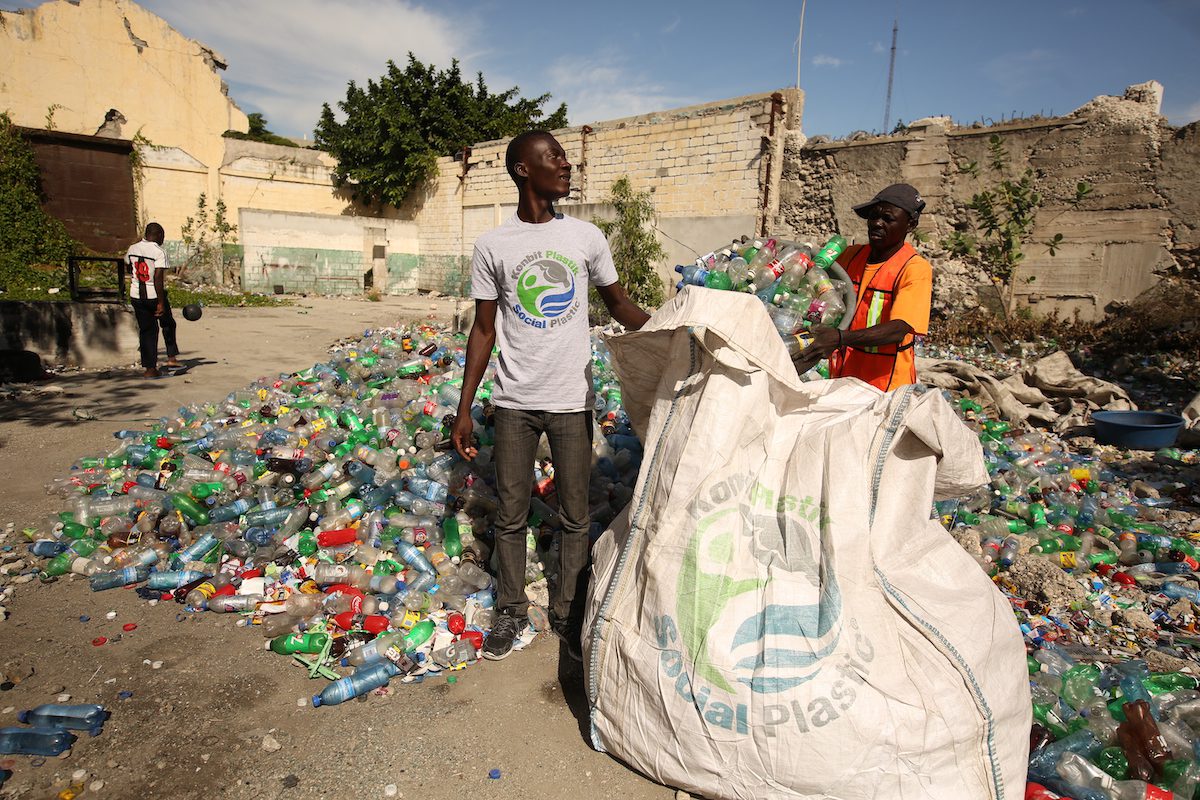
Plastic BankThere are more microplastics in the ocean than there are stars in the Milky Way galaxy and the majority of this plastic waste comes from areas of extreme poverty, where recycling is simply not an option. Because a garbage truck’s worth of plastic is dumped into the ocean every minute, David Katz and Shaun Frankson were compelled to create the organization known as Plastic Bank. During a TED talk, Katz explains that the solution to this problem is to “turn off the tap,” since ridding the oceans of plastic waste may be futile. Thus, the organization was launched with two goals in mind: stopping the flow of plastic waste into the ocean, while simultaneously alleviating global poverty.

What is the Plastic Bank?

The Vancouver-based Plastic Bank, launched in 2013, is predicated around the idea of turning plastic waste into digital currency in impoverished communities. This gives plastic too much value to be simply dumped into the ocean. The organization touts the mantra, “Plastic is a resource — not waste.”

At numerous locally-run Plastic Bank locations, individuals turn in plastic they have collected from within their communities. In Haiti, more than 40 recycling centers have been established and plastic collectors earn as high as $5 per day in a country where the average citizen lives on $2 a day, according to the World Bank. Since 2015, the first Plastic Bank center opened in Haiti has collected an amount of plastic equivalent to more than 100 million plastic bottles.

The plastic is weighed and assigned a value, which is then deposited into an online account that can be accessed via a smartphone application. According to Frankson, 50 percent of people in Haiti have a smartphone that can run the app and those who do not can use plastic to buy a phone. The app uses blockchain technology on IBM’s LinuxONE servers, meaning that all transactions are tracked and free of any danger involved in a cash-based system, such as robbery or forgery. At Plastic Bank stores, individuals can use their credits to buy necessities such as water, food, sustainable cooking fuel, high-efficiency stoves and even medical insurance, school tuition, solar-powered smartphone charging and Wi-Fi access.

Another innovation is the app’s banking features. Utilizing the same blockchain technology to create a secure “hyper ledger,” users can build credit over time and eventually earn low-interest loans. Before this feature, this was a very uncommon opportunity in countries like Haiti since many citizens do not qualify for bank accounts.

The Advent of Social Plastic

Once the plastic is collected at recycling centers, it is cleaned, crushed into pellets and sold as what the organization calls Social Plastic, or a form of plastic that is more socially responsible. Social Plastic is purchased by companies and multinational corporations such as German Henkel, Shell, IBM and Marks & Spencer and is used directly in the manufacturing of their goods. According to Katz, Social Plastic is a “globally recognized currency“ that “alleviates poverty and cleans the environment at the same time.”

The Future of Plastic Bank

Currently, Plastic Bank is expanding operations to over two dozen countries and developing the app further, including IBM visual recognition technology to help users identify the value of certain plastics, like a barcode scanner in a store. Plastic Bank expects to entice major corporations such as Coca-Cola, PepsiCo and Colgate-Palmolive to join the initiative. Plastic Bank currently operates in the Philippines, Haiti and Indonesia and is projected to have 530 locations by the end of 2019.

– Adam Bentz
Photo: Flickr

October 1, 2019
https://borgenproject.org/wp-content/uploads/borgen-project-logo.svg 0 0 Jennifer Philipp https://borgenproject.org/wp-content/uploads/borgen-project-logo.svg Jennifer Philipp2019-10-01 01:30:562019-10-10 10:13:42How Plastic Bank is Tackling Global Poverty
Economy, Global Poverty, Life Expectancy

10 Facts About Life Expectancy in Greece

10 Facts About Life Expectancy in Greece
The life expectancy age in Greece has been at a constant 0.22 percent increase since 2015. Out of all the countries in the world, Greece ranked at number 31 in 2019. The current average age of life expectancy is 81 years old. There are many factors that affect this average but the main one is poverty. Here are 10 facts about life expectancy in Greece and how it relates to poverty.

10 Facts About Life Expectancy in Greece

  1. The CIA World Factbook reported that the average living ages in 2017 were 83 for women and 71 for men. This coincides with the current average living age of 83 for women but men have increased by at least seven years since 2017.
  2. Socioeconomic status and class tend to directly correlate with poverty. The unemployment rate in Greece is currently 15.3 percent, which is much higher than the average unemployment rate. Unemployment can put Greeks in a lower class range, thereby forcing them into poverty. According to the IFA, as one’s status decreases so does one’s life expectancy.
  3. Access to good health care can affect life expectancy because if one has better access to health care, they could live longer. In Greece, public health care has been chronically underfunded and the country does not have an integrated health system making it harder for Greeks to receive proper assistance. Greece is trying to transition into a new health system to improve health care. These efforts include focussing on promotion and prevention in order to provide public health service at a regional level and district level.
  4. The Changemakers is an organization that started a competition called Destination: Change. New Solutions for Greece. It is meant to help find sustainable and systemic solutions for problems in Greek society. It looks at how to reduce issues like poverty which may affect the rate of life expectancy.
  5. In 2018, poverty rates increased by 6.7 percent in Greece and Eurostat data stated that more than 20 percent of Greeks have “severe material deprivation.” This means that there is an inability to afford items suited for a quality life among individuals and families in Greece.
  6. Help Age International is an organization that measures how elderly populations are doing in various countries. It conducted an annual study that shows how the elderly population in Greece have the poorest quality of life in Europe. Greece ranked 79th in quality of life compared to 96 other countries. Although Greece’s life expectancy is higher than the European average, more than 19.3 percent of its population is elderly. Understandably, health care and finances might impact the elderly’s life expectancy. Life expectancy is high but the quality of life among the elderly is not.
  7. Poverty rates in Greece are increasing and more Greeks are at risk of being in poverty. The financial crisis Greece encountered has caused a lot of this. Greece currently owes the European Union 290 billion euros. An article by Greek reporter Nick Kampouris stated that since 2018, “34 percent of Greeks are in danger of living in poverty.”
  8. The World Health Organization is trying to improve the quality of health care in order to improve life expectancy. It works in 150 different countries working to provide quality health care to those in need, and in turn, helps improve life expectancy. Greece has a representative who gives and collects data concerning its population.
  9. According to a report from the OECD in 2017, over the past 10 years, “Despite stalling in 2007, 2012 and 2015, life expectancy at birth is now over a year higher than it was a decade ago in Greece.” This is due to the fact that many Greeks reported being in good or very good health in the years following 2015.
  10. A BBC travel article published in 2017 stated that the Island of Ikaria has the highest life expectancy rate in Greece. Katerina Karnarou, a local of the Island of Ikaria, happens to be the oldest woman in Greece. People of this island often live longer with many citizens living past 90. Their diets and active lifestyles are what permits them to live so long and rank them as one of the top five locations with the highest life expectancy.

Poverty tends to have a huge impact on life expectancy in Greece. Poverty impacts socioeconomic status, health or living conditions, which all influence the longevity of each citizen. When more Greeks are falling towards the poverty line, they may find it challenging to access what is necessary to live a long, healthy life.

– Jessica Jones
Photo: Flickr

October 1, 2019
https://borgenproject.org/wp-content/uploads/borgen-project-logo.svg 0 0 Jennifer Philipp https://borgenproject.org/wp-content/uploads/borgen-project-logo.svg Jennifer Philipp2019-10-01 01:30:152024-05-29 23:13:0310 Facts About Life Expectancy in Greece
Page 1210 of 2180«‹12081209121012111212›»

Get Smarter

  • Global Poverty 101
  • Global Poverty… The Good News
  • Global Poverty & U.S. Jobs
  • Global Poverty and National Security
  • Innovative Solutions to Poverty
  • Global Poverty & Aid FAQ’s
Search Search

Take Action

  • Call Congress
  • Email Congress
  • Donate
  • 30 Ways to Help
  • Volunteer Ops
  • Internships
  • Courses & Certificates
  • The Podcast
Borgen Project

“The Borgen Project is an incredible nonprofit organization that is addressing poverty and hunger and working towards ending them.”

-The Huffington Post

Inside The Borgen Project

  • Contact
  • About
  • Financials
  • President
  • Board of Directors
  • Board of Advisors

International Links

  • UK Email Parliament
  • UK Donate
  • Canada Email Parliament

Get Smarter

  • Global Poverty 101
  • Global Poverty… The Good News
  • Global Poverty & U.S. Jobs
  • Global Poverty and National Security
  • Innovative Solutions to Poverty
  • Global Poverty & Aid FAQ’s

Ways to Help

  • Call Congress
  • Email Congress
  • Donate
  • 30 Ways to Help
  • Volunteer Ops
  • Internships
  • Courses & Certificates
  • The Podcast
Scroll to top Scroll to top Scroll to top