• Link to X
  • Link to Facebook
  • Link to Instagram
  • Link to TikTok
  • Link to Youtube
  • About
    • About Us
      • President
      • Board of Directors
      • Board of Advisors
      • Financials
      • Our Methodology
      • Success Tracker
      • Contact
  • Act Now
    • 30 Ways to Help
      • Email Congress
      • Call Congress
      • Volunteer
      • Courses & Certificates
      • Be a Donor
    • Internships
      • In-Office Internships
      • Remote Internships
    • Legislation
      • Politics 101
  • The Blog
  • The Podcast
  • Magazine
  • Donate
  • Click to open the search input field Click to open the search input field Search
  • Menu Menu

Archive for category: Foreign Policy

Information and news about foreign policy

Foreign Policy

What is the Bilderberg Group?

bilderberg-group
The Bilderberg Group is an annual conference designed to foster dialogue between Europe and North America. The group was started in 1954 when the first conference was held at the Bilderberg Hotel in Holland. The conference brings together 120-150 political leaders and experts from a variety of fields each year to discuss megatrends and major issues facing the world.

The Bilderberg conference provides an opportunity for informal, off-the-record conversation that is seldom possible in other venues. No official positions are required in the meetings. The conference provides attendees an agenda free, vote free setting where ideas are encouraged and participants have the opportunity to express their own opinions. No notes are taken, and no policy statements are issued before or after the conference.

Bilderberg is governed by a Steering Committee that elects a chairman who in turn is responsible for making suggestions and preparing the conference program with the Steering Committee.

Bilderberg grew out of the Cold War as a mechanism for European and North American communication, and today it remains a venue to discuss relevant and common problems facing the world. The group discusses matters surrounding trade, jobs, monetary policy, and international security. Dialogue between Europe and the United States is as important today as it was in the 1950’s.

The Bilderberg Group has received significant criticism over the years, however. Members of the media have labeled the conference as a “powerful global cabal” as each event is protected with heavy security and press is not allowed inside. Some conspiracy theorists have claimed the group runs the world. One prominent theory claims the group was responsible for the creation of the Euro, and that the group meets to select the winners and losers in the U.S presidential Elections, or at least the vice presidential pick.

Rumors like these persist in part because Bilderberg attendees are encouraged not to discuss the proceedings. However, to date there is no concrete evidence to suggest that the conference serves as anything more than an informal discussion of important problems and issues facing the world today.

-Caitlin Zusy
Sources Washington Post
Photo Unusual News

July 6, 2013
https://borgenproject.org/wp-content/uploads/borgen-project-logo.svg 0 0 Borgen Project https://borgenproject.org/wp-content/uploads/borgen-project-logo.svg Borgen Project2013-07-06 04:00:462024-12-13 17:49:26What is the Bilderberg Group?
Aid Effectiveness & Reform, Foreign Policy

US Military Leaders Want Congress Helping Poor

US Military Leaders Want Congress Helping Poor
Foreign aid has long been a very small piece of the United States’ federal budget, coming in at less than 1%. But this does not reflect the important significance of that aid, diplomacy, and development strategies have in the world. The National Security Council is now joining the fight for increased foreign policy funding lead by its leaders Admiral James M. Loy and General Michael W. Hagee.

In a letter to the Appropriations Committee, the two co-chairs explain their position saying, “Our nation’s military strength is not sufficient on its own to defend America’s security, protect our most vital national interests, sustain and bolster economic growth and, in particular, address the deep-rooted causes of violence and instability around the world. To deal with these challenges, the U.S. must balance strategically all three aspects of national power and international influence—defense, diplomacy, and development.”

These military leaders have first-hand seen the need for assistance overseas and encourage the greater focus of foreign aid because it will be able to achieve goals at a far lower cost “in lives and dollars” than the military can. Condoleezza Rice, former Secretary of State, also spoke on the necessity of supporting international development saying, “It is a vital investment in the free, prosperous, and peaceful international order that fundamentally serves our national interest.”

Promoting national and international security is vital to the U.S.’s strength as a nation, and can be better attained if proper funding is allotted. The National Security Council knows firsthand the international efforts taken for civilian assistance, and the co-chairs saw their resources for assistance often insufficiently funded and staffed. This lack of funding puts a serious damper on any efforts we may undertake in terms of diplomacy and development, where proper funding and investment could cause a dramatic decrease in poverty and hunger levels around the world.

– Sarah Rybak

Source: USGLC,The Foreign Policy Initiative
Photo: Elevation Networks

June 22, 2013
https://borgenproject.org/wp-content/uploads/borgen-project-logo.svg 0 0 Borgen Project https://borgenproject.org/wp-content/uploads/borgen-project-logo.svg Borgen Project2013-06-22 07:53:402024-05-24 23:54:45US Military Leaders Want Congress Helping Poor
Development, Foreign Policy, Global Poverty, Human Rights, Human Trafficking, Politics and Political Attention, Refugees and Displaced Persons, USAID, War and Violence

Afghan Child Refugees Flee to Europe

afghanistan-refugees
As citizens of the United States, we hear a lot about the war in Afghanistan. We hear about what the U.S. is doing, our withdrawal timeline, attacks and progress. What we don’t hear about is how the war has affected Afghan citizens, and what life has been like for them.

Right now in Afghanistan, there is a mass exodus of teenage boys who are fleeing Afghanistan. These Afghan child refugees are headed on a 10,000-mile journey towards Europe, where, if they are lucky enough to live and arrive in Europe, they may be able to seek asylum. Teens are forced to trust in smugglers who transport them in secret compartments in vans and truck, or take them on dangerous water crossings with low survival rates.  Many of the boys who take on this journey die in the process, with estimates as low as 35% of boys making it to Europe.

Additionally, Afghan boys are at risk for sex trafficking on their journey. Many of the boys are sexually abused, or turned into sex slaves by their smugglers. They are powerless to the smugglers, who control their livelihood and safety. Many children may also be diverted into menial jobs as they try to save money to pay smugglers for future legs of their jouney. Boys disappear often, and anonymously. They are incredibly vulnerable and very susceptible to kidnappers.

The deaths and disappearances of these boys are, in part, a result of their vulnerability and poverty. The poorer and less educated the boys, the bigger risk they may suffer. Additionally, some of the children may be experiencing post-traumatic stress from the war-related events that they may have witnessed in Afghanistan. The children are also subject to the constant threat of deportation, as most of them do not have legal status or documentation.

The lack of legal status can have many implications on the children. They could be exposed to organized crime, physical abuse, and child labor, as well as the previously mentioned sex trafficking. In several of the countries through which the boys travel, such as Greece, unaccompanied children are not guaranteed asylum or refugee status. Those children who are caught, deported, and sent back to Afghanistan may be at an even greater risk if returned. The plight of young Afghans is undoubtedly a serious human rights violation and one that should be more widely covered by mainstream media.

– Caitlin Zusy 

Sources: 60 Minutes, 60 Minutes, UNHRC
Photo: The National

June 5, 2013
https://borgenproject.org/wp-content/uploads/borgen-project-logo.svg 0 0 Borgen Project https://borgenproject.org/wp-content/uploads/borgen-project-logo.svg Borgen Project2013-06-05 04:11:062024-05-24 23:54:08Afghan Child Refugees Flee to Europe
Foreign Policy

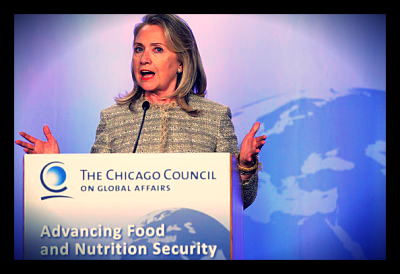
The Chicago Council on Global Affairs

chicago-council-on-global-affairs
The Chicago Council on Global Affairs was founded in 1922. It is an independent, non-partisan organization charged with influencing discourse on global issues. The organization employs opinion and policy formation, leadership dialogue, and public learning to influence discourse. The organization hosts public programs and private events featuring world leaders and experts. They implement task forces, conferences, and other methods to broadcast their ideas and opinions on a global scale. Individual and corporate members who pay a yearly fee support the council.

The council’s history showcases their importance and focus. The founders believed that World War I had changed foreign affairs, and thus, our policies and methods ought to be reevaluated. In the late twenties and thirties, the council was one of the premier sources for international news and analysis drawing speakers such as John Maynard Keynes and President Herbert Hoover. During the forties and fifties, the Chicago Council on Global Affairs made an effort to attract younger participants as well as to expand programs to the suburbs. Speakers in this period included Eleanor Roosevelt, and then U.S. Senator John F. Kennedy.

During the sixties and seventies the council’s focus changed slightly as they began to focus on world hunger and relations of countries in the Atlantic. They launched biennial conferences with foreign policy experts from around the world. They also began publishing results for its Public Opinion Survey on Foreign Policy Issues. Speakers included President Gerald Ford, Secretary of State Henry Kissinger and UN Secretaries General U Thant and Kurt Waldheim among others.

In the eighties and nineties, the council shifted towards European development, economics and integration as well as human rights. Speakers included Egyptian President Hosni Mubarak, former Soviet President Mikhail Gorbachev and others.

Today, the council has shifted its focus towards globalism. They are eager to help in the fields of public education, the global economy, democratization, sovereignty,  intervention, global institutions and a changing America. Additionally, they have begun focusing on Asia, Africa and Latin America- regions that were previously less discussed. Recent speakers have included Secretary of State Condoleezza Rice and former UK Prime Minister Tony Blair.

The Council holds Chicago and World forums where experts present their perspectives on various themes. The council also sponsors corporate programs and emerging leadership programs among others. Their publications and studies include food security as well as a public opinion study of illegal immigration flows among others.

The Council has defined a list of several topics of interest. These include agriculture and development, economics and business, energy, environment and climate, international politics and policy, foreign policy and national security, and values, diversity and pluralism. These topics guide the council’s discourse. The Chicago Council on Global Affairs has an important and rich history. They exist as an important non-partisan organization to provide valuable information and opinions on global affairs. For more information about their programs, studies and events visit them here.

– Caitlin Zusy
Source: The Chicago Council on Global Affairs
Photo: Opportunity.org

May 27, 2013
https://borgenproject.org/wp-content/uploads/borgen-project-logo.svg 0 0 Borgen Project https://borgenproject.org/wp-content/uploads/borgen-project-logo.svg Borgen Project2013-05-27 04:00:392020-06-18 19:32:16The Chicago Council on Global Affairs
Advocacy, Children, Foreign Policy, Human Trafficking

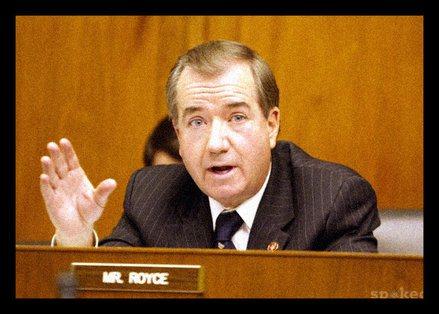
Chairman Royce on Human Trafficking

Chairman Royce on Human Trafficking
 “Trafficking in persons is a grievous offense against human dignity that impacts every country on earth, and disproportionately victimizes girls and children.” – Rep. Ed Royce (R-CA)

House Foreign Affairs Committee Chair Ed Royce opened a hearing on human trafficking on May 7th, 2013. The hearing will discuss local and private sector initiatives to combat human trafficking.  Modern-day slavery, human trafficking is a growing global crime.

One of the things society must wrestle with is how the vulnerable are treated and protected as well as what their responsibility is in coming to the aid of the exploited. Human trafficking exists in every nation worldwide and targets women and children in disproportionate amounts.  Numbers indicate over 20 million victims of forced labor and forced sex work worldwide. However, bigger than the numbers are the faces and stories of the victims, largely children, who have been stripped of their hope, innocence, and youth.

Chairman Royce’s Chief of Staff, Amy Porter, spent time in India and Cambodia serving victims of human trafficking. She recounts girls as young as 3 years old in awful, disgusting situations. Closer to home, it is estimated that 100,000 children in the US are victims of human trafficking.  The Foreign Affairs Committee has worked tirelessly to get human trafficking on the minds of Congress and will continue to work hard to make the issue an urgent and pressing one in the coming weeks and years.

The hearing will look at some of the promising private sector and community partnerships going on worldwide and the implications of those innovative partnerships in eradicating human trafficking. The tools that are being developed and the relationships established on the local, community level may just be the answer to fighting human trafficking worldwide.

Videos of the Question and Answer session as well as the opening statement can be found here.

– Amanda Kloeppel

Source: House Foreign Affairs Committee
Photo: Jewish Journal

May 9, 2013
https://borgenproject.org/wp-content/uploads/borgen-project-logo.svg 0 0 Borgen Project https://borgenproject.org/wp-content/uploads/borgen-project-logo.svg Borgen Project2013-05-09 05:00:082024-05-24 23:50:13Chairman Royce on Human Trafficking
Foreign Policy

Fawzia Koofi Running in 2014 Election to be Afghanistan’s First Female President

Afghanistan_first_female_president
Whether you identify as a feminist or not, no one can deny the courage of Fawzia Koofi, as she is running for the presidency in Afghanistan during the 2014 elections. President Karzai is set to reach his limit of two five-year terms in office and if Koofi succeeds, she will be Afghanistan’s first female president. As of now, Koofi chairs parliament’s women and human rights committee.

There is no doubt that Fawzia Koofi embodies the feminist movement and sends a clear message to the world; Afghanistan is progressing, despite the Taliban’s best efforts of terrifying women into suppression and out of politics. Seeing as Afghanistan was once known as the worst place in the world to be a woman, Koofi has managed to incite dramatic change in Afghanistan’s political climate.

After years of conflict, this potential change in leadership has restored faith in many of Afghanistan’s people. Afghanistan’s first female president would serve as a representation of endless opportunity and positive forward motion for the country’s youth. Koofi has said herself that there is a strong desire for change among young people and women throughout Afghanistan. Koofi emphasizes this in her new book, “Letters to my Daughters”.

“Being a woman in politics in Afghanistan and a woman who stands for what she believes in, there is always risk”, Koofi stated. Fawzia Koofi is well aware of the danger she is putting herself in, as her own father was a politician who was killed by assassination. However, she is determined, stating that “…change is possible; it’s just a matter of some political and moral support from our international friends.”

This leads to the question of how this political shift would impact the United States, particularly in the realm of national security. Koofi herself has asked that the United States continue its support for Afghan women’s rights, even after the withdrawal of troops in 2014. Her concern is that gains made for women’s rights in Afghanistan will be eradicated if the new president enters into reconciliation talks with conservatives, including Taliban insurgents. There is great concern among women in Afghanistan, as this settlement could lead to the Taliban sharing in power. Koofi sees this threat even now, stating that “Talibanisation is a process, people within government are already promoting Taliban ideology and Taliban thinking”.

Rebekah Russo

Source:Al Arabiya News

May 6, 2013
https://borgenproject.org/wp-content/uploads/borgen-project-logo.svg 0 0 Borgen Project https://borgenproject.org/wp-content/uploads/borgen-project-logo.svg Borgen Project2013-05-06 10:09:142020-05-26 08:28:51Fawzia Koofi Running in 2014 Election to be Afghanistan’s First Female President
Children, Food Security, Foreign Policy, Health, USAID

Guatemala’s Zero Hunger Pact

Guatemala_USAID_Nutrition
The U.S. Department of State recently hosted a number of government officials in a conference on nutrition and hunger in Guatemala. Attendees included representatives from USAID, the Guatemalan Health Minister, officials of the Government of Guatemala, a panel of nutrition experts, and private sector leaders.

As part of the larger Zero Hunger Pact, started by the President of Guatemala in 2012, Guatemala’s goal is to lower chronic malnutrition in children throughout the country by 10 percent by 2015.

In addition to representatives from the United States and Guatemala, members from the World Bank, the World Food Program, and other high-profile organizations appeared at the event. Participants of the event gathered to discuss and strategize on Guatemala’s implementation of the Zero Hunger Pact, which included planning the necessary next steps for the country to take to reduce malnourishment.

Guatemala has one of the highest rates of child malnutrition in the world as nearly half of all children in the country under five years of age suffer from chronic malnourishment; the issue is particularly bad in the Western highlands of Guatemala. U.S. government officials praised the Guatemalan government’s efforts to tackle child nutrition at the conference and also praised their efforts for sustainable results in fighting hunger.

In addition to the Zero Hunger Pact, Guatemala is also a focus area for the United State’s global hunger and food security initiative called Feed the Future.

– Christina Kindlon

Source: State Department

April 14, 2013
https://borgenproject.org/wp-content/uploads/borgen-project-logo.svg 0 0 Borgen Project https://borgenproject.org/wp-content/uploads/borgen-project-logo.svg Borgen Project2013-04-14 11:00:452020-05-13 21:55:34Guatemala’s Zero Hunger Pact
Foreign Aid, Foreign Policy, Global Poverty

Foreign Aid Creates Jobs in the US

Foreign_Aid_Job_Creation_USAID
There are many disputing ideas on whether or not America should continue to invest in foreign aid, especially while in the throes of an economic recession. While spending US funds to support countries and people that most citizens will probably never visit or meet may seem counter-intuitive, foreign aid will be a factor in pulling America out of its recession. Lifting developing countries out of poverty creates more customers to buy American products, which in turn creates jobs in America.

Foreign aid job creation is not merely speculation. Currently almost half of US exports go to developing countries and this number can be expected to increase as these new, developing markets continue to open. This will greatly improve the US economy since one in five American jobs, like cell phone chips and food production, are export-based. American businesses recognize the opportunity to grow by alleviating world poverty. In 2012, over 50 US corporations delivered a letter to Congress in support of continuing funding for foreign investment. These corporations included Google, Cisco, Coca Cola, Johnson & Johnson and Caterpillar.

These corporations are aware of the huge potential payoffs of foreign investment. For example, the US has given Mexico $1.7 billion in aid over the past 45 years and now exports $16.3 billion in goods to their neighbor every year. The US has also seen its investment in Brazil offer an enormous return. America exports $35.4 billion annually to Brazil after giving $2.8 billion in aid from 1960-2005. Given that a majority of the United States’ top trading partners had previously accepted aid from the US, it is obvious that foreign aid is a good investment.

Foreign aid does not have to be strictly a question of moral obligation; it is also financially and developmentally smart. Many Congressmen are now referring to foreign aid as investment for this very reason. It may take many years until US citizens see the financial benefits of foreign investments but the eventually, revenues from these new markets will be well worth the wait. Foreign aid is less than 1% of United States’ budget and has the potential to create jobs to bring the US out of rough economic times. Contact your Congressional representatives and ask them to support funding for foreign aid.

– Mary Penn

Source: Orange County Register
Photo: Soda Head

April 1, 2013
https://borgenproject.org/wp-content/uploads/borgen-project-logo.svg 0 0 Borgen Project https://borgenproject.org/wp-content/uploads/borgen-project-logo.svg Borgen Project2013-04-01 12:16:012020-06-01 06:01:39Foreign Aid Creates Jobs in the US
Foreign Aid, Foreign Policy

Effects of Drone Strikes on Humanitarian Aid

Effects of Drone Strikes on Humanitarian Aid
The moral, ethical, and legal questions and uncertainties about secretive US drone strikes have increasingly become subjects of media attention. Many have criticized the Bush and Obama administrations for effectively engaging in endless, unchecked war, in many places, all the time. But one question has gone largely unasked in the debate over unmanned US strikes: what are the effects of drone strikes on humanitarian aid?

As we know, poverty and terrorism are closely linked. The daily struggles of those living in extreme poverty breed despair and desperation and leave many, especially youth, vulnerable to terrorist groups’ incendiary messages. Poverty reduction is an important part of US national security and foreign policy, and yet drone strikes may be undermining attempts to combat extreme poverty on the ground.

Organizations working in rural areas of Afghanistan, Pakistan, Somalia, Yemen, and other drone strike-targeted regions have reported increased hostility and resistance in relation to drone strikes. Suspicions are always aroused in the days and weeks following a strike. According to NGO security officials in Somalia, following a 2008 drone strike, attacks on aid workers increased from one to two a month to six to eleven.

Aid workers have been accused of complicity in drone strikes. Often, workers who have been collecting information for aid purposes are accused of passing on sensitive information that supposedly enable strikes, such as GPS coordinates. Some workers have been killed, either by hostile locals or as a direct result of strikes.

One of the biggest problems that aid organizations and NGOs face in dealing with drone strikes is the lack of human personnel involved in the attacks. There are no authorities on the ground to address the safety of aid workers or civilians in the region. It is difficult to determine responsibility for the attacks because even though drones often operate from regular military airbases, they are under the CIA’s jurisdiction.

Some groups, such as the UN Assistance Mission in Afghanistan (UNAMA), have had success interfacing with the US government through the International Security Assistance Force (ISAF). But others, like the Center for Civilians in Conflict, have had zero success in lobbying Congressional leaders for greater oversight of drone strikes. Civilians in Conflict released this report in 2012 on the effects of drone strikes on civilians.

The effects of drone strikes on humanitarian aid cannot be underestimated. Compounding tensions in areas already struggling with poverty and violence does nothing to alleviate the problems. Instead, it hampers the valiant efforts of those risking their own lives to make a positive difference. If the US government wants to positively contribute to poverty relief and reduction efforts, it needs to evaluate the effects of drone strikes on humanitarian aid work in targeted regions.

– Kat Henrichs

Source: IRIN
Photo:

March 30, 2013
https://borgenproject.org/wp-content/uploads/borgen-project-logo.svg 0 0 Borgen Project https://borgenproject.org/wp-content/uploads/borgen-project-logo.svg Borgen Project2013-03-30 09:53:042024-05-24 23:46:11Effects of Drone Strikes on Humanitarian Aid
Foreign Aid, Foreign Policy, USAID

USAID Increases Attempts To Put Itself Out Of Business

USAID Increases Attempts To Put Itself Out Of BusinessUSAID holds a unique position in that its main objective is to put itself out of business. In order to achieve this goal, USAID established USAID Forward.

Shortly after Rajiv Shah became president of USAID in 2009, USAID Forward was created. USAID Forward is a group of measures implemented to strengthen the effectiveness of the Agency’s performance in areas such as budget management, project implementation, and monitoring and evaluation.

Recently, USAID has issued a progress report and infographic containing the progress USAID Forward has made in maximizing transparency and delivering better results. This report not only catalogs the current progress being made but also hints at future developments and the future direction of USAID.

As an agency, USAID is moving away from establishing individual missions around the world and moving toward establishing partnerships with foreign nations. During the presidency of Rajiv Shah, USAID has cut its global footprint by 11 missions. Rather than establishing missions, USAID works to aid nations monetarily and help them establish a sustainable infrastructure created with its own people. This is a result-oriented tactic that centers around providing data and technical support as well as goal-oriented monetary aid with a focus on accountability.

USAID is one of the United States’ largest nonprofits and was established by President Kennedy in 1961. It is currently one of the largest nonprofits in the United States and operates directly under the guidance of the President of the United States and Secretary of State.

Despite the changes in strategy and tactics, the main goal of USAID remains the same: creating conditions where aid is no longer needed.

– Pete Grapentien

Source American Enterprise Institute

March 29, 2013
https://borgenproject.org/wp-content/uploads/borgen-project-logo.svg 0 0 Borgen Project https://borgenproject.org/wp-content/uploads/borgen-project-logo.svg Borgen Project2013-03-29 10:30:322024-05-24 23:45:49USAID Increases Attempts To Put Itself Out Of Business
Page 10 of 11«‹891011›

Get Smarter

  • Global Poverty 101
  • Global Poverty… The Good News
  • Global Poverty & U.S. Jobs
  • Global Poverty and National Security
  • Innovative Solutions to Poverty
  • Global Poverty & Aid FAQ’s
Search Search

Take Action

  • Call Congress
  • Email Congress
  • Donate
  • 30 Ways to Help
  • Volunteer Ops
  • Internships
  • Courses & Certificates
  • The Podcast
Borgen Project

“The Borgen Project is an incredible nonprofit organization that is addressing poverty and hunger and working towards ending them.”

-The Huffington Post

Inside The Borgen Project

  • Contact
  • About
  • Financials
  • President
  • Board of Directors
  • Board of Advisors

International Links

  • UK Email Parliament
  • UK Donate
  • Canada Email Parliament

Get Smarter

  • Global Poverty 101
  • Global Poverty… The Good News
  • Global Poverty & U.S. Jobs
  • Global Poverty and National Security
  • Innovative Solutions to Poverty
  • Global Poverty & Aid FAQ’s

Ways to Help

  • Call Congress
  • Email Congress
  • Donate
  • 30 Ways to Help
  • Volunteer Ops
  • Internships
  • Courses & Certificates
  • The Podcast
Scroll to top Scroll to top Scroll to top