• Link to X
  • Link to Facebook
  • Link to Instagram
  • Link to TikTok
  • Link to Youtube
  • About
    • About Us
      • President
      • Board of Directors
      • Board of Advisors
      • Financials
      • Our Methodology
      • Success Tracker
      • Contact
  • Act Now
    • 30 Ways to Help
      • Email Congress
      • Call Congress
      • Volunteer
      • Courses & Certificates
      • Be a Donor
    • Internships
      • In-Office Internships
      • Remote Internships
    • Legislation
      • Politics 101
  • The Blog
  • The Podcast
  • Magazine
  • Donate
  • Click to open the search input field Click to open the search input field Search
  • Menu Menu

Archive for category: Foreign Aid

Foreign aid coverage and information.

Foreign Aid

Remittances Outweigh International Aid to Africa

aid_opt
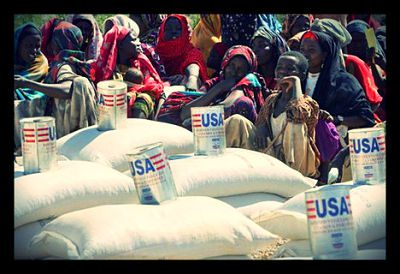
Millions of Africans live in migrant communities around the world, and a large number of these regularly send money to family back home. In 2010, the total amount of these remittances topped $50 billion – and possibly up to three times that, as much of the money is sent informally. For comparison, official development assistance that year was $43 billion, according to the World Bank. There is a difference too in the manner of aid. Because remittances are sent directly to family members, they are targeted and aimed at specific needs, be they schooling, or essentials like food and medicine. A recent study showed that nearly half of the population of Somalia, among many other countries, is dependent on money sent from abroad and that the total amount of remittances sent annually reaches $350 billion.

In some ways, money sent directly to families in developing countries can be better spent than official international assistance, as there is no bureaucracy to go through and people can address their needs directly. However, this does not allow for infrastructural development and other government driven projects. And if the income of many people is generated abroad, then local governments receive no benefit from taxation. Therefore, international aid is still important as a facilitator of broader governmental programs in conjunction with the individually distributed remittances.

– David M Wilson
Sources: The Economist, BBC
Photo: Zehabesha

July 27, 2013
https://borgenproject.org/wp-content/uploads/borgen-project-logo.svg 0 0 Borgen Project https://borgenproject.org/wp-content/uploads/borgen-project-logo.svg Borgen Project2013-07-27 04:55:122016-02-16 11:54:23Remittances Outweigh International Aid to Africa
Food & Hunger, Food Security, Foreign Aid

Food Crisis in the Central African Republic

Food Crisis in the Central African Republic
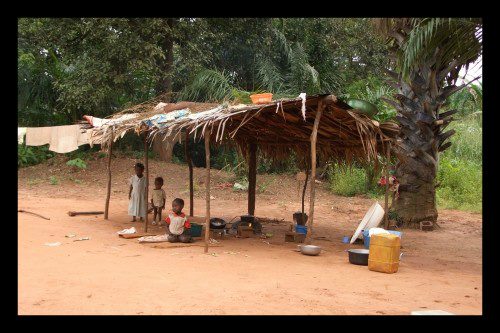
The Central African Republic is now facing a food crisis nearly four months after a coup overthrew the government and proclaimed the leader of the Seleka rebel coalition, Michel Djotodia, as president. More than 60,000 people are suffering from severe food shortages, and 200,000 have been forced to flee their homes due to instability in the region.

Food shortages are nothing new for the country, as last year the United Nations claimed that upwards of 800,000 people, nearly 20% of the country’s population, experienced some level of food crisis. However, the current shortages have the potential to be much more severe as the fighting has severely impacted the country’s agriculture, with many families losing food stocks, seeds, and livestock.

Due to the new government administration, and ongoing political turmoil following the coup, access for humanitarian agencies throughout the country has been restricted, especially in some of the hardest-hit rural areas. Yet before this can change, security throughout the country must improve. This lack of security has further led to the closing of health centers and schools due to safety concerns. Nearly a million children are out of school as a result of these closures, and a significant percentage of those have missed nearly a full school year due to the ongoing conflict.

Funding for humanitarian work is an ongoing issue. Current donations account for only about 43% of the $125 million in aid that the UN estimates are needed in the Central African Republic. The Archbishop of Bangui, Dieudonné Nzapalainga, said, “The current humanitarian crisis is the worst in the country’s history. It is urgent that the international community provides funds quickly to help and to save lives. The world can’t turn a blind eye on the crisis here. The country is bordered by six of the most fragile African nations—there is a high risk of destabilization throughout Central Africa.”

– David Wilson

Sources: WFP, The Examiner, Action Against America

July 22, 2013
https://borgenproject.org/wp-content/uploads/borgen-project-logo.svg 0 0 Borgen Project https://borgenproject.org/wp-content/uploads/borgen-project-logo.svg Borgen Project2013-07-22 08:15:242024-05-25 00:02:57Food Crisis in the Central African Republic
Foreign Aid, Nonprofit Organizations and NGOs

3 Rules of Smart Giving

smart-giving-borgen-project_opt
Can someone really be wrong when he or she decides to give to charity? There is no concrete answer, but sometimes certain types of giving can do more overall good than others.

Eric Friedman, an actuary and philanthropist, argues that there is a right and wrong way to give, and many people are doing it wrong. Today’s generation of givers prefers to become more deeply involved in their philanthropy, for example, by mentoring young people, creating a foundation, or asking to learn exactly what good their money did when they donated to an organization. While this philanthropic trend is positive, Friedman claims that people still need to be smarter when it comes to giving by focusing on these three areas:

  1. Consider global problems and weigh them against your personal priorities. Maybe you feel drawn to give your income to a group that is close to your heart, such as your college or a sports team. First, though, consider how far your money will go with those organizations compared to how many homeless or hungry people you could help with that same money. It’s certainly not that personal causes don’t matter, but your donation may not make as much of an impact as it would for other global causes.
  2. Do some research to find out which charities have the most effective philanthropic programs. Friedman suggests using websites such as givewell.org and givewhatwecan.org, both of which help donors find the charities that give you the most bang for your buck, enabling you to help the most people possible.
  3. Investigate the organization to which you’re giving before donating. Only 35% of donors do any research about the charity to which they give their money, and just 9% do more than two hours of research about the organization. Donating money is an investment that people should not take lightly, and knowing exactly what the charity stands for and how they plan to solve problems is half the battle.

If Friedman is correct, this type of smart giving could make a much more significant impact when it comes to issues like global poverty and world hunger.

– Katie Brockman

Sources: TIME, Give Well, Giving What We Can
Photo: WPFD

July 19, 2013
https://borgenproject.org/wp-content/uploads/borgen-project-logo.svg 0 0 Borgen Project https://borgenproject.org/wp-content/uploads/borgen-project-logo.svg Borgen Project2013-07-19 04:14:332018-03-07 13:33:163 Rules of Smart Giving
Foreign Aid

Poverty and the 2013 G8 Summit

The Group of Eight, or G8, summit was held in Enniskillen, Northern Ireland last week. The G8 Summit is an annual conference at which leaders from nine of the world’s most powerful nations and bodies come together to discuss the global issues of the day. Representatives from the United States, United Kingdom, Canada, Russia, Japan, Italy, Germany, France and the European Union all sat down together to discuss the Syrian conflict, international trade agreements, and meeting Millennium Development Goals (MDGs). Though only briefly discussed, one of the most important topics on their agenda was poverty and how it related to health and development.

In the days leading up to the summit, anti-poverty groups came out in force to demonstrate on behalf of their cause. In Belfast and at Lough Erne resort, where the global leaders were staying, over 10,000 activists took to the streets to make their voices heard. Prime Minister of the UK, David Cameron, had already vowed to put “impact investing” on the G8 agenda, and the people wanted to be sure that he stuck to his word. Impact investing- a combination of philanthropy and profit- was a topic that would coincide well with other issues up for discussion.

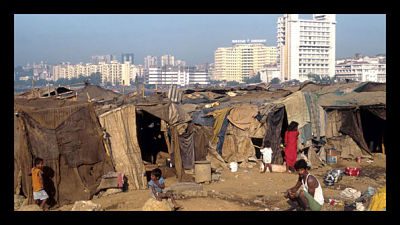
More than three billion people worldwide, about 40% of the world’s population, live in poverty. 1.5 billion people living in “resource rich” countries survive on less than $2 a day. Tax avoidance schemes conducted by foreign investors deprive nations of around $161 billion per year, and global leaders have allowed these practices to continue. The removal of all barriers to foreign investment and the privatization of industries have maintained a status quo where investors benefit more from the country than its people receive in return.

One of the MDGs agreed upon in 2000 was a reform in the structure of economic relations between developed and developing countries, including fairer trade relations. This would allow developing nations to work their way out of poverty, as opposed to allowing wealthier countries to take advantage of their natural resources. As opposed to pursuing a solution to this goal, wealthy nations and investors have denied developing economies the opportunity to build their own industries. Policies that force developing countries to rely on inward “investment” have been embraced instead.

In countries where development initiatives, such as funding for education and improving health care, have been embraced, there has been marked improvement. In Ghana and the Philippines, development index scores have come up over the past few years after implementing such programs. In that same span of time, since 2009, 60 countries have introduced legislation to discourage or prohibit activism in all forms. Organizations that seek to improve the lives of the poor are limited to only providing basic services.

What is needed now is a sustainable development model for nations trying to climb out of poverty. Accountability, transparency and commitment are all essential to shared development goals.

This past week may have been the first step towards reaching this new objective. On the Saturday before the official start of the G8 summit, the participating leaders came together in a pre-G8 meeting and they all agreed to join a tax sharing agreement. This new agreement means that companies and investors must report what they pay to home-nations to insure that developing countries are receiving their rightful portion of the profit pie. If the world’s top leaders commit to seeing this agreement succeed, it could mean the beginning of a brighter future for the developing world.

– Allana Welch

Sources: Hindustan Times, Action Aid, The Journal, The Telegraph, One.org

July 18, 2013
https://borgenproject.org/wp-content/uploads/borgen-project-logo.svg 0 0 Borgen Project https://borgenproject.org/wp-content/uploads/borgen-project-logo.svg Borgen Project2013-07-18 10:10:002024-12-13 17:49:40Poverty and the 2013 G8 Summit
Foreign Aid, Poverty Reduction, United Nations

Extreme Poverty Has Been Cut in Half Since 1990

Economist_global_poverty_stats _opt
In 1990, 43% of the world’s population subsisted on less than $1.25 per day. By 2010, that number had shrunk to 21%. This success comes 5 years before the United Nation’s Millennium Development Goal of achieving such a number by 2015.

The conversation has now shifted to the remaining 21%. Optimists hope to achieve similar success by 2030. However, there are several unique obstacles to addressing that 21%, and the economic conditions that allowed such a rapid decline before are unlikely to be replicated in the coming decade.

Much of the success of the last two decades was achieved by slightly elevating the conditions of those living just below the $1.25 per day line. Pulling a person living at $1.15 per day over the $1.25 line is much easier than pulling someone living at $0.25 to over $1.25. In other words, much of the remaining 21% was the bottom half of the original 43 percent. The challenge of the next decades will be to improve the lives of the most impoverished people on Earth.

China’s growth over the past decades was instrumental in lowering the extreme poverty rate. In the twenty years, from 1981 to 2001, China pulled 680 million of its own citizens out of extreme poverty as it rapidly developed. With China’s extreme poverty rate now at low levels, the focus will now shift to new developing countries, primarily India and Africa. The challenge will be to replicate the economic conditions for such an achievement in vastly different governmental and cultural contexts.

Should such a success be achieved by 2030, however, the fight against poverty will hardly be over. The $1.25 a day figure is simply an accepted global standard of extreme poverty, and does not account for those living in poverty in developed countries. In the U.S., the poverty line sits at $30 a day–a marked difference. However, with extreme poverty levels eradicated, the world would be able to focus anew on those living just below the line.

– Andrew Rasner

Sources: The Economist, The Wall Street Journal, The Economist
Photo: The Economist,

July 17, 2013
https://borgenproject.org/wp-content/uploads/borgen-project-logo.svg 0 0 Borgen Project https://borgenproject.org/wp-content/uploads/borgen-project-logo.svg Borgen Project2013-07-17 08:46:192013-08-14 15:18:42Extreme Poverty Has Been Cut in Half Since 1990
Foreign Aid, Nonprofit Organizations and NGOs

10 Mil Volunteers Revolutionizing Disaster Relief

Tzu Chi Organization
The Buddhist Tzu Chi Foundation is an international non-profit humanitarian organization with four main tenets: charity, medicine, education, and humanitarian culture. So far, with the help of 10 million volunteers and donors, the Buddhist Tzu Chi Foundation has provided millions of dollars of relief and aid in over 70 countries.

Tzu Chi was among the first organizations to provide relief to families that were victims of the World Trade Center attacks, Hurricanes Sandy and Katrina, and the earthquake in Haiti. Tzu Chi is unique in its approach to disaster relief in that it hands sums of cash directly into the hands of survivors. This is part of Tzu Chi’s philosophy: allowing survivors to use charity money on their own terms.

The Buddhist Tzu Chi Foundation started in 1966 when a group of women began to save two cents from grocery money every day to donate to charity. The organization registered as a non-profit 501(c)(3) in California in 1984, and over the years, it has become an international group of over 10 million volunteers.

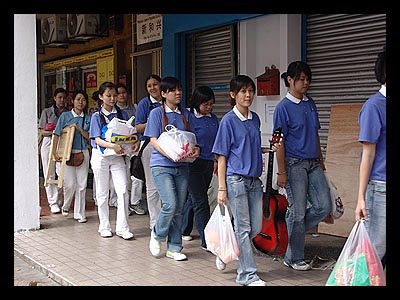
Literally meaning “compassionate relief,” Tzu Chi has expanded its program beyond just charity by building schools and hospitals around the world. With deep roots in Asia, Tzu Chi has become one of the most influential charity organizations in that region. Tzu Chi volunteers are easily recognized by their blue and white uniforms, and have frequently been called “blue angels.”

A factor that distinguishes Tzu Chi from many other Buddhist organizations is that it is first and foremost not evangelical. Volunteers are made to feel at home and are encouraged to practice whatever religion they affiliate with. All members are encouraged to improve their behavior and mindset, regardless of the underlying Buddhist ethics.

Tzu Chi is strictly non-political and non-governmental, and does not discriminate based on race, religion, nationality, gender, or ethnicity. For this, it has come under some scrutiny in the past, as many Taiwanese were upset with Tzu Chi for offering relief to mainland China. That criticism passed when Tzu Chi became one of the most coordinated organizations to provide relief to Taiwan during the 921 earthquake.

The organization has expanded to involve university students worldwide. The Tzu Chi Collegiate Association is a worldwide network that was officially established in Taiwan in 1992. The volunteers are often given opportunities to attend international NGO conferences. Tzu Shao is also a branch of Tzu Chi that allows youth 18 and under to get involved.

Tzu Chi is progressive in the idea that human growth is rooted in charity and giving, not just internal meditation. Not only does Tzu Chi help survivors of disasters and tragedies, but it also helps its volunteers. Many people are involved with the organization to help their communities and also for their own personal development.

– Lindsey Rubinstein

Sources: Tzu Chi, NY Daily News

July 16, 2013
https://borgenproject.org/wp-content/uploads/borgen-project-logo.svg 0 0 Borgen Project https://borgenproject.org/wp-content/uploads/borgen-project-logo.svg Borgen Project2013-07-16 05:32:472024-06-04 02:43:5610 Mil Volunteers Revolutionizing Disaster Relief
Developing Countries, Development, Extreme Poverty, Foreign Aid, Foreign Policy, Technology

Obama Pledges $6.5 Billion for Electricity in Africa

Obama Electrify Africa
According to the International Energy Agency, all developing nations lack adequate access to electricity. This amounts to 1.3 billion people living in the dark worldwide. According to the same source, an investment of $1 trillion USD would be needed to remedy this. Currently, poverty and hunger take center stage. Food is of more use to a starving child than is a night light, but Westerners often take for granted how valuable the power of light can be to a community in poverty.

Not only does electricity make lives easier on a personal level, it helps to mechanize farming operations, which can be a great boost to a company’s agricultural productivity. Natural disasters often become less deadly when people are warned about them ahead of time, which can be accomplished with electric monitoring systems. Socially, populations are less marginalized with improved means of communication and information.

President Barack Obama said during his recent trip to South Africa, “Access to electricity is fundamental to opportunity in this age. It’s the light that children study by, the energy that allows an idea to be transformed into a real business. It’s the lifeline for families to meet their most basic needs, and it’s the connection that’s needed to plug Africa into the grid of the global economy.” President Obama then pledged almost $7 billion USD to help provide electricity for Africa.

The White House stated that The Export-Import Bank will carry most of the financial weight of the program, donating $5 billion, and the U.S. Oversees Private Investment Corporation will provide another $1.5 billion.

The funds will go toward preventing the frequent blackouts that plague the Sub-Saharan part of the continent, as well as helping the 85% percent of people in the region without electricity gain access to it. Kenya, Uganda, Ethiopia, Liberia, Nigeria, Tanzania and Mozambique will be the first countries to benefit from the program as it is developed at preliminary stages.

The investment is a great step toward solving the problem, but in all, Africa alone will need $300 billion to achieve universal electricity by 2030. The Alliance for Rural Electrification, a non-government organization, is another ally in combating this issue. As champions of universal electrification, ARE focuses on renewable energy such as solar, which much of Africa is a strong candidate for. This is especially relevant for areas that are geographically isolated where extending the reach of an existing power grid is not feasible.

– Samantha Mauney

Source: ARE, Scientific American, CNN
Photo: Business Insider

July 16, 2013
https://borgenproject.org/wp-content/uploads/borgen-project-logo.svg 0 0 Borgen Project https://borgenproject.org/wp-content/uploads/borgen-project-logo.svg Borgen Project2013-07-16 04:48:452020-07-02 12:07:03Obama Pledges $6.5 Billion for Electricity in Africa
Advocacy, Aid Effectiveness & Reform, Children, Education, Foreign Aid

Child Sponsorship Works

 child-sponsorship-works-borgen-project-compassion-international_opt
When people ask how to help the poor, child sponsorship often is suggested. Indeed, for a small amount of money each month, organizations allow individuals to sponsor a child and help to provide education, food, and clothing for them. In return, the sponsors get a picture of the child and quarterly or annual updates from the organization regarding their child.  It has long seemed like an easy way to make an impact. The question many people ask, however, is does it really work? One development economist decided he was going to find out.

It seemed no one had ever been interested in finding the answer despite the fact that 9 million children are sponsored worldwide and more than $5 billion dollars per year is invested in child sponsorship programs. For organizations, obviously the stakes were high. If they allowed researchers to study the effectiveness of their programs, what would they do if they came back ineffective? After several years, one organization decided to allow themselves to be studied under one condition: anonymity.

The study initially looked at individuals in Uganda, studying 809 individuals including 188 who were sponsored as children. The results from the first study were any economist’s dream. The data clearly showed large and statistically significant impacts on the educational outcomes of sponsored children. It appeared the program was actually working! To solidify the results, the study was conducted in six other countries: Uganda, Guatemala, the Philippines, India, Kenya and Bolivia. Data was obtained on 10,144 individuals and the results were consistent with the first study. 27 to 40% more sponsored children complete secondary school and 50 to 80% more complete a college education. In addition to effects on education, the study found that sponsored children were also more likely to gain meaningful employment.

As a result of the study, the sponsorship organization removed the anonymity clause. Compassion International was the organization that allowed its program to be scrutinized; the results were clear that child sponsorship works. It helps lift kids and families out of poverty and provides them with hope. For more information about child sponsorship, visit Compassion International at www.compassion.com.

– Amanda Kloeppel
Sources: Christianity Today, Compassion International

July 13, 2013
https://borgenproject.org/wp-content/uploads/borgen-project-logo.svg 0 0 Borgen Project https://borgenproject.org/wp-content/uploads/borgen-project-logo.svg Borgen Project2013-07-13 06:00:172020-05-14 11:01:29Child Sponsorship Works
Developing Countries, Development, Foreign Aid, Global Poverty

Ethiopia No Longer Crippled in Poverty

Ethiopia No Longer Crippled in Poverty
Ethiopia has proven to be a country to model economic growth for other African nations. The World Economic Forum on Africa will be meeting soon to discuss, among other issues, how Ethiopia was able to bring itself out of high poverty levels and into a relatively flourishing state. As a country that has a history of civil, Ethiopia’s progress is an inspiration to all of Africa.

Ethiopia has made huge strides in its economic sector as well as healthcare and government accountability. In the past two decades, Ethiopia has decreased the child mortality rate by 60 percent and built more than 15,000 primary healthcare facilities in rural areas. The country is also well on its way to meet the Millennium Development Goals by 2015.

The government of Ethiopia has been adamant about implementing policies that will better the economy and all aspects of the country. Haddis Tadesse, a representative of the Bill and Melinda Gates Foundation in Addis Ababa, has described Ethiopia’s policymakers as shifting from the mentality of “we can’t” to “we can.” This philosophy has done wondrous things to inspire hope for everyone living in Ethiopia.

Politicians and government authorities are now developing strategies to end hunger and create food stability for all citizens, build a new, impressively large hydro electronic power plant, an electrified railway system and a light manufacturing industry. Once these projects are complete, Ethiopia’s economy will continue to boom.

By following the examples of India, Malaysia, China, Brazil and Turkey, Ethiopia has been able to mold itself into a prospering economy and society. As Haddis Tadesse says, “Ethiopia is well-positioned to escape the poverty trap. But it won’t be easy.” With further improvements in infrastructure, human rights and creating a stable market, the country is likely to become dependent on foreign assistance and begin to provide aid to other African countries.

– Mary Penn

Source: World Economic Forum
Photo: Celebrate Children

July 2, 2013
https://borgenproject.org/wp-content/uploads/borgen-project-logo.svg 0 0 Borgen Project https://borgenproject.org/wp-content/uploads/borgen-project-logo.svg Borgen Project2013-07-02 17:15:222024-06-05 01:53:29Ethiopia No Longer Crippled in Poverty
Foreign Aid

Japanese Prime Minister Pledges $14 Billion in Aid for Africa

shinzo-rdv-tmagArticle_africa_global_poverty_international_aid_borgen_project_opt
YOKOHAMA, Japan – Japanese Prime Minister Shinzo Abe said Japan will make a large aid investment in Africa because the continent will be a growth engine in the coming years and will be at the leading edge of economic expansion. He also advocated for Japan to make a commitment to the continent in a mutually beneficial way.

Abe made his remarks at the Tokyo International Conference on African Development in Yokohama in early June. He opened the conference with a $14 billion (1.3 trillion yen) pledge for aid to help Africa. The investment is part of a larger investment of 3.2 trillion yen from Japan’s private and public sectors over the next five years. Abe told a press conference that this is a prime time for Japan to invest in Africa.

The investment is expected to support trade, infrastructure and private sector development, agriculture, agro-processing and health.

“Africa will be a growth center over the next couple of decades until the middle of this century,” Abe said. “Now is the time for us to invest in Africa.”

Abe said Japan would focus on industrialization in Africa to “generate employment and growth.”

Japan has been a long time investor in Africa, but it recently fell behind China, which has taken an aggressive approach to investment on the continent. Critics have charged that China’s investment is focused on a so-called resources grab and has not focused enough on improving human rights.

Officials in Japan stress that the country’s relationship with Africa should be a business partnership, not just a simple donor relationship. Abe has pledged to triple the value of infrastructure exports from Japan, which could be a good fit with Africa’s need for infrastructure such as roads, rails, ports and a stable power grid.

– Liza Casabona

Source: United Nations’ Development Programme, Economic Times
Photo: Rendezvous

July 1, 2013
https://borgenproject.org/wp-content/uploads/borgen-project-logo.svg 0 0 Borgen Project https://borgenproject.org/wp-content/uploads/borgen-project-logo.svg Borgen Project2013-07-01 06:00:572024-05-24 23:55:17Japanese Prime Minister Pledges $14 Billion in Aid for Africa
Page 57 of 61«‹5556575859›»

Get Smarter

  • Global Poverty 101
  • Global Poverty… The Good News
  • Global Poverty & U.S. Jobs
  • Global Poverty and National Security
  • Innovative Solutions to Poverty
  • Global Poverty & Aid FAQ’s
Search Search

Take Action

  • Call Congress
  • Email Congress
  • Donate
  • 30 Ways to Help
  • Volunteer Ops
  • Internships
  • Courses & Certificates
  • The Podcast
Borgen Project

“The Borgen Project is an incredible nonprofit organization that is addressing poverty and hunger and working towards ending them.”

-The Huffington Post

Inside The Borgen Project

  • Contact
  • About
  • Financials
  • President
  • Board of Directors
  • Board of Advisors

International Links

  • UK Email Parliament
  • UK Donate
  • Canada Email Parliament

Get Smarter

  • Global Poverty 101
  • Global Poverty… The Good News
  • Global Poverty & U.S. Jobs
  • Global Poverty and National Security
  • Innovative Solutions to Poverty
  • Global Poverty & Aid FAQ’s

Ways to Help

  • Call Congress
  • Email Congress
  • Donate
  • 30 Ways to Help
  • Volunteer Ops
  • Internships
  • Courses & Certificates
  • The Podcast
Scroll to top Scroll to top Scroll to top