• Link to X
  • Link to Facebook
  • Link to Instagram
  • Link to TikTok
  • Link to Youtube
  • About
    • About Us
      • President
      • Board of Directors
      • Board of Advisors
      • Financials
      • Our Methodology
      • Success Tracker
      • Contact
  • Act Now
    • 30 Ways to Help
      • Email Congress
      • Call Congress
      • Volunteer
      • Courses & Certificates
      • Be a Donor
    • Internships
      • In-Office Internships
      • Remote Internships
    • Legislation
      • Politics 101
  • The Blog
  • The Podcast
  • Magazine
  • Donate
  • Click to open the search input field Click to open the search input field Search
  • Menu Menu

Archive for category: Foreign Aid

Foreign aid coverage and information.

Foreign Aid, Global Poverty, Human Rights, Inequality, Refugees and Displaced Persons

Indigenous Peoples: Poverty and Foreign Aid

Indigenous_Peoples
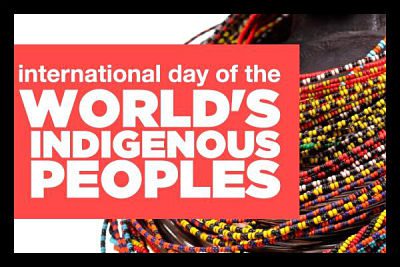
On August 9th, the world celebrated the UN’s International Day of the World’s Indigenous People, an annual event that has been held since 1995. This year’s theme, “honoring treaties, agreements and other constructive arrangements,” struck a chord with aboriginal peoples around the globe. With many suffering from poverty and marginalization at the hands of states in power, the indigenous peoples of today are finding a dead end at the intersection of state interests and modern culture. The United Nations adopted the Declaration on the Rights of Indigenous Peoples in 2007 and has been advocating for indigenous peoples’ rights ever since. In a report released in 2009, the UN Department of Economic and Social Affairs described the state of the world’s indigenous peoples, particularly the impoverishment that most have found themselves in.  The report points out that globalization has given governments a reason to take indigenous lands for use in profitable industries like mineral extraction. Either seized or heavily polluted, these lands and territories of indigenous people have increasingly become their heaviest losses. With unsettling histories marked by colonization, dispossession, and injustice, indigenous peoples have been forced into the lowest echelons of society where they often remain. Research conducted by the International Fund for Agricultural Development (IFAD) has produced statistical figures that characterize the overwhelming poverty felt by these peoples. There are about 370 million indigenous peoples around the globe today, or about 5% of the world population. They make up 15% of the world’s poor and 1/3 of the world’s “extremely poor rural people.” Disparities between countries’ indigenous and nonindigenous populations in education, healthcare, and other basic sectors are substantial. On August 9th, several indigenous populations spoke out against their marginalization.  In the Philippines, the people of Cordillera called on their government to “honor their commitments to [the people of Cordillera].” In the past three years, these people have seen the rise of the state’s mining industry, which has ultimately violated their rights. Given their circumstances, indigenous peoples’ voices are rarely heard. Where foreign aid could be the key to a better world for these peoples, countries continue to allot funds to secure state interests, often leaving aboriginal peoples behind. In a collective effort to shift the tides, indigenous peoples everywhere are calling on donors to consider sending direct donations in support of their development.
– Lina Saud
Sources: Indigenous Day, What Indigenous Peoples Need from Foreign Aid Photo: Indian Country

August 19, 2013
https://borgenproject.org/wp-content/uploads/borgen-project-logo.svg 0 0 Borgen Project https://borgenproject.org/wp-content/uploads/borgen-project-logo.svg Borgen Project2013-08-19 10:19:072024-12-13 17:53:47Indigenous Peoples: Poverty and Foreign Aid
Foreign Aid, Nonprofit Organizations and NGOs

AmericasRelief Team

Americas_Relief_Team
Although there are many international aid organizations, few exist that focuses all their resources on one specific region of the world. AmericasRelief Team is one of the exceptions. This organization is devoted to providing immediate, as well as sustainable, humanitarian and educational aid for people in the Americas experiencing some form of disaster.

The group works to provide such assistance by creating a three-part process: disaster preparedness, disaster response and aid and humanitarian assistance. However, like any effective international organization, AmericasRelief Team does not work alone. It partners with other international groups, local groups, nonprofits, emergency centers, corporate donors, the U.N. Office for the Coordination of Humanitarian Affairs and other independent experts to ensure that it is able to help as many people as possible.

AmericasRelief Team has many success stories to solidify its position as a key source of aid to the Americas during disasters. In 2005, the AmericasRelief Teams provided vital assistance to the Florida State Government after Tropical Storm Jeanne devastated the Caribbean region. More recently, in 2010, the group organized the distribution and utilized of 20 million pounds in humanitarian aid money and worked with the United Nations to quickly respond to the earthquake in Haiti.

In addition to monetary aid, the AmericasRelief Team provides clothing, household items and transportation for victims of disasters. Also, the group works with local news and media teams to spread information about the disaster and ways to avoid further complications. Overall, the group is one of the first responders to disasters in the Americas and one of the most effective organizations to provide vital services to those affected by any tragedies.

– Mary Penn

Sources: AmericasRelief Team, InterAction

August 19, 2013
https://borgenproject.org/wp-content/uploads/borgen-project-logo.svg 0 0 Borgen Project https://borgenproject.org/wp-content/uploads/borgen-project-logo.svg Borgen Project2013-08-19 03:00:242024-06-04 02:43:58AmericasRelief Team
Foreign Aid, Foreign Policy, War and Violence

Global Poverty and US Foreign Policy

us_foreign_policy

Defense, Diplomacy, and Development. These are the “three D’s” that the United States employs while dealing with other countries. While each brings a number of strengths and weaknesses, one must be the central focus of American foreign policy. This approach is development. By improving standards of living abroad, Americans not only improve the lives of others, but they improve their own lives. Through actions that work to increase development in foreign nations, the United States improves its national security, enhances its economy, improves the environment, and fulfills an ethical responsibility in working to eliminate poverty completely.

By ending global poverty, the United States enhances its national security. According to national security strategy documents employed by both the Bush and Obama administrations, the largest threats that the United States will be facing over the next two decades come “less from conquering states than from failing ones.” It is the failing states that likely lack the financial capital to construct sovereign governments or build strong economies. It is also within these fragile states that corruption and extremism can take hold due to a lack of effective governance. If left unchecked, these states can develop into a threat for other nations. By developing failed states into nations that can effectively rule over their own population and help foster construction of functional economies, the United States reduces the likelihood of having to deal with a conflict that emerged from a failed state’s internal disorder.

In addition to improving national security, ending global poverty improves the American economy. The United States has $500 billion invested in developing countries. Working to increase economic output in developing nations allows for higher returns on those investments while improving the standard of living for those who reside within those nations. As more people in the world earn higher wages, they can then afford to buy more expensive American goods. Ending global poverty, therefore, not only improves the lives of those abroad, but it also improves the lives of Americans.

Yet another advantage of ending global poverty is reducing the toll that humans put on the environment. In many impoverished areas, access to clean and green technologies is not economically feasible. Ending global poverty allows for improved access to these ecologically-friendly technologies. By enhancing standards of living, those living in developing nations are able to use cleaner technologies to fulfill their energy needs. These cleaner technologies can help reduce carbon emissions from developing nations, which improves the lives of everyone worldwide.

Finally, ending global poverty is an ethical action that the United States has the capability to accomplish. The United Nations has stated that extreme poverty can be eliminated completely by the year 2030. The United States, as the largest economic power in the world, can help contribute to this cause by aiding in the development process that needs to take place. By continuing to provide funds to developing nations, and by supporting economic growth in these areas, the United States can help make poverty history.

Ultimately, the goal of ending global poverty should be the primary focus of United States foreign policy. Working to end global poverty improves American national security by creating stability in foreign nations. It also improves the American economy by increasing the purchasing power of people abroad, providing them with the capability purchase American goods. Additionally, improved purchasing power provides people in foreign countries with improved access to cleaner technologies, which will help reduce the global impact of humans on the environment. And finally, working to end global poverty is an ethical action that the United States has the power to carry out. Improving standards of living abroad not only benefits Americans, but it benefits the entire globe. By working to end global hunger, the United States will help make poverty a thing of the past.

– Jordan Kline

Sources: Wilson Center, US News and World Report, The Guardian
Photo: Foreign Policy

August 14, 2013
https://borgenproject.org/wp-content/uploads/borgen-project-logo.svg 0 0 Borgen Project https://borgenproject.org/wp-content/uploads/borgen-project-logo.svg Borgen Project2013-08-14 09:00:412024-05-25 00:17:06Global Poverty and US Foreign Policy
Foreign Aid, Refugees and Displaced Persons, United Nations

Refugees in Ethiopia Receive Monetary Relief

Somali_Refugees_Ethiopia
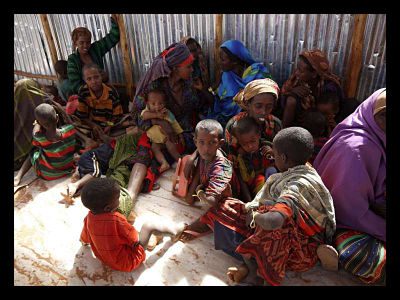
Somali refugees continue to arrive in Ethiopia in large droves due to poor growing conditions, food shortages, and continued conflict. While the situation is slowly improving, John Ging, Director of Operations in the Office for the Coordination of Humanitarian Affairs, urges continued attention to the crisis and says, “I call on the international community to invest now to build the resilience of Somalis and stop the cycle of crisis they have endured far too long.”

To that end, The United Nations World Food Program, UNHCR, European Commission Humanitarian Aid and Civil Protection, and the government of Ethiopia have partnered to launch an aid project that provides Somali refugees with monthly cash installments in addition to food aid. Currently, 12,000 refugees are receiving monetary relief and the project plans to extend cash aid to 13,000 more by October.

Monetary relief allows Somali refugees to round out their diet with fresh produce, proteins, and dairy from the local market, providing an important supplement to the basic grains and non-perishables received from aid agencies. It also gives the refugees an opportunity to inject money into the local economy. This economic boost is helpful to the communities supporting the large number of refugee settlements.

Currently the refugees who are part of the pilot cash program receive 100 Ethiopian Birr per month, or about $5.00. The organizations backing this program are optimistic that these cash transfers will greatly alleviate the most acute suffering and make the refugee situation less of a burden. Between Ethiopia, Kenya, and Yemen, there are over 1 million Somali refugees. The cash relief program gives refugees an opportunity to regain a little agency and make decisions about what groceries to purchase while also offering much needed hunger relief.

– Zoe Meroney

Sources: World Food Program, United Nations, All Africa
Photo: UNHCR

August 12, 2013
https://borgenproject.org/wp-content/uploads/borgen-project-logo.svg 0 0 Borgen Project https://borgenproject.org/wp-content/uploads/borgen-project-logo.svg Borgen Project2013-08-12 05:02:342024-06-11 01:49:27Refugees in Ethiopia Receive Monetary Relief
Foreign Aid

10 Foreign Aid Quotes from Congress

Foreign Aid Quotes
Although Congress is known to disagree amongst itself, there is one issue that many members of the Democratic and Republican Party do agree on: the importance of foreign aid. Here are 10 quotes made by members of Congress stressing the need to continue funding foreign aid.

1. “Foreign aid must be viewed as an investment, not an expense…but when foreign aid is carefully guided and targeted at a specific issue, it can and must be effective.” – U.S. Representative Kay Granger (R-TX), Huffington Post, June 2011

2. “The world we live in takes a multifaceted approach. To the American taxpayer: We need to be investing in improving people’s lives before the terrorists try to take over.” – U.S. Senator, Lindsey Graham (R-SC), Foreign Policy magazine, February 2011

3. “For development to play its full role in our national security structure, the U.S. Agency for International Development (USAID) must be a strong agency with the resources to accomplish the missions we give it. But during the last two decades, decision-makers have not made it easy for USAID to perform its vital function. Even as we have rediscovered the importance of foreign assistance, we find ourselves with a frail foundation to support a robust development strategy. I believe the starting point for any future design of our assistance programs and organization should not be the status quo, but rather the period in which we had a well functioning and well-resourced aid agency.” – U.S. Senator Dick Lugar (R-IN), Statement on Foreign Assistance Revitalization and Accountability Act, July 2009

4.“The right question to ask is: are we really spending too much on non-defense programs? The answer is clearly no. Non-defense discretionary spending levels are essentially unchanged from 2001. There is no reason we shouldn’t be able to afford them today.” – U.S. Senator Daniel Inouye (D-HI), June 2011

5.”The real problem in America’s spending is not foreign aid, which is a very small part of our budget.” – U.S. Senator Marco Rubio (R-FL), Town Hall meeting, July 2011

6. “We face tremendous foreign policy and national security challenges worldwide, from helping countries manage peaceful, democratic transitions in the Middle East, to preventing violence, conflict, and terrorism from engulfing key partners, and to leading humanitarian responses to forestall drought, famine, and natural disasters. We are only able to achieve these aims with a strong State Department and USAID.” – U.S. Senator John Kerry (D-MA), Press release, July 2011

7. “Leaders of both parties have affirmed that U.S. power is a three-legged stool of military might, diplomatic skill and development. The foreign aid bill’s diplomatic and development objectives pay dividends by helping avoid military deployments to protect U.S. interests, which are far more costly in both life and treasure. Robust engagement is no less necessary to achieve strategic security imperatives in this belt-tightening atmosphere. Investments in health, education, humanitarian aid for refugees and disaster victims and micro-loans for entrepreneurs are critical to fostering stability around the world. It would be senseless to let our response to a fiscal challenge create a national security crisis.” – U.S. Representative Nita Lowey (D-NY), Op-Ed in Politico, February 2011

8. “Our top military leaders are adamant that International Affairs programs are a critical to our national security. Our top business leaders are adamant that these programs are critical to our economic future. I’ve seen firsthand how these programs work beyond the frontline states and these cuts will seriously restrict our ability to keep Americans safe and advance our economic interests.” – Former U.S. Congressman and Ambassador Mark Green, July 2011

9. “Foreign aid is important. If it’s done right, it spreads America’s influence around the world in a positive way.” – U.S. Senator Marco Rubio (R-FL), Town Hall meeting, July 2011

10. (In support of continuing aid to Egypt) “Cut off all aid immediately and you will take an economy that is already floundering and probably drive it into chaos, and that is not in anyone’s national security interests.” – Sen. Robert Menendez, D-N.J

– Mary Penn

Sources: Huffington Post, InterAction
Photo: Politico


Read Humanitarian Quotes.

August 6, 2013
https://borgenproject.org/wp-content/uploads/borgen-project-logo.svg 0 0 Borgen Project https://borgenproject.org/wp-content/uploads/borgen-project-logo.svg Borgen Project2013-08-06 04:39:552024-06-11 01:49:2710 Foreign Aid Quotes from Congress
Foreign Aid, Foreign Policy

Afghan Civilian Casualties Increase as Forces Withdraw

afghan_troops_civilians
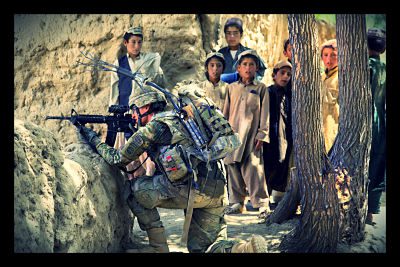
The UN reports that Afghan civilian casualties are on the rise as international forces are phase out their military presence. This year, the war has caused 1,319 civilian deaths with 2,533 injured, which is a 23% increase in civilian violence compared to last year. Women and children have been affected disproportionately, with 38% more casualties this year.

The primary cause of civilian casualties continues to be IEDs, which have indiscriminately killed more children than any other demographic – 53% more than last year. Insurgents were responsible for 74% of all casualties this year, who are targeting civilians believed to be working in alignment with the government, and 12% of the casualties were incurred in fighting on the ground with 207 civilians counted dead in crossfire.

Foreign troops are scheduled to leave Afghanistan next year, leaving the Afghan army to assume control of the countries security. In places where international troops have withdrawn, insurgent attacks are on the rise. The reported increase in civilian casualties is being weighed by decision makers, who must consider how the Afghan troops can assume control of continuing the fight against extremists while protecting innocents from unnecessary violence.

– Jennifer Bills

Sources: Al Jazeera, Thomson Reuters Foundation
Photo: Anti War

August 6, 2013
https://borgenproject.org/wp-content/uploads/borgen-project-logo.svg 0 0 Borgen Project https://borgenproject.org/wp-content/uploads/borgen-project-logo.svg Borgen Project2013-08-06 04:17:422016-12-05 16:15:49Afghan Civilian Casualties Increase as Forces Withdraw
Foreign Aid

UNICEF Delivers Aid to Central African Republic

unicef_aid_africa
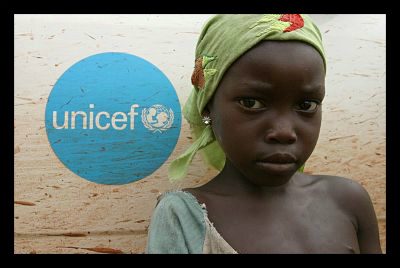
In March of 2013 a crisis was declared in Central African Republic (CAR) after rebels seized power. The coup forced almost all humanitarian groups out of the country, leaving most of the country’s population without aid. Due to the crisis most of the citizens of CAR do not have access to basic medical services. The rebel coalition has ransacked schools, health clinics and hospitals. Many are afraid to leave their homes because of the violent rebel presence.

“The attacks have deprived an already vulnerable population – 4.4 million people spread across a country bigger than France – of access to even basic medical treatment,” said Doctors Without Borders in a recent report released about the crisis in CAR. “In a country which already had the second-lowest life expectancy in the world, at just 48 years, the people are now even more at risk.”

UNICEF has just delivered its third shipment of aid to Central African Republic filled with life-saving humanitarian supplies. The shipment weighed the equivalent of six large truck-loads. The shipment includes medicines and health supplies to treat over 20,000 people, tarpaulins to provide emergency shelter for 1,000 families, 400 boxes of therapeutic milk to treat severely malnourished children, and health and nutrition equipment to benefit children and women most affected bot the violent crisis. The shipment is aimed to reach those in the interior of the country who have little access to humanitarian aid and are in the greatest need.

“This is the largest shipment of supplies we have received since the crisis began. These life-saving supplies will be delivered immediately to affected communities across the Central African Republic,” said UNICEF representative Souleymane Diabate. “This month, through the work of mobile teams, we re-established a presence in the interior of the country and the supplies will be used to ensure that the health and nutritional needs of the most vulnerable women and children are met.”

Since the crisis, UNICEF has managed to organize a humanitarian response that has impaced the lives of 223,000 people. These people now have access to basic health services and medicines thanks to UNICEF. They have also treated 10,035 children with severe acute malnutrition and seen improvement in the children’s health. UNICEF has also vaccinated 123,000 children against measles and hopes to vaccinate the rest of the country before the end of September.

UNICEF hopes to expand its emergency response initiative in CAR and has currently raised US$8 million from donations. They hope to raise US $24 million to scale-up efforts.

– Catherine Ulirch

Sources: UNICEF, AllAfrica

August 6, 2013
https://borgenproject.org/wp-content/uploads/borgen-project-logo.svg 0 0 Borgen Project https://borgenproject.org/wp-content/uploads/borgen-project-logo.svg Borgen Project2013-08-06 04:00:292024-05-25 00:13:48UNICEF Delivers Aid to Central African Republic
Activism, Advocacy, Aid Effectiveness & Reform, Foreign Aid

The Borgen Project Advocates for Foreign Aid

mcdermottmeeting
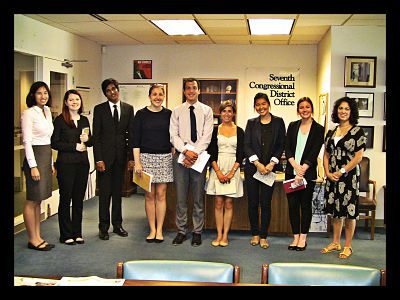
Today, The Borgen Project team paid a visit to Congressman McDermott’s district office in Seattle. They advocated for a stronger international affairs budget, passing the Food Aid Reform Act and the Electrify Africa Act, and other issues related to global poverty.

Laurie Goodman, a PR Intern, said, “This was my first time lobbying in a congressional office and it was a great experience. I definitely suggest that others to contact their local leaders.”

The Borgen Project encourages everyone to schedule a meeting with their local congressional offices and advocate for eradicating poverty.

– Abby Stewart 

August 5, 2013
https://borgenproject.org/wp-content/uploads/borgen-project-logo.svg 0 0 Borgen Project https://borgenproject.org/wp-content/uploads/borgen-project-logo.svg Borgen Project2013-08-05 15:00:352024-05-24 23:40:29The Borgen Project Advocates for Foreign Aid
Food & Hunger, Food Aid, Food Security, Foreign Aid, United Nations

What Is Global Food Insecurity?

Global Food Insecurity
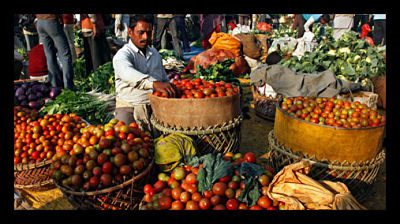
There really is no formula to defining global food insecurity. Still, many world health organizations use the term to point out deficiencies in global food security. To understand what something is, it sometimes helps to understand what it is not. This may just be the case with food insecurity. To understand food insecurity, that is, one must first define and understand food security and work backwards. If food security does not exist, then, by definition, you have food insecurity.

The World Food Summit of 1996 defined food security as existing “when all people at all times have access to sufficient, safe, nutritious food to maintain a healthy and active life.” This definition hinges on three qualifications: namely food availability, food access, and food use. Lacking one of these elements of food security, a population faces food insecurity, which can and does arise in an endless permutation of manners.


Global Food Insecurity: Failing Food Security Criteria


To establish food security, say, in a developing nation, food must first be available on a consistent basis. Some will argue that there is currently enough food in the world to feed everyone in the world. Nonetheless, people go hungry due to inconsistency in their daily intake of food. For example, one may go days without a meal. In this situation, a cornucopia of food, arriving two weeks later, does nothing to alleviate that person’s current hunger. As such, food security depends on food availability.

Second, the nation’s population must have access to the right kinds of food to sustain a healthy diet. Not only must a person have food available, that is, it must be the right kind of food. For example, a human cannot survive on rice alone. We need all different kinds of food to live healthy lives. The definition of healthy diet here also includes accommodations to particular dietary needs, such as avoiding certain foods or increasing intake of others.

Finally, food security requires appropriate use of food based on adequate knowledge of basic nutrition and care. In order to maintain a healthy diet, one must know how to eat the food that is available to him or her and portion that food out in a way that best serves the needs of his or her body. When USAID drops bags of food over Africa, for example, it will be helpful to also teach those receiving the aid how to ration the food. Basic sanitation and access to water are included in appropriate use to complete the qualifications of food security.

If even one of these three elements or qualifications is not met, it is easy to see how even a full plate of food, three times a day, may not be enough to maintain a healthy diet. Food security requires that the food is enough to satisfy the short, mid, and long-term needs of the human body and that the person consuming the food does so in an appropriate manner to maintain him or herself. Global food insecurity, or deficient food security from a worldwide perspective, exists in a world where even one person goes hungry.

Though great strides have been made in alleviating global hunger, the current level of food insecurity is unacceptable. Even in the United States, 1 out of 10 households were food insecure, hence the importance of food provision and education programs, like, local food banks. To learn more about food (in)security in the U.S., you can visit this site.

– Herman Watson

Sources: U.S. Food Aid and Security, World Health Organization, World Food Programme, Food and Agriculture Organization
Photo: Security and Sustainability Forum

August 5, 2013
https://borgenproject.org/wp-content/uploads/borgen-project-logo.svg 0 0 Borgen Project https://borgenproject.org/wp-content/uploads/borgen-project-logo.svg Borgen Project2013-08-05 11:35:562024-05-25 00:15:01What Is Global Food Insecurity?
Foreign Aid, Health

IntraHealth International Improves Aid Efforts

Intra_Health
Health workers have strong influences in people’s lives. It is important that they be informed and efficient, which is why IntraHealth International runs three programs designed to improve the work done by health workers around the world. IntraHealth recognizes that supplies and advocacy are great, but trained professionals take it to the next level.

Their three programs are Championing the Health Worker, Health Workforce and Systems Strengthening and Health Worker Training and Performance. While each of these programs does good in itself, they work together to achieve higher standards in health care that a single program could not reach alone.

Fully aware of the shortage of health workers in developing areas, IntraHealth strives to  engage more people in global health professions. This benefits future generations, but what about people who need help now? IntraHealth deploys trained health workers in the regions they are needed most first. In instances of child birth, the presence of trained medical workers can mean life or death for the mother and infant.

Although trained medical workers are essential to the success of this operation, effective management systems are also necessary. Human resources and management skills, like medicine, can be taught to large populations and provide them greater opportunity to help their community thrive.

IntraHealth helps existing organizations improve their policies and planning to better serve both patients and health workers, strengthen human resource information systems for better decision-making, promoting practices to increase the longevity of health workers and improving overall productivity. The HRH Global Resource Center also helps spread information on human resources specifically for the health workforce.

A prime example of the three programs working together can be seen in Uganda. The country saw an almost 7,000 person increase in the health workforce between October 2012 and April 2013 thanks to IntraHealth’s combined effort with the Ugandan government. Because of this increase in knowledgeable staff, the government allocated 49.5 billion shillings (around US $20 million) to continue growth of the health workforce. This was only the beginning. After the increase in health workers, it was necessary to decide the most effective placements for each worker. With the Uganda Capacity Program, a system that sorts through applications to find the best fit, efficient placement saved the government millions of shillings and created clinics more able to serve their communities. The health workers trained by IntraHealth in human resources practices were also able to continue improvement of operations. Uganda has a history of insufficient numbers of health workers. Only 58 percent of needed positions were filled in Mbale, but by 2013, the number jumped to 70%. With recent clever advertising, over 35,000 applications were sent in for consideration.

– Jordan Bradley
Sources: intrahealth.org Global Health Knowledge
Photo: Flikr

July 31, 2013
https://borgenproject.org/wp-content/uploads/borgen-project-logo.svg 0 0 Borgen Project https://borgenproject.org/wp-content/uploads/borgen-project-logo.svg Borgen Project2013-07-31 04:17:462024-05-25 00:09:49IntraHealth International Improves Aid Efforts
Page 56 of 61«‹5455565758›»

Get Smarter

  • Global Poverty 101
  • Global Poverty… The Good News
  • Global Poverty & U.S. Jobs
  • Global Poverty and National Security
  • Innovative Solutions to Poverty
  • Global Poverty & Aid FAQ’s
Search Search

Take Action

  • Call Congress
  • Email Congress
  • Donate
  • 30 Ways to Help
  • Volunteer Ops
  • Internships
  • Courses & Certificates
  • The Podcast
Borgen Project

“The Borgen Project is an incredible nonprofit organization that is addressing poverty and hunger and working towards ending them.”

-The Huffington Post

Inside The Borgen Project

  • Contact
  • About
  • Financials
  • President
  • Board of Directors
  • Board of Advisors

International Links

  • UK Email Parliament
  • UK Donate
  • Canada Email Parliament

Get Smarter

  • Global Poverty 101
  • Global Poverty… The Good News
  • Global Poverty & U.S. Jobs
  • Global Poverty and National Security
  • Innovative Solutions to Poverty
  • Global Poverty & Aid FAQ’s

Ways to Help

  • Call Congress
  • Email Congress
  • Donate
  • 30 Ways to Help
  • Volunteer Ops
  • Internships
  • Courses & Certificates
  • The Podcast
Scroll to top Scroll to top Scroll to top