• Link to X
  • Link to Facebook
  • Link to Instagram
  • Link to TikTok
  • Link to Youtube
  • About
    • About Us
      • President
      • Board of Directors
      • Board of Advisors
      • Financials
      • Our Methodology
      • Success Tracker
      • Contact
  • Act Now
    • 30 Ways to Help
      • Email Congress
      • Call Congress
      • Volunteer
      • Courses & Certificates
      • Be a Donor
    • Internships
      • In-Office Internships
      • Remote Internships
    • Legislation
      • Politics 101
  • The Blog
  • The Podcast
  • Magazine
  • Donate
  • Click to open the search input field Click to open the search input field Search
  • Menu Menu

Archive for category: Foreign Aid

Foreign aid coverage and information.

Developing Countries, Food Aid, Foreign Aid

Future of Foreign Aid

future-of-foreign-aid
Amid the debate as to whether or not foreign aid helps or hinders developing countries, World Bank Director of Economic Policy and Poverty Reduction Programs for Africa Marcelo Giugale believes that the tables are turning. While the number of people in poverty and countries in need of financial assistance gradually falls, the need for foreign aid will remain a constant. However, the players will change as well as the type of aid needed.

Currently, foreign aid is criticized for many reasons. Corruption, insensitivity and imposition to local markets and businesses, and a growing sense of “aid-dependency” in recipient countries are just a few of the concerns. While the list is long, Giugale believes that the role of foreign aid and a country’s dependence on the monetary assistance is diminishing. He says that the future of foreign aid will become a search for knowledge instead of cash. To reiterate this point, he cites past aid recipients turned donors such as China, India and Brazil and their roles in assisting Africa.

As donor countries begin to regard foreign aid more as investment and partnership, they begin to export goods and assist in building a sound infrastructure rather than imposing a certain way of life or thinking. As developing countries are embracing the income and value of their own natural resources in an economy where oil, gas and minerals generate revenue, the assistance turns to a need of knowledge.

Giugale believes that developing countries already know how to build schools and can pay the teachers that work in them. The aid that supports these developments may diminish in the future. However, the aid that developing countries might seek in the future includes solutions to problems that the government cannot solve alone. In the future of foreign aid, a donor country may lend assistance through experience in improving educational curriculum, health insurance systems, or regulating private suppliers of infrastructure.

– Kira Maixner

Source: The Huffington Post
Photo: INHABITAT

April 17, 2013
https://borgenproject.org/wp-content/uploads/borgen-project-logo.svg 0 0 Borgen Project https://borgenproject.org/wp-content/uploads/borgen-project-logo.svg Borgen Project2013-04-17 10:00:412024-06-10 03:04:43Future of Foreign Aid
Food Security, Foreign Aid, Global Poverty

U.S. AID to Fight Hunger by Sending Money, Not Food


rsz_countingmoney
As a way to save money, the Obama Administration is expected to switch from sending domestically grown food to giving cash to USAID recipient countries. Although the administration has not yet commented on its new plans, people close to the decision-makers have confirmed that this new method will be employed as a way to decrease spending without compromising food aid.

There have been many opposing views as to whether this new strategy will help or hurt people living in hunger. Although the food aid budget would drop 25 percent, sending money instead of food is faster and more cost effective. Currently, shipping charges consist of about half of the US food aid costs. This is due to a rule that requires the food to be transported on US shipping vessels, which is more expensive. Groups in favor of cash donations include Care, Actionaid, American Jewish World Service, Church World Service and Oxfam.

However, other groups, like farming and shipping associations, World Vision, International Relief and Development, and Planet Aid, are against the proposed new strategy. Since recipients will be responsible for purchasing food with the aid money, there is the danger that food in that country may not be readily available or of high quality. These opposition groups are also concerned that local farmers may not be able to produce the necessary variety of crops for a healthy diet. Most importantly, they oppose the change because food donation has proven to be effective.

If the proposal goes into effect, this will be the most drastic change to US food aid programs in over 50 years. It may be the case that the administration decides to reduce food donation, but not completely end the program. Twenty-four senators and many other farm and foreign aid groups have written to the Obama Administration speaking out against any changes to food aid policy. However, with the current budget cuts, it is likely that the White House will try to reduce costs as much as possible.

– Mary Penn

Source: GMA News
Photo: Guardian

April 15, 2013
https://borgenproject.org/wp-content/uploads/borgen-project-logo.svg 0 0 Borgen Project https://borgenproject.org/wp-content/uploads/borgen-project-logo.svg Borgen Project2013-04-15 09:58:132020-05-12 07:21:28U.S. AID to Fight Hunger by Sending Money, Not Food
Education, Foreign Aid

USAID to Expand Its Teacher Training Project in Pakistan

USAID to Expand Its Teacher Training Project in Pakistan
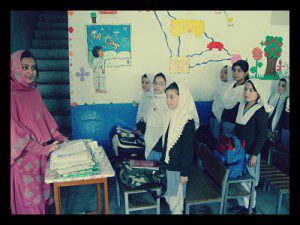
The USAID Teacher Education Project in Pakistan has expanded to provide teaching services to every province in the country. This $75 million project has been working since 2011 to modernize Pakistan’s education system. With the help of Pakistan’s Higher Education Commission (HEC), over 2,600 students have enrolled in 15 universities and 57 colleges across the country. USAID hopes to see this number increase as more teachers emerge from the Teacher Education Program.

In order to reach out to more potential teachers, USAID realized the need to enlarge its program. Not only will the Teacher Education Project offer more locations, it is also giving 1,900 scholarships to students based on merit and financial need.

This higher education program will be implementing suggestions from a study conducted in 2006 that found flaws in Pakistan’s current teacher training system. The study discovered a trend of the government setting unrealistic goals for its education system and then, when it fails to meet those goals, creating new, also idealistic targets that are never reached. By making its goals more realistic, USAID is confident in its ability to improve Pakistan’s education system by producing high quality teachers.

As Pakistan trains more well qualified teachers, the country will begin to experience higher quality of education for its younger students as well. Javaid Laghari, chair of the HEC, is optimistic about Pakistan’s future, “We hope for a good change, when today’s students become tomorrow’s teachers.”

– Mary Penn

Source: UWN
Photo: BarakatNews

April 14, 2013
https://borgenproject.org/wp-content/uploads/borgen-project-logo.svg 0 0 Borgen Project https://borgenproject.org/wp-content/uploads/borgen-project-logo.svg Borgen Project2013-04-14 09:00:472020-06-07 21:59:02USAID to Expand Its Teacher Training Project in Pakistan
Children, Development, Foreign Aid, Global Poverty

China: A Model for Ending Poverty

China_Foreign_Aid_Africa
It is predicted that by 2015 China will decrease the number of its citizens living in poverty by 50 million. Other developing countries are taking note of China’s success and, with the help of foreign investment, hope to employ the same methods. With its growing economy and monetary assistance, China is, by example, taking a leading role in foreign aid and assisting the developing world.

China’s representative for the World Food Programme, Brett Rierson, explains how China used a bottom-up method of alleviating poverty. The Chinese government focused on aiding poor farmers by implementing policies that permitted farmers to keep a higher percentage of their profits and allocating foreign investment and technology to small villages. Investment in infrastructure, as well as improving nutrition education, women’s health, and agriculture production, are also factors responsible for China’s success story.

A majority of China’s aid goes to countries in Asia and Africa. These developing countries can mimic China’s strategy by investing in infrastructure and farming communities. Deborah Brautigam, director of the international development program at Johns Hopkins University in Baltimore, reminds us that it was China’s decision to invest in agriculture that helped reduce poverty, not just foreign assistance. African countries have the potential to lift themselves out of poverty, but it depends on how they invest the money they received from foreign aid.

China formerly received foreign aid from Western countries and is now ready to begin investing in other developing countries. With China’s help, the United Nations is on track to reaching the Millennium Development Goal of ending extreme poverty by 2030.

-Mary Penn
Source: SCMP
Photo: The Guardian

April 4, 2013
https://borgenproject.org/wp-content/uploads/borgen-project-logo.svg 0 0 Borgen Project https://borgenproject.org/wp-content/uploads/borgen-project-logo.svg Borgen Project2013-04-04 14:48:542020-05-04 08:04:43China: A Model for Ending Poverty
Foreign Aid, Foreign Policy, Global Poverty

Foreign Aid Creates Jobs in the US

Foreign_Aid_Job_Creation_USAID
There are many disputing ideas on whether or not America should continue to invest in foreign aid, especially while in the throes of an economic recession. While spending US funds to support countries and people that most citizens will probably never visit or meet may seem counter-intuitive, foreign aid will be a factor in pulling America out of its recession. Lifting developing countries out of poverty creates more customers to buy American products, which in turn creates jobs in America.

Foreign aid job creation is not merely speculation. Currently almost half of US exports go to developing countries and this number can be expected to increase as these new, developing markets continue to open. This will greatly improve the US economy since one in five American jobs, like cell phone chips and food production, are export-based. American businesses recognize the opportunity to grow by alleviating world poverty. In 2012, over 50 US corporations delivered a letter to Congress in support of continuing funding for foreign investment. These corporations included Google, Cisco, Coca Cola, Johnson & Johnson and Caterpillar.

These corporations are aware of the huge potential payoffs of foreign investment. For example, the US has given Mexico $1.7 billion in aid over the past 45 years and now exports $16.3 billion in goods to their neighbor every year. The US has also seen its investment in Brazil offer an enormous return. America exports $35.4 billion annually to Brazil after giving $2.8 billion in aid from 1960-2005. Given that a majority of the United States’ top trading partners had previously accepted aid from the US, it is obvious that foreign aid is a good investment.

Foreign aid does not have to be strictly a question of moral obligation; it is also financially and developmentally smart. Many Congressmen are now referring to foreign aid as investment for this very reason. It may take many years until US citizens see the financial benefits of foreign investments but the eventually, revenues from these new markets will be well worth the wait. Foreign aid is less than 1% of United States’ budget and has the potential to create jobs to bring the US out of rough economic times. Contact your Congressional representatives and ask them to support funding for foreign aid.

– Mary Penn

Source: Orange County Register
Photo: Soda Head

April 1, 2013
https://borgenproject.org/wp-content/uploads/borgen-project-logo.svg 0 0 Borgen Project https://borgenproject.org/wp-content/uploads/borgen-project-logo.svg Borgen Project2013-04-01 12:16:012020-06-01 06:01:39Foreign Aid Creates Jobs in the US
Education, Food Security, Foreign Aid, USAID

US AID and Nepal Partner to Educate on Agriculture

US AID and Nepal Partner to Educate on Agriculture
Nepal Economic, Agriculture, and Trade Activity (NEAT), a 32-month program funded by USAID, aims to “promote economic growth, reduce poverty, increase food security, and improve lives” throughout Nepal. As part of the program, USAID and Nepal have partnered up through the Nepal Ministry of Agriculture Development to distribute educational materials on agricultural practices in the hopes of improving the production of agriculture in the country.

Through the funding provided by USAID, more than 263,000 pamphlets were handed out detailing specific agricultural instructions, both written in Nepali and as visuals in order to aid those citizens who are illiterate. The pamphlets detail “critical agriculture practice” on 13 types of crops and 3 species of livestock.

The NEAT program has improved the agricultural education of 67,510 households throughout 20 districts of Nepal with a regular lack of access to proper food sources. Thus far, the project has already allowed area farmers to see an increased income of $8.5 million collectively. These farmers and households have had increased access to markets and are better educated on agricultural practices such as pest and disease control, use of fertilizer, improved seed, and “post-harvest handling.”

The Director of USAID’s Social, Environmental, and Economic Development Office, John Stamm, maintained that USAID is dedicated to creating sustainable development solutions, including the NEAT program – which will allow Nepalese citizens greater resources for continuing to improve their lives long after the program ends in August of 2013.

– Christina Kindlon

Source: USAID

March 31, 2013
https://borgenproject.org/wp-content/uploads/borgen-project-logo.svg 0 0 Borgen Project https://borgenproject.org/wp-content/uploads/borgen-project-logo.svg Borgen Project2013-03-31 14:30:432020-06-01 00:46:00US AID and Nepal Partner to Educate on Agriculture
Foreign Aid, Foreign Policy

Effects of Drone Strikes on Humanitarian Aid

Effects of Drone Strikes on Humanitarian Aid
The moral, ethical, and legal questions and uncertainties about secretive US drone strikes have increasingly become subjects of media attention. Many have criticized the Bush and Obama administrations for effectively engaging in endless, unchecked war, in many places, all the time. But one question has gone largely unasked in the debate over unmanned US strikes: what are the effects of drone strikes on humanitarian aid?

As we know, poverty and terrorism are closely linked. The daily struggles of those living in extreme poverty breed despair and desperation and leave many, especially youth, vulnerable to terrorist groups’ incendiary messages. Poverty reduction is an important part of US national security and foreign policy, and yet drone strikes may be undermining attempts to combat extreme poverty on the ground.

Organizations working in rural areas of Afghanistan, Pakistan, Somalia, Yemen, and other drone strike-targeted regions have reported increased hostility and resistance in relation to drone strikes. Suspicions are always aroused in the days and weeks following a strike. According to NGO security officials in Somalia, following a 2008 drone strike, attacks on aid workers increased from one to two a month to six to eleven.

Aid workers have been accused of complicity in drone strikes. Often, workers who have been collecting information for aid purposes are accused of passing on sensitive information that supposedly enable strikes, such as GPS coordinates. Some workers have been killed, either by hostile locals or as a direct result of strikes.

One of the biggest problems that aid organizations and NGOs face in dealing with drone strikes is the lack of human personnel involved in the attacks. There are no authorities on the ground to address the safety of aid workers or civilians in the region. It is difficult to determine responsibility for the attacks because even though drones often operate from regular military airbases, they are under the CIA’s jurisdiction.

Some groups, such as the UN Assistance Mission in Afghanistan (UNAMA), have had success interfacing with the US government through the International Security Assistance Force (ISAF). But others, like the Center for Civilians in Conflict, have had zero success in lobbying Congressional leaders for greater oversight of drone strikes. Civilians in Conflict released this report in 2012 on the effects of drone strikes on civilians.

The effects of drone strikes on humanitarian aid cannot be underestimated. Compounding tensions in areas already struggling with poverty and violence does nothing to alleviate the problems. Instead, it hampers the valiant efforts of those risking their own lives to make a positive difference. If the US government wants to positively contribute to poverty relief and reduction efforts, it needs to evaluate the effects of drone strikes on humanitarian aid work in targeted regions.

– Kat Henrichs

Source: IRIN
Photo:

March 30, 2013
https://borgenproject.org/wp-content/uploads/borgen-project-logo.svg 0 0 Borgen Project https://borgenproject.org/wp-content/uploads/borgen-project-logo.svg Borgen Project2013-03-30 09:53:042024-05-24 23:46:11Effects of Drone Strikes on Humanitarian Aid
Foreign Aid, Foreign Policy, USAID

USAID Increases Attempts To Put Itself Out Of Business

USAID Increases Attempts To Put Itself Out Of BusinessUSAID holds a unique position in that its main objective is to put itself out of business. In order to achieve this goal, USAID established USAID Forward.

Shortly after Rajiv Shah became president of USAID in 2009, USAID Forward was created. USAID Forward is a group of measures implemented to strengthen the effectiveness of the Agency’s performance in areas such as budget management, project implementation, and monitoring and evaluation.

Recently, USAID has issued a progress report and infographic containing the progress USAID Forward has made in maximizing transparency and delivering better results. This report not only catalogs the current progress being made but also hints at future developments and the future direction of USAID.

As an agency, USAID is moving away from establishing individual missions around the world and moving toward establishing partnerships with foreign nations. During the presidency of Rajiv Shah, USAID has cut its global footprint by 11 missions. Rather than establishing missions, USAID works to aid nations monetarily and help them establish a sustainable infrastructure created with its own people. This is a result-oriented tactic that centers around providing data and technical support as well as goal-oriented monetary aid with a focus on accountability.

USAID is one of the United States’ largest nonprofits and was established by President Kennedy in 1961. It is currently one of the largest nonprofits in the United States and operates directly under the guidance of the President of the United States and Secretary of State.

Despite the changes in strategy and tactics, the main goal of USAID remains the same: creating conditions where aid is no longer needed.

– Pete Grapentien

Source American Enterprise Institute

March 29, 2013
https://borgenproject.org/wp-content/uploads/borgen-project-logo.svg 0 0 Borgen Project https://borgenproject.org/wp-content/uploads/borgen-project-logo.svg Borgen Project2013-03-29 10:30:322024-05-24 23:45:49USAID Increases Attempts To Put Itself Out Of Business
Advocacy, Foreign Aid

How To Shock A Celebrity

How To Shock A CelebrityAs Richard Hatzfeld writes on Impatient Optimists, breaking through the clutter of global health propaganda is “like asking someone to pick out the sound of a pin drop in a room full of tambourine-clanging kindergartners.”

The pin dropping in this scenario is End7, a nonprofit organization on a mission to end seven Neglected Tropical Diseases (NTD’s) by 2020. Earlier this year, End7 released a new video that begins with international celebrities reacting to the visual horror of NTD’s.

Let’s talk about what NTD’s are first. NTD’s, which affect 1 in 6 people worldwide, prevent children from going to school. They prevent parents from going to work and supporting their families. These diseases push impoverished communities deeper into poverty.

NTD’s comprise of diseases such as:

– Schistosomiasis, also known as Snail Fever, the 2nd leading parasitic killer after malaria

– Lymphatic Philariasis (elephantiasis), the massive swelling of limbs and genitals

– Trachoma, an infectious leading cause of blindness, characterized by white lumps in the upper eyelid and eyelashes curling inward

Not to mention river blindness, roundworm, hookworm, and whipworm – End7 promises that all 100% of donations will be given to treatment programs for these diseases.

This isn’t a mainstream health issue. The U.S. hardly even recognizes this as a health issue due to lack of public awareness and thus, its absence from top health policy discussions.  Upon recognizing this, the Global Network for Neglected Tropical Diseases launched the End7 campaign and promptly took its first step to mass public awareness – by showing the video to international celebrities, like Emily Blunt, Priyanka Chopra, & Tom Felton. Reflecting its inherent effect, the video’s name became “How to Shock a Celebrity.”

End7’s video campaign bluntly highlights the underrated power of sight. Look, it tells us. These diseases are real. They’re terror inducing, and they exist halfway around the world from your neighborhood. What you’re feeling is clearly a normal reaction. Do something about it.

Do what? Watch the video. Share it. Become part of the conversation on Facebook and Twitter.

Show it to your friends, your family, your co-worker who also eats lunch at her desk.

Maybe even show it to a celebrity.

– Shraddha Anandpara

Source: Impatient Optimists


March 29, 2013
https://borgenproject.org/wp-content/uploads/borgen-project-logo.svg 0 0 Borgen Project https://borgenproject.org/wp-content/uploads/borgen-project-logo.svg Borgen Project2013-03-29 09:30:292024-12-13 17:49:15How To Shock A Celebrity
Foreign Aid

More US Aid to Jordan to Help With Syrian Refugees

More US Aid to Jordan to Help With Syrian Refugees

The Civil War in Syria has driven thousands of people out of the country and into Jordan. This has resulted in major problems in Jordan as they try to figure out what to do with all of the Syrian refugees. Recently, President Barack Obama made a public announcement offering $200 million in U.S. aid to help with the Syrian refugees in Jordan.

This pledge from Barack Obama for foreign aid money comes at an interesting time as it follows the extensive budget cuts recently put in place by the United States Congress. However, President Obama seems adamant on offering aid money to Jordan for basic services to help place and educate displaced Syrians, saying he will work with Congress to find a way to give $200 million extra dollars in U.S. aid. According to  Jordan’s King Abdullah II, whom Obama met with on Friday, March 22, more than 460,000 Syrians have fled their country in search of refuge within the Jordanian borders. This number is estimated to double in the upcoming months if the turmoil in Syria continues.

Putting these numbers into perspective: 460,000 people make up approximately a tenth of the Jordanian population. Doubling the number of Syrian refugees causes an almost 25% increase in the number of people in Jordan.

This increase in people will have serious effects on the economic situation in Jordan. Some economists predict a nearly 30% unemployment rate by the end of the year as more and more Syrians pour into the county. These many refugees are also predicted to cost over $1 billion. Yet, King Abdullah pledges to not turn away any refugees, asking “how are you going to turn back women, children or the wounded?”

The Obama administration seems committed to helping end the fighting in Syria, pushing for the current Syrian president Assad to step down. Yet, Obama absolutely refuses to provide U.S. military assistance for the Syrian opposition movement, saying that interference may discredit the message the Syrian rebels are advocating or may lead to even larger security issues. Financial support in Jordan to take care of the many Syrian refugees seems to be a substitute solution for showing its support for bringing peace to Syria without getting directly involved in the civil war.

Obama pledging the extra aid money is only half of the equation. Congress must now scrape together this money, which may be a difficult task, as evident from the inability for Congress to come to an agreement over budget cuts.

– Angela Hooks

Sources: CNN, Wall Street Journal
Photo: UPI

March 26, 2013
https://borgenproject.org/wp-content/uploads/borgen-project-logo.svg 0 0 Borgen Project https://borgenproject.org/wp-content/uploads/borgen-project-logo.svg Borgen Project2013-03-26 12:00:532024-05-24 23:41:30More US Aid to Jordan to Help With Syrian Refugees
Page 59 of 61«‹5758596061›»

Get Smarter

  • Global Poverty 101
  • Global Poverty… The Good News
  • Global Poverty & U.S. Jobs
  • Global Poverty and National Security
  • Innovative Solutions to Poverty
  • Global Poverty & Aid FAQ’s
Search Search

Take Action

  • Call Congress
  • Email Congress
  • Donate
  • 30 Ways to Help
  • Volunteer Ops
  • Internships
  • Courses & Certificates
  • The Podcast
Borgen Project

“The Borgen Project is an incredible nonprofit organization that is addressing poverty and hunger and working towards ending them.”

-The Huffington Post

Inside The Borgen Project

  • Contact
  • About
  • Financials
  • President
  • Board of Directors
  • Board of Advisors

International Links

  • UK Email Parliament
  • UK Donate
  • Canada Email Parliament

Get Smarter

  • Global Poverty 101
  • Global Poverty… The Good News
  • Global Poverty & U.S. Jobs
  • Global Poverty and National Security
  • Innovative Solutions to Poverty
  • Global Poverty & Aid FAQ’s

Ways to Help

  • Call Congress
  • Email Congress
  • Donate
  • 30 Ways to Help
  • Volunteer Ops
  • Internships
  • Courses & Certificates
  • The Podcast
Scroll to top Scroll to top Scroll to top