• Link to X
  • Link to Facebook
  • Link to Instagram
  • Link to TikTok
  • Link to Youtube
  • About
    • About Us
      • President
      • Board of Directors
      • Board of Advisors
      • Financials
      • Our Methodology
      • Success Tracker
      • Contact
  • Act Now
    • 30 Ways to Help
      • Email Congress
      • Call Congress
      • Volunteer
      • Courses & Certificates
      • Be a Donor
    • Internships
      • In-Office Internships
      • Remote Internships
    • Legislation
      • Politics 101
  • The Blog
  • The Podcast
  • Magazine
  • Donate
  • Click to open the search input field Click to open the search input field Search
  • Menu Menu

Archive for category: Foreign Aid

Foreign aid coverage and information.

Economy, Foreign Aid

How the 10 Richest Countries Could End Poverty

Top Richest Countries International Aid Spending
At last count, there were 193 independent countries in the world. Let’s start by reviewing the top 10 richest countries. Contrary to popular belief, the U.S. is not the richest country in the world; it comes in at seventh place.

  1. Qatar, GDP per capita: $88,222
  2. Luxembourg, GDP per capita: $81,466
  3. Singapore, GPD per capita of: $56,694
  4. Norway, GDP per capita: $51,959
  5. Brunei, GDP per capita: $48,333
  6. United Arab Emirates, GDP per capita: $47,439
  7. United States of America, GDP per capita: $46,860
  8. Hong Kong, GPD per capita: $45,944
  9. Switzerland, GDP per capita: $41,959
  10. Netherlands, GDP per capita: $40,973

So, how are the wealthiest countries in the world combating global poverty?

In 2002, the world’s leaders got serious about ending world poverty. At the International Conference on Financing for Development in Monterrey, Mexico, each country agreed to dedicate 0.7 percent of its national income to international aid. If each of the 22 leading countries were to adhere to this agreement, a total of $200 billion a year would be invested in foreign aid. However, this goal has yet to be reached.

In 2005, the top richest countries in the world committed a total of $106 billion to foreign aid – $119 billion short of the 2002 target.  Each country dedicated an average of only 0.33 percent of their national income to international aid. The U.S. ranked second to last, with an investment of only 0.22 percent. The country in last place, Portugal, dedicated 0.21 percent.

However, there are five countries that have already met or surpassed the 0.7 percent goal. Starting with the largest contribution, they are:

  1. Norway at 0.93 percent
  2. Sweden at 0.92 percent
  3. Luxembourg at 0.87 percent
  4. Netherlands at 0.82 percent
  5. Denmark at 0.81 percent

What is the big deal about .07 percent?

  • This pledge was initiated in 1970 at the General Assembly Resolution, and has been recommitted several times since, the most recent being at the Monterrey conference in 2002.
  • Through this 0.7 percent commitment, world poverty can be halved within our lifetime.
  • If all 22 of the world’s leading countries met the .07 percent goal by 2015, extreme world poverty would end within a generation.
  • 16 of the 22 leading countries have already met or have agreed to meet the 0.7 percent target by no later than 2015. The U.S. is not one of them.

Why is the U.S. trailing behind the fight against global poverty?

Most Americans believe the U.S. contributes 25 percent of our gross national income (GNI) to international aid. In reality, we contribute less than 1 percent. Moreover, most Americans believe the U.S. should combat world hunger through foreign aid efforts.

Americans support investment in foreign aid. As one of the world’s wealthiest and leading countries, we can do better than second to last. It is time our values as Americans are accurately reflected in our national budget. Contact your congressional leaders today to voice your support in investing in foreign aid. Here’s a place to get started: Call Congress.

– Caressa Kruth

Sources: Forbes, United Nations Department of Economic and Social Affairs Division for Sustainable Development, Borgen Project
Photo: The Why of Development

October 7, 2013
https://borgenproject.org/wp-content/uploads/borgen-project-logo.svg 0 0 Borgen Project https://borgenproject.org/wp-content/uploads/borgen-project-logo.svg Borgen Project2013-10-07 21:15:072024-06-05 01:53:39How the 10 Richest Countries Could End Poverty
Food & Hunger, Food Aid, Foreign Aid, Global Poverty, USAID, Water

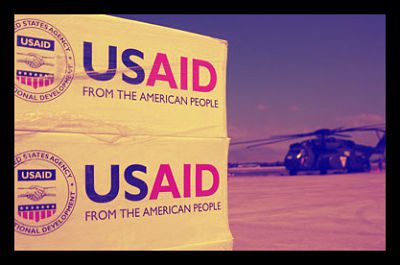
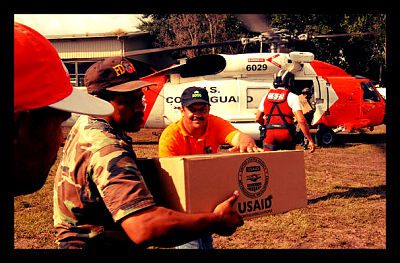
Foreign Aid, Where Does It Go? A Look at USAID

American Foreign Aid USAID
The United States Agency for International Development (USAID) is a successful program engineered to combat poverty. USAID has focused on diminishing poverty in several aspects. Improving nutrition, assisting in food aid, and advancing water supplies are all important USAID goals. These three issues are connected on a deeper scale, as improving nutrition levels is conjoined with clean water supply and food aid assistance.

Proper nutrition is a basic necessity for every human. Malnutrition leads to approximately 2.6 million deaths per year, deaths that could be prevented if steps were taken to counteract malnutrition. USAID has partnered with Scale Up Nutrition (SUN) to help achieve basic nutritional improvement in impoverished areas throughout the world.

USAID and SUN have laid out a strategic approach to achieve their goal. They plan to prevent malnutrition through a package of maternal, infant, and young children programs. USAID and SUN will also combat malnutrition by targeting supplementation to vulnerable groups, managing malnutrition through community based projects, providing nutritional care for those living with HIV/AIDS, and improving the quality of food in the food assistance programs.

USAID is not only well prepared to handle global malnutrition levels; they are also prepared on the food assistance front. USAID works with the UN World Food Programme (WFP) to effectively deliver lifesaving aid to food-barren areas. USAID and WFP have developed a working protocol that efficiently delivers food supplies to shortages worldwide.

USAID and WFP are constantly upgrading their food science programs, allowing them to deliver greater amounts of healthy food to needy areas. USAID is using a supply-chain management system that allows food to be sent out more efficiently. The programs have also combined to implement an emergency food service, which allows USAID and WFP to purchase emergency food in disaster-stricken areas. In addition, USAID also funded the Famine Early Warning System (FEWS), which is highly regarded as one of the best early-warning systems in the world.

Food and nutrition are two basic necessities in life. These epidemics are two of the most common problems known worldwide, yet a third is often overlooked. Lack of clean water supplies is just as important, and it receives a similar amount of attention from USAID. USAID has a specifically laid out plan to implement clean water supplies in needy areas. USAID focuses on increasing access to a sustainable water supply for all communities, finding a way to sanitize the water supplies, and teaching the community key hygiene behaviors to keep the water sanitized.

Through the actions of USAID, positive results can be seen in all of the targeted areas. In 2011, 3.8 million people had better access to clean water. USAID and affiliated programs provided over 1.5 metric tons of food to communities in 2012. The nutrition programs have been equally effective, with predictions that malnutrition will decrease by 20 percent in the next two years in targeted countries. The progress can be easily seen; all of which were made possible by the foreign aid budget that often falls under much criticism.

– Zachary Wright

Sources: USAID, USAID: Food Aid, USAID: Nutrition
Photo: Flickr

October 7, 2013
https://borgenproject.org/wp-content/uploads/borgen-project-logo.svg 0 0 Borgen Project https://borgenproject.org/wp-content/uploads/borgen-project-logo.svg Borgen Project2013-10-07 18:15:212024-05-25 00:23:47Foreign Aid, Where Does It Go? A Look at USAID
Foreign Aid, Global Poverty, Women & Children

John Kerry Announces Initiative to Fight Gender-Based Violence

Sunglasses John Kerry
This past Monday, Secretary of State John Kerry announced a new U.S. initiative aimed at preventing and responding to gender-based violence in humanitarian emergencies worldwide. Known as “Safe from Start,” the $10 million will be funded to allow the U.N. High Commissioner for Refugees, the International Committee of the Red Cross, and other humanitarian organizations to hire specialized staff, start new programs, and “develop innovative methods” to protect women and girls at the onset of emergencies around the world.

“In the face of conflict and disaster, we should strive to protect women and girls from sexual assault and other violence,” Kerry emphasized in a press release. The statement also mentions that the U.S. will coordinate with other donors and stakeholders to develop a framework for action and accountability to ensure that efforts to address gender-based violence are routinely prioritized as a life-saving interference, along with other vital humanitarian help.

The initiative builds on the framework established by the U.S. National Action Plan on Women, Peace and Security, and the U.S. Strategy to Prevent and Respond to Gender-based Violence Globally. The Bureau of Population, Refugees, and Migration (PRM) and the U.S. Agency for International Development (USAID) will be responsible for the initiative.

Most conflict-ridden countries such as Syria, Egypt, or the Democratic Republic of Congo are reporting high rates of rape. Seen as a tool to terrorize villages and break the will of the opposition, rape has been routinely incorporated as a weapon of war during conflicts. According to Save the Children, up to 80 percent of war rape victims are under 18, while an Oxfam report states that rape is the “most extensive form of violence” women and girls are currently facing in Syria.

Although the press release mentions women and girls as the primary victims of gender-based violence, the U.S. Strategy to Prevent and Respond to Gender-based Violence Globally states that this type of aggression can also be directed towards men and boys, as well as sexual and gender minorities.

According to this document, gender-based violence is “violence directed at an individual based on his or her biological sex, gender identity, or perceived adherence to socially defined norms of masculinity and femininity.” It includes physical, sexual, and psychological abuse, as well as threats, coercion, arbitrary loss of liberty, and economic hardship.

– Nayomi Chibana
Feature Writer

Sources: U.S. Department of State, CNS News, Huffington Post
Photo: Cloture Club

October 6, 2013
https://borgenproject.org/wp-content/uploads/borgen-project-logo.svg 0 0 Borgen Project https://borgenproject.org/wp-content/uploads/borgen-project-logo.svg Borgen Project2013-10-06 07:26:482017-01-31 10:32:16John Kerry Announces Initiative to Fight Gender-Based Violence
Development, Economy, Foreign Aid, Foreign Policy, Global Poverty

What is the OECD?

OECD_policies_
What is the OECD?

In short: OECD stands for Organization for Economic Co-operation and Development. It is an international economic organization whose mission is to “promote policies that will improve the economic and social well-being of people around the world.”

A little more detail: In the beginning, the OECD was actually named the OEEC – the Organization for European Economic Co-operation. It was founded in April of 1948, with 18 original European participants. The first and original principles of the OEEC were as follows: “Promote cooperation between participating countries and their national production programs for the reconstruction of Europe; Develop intra-European trade by reducing tariffs and other barriers to the expansion of trade; Study the feasibility of creating a customs union or free trade area; Study multi-lateralization of payments; and Achieve conditions for better utilization of labor.”

In 1961, the OEEC became the OECD, and membership was extended to non-European countries. Most OECD members are regarded as “developed countries” with a high human development index. To this day, according to Pierre Tristam at about.com, the OECD remains one of the most cited sources for “economic data and information” because the organization keeps vast databases and “conducts some of the world’s most authoritative analyses and studies on the world economy.”

The OECD said that it provides a forum in which countries can work together to “seek solutions to common problems.” The organization aims to identify good practices and to coordinate “domestic and international policies.” It is committed to democracy and a sustainable market economy. Some of these good practices include taxes and social security, leisure time, school systems and “pension systems” that look after country’s elderly citizens, since the OECD tries to look at issues “that directly affect the lives of ordinary people.”

Its reach extends to the environment, the economy and social issues. The OECD is committed to helping the lives of ordinary people, thus making life harder for those “whose actions undermine a fair and open society,” such as terrorists, unethical businessmen and tax evaders.

The OECD promotes policies designed:

“To achieve the highest sustainable economic growth and employment and a rising standard of living in Member countries, while maintaining financial stability, and thus to contribute to the development of the world economy; to contribute to sound economic expansion in Member as well as nonmember countries in the process of economic development; and to contribute to the expansion of world trade on a multilateral, nondiscriminatory basis in accordance with international obligations.”

As of 2013, the OECD has 34 active member countries, including the United States, and “is in accession talks with the Russian Federation.”

– Alycia Rock

Sources: OECD: About, OECD: Report 2013, Middle East About, OECD
Photo: CIB

October 4, 2013
https://borgenproject.org/wp-content/uploads/borgen-project-logo.svg 0 0 Borgen Project https://borgenproject.org/wp-content/uploads/borgen-project-logo.svg Borgen Project2013-10-04 20:31:102024-12-13 17:49:41What is the OECD?
Foreign Aid, Global Poverty

5 Foreign Aid Quotes from Democrats

Demorcrats Quotes Famous Foreign Affairs
Democrats and Republicans are different; we all know that. Throw out any social or economic topic, and bipartisan debate is sure to rage. Take foreign aid, for example. Republicans are notoriously opposed to foreign assistance, while Democrats usually favor it.

However, these perceived differences between the parties do not always hold true. Leaders of both parties have spoken openly in support of foreign aid. Foreign assistance is not a Democratic or Republican issue, but, rather, an American one.

Here are five quotes from notable Democratic leaders about this issue. These quotes can be compared to quotes from Republican leaders here.

  1.  “Foreign assistance is not a giveaway. It’s not charity.  It is an investment in a strong America and free world.” – U.S. Senator John Kerry
  2. “Growth in poor economies will be an engine of our own economy, and our success is tied to the progress of those around us. The investments we make today in the developing world will help create the jobs of tomorrow here in America. Right now, the tough choice is to maintain foreign assistance, not to cut it. Right now, the bold act of leadership is to defend spending on key international programs, not to attack it.” – Bill Gates
  3. “The 1 percent of our budget we spend on all diplomacy and development is not what is driving our deficit. Not only can we afford to maintain a strong civilian presence, we cannot afford not to. The simple truth is, if we don’t seize the opportunities available today, other countries will; other countries will fight for their companies while ours fend for themselves. Other countries will promote their own models and serve their own interests, instead of opening markets, reinforcing the rule of law and creating widespread inclusive growth. Other countries will create the jobs that should be created here, and even claim the mantle of global leadership.” – Former U.S. Secretary of State, Hillary Clinton
  4. “Moreover, the United States will continue to support those nations that transition to democracy — with greater trade and investment — so that freedom is followed by opportunity. We will pursue a deeper engagement with governments, but also with civil society — students and entrepreneurs, political parties and the press. We have banned those who abuse human rights from traveling to our country. And we’ve sanctioned those who trample on human rights abroad. And we will always serve as a voice for those who’ve been silenced.” – President Barack Obama
  5. “Relations between the United States and other countries, and our role as a global leader, are advanced by our willingness to help other countries in need. Foreign aid is essential to protecting U.S. interests around the world, and it is also a moral responsibility of the wealthiest, most powerful nation.” – U.S. Senator Patrick Leahy

Read global poverty quotes.

– Tara Young 

Sources: Pew Research Center, InterAction
Photo: OhioBelle

October 4, 2013
https://borgenproject.org/wp-content/uploads/borgen-project-logo.svg 0 0 Borgen Project https://borgenproject.org/wp-content/uploads/borgen-project-logo.svg Borgen Project2013-10-04 10:54:212024-05-25 00:20:585 Foreign Aid Quotes from Democrats
Foreign Aid, Global Poverty

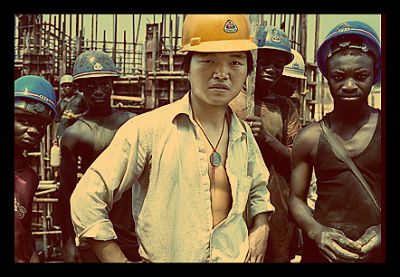
China Investing in Aid to Africa: Infrastructure, Communication, Energy Initiatives

China Aid to Africa Infrastructure Development Training Communication Energy
Many officials believe China investing in aid to Africa may be unethical, a form of misguided imperialism, or a way of taking advantage of Africa’s natural resources for the primary benefit of improving China’s economy. Regardless as to whether China’s motive behind widespread aid in Africa is good or bad, the collected data sure tells us one thing–Africa is certainly benefiting from China’s contracts, assistance, and investments.

Western cultures, such as the United States, take a different approach than China. China’s approach is very secretive, and it is difficult to track what exactly Chinese workers are doing in Africa. Fortunately, the U.S. is working hard to uncover that information.

AidData, a research organization funded at The College of William and Mary in the United States, is seeking to reveal the culturally hidden inner-workings of China’s International Development strategies. Based on AidData’s findings, 1,673 different international aid projects were launched and implemented in more than fifty African countries from 2000-2011. China has invested approximately $75 billion in these projects.

China’s international aid projects in Africa are heavily weighted in projects concerning infrastructure, communication, and various power projects. Benefiting from China’s infrastructure project aid, Africa now has an increased quality of transportation either within or outside of the continent. China has assisted in higher quality African roads, railways, and ports. Notably, China carried out a project in Angola that repaired a prominent railroad for the country’s citizens.

The quality of communication in Africa has also increased due to China’s efforts. In Tanzania, China undertook a contract to build a fiber-optic transmission backbone network in order to utilize Internet and telecommunication services. The overarching goal of this project is to connect people via communication vehicles in various areas of Tanzania.

China also has made big gains in Africa’s energy growth. In 2010, China began to build The Malabo Gas Plant in Equatorial Guinea. Once completed, Equatorial Guinea will have full service power supply. The project will boost irrigation systems in the country, as well as build ecological attention. Infrastructure projects in Africa will support and drive the African social and economic expansion. That said, China will continue to expedite progress in transportation projects, interaction services, and power systems.

Because China is working in a rather unregulated market, it will be important for Chinese enterprises to act accountably for their actions. By the same token, African government officials will need to take steps to protect the rights of the African people and the community as a whole.

– Laura Reinacher

Sources: China, Global Times, One
Photo: Shared Societies Project Blog

October 3, 2013
https://borgenproject.org/wp-content/uploads/borgen-project-logo.svg 0 0 Borgen Project https://borgenproject.org/wp-content/uploads/borgen-project-logo.svg Borgen Project2013-10-03 06:00:262017-01-24 12:55:06China Investing in Aid to Africa: Infrastructure, Communication, Energy Initiatives
Foreign Aid, Global Poverty, USAID

5 Republican Foreign Aid Quotes

Top Five Republican Foreign Aid Quotes Condoleezza Rice Marco Rubio Mitt Romney Global Development
Not all Republicans are opposed to foreign aid, and even those who are, have much to say regarding its usage in the American budget. The following are five quotes from various Republican politicians regarding their views on foreign aid.

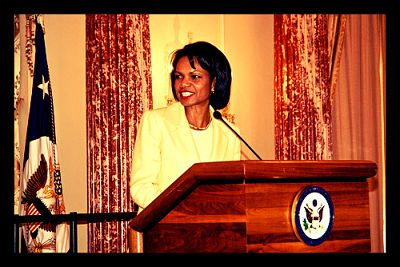
1. “It has been hard to muster the resources to support fledgling democracies–or to help the world’s most desperate… yet this assistance–together with the compassionate works of private charities–people of conscience and people of faith–has shown the soul of our country.” – Former Secretary of State Condoleeza Rice (2012 Republican Convention)

2. “But too often our passion for charity is tempered by our sense that our aid is not always effective. We see stories of cases where American aid has been diverted to corrupt governments. We wonder why years of aid and relief seem never to extinguish the hardship, why the suffering persists decade after decade. Perhaps some of our disappointments are due to our failure to recognize just how much the developing world has changed. Many of our foreign aid efforts were designed at a time when government development assistance accounted for roughly 70 percent of all resources flowing to developing nations. Today, 82 percent of the resources flowing into the developing world come from the private sector. If foreign aid can leverage this massive investment by private enterprise, it may exponentially expand the ability to not only care for those who suffer, but also to change lives.” – 2012 Presidential Candidate Mitt Romney (in an address to the Clinton Global Initiative, 2012)

3. “For development to play its full role in our national security structure, the U.S. Agency for International Development (USAID) must be a strong agency with the resources to accomplish the missions we give it. But during the last two decades, decision-makers have not made it easy for USAID to perform its vital function. Even as we have rediscovered the importance of foreign assistance, we find ourselves with a frail foundation to support a robust development strategy. I believe the starting point for any future design of our assistance programs and organization should not be the status quo, but rather the period in which we had a well functioning and well-resourced aid agency.” – Senator Dick Lugar (Statement on Foreign Assistance Revitalization and Accountability Act, 2009)

4. “Foreign aid is also an important part of America’s foreign policy leadership. While we certainly must be careful about spending money on foreign aid, the reality is that it is not the reason we have a growing debt problem.” – Senator Marco Rubio (Foreign Policy address at the Jesse Helms Center, 2011)

5. “But I would just tell my fellow citizens and people from South Carolina, I want to shape the world the best we can rather than just follow the world and if you don’t believe military force is the answer to every problem, which I don’t, then we need an engagement strategy, and sometimes investing in a country at the right time can pay dividends.” – Senator Lindsey Graham (in a hearing, 2008)

– Samantha Davis


Read global poverty quotes

Sources: Wall Street Journal, Vote Smart, USGLC
Photo: Flickr

October 2, 2013
https://borgenproject.org/wp-content/uploads/borgen-project-logo.svg 0 0 Borgen Project https://borgenproject.org/wp-content/uploads/borgen-project-logo.svg Borgen Project2013-10-02 09:42:122024-05-25 00:21:075 Republican Foreign Aid Quotes
Developing Countries, Foreign Aid, Global Poverty, Health

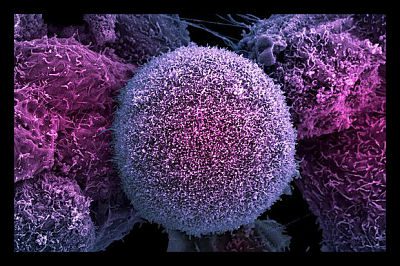
Preventing Cancer in the Developing World

Cancer_in_the_Developing_World
Many people in developing countries are lucky to have dinner tonight. While alleviating hunger is a main goal for many humanitarian organizations, the types of food that impoverished people have access to is becoming a concern for health experts. Cancer is an illness affecting people all over the world and developing countries are no exception. However, those living in the third world are especially at risk due to malnutrition, food insecurity, and lack of education.

Cancer is one of the most common causes of death in developing countries and affects more people than in the developed world. One of the main reasons for this is diet. Fruit, vegetables, whole grains and fish are all part of a healthy diet that helps to prevent cancer. On the other hand, fats and oils can increase a person’s chance of developing cancer. This becomes a complicated issue when there are no fresh foods in a community due to conflict or natural disaster, but a humanitarian organization sends processed foods. Rather than starve, the population will eat the unhealthy food.

Several other ways that people living in the third world are more at risk for cancer include exercise habits, smoking, alcohol consumption, sex at an early age and sex with multiple partners. Tobacco can lead to lung, mouth and neck cancer, and early and multiple partner sex is linked to cervix cancer as well as sexually transmitted diseases.

Another main contributor to high cancer rates in the developing world is the healthcare system. Cancer screening services and prevention treatments are out of reach for many impoverished people due to cost, location of healthcare facilities, and limited availability. A lack of vaccines is also a huge concern in the developing world. Vaccines like HPV and HBV are simply not available to a large portion of the population.

There are simple ways to decrease the rates of cancer in the developing world. These include improved food and agriculture aid, increased funding for healthcare, and more vaccines available at a low cost. While these solutions are simple, the implementation of these methods can often be complicated. It can be difficult to reach those living in rural communities and healthy food is difficult to transport long distances. However, increased foreign aid funding, agriculture program aid, and cancer education would be solid first steps towards cancer prevention.

– Mary Penn

Sources: All Africa, Med Scape
Photo: The Times

August 29, 2013
https://borgenproject.org/wp-content/uploads/borgen-project-logo.svg 0 0 Borgen Project https://borgenproject.org/wp-content/uploads/borgen-project-logo.svg Borgen Project2013-08-29 19:25:202020-07-09 21:05:10Preventing Cancer in the Developing World
Developing Countries, Foreign Aid, Global Poverty, Slums

Low-Income Indian Families Get a Boost from World Bank

Low_Income_Indian_Families_world_bank
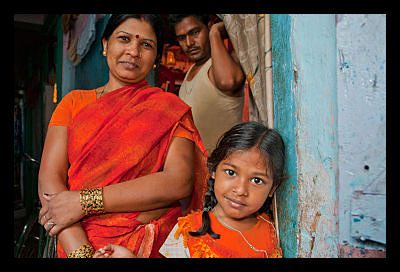
A $100 million credit agreement, signed by the World Bank and the Indian Government, will help low-income Indian families access a loan to purchase, build, or upgrade their dwellings.

The National Housing Bank (NHB) will implement the Low Income housing Finance Project, which will support the government’s agenda for financial inclusion on two counts. First, it will enable low-income households in urban areas to access housing finance, and second will strengthen the capacity of financial institutions that target these groups.

India faces a crippling housing shortage; as its urban population continues to rapidly expand, the urban housing shortage is estimated to be 19 million (as of 2012). Low-income families bear the brunt of the problem; they are faced with an estimated 90% of the shortage.

The housing sector is vulnerable to challenges because current land use policies and building norms restrict the availability of housing. Since the majority of the low-income population works in the informal sector, they lack documentation of income and therefore require customized lending products; as a result, developers are reluctant to enter the low-income market due to the perceived risks associated with these buyers.

As the Indian government strives to achieve financial inclusion for the whole population, the project will let the NHB innovate and provide financial solutions for improving low-income access to housing.

R.V. Verma, chairman and managing director of National Housing Bank said, “The program, which will explore sustainable housing finance models for low income households, has been conceived imaginatively and is consistent with the vision and charter of the NHB.”

Michael Haney, operations advisor at the World Bank, explained how the influx of 10 million Indians to towns and cities each year run into trouble finding loans to build or buy themselves houses. “They are forced to use unregulated, informal sources of finance at much higher rates of interest,” he explained.

The new initiative will help families move from informal sources of finance to longer-term, official sources for their housing needs; risk management, market infrastructure and new products will be implemented in order to achieve this goal.

Initially, the project will launch pilot programs to test the sustainability of these lending guidelines and products, and the long-term goal will be to preserve affordability for low-income families by finding alternative forms of collateral to reduce credit risk and keep interest rates at manageable levels.

– Chloe Isacke

Sources: World Bank, Economic Times
Photo: Kootation

August 29, 2013
https://borgenproject.org/wp-content/uploads/borgen-project-logo.svg 0 0 Borgen Project https://borgenproject.org/wp-content/uploads/borgen-project-logo.svg Borgen Project2013-08-29 08:26:112020-07-09 21:10:40Low-Income Indian Families Get a Boost from World Bank
Developing Countries, Development, Food & Hunger, Food Aid, Foreign Aid, Global Poverty, Poverty Reduction, USAID

US Foreign Aid to Africa: What We Give and Why

us_foreign_aid

In 2012, the United States provided nearly $12 billion in official development assistance (“ODA”) to African nations. The ODA is allocated to education, health, infrastructure and economic development programs in recipient countries. Currently, the United States allocates foreign aid to 47 African nations and USAID operates 27 missions on the continent.

US Foreign aid to Africa began in the 1960s as many African nations gained independence and the United States sought strategic alliances to counter the influence of the Soviet Union. With the exception of disaster and famine relief, most foreign aid to Africa began to decrease with the collapse of the Soviet Union.

In the 2000s, President Bush more than tripled aid to Africa by establishing programs such as the Child Survival and Health Programs Fund as well as the Global HIV/AIDS Initiative.

Though foreign aid programs are designed to assist recipient nations with development, they also benefit the United States in a number of ways.

First, these programs help build strategic alliances and foster support for democratic transitions. It also stimulates Africa’s growth and development, which provides opportunities for increased trade and direct investment in the continent’s emerging markets.

But for all the benefits, foreign aid to Africa has no shortage of detractors. Many critics point out that much of the money allocated to Africa never reaches the people who most need the assistance. “Eighty percent of U.S. aid to Africa is spent right here in America — on American contractors, American suppliers, and so forth,” said George Ayittey, president of the Free Africa Foundation.

In more corrupt nations, politicians and civic leaders are often charged with misappropriating funds designated for the people. Others critics claim that foreign aid to Africa simply does not work—after 50 years of assistance, Africa still confronts the same issues.

But even critics would have to agree on one crucial point: foreign aid is an integral part of U.S. foreign policy. In Africa, aid programs support a large framework of social and economic assistance for developing nations.

Critics are correct that American companies and corrupt politicians siphon a large portion of foreign aid. But aid to Africa has also done much to improve infrastructure, bolster economic development and improve health care conditions for millions of people on the continent.

– Danial Bonasso
Sources: Foreign Policy Initiative, Washington Post, NPR, One.org
Photo: James Bovard

August 21, 2013
https://borgenproject.org/wp-content/uploads/borgen-project-logo.svg 0 0 Borgen Project https://borgenproject.org/wp-content/uploads/borgen-project-logo.svg Borgen Project2013-08-21 11:44:212024-12-13 17:49:39US Foreign Aid to Africa: What We Give and Why
Page 55 of 61«‹5354555657›»

Get Smarter

  • Global Poverty 101
  • Global Poverty… The Good News
  • Global Poverty & U.S. Jobs
  • Global Poverty and National Security
  • Innovative Solutions to Poverty
  • Global Poverty & Aid FAQ’s
Search Search

Take Action

  • Call Congress
  • Email Congress
  • Donate
  • 30 Ways to Help
  • Volunteer Ops
  • Internships
  • Courses & Certificates
  • The Podcast
Borgen Project

“The Borgen Project is an incredible nonprofit organization that is addressing poverty and hunger and working towards ending them.”

-The Huffington Post

Inside The Borgen Project

  • Contact
  • About
  • Financials
  • President
  • Board of Directors
  • Board of Advisors

International Links

  • UK Email Parliament
  • UK Donate
  • Canada Email Parliament

Get Smarter

  • Global Poverty 101
  • Global Poverty… The Good News
  • Global Poverty & U.S. Jobs
  • Global Poverty and National Security
  • Innovative Solutions to Poverty
  • Global Poverty & Aid FAQ’s

Ways to Help

  • Call Congress
  • Email Congress
  • Donate
  • 30 Ways to Help
  • Volunteer Ops
  • Internships
  • Courses & Certificates
  • The Podcast
Scroll to top Scroll to top Scroll to top