• Link to X
  • Link to Facebook
  • Link to Instagram
  • Link to TikTok
  • Link to Youtube
  • About
    • About Us
      • President
      • Board of Directors
      • Board of Advisors
      • Financials
      • Our Methodology
      • Success Tracker
      • Contact
  • Act Now
    • 30 Ways to Help
      • Email Congress
      • Call Congress
      • Volunteer
      • Courses & Certificates
      • Be a Donor
    • Internships
      • In-Office Internships
      • Remote Internships
    • Legislation
      • Politics 101
  • The Blog
  • The Podcast
  • Magazine
  • Donate
  • Click to open the search input field Click to open the search input field Search
  • Menu Menu

Archive for category: Foreign Aid

Foreign aid coverage and information.

Activism, Advocacy, Aid Effectiveness & Reform, Developing Countries, Foreign Aid, Foreign Policy, Global Health, Global Poverty, Health

WISH Summit Innovates Health Care Systems

bike
The inaugural World Innovation Summit for Health (WISH) – a conglomeration of entrepreneurs, business leaders, academics and technicians in the health space – convened last week in Qatar. As its title suggests, WISH serves as an arena for international delegates to create and implement innovative, nontraditional solutions to pressing issues in global health.

One participant, Londoner Lord Darzi of Denham (chairman of the Institute of Global Innovation at Imperial College), succinctly stated after the announcement of the Summit that “WISH is about action.”

Qatar’s newfound consideration as a hub for frontline innovation- principally through the Qatar Foundation- landed the nation the opportunity to host the prestigious two-day summit event. The Foundation has been on the forefront of the nation’s “visionary national health strategy” and initiated a first-of-its-kind investigation into the healthcare systems of eight major world players, the United Kingdom, the United States, Spain, Australia, South Africa, Brazil, India and Qatar. The Global Innovation Diffusion Report, unveiled on the second day of the summit, presented a well-researched report card of how each nation fosters and incorporates innovation to maximize health outcomes for their citizens.

The report noted both victories and areas in need of improvement for the eight nations of study. Each succeeded on a general level in identifying and addressing doctors and involving patients in treatment. Unfortunately, however, every nation but Qatar fell short in matching research-based suggestions with real changes in the health care space. Expert assessments of appropriate technological or practical innovations were ignored for different reasons in each nation.

In Spain and the United Kingdom, the least innovative countries, funds for research and development are scarce. New ideas simply cannot get off the ground because there is no money to put wind in their sails to begin with. Australia, Brazil and South Africa were slightly more successful than their European counterparts, but need to improve incentives for academics and policymakers who spread innovation. The United States and India showed a consistent, but small, gap between the ideal and reality.

The thorough case study concluded that innovation is most successfully spurred in the United States when incorporated into (or alongside) insurance and the accompanying payment system. Incidentally, the report identified the rollout of Patient Centered Medical Home (PCMH) programs as a major success for the U.S. in terms of innovation implementation. PCMH programs encourage primary care providers to tailor payments around patient outcomes and foster cooperation between medical and social services.

Moving forward, hot areas of progress for medical innovation will likely include: the application of mobile technology to share and store medical information; policymaking that encourages clinicians to adopt new ways of working; mobilization of resources to allow coordination between researchers and clinicians; and the development of an “innovation culture” and leadership among front line health care professionals.

Delegates representing our nation will undoubtedly confer about these recent findings and carve out a designated space for innovation in discussions touching on future policies, programs and technologies.

– Casey Ernstes

Sources: Gulf News, NCQA, PR News Wire, World Innovation Summit for Health: Home, World Innovation Summit for Health: Global Diffusion
Photo: Vintage 3D

January 14, 2014
https://borgenproject.org/wp-content/uploads/borgen-project-logo.svg 0 0 Borgen Project https://borgenproject.org/wp-content/uploads/borgen-project-logo.svg Borgen Project2014-01-14 09:54:332017-03-20 13:12:30WISH Summit Innovates Health Care Systems
Activism, Advocacy, Charity, Foreign Aid, Global Poverty, Health, Philanthropy

Most Charitable in Hollywood

hollywood
Money is not the only way to contribute to charities, although it is arguably the most effective – unless you are a celebrity. Apparently just being associated with a charity is enough to boost donations by $100,000 per year. Research from the Rutgers’s Business School found charities with celebrity endorsements received a 1.4 percent increase in donations over charities that were not associated with stars.

In that respect, the popular celebrity news website, The Daily Beast, found out who the most charitable celebrities were in regards to lending out their name and fame. Using an in depth survey with forty-eight characteristics via E-poll market research, a list was created with the top celebrities in the charitable running. The list was narrowed after secondary research on www.looktothestars.org, a site that tracks how many charities celebrities are actually supporting. Using Traackr to record the number of actual hits on Google, Facebook, Instagram, Twitter and personal blogs, the list was further weighted to reflect the celebrities’ personal effort put into promoting their respective organizations.

Elton John was at the top of the list with support towards a whopping forty-eight charities. Furthermore, his foundation to help treat AIDS victims, Elton John Aids Foundation, is one of his personally founded charities. Though it may be due to the passing of many of Elton’s close friends of because of AIDS/HIV, he hosts enormous galas open to his multitude of famous friends as fundraisers for his organization.

Second on the list is Angelina Jolie, recognized worldwide for her long list of humanitarian efforts. She has visited various nations such as Tanzania, Iraq, Afghanistan, Jordan, Egypt and Costa Rica, even during times of conflict and war. Taking a hands on approach, she has provided care and aid to refugees in the aftermath of natural disasters, apartheid, oppression and more. She is the founder of the Maddox Jolie-Pitt, named after her first adopted Cambodian son, an organization which serves to implement sustainable community improvement policies for women and children in Cambodia. Angelina and Brad Pitt sold the first images of their newborn twins to People and Hello! Magazines for $14 million, utilizing the entire sum of money for the Maddox Jolie-Pitt Foundation.

Following Angelina on the top 25 list is Bono, the incredible U2 front man, Oprah Winfrey and Ellen Degeneres. Some of the most famous stars on television and film are giving huge chunks of their success away to help others, thus becoming role models in the world of charity and fundraising. It is simultaneously inspiring and humbling to recognize that people have the ability to help those in need no matter how famous, wealthy or well off we are in their own lives. Celebrities have a name and a face but their actions are worth so much more than that, and anyone can take action against global poverty.

– Kaitlin Sutherby

Sources: Marie Claire, The Daily Beast, Look to the Stars
Photo: Giphy.com

January 13, 2014
https://borgenproject.org/wp-content/uploads/borgen-project-logo.svg 0 0 Borgen Project https://borgenproject.org/wp-content/uploads/borgen-project-logo.svg Borgen Project2014-01-13 22:42:122024-12-13 17:49:53Most Charitable in Hollywood
Foreign Aid, Foreign Policy, Global Poverty, Philanthropy, Poverty Reduction

American Sentiment Toward Global Poverty

American sentiment global poverty
Though the United States is one of the wealthiest nations in the world, the country ranks poorly when it comes to aid and contributions to global poverty. In a ranked global list of 27 developed countries, the United States tied for 19. This gap in aid can be explained by the belief that Americans care more about helping people geographically near them than helping people who live further away.

A study conducted by the Center for Global Development established a “Commitment to Development” Index which measures the contributions of developed countries to less-developed nations around the world. The study also splits aid into 6 different sectors in order to account for every kind of assistance given by countries.

The security sector of the study, for example, deducts points from countries that give weapons to unstable or tyrannical governments. The study concluded that the United States does less than the average developed country to help underdeveloped nations, resulting from the lack of attention given to people residing in further countries.

Furthermore, a study conducted by a PhD student at Stanford found a clear correlation between citizens’ support for foreign aid and the amount of aid given by their country. In the United States, many people are very generous and give public and private donations at high levels; however, these donations are directed to fellow Americans. As it stands, a majority of Americans support donating to their fellow citizens and cutting aid in the form of food and money to foreigners.

Both studies go far in explaining the low levels of aid given by the United States of America to foreign nations. In order to increase the amount of aid given to foreign nations, the United States will have to change its attitude, thus allowing for a positive affect on the amount of aid donated overseas.

– Lienna Feleke-Eshete

Sources: Think Progress, Center for Global Development

January 5, 2014
https://borgenproject.org/wp-content/uploads/borgen-project-logo.svg 0 0 Borgen Project https://borgenproject.org/wp-content/uploads/borgen-project-logo.svg Borgen Project2014-01-05 12:50:012024-12-13 17:49:51American Sentiment Toward Global Poverty
Foreign Aid, Global Poverty

Mozambique & Foreign Aid

This past week, the United States Millennium Challenge Corporation (MCC) has refused to grant a second aid package to the government of Mozambique. These aid packages, also known as compacts, are given in the hope that the funds will allow the countries to build more infrastructure and combat national issues. The first compact of $506.9 million previously given to Mozambique was directed toward water supply, sanitation, road and agricultural improvements; however, many of these projects were delayed.

Because the conditions for a second aid package required that all projects funded by the first compact be completed, Mozambique was not eligible for more aid. The U.S. MCC did, however, contribute more funding to the current projects in Mozambique.

The first compact has supported Mozambique’s Farmer Income Support Project, Land Tenure Services Project, Rehabilitation of Roads Project, and Water and Sanitation project. The Farmer Income Support project aims to remove trees, provide support to increase crop yields and help farmers develop alternative sources of income. The Land Tenure project will address issues with land distribution laws and provide land-related services. The Rehabilitation of Roads project will attempt to improve markets by rehabilitating parts of the National Route 1, and the Water and Sanitation project will improve access to clean water supplies, especially in rural areas.

The government of Mozambique was taken aback by the rejection from the MCC; however, the country is also becoming less dependent upon foreign aid. In the past, foreign aid has been the center of the budget of the nation but in the future, Mozambique expects domestic resources to pay for 66.5 percent of the budget.

This increase in budget will allow an increase in education, health care, agriculture and rural development, the judicial system, security and more. The increase will also create new jobs, which will create a cycle of economic improvement.

– Lienna Feleke-Eshete

Sources: All Africa, All Africa
Photo: The OGM

January 2, 2014
https://borgenproject.org/wp-content/uploads/borgen-project-logo.svg 0 0 Borgen Project https://borgenproject.org/wp-content/uploads/borgen-project-logo.svg Borgen Project2014-01-02 04:00:422024-05-26 23:01:17Mozambique & Foreign Aid
Foreign Aid, Migration, Refugees and Displaced Persons

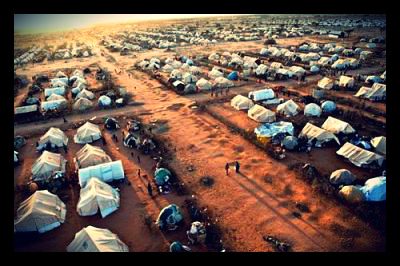
Kenya Plans To Close All Refugee Camps

kenyan_refugee_camps
Kenya in recent decades has become a place of refuge for people from all countries in Africa. Nonetheless, this past week, Asman Kamama, the Chairman of the Kenyan Administration and National Security Committee, stated that Kenya would attempt to close all its refugee camps within the next two years. This goal, however, depends upon the stability and improvements made within the countries where the refugees are coming from, particularly Somalia. Of Kenya’s 592, 219 refugees, 476,635 (80%) of these refugees are Somalis.

Groups from Ethiopia, Sudan, Congo, Rwanda, Eritrea, Burundi, South Sudan and Uganda also compromise the population of Kenyan refugee camps. As a result of the mass amount of refugees, the populations in refugee camps have swollen and strained the resources available. For example, Dadaab refugee camp, located in Kenya, is ranked the largest refugee camp in the world.

However, the United Nations has denied that an effort has been made to close the Somali refugee camps in Kenya. Kitty McKinsey, a spokeswoman for the U.N. Refugee Agency, stated that the United Nations does not believe “that there is any order for the refugee camps in Kenya to be closed.” McKinsey added, “The Kenyan government and the Kenyan people have been very generous to the refugees over the years, and we certainly have every reason to expect that will continue to be the case.”

The fate of refugees in Kenya is yet to be seen. If Kenya does close the refugee camps, Kamama explained that the return of these refugees will be peaceful and smooth.

– Lienna Feleke-Eshete

Sources: VOA News, All Africa

Photo: Womens News Network

December 23, 2013
https://borgenproject.org/wp-content/uploads/borgen-project-logo.svg 0 0 Borgen Project https://borgenproject.org/wp-content/uploads/borgen-project-logo.svg Borgen Project2013-12-23 04:00:362024-05-25 00:38:39Kenya Plans To Close All Refugee Camps
Advocacy, Developing Countries, Development, Economy, Foreign Aid, Foreign Policy, Global Poverty, Government, Human Rights

More than Moved

cars white background
In the midst of international mourning for Nelson Mandela and in an attempt to drive home the message of International Human Rights Day, a Brazilian NGO posed a provocative question on Tuesday, December 10.

A billboard designed by Conectas Human Rights, featured an image of Nelson Mandela and the question, “Do you feel moved by his legacy?” The text then urged the Brazilian population to act upon their emotions and “Do more than be moved.”

This campaign is driven by recent public opinion polls that reveal a negative feeling toward human rights issues in Brazil and support for more stringent laws and regulations.

Respondents to surveys administered across 134 municipalities in June 2013, support the reduction of maximum crime penalties from 18 years of age to 16, based on a belief held by 60% of the sample population that criminality is the result of ‘bad character.’

Moreover, the Datafolha Research Institute released data that reveal 26% of self-identified conservative-leaning respondents believe that homosexuality must be discouraged by society as a whole, whilst 33% believe that poverty is the result of laziness.

These emerging public opinions are linked to a reduction in funding for human rights groups, namely through foreign aid.

Brazil is widely considered to be an emerging market, the country’s role as 2014 World Cup host is evidence of this image but it disguises the fact that a growing economy does not automatically address human rights issues as seen through the need of foreign aid in assisting structural development.

It is estimated that 60% of the country’s NGOs relied on foreign aid for 80% of their budgets in 2003. Between 2008 and 2009 this aid decreased by 30% and again by another 49% in 2010 alone.

Executive Director of the Brazil Human Rights Fund, Ana Araújo, reminds us that Brazil was marked by dictatorship as recently as 30 years ago, a type of legacy that differs greatly from the one being celebrated across the globe on International Human Rights Day 2013.

Araújo argues that domestic support for human rights groups is the next, though not imminent, step, suggesting that emerging powers require more support, not less, to ensure that their emergence is ‘just.’

– Zoë Dean

Sources: Global Voices Online, Universo Online: CNT, Universo Online: Rightist Leanings, Open Democracy

December 22, 2013
https://borgenproject.org/wp-content/uploads/borgen-project-logo.svg 0 0 Borgen Project https://borgenproject.org/wp-content/uploads/borgen-project-logo.svg Borgen Project2013-12-22 14:16:582024-06-04 03:01:13More than Moved
Activism, Advocacy, Charity, Foreign Aid, Global Poverty

One Direction’s Busy November

one_direction_harry_styles
As it happens, One Direction is not just another single-minded boy band dolling out love songs and capturing the hearts of teenage girls around the world. In fact, unlike most boy bands one may think of, One Direction is putting their worldwide status to good use by regularly participating in fundraising for a slew of causes. Indeed, their multiple efforts just last month is a cause for praise.

In early November, Liam Payne and Harry Styles joined the Y Combinator startup company, Prizeo, in a fundraising campaign that raised $784,345 to benefit cancer research.  Prizeo “relies on a raffle model where contributors get a single entry for every dollar donated, the grand prize being an in-person experience with the sponsoring celebrity.”  The One Direction grand prize was an evening out in London with Payne and Styles, while smaller perks included custom t-shirts, social media profile pictures, bracelets, photos and a One Direction sweatshirt signed by the group members.

The band also joined a Celebrity Telethon in support of Typhoon Haiyan survivors, where they officially launched the telethon via their Twitter account.  The event took place in London at the iconic BT Tower, where callers were able to talk to a famous voice and have their donations taken by one of numerous celebrity participants.  One Direction’s Liam Payne expressed his sympathy for the survivors, stating, “The pictures I have seen of little children in-between the ruins made my heart break.  All of us in the band are shocked by how many people need help, so we’re asking the public to continue to be as generous as they possibly can.”  The UK Disasters Emergency Committee raised £90,000 directly from the telethon, which helped raise their total Philippines Typhoon Appeal donations to over £44 million.

One Direction further hosted a portion of the BBC’s Children in Need charity event, where they performed their hit song “Best Song Ever” and also designed and personalized a special Pudsey Bear, which was auctioned off to raise money for the charity.  This year’s event raised over £31,124,896.

Just last week, group member Harry Styles garnered support for UNICEF by auctioning his unwashed shirt on the designer discount website hardlyeverwornit.com.  A Texas businessman made the highest bid, offering £3,002 for the shirt.

– Rifk Ebeid

Sources: Mirror, Forbes, Look to the Stars, Disasters Emergency Committee: Celebrity Telethon, Press Party, Disasters Emergency Committee: Stars Join Telethon, Twitter

December 19, 2013
https://borgenproject.org/wp-content/uploads/borgen-project-logo.svg 0 0 Borgen Project https://borgenproject.org/wp-content/uploads/borgen-project-logo.svg Borgen Project2013-12-19 04:00:532024-05-25 00:35:59One Direction’s Busy November
Foreign Aid, Global Poverty

JP Morgan Chase Historic Settlement

JP_Morgan_Record_Settlement_opt
On November 17, 2013, the megabank JP Morgan Chase reached a record civil settlement of $13 billion and still could face criminal charges. The vast majority of the settlement, $9 billion, will go to State and Federal agencies that insured and backed the many bad mortgages the bank doled out from 2006-2009, including a $2 billion fine received by federal prosecutors. Consumers of the bad-faith mortgages will receive the benefit of the remaining $4 billion through a reduction in interest rates, temporary payment deferment, the removal of abandoned homes from low-income neighborhoods and other measures designed to offer relief to those hit hardest by the bank’s improper practices. There is no mention of the bank buying back any of the sour loans, and those who have already foreclosed are out of luck.

As a whole, the settlement stands to make little impact on the banking giant despite the historic figure. JP Morgan Chase revealed they had put aside $23 billion some time earlier just to pay for expected damages. Last year alone the company recorded over $20 billion in profits, and, despite the current litigation, the company’s stock is increasing as the housing market stabilizes. Last year, the US government budgeted just $42 billion in foreign aid and $11.2 billion in war-related aid to Afghanistan and Iraq. Sequestered litigation funds from JP Morgan Chase alone could have paid almost half of that budget.

Syria is embroiled in an incredibly costly war that has left many homeless as they flee the fighting or watch as their homes are destroyed by shelling. With the total number of refugees expected to hit 3 million by the end of this year, the UN has appealed for $5 billion in aid to house and care for these victims. Right now, they are about $2 billion short of that request. Before the US Justice Department transfers their imposed fine to the treasury, think of the millions of Syrians lacking food, healthcare, water and shelter.

Typhoon Haiyan has destroyed or damaged over 240,000 homes in the Philippines and over 800,000 people have been displaced from the storm. Though aid efforts have been swift and generous, rebuilding destruction of that magnitude will not come quickly. Hurricane survivors will need temporary shelter for months while debris is cleared, utility lines are restored and, eventually, homes are rebuilt. Estimates say the country suffered a total of $15 billion in physical damages. Federal and State investors could donate their $7 billion to the recently homeless of the Philippines and easily cover the cost of returning them to shelter.

$13 billion is a massive sum, why not think big? As of July of this year, the UN estimated a need for $12.84 billion to assist the entire world’s crises. One settlement that only represents a little more than half of JPMorgan Chase’s 2012 profits could provide adequate humanitarian relief to the entire world for the year. One company’s misdeeds resulting in relief for millions across over 25 countries; that would be historic.

– Tyson Watkins

Sources: NY Times, USA Today, Reuters, Reuters, NY Times, USAID, Yahoo News
Photo: Business Week

December 6, 2013
https://borgenproject.org/wp-content/uploads/borgen-project-logo.svg 0 0 Borgen Project https://borgenproject.org/wp-content/uploads/borgen-project-logo.svg Borgen Project2013-12-06 17:34:552024-05-25 00:32:16JP Morgan Chase Historic Settlement
Activism, Advocacy, Foreign Aid, Foreign Policy, Global Poverty, USAID

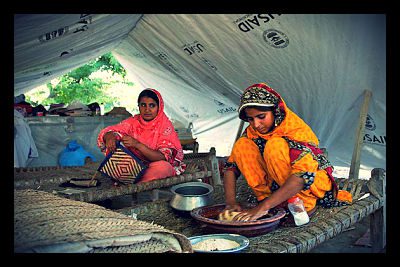
An Overview of USAID

usaid_pakistan
The United States Agency for International Development (USAID) was created in 1961 by The Foreign Assistance Act, which established a separate administration for non-military foreign aid. This consolidated the many separate foreign aid organizations within the US government at the time into one effective agency.

USAID advocates for making international aid the focus of foreign policy.  Under President Truman, foreign policy had two goals:  creating new markets for U.S. exports by relieving global poverty and helping countries prosper through capitalism. Later, in the 1970s, USAID shifted its focus to basic human needs: food security, health, education, jobs and resource management.

Today, USAID focuses on creating sustainable markets, transitioning countries into democracies and rebuilding former areas of conflict. USAID works mainly through non-governmental organizations (NGOs) and diversified aid packages.  Food security, economic growth, education, environmental protection, gender equality, health, innovation, sanitation and conflict management are at the forefront of US foreign policy.  All these factors go into creating sustainable trade partners and positive political relations.

USAID’s $20.4 billion funding comes directly from the U.S. government.  Of this, only about $1.35 billion is spent on operating costs.  The rest of the funding goes to “bilateral assistance” provided to countries and regions in need.  Afghanistan is the largest recipient of US economic assistance at $2.24 billion, followed by Pakistan with $970 million.

Past successes include family planning, immunization programs, improved farming techniques and booming energy sectors in developing countries.  Life expectancy in the developing world has increased by 33 percent, immunizations have eliminated smallpox, and infant and child death rates have decreased by 50 percent in the developing world.  HIV/AIDS education and prevention has been a major focus of USAID, with programs set up in 32 countries.  Meanwhile, 1.3 billion people have access to safe drinking water thanks to USAID-led UN Drinking Water Supply and Sanitation Decade.

– Stephanie Lamm

Sources: USAID History, USAID Sites
Photo: Business Week

October 23, 2013
https://borgenproject.org/wp-content/uploads/borgen-project-logo.svg 0 0 Borgen Project https://borgenproject.org/wp-content/uploads/borgen-project-logo.svg Borgen Project2013-10-23 15:14:362024-05-25 00:30:10An Overview of USAID
Developing Countries, Economy, Extreme Poverty, Foreign Aid, Global Poverty, United Nations

Pressure on Developed Nations to Contribute More Aid

Leaders have begun to discuss what will replace the Millennium Development Goals once they reach expiration in 2015. Mukhisa Kituyi, the new secretary general of UNCTAD, the UN Trade and Development body, stated that aid-flows from wealthy nations were drying up and that developing economies must contribute more in order to assist the poorer nations.

Kituyi, who took office last month, urged Brazil, China, and other emerging economies to take responsibility for the fight against extreme poverty. “From Brazil to China, while they have shown a willingness to invest in economic infrastructure – the construction of roads, railways, and ports – that capacity should also extend to the construction of social infrastructure,” he said.

There has been constant pressure on developed nations to contribute more aid in both reaching the Millennium Development Goals and ending extreme poverty; however, Kituyi’s call for action represents one of the rare voices asking the developing nations to pay tribute as well.

UNCTAD, which was formed in 1964, is seen as the intellectual counterweight to the World Bank and the IMF, urging even more liberalized trade and deregulated finance. However, in recent years, some of the organization’s staff members are increasingly concerned about Unctad’s future. Kituyi claims that he is determined to boost the organization’s reputation, and is especially concerned in taking part in the formation of what follows the Millennium Development Goals.

– Sonia Aviv

Sources: The Guardian, International Development News, News 168
Photo: The Habari Network

October 9, 2013
https://borgenproject.org/wp-content/uploads/borgen-project-logo.svg 0 0 Borgen Project https://borgenproject.org/wp-content/uploads/borgen-project-logo.svg Borgen Project2013-10-09 20:58:002024-05-25 00:24:02Pressure on Developed Nations to Contribute More Aid
Page 54 of 61«‹5253545556›»

Get Smarter

  • Global Poverty 101
  • Global Poverty… The Good News
  • Global Poverty & U.S. Jobs
  • Global Poverty and National Security
  • Innovative Solutions to Poverty
  • Global Poverty & Aid FAQ’s
Search Search

Take Action

  • Call Congress
  • Email Congress
  • Donate
  • 30 Ways to Help
  • Volunteer Ops
  • Internships
  • Courses & Certificates
  • The Podcast
Borgen Project

“The Borgen Project is an incredible nonprofit organization that is addressing poverty and hunger and working towards ending them.”

-The Huffington Post

Inside The Borgen Project

  • Contact
  • About
  • Financials
  • President
  • Board of Directors
  • Board of Advisors

International Links

  • UK Email Parliament
  • UK Donate
  • Canada Email Parliament

Get Smarter

  • Global Poverty 101
  • Global Poverty… The Good News
  • Global Poverty & U.S. Jobs
  • Global Poverty and National Security
  • Innovative Solutions to Poverty
  • Global Poverty & Aid FAQ’s

Ways to Help

  • Call Congress
  • Email Congress
  • Donate
  • 30 Ways to Help
  • Volunteer Ops
  • Internships
  • Courses & Certificates
  • The Podcast
Scroll to top Scroll to top Scroll to top