• Link to X
  • Link to Facebook
  • Link to Instagram
  • Link to TikTok
  • Link to Youtube
  • About
    • About Us
      • President
      • Board of Directors
      • Board of Advisors
      • Financials
      • Our Methodology
      • Success Tracker
      • Contact
  • Act Now
    • 30 Ways to Help
      • Email Congress
      • Call Congress
      • Volunteer
      • Courses & Certificates
      • Be a Donor
    • Internships
      • In-Office Internships
      • Remote Internships
    • Legislation
      • Politics 101
  • The Blog
  • The Podcast
  • Magazine
  • Donate
  • Click to open the search input field Click to open the search input field Search
  • Menu Menu

Archive for category: Foreign Aid

Foreign aid coverage and information.

Foreign Aid, Foreign Policy, Global Poverty

Types of Foreign Aid

Types of Foreign Aid

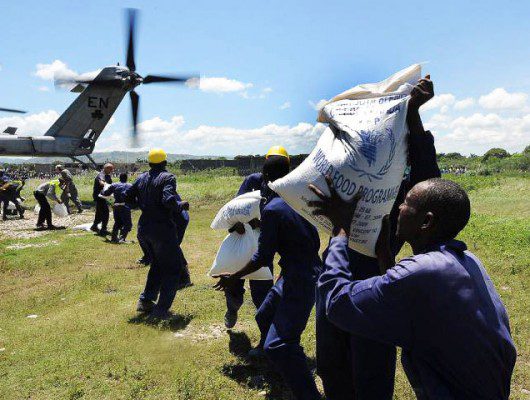
America’s foreign aid budget for 2016 is expected to be around $37.9 billion. The goals of American foreign aid involve a mixture of strategic and humanitarian efforts. Therefore, the types of foreign aid the government administers are aimed at addressing a variety of issues.

Various initiatives are represented by five different categories, as outlined by Congressional Research Service:

  1. Bilateral Aid is aid given by the U.S. government directly to another country. According to the Congressional Research Service, it is designed to “foster sustainable broad-based economic progress and social stability in developing countries.” In other words, bilateral aid focuses on long-term development that fosters human rights and political and economic freedoms.
  2. Economic Aid Supporting U.S. Military and Political Objectives’ primary purpose is to meet U.S. economic, political or security interests. Funds provided under this category can be used for development projects or as cash transfers to help a recipient country stabilize its economy and service foreign debt. By helping nations fund development projects and stabilize their economies, the U.S. government hopes to achieve greater success in addressing national security issues such as terrorism, weapons proliferation and drug trafficking.
  3. Humanitarian Assistance is given in response to natural disasters and problems resulting from conflict zones in failing states. Unlike development assistance programs, which are often viewed as long-term efforts, humanitarian aid programs are generally devoted to addressing emergencies. For example, humanitarian aid includes providing protection and assistance to refugees and internally displaced persons and the delivery of emergency food aid.
  4. Multilateral Aid, although less common from the U.S., combines aid from multiple donor nations to finance multidimensional development projects. These initiatives are implemented by international organizations, like UNICEF or the World Bank.
  5. Military Assistance aims to help U.S. allies to acquire American military equipment and training. An example of one of these programs, administered by the Department of State, is Foreign Military Financing. This grant program enables governments to receive American military equipment. Two major recipients of this FMF grant are Israel and Egypt.

While the types of foreign aid are varied, the most important part of any U.S. foreign aid program, as Texas Representative Kay Granger appropriately noted, is that it be “carefully guided and targeted at a specific issue…it can and must be effective.”

– Taylor Resteghini

Sources: Borgen Project, Center for Global Development, Congressional Research Service, U.S. Foreign Assistance
Photo: Global News

March 11, 2016
https://borgenproject.org/wp-content/uploads/borgen-project-logo.svg 0 0 Borgen Project https://borgenproject.org/wp-content/uploads/borgen-project-logo.svg Borgen Project2016-03-11 01:30:102024-12-13 17:51:26Types of Foreign Aid
Foreign Aid, Foreign Policy, Global Poverty, Government

Electrify Africa Act Signed Into Law

Electrify Africa
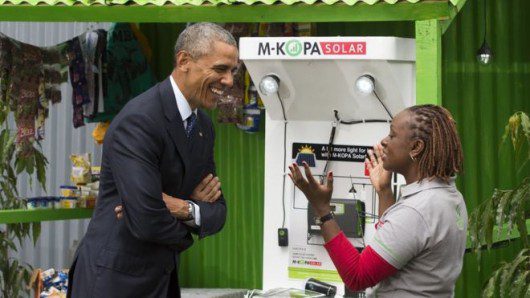
President Obama has signed into law the Electrify Africa Act of 2015, which will bring electricity to millions in Africa.

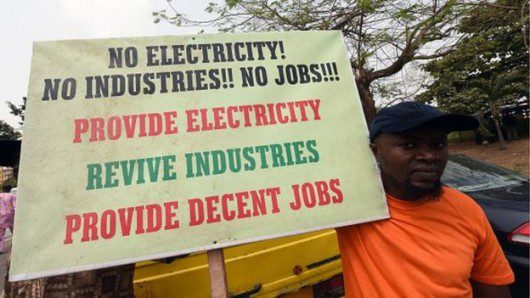
About two-thirds of people in Africa do not have access to reliable power, according to BBC News. The Electrify Africa Act will establish a strategy to help sub-Saharan countries implement power solutions to promote economic growth and reduce poverty.

For people without electricity, simple tasks such as cooking or reading are complicated without a light source at night. Many people in Africa are also unable to use modern technologies, like cell phones or computers, or do basic tasks such as refrigerating food and medicine.

The lack of electricity causes some families in Africa to use fossil fuels or charcoal, which has a negative effect on the environment and health.

According to BBC News, House Committee on Foreign Affairs Chairman Ed Royce stated that this initiative will “improve the lives of millions in sub-Saharan Africa by helping to reduce reliance on charcoal and other toxic fuel sources that produce fumes that kill more than HIV/Aids and malaria combined.”

Electrify Africa
Power Africa was launched by President Obama in 2013. It took nearly two years for it to pass through the Senate and House of Representatives and become the Electrify Africa Act of 2015.

The U.S. initially invested $7 billion in the project but that number has since risen to nearly $43 billion. According to Voice of America, the high cost of energy in sub-Saharan Africa makes producing exports impossible, so it would be beneficial to the U.S. to help Africa become a major trading partner.

In addition to the U.S. government, African governments and private companies are involved in the development of the Power Africa initiative. The Electrify Africa Act provides a framework for companies to invest in African energy solutions.

The long-term goal is to double the amount of electricity available to people in sub-Saharan Africa, bringing electricity to 50 million people in the region by 2020.

– Kaitlyn Arford

Sources: BBC, Christian Science Monitor, Voice of America

March 7, 2016
https://borgenproject.org/wp-content/uploads/borgen-project-logo.svg 0 0 Borgen Project https://borgenproject.org/wp-content/uploads/borgen-project-logo.svg Borgen Project2016-03-07 01:30:422020-06-22 16:49:45Electrify Africa Act Signed Into Law
Foreign Aid, Global Poverty

Rubio Supports US Soft Power to End Global Poverty

Rubio
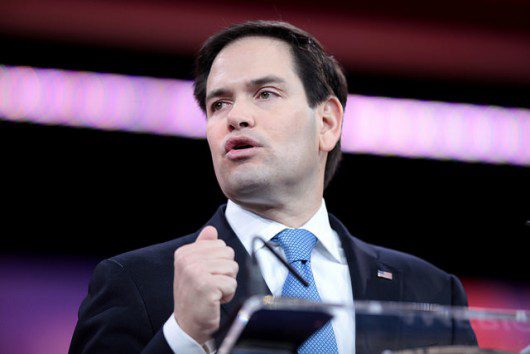
Ending global poverty is an issue that has largely escaped the 2016 presidential campaign. Inequality, terrorism, immigration, trade agreements and social issues have taken center stage. Yet many candidates support foreign aid as a key component of U.S. policy and believe that ending global poverty is in the best interest of the United States. Marco Rubio is one such candidate.

Rubio is unique in a way, in that his parents are immigrants who suffered under poverty in Cuba. In a 2014 press release, Rubio describes their situation. “My mother was one of seven girls whose parents often went to bed hungry so their children wouldn’t. My father lost his mother when he was nine. He left school and went to work at a local restaurant at about the same age of my youngest son now.”

Recognizing that his parents were not at fault for their hardship, Rubio says, “My parents, like most people that have ever lived, were raised in a country where they were trapped by the circumstances of their birth.” Poverty traps billions of people all over the globe and by linking his parents to “most people that have ever lived,” Rubio clearly empathizes with the world’s poor.

Therefore, it comes as no surprise that, when asked, Rubio expresses support for U.S. foreign aid. At a November campaign stop, Tom Hardy of Global Citizen/Humanosphere asked Rubio about his views on international development and aid. His response was short and succinct.

“In countries where there is real and robust economic development, there is less radicalization. Soft power is a real element and it’s in our national interest, and part of it is because it is the right thing to do.” Rubio identifies two key elements of why the U.S. should assist other countries. One is that development and strong rule of law help suppress terrorism. The other is that helping others and doing the right thing is a core piece of America’s identity.

Rubio believes that the United States “has been blessed for what it has done for the world.” He also pointed out that “[foreign aid] is only a small percentage of the federal budget.” This last sentence is crucial, as it rebuffs a common misperception about foreign aid.

A major reason why candidates, including Rubio, fail to mention their support for aid is that the public grossly overestimates the generosity of the United States. A Borgen Project article from 2014 reported that a Kaiser Family Foundation study found the average U.S. citizen believes 28 percent of the U.S. budget goes to aid. In reality, that number is less than one percent. Due to this discrepancy, the same report found that nearly half of Americans favor large cuts in foreign aid.

Supporting increases in aid is, therefore, politically challenging but Rubio has taken the risk. In the last year, he lent his support to the Reach Every Mother and Child Act and the Global Food Security Act as a co-sponsor. Both of these bills are supported by The Borgen Project and by many pro-development groups. Rubio has not only talked the talk but walked the walk.

To retain America’s position as a leader among nations, it is important that whoever is elected in 2016 understands that influence comes not only through military might but also through the soft power of aid and development.

As Rubio said in a 2012 speech, “We don’t have a national debt because of foreign aid. If you zeroed out foreign aid it would do nothing for the debt, but would be devastating, not just to the world but to America’s role in it.”

As a person, a senator and a presidential candidate, Marco Rubio’s commitment to ending global poverty is unquestionable.

– Dennis Sawyers

Sources: Global Citizen, Humanosphere, Marco Rubio Official Site, The Borgen Project
Photo: Flickr

February 25, 2016
https://borgenproject.org/wp-content/uploads/borgen-project-logo.svg 0 0 Borgen Project https://borgenproject.org/wp-content/uploads/borgen-project-logo.svg Borgen Project2016-02-25 01:30:442024-12-13 18:05:44Rubio Supports US Soft Power to End Global Poverty
Aid, Development, Education, Foreign Aid, Global Poverty, Health

USAID to Provide Millions in Aid Abroad Through ASHA

ASHAThe U.S. Agency for International Development (USAID) has established the goal of ending poverty by the year 2030. Contributing to this effort is $23 million in awards that will be released by USAID to 25 countries this year through the agency’s Office of American Schools and Hospitals Abroad (ASHA).
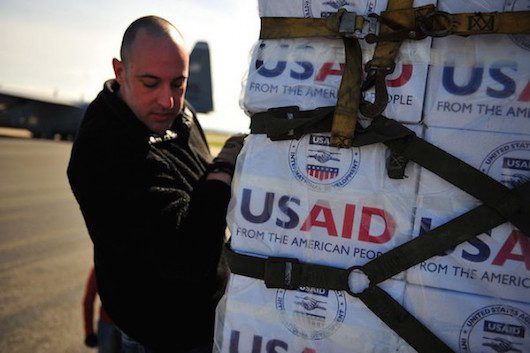
The funding will go to “U.S. organizations and their overseas partners to support construction projects and to purchase equipment for 15 hospitals and clinics, six secondary schools, 16 universities, and one library,” as stated on the USAID website. The awards were announced on Feb. 1, 2016, and will be allocated toward global innovation and development.

USAID/ASHA provides assistance to international schools and hospitals. The organization has also served a public diplomatic role in fostering positive relationships between countries. It provides health services and education to over 80 countries and 300 international institutions.

“It is a remarkable honor to play a role in overseas institutions which advance education and health in their countries and around the world,” says Katherine Crawford, director of USAID. The education awards will reach universities in regions of the Middle East, Asia, Latin America, the Caribbean and Africa.

Among the winners is Ashesi University College in Ghana, which received $700,000 to go toward classroom innovation. This funding will provide students with a rich engineering education that compares to top U.S. universities. Further contributions include the development of educational facilities in Somalia and Zambia.

In Somalia, USAID funding will help create a new science building, an auditorium and more areas for student dining. In Zambia, the award will help build a library that provides educational outreach and innovative programs to more than 35,000 children.

In the area of health, USAID will provide $570,000 in funding to the CURE Ethiopia Children’s Hospital. The funds will be utilized for operating room equipment, training and the delivery of medical care.

Other countries receiving a portion of this funding include India, where labor rooms for six women and a neonatal intensive care unit for 25 children and 45 mothers will become available.

In India, nursing training will also be accommodated by the grant. Medical equipment for maternal and pediatric programs will be made available in Afghanistan along with a diabetes-fighting program.

This grant will continue USAID’s overseas programs in the areas of health and education. USAID seeks to educate and provide care to the globally disadvantaged while promoting innovation in sciences and technology.

Through these awards, ASHA can impact communities and continue to stimulate progress.

– Mayra Vega

Sources: Foreign Affairs, USAID,
Photo: IBT

February 22, 2016
https://borgenproject.org/wp-content/uploads/borgen-project-logo.svg 0 0 Borgen Project https://borgenproject.org/wp-content/uploads/borgen-project-logo.svg Borgen Project2016-02-22 01:30:552024-05-27 09:33:13USAID to Provide Millions in Aid Abroad Through ASHA
Foreign Aid, Global Poverty

Why is Transparency in Foreign Aid Important?

Transparency_in_Foreign_AidGovernment transparency is one of the key elements to maintaining a free society. According to Ballotpedia, “openness, accountability and honesty define government transparency. In a free society, transparency is defined as a government’s obligation to share information with citizens. It is at the heart of how citizens hold their public officials accountable.”


When a free society is established, the government needs to be held accountable and inform the people of how taxpayers’ money is spent and where. This occurs through transparency.

At the end of October, many organizations and individuals applauded the reintroduction of Bill H.R. 3766, or the Foreign Aid Transparency and Accountability Act of 2015.

“By strengthening its commitment to monitoring and evaluation and transparency, the U.S. government can better allocate aid resources and be held accountable by a range of stakeholders,” according to Modernize Aid. This means that those with influence are able to put the money where it is most needed and most effective.

Former attempts to pass the bill were largely successful and moved quickly through the Senate and the House. However, the Senate stopped progress in both instances.

Modernizing Foreign Assistance Network and the Professional Services Council (PSC) are two of many organizations that are enthusiastic about the bill.

PSC’s CEO, Stan Soloway, has stated that “Congress should increase aid transparency and accountability and provide USAID and other agencies with the necessary acquisition and other resources to effectively plan, award and oversee development implementation by international development companies.”

As United States citizens, there are certain responsibilities to the government. The National Center for Constitutional Studies notes that “the success of the American Republic as a political structure has been the consequence…of the voluntary participation of citizens in public affairs – enlisting in the army in time of war; taking part unpaid in political campaigns; petitioning legislatures; and in a hundred other great ways, or small-assuming responsibility for the common good.”

The key goal in foreign aid transparency is the petitioning for legislation. This process is the people’s opportunity to let government officials know what is most important to them. It also gives the leaders an idea of what bills to pass.

Transparency in Foreign Aid allows a country to see exactly where tax money is going. It is a bill that holds promise for a more accountable government.

OXFAM America has expressed its desire for the legislation to be passed. “Now’s the time for effective aid supporters from both sides of the aisle in Congress to rally behind the House and Senate sponsors and push this bill over the finish line. It’s fun to cheer positive action in Congress! Let’s make sure we have the opportunity to do more of it.”

In order to do this, constituents are able to write, email or call their government leader’s offices. Each time a citizen does this, a tally is made on the issue the individual expresses interest in.

These tallies add up each week and are then considered when it comes time for voting on various bills and legislation. The more tallies from people, the more likely the piece of legislation has for success.

– Katherine Martin

Sources: Ballotpedia, Modernize Aid, Professional Services Council, NCCS, Politics of Poverty
Photo: Google Images

November 29, 2015
https://borgenproject.org/wp-content/uploads/borgen-project-logo.svg 0 0 Borgen Project https://borgenproject.org/wp-content/uploads/borgen-project-logo.svg Borgen Project2015-11-29 01:30:102024-05-27 09:28:25Why is Transparency in Foreign Aid Important?
Development, Food Aid, Foreign Aid, Global Poverty

Myths about Foreign Aid

myths_about_foreign_aid
The fact is that some 795 million people in the world do not get enough food to lead healthy, productive lives, and the vast majority of the world’s hungry live in developing countries. The following are three myths about foreign aid:

1. We shouldn’t bother. Our small contributions won’t make a difference in such an enormous problem as global poverty. When it comes to world hunger, the “one person can’t make a difference” myth can be easily dispelled.

Here in the U.S., mosquitoes are aggravating little pests; however, in Africa, mosquitoes are deadly. In 2005, the Against Malaria foundation was founded; it implements practical, cost-efficient, insecticide-treated bed nets to fight this preventable disease.

Over the past 15 years, approximately 663 million cases have been prevented in Africa — roughly 68 percent of that reduction is contributed to the distribution of a billion bed nets. Each bed net costs around $5, lasts for three to four years and protects two people. So, yes, as little as five bucks can make a difference in a global problem, and this, of course, is just one example.

2. We have no idea where our money really goes. Those fundraisers are scams. Unfortunately, the existence of corruption persists all over the world, and that isn’t a myth. Along with the endless benefits the internet provides there are also the ceaseless hoaxes, which are often in the disguise of charitable organizations.

To some extent, it seems as if charities and even the word “donate” tend to act as repellents, triggering apprehension and uneasiness. Fortunately, programs, such as the Millennium Challenge Account, and laws, such as the Foreign Corrupt Practices Act, monitor and help safeguard aid. And when in doubt, research the organization before providing any type of aid. Consumer Affairs is one helpful website.

3. Taking care of others in developing countries implies that we are failing to “take care of ourselves.” On the contrary, the more independent others become, the more consumers we acquire. Actually, our nation’s safety strengthens as we lift others out of poverty.

Three major myths about foreign aid busted and many more to be exposed. The following are three ways we can effectively help eradicate global poverty and hunger:

  1. Research the organization before providing aid.
  2. Get active and lobby for the world’s poor. Call and/or email Congress in support of poverty reduction. The Borgen Project provides an efficient, simple method to contact Congress.
  3. Believe that you can make a difference in a global epidemic. The very act of providing aid to another is itself a gift.

– Dana McLemore

Sources: Against Malaria, DTIC, FAO, KFF
Photo: Flickr

November 12, 2015
https://borgenproject.org/wp-content/uploads/borgen-project-logo.svg 0 0 Borgen Project https://borgenproject.org/wp-content/uploads/borgen-project-logo.svg Borgen Project2015-11-12 01:30:202020-06-24 19:26:30Myths about Foreign Aid
Foreign Aid, Global Poverty

Where Could Your Foreign Aid Dollars Go?

Foreign Aid: What Could Your One Percent Do?In a recent poll, 81 percent of Americans said they believe that the U.S. has “a moral responsibility to work and reduce hunger and severe poverty in poor countries.” However, Americans also think that America is already spending a significant portion of its annual budget on foreign aid; when polled, some Americans thought the U.S. spent as much as 30 percent, more than is actually spent on Social Security or Medicare, when in reality only about 1 percent of the budget is allocated to foreign aid.
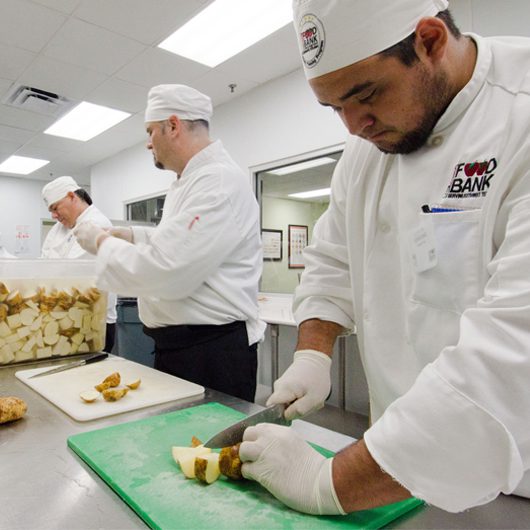
And while 1 percent of the American budget is a large sum in absolute dollars, even compared to other developed nation’s foreign aid spending, America does not rank in the top 15 industrialized countries when compared to the percent of its gross national income. Britain, who does make the top 15, spent about 6 percent of its gross national income in 2012, so while they are spending less money in actual dollars, they are willing to allocate a higher percentage of their budget toward assisting economically struggling countries.

As the American foreign assistance budget stands now, citizens pay pennies on the dollar toward saving and improving the lives of people living in poverty. The average median income for residents of Washington State in 2013 was $58,405. Households making the median annual income would have paid roughly $10,000 in income taxes. Of their tax money, about $100 would have been put toward foreign aid.

Foreign aid dollars are worked in a variety of ways. In 2012, the economic assistance budget of about $31 billion was split among spending on development assistance, migration and refugee assistance, international narcotics control and law enforcement, and global health and child survival. According to a tax calculator created by the nonprofit ONE.org, that family’s $100 could have been used to provide someone with 268 days of HIV treatments, 61 life-saving vaccines or 11 bed nets that save lives.

Tax season is understandably not everyone’s favorite time of year, but it is good to know not only where our dollars are being spent, but also the amount of good they can do. Even with only a small percentage of our taxes being spent on foreign aid, they are managed through effective programs that make real differences.

– Brittney Dimond

Sources: Gates Notes, One, OFM, National Priorities, OXFAMAmerica
Photo:  Flickr

October 16, 2015
https://borgenproject.org/wp-content/uploads/borgen-project-logo.svg 0 0 Borgen Project https://borgenproject.org/wp-content/uploads/borgen-project-logo.svg Borgen Project2015-10-16 22:14:432024-05-27 09:28:11Where Could Your Foreign Aid Dollars Go?
Food & Hunger, Foreign Aid, Global Poverty

Food for Peace, the Past, Present and Future

Food for Peace, the Past, Present and Future
In 2013, NPR reported that “a political war” was brewing over the Food For Peace Act.

Food for Peace, which has been the United States’ primary program for overseas food assistance, is estimated to have benefited 3 billion people in 150 countries.

The program began as a way for the United States to put its surplus foodstuffs to good use across the globe, and has since modernized into a competitive process in which the American government purchases commodities from US farmers (through a competitive process) and then allocates them to needy populations worldwide.

Or at least, most of those commodities are redistributed. There is a portion of that food that is deemed “non-emergency” and placed into the hands of non-profits that are able to sell it for profit. Being non-profit companies, these profits are intended to then be funneled into development initiatives.

In 2013, this tactic of redistribution was the subject of hot debate. Many critics, including Oxfam America told NPR that it was “a horribly ineffective way to pay for local development projects” and that “according to some calculations, at least a third of the money is wasted.”

Fast forward 2 years later and the war seems to be over. Those who called for reforms, like Oxfam America, were victorious. Food for Peace has recently undergone a fine-print makeover intended to streamline the United States’ role as a pipeline that brings nutrition to starving populations.

Senators Bob Corker (R-Tenn) and Chris Coons (D-Del.), members of the Senate Foreign Relations Committee, are leading the charge:

“With limited aid available it is our responsibility to ensure American resources are used in the most effective manner possible,” said Senator Corker. “These necessary reforms will allow us to better promote stability around the world by delivering lifesaving food to those in need more quickly and at a lower cost.”

Senator Coons added that “Our current system for acquiring and distributing food is inefficient and often hurts the very communities it is trying to help.”

So, what will these reforms look like?Food_for_peace

They begin with a more cost-effective method of food procurement. This means that while the current program requires that 100 percent of food be produced in the United States, the reforms would allow US produced commodities as well as regionally produced ones (from places such as Latin America) to be considered for the program.

It will also expand the definition of “commodities” to include vouchers and even cash transfers, which have seen remarkable success in poverty reduction in Randomized Control Trials in Africa.

The reforms will also reduce the number of goods that must be shipped on American-flagged vessels (it is 50 percent currently) which will cut shipping costs an estimated $50 million annually.

For those concerned over how this will affect American shipping interests, a press release has estimated that this would have no tangible effect on the US shipping sector, as only .86 percent of US exports are channeled through Food for Peace.

Finally, the Food for Peace Reforms will deal a fatal blow to the “monetization” aspect—or the portion of food that is given directly to nonprofits–by eliminating this aspect of the program completely.

This comes on the recommendation of the Government Affair’s Office (GAO) who launched an investigation into “monetization” in regards to Food for Peace in 2011. The GAO found that monetization is “an inherently inefficient way to fund development projects and can cause adverse market impacts in developing countries.”

This is at odds with the 2013 claim that it is this program that ensures the continuance of aid assistance regardless of who sits in the oval office.

“If we remove the conditions about how the money should be spent, that money may never be available for those crises, at a key time when we need it,” said Jeffrey Grieco, chief of public and international affairs at International Relief and Development (IRD).

Regardless of the attitude towards monetization, which is likely to spark yet another war in Congress to match the 2013 conflict, these reforms are estimated to release $440 million in funds that could be used to feed 12 million more people. The gains of monetization would have to be at least that strong to hinder this reform bill’s progress through Washington.

– Emma Betuel

Sources: Senate, GAO, NPR
Photo: Google Images, Flickr

October 7, 2015
https://borgenproject.org/wp-content/uploads/borgen-project-logo.svg 0 0 Borgen Project https://borgenproject.org/wp-content/uploads/borgen-project-logo.svg Borgen Project2015-10-07 01:30:402020-06-27 06:49:59Food for Peace, the Past, Present and Future
Foreign Aid, Global Health, Global Poverty, USAID

USAID: Interview with International Development Worker

international_development
Since 2009, USAID’s budget has gone down by about 16 percent. The United States’ foreign aid organization is already underfunded, making up less than one percent of the federal budget. Yet, USAID has 1,920 projects across almost every continent in the world.

With so little funding, it is impressive how much the organization can accomplish. Given the funding cuts, I talked to an active international development specialist and visiting professor at Colorado College.

Dr. Joseph Derdzinski had much experience with law and security forces in foreign countries during his time in the U.S. Air Force. Since then, he has conducted research on the democratic consolidation processes of post-authoritarian states as well as serving on election observation missions in Afghanistan and Egypt.

Q: Why do you think that USAID’s funding has gone down so significantly since 2009?

A: USAID was a main focal point of building infrastructure in Iraq and Afghanistan, so USAID funding was contingent on Afghanistan and Iraq. The reduction in USAID’s funding and budget is largely due to a reduction of foreign military personnel as well as development agencies from Afghanistan and Iraq.

Q: Why is the organization so underfunded?

A: It would make sense to fund more fully the agency, but there’s very little will from taxpayers or incentive for elected officials to increase USAID’s funding. In the annual federal budget, foreign aid doesn’t get the same level of attention as other budget items or priorities. This is due in part to the low level of understanding of how little funding foreign aid programs actually receive.

During or in the immediate wake of a war, foreign development funding is easier to justify, but it’s harder for a lawmaker to make a case for aid once the war is over. Moreover, everything to do with the war in Iraq, including development projects, was never part of the annual budgets. They were a supplement to the annual budget.

Q: Can you give me an example of how foreign aid helps the United States?

A: What’s happening in Greece in terms of migrations of people into Greece is a good example. The great majority who aren’t from Syria are fleeing authoritarian regimes and economic woes. And that’s the same as what’s happening at the U.S. border. Migrants to the US are fleeing social unrest and oppressive regimes.

And so, if the goal is to keep people in their home countries, one potential impact of international development is to allow people the option to remain in their home countries.

Q: Would you say that the budget cuts make working in international development difficult?

A: Yes, now more than ever it is more challenging to work in international development.

Conclusion: USAID is an important and undervalued organization in the United States. While at first glance, the work that USAID is doing may appear to primarily benefit the countries that are receiving assistance, it is in fact work that is beneficial to the United States as a whole. International development creates jobs for Americans, protects national security, and as Dr. Derdzinski described, can assist with the United States’ immigration dilemma.

With all of these factors kept in mind, foreign development assistance should no longer be something that is difficult for lawmakers to justify, but rather should be an integral part of policymaking.

– Clare Holtzman

Sources: Colorado College, Foreign Policy, USAID 1, USAID 2
Photo: United States Air Force Academy

September 5, 2015
https://borgenproject.org/wp-content/uploads/borgen-project-logo.svg 0 0 Borgen Project https://borgenproject.org/wp-content/uploads/borgen-project-logo.svg Borgen Project2015-09-05 07:36:142024-06-05 01:53:29USAID: Interview with International Development Worker
Foreign Aid, Global Poverty, Poverty Reduction

Development Impact Bonds: Investing in Poverty Reduction

Development Impact Bonds for Investing in Poverty Reduction- BORGEN
A relatively new strategy in guiding private money toward poverty reduction are deemed Development Impact Bonds, or DIBs. DIBs differ from traditional financing for poverty reduction in a few key ways.

First, rather than an aid agency or philanthropist giving money for a certain goal, like increasing educational attainment for girls in a developing country, private investors provide the money with an expectation to make a profit. As with any investment, risks are an inherent part of the equation.

The way that the investors recoup their investment is the principle of outcome-based returns. If a certain project hits its goals, then the investors get their initial money plus whatever interest was agreed upon in the contract.

For example, a program that trains job seekers would not get money for the number of people trained but by the number of people that graduated from the program and held jobs for a certain amount of time. If successful, investors’ profit comes from a philanthropic organization, aid agency or the government that received the benefits of the program.

What this does — and the second way DIBs differ from traditional development program financing — is to take the risk off the hands of the constrained budgets of aid agencies. If, unfortunately, the program fails, then the aid agency or government responsible for repayment is off the hook and the investors are left empty handed. However, this risk sharing allows for more programs to have a chance.

Thirdly, the outcome-based principle allows allows for more flexibility in meeting program goals. Rather than be burdened with a predetermined process imposed by the donor, the program can be innovative and work within the context of the local environment.

This allows frees up space for local entrepreneurs. They know the area, the culture, and have a better idea of what will and will not work best. The flexibility in meeting targets not only incubates different and novel ideas, it incorporates locals and their knowledge better than traditional funding.

While these differences make DIBs attractive, the management and transaction costs may be prohibitively high. The novelty of the mechanism and uniqueness of each contract, together with the infant stage that this industry is in are what contributes to these costs. If successful, over time, a streamlined process and proven results will reduce the costs and increase the uptake.

DIBs have potential in the areas of global health, education, agriculture, water and sanitation, housing and the environment.

Investors interested in creating a positive social impact with their money now have a new option. Savvy investors may also view these investments as laying the groundwork for future business opportunities in the developing economy.

– John Wachter

Sources: Conscious Company Magazine, EcoEnterprises Fund, The Guardian 1, The Guardian 2, Instiglio, JP Morgan Chase
Photo: Flickr

August 31, 2015
https://borgenproject.org/wp-content/uploads/borgen-project-logo.svg 0 0 Borgen Project https://borgenproject.org/wp-content/uploads/borgen-project-logo.svg Borgen Project2015-08-31 01:30:182024-05-27 09:27:26Development Impact Bonds: Investing in Poverty Reduction
Page 45 of 61«‹4344454647›»

Get Smarter

  • Global Poverty 101
  • Global Poverty… The Good News
  • Global Poverty & U.S. Jobs
  • Global Poverty and National Security
  • Innovative Solutions to Poverty
  • Global Poverty & Aid FAQ’s
Search Search

Take Action

  • Call Congress
  • Email Congress
  • Donate
  • 30 Ways to Help
  • Volunteer Ops
  • Internships
  • Courses & Certificates
  • The Podcast
Borgen Project

“The Borgen Project is an incredible nonprofit organization that is addressing poverty and hunger and working towards ending them.”

-The Huffington Post

Inside The Borgen Project

  • Contact
  • About
  • Financials
  • President
  • Board of Directors
  • Board of Advisors

International Links

  • UK Email Parliament
  • UK Donate
  • Canada Email Parliament

Get Smarter

  • Global Poverty 101
  • Global Poverty… The Good News
  • Global Poverty & U.S. Jobs
  • Global Poverty and National Security
  • Innovative Solutions to Poverty
  • Global Poverty & Aid FAQ’s

Ways to Help

  • Call Congress
  • Email Congress
  • Donate
  • 30 Ways to Help
  • Volunteer Ops
  • Internships
  • Courses & Certificates
  • The Podcast
Scroll to top Scroll to top Scroll to top