The Bottom Billion: Causes and Solutions
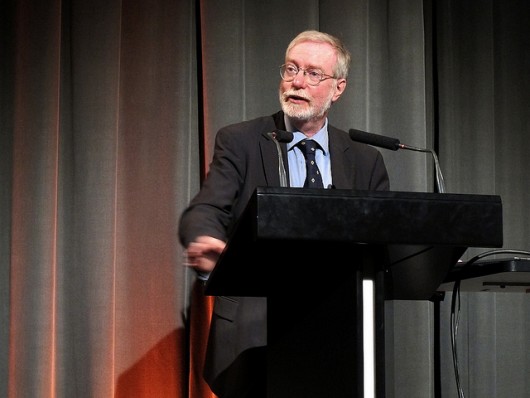 According to Paul Collier, a professor of economics at Oxford University and the author of “The Bottom Billion,” a book about the poorest one billion people in the world, “the countries at the bottom billion coexist with the 21st century, but their reality is the 14th century: civil war, plague, ignorance.”
Countries and their citizens in the bottom billion find their conditions getting worse, not better. For instance, during the 90s, while globalization lifted millions out of poverty in China and India, the income of the bottom billion “actually fell by 5 percent.”
Most of the bottom billion live in 58 countries, 70 percent of which are in Africa and most of the rest, in Central Asia. These countries are among the poorest in the category of “developing countries or Third World countries.” Some of the countries in the bottom billion include Rwanda, Congo, Sudan, Chad, Somalia and Ethiopia.
So how does a country fall within the bottom billion group? The answer to this is multidimensional and lies in what Collier terms as “poverty traps.” According to Collier, these poverty traps include conflict, being landlocked, abundant natural resources and bad governance.
When it comes to war-torn countries, Rwanda, Congo, Somalia and Sudan are some examples that fall into this category. As a result of the conflict, the economy is destroyed, lives of innocent civilians are damaged and the political unrest also causes isolation and a lack of foreign investment.
Being landlocked with bad neighbors is also a disadvantage for developing countries. When we consider a country like Switzerland, a landlocked country in the developed world, its proximity to its surrounding countries does not compromise its security and it has the ability to trade with powerful and wealthy neighboring countries. This is not the case for developing countries, which are often surrounded by poor or unstable countries.
Having abundant resources may sound like a benefit rather than a disadvantage. However, with countries like Sudan and Somalia, even though natural resources such as copper and diamonds are abundant, corrupt politicians and other leading authorities within the country are able to seize power and divide the spoils, making their economies more vulnerable.

With the levels of corruption in developing countries, it is impossible for there to be sustainable growth. Accountability, transparency, monitoring and evaluation are needed to advance these countries and lift their citizens out of poverty.
To address these issues, Collier believes that aid should be increasingly concentrated in the most difficult environments and military intervention should be focused on “protecting democratic governments.” For instance, the British helping Sierra Leone is an example of productive military intervention.
Laws and charters have also been put forward as possible solutions. Collier suggests that international charters should be adopted for natural resources, budget transparency, post-conflict situations and investment.
Finally, Collier highlights that the bottom billion need to diversify their exports and are in need of temporary protection from Asia.
The situation faced by people in the bottom billion, though dire, can be addressed. While outside intervention may be necessary in some cases, change ultimately must come from within, with the end goal being for countries to prosper autonomously and independently.
– Vanessa Awanyo
Sources: The Guardian, The Economist, GSDRC
Photo: Flickr
