• Link to X
  • Link to Facebook
  • Link to Instagram
  • Link to TikTok
  • Link to Youtube
  • About
    • About Us
      • President
      • Board of Directors
      • Board of Advisors
      • Financials
      • Our Methodology
      • Success Tracker
      • Contact
  • Act Now
    • 30 Ways to Help
      • Email Congress
      • Call Congress
      • Volunteer
      • Courses & Certificates
      • Be a Donor
    • Internships
      • In-Office Internships
      • Remote Internships
    • Legislation
      • Politics 101
  • The Blog
  • The Podcast
  • Magazine
  • Donate
  • Click to open the search input field Click to open the search input field Search
  • Menu Menu

Archive for category: Food & Hunger

Information and stories on food.

Developing Countries, Development, Food & Hunger, Food Aid, Foreign Aid, Global Poverty, Poverty Reduction, USAID

US Foreign Aid to Africa: What We Give and Why

us_foreign_aid

In 2012, the United States provided nearly $12 billion in official development assistance (“ODA”) to African nations. The ODA is allocated to education, health, infrastructure and economic development programs in recipient countries. Currently, the United States allocates foreign aid to 47 African nations and USAID operates 27 missions on the continent.

US Foreign aid to Africa began in the 1960s as many African nations gained independence and the United States sought strategic alliances to counter the influence of the Soviet Union. With the exception of disaster and famine relief, most foreign aid to Africa began to decrease with the collapse of the Soviet Union.

In the 2000s, President Bush more than tripled aid to Africa by establishing programs such as the Child Survival and Health Programs Fund as well as the Global HIV/AIDS Initiative.

Though foreign aid programs are designed to assist recipient nations with development, they also benefit the United States in a number of ways.

First, these programs help build strategic alliances and foster support for democratic transitions. It also stimulates Africa’s growth and development, which provides opportunities for increased trade and direct investment in the continent’s emerging markets.

But for all the benefits, foreign aid to Africa has no shortage of detractors. Many critics point out that much of the money allocated to Africa never reaches the people who most need the assistance. “Eighty percent of U.S. aid to Africa is spent right here in America — on American contractors, American suppliers, and so forth,” said George Ayittey, president of the Free Africa Foundation.

In more corrupt nations, politicians and civic leaders are often charged with misappropriating funds designated for the people. Others critics claim that foreign aid to Africa simply does not work—after 50 years of assistance, Africa still confronts the same issues.

But even critics would have to agree on one crucial point: foreign aid is an integral part of U.S. foreign policy. In Africa, aid programs support a large framework of social and economic assistance for developing nations.

Critics are correct that American companies and corrupt politicians siphon a large portion of foreign aid. But aid to Africa has also done much to improve infrastructure, bolster economic development and improve health care conditions for millions of people on the continent.

– Danial Bonasso
Sources: Foreign Policy Initiative, Washington Post, NPR, One.org
Photo: James Bovard

August 21, 2013
https://borgenproject.org/wp-content/uploads/borgen-project-logo.svg 0 0 Borgen Project https://borgenproject.org/wp-content/uploads/borgen-project-logo.svg Borgen Project2013-08-21 11:44:212024-12-13 17:49:39US Foreign Aid to Africa: What We Give and Why
Children, Food & Hunger, Health

Prenatal Sprinkles Offer Easy Solution to Malnourishment

Sprinkles_Prenatal_Health
According to the Hunger Project, a non-profit organization that works to end global hunger, “malnutrition occurs when the variety or quality of food is insufficient to support proper development and health.”

Roughly 15 percent of babies born in developing countries are of low birth weight due to maternal malnutrition, and even those born at a healthy weight are at risk for malnutrition due to insufficient breastfeeding. Malnutrition causes one-third of global child deaths, perpetuated as undernourished women give birth in low-resource settings.

When a malnourished woman gives birth to a low-birth weight baby that has already been affected by her mother’s malnourishment, the child will suffer from a compromised immune system and will most likely stay malnourished, even when she reaches reproductive age. Her child, too, will be born malnourished, and the cycle of malnourishment will continue.

Seeking to break the cycle of malnourishment, the Hospital for Sick Children in Toronto, Canada is developing a daily microencapsulated micronutrient powder through its affiliate SickKids.

Called “Prenatal Sprinkles,” this powder contains iron, folic acid and calcium. Pregnant and lactating women in poor areas can simply sprinkle their food with this supplement in order to combat malnutrition.

Prenatal Sprinkles will help to combat anemia during pregnancy, which often leads to premature birth, and preeclampsia associated with hypertension, which often causes maternal and fetal death.

Prenatal Sprinkles can potentially lower maternal hypertensive disease related mortality by 20 percent and preterm birth by 24 percent. Previously, supplements could not contain both iron and calcium due to poor absorption, but Prenatal Sprinkles contain differential time-release nutrients that increase iron and calcium absorption and prevent calcium-iron interaction. They also have a smooth texture and a pleasant flavor, making them palatable for malnourished women.

The Hospital for Sick Children is partnering with companies in the private sector in order to finance the production of Prenatal Sprinkles, but the projected cost of mass production is very low for the supplement.

Though Prenatal Sprinkles are not yet in wide circulation, they offer a simple and cost effective solution to malnutrition, a problem that cannot be solved by food aid alone.

– Katie Bandera

Sources: Sprinkles (R) 60mg Fe for Pregnant and Lactating Women, Issues: Malnutrition
Photo: Girls’ Globe

August 19, 2013
https://borgenproject.org/wp-content/uploads/borgen-project-logo.svg 0 0 Borgen Project https://borgenproject.org/wp-content/uploads/borgen-project-logo.svg Borgen Project2013-08-19 04:24:032024-05-25 00:17:53Prenatal Sprinkles Offer Easy Solution to Malnourishment
Food & Hunger, Health, Nonprofit Organizations and NGOs, Women and Female Empowerment

Project Concern International

Africa-Kenya-Agricultural-Extension-Development
Project Concern International (PCI) is an organization which seeks to to prevent disease, improve community health, and promote sustainable development worldwide. PCI was founded in 1961 by Dr. James Turpin after saving the lives of two children suffering from pneumonia while working in a Tijuana clinic. This experience inspired the young doctor to go on and forever change the lives of millions. PCI envisions a world in which resources are abundant and shared, communities are capable of providing for the basic health and well-being of its members, and children and families can achieve lives of hope, good health and self-sufficiency. PCI conducts its work through field offices in host countries where directors can live in the area and get an intimate understanding of local needs.

Working in 16 countries, PCI hopes to reach at least 5 million people per year with its services. Overtime, PCI has expanded its reach through increased funding: from the Bill and Melinda Gates Foundation to government grants to the Starbucks foundation, PCI has a well rounded list of supporters. PCI’s ultimate goals include addressing the root causes of poverty and poor health; working with the community to leverage their assets, capabilities and goals to create community-inclusive solutions; implementing holistic solutions; cultivating long-standing relationships with community leaders, investors, and stakeholders to catalyze the impact of aid spent; and developing tools which measure the long-term success of such programs. PCI addresses poverty through programs focused on women’s empowerment & poverty, children’s health, disease prevention, food & water programs, and disaster relief & recovery. Between 2013-2016, PCI hopes to reach over 10 million people worldwide and become a leader in building community capacity, resilience and self-sufficiency.

In addition to its programs worldwide, PCI also has a series of initiatives to further promote its goals. These intiatives include: Women Empowered, Legacy, Who Cares? and SHE.

  • Women Empowered: Established in May of this year, Women Empowered is an initiative in support of women’s equality, human rights and success. PCI believes that women are the solution to poverty, poor health and vulnerability and that through WE, women can attain social and economic empowerment. WE programs are currently being implemented in Guatemala, Bolivia, Botswana, and Malawi. One such success story comes from Maweta in Zambia. After raising six children of her own, Maweta returned to parenthood to raise her grandchildren after their parents died from AIDS. Without a steady source of income, Maweta struggled to provide for her grandchildren. After attending a community orientation hosted by PCI, Maweta began mobilizing women in her community to form a self-help group. Nine months later, Maweta has learned how to read and write, perform basic accounting and save $60 by selling mangoes to her community. Maweta has since received a loan to start a small business. Maweta buys food in bulk, repackages it into smaller quantities and sells these to her village. Since starting the business, Maweta has been able to provide for her grandchildren’s basic needs and education.
  • Legacy: PCI’s Legacy Programs focus on maternal/child health and nutrition, as well as economic empowerment. As the name suggests, ‘Legacy’ for PCI means consistent and compassionate commitment to the communities involved. These programs include: Well Baby clinics, Ventanilla de Salud (VDS), Casa Materna, and the Street and Working Children Program. Ventanilla de Salud (VDS) targets at risk immigrant populations near the border, by providing basic health and community services, while these families are waiting for service at the Mexican consulate. VDS has reached more than 41,000 people with health education information and nearly 20,000 with HIV/AIDS prevention messages. However, the VDS program suffers from a lack of funding and has been scaled back by more than 25 percent.
  • Who Cares?: An online campaign which celebrates, recognizes and encourages those who are giving back to the greater good. Who Cares? provides volunteers with the opportunity to network, share stories, or just get motivated about a cause. Who Cares targets the youth and young adults because they believe that the ability of today’s youth to mobilize others is huge, yet largely untapped. In addition, Who Cares provides tools to help the youth mobilize others and make their efforts pay off.
  • SHE: SHE, which is short for Strong, Health and Empowered, is a group of ambassadors who dedicate their time to PCI’s projects across the globe. These ambassadors work within the community to promote women’s empowerment and find innovative solutions to ensure that women lead strong, healthy lives.

To learn more about PCI’s work, explore PCIglobal.org for more info.

– Kelsey Ziomek

Sources: PCI Global, The San Diego Foundation, Washington Global Health Alliance, Coronado Eagle

August 19, 2013
https://borgenproject.org/wp-content/uploads/borgen-project-logo.svg 0 0 Borgen Project https://borgenproject.org/wp-content/uploads/borgen-project-logo.svg Borgen Project2013-08-19 03:25:382024-12-13 17:49:38Project Concern International
Food & Hunger

Malnutrition in India – An Unspoken Diagnosis

Malnutrition_India
Health reporter Harman Boparai recently travelled to India where he once practiced as a physician to learn more about child health in the country. In the pediatric ward at Panna District Hospital, Bopari reported that the children, who suffered from different illnesses and came from different villages, were all extremely undernourished. Nutrition has increasingly been recognized as a basic but crucial contributor for social and economic development.

According to the World Health Organization, 165 million children under 5 years of age suffered from stunted growth in 2011.This means that one in four of the world’s children did not get the right nutrients or food to grow. Of the total number of malnourished children in the world, one in every three lives in India. Adequate nutrition is essential in early childhood to ensure healthy growth, a strong immune system, proper organ formation and function, and neurological and cognitive development.

Economic growth and development also require well-nourished populations who have the capablity to learn new skills, think critically, and contribute to their communities. Boparai later traveled to New Delhi where he talked with individuals working on the issues. At Save the Children India, Shireen Miller, the nonprofit’s director for advocacy, explained that the implementation of government food security programs was essential to the survival of children in the country. “Malnutrition is a critical factor in child survival,” she said. “When we say that a child dies of illnesses like diarrhea and pneumonia, it is because of the fact that they’re malnourished which has reduced their ability to withstand that illness.”

According to UNICEF, in India, around 46 percent of all children under 3 are too small for their age, and 47 percent are underweight. The severity of the issue of malnutrition varies across states, with Kerala among the lowest rates at 27 percent, and Madhya Pradesh at the highest rate of 55 percent. To reverse the current trend, the Government of India started a program under the Integrated Child Development Services (ICDS), which works to provide poor Indian children with the nutrients needed to grow and end malnutrition in India. The program not only provides immunization and supplementary nutrition, but also educates pregnant women and mothers of young children on health and nutrition.

ICDS in India is the world’s largest integrated early childhood program, with over 40,000 offices nationwide. The program today covers over 4.8 million expectant and nursing mothers and over 23 million children under the age of six. Of these children, approximately half participate in early learning activities. Across the developing world, 66 million children go to primary school hungry. This lack of nutrition means these children are less likely to perform at their full potential in school. The World Food Programme estimates that $3.2 billion is needed annually to reach all 66 million hungry school-aged children, or less than 0.2 percent of the world’s military spending.

– Ali Warlich

Sources: Global Post, WHO, UNICEF, Global Issues

August 18, 2013
https://borgenproject.org/wp-content/uploads/borgen-project-logo.svg 0 0 Borgen Project https://borgenproject.org/wp-content/uploads/borgen-project-logo.svg Borgen Project2013-08-18 05:58:212024-05-25 00:16:17Malnutrition in India – An Unspoken Diagnosis
Food & Hunger, Human Rights

5 Companies Using Fair Trade Chocolate

Ben & Jerry's Fair Trade
It’s been a long day at work and you finally have a chance to sit down with a bowl of chocolate ice cream in front of the television. While flipping through channels, you come across a news story about child slavery in the Ivory Coast, where 43% of the world’s cocoa is produced. You pause with a spoonful of creamy goodness on the way to your mouth and think, “Isn’t anything safe anymore? Can’t I just enjoy my chocolately treat in peace?”

At this point, you have two options: you can keep flipping the channels and focus on how tasty your ice cream is, or you can finish reading this post to discover where to buy fair trade, guilt-free chocolate. Although, it really isn’t much of a choice, now that images of child slaves are lugging bags of cocoa beans around inside your head.

Lucky for everyone involved, many companies are making the switch to Fair Trade cocoa. Fair Trade USA, a non-profit that certifies American products as Fair Trade, currently works with more than 800 companies to ensure that their products comply with all international Fair Trade standards. They certify a multitude of products, including tea and herbs, fresh fruit and vegetables, sugar, flowers, nuts, honey, and (thankfully) cocoa.

The following list consists of five companies that are using Fair Trade cocoa, as determined by Fair Trade USA. These are just a few of the many companies from which you buy chocolate that tastes great and makes you feel even better.

For your ice cream fix, go with Ben & Jerry’s. The Vermont-based company is in the process of converting all ingredients to Fair Trade and profiles their progress by flavor on their website. Their Chocolate Therapy flavor is currently made with 71% Fair Trade ingredients, so eat up!

If you need some dairy-free creaminess, meet NadaMoo. This delicious coconut milk ice cream is organic and Fair Trade Certified. With flavors like Java Crunch, Lotta Mint Chip, and Gotta Do Chocolate, you can enjoy pint-sized dairy-free and slavery-free yumminess.

When chocolate-covered treats catch your eye, look for a SunRidge Farms label. Their organic and Fair Trade Certified dark chocolate-coated almonds, cacao nibs, espresso beans, goji berries, and raisins are sure to satisfy your sweet tooth (or teeth).

Looking to build some muscle with chocolate-y goodness? Tera’s Whey Organic Fair Trade Certified Dark Chocolate Whey Protein is your answer. Your endorphin high combined with that warm fuzzy feeling from buying Fair Trade will leave you feeling fantastic.

For your baking needs, try SunSpire’s organic and Fair Trade chocolate chips and baking bars. When making its chocolate products, SunSpire doesn’t use refined sugars, hydrogenated oils, preservatives, or artificial colors or flavors. The company has also made a long-term commitment to its cocoa farmers through their Caring for Cocoa Communities program, which provides hands-on support for growers and helps to foster growth in their communities.

Now that you’re armed with information, it’s time to head to the store and support these companies using Fair Trade chocolate. Who knew doing the right thing could be so delicious?

– Katie Fullerton

Sources: Fair Trade USA, Ben & Jerry’s, NadaMoo, SunSpire

August 16, 2013
https://borgenproject.org/wp-content/uploads/borgen-project-logo.svg 0 0 Borgen Project https://borgenproject.org/wp-content/uploads/borgen-project-logo.svg Borgen Project2013-08-16 05:35:452024-12-13 17:49:385 Companies Using Fair Trade Chocolate
Food Security, Water

Restored Canal in Cambodia Brings Hope

canal_opt
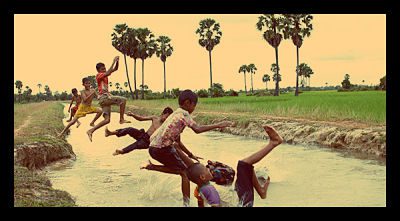
The restored canal in Cambodia has transformed lives for small rice-farming communities that depend heavily on rice for their livelihoods. Rice farming is the main source of income for 80% of Cambodia’s 14.5 million population, however, for years, farmers in the region have only been able to expect one rice cycle. Thanks to the restored canal, those in the area have enjoyed three harvests in just nine months, increasing total rice yield three times over.

Previously, the canal that zigzags across the rice paddy in the southern region of Cambodia was shallow, meaning that farmers had to depend on rainwater for a successful crop yield. Rainfall can be erratic and unpredictable. Two years before the restoration of the canal started, a bad drought destroyed rice crops, leaving scores of people hungry. The restoration involved dredging and enlarging 47 kilometers of canal in order to feed water to more than 41,100 hectares of rice in 12 provinces. Now at 6.5 kilometers wide, the canal is linked to a lake, and provides farmers with enough water to grow rice in three cycles of three months each. As a result of the project, approximately 11,240 families across the 12 provinces will have better irrigation for farming.

The restoration of the canal was funded by Sweden and Australia, and the work was carried out by an NGO in conjunction with local authorities. It was launched in an effort to help communities in vulnerable areas manage the risks of climate change. With the impacts of climate change expected to adversely affect the production of rice, it has been a goal of the UNDP to put mechanisms in place that will help to guarantee food production and food security in the future.

With rice yields already on the increase, farmers in the region are beginning to feel the financial benefits. Lim Savoeun, a rice-farmer, said the increased profits have made a big difference for her family. “In the past, we struggled to scrape by and sometimes had to loan money from others to fill the gap [in the income],” she said. “But we can avoid that since we are now able to grow rice for often that before. As long as there is water, we will keep working tirelessly on our land. We can’t complain.”

– Chloë Isacke

Sources: UNDP, United Nations
Photo: New York Times

August 12, 2013
https://borgenproject.org/wp-content/uploads/borgen-project-logo.svg 0 0 Borgen Project https://borgenproject.org/wp-content/uploads/borgen-project-logo.svg Borgen Project2013-08-12 05:51:072024-06-05 01:53:36Restored Canal in Cambodia Brings Hope
Food & Hunger

Diplomacy by Gastronomy

chefs_opt
Chefs of world leaders are teaming up to feed New York City’s hungry this year. These professional chefs are members of Le Club des Chefs de Chefs, the organization of chefs for the world’s leaders. They will be teaming up with InterContinental Hotels & Resorts to serve high quality food to more than 200 individuals in New York’s Xavier Mission. The 20 chefs involved will create food “fit for a king” and will use this special luncheon event as a way to highlight world hunger.

Some of the participating chefs include Chef Cristeta Pasia Comerford, Chef to President Obama, and Chef Christian Garcia, president of the club and personal chef to Prince Albert II of Monaco. Other participating chefs hail from Canada, India, Denmark, France, and Italy, amongst several other nations.

On Saturday July 27, the chefs provided a variety of home-style cooking at Xavier Mission. 10 special dishes were featured and available to the residents of the mission. The next week, 16 restaurants of InterContinental will feature the dishes as part of their “Fit for Royalty” Menu. The proceeds from these menu items will be donated to local food banks. The menu will allow guests of the restaurants to sample what world dignitaries eat and, at the same time, draw attention to the world hunger.

Most importantly, these chefs are engaging in a new type of diplomacy by gastronomy. The world’s food issues are a topic that needs to be addressed everywhere. By combining their experience and collaborating on ideas, today’s chefs can urge world leaders to tackle global hunger. Moreover, as food experts, chefs can be leaders in the discussion on food and hunger.

In a compelling article on CNN’s Eatocracy, Chef José Andrés outlines why he believes that chefs should be involved in the fight against hunger. He suggests that food promotes a sense of fellowship that extends beyond borders. As experts of food, chefs can bridge the gap between world leaders using food as common ground.

Even Secretary of State Hillary Clinton herself has said, “Better and more effective diplomacy can happen around a dining table than at a conference table.” Diplomacy by gastronomy has the ability to be a powerful tool in mobilizing the fight against world hunger. By sharing their recipes, 20 world leader’s chefs will be able to both feed the hungry and mobilize action against food insecurity.

– Grace Zhao

Sources: CNN Eatocracy
Sources: New York Times

August 6, 2013
https://borgenproject.org/wp-content/uploads/borgen-project-logo.svg 0 0 Borgen Project https://borgenproject.org/wp-content/uploads/borgen-project-logo.svg Borgen Project2013-08-06 06:37:542017-03-20 13:03:38Diplomacy by Gastronomy
Food & Hunger, Food Security, United Nations

FAO Perennial Crops for Food Security

perennial_crops
The UN Food and Agriculture Organization (FAO) will hold a workshop on Perennial Crops for Food Security later this month to highlight the development of a perennial wheat variety by NSW Department of Primary Industries (DPI), CSIRO and Charles Sturt University.

DPI was recently successful in growing a perennial wheat variety in the Cowra district in Australia. Perennial crops offer significant benefits in sustainability that support efforts to address food security. The wheat variety will produce for three consecutive years compared to other wheat varieties produce only one year. DPI is also pursuing research in inter-cropping of perennials in Cowra. Their work involves planting perennial grain and legumes side by side to boost soil nutrition.

In addition to discussing developing new perennial crops the workshop will focus on increasing perennial crop yields and integrating these crops in production cycles. Perennial crops are more sustainable as they are able to be harvested without killing the plant. This ensures that the plant continues to grow and produce. The perennial crops are also heartier and able to survive temperature changes and extremes. However, annual plants have received the vast amount of technological attention (i.e. corn).

However, there are several barriers to encouraging farmers to adopt these crops. In regions where land tenure or ownership rights are tenuous, investing in perennials crops does not appeal to farmers who do not need investment security of perennials. Many of these crops take several years to establish and produce a crop and it can be difficult to convince farmers that this investment is worth the wait. The specialized equipment and the new techniques required do not make conversion any easier and often involve a high price tag.

The FAO expert workshop will include speakers from several countries. These experts will discuss trends and the status of various perennial crop developments. The gaps and opportunities for integrating these crops in the production chain will also be addressed by presenters. Speakers and participants also come from diverse public and private backgrounds.

Perennial crops will be a long term solution for food security, as demonstrated by the various barriers that must be overcome. However, the many benefits that they present make it an important endeavor. If food security is to be achieved and 9 billion people fed by 2050, scientists and international development specialists must pursue a variety of options.

– Callie D. Coleman

Sources: Cowra Guardian, FAO, Perennial Solutions
Photo: Perennial Solutions

August 6, 2013
https://borgenproject.org/wp-content/uploads/borgen-project-logo.svg 0 0 Borgen Project https://borgenproject.org/wp-content/uploads/borgen-project-logo.svg Borgen Project2013-08-06 06:18:572024-12-13 17:49:37FAO Perennial Crops for Food Security
Food & Hunger, Health

How Prevalent is Stunted Growth?

Stunted_Growth
Millions of children around the world suffer from undernutrition. It is defined by UNICEF as a diet bereft of the calories and proteins necessary for growth and bodily maintenance, or the inability to utilize the nutrients in food due to an illness. This undernutrition is the cause of death of 5.6 million children in the developing world annually. And it is largely responsible for the stunted growth of millions of others.

Stunted growth, or low-height for age, can be attributed to a number of factors including infection, parasites, and, as mentioned, undernutrition. While these factors are not explicitly related, they are each correlated with lower incomes and poverty. Moreover, as a result of these conditions, particularly during the early years of a child’s life, he or she may not receive the nutrients necessary for proper development.

Stunting could begin as early as gestation in the womb, and has lifelong consequences as a “chronic restriction of a child’s growth.” Children with stunted growth have restricted brain development, preventing them from achieving their full potential in schooling and the workforce thereafter. In terms of disease, stunting puts children at a greater risk of dying from infection.

The countries in the world with the highest prevalence of stunted growth include Peru, India, Ethiopia, and Vietnam. These countries have risen to the challenge of preventing stunted growth in their children, like Peru with its “5 by 5 by 5” program. This specific program aimed to “reduce stunting in children under 5 by 5 percent in 5 years” by following simple steps like bettering women’s nutrition, encouraging breastfeeding, providing vitamins and nutrient-rich foods, and so on. The success has been widespread in Peru and elsewhere. By 2011, stunting in Ethiopia was reduced from 57% to 44% in children below the age of 5.

– Lina Saud 

Sources: Do Something, World Food Programme, UNICEF, Princeton Publications
Photo: Flikr

August 6, 2013
https://borgenproject.org/wp-content/uploads/borgen-project-logo.svg 0 0 Borgen Project https://borgenproject.org/wp-content/uploads/borgen-project-logo.svg Borgen Project2013-08-06 05:58:392024-05-25 00:13:28How Prevalent is Stunted Growth?
Food & Hunger, Food Aid, Food Security

5 Things You Didn’t Know about Hunger

hunger_child
Did you know that…

  1. Today, 870 million people worldwide suffer from hunger. Despite a 130 million decrease since 1990, progress has been slower since 2008.
  2. 98 percent of the underfed – 852 million – live in developing countries, where almost 15 percent of the population is undernourished. By contrast, in developed countries, 16 million people are underfed.
  3. Gender-related discrimination has repercussions on hunger statistics. Indeed, if women farmers had access to the same resources as men, up to 150 million underfed people would no longer be hungry.
  4. 45 percent of deaths of children under five are due to poor nutrition. This represents 3.1 million children each year.
  5. The World Food Program calculated that only US $3.2 billion is needed to satisfy the 66 million primary school-age children who attend class hungry.

– Lauren Yeh

Sources: WFP, FAO
Photo: Huffington Post

August 6, 2013
https://borgenproject.org/wp-content/uploads/borgen-project-logo.svg 0 0 Borgen Project https://borgenproject.org/wp-content/uploads/borgen-project-logo.svg Borgen Project2013-08-06 05:01:242024-12-13 17:49:345 Things You Didn’t Know about Hunger
Page 68 of 78«‹6667686970›»

Get Smarter

  • Global Poverty 101
  • Global Poverty… The Good News
  • Global Poverty & U.S. Jobs
  • Global Poverty and National Security
  • Innovative Solutions to Poverty
  • Global Poverty & Aid FAQ’s
Search Search

Take Action

  • Call Congress
  • Email Congress
  • Donate
  • 30 Ways to Help
  • Volunteer Ops
  • Internships
  • Courses & Certificates
  • The Podcast
Borgen Project

“The Borgen Project is an incredible nonprofit organization that is addressing poverty and hunger and working towards ending them.”

-The Huffington Post

Inside The Borgen Project

  • Contact
  • About
  • Financials
  • President
  • Board of Directors
  • Board of Advisors

International Links

  • UK Email Parliament
  • UK Donate
  • Canada Email Parliament

Get Smarter

  • Global Poverty 101
  • Global Poverty… The Good News
  • Global Poverty & U.S. Jobs
  • Global Poverty and National Security
  • Innovative Solutions to Poverty
  • Global Poverty & Aid FAQ’s

Ways to Help

  • Call Congress
  • Email Congress
  • Donate
  • 30 Ways to Help
  • Volunteer Ops
  • Internships
  • Courses & Certificates
  • The Podcast
Scroll to top Scroll to top Scroll to top