• Link to X
  • Link to Facebook
  • Link to Instagram
  • Link to TikTok
  • Link to Youtube
  • About
    • About Us
      • President
      • Board of Directors
      • Board of Advisors
      • Financials
      • Our Methodology
      • Success Tracker
      • Contact
  • Act Now
    • 30 Ways to Help
      • Email Congress
      • Call Congress
      • Volunteer
      • Courses & Certificates
      • Be a Donor
    • Internships
      • In-Office Internships
      • Remote Internships
    • Legislation
      • Politics 101
  • The Blog
  • The Podcast
  • Magazine
  • Donate
  • Click to open the search input field Click to open the search input field Search
  • Menu Menu

Archive for category: Food & Hunger

Information and stories on food.

Food & Hunger, Food Aid, Global Poverty, Health

World Hunger is Biggest Threat to Global Health

Though it is rarely featured in the daily headlines, world hunger has become the greatest problem facing the world today. Every day, 1 in 8 people go hungry worldwide. The situation has become so severe that experts now recognize hunger as the largest risk to health – surpassing AIDS, malaria, and tuberculosis combined.

Hunger is the worst in developing nations, where nearly 98 percent of the world’s hungry reside. Africa has the greatest number of countries with the highest categories of hunger – in at least 19 of its nations more than 25 percent of the population goes hungry. These issues are exacerbated by war and crisis. For people forced from their homes by violence and for other refugees, food is scarce.

The United Nations spends about $30 million weekly to keep food aid flowing to these problem areas. The efforts of the UN alone are not enough, however. In order to combat this global health risk, the hunger problem needs to be addressed on a global scale.

“It’s getting to a point where if the international community doesn’t wake up and realize that they have to, they must make efforts to find a political solution, otherwise we are not going to be able to sustain this level of response,” said Mathew Hollingworth of the World Food Program. Without the help of the international community, world hunger will continue to endanger people around the world.

– Sonia Aviv

Sources: ENCA, World Food Programme, 15 Min. News
Photo: The Inspiration Room

October 13, 2013
https://borgenproject.org/wp-content/uploads/borgen-project-logo.svg 0 0 Borgen Project https://borgenproject.org/wp-content/uploads/borgen-project-logo.svg Borgen Project2013-10-13 04:00:402024-06-04 02:43:59World Hunger is Biggest Threat to Global Health
Children, Food & Hunger, Food Aid, Food Security

Optifood Software Analyzes Diets to Address Malnutrition

Working through the World Health Organization (WHO), a team of scientists and programmers have created a new software that is capable of analyzing a person’s diet and determining what in their geographic area can be used to supplement nutritional deficits cheaply. The software is currently undergoing USAID-approved trials in Guatemala, with promising results.

According to the Food and Nutritional Technical Assistance III Project (FANTA), malnourished children in the two studied Highlands communities of Huehuetenango and Quiche can be adequately fed for 25-50¢ US each day. The study consists of randomly selected children in the two communities between the ages of 9 and 11 months, and suggests that in addition to breastmilk, potatoes, beans, eggs, tortillas, and fortified cereal, a local powder called Chispitas would complete the children’s diet. Currently, Chispitas is only available to some communities in Guatemala.

With the average Guatemalan woman giving birth to three children, and the average Highlands household earning US$3.15 per day, even Optifood’s findings will require effort to become reality. Most families simply cannot spend 8-15 percent of their income feeding a single baby. And despite the fact that the ingredients in Chispitas can be found locally, the finished product is most available in urban areas where poverty is more severe than in the Highlands.

Whatever the practical limitations, Optifood takes a great step forward by simply identifying, in almost real time, what the nutritional problems are and the optimal, if ultimately impossible, solutions. With workshops being offered in Guatemala and a handful of other countries, to educate local aid workers in the use of the software, hard data can begin to emerge from poor areas and provide international agencies like the WHO the information it needs to assess priorities. It also gives national programs, such as Guatemala’s Zero Hunger Initiative, with a clear set of objectives to accomplish.

As one of the major criticisms of aid organizations is the uncertainty about what funding can actually accomplish, Optifood is able to provide a nutritional “before and after” comparison, elucidating the problem and demonstrating the effects of policy changes or investments.

– Alex Pusateri

Sources: USAID Blog, Google Translate, CIA, INCAP, FANTA Project
Photo: Hunger and Undernutrition Blog

October 11, 2013
https://borgenproject.org/wp-content/uploads/borgen-project-logo.svg 0 0 Borgen Project https://borgenproject.org/wp-content/uploads/borgen-project-logo.svg Borgen Project2013-10-11 04:00:392024-05-25 00:24:30Optifood Software Analyzes Diets to Address Malnutrition
Economy, Food & Hunger

Inflation and Food Shortages in Venezuela

For residents of Venezuela, food and grocery shortages have become a part of daily life. Outside of many government-subsidized grocery stores, people line up before dawn hoping to purchase what they can before supplies run out. Items such as milk, meat and toilet paper are bought up quickly. The shortages have lasted for more than a year, prompting calls for President Madura to reevaluate the economic policies of his predecessor, Hugo Chavez.

Though Venezuela is one of the most oil rich nations in the world, it is struggling to mitigate inflation and keep subsidized grocers stocked with products. Many experts say that strict price controls are to blame for the country’s economic problems, while President Maduro insists that it is all part of an effort by the opposition and CIA to destabilize the government and sabotage Venezuela’s oil industry.

Asdrubal Oliveros, an economist at one of Venezuela’s leading consulting firms, told the Guardian that the current crisis is the result of several factors, which include the country’s overreliance on imports and the government price controls. Another factor is the decrease in agricultural production due to the government’s recent land expropriations. “It’s cheaper to import than it is to produce,” Oliveros said. “That’s a perverse model that kills off any productivity.”

Many economists echo Oliveros analysis, saying that the Venezuelan government is not helping the problem by fixing prices so low. When prices are set low, companies and producers are not able to make a profit—this, in turn, leads to a cessation of farming, manufacturing, and production. Originally designed to help Venezuela’s poor and working classes afford food and staples, the price-fixing program has instead led to empty shelves and long queues.

After becoming President of Venezuela, Hugo Chavez and his ministers sought to reduce the growing wealth disparity in their country. To achieve this, they implemented price controls on certain goods so as to make them cheaper for individuals and families with lower incomes. This step and increased spending on social programs, however, may be contributing to the country’s current economic crisis.

Aggravating the problem is the fact that inflation is increasing at an alarming speed. In August, 12-month interest rates rose to 45.4 percent. This is the highest since Venezuela’s hyperinflation crisis in the mid-1990s. Officials in Maduro’s government have said that they will be considering changes in the country’s economic policies in an effort to combat the rising prices and food shortages in Venezuela.

– Daniel Bonasso

Sources: The Guardian, New York Times, Wall Street Journal

October 9, 2013
https://borgenproject.org/wp-content/uploads/borgen-project-logo.svg 0 0 Borgen Project https://borgenproject.org/wp-content/uploads/borgen-project-logo.svg Borgen Project2013-10-09 20:55:002024-05-25 00:24:18Inflation and Food Shortages in Venezuela
Food & Hunger, Food Aid, Foreign Aid, Global Poverty, USAID, Water

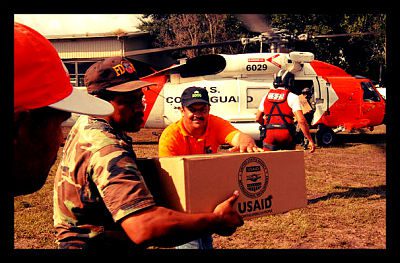
Foreign Aid, Where Does It Go? A Look at USAID

American Foreign Aid USAID
The United States Agency for International Development (USAID) is a successful program engineered to combat poverty. USAID has focused on diminishing poverty in several aspects. Improving nutrition, assisting in food aid, and advancing water supplies are all important USAID goals. These three issues are connected on a deeper scale, as improving nutrition levels is conjoined with clean water supply and food aid assistance.

Proper nutrition is a basic necessity for every human. Malnutrition leads to approximately 2.6 million deaths per year, deaths that could be prevented if steps were taken to counteract malnutrition. USAID has partnered with Scale Up Nutrition (SUN) to help achieve basic nutritional improvement in impoverished areas throughout the world.

USAID and SUN have laid out a strategic approach to achieve their goal. They plan to prevent malnutrition through a package of maternal, infant, and young children programs. USAID and SUN will also combat malnutrition by targeting supplementation to vulnerable groups, managing malnutrition through community based projects, providing nutritional care for those living with HIV/AIDS, and improving the quality of food in the food assistance programs.

USAID is not only well prepared to handle global malnutrition levels; they are also prepared on the food assistance front. USAID works with the UN World Food Programme (WFP) to effectively deliver lifesaving aid to food-barren areas. USAID and WFP have developed a working protocol that efficiently delivers food supplies to shortages worldwide.

USAID and WFP are constantly upgrading their food science programs, allowing them to deliver greater amounts of healthy food to needy areas. USAID is using a supply-chain management system that allows food to be sent out more efficiently. The programs have also combined to implement an emergency food service, which allows USAID and WFP to purchase emergency food in disaster-stricken areas. In addition, USAID also funded the Famine Early Warning System (FEWS), which is highly regarded as one of the best early-warning systems in the world.

Food and nutrition are two basic necessities in life. These epidemics are two of the most common problems known worldwide, yet a third is often overlooked. Lack of clean water supplies is just as important, and it receives a similar amount of attention from USAID. USAID has a specifically laid out plan to implement clean water supplies in needy areas. USAID focuses on increasing access to a sustainable water supply for all communities, finding a way to sanitize the water supplies, and teaching the community key hygiene behaviors to keep the water sanitized.

Through the actions of USAID, positive results can be seen in all of the targeted areas. In 2011, 3.8 million people had better access to clean water. USAID and affiliated programs provided over 1.5 metric tons of food to communities in 2012. The nutrition programs have been equally effective, with predictions that malnutrition will decrease by 20 percent in the next two years in targeted countries. The progress can be easily seen; all of which were made possible by the foreign aid budget that often falls under much criticism.

– Zachary Wright

Sources: USAID, USAID: Food Aid, USAID: Nutrition
Photo: Flickr

October 7, 2013
https://borgenproject.org/wp-content/uploads/borgen-project-logo.svg 0 0 Borgen Project https://borgenproject.org/wp-content/uploads/borgen-project-logo.svg Borgen Project2013-10-07 18:15:212024-05-25 00:23:47Foreign Aid, Where Does It Go? A Look at USAID
Extreme Poverty, Food & Hunger, Food Aid, Global Poverty, Technology

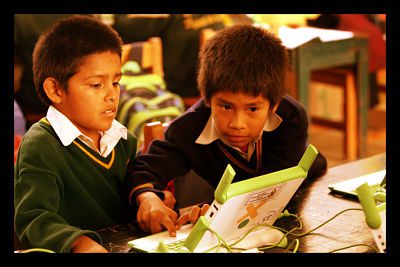
Why Technology Won’t Solve World Hunger

Technology Won't Solve World Hunger Kids Using Laptop
Ideas for ending world hunger are the subject of deep contention and intrigue. Conversations about how best to go about ending hunger are held among regular people far removed from the international, sociopolitical arena or non-profit sector, as well as among leaders in national governments and conferring minds within the United Nations.

Duncan Green in The Guardian recently reminded the world of the stark contrasts between those who can afford to eat and the nearly 900 million who sleep on empty stomachs. Progressive efforts underway in Ghana and Brazil have seen initiatives such as cash transfers to the impoverished and an increase in minimum wage. These programs have made strides, but in nations like India that are growing exponentially, the government must address the issue.

Of the myriad of ways to eradicate hunger, is technology perhaps a truly viable option at this point? If so, are the contributions made by technology being overlooked as a way to finally solve world hunger, or is technology simply a tool in this case?

Josette Sheeran, blogging for The Huffington Post, seems to think that technology is something of a cure-all for world hunger. She talks of the electronic vouchers used in Palestinian territories that give people greater access to food. The World Food Programme (WFP) is responsible for that, and other projects, such as the one in the Philippines that uses texting to feed workers. People participate in work projects and can collect their payment at participating food shops.

The WFP also uses social media with their WeFeedBack initiative that lets the user online select a favorite food and using a special calculator, can see based on its cost how many children would be fed with it. The calculated amount is what WFP encourages the user to donate.

Not long ago, a lab-grown burger patty was cooked and eaten in view of the public, touted as a way to help save both planet and people. A report from The Atlantic posits that the world already produces enough food to feed a growing global population and that new technology won’t necessarily solve the hunger crisis. Three-dimensional food printers are also a new tech tool being developed, but the report makes the case that in-house food printers won’t be an appliance in every kitchen because regular people cannot figure out the technology.

Why, then, would these technologies work in the emergent world? And, even if labs in emergent nations were capable of mass producing meat, consumption would be limited to the middle class and upper classes.

Sarah Sloat for Pacific Standard cites a 2012 paper by CUNY law student Rebecca Bratspies that says food production has grown inversely proportional to the hungry. Better food distribution will help solve hunger more than technological developments. The feeling, then, is that even with the massive amount of resources available to solve the world hunger crisis, the solutions are not dependent upon increased production.

Technology in food production has proven to increase production, but access is still contingent upon how food is distributed and how easily available it is to those who need it. Getting there may not be an issue of widespread production, but rather individual nations doing what they can to feed citizens.

– David Smith

Sources: The Guardian, The Atlantic
Photo: Huffington Post

October 2, 2013
https://borgenproject.org/wp-content/uploads/borgen-project-logo.svg 0 0 Borgen Project https://borgenproject.org/wp-content/uploads/borgen-project-logo.svg Borgen Project2013-10-02 20:43:142017-02-21 12:51:45Why Technology Won’t Solve World Hunger
Developing Countries, Food & Hunger, Food Aid, Food Security, Global Poverty, Inequality, Poverty Reduction

Could GMO’s Help Prevent Food Shortages?

Genetically_Modified_Crops_Prevent_Food_Shortages
With the world population expected to double by 2050, food security will continue to be an increasingly complicated and important issue. More food will be needed to feed more people and, to preserve vital biodiversity sites, we’ll need to produce this additional food using land already devoted to agriculture. While there are many factors that could improve agricultural efficiency, genetically modified crops hold the most potential. Many scientists now believe that transgenic plants could help prevent or minimize future food shortages.

Transgenic plants are those that possess an inserted portion of DNA either from a different member of their own species or from an entirely different species. The inserted DNA serves some special purpose, such as allowing the plant to produce natural insecticides. Once the genes are transferred, they can be passed on to offspring through simple fertilization, allowing farmers to breed advantageous traits in their plants. Transgenic plants have proven extremely profitable in the developed world, accounting for a 5% to 10% increase in productivity, and reducing the cost of herbicides and insecticides.

Such methods could effectively increase productivity in the developing world, where a surge in food production is sorely needed. Developing countries, especially those in the tropics and subtropics, suffer severe crop losses due to pests, diseases, and poor soil conditions. In addition, a lack of financial capital often prevents farmers from investing in high quality seeds, insecticides, and fertilizers. Poor post-harvest conditions such as inadequate storage facilities and thriving fungi and insect populations also fuel crop loss. Currently, pests destroy over half the world’s crop production. Transgenic plants could provide an innovative solution.

Fortunately, bioengineering solutions can be easily adapted from one species to another, allowing one advancement in plant biotechnology to quickly produce many more. For example, insect-resistant strains of several important plant species have been produced using one specific endotoxin. Commercial production of insect-resistant maize, potato, and cotton has already begun. Plant bioengineers hope to use similar technology to create fruits that ripen more slowly, allowing for longer shelf lives and less post-harvest crop loss.

It is important to note that this technology has mostly been established with the developed world in mind. Therefore, adapting it for use in the developing world must be done carefully. For instance, many crops grown in the developing world are local varieties and have not been extensively tested thus far by plant bioengineers. Blindly replacing local crops with bioengineered varieties from the developed world could disturb deep social or religious traditions that are represented in the widely varied cultures in the developing world. Additionally, societies are more likely to embrace a familiar crop than a foreign one. Research and development in bioengineering must, therefore, adapt to include the crops of the developing world.

Although the globe produces enough food for everyone, people everywhere continue to die of starvation. With this unequal distribution in mind, it is imperative that, moving forward, small farmers in the developing world receive the same access to plant biotechnology given to large agribusinesses in the developed world. First-world corporations cannot be granted even more unfair advantages over small landholders in poorer nations, especially as global populations grow and food security becomes ever more scarce and important. As this technology is developed, it is up to us to share it with the developing world in order to minimize severe food shortages in the years to come.

– Katie Fullerton

Sources: Plant Physiology, Colorado State University
Photo: Tree Hugger

August 31, 2013
https://borgenproject.org/wp-content/uploads/borgen-project-logo.svg 0 0 Borgen Project https://borgenproject.org/wp-content/uploads/borgen-project-logo.svg Borgen Project2013-08-31 08:18:222024-06-05 01:53:37Could GMO’s Help Prevent Food Shortages?
Activism, Food & Hunger

40 Hour Famine at Hennessey Catholic College

40_hour_famine
Hennessey Catholic College Students have decided to experience what world hunger and poverty is truly like in their own, unique way. The school has formed the 40-hour famine team with the goal of raising both money and awareness for those suffering from extreme poverty and international conflicts in Malawi, Ethiopia, East Timor, Nepal, Tanzania and Ugandav. The students are given the opportunity to experience the tribulations of those living in developing areas, sacrificing basic human needs such as sleep and food to fully immerse themselves in the struggle of living on less than a dollar a day.

The conflicts in Malawi are worsening. Nearly two million people in southern Malawi are starving and almost half of Malawians live on less than a dollar a day. With a population of almost 16 million people, that means nearly eight million citizens live below the poverty line. For Hennessey students, these statistics are troubling.

Starting at eight PM on the 16th of August and ending at noon on the 18th, 35 students will make multiple sacrifices for the cause. Below are some of the sacrifices individuals are contributing to the 40-hour famine campaign.

  • A Year 7 student trading in comfort of bed to sleep on floor, a reality many Malawians face every day.
  • A Year 10 student remaining awake for 40 hours, something children living in fear must do often.
  • A Year 12 student is giving up the Internet for 40 hours, something many children have never even used before.
  • A Year 8 student will rely on juice, tea, water and sugars, cutting out the luxury food and drinks that developing countries don’t have.

The students plan to raise $1500 dollars for the cause in hopes of helping those in need. Hennessey teacher and 40-hour famine leader Leonie Green said she is impressed with the student’s dedication to raising awareness, all the while learning very valuable lessons.

“It’s good to get people educated and not taking for granted what we have so much of,” she said.

– William Norris
Sources: The Young Witness, World Bank
Photo: World Vision

August 28, 2013
https://borgenproject.org/wp-content/uploads/borgen-project-logo.svg 0 0 Borgen Project https://borgenproject.org/wp-content/uploads/borgen-project-logo.svg Borgen Project2013-08-28 11:30:552024-12-13 17:49:3940 Hour Famine at Hennessey Catholic College
Food & Hunger, Food Security

Algeria Food Security

Algeria_food_security
Algeria has launched an agriculture development program designed to boost domestic production. Using its increased revenue from hydrocarbon exports, the country will tackle food security through a variety of programs working with farmers in rural and low-income areas.

Like most of North Africa, Algeria imports a substantial portion of its food. As a result, it is extremely vulnerable to shifts in commodity pricing. In 2011 riots broke out across Algeria due to the high price of sugar and cooking oil and were influenced by the Arab Spring in neighboring nations as well.

In response, the Algerian government reduced the import taxes on these two goods. While the riots may have died down the country remains vulnerable to similar price spikes. As a result Algeria heavily subsidizes key food items that are estimated to amount to 1.1% of gross domestic product (GDP) in 2013.

Algeria imports almost seventy percent of its wheat consumption. Egypt also imports a significant percentage of food and is the world’s largest importer of wheat. The Egyptian government also uses a system of subsidies in an attempt to alleviate the price burden. However, these governments recognize subsidies are not a sustainable way to ensure food security.

Algeria’s agriculture development program will focus on improving farm management practices, addressing regulations, and promoting modern technological practices in the industry. Previously the country’s food security programs have focused on putting more arable land into production. While useful, this is not a sustainable way to ensure the country’s food security.

More effective programs have focused on public-private partnerships that help introduce modern farming practices among rural growers. These practices have helped increase agricultural output by 23 percent in 2011 and an additional 32 percent in 2012.

The country wishes to increase its irrigated acres, adding 0.5 million hectares to the current 1.1 million currently irrigated by 2014. Algeria will also focus on developing its infrastructure. This will be a key component to affecting agricultural development in remote areas, which in a country of Algeria’s size are significant. This component will also include development efforts to reduce post-harvest losses through storage and transportation modifications.

The effect food prices have on the country’s stability will help motivate the government to introduce new and sustainable practices. This will be done not only in an effort to increase Algeria food security but also to ensure governmental stability.

– Callie D. Coleman

Sources: Global Arab Network, IFPRI
Photo: Flickr

August 27, 2013
https://borgenproject.org/wp-content/uploads/borgen-project-logo.svg 0 0 Borgen Project https://borgenproject.org/wp-content/uploads/borgen-project-logo.svg Borgen Project2013-08-27 21:14:372024-12-13 17:49:40Algeria Food Security
Developing Countries, Food & Hunger, Global Poverty, Poverty Reduction

Tax on Carbon Dioxide Emissions to Potentially Help South Africa’s Poor

Tax on South Africa Emissions
This year, South Africa has launched a new tax on carbon dioxide emissions in an effort to create a lower carbon future and a greener economy.

Finance Minister Pravin Gordhan has announced a Carbon Tax Policy White Paper that will describe the placement of taxes based on pounds of carbon dioxide emissions. Currently, South Africans already pay some unofficial carbon emission taxes, such as taxes on automobile emissions and electricity. However, the new carbon tax policy would introduce a new tax of 120 rands, or about 12 dollars, per ton of carbon dioxide equivalent.

The tax will be effective in 2015 and increase 10 percent between 2015 and 2020.

South Africa is one of the 20 nations that produce the most carbon emissions into the atmosphere. Increasing use of fossil fuels in recent years has led to rapid climate change. For developing or poor nations, the warming climate means that people are losing the ability to grow enough food.

In other places, environmental disasters bring ruin to land. Drying water sources means that women and children will have to walk farther and farther to find water. As carbon emissions increase, inequality and poverty only grow. Thus, it is imperative for nations such as South Africa to make a difference by reducing their carbon footprint.

The creation of a stricter carbon emissions tax means that the government, businesses, civil society and other stakeholders must have the same understanding of carbon emissions: it is something that needs to be eliminated progressively.

By enforcing taxes, the government of South Africa provides an incentive for companies and organizations to take up greener technologies. This would help to shift production from a high emissions approach to a new standard of a green technology.

Though the carbon tax sounds like a good way to fight environmental degradation, the tax could still negatively affect poorer households. The poor of South Africa spend significantly more of their income on food and energy. In some instances, these poor will eventually spend up to 40 percent more of their income on such basic necessities.

Furthermore rising coal-based electricity prices have increased more and more in recent years. This has put enormous pressure on low-income households. For these households that don’t have the luxury of spending freely on energy, a tax on carbon dioxide producing energy sources could be a great burden.

Moreover, there is also a worry that the carbon tax won’t be strict enough due to the possibility of exemptions. The proposed carbon tax provides a tax-free exemption threshold of 60 percent. When such exemptions exist, it is easy for carbon emissions to simply be ignored as groups or companies vie for exemptions. Exemptions mean that the people may be tempted to prioritize money over truly reducing the carbon footprint.

Perhaps the best way to think about this potential carbon dioxide tax is to consider poverty first. While the tax helps to reduce emissions, it can also generate billions of rands in revenue.

Additionally, it is important to note that greener technology can provide thousands of new employment opportunities for South Africa’s jobless.

– Grace Zhao

Sources: Mail and Guardian, BD Live, Times Live
Photo: The Guardian

August 23, 2013
https://borgenproject.org/wp-content/uploads/borgen-project-logo.svg 0 0 Borgen Project https://borgenproject.org/wp-content/uploads/borgen-project-logo.svg Borgen Project2013-08-23 05:18:552024-05-25 00:19:15Tax on Carbon Dioxide Emissions to Potentially Help South Africa’s Poor
Food & Hunger, Food Security, Health

International Health Institutions Changing the World

international_health_institutions

The needs and rights of the world’s poor come in all shapes and sizes. For decades, aid organizations have used their funds, manpower and resources to mobilize corrective programs for these vulnerabilities. Health organizations in particular play a critical role serving the world’s poor by employing a wide range of expertise to aid in mitigating international health concerns. These organizations believe that all people deserve the dignity of regular, healthy meals, and to have access to basic and affordable medical treatment. Here are four top international health institutions that stand out:

World Health Organization

The WHO is probably the best-known health institution in the world. Established in 1948 as the United Nations’ global health authority and headquartered in Geneva, Switzerland, the World Health Organization leads the world in public health statistics, public health policy, emergency response, and research. The WHO is probably most visible in disaster relief and immunization programs, which reach tens of millions of people. Their experts also publish health and wellness guidelines and work with UN-member states to promote these guidelines for maximum impact. WHO workers also keep close tabs on achieving Millennium Development Goals and other international standards to ensure that progress promised is progress made. Overall, the World Health Organization continues its work as the world’s leading international health coordinating and authoritative body.

Oxfam International

While the World Health Organization’s focus is all-encompassing with regard to international health standards and policy, Oxfam International has a more targeted approach on relief and development. Headquartered in Washington, D.C. with advocacy offices in Brussels, Geneva, New York, Brasilia and Addis Ababa, Oxfam has a much heavier focus on advocacy and emergency response initiatives. Oxfam focuses its development, emergency assistance, campaigning, advocacy and policy research to empower the global poor to exercise their economic rights and right to development. And like many international organizations, they have Hollywood Ambassadors that bring star power to the cause. One of Oxfam’s most notable campaigns is Health & Education for All, which pushes for clinics and schools to be built in post-conflict communities by partnering with local actors and mobilizing the necessary resources. The relief and development agency’s programs aim to empower those living in poverty to exercise their rights so that they can live lives of dignity.

GAIN Alliance

In contrast to Oxfam’s mission of advocacy and emergency response and the World Health Organization’s all-encompassing approach to international health issues, GAIN Alliance has a much more precise mission: provide nutritional foods to malnourished communities all over the world. GAIN operates in more than 30 countries, just over half of them in Africa. Its work centers on healthy aid provisions for more than 667 million people, half of which are women and children. Projects to improve nutrition in poor communities address maternal and infant nutrition, large scale food fortification and supporting local agricultural initiatives to be more market-friendly and nutritious.

UNICEF

While not specifically an international health institution, the United Nations Children’s Fund (UNICEF) makes critical contributions to improved global health. Its work invariably encompasses investing in improved health outcomes for infants and young children in chaotic environments and emergency situations. The nexus of UNICEF and better health outcomes for children is clearly visible in its efforts to provide adequate, nutritious meals to 180 million children under the age of 5 who suffer physical and mental impairments as a result of malnutrition and stunted growth. Further, UNICEF aligns its health initiatives with many of its focus areas, which include programs focusing on HIV prevention, child protection, promoting gender equality and basic education. UNICEF has made great strides in its health programs, underlining UNICEF’s mission to foster children’s holistic development and protection.

– Zach Crawford

Sources: World Health Organization, Oxfam International Health and Education for All, GAIN Alliance 2011-2012 annual report, TIME Magazine
Photo: United Nations

August 22, 2013
https://borgenproject.org/wp-content/uploads/borgen-project-logo.svg 0 0 Borgen Project https://borgenproject.org/wp-content/uploads/borgen-project-logo.svg Borgen Project2013-08-22 15:16:412024-06-04 02:43:58International Health Institutions Changing the World
Page 67 of 78«‹6566676869›»

Get Smarter

  • Global Poverty 101
  • Global Poverty… The Good News
  • Global Poverty & U.S. Jobs
  • Global Poverty and National Security
  • Innovative Solutions to Poverty
  • Global Poverty & Aid FAQ’s
Search Search

Take Action

  • Call Congress
  • Email Congress
  • Donate
  • 30 Ways to Help
  • Volunteer Ops
  • Internships
  • Courses & Certificates
  • The Podcast
Borgen Project

“The Borgen Project is an incredible nonprofit organization that is addressing poverty and hunger and working towards ending them.”

-The Huffington Post

Inside The Borgen Project

  • Contact
  • About
  • Financials
  • President
  • Board of Directors
  • Board of Advisors

International Links

  • UK Email Parliament
  • UK Donate
  • Canada Email Parliament

Get Smarter

  • Global Poverty 101
  • Global Poverty… The Good News
  • Global Poverty & U.S. Jobs
  • Global Poverty and National Security
  • Innovative Solutions to Poverty
  • Global Poverty & Aid FAQ’s

Ways to Help

  • Call Congress
  • Email Congress
  • Donate
  • 30 Ways to Help
  • Volunteer Ops
  • Internships
  • Courses & Certificates
  • The Podcast
Scroll to top Scroll to top Scroll to top