• Link to X
  • Link to Facebook
  • Link to Instagram
  • Link to TikTok
  • Link to Youtube
  • About
    • About Us
      • President
      • Board of Directors
      • Board of Advisors
      • Financials
      • Our Methodology
      • Success Tracker
      • Contact
  • Act Now
    • 30 Ways to Help
      • Email Congress
      • Call Congress
      • Volunteer
      • Courses & Certificates
      • Be a Donor
    • Internships
      • In-Office Internships
      • Remote Internships
    • Legislation
      • Politics 101
  • The Blog
  • The Podcast
  • Magazine
  • Donate
  • Click to open the search input field Click to open the search input field Search
  • Menu Menu

Archive for category: Food Aid

Information and news about food aid

Food & Hunger, Food Aid, Food Security, Global Poverty

Food Companies Leading the Fight Against World Hunger

Food Companies Leading in the Fight Against World Hunger - BORGEN
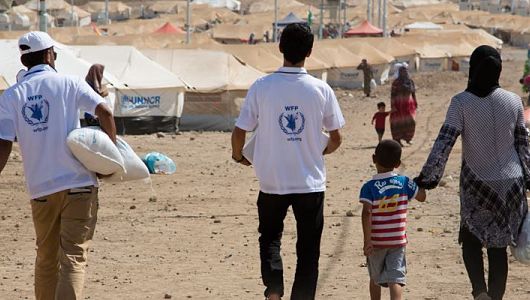
One out of nine people in the world go to bed hungry according to the Food and Agriculture Organization of the United Nations. The United Nations World Food Programme is dedicated to reducing global hunger by offering food aid to developing countries in need. WFP has provided food for more than 90 million people. WFP partners with and receives funding from a few well-known food companies.

Yum! brands started the World Hunger Relief campaign as the largest consumer outreach campaign on the hunger issue. It is the world’s largest restaurant company with more than 40,000 restaurants in 125 countries. It is leading in the fight against global hunger through the campaign, as well as through the mobilization of the 1.5 million employees as advocates for global hunger relief.

Yum! brands’ World Hunger Relief campaign has raised $100 million for WFP since 2007 with the help of global spokesperson Christina Aguilera. Yum! brands include Kentucky Fried Chicken, Taco Bell and Pizza Hut.

https://www.youtube.com/watch?v=GnSf2xj6URs

PepsiCo is another partner of WFP. The company is more well known for its food and beverages than for the philanthropic PepsiCo Foundation. PepsiCo Foundation has donated $3.5 million to WFP to produce a food product made of chickpeas to help treat malnutrition in Ethiopia.

Unilever partners with WFP to make people more aware of global hunger through fundraising and campaigns as well as educational plans. They have targeted their consumer base in 13 countries in their campaigns against global hunger. Unilever has also assisted WFP in identifying what are the nutritional needs of the children to better help them.

Kellogg’s, though not a partner with WFP, does important work to fight global hunger. Kellogg’s donates over $20 million per year in food products for disaster relief and hunger. The company also has an initiative called “Breakfast for Better Days.” The initiative is focused on alleviating hunger specifically in South Africa, pledging to feed 25,000 children every school day in 2015. The company will dedicate one billion servings of Kellogg’s snacks and cereal for global poverty alleviation by 2016 and has donated nearly eight million breakfasts to FoodBank South Africa already.

An increase in awareness of global hunger has also increased the number of food companies coming on board to bring global hunger relief.

– Iona Brannon

Sources: World Food Programme 1, World Food Programme 2, Hunger to Hope, Food and Agriculture Organization of the United Nations, Kellogg
Photo: Flickr


August 29, 2015
https://borgenproject.org/wp-content/uploads/borgen-project-logo.svg 0 0 Borgen Project https://borgenproject.org/wp-content/uploads/borgen-project-logo.svg Borgen Project2015-08-29 01:30:072024-12-13 18:04:43Food Companies Leading the Fight Against World Hunger
Food Aid, Global Poverty, Humanitarian Aid, USAID

World Food Program Increases Food Assistance to Syrians

food_assistance
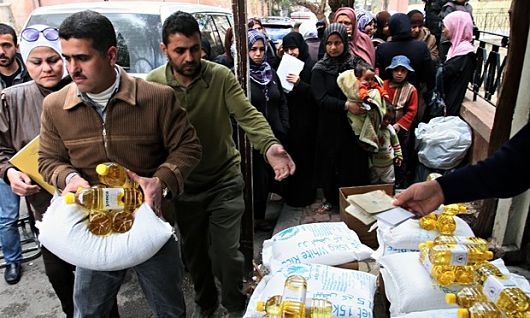
As fighting persists in Syria, life for the population remains a struggle and food security a challenge. Millions of people have been affected amid the escalating violence and the situation is rapidly deteriorating. The U.S. has announced a contribution of $65 million dollars to the World Food Program, which is operating within the Syrian borders.

The armed conflict in Syria, also called the Syrian Civil War, has been ongoing for years since unrest began in 2011. In the wake of the Arab Spring, a revolutionary wave of demonstrations and protests occurred across the Arab world. What began as protests against the government gradually morphed into a rebellion after a violent military force used by President Bashar al-Assad’s government.

As of January 2015, the death toll in Syria had risen above 220,000 and approximately 6 million people have been displaced, cut off from basic human needs such as water, food and electricity.

The United States Agency for International Development (USAID) is giving $65 million dollars to the United Nations World Food Program (WFP) to achieve their goal of providing food assistance to 4 million starving people inside the country and 1.6 million more in the neighboring countries of Jordan, Lebanon, Turkey and Egypt.

In Syria, the WFP has been running dangerously low on funding but the money infusion from USAID will keep the WFP afloat and operating through November preventing what could have been a complete shutdown.

The U.S. being the biggest donor to the Syrian crisis has contributed more than $4 billion dollars overall, allowing millions of needy families within Syria and those affected outside access to food and clean water.

According to USAID, the U.S. has now given more than $1.2 billion to the WFP for its Syrian operations – including more than $530 million for operations inside Syria and more than $693 million for operations benefiting Syrian refugees.

Although USAID has donated billions to the WPF, the international community has for the most part dropped the ball, forcing the WFP to devalue their food vouchers by half to refugees and lowered the amount of food in monthly household parcels inside Syria. USAID and the WFP continues to reach out to other governments hoping to rally more support and pressure them to take more actions.

In a press release by USAID on Friday, July 31, 2015, Dina Esposito, Director of USAID’s Office of Food for Peace said, “we have heard tragic stories of hungry refugees returning to war-torn Syria and taking children out of school to beg.” He continued, “We hope this new funding will help mitigate such difficult choices and help Syrians as the winter months approach.”

In war torn Syria, families are fleeing what were once their homes, desperately seeking safety. Starving and suffering from illness, people are getting life-saving food, water and medical care, thanks to the WFP and the disaster averting financial rescue from USAID.

– Jason Zimmerman

Sources: USAID, Reuters
Photo: Huffington Post

August 22, 2015
https://borgenproject.org/wp-content/uploads/borgen-project-logo.svg 0 0 Borgen Project https://borgenproject.org/wp-content/uploads/borgen-project-logo.svg Borgen Project2015-08-22 01:30:072020-07-02 10:27:41World Food Program Increases Food Assistance to Syrians
Food & Hunger, Food Aid, Food Security, Global Poverty, Hunger

The Zero Hunger Challenge Revisited

Hunger_ChallengeIt is a simple phrase, proven fact and universal goal all in one: Hunger can be eliminated in our lifetime.

This belief launched the Zero Hunger Challenge in 2012, a program that challenged individuals and organizations to recognize and assist the 800 million hungry people around the world.

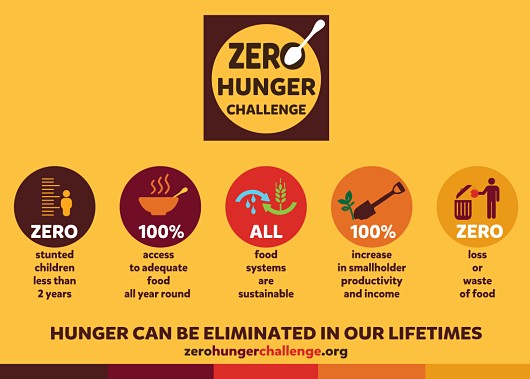
Started by U.N. Secretary-General Ban Ki-moon, the challenge strives to achieve five outcomes: zero stunted children less than two years, 100% access to adequate food all year round, making all food systems sustainable, a 100% increase in smallholder productivity and income, and zero loss or waste of food.

Ki-moon believes that combining these five elements will create a world with no hunger. The Zero Hunger Challenge encourages participation from a wide range of people and organizations.

Now three years after Ki-moon launched his Zero Hunger Challenge, countries around the world are declaring their own “end hunger” plans.

In May 2015, the United Nations assisted the government of the Lao People’s Democratic Republic in launching the National Zero Hunger Challenge, which joined with other countries to eliminate hunger and malnutrition while also increasing food resources. Also in May, the Royal Government of Cambodia started a National Zero Hunger Challenge to end hunger in their country by 2025.

As more countries join the National Zero Hunger Challenge, the goal to end hunger becomes more and more realistic. The United Nations estimates that ending world hunger will require investments in rural and urban areas so that poorer people can have access to food and can improve their lives.

Recently, the Zero Hunger Challenge has gained more support from church organizations.

The Ecumenical Advocacy Alliance, a global network of church organizations, asks all uninvolved individuals and churches to join the initiative.

Dr. Manoj Jurian, World Council of Churches coordinator, said, “No one should be hungry, especially in a world that already produces more than enough food to feed everyone. We can build sustainable and waste-free food systems that nourish and support all people and empower the smallholder and family farms that produce that vast majority of the world’s food.”

Dr. Jurian also notes that as religious people, churches are committed to ensuring that no person is hungry. The Bible contains many stories about hunger, the most notable being Matthew 1:25, in which Jesus tells his followers, “For I was hungry, and you fed me. I was thirsty, and you gave me a drink. I was a stranger, and you invited me into your home.” In these lines, caring individuals aid someone in need of food and water; like so, Dr. Jurian claims it is part of religious duty to help those in need.

With active participants around the world, world hunger can end in our lifetime. To join the challenge, visit: www.un.org/en/zerohunger/.

– Kelsey Parrotte

Sources: AllAfrica, Ecumenical Advocacy Alliance, United Nations
Photo: United Nations

July 29, 2015
https://borgenproject.org/wp-content/uploads/borgen-project-logo.svg 0 0 Borgen Project https://borgenproject.org/wp-content/uploads/borgen-project-logo.svg Borgen Project2015-07-29 07:58:012024-05-27 09:26:14The Zero Hunger Challenge Revisited
Food & Hunger, Food Aid, Global Poverty, Hunger

FoPo Food Powder and World Hunger

FoPo_Food_Powder

1.76 billion tons of food is wasted globally each year. Food waste is caused by buying or preparing more food than necessary, and not cooking or eating food purchases at all.

To solve this problem and to alleviate world hunger, a group of Swedish master students created FoPo Food Powder. The product is created by turning cheap, nearly expired produce into powder form. By freeze-drying the food, pressure is lowered and water is removed, which results in longer-lasting nutrition in powder form.

Team members Kent Ngo, Gerald Marin, Vita Jarolimkova, Lizzie Cabisidan and Ada Balazy hope that their discovery can help end world hunger and minimize food waste.

The team has three objectives: reduce food waste by turning it into an innovative food product that can be used by people all over the world; extend shelf life while preserving all the nutritional properties and taste; give ugly and expiring food a chance.

“We are not into using a new product or new technology, but creating value out of the inefficiency of the food system,” Marian says.

So far, the powder comes in three flavors: banana, raspberry and mango. The powder retains 30-80% of its nutritional value and can be topped on yogurt and ice cream, baked into recipes, and blended into smoothies.

FoPo Food Powder also offers benefits for food producers and retailers. They can donate or sell their unsellable food, buy FoPo and incorporate it into their recipes, and sell FoPo for a source of good nutrition without additives.

Even further, FoPo offers hope for disaster relief, military and space needs, and providing nutrition to impoverished locations.

Since beginning their project in December 2014, the team has discovered that powdered food is becoming more accepted by consumers, and freeze-drying preserves nutritional value better than other techniques.

FoPo won the Ben & Jerry’s Join Our Core crowd-funding and placed runner-up for Thought For Food Summit, a challenge that helps students with projects to make the world a better place. Currently, FoPo is a finalist for MassChallenge, a community that helps early-stage entrepreneurs with their projects.

FoPo also receives support from both the United Nations Food and Agriculture Organization and the Philippines. They are currently launching a test run in natural disaster areas of the Philippines. Local farmers near the test sights will also be donating fruits such as pineapples and mangoes to the trial run.

The team continues to raise awareness and money about their product. With funds, they can find a manufacturer, acquire legal advice and perform further safety testing.

The team hopes to sell to grocery stores and online to big manufacturers in the near future. They also hope to create more flavors of FoPo, see more consumers interested in their product, and feed 9 billion people healthy and nutritious food produced from wasted food.

– Kelsey Parrotte

Sources: FoPo Food Powder, Mashable, Mother Jones
Photo: FoPo Food Powder

July 28, 2015
https://borgenproject.org/wp-content/uploads/borgen-project-logo.svg 0 0 Borgen Project https://borgenproject.org/wp-content/uploads/borgen-project-logo.svg Borgen Project2015-07-28 12:43:382024-05-27 09:26:16FoPo Food Powder and World Hunger
Food & Hunger, Food Aid, Food Security, Global Poverty

The State of Food Insecurity Report

The State of Food Insecurity Report - The Borgen Project
An important aspect in the success of the Millennium Development and Sustainable Development goals is the recording of progress over time. The State of Food Insecurity Report by the Food and Agriculture Organization of the United Nations (FAO) helps look at the initiatives that have worked to sustain food security in developing nations. Focusing on hunger is the first step to ending poverty and maintaining sustainable development. By looking at economic growth, agricultural productivity and international trade, development can be improved according to what continues to work.

The State of Food Insecurity Report finds that “about 795 million people are undernourished globally, down 167 million over the last decade, and 216 million less than in 1990-92,” according to FAO. Although food insecurity has been declining, there is still a chance of stagnation if economic growth slows in Central Asia, Western Asia, and South Africa.

The Millennium Development Goals reach their deadline this year, therefore, new goals have been developed. The Sustainable Development Goals focus on innovative ways to eradicate poverty for good. One way the U.N. does this is to educate farmers on how to efficiently grow crops. This helps feed families in surrounding regions and provides income for farmers to help with economic growth. Taking a sustainable approach to food security, rather than exporting food, maintains the distribution of goods.

Although the report focuses on hunger, many aspects of development affect the result of food security in developing populations. The economic growth of a nation positively affects the nourishment of people in poor countries. However, the report also notes that “it also must include social protections, which include basic human rights and a safety net providing basic needs,” according to Deseret News.

Poverty continues to decline with the implementation of the MDGs and SDGs. Despite this, there still remain people in underdeveloped countries who experience malnutrition and a limited access to education. “The 2015 report not only estimates the progress already achieved, but also identifies remaining problems, and provides guidance on which policies should be emphasized in the future,” says the FAO. The importance of tracking the progress of development goal plans will help the U.N. come closer to completing its ultimate goal of eradicating poverty by 2030.

-Kimberly Quitzon

Sources: Food and Agriculture Organization 1, Deseret News, Food and Agricultural Organization 2,
Photo: Dr. John La Puma

July 15, 2015
https://borgenproject.org/wp-content/uploads/borgen-project-logo.svg 0 0 Borgen Project https://borgenproject.org/wp-content/uploads/borgen-project-logo.svg Borgen Project2015-07-15 11:39:352024-05-27 09:24:21The State of Food Insecurity Report
Aid, Aid Effectiveness & Reform, Food & Hunger, Food Aid, Global Poverty, Refugees and Displaced Persons

UN Scales Back Food Aid for Syrian Refugees

UN-Scales-Back-on-Food-Aid-for-Syrian-Refugees
In the wake of large budget cuts and conflict with the Islamic State, or ISIS, the United Nations World Food Programme (WFP) is scaling back its food aid for more than 1.2 million Syrian refugees in Lebanon. These cuts will manifest themselves in the monthly food assistance vouchers that Syrian refugees receive. Normally valued at $19 per person, the vouchers will be reduced to $13.50 as of July.

Around 75% of Syrian refugee households in Lebanon are undergoing “some level of food insecurity,” according to a recent WFP survey. In addition, roughly 800,000 refugees in Lebanon qualify for food vouchers, and this scale-back is arriving right in the middle of Ramadan.

The WFP was banking on a ceasefire between ISIS and the Syrian government in order to let Syrian farmers harvest wheat stored in ISIS territory. No such ceasefire took place.

“That wheat that is harvested cannot be brought across lines of conflict into the area where it is needed most by people who are suffering now into a fifth year of this conflict,” WFP Executive Director Ertharin Cousin told the Associated Press.

A WFP press release issued earlier this month points out that the WFP’s refugee operations are currently 81% underfunded. The WFP is requesting $139 million in order to continue aiding refugees in Lebanon, Jordan, Egypt, Turkey and Iraq through the summer.

“We are extremely concerned about the impact these cuts will have on refugees and the countries that host them,” WFP Regional Director Muhammad Hadi told the U.N. News Centre. “Families are taking extreme measures to cope such as pulling their children out of school, skipping meals and getting into debt to survive. The long-term effects of this could be devastating.”

– Alexander Jones

Sources: McGuirk, UN, Wood
Photo: The Guardian

July 8, 2015
https://borgenproject.org/wp-content/uploads/borgen-project-logo.svg 0 0 Borgen Project https://borgenproject.org/wp-content/uploads/borgen-project-logo.svg Borgen Project2015-07-08 10:47:072024-06-11 02:48:08UN Scales Back Food Aid for Syrian Refugees
Food Aid, Food Security, Global Poverty, Hunger

Hope for Reducing Hunger in Iran

Hunger in IranIran, located in Western Asia, is the 18th largest country in the world. Its population is around 88 million, of which at least  25.4 million live in severe poverty. Recent studies indicate that nearly half of the population experiences some form of food insecurity and more than “12% of the children under 6 are wasted”.

Causes of Hunger in Iran

  • Economic—Food insecurity and hunger in Iran result from various complex challenges. These include economic challenges that have worsened since COVID-19, including raised unemployment and inflation.
    This double burden of economic hardship has severely limited people’s purchasing power, making it difficult for families to afford sufficient food and nutrient-rich options crucial for maintaining good health. As a result, many Iranians struggle to secure regular meals, exacerbating the issue of malnutrition and food insecurity across the country.
  • Agriculture—Iran depends on agriculture to meet its food requirements, producing 13.1% of the GDP. Recent climate changes, such as less rain, droughts and mismanagement of water resources, have negatively affected agriculture, resulting in job losses, lower crop yields, inflation and food insecurity in the population. This has resulted in a surge in poverty and food insecurity.
  • Political—Political instability and economic sanctions, such as import bans, have made it difficult for the country to produce food, disrupting supply chains and limiting access to essential resources. These challenges affect farmers and suppliers and have broader implications for the economy and public health.
  • Refugees— There are approximately 3.5 million refugees in the country who are not living under ideal conditions. They face limited job opportunities, poverty and a lack of access to education and healthcare. This situation is challenging for them and also strains the economy.

Steps to Reduce Hunger

  • UNICEF—UNICEF supports the government in collecting maternal and child nutrition data. The organization also aims to address nutritional deficiencies by enhancing nutrition programs, developing dietary guidelines and educating health care workers on feeding practices for infants and young children. This approach has the potential to nourish thousands of children, reduce health disparities among children and adults, lower the risk of chronic diseases and ultimately help eradicate hunger in Iran.
  • World Food Program—The WFP primarily assists refugees by providing cash assistance through ATM cards. It also helps them establish permanent income sources and become self-reliant by setting up small businesses. Additionally, the WFP provides school meals to improve student attendance and health. During emergencies, it supports the government in recovery and rehabilitation efforts.

The Future of Food Security in Iran

Food security is a major concern for Iran, but the country has significant agricultural potential. Enhancing crop yields is essential to ensure a reliable food supply and fully harness this potential. This can be achieved by minimizing water waste and addressing the impacts of climate change. Collaboration between the government and the international community is crucial for success.

To address the challenges of undernourishment and nutritional deficiencies, collaboration with organizations such as UNICEF and the World Food Program (WFP) can offer the Iranian government essential support, technology and resources and help improve the situation. Such efforts will help ensure a food-secure future for all citizens.

– Rebecca Malachowski and Maria Waleed
Photo: Wikipedia

Updated: October 31, 2024

July 6, 2015
https://borgenproject.org/wp-content/uploads/borgen-project-logo.svg 0 0 Borgen Project https://borgenproject.org/wp-content/uploads/borgen-project-logo.svg Borgen Project2015-07-06 09:46:032024-11-03 17:21:00Hope for Reducing Hunger in Iran
Food Aid, Global Poverty

The Cost to End World Hunger

World hunger and its devastating effects can be eradicated with a fraction of the United States Federal Budget. Discussed below is a breakdown of leading facts and figures about the current state of world hunger, including the cost to end world hunger.

Cost to End World Hunger

The cost to end world hunger…

— $30 billion per year is needed to end world hunger
— $737 billion per year is the amount Congress spends on Defense

cost to end world hunger

How much does it cost to end world hunger?

– Leen Abdallah

World hunger can be eradicated.

A price has been set and estimated by the United Nations to solve this crisis – $30 billion a year. It may seem like a large sum of money, but when compared to the U.S. defense budget – $737 billion in 2012 – $30 billion seems more attainable. The $30 billion expense is manageable, especially when the U.S. would be joined by other investors in global poverty, but the U.S. has the capacity to be the leader on this issue.

An article published in the Los Angeles Times in 2008 states that providing a substantial amount of money directed specifically towards agricultural development could result in high-yields and trigger a second Green Revolution.

Helping the world’s poor is not merely the right and moral thing to do; it also benefits the private sector. Businesses have already thought of a solution: public-private partnerships. The business community works with the U.S. government to sustain agricultural development in poor countries so as to better tackle the problems that businesses face abroad in these underdeveloped and developing nations. These provided funds would not only increase food production but they would ensure that food prices are much more affordable.

Aside from benefits to the private sector and the economy, tackling the global hunger crises presents a better image for the U.S. as a “humanitarian superpower.” Furthermore, the U.S.’ involvement in humanitarian projects would present more American corporations as “respectful partners” within the global community.

The United States Agency for International Development (USAID) has allied with corporate sponsors to support global development. For example, USAID works “with the Schaffer Global Group on a factory in Mali, with Heinz to help Egyptian tomato farmers and with Coca-Cola on clean water projects in a dozen countries.”

Much has been and continues to be done; yet, the U.S. possesses the capacity to do more. There are 870 million people who are under-nourished and the U.S. has the potential to end their hunger.

Source: LA Times, Know Your World:Hunger Facts, USGovSpending


February 15, 2015
https://borgenproject.org/wp-content/uploads/borgen-project-logo.svg 0 0 Borgen Project https://borgenproject.org/wp-content/uploads/borgen-project-logo.svg Borgen Project2015-02-15 13:26:372020-07-15 22:59:57The Cost to End World Hunger
Food Aid, Food Security, Global Poverty, Government, Health, Hunger, Malnourishment

Three Simple Ways We Can Help End Starvation

Nearly 25,000 people die every day from starvation. While in richer countries nutrition isn’t always a paramount problem, there are still 947 million people living in developing nations who are undernourished; we have the ability to help lower this number. Below are a list of ways you can help easily end starvation.

1. Raise Money

During the 2011 East African famine, relief organizations such as Save The Children and UNICEF launched campaigns to raise money for feeding starving children. By using clear and simple incentives (“just $10 can feed a child for seven days!”), smart organizations allowed even those halfway across the world to help those in need. Donating money is simple, easy and can usually be done online with just a click of a button.

2. Urge your Congressional Leaders to Support Crucial Legislation

Calling or emailing your congressional leaders is a simple and a sure way to increase their chances of supporting a bill which could save millions of lives. One such bill still waiting to be passed in the House of Representatives is the Global Food Security Act of 2013, which would improve nutrition and strengthen agriculture development in developing countries. Other similar legislation that could use your support includes the Food Aid Reform Act and Water for the World Act.

3. Limit Your Daily Intake

Over the past three decades, the average intake of dietary fats has dramatically increased in almost every country except Africa. With a recommended range from between 15 to 35 percent, we are seeing a stark contrast in dietary intake. In fact, many countries in North America and Western Europe exceeded this recommended daily intake, while countries in sub-Saharan Africa and South Asia fell dramatically below.

Despite our growing intake, we are quickly running out of natural resources. In an overpopulated world, it is up to each of us to individually be cognizant of our daily intake. By limiting our intake in richer countries, we are ensuring that our world is capable of growing enough food in the first place for all of our global citizens.

By helping others who suffer from malnutrition, we are also helping ourselves in return. The most common causes of death around the world—including heart disease, obesity, cancer and chronic illness—can be a result of unhealthy eating habits.

By remaining aware that we have a much larger role in helping to end global hunger and poverty than we may believe, we can help put an end to millions of those going to sleep hungry at night.

– Nick Magnanti

Sources: CNN, Borgen Project, McCollum House, Food for the Poor, Green Facts, Green Facts 2
Photo: Action ContrelAfaim

August 19, 2014
https://borgenproject.org/wp-content/uploads/borgen-project-logo.svg 0 0 Borgen Project https://borgenproject.org/wp-content/uploads/borgen-project-logo.svg Borgen Project2014-08-19 08:00:162024-12-13 17:51:06Three Simple Ways We Can Help End Starvation
Food & Hunger, Food Aid, Violence Against Women, Women

Pakistan Women and Food Aid Violence

Over 40 tribal elders in the Bannu region of Pakistan voted to ban women from collecting food aid for Internally Displaced Persons fleeing the military offensive in North Waziristan, Pakistan. Witnesses report seeing men slap women who had joined the line for food rations. The women reportedly left quickly after experiencing such violence, but the question remains as to how widows or women unaccompanied by men will receive aid. One man distributed leaflets discouraging women from attempting to attain food rations with a warning to husbands who fail to keep their women at home. The Bannu region is especially conservative, where women wear full-length burqa robes and rarely venture outside their homes.

Violence and discrimination against women in Pakistan have plagued the country, as recently as on July 23 when unknown assailants threw acid at two women at a shopping center in Baluchistan. A similar attack occurred one day earlier when four women were attacked with acid. In both attacks, the perpetrators rode past on motorcycles spraying their victims with acid. Officials believe the crimes to be the work of religious extremists in the area.

In March, the Council of Islamic Ideology, a body that provides legal advice to the Pakistani government, said laws that ban child marriage are “un-Islamic.” Current laws require boys to reach the age of 18 before marriage, and girls the age 16. Chairman of the Council Maulana Mohammad Khan Sheerani continued, “Sharia allows men to have more than one wife, and we demanded that the government should amend the law.”

Child marriage in Pakistan, according to experts, explains the country’s high infant mortality rate, as early marriage results in frequent pregnancies with inadequate preparation. The country also has lower reproductive and maternal healthcare coverage for women than its neighbors India, Bangladesh or Nepal.

Over 990,000 people left the North Waziristan following the June airstrikes known as the Zarb-e-Azb operation, and 84 percent of these IDPs have fled to the Bannu District. North Waziristan has long served as a haven for militants in Pakistan and although the Pakistani government claimed to have targeted all militant groups equally, the U.S. and many locals say Pakistan protected the Haqqani group, which has been based in Waziristan for decades. Many accuse the Pakistani military of allowing Haqqani militants to escape before the operation began. The U.S. sees the Haqqani as a threat to stability in Afghanistan, and is withholding $300 million in aid to Pakistan until the Secretary of Defense determines Pakistan to have “significantly disrupted” the Haqqani network.

The Pakistani military has used militants as proxies in Afghanistan and India for decades. Experts believe the operation — which has killed over 450 since June — is intended to primarily target Tehreek-e-Taliban Pakistan, central Asian and Arab militants in the region that militants have traditionally used to launch attacks on Afghanistan.

The U.S. military has since joined Pakistan with its drone strikes on Saturday that killed 15.

– Erica Lignell

Sources: Reuters, International Business Times, Business Standard, New York Times, Wall Street Journal
Photo: Reuters

July 28, 2014
https://borgenproject.org/wp-content/uploads/borgen-project-logo.svg 0 0 Borgen Project https://borgenproject.org/wp-content/uploads/borgen-project-logo.svg Borgen Project2014-07-28 14:05:422024-06-05 01:57:51Pakistan Women and Food Aid Violence
Page 7 of 13«‹56789›»

Get Smarter

  • Global Poverty 101
  • Global Poverty… The Good News
  • Global Poverty & U.S. Jobs
  • Global Poverty and National Security
  • Innovative Solutions to Poverty
  • Global Poverty & Aid FAQ’s
Search Search

Take Action

  • Call Congress
  • Email Congress
  • Donate
  • 30 Ways to Help
  • Volunteer Ops
  • Internships
  • Courses & Certificates
  • The Podcast
Borgen Project

“The Borgen Project is an incredible nonprofit organization that is addressing poverty and hunger and working towards ending them.”

-The Huffington Post

Inside The Borgen Project

  • Contact
  • About
  • Financials
  • President
  • Board of Directors
  • Board of Advisors

International Links

  • UK Email Parliament
  • UK Donate
  • Canada Email Parliament

Get Smarter

  • Global Poverty 101
  • Global Poverty… The Good News
  • Global Poverty & U.S. Jobs
  • Global Poverty and National Security
  • Innovative Solutions to Poverty
  • Global Poverty & Aid FAQ’s

Ways to Help

  • Call Congress
  • Email Congress
  • Donate
  • 30 Ways to Help
  • Volunteer Ops
  • Internships
  • Courses & Certificates
  • The Podcast
Scroll to top Scroll to top Scroll to top