• Link to X
  • Link to Facebook
  • Link to Instagram
  • Link to TikTok
  • Link to Youtube
  • About
    • About Us
      • President
      • Board of Directors
      • Board of Advisors
      • Financials
      • Our Methodology
      • Success Tracker
      • Contact
  • Act Now
    • 30 Ways to Help
      • Email Congress
      • Call Congress
      • Volunteer
      • Courses & Certificates
      • Be a Donor
    • Internships
      • In-Office Internships
      • Remote Internships
    • Legislation
      • Politics 101
  • The Blog
  • The Podcast
  • Magazine
  • Donate
  • Click to open the search input field Click to open the search input field Search
  • Menu Menu

Archive for category: Food Aid

Information and news about food aid

Food Aid, Global Poverty, Hunger

Cutting Iraq WFP Aid

Cutting Iraq WFP Aid
The United Nation’s World Food Programme (WFP) began providing food aid and humanitarian assistance to Iraq in 1991. In October 2016, 1.2 million Iraqis received food assistance from the WFP. However, a staggering 4.4 million across the nation are still in need.

Due to cuts in funding from donor states, the WFP has reduced food rations in Iraq by 50%. The move will leave 1.4 million displaced Iraqis without assistance, although the agency is negotiating on how to regain full funding from donors such as the United States, Germany and Japan.

Occupation of the region by Islamic State facilitated the destruction of massive annual barley and wheat harvests, destroying an annual one-third of the nation’s crop yields. The Carnegie Endowment for International Peace also attributes increasing influxes of internally displaced persons and Syrian refugees, inefficient supply chains, lack of governing infrastructure and cash shortages to be at the root of Iraq’s food supply crisis.

Agencies active in providing assistance include Iraq’s Ministry of Displacement and Migration, United Nations organizations and the WFP. These actors constitute the foundation of social protections and safety nets for Iraqi citizens through food distribution, development and financial support.

According to an Iraq WFP aid study on social protections from the Centre for Social Protection at the Institute of Development Studies, Iraq’s Ministry of Displacement and Migration granted financial aid of 300,000 dinars (USD$255) to 9,373 families displaced among a dozen countries. This ministry also runs a “human stability” program.

Although cornucopias of vulnerable populations, an absence of adequate legal statutes and corruption are all hurdles to food assistance, there are steps that can be taken to improve Iraqi social protection systems. For example, the WFP recommends “building the capacity of social protection research, increasing the number of beneficiaries and demanding inclusion of the unemployed in social welfare systems.”

– Amber Bailey

Photo: Flickr
February 16, 2017
https://borgenproject.org/wp-content/uploads/borgen-project-logo.svg 0 0 Borgen Project https://borgenproject.org/wp-content/uploads/borgen-project-logo.svg Borgen Project2017-02-16 01:30:122020-06-01 12:47:12Cutting Iraq WFP Aid
Developing Countries, Food & Hunger, Food Aid, Global Poverty, USAID

USAID: Increasing Food Aid Through a Simple Bag

Food_AidAs humanitarian crises grow across the world, the U.S. Agency for International Development (USAID) is increasing food aid with one simple solution: bag redesigns.

Before getting into the solution, it is imperative to diagnose the problem first.

The world currently faces six qualified food emergencies, as stated by the World Food Program. Between civil wars and the environmental effects of the recent El Nino, civilians in Syria, Iraq, southern Africa, Nigeria, South Sudan and Yemen are all in dire need of food assistance. If lives are to be saved, agencies like USAID must increase food aid.

USAID is considered to be one of the world’s most significant food aid donors. Yearly, it donates around $1.5 billion in rice, sorghum and wheat to countries in need all around the world. These shipments are ordered to port in one of three chosen locations: Djibouti, Ethiopia or South Africa. However, under law, this food aid must be bought within the U.S. and half of all aid must be transported via U.S. ships. Realistically, this process takes around four to six months to ship. This donation process can be tedious and, in emergency situations when food is needed in less than a week (like the Haitian earthquake), deadly.

Not only this, but it is estimated that one percent of food donation cargo spoils along the way. While the percentage appears insignificant, the repercussions are fierce. One percent of USAID’s food donation is equivalent to 10,000 tons of food, costing up to $15 million. And so, when one percent spoils, an estimated 200,000 families will go hungry for an entire month. For some, one percent is the difference between life and death.

Alongside the U.S. Department of Agriculture, USAID sought out the Massachusetts Institute of Technology (MIT) to tackle this mission last year. MIT researchers will assess how food aid is packaged in present-day and then research alternative packaging systems that will both delay the food aid’s expiration and decrease the cost of making the package. Should they find an alternative, USAID and MIT could be responsible for increasing food aid around the world.

MIT is currently testing bags that will avoid water damage and slow insect infestation, two leading causes of food aid spoiling. Currently, these newly design bags are carrying $1.7 million worth of food aid to Djibouti and South Africa. Only time will tell if USAID and MIT have found success in the redesigns. Regardless, for 200,000 families, the world of food aid is growing a little brighter.

– Brenna Yowell

Photo: Flickr

February 13, 2017
https://borgenproject.org/wp-content/uploads/borgen-project-logo.svg 0 0 Borgen Project https://borgenproject.org/wp-content/uploads/borgen-project-logo.svg Borgen Project2017-02-13 01:30:292020-05-25 22:12:21USAID: Increasing Food Aid Through a Simple Bag
Developing Countries, Food Aid, Global Poverty

What is Food Aid Reform?

Food Aid Reform
In February 2015, the Food for Peace Reform Act was reintroduced and pitched as something that could “free up as much as $440 million annually” by making the delivery of aid to foreign nations much more efficient. While this is impressive and exciting news, it prompted many to ask the question: “What is food aid reform?”

To answer this question, it’s important to first understand the way U.S. food aid functions. Following World War II, the U.S. launched a food aid program intended to combat world hunger by taking any surplus in U.S. grain and shipping it overseas.

This program had very good intentions, and it has made an incredible impact for many people living in areas rife with humanitarian or natural crises. However, many agree that it is now time for this program to be modernized.

One of the main problems with the current food aid program is that the current law requires the government to purchase its donated food from American producers and ship food aid out on American ships. This law prevents food aid programs from cutting out the middlemen and simply purchasing food from the regions that it would be delivered to.

In the vast majority of cases, that means that the country receiving aid is given less food. Not only is this hitch in the food aid program bad for the people receiving aid, but it also adds an unnecessary extra cost to the program. A study done in 2009 by the Government Accountability Office discovered that it costs 34 percent less to buy food in Sub-Saharan Africa than to have it shipped there.

Additionally, an estimate given by the U.S. Agency for International Development states that purchasing food within the region could provide starving populations with food 11 to 14 weeks sooner than they would otherwise receive it.

So, what is food aid reform? Food aid reform is an initiative to fix some of the most pertinent problems regarding how U.S. foreign aid functions. By changing some of the laws that hinder food aid reform, this program can become timelier, more efficient and more beneficial to those who depend on it.

– Jordan Little

Photo: Flickr

October 29, 2016
https://borgenproject.org/wp-content/uploads/borgen-project-logo.svg 0 0 Borgen Project https://borgenproject.org/wp-content/uploads/borgen-project-logo.svg Borgen Project2016-10-29 01:30:432020-05-28 09:43:31What is Food Aid Reform?
Food & Hunger, Food Aid, Global Poverty

Hunger in Kenya: Organizations that are Helping

Hunger in KenyaHunger in Kenya is a prominent issue, with more than 600,000 Kenyans in urgent need of food aid after the region was hit by a drought, which started in February when most farmers were preparing for planting season. The weather has dried up waterholes and rivers leading to crop failure.
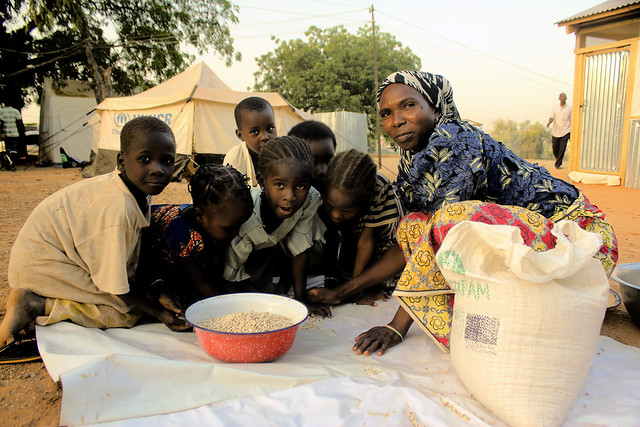
The Kenyan government has promised to release 50 million Kenya shillings, or $5 million, to be used to purchase food aid, but the government has yet to release the funds. West Pokot deputy governor Titus Lotee said, “We have started distributing food but the 4,000 bags of maize is not enough,” and called on humanitarian organizations to help fight the hunger in Kenya.

Action Against Hunger has implemented a strategy for 2015–2017 in Kenya in order to address two main pillars: ending the drought emergency and addressing all forms of malnutrition.

Action Against Hunger has strengthened its approach to addressing health problems in Kenya by implementing programs in nutrition, food security, water, sanitation and hygiene. Thus far, 275,552 people have received nutritional support and 25,060 people have accessed safe water and sanitation.

Another charity, Feed the Children, provides access to food, water and schooling in four of Kenya’s counties. The organization focuses on the most vulnerable: malnourished children under the age of five, pregnant and lactating women, and people living with HIV/AIDS.

Feed the Children has built water pans and rainwater harvesting systems, which can hold water for up to seven months after the rain stops for the year. The Australian government assisted Feed the Children in building 35 latrines in six schools and supplied 8,000-cubic-meter water tanks to seven schools.

The Feed Hungry Children in Kenya project is providing health clinics, where children are weighed and measured and given food supplements. Poor families are given a food ration of beans and maize each month.

In addition to the two organizations, the World Food Programme works with Feed the Children to serve regular meals to children in 170 schools throughout Kenya in hopes of mitigating the crisis.

These humanitarian organizations will work to tackle starvation and hunger in Kenya until the country’s food availability problem improves.

– Jackie Venuti

Photo: Flickr

August 21, 2016
https://borgenproject.org/wp-content/uploads/borgen-project-logo.svg 0 0 Borgen Project https://borgenproject.org/wp-content/uploads/borgen-project-logo.svg Borgen Project2016-08-21 01:30:332024-12-13 17:54:45Hunger in Kenya: Organizations that are Helping
Aid, Food & Hunger, Food Aid

The Dangote Foundation Donates Food in Abuja, Nigeria

Dangote FoundationThe Dangote Foundation delivered food items worth millions of Nigerian naira to thousands of vulnerable internally displaced persons (IDPs) in Abuja, the Federal Capital Territory of Nigeria.
During a visit to the IDP camps of Abuja, Dangote Foundation chairman Alhaji Aliko Dangote was saddened by what he saw and pledged to alleviate the suffering of thousands of IDPs. The Dangote Foundation is a branch of the Dangote Group. The foundation provides charitable funds to a variety of causes in Nigeria and other African states.

Abuja currently has 13,481 internally displaced persons according to the latest assessment by the International Organization for Migration’s Displacement Tracking Matrix. The Dangote Foundation donated food items to the IDPs during Ramadan as a philanthropic action geared toward alleviating poverty in Nigeria.

The Federal Capital Territory (FCT) Minister Malam Muhammad Musa Bello directly received the donation and ensured that the IDPs would expressly benefit from the donations. These items included Dangote sugar, Dangote salt, Dangote Spaghetti, rice, Danvita and wheat meal.

The FCT Minister stated that the donation Abuja received was extremely generous and the country is grateful to the foundation. Moreover, the FCT Administration is committed to alleviating poverty and respects non-governmental organizations with a similar mission.

This donation has been one of many recent philanthropic actions by the Dangote Foundation in Nigeria. Within a span of five years, the foundation has donated N6.3 billion to various IDP camps in Nigeria. Currently, one US dollar equals 315.25 Nigerian Naira.

Previously, the Foundation made donations to Nigerian universities and women’s causes. They have also provided donations during ethnoreligious crises. In addition, the Dangote Foundation donated to the World Food Program to help Pakistan during massive flooding in 2010 and raised over N11billion for flood relief in Nigeria.

In coordination with the Gates Foundation; the Dangote Foundation, USAID and Nigerian governors joined together to secure political and financial resources to enhance immunization programs within Nigeria in order to keep the country polio-free.

The Dangote Foundation focuses on health, education, economic development and disaster relief through their commitment to decreasing the amount of people suffering or dying from poverty-related issues.  The Dangote Foundation’s donations work to rectify the lack of education for children, to create quality healthcare and support underprivileged adults by improving access to education and healthcare.

– Kimber Kraus

Photo: Flickr

August 20, 2016
https://borgenproject.org/wp-content/uploads/borgen-project-logo.svg 0 0 Borgen Project https://borgenproject.org/wp-content/uploads/borgen-project-logo.svg Borgen Project2016-08-20 01:30:092024-05-27 09:35:03The Dangote Foundation Donates Food in Abuja, Nigeria
Aid, Food & Hunger, Food Aid, Global Poverty, USAID

Hope on the Horizon: Increase in Food Assistance for Iraq

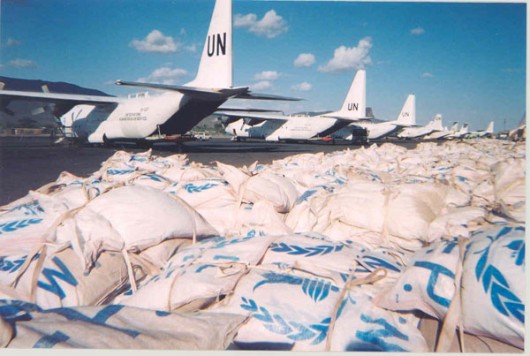
Food Assistance in IraqAn increase in food assistance for Iraq will become a reality thanks to the U.S. Agency for International Development (USAID). The U.N. World Food Program (WFP) in Iraq will receive an additional $20 million in emergency food assistance per an announcement from Stuart E. Jones, U.S. Ambassador to Iraq, made on Feb. 29, 2016, according to USAID.

With this new support, provided through USAID’s Office of Food for Peace (FFP), the U.S. government has contributed nearly $623.8 million to support humanitarian activities in Iraq since the 2014 fiscal year, according to USAID’s Iraq-Complex Emergency Fact Sheet.

The new funding will support the distribution of household food parcels, including beans, dry peas, flour, oil and rice — and immediate response rations for vulnerable populations comprising ready-to-eat food items, such as beans, biscuits, canned meat, canned peas and dates according to USAID’s Iraq-Complex Emergency Fact Sheet.

USAID is helping the WFP reach 1.5 million displaced and conflict-affected Iraqis throughout the country according to USAID’s Feb. 29, 2016 press release.

This significant boost in aid has the potential to help Iraqis who were adversely impacted by cuts to the WFP last year. In August 2015, the WFP was forced to cut back food assistance due to a funding shortfall, according to the U.N.

“Unfortunately, lack of funds and the rise in the number of displaced Iraqis forces us to reduce the size of the food rations we provide to tens of thousands of families living outside camps,” said Jane Pearce, WFP representative and country director in Iraq, in an August 2015 press release.

This recent increase in food assistance for Iraq comes at a crucial time. The food and medicine shortage in Iraq resulted in the death of approximately 20 children and older persons in recent weeks according to a report by the International Organization for Migration (IOM).

Between December 2015 and January 2016, the price of some food commodities in Fallujah increased by more than 800 percent, according to the WFP; as of late February, a 110-pound bag of rice cost $400 and a 110-pound sack of wheat flour was priced at $550, reported the IOM.

There is hope that this increase in food assistance for Iraq is a sign of more good to come for internally displaced persons living in the country.

– Summer Jackson

Sources: UN, USAID 1, USAID 2
Photo: Wikipedia

March 23, 2016
https://borgenproject.org/wp-content/uploads/borgen-project-logo.svg 0 0 Borgen Project https://borgenproject.org/wp-content/uploads/borgen-project-logo.svg Borgen Project2016-03-23 01:29:532024-06-11 02:48:18Hope on the Horizon: Increase in Food Assistance for Iraq
Aid, Food & Hunger, Food Aid, Global Poverty

ShareTheMeal App Uses Technology to Fight Global Hunger

ShareTheMealThere are 795 million undernourished people in the world today. That’s one in nine people who are not getting enough food to lead a healthy life.


Those numbers make hunger and malnutrition the number one risk to health worldwide. That makes malnutrition a greater threat than AIDS, malaria and tuberculosis combined.

Enter the United Nations World Food Programme (WFP), the largest humanitarian agency fighting hunger today. Each year, the WFP reaches 80 million people with food assistance in around 80 countries.

As an initiative that relies completely on voluntary donations, two managers at WFP, Sebastian Stricker and Bernhard Kowatsh, have created a way to make donating even easier by using technology to fight global hunger.

In fact, thanks to them, donating is right at your fingertips.

That’s because they’ve created an app. It’s called ShareTheMeal.

Currently being hailed as the first of its kind, this free app allows iOS and Android users to fund food rations for as little as $0.50. While a small sum to most in the Western world, in other, poorer parts of the planet, the value can be life-saving. The sum is enough to provide the vital nutrition an individual needs a day.

“The simple act of sharing a meal is how people all over the world come together,” said Ertharin Cousin, the WFP’s executive director, “This digital version of sharing a meal is a tangible way that generation zero hunger can act to end hunger.”

Pilot tests for the app were performed in June 2015 across Germany, Austria and Switzerland. Using the technology to fight global hunger, more than 120,000 users provided more than 1.7 million meals for schoolchildren in the southern African country of Lesotho.

The money coming from Thursday’s global launch of ShareTheMeal will initially be used to support 200,000 Syrian refugee children living in the Zaatari camp in Jordan who participate in the WFP’s school meals program.

“By Christmas, we hope to have gathered enough shared meals, to feed these children for one year,” ShareTheMeal’s head of growth Massimiliano Costa says.

Improvements to hunger and living conditions in refugee camps as well as among Syrian communities is widely viewed as crucial to encouraging Syrians not to embark on risky travel to Europe.

If the app does well, the project will expand to other countries and regions. The WFP is already looking at the numbers. With two billion smartphone users worldwide, that statistic outnumbers the hungry children in the world 20 to 1.

The United Nations’ has set the ambitious goal of ending world hunger by 2023. Perhaps ShareTheMeal is the answer.

– Kara Buckley

Sources: ShareTheMeal, Forbes, Reuters, The Guardian                                                                                                                                                                                                                      Photo: Pixabay

November 17, 2015
https://borgenproject.org/wp-content/uploads/borgen-project-logo.svg 0 0 Borgen Project https://borgenproject.org/wp-content/uploads/borgen-project-logo.svg Borgen Project2015-11-17 01:30:112024-12-13 18:05:24ShareTheMeal App Uses Technology to Fight Global Hunger
Development, Food Aid, Foreign Aid, Global Poverty

Myths about Foreign Aid

myths_about_foreign_aid
The fact is that some 795 million people in the world do not get enough food to lead healthy, productive lives, and the vast majority of the world’s hungry live in developing countries. The following are three myths about foreign aid:

1. We shouldn’t bother. Our small contributions won’t make a difference in such an enormous problem as global poverty. When it comes to world hunger, the “one person can’t make a difference” myth can be easily dispelled.

Here in the U.S., mosquitoes are aggravating little pests; however, in Africa, mosquitoes are deadly. In 2005, the Against Malaria foundation was founded; it implements practical, cost-efficient, insecticide-treated bed nets to fight this preventable disease.

Over the past 15 years, approximately 663 million cases have been prevented in Africa — roughly 68 percent of that reduction is contributed to the distribution of a billion bed nets. Each bed net costs around $5, lasts for three to four years and protects two people. So, yes, as little as five bucks can make a difference in a global problem, and this, of course, is just one example.

2. We have no idea where our money really goes. Those fundraisers are scams. Unfortunately, the existence of corruption persists all over the world, and that isn’t a myth. Along with the endless benefits the internet provides there are also the ceaseless hoaxes, which are often in the disguise of charitable organizations.

To some extent, it seems as if charities and even the word “donate” tend to act as repellents, triggering apprehension and uneasiness. Fortunately, programs, such as the Millennium Challenge Account, and laws, such as the Foreign Corrupt Practices Act, monitor and help safeguard aid. And when in doubt, research the organization before providing any type of aid. Consumer Affairs is one helpful website.

3. Taking care of others in developing countries implies that we are failing to “take care of ourselves.” On the contrary, the more independent others become, the more consumers we acquire. Actually, our nation’s safety strengthens as we lift others out of poverty.

Three major myths about foreign aid busted and many more to be exposed. The following are three ways we can effectively help eradicate global poverty and hunger:

  1. Research the organization before providing aid.
  2. Get active and lobby for the world’s poor. Call and/or email Congress in support of poverty reduction. The Borgen Project provides an efficient, simple method to contact Congress.
  3. Believe that you can make a difference in a global epidemic. The very act of providing aid to another is itself a gift.

– Dana McLemore

Sources: Against Malaria, DTIC, FAO, KFF
Photo: Flickr

November 12, 2015
https://borgenproject.org/wp-content/uploads/borgen-project-logo.svg 0 0 Borgen Project https://borgenproject.org/wp-content/uploads/borgen-project-logo.svg Borgen Project2015-11-12 01:30:202020-06-24 19:26:30Myths about Foreign Aid
Food & Hunger, Food Aid, Global Poverty, Hunger

Town Installs Outdoor Refrigerator to Feed the Hungry in Spain

Town Installs Outdoor Refrigerator to Feed the Hungry in Spain
There are 795 million people worldwide who do not have the resources available to them in order to lead a healthy lifestyle. That means that one in nine people in the world do not have enough food and often live in hunger.

UNICEF estimates that 20 percent of the children in Spain are living below the poverty line and hunger is becoming a more relevant problem in the country. In 2013, Spain distributed breakfast and snacks for 50,000 kids at risk of exclusion.

Seventeen percent of Spanish children are obese and living below the poverty line and do not have access to fresh food, fruit or vegetables.

Unemployment has been climbing since the 2008 financial crisis and Spain was one of the hardest-hit countries. People who once held regular jobs are out of unemployment benefits and are turning to squatting and collecting food from the garbage outside of stores.

In Galdakao, Spain, people are putting leftovers in a fridge on the street in order to feed the hungry.

The city has a population of 30,000 and created a communal refrigerator to help eradicate hunger in their town. After Alvaro Saiz, who ran a food bank in Galdakao, saw starving people digging through trash outside of stores and restaurants he decided there was a better way to not waste unused food through a new organization called Solidarity Fridge.

People in homes, people on the streets, and restaurant owners now take their unused food and put it in the communal fridge for the people who need it most to eat.

The project cost $5,500 and they had to change the law to prevent any legal action against the city if someone got sick. However, no raw meat or eggs are allowed in the fridge and anything in the refrigerator after four days must be thrown out. Solidarity Fridge says no food remains more than a few hours before it is taken by someone who is hungry.

Solidarity Fridge has become a learning experience for children as well. Schools organize field trips to visit the fridge and teach children about sharing and not wasting food.

One-third of food produced is wasted or lost every year, which is 1.3 billion tons. The entire net production of food in sub-Saharan Africa is 230 million tons. Solidarity Fridge may be a future model for other cities around the world wanting to feed the hungry while cutting down on wasting food.

– Donald Gering

Sources: Good News Network, New York Times, Revolting Europe, UNEP, WFP
Photo:  Flickr

September 1, 2015
https://borgenproject.org/wp-content/uploads/borgen-project-logo.svg 0 0 Borgen Project https://borgenproject.org/wp-content/uploads/borgen-project-logo.svg Borgen Project2015-09-01 02:06:102020-07-01 12:00:06Town Installs Outdoor Refrigerator to Feed the Hungry in Spain
Aid Effectiveness & Reform, Food Aid, Global Poverty

Changes to US Food for Peace to Increase Sustainability

Changes to Food for Peace to Increase Sustainability
Sixty years after being put into effect, the Food for Peace program faces congressional reform that will lower costs and provide sustainable support for those living in conflict-ridden countries. Currently, law requires that food aid be grown in and shipped from the U.S. – a mandate that increases costs 25-50 percent more than they would be on the current market. Advocates for reform criticize the program for its inefficiency and helping American shipping and farming businesses profit from such programs.

Shipping firms, farms and some NGOs form an “iron triangle of special interests” that have benefited from international aid and attracted criticism from politicians in both parties. Between 2004 and 2013, 88 percent of USAID funding was used to harvest and ship food- a huge cost that decreased the amount of food the organization was able to provide by 64 percent.

A system designed this way is not only inefficient in properly allocating resources, but also counterproductive in affecting any kind of change in the countries that need it most. Daniel Maxwell, professor and research director at the Feinstein International Center at Tufts University, commented, “We need to support local agricultural producers and markets, or at a minimum, not undermine them.” Reformers advocate for changing the system to implement locally grown and shipped food resources rather than those from the U.S.

Senators Corker and Coons, who are cosponsoring the reform of the bill, have estimated that such changes could expand the program’s reach by 12 million people and free up $440 million through local, sustainable production. Providing support for local growers and shippers will strengthen local economies rather than keeping them reliant on international resources, empower and employ more people, and create a more sustainable rebuilding of communities.

Eric Munoz at Oxfam America says that a program created 60 years ago is not useful or appropriate for current times. Indeed, when 60 million people per year are in need of food aid, expansion of resources and lowering costs is more greatly needed than ever. Many farmers believe they have a right to profit from food aid programs and would suffer from reforms, but experts estimate such programs amount to only 1 percent of agribusiness profits.

For policy changes that would so greatly impact those in need, lessening the profits of huge farming businesses in the U.S. seems trivial. Worrying about this profit loss is “an inappropriate way of viewing the rationale of providing emergency assistance and foreign assistance, particularly assistance that is meant to address food insecurity in complex crises like Syria or South Sudan,” says Munoz.

Corker and Coon’s reform bill will see congressional debate in September.

– Jenny Wheeler

Sources: IRIN 1, IRIN 2
Photo: Flickr


August 29, 2015
https://borgenproject.org/wp-content/uploads/borgen-project-logo.svg 0 0 Borgen Project https://borgenproject.org/wp-content/uploads/borgen-project-logo.svg Borgen Project2015-08-29 01:30:392024-05-27 09:27:17Changes to US Food for Peace to Increase Sustainability
Page 6 of 13«‹45678›»

Get Smarter

  • Global Poverty 101
  • Global Poverty… The Good News
  • Global Poverty & U.S. Jobs
  • Global Poverty and National Security
  • Innovative Solutions to Poverty
  • Global Poverty & Aid FAQ’s
Search Search

Take Action

  • Call Congress
  • Email Congress
  • Donate
  • 30 Ways to Help
  • Volunteer Ops
  • Internships
  • Courses & Certificates
  • The Podcast
Borgen Project

“The Borgen Project is an incredible nonprofit organization that is addressing poverty and hunger and working towards ending them.”

-The Huffington Post

Inside The Borgen Project

  • Contact
  • About
  • Financials
  • President
  • Board of Directors
  • Board of Advisors

International Links

  • UK Email Parliament
  • UK Donate
  • Canada Email Parliament

Get Smarter

  • Global Poverty 101
  • Global Poverty… The Good News
  • Global Poverty & U.S. Jobs
  • Global Poverty and National Security
  • Innovative Solutions to Poverty
  • Global Poverty & Aid FAQ’s

Ways to Help

  • Call Congress
  • Email Congress
  • Donate
  • 30 Ways to Help
  • Volunteer Ops
  • Internships
  • Courses & Certificates
  • The Podcast
Scroll to top Scroll to top Scroll to top