• Link to X
  • Link to Facebook
  • Link to Instagram
  • Link to TikTok
  • Link to Youtube
  • About
    • About Us
      • President
      • Board of Directors
      • Board of Advisors
      • Financials
      • Our Methodology
      • Success Tracker
      • Contact
  • Act Now
    • 30 Ways to Help
      • Email Congress
      • Call Congress
      • Volunteer
      • Courses & Certificates
      • Be a Donor
    • Internships
      • In-Office Internships
      • Remote Internships
    • Legislation
      • Politics 101
  • The Blog
  • The Podcast
  • Magazine
  • Donate
  • Click to open the search input field Click to open the search input field Search
  • Menu Menu

Archive for category: Education

Information and stories on education.

Education, Poverty

Six Facts About Education in Djibouti

Read more
October 18, 2017
https://borgenproject.org/wp-content/uploads/borgen-project-logo.svg 0 0 Borgen Project https://borgenproject.org/wp-content/uploads/borgen-project-logo.svg Borgen Project2017-10-18 01:30:252026-04-24 16:11:19Six Facts About Education in Djibouti
Education

Education in Armenia

Education in Armenia
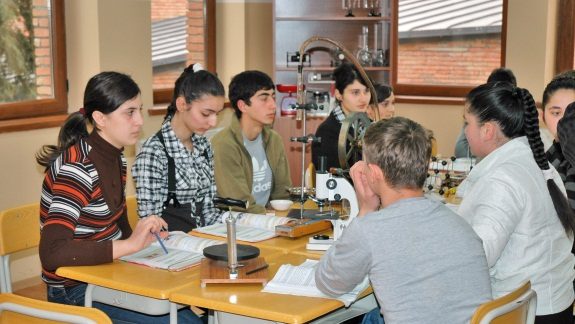
In Armenia, the law requires schooling from the ages of six to 16. Education plays a central role in the lives of Armenian families, with students receiving abundant amounts of homework and classes lasting between four and six hours. Teachers are said to become a type of extended family, as parents give them a lot of respect for working with their children. Despite being a fairly small country, there are 25 higher education institutions with a variety of undergraduate and graduate programs. While education is an important facet of childhood in Armenia, it is becoming increasingly unaffordable for many families.

Education in Armenia is officially guaranteed for all citizens, but the education system is becoming more and more privatized. Some parents have trouble affording textbooks and other supplies for their children, and the system is also very corrupt, creating additional unnecessary expenses. There have been cases where parents are forced to provide supplemental income for teachers or large sums of money to ensure that their children will pass examinations. This corruption has lead to a significant decrease in the number of students enrolling in Armenian higher education institutions.

Another issue facing Armenian education is the disparity between male and female secondary school enrollment rates. Unlike many other parts of the world, there are many more females than males enrolled in secondary education. In 2014, about 112 percent of females were enrolled in upper secondary education, while only 89 percent of males were enrolled.

While Armenia does need to reduce the corruption in its education system and should increase funding to make education more accessible to low-income families, the quality of the education provided here is very high. Of Armenians who are age 15 and over, 100 percent are literate, placing Armenia near the 99th percentile for access and literacy across the world.

Armenia has clearly done something right by providing good quality education to all, but it needs to work on making that education equally affordable with less corruption. Despite their favorable statistics, there is much work to be done, but with the implementation of better standards and increased funding, the education system in Armenia can surely become one of the best in the world.

– Liyanga De Silva

Photo: Flickr

October 18, 2017
https://borgenproject.org/wp-content/uploads/borgen-project-logo.svg 0 0 Kim Thelwell https://borgenproject.org/wp-content/uploads/borgen-project-logo.svg Kim Thelwell2017-10-18 01:30:132024-05-29 22:27:45Education in Armenia
Education, Global Poverty

How to Help People in Montenegro

How to Help People in Montenegro

Montenegro is one of the world’s newer nations, having become independent from Serbia in 2006. As such, development in the country is a work in progress, with several vulnerable groups still existing. There are a few different ways that people around the globe are figuring out how to help people in Montenegro. There are multiple foundations whose mission is to combat poverty within Montenegro as well as instances where individuals within the United States are helping out.

“Help – Hilfe zur Selbsthilfe” is a foundation that has been committed to providing people in need globally with prompt, sustainable, long-term aid and support since 1981. Their mission is in line with its principle of assisting people with working towards self-reliance. It works together with people that are in need regardless of their age, gender, political views or religious beliefs by providing aid in the aftermath of catastrophes.

Help has been working in Montenegro specifically since 1999, and the main focus of their work there is supporting the Roma people who had fled to Montenegro during the Kosovo war. Help focuses on clarifying residence issues such as access to health care, education and income opportunities by pursuing uniform approaches to solutions to reduce economic hardships while taking their culture and customs into consideration. Help is particularly focusing on Roma women, who tend to be the most disadvantaged in social and economic terms.

U.S. emergency planners and their counterparts in Montenegro came together in Podgorica to help the country better prepare the young democracy to effectively respond to potential catastrophic disasters in a four-day working session that is part of the Department of Defense Civil-Military Emergency Preparedness Program. This program is a global initiative to help countries be better able to address security concerns and be prepared to manage all varieties of hazards.

BalkanInsight has an interesting take on when people want to learn how to help people in Montenegro. The article talks about how poverty is not simple, and those who believe that it is do not necessarily understand it. Not all children in the country suffer from hunger; on the contrary, almost one in four children under five are overweight, with just 7 percent of Roma children being underweight compared to 1 percent of the general population.

Sometimes where hunger does occur in Montenegro it is because of family problems, such as mental health, addiction or domestic violence. Situations such as these require more complex interventions, not necessarily the food parcels that are shown time and again on social or broadcast media. It is wise in a situation like this to realize that it is always good to help when one needs help, but to be careful as to how you are helping and make sure that you are truly helping rather than hurting.

– Sara Venusti

Photo: Flickr

October 16, 2017
https://borgenproject.org/wp-content/uploads/borgen-project-logo.svg 0 0 Borgen Project https://borgenproject.org/wp-content/uploads/borgen-project-logo.svg Borgen Project2017-10-16 01:30:502019-08-14 10:33:59How to Help People in Montenegro
Education, Global Poverty

Addressing Causes of Poverty in Côte d’Ivoire

causes of poverty in Côte d'Ivoire
Côte d’Ivoire, or the Ivory Coast, is a former French colony and is located in North Africa. The country’s economy relies heavily on agriculture and processing, with over half of the country’s population working as laborers and farmers. Côte d’Ivoire’s main exports include cocoa, various nuts and palm oil. This low-income country, with 50.9 percent public debt in 2016, has a population estimated at just over 24 million and has a poverty rate of 46.3 percent.

One most recent cause of poverty in Côte d’Ivoire is the production of cocoa which is “highly sensitive to fluctuations in international prices…and to climatic conditions.” Recently, Côte d’Ivoire farmers have been witnessing agricultural diseases among the cocoa plants and trees. Along with decreased crops, around 80 percent of buyers have escaped their contracts with the cocoa farmers, which leaves the farmers with little to no income.

Without payment for the harvested crop, many of these farmers and their families have to survive with nothing. Even if the farmers do receive payment, they earn less than a dollar per day, contributing to the number of people living below the poverty line. Without the proper income, these farmers are facing an inability to buy fertilizers for next year’s production. One farmer states that the soil is old and barren, and without fertilizer, “you can’t grow anything.”

Another cause of poverty in Côte d’Ivoire is the lack of healthcare. Since the civil war in Côte d’Ivoire in 2002, there has been a collapse of resources for people with health issues, including HIV/AIDS. Based on 2016 data, the adult prevalence rate of HIV/AIDS is about 2.7 percent, and about 460,000 people are living with the disease. Côte d’Ivoire is also at high risk of other diseases besides HIV/AIDS.

The absence of sexual education is also to blame for poverty in Côte d’Ivoire. The current rise in population is estimated to continue growing, as about 60 percent of the population is 25 or younger. Furthermore, the fertility rate is approximately 3.5 children per woman, and use of contraception is below 20 percent.

However, there is good news for the country. In June 2012, Côte d’Ivoire received $4.4 billion in debt relief under the Highly Indebted Poor Countries Initiative. Since then, the country’s growth rate has risen to among the highest in the world. To tackle the epidemic of HIV/AIDS and other causes of poverty in the Côte d’Ivoire, several mayors of the nation’s communities joined together with the UNAIDS Executive Director Michel Sidibé to establish the Paris Declaration, which plans to eradicate the disease in Côte d’Ivoire by 2030.

As for the cocoa crisis, sustainability of the fields for production is essential, as well as paying the farmers a livable income. The French Development Agency and Barry-Callebaut, the global leading manufacturer of chocolate, have founded a sustainability strategy called Forever Chocolate in hopes of getting the crisis under control and providing a better future for Côte d’Ivoire farmers.

Furthermore, the Millennium Challenge Corporation (MCC) has selected Côte d’Ivoire “to begin developing a five-year compact,” and the company has committed to helping the country fight its poverty. In conjunction with the MCC, The Borgen Project is advocating the passing of the African Growth and Opportunity Act and Millennium Challenge Act (AGOA and MCA) Modernization Act in Congress. This bill will strengthen and extend programs and aid in Africa if passed. For more information or to contact your Congressperson and show support, visit: https://borgenproject.org/legislation/.

– Jennifer Lightle
Photo: Flickr

October 14, 2017
https://borgenproject.org/wp-content/uploads/borgen-project-logo.svg 0 0 Kim Thelwell https://borgenproject.org/wp-content/uploads/borgen-project-logo.svg Kim Thelwell2017-10-14 07:30:312024-05-29 22:27:24Addressing Causes of Poverty in Côte d’Ivoire
Education, Global Poverty, Government

New Program for Free High School in Ghana Looks Promising

Free High School in GhanaIn February 2017, the president of Ghana, Nana Akufo-Addo, stated that the government will begin to fund the cost of public Senior High Schools (SHS) for everyone who qualifies beginning in September. According to The Herald, President Akufo-Addo stated, “By free SHS, we mean that, in addition to tuition which is already free, there will be no admission fees, no library fees, no science centre fees, no computer laboratory fees, no examination fees, no utility fees; there will be free textbooks, free boarding and free meals and day students will get a meal at school for free.”

President Akufo-Addo has followed through on this promise. The equivalent of over $90 million has been set aside by the government with the goal of aiding 424,092 students for the 2017-2018 school year. While the program for free high school in Ghana is for incoming freshman only, it is already a great improvement, as in 2014, only 37 percent of students were enrolled in secondary education.

President Akufo-Addo has been quoted recognizing the importance of education both in general and in terms of developing countries. VOA News reports Akufo-Addo saying that the, “economy for over a century has been depending largely on the production and export of raw materials. This cannot and will not create prosperity for the masses of Ghanaians.”

Though there have been concerns expressed about if free SHS is a sustainable program, if the system will be overburdened or if it will harm the private schooling sector, the worries are thus far unfounded. The beneficiaries of this maiden program will be under the policies of the program until their third year, which gives time for the policies to be further developed and corrected.

The private schooling sector was not affected when free primary school was initiated over a decade ago. In fact, they remain among top performing schools in the nation. Therefore, the same result is more than likely to be expected with the beginning of free high school in Ghana.

As for if the school system will be overburdened with congestion of students and a subsequent drop in the quality of education, the prime minister of education is not concerned. VOA News quotes Minister Matthew Opoku Prempeh claiming, “the government based its calculations on data from headmasters and on the total number of students who passed the entrance exam…We should be able to place everybody.”

With a new and still improving focus on education, the future of Ghana from both an economic standpoint and a more holistic level has room for growth more than ever before.

– Gabriella Paez

Photo: Flickr

October 14, 2017
https://borgenproject.org/wp-content/uploads/borgen-project-logo.svg 0 0 Kim Thelwell https://borgenproject.org/wp-content/uploads/borgen-project-logo.svg Kim Thelwell2017-10-14 07:30:192020-02-13 20:10:01New Program for Free High School in Ghana Looks Promising
Economy, Education, Global Poverty

How to Help People in Denmark

How to Help People in Denmark

In the 2016 U.S. presidential election, Denmark and other Scandinavian countries gained attention for their extraordinarily equitable economies. Candidate Bernie Sanders often pointed to the Danish education and healthcare systems as models to be followed by the U.S.

Rather than asking how to help people in Denmark, Sanders and other social democrats focused on how the rest of the world could benefit from understanding the ways in which the Danish government already helps its own people.

In addition to free education and healthcare, the Danish government provides all citizens with a minimum income guarantee of about $100 per day. As a result, Denmark has achieved the fourth lowest inequality rate in the world.

Such a world-class safety net is supported by one of the world’s highest tax rates. All sales in Denmark include a 25 percent tax and the highest income earners give upwards of 60 percent of their income to the state.

The high tax rate has motivated some economists like Rasmus Landerso and James Heckman to frame the Danish economy as equitable only insofar as it compresses the range between high and low incomes, not because it has a high index of social mobility.

Indeed, their recent study found that intergenerational social mobility in Denmark mirrors that in the U.S. A child from a lower-class background, for example, whose parents did not finish college in Denmark is just as unlikely to attend college and become middle-class as his or her American counterpart, despite the fact that Danish higher education is free.

The difference, then, between the two countries is that the Danish government compensates for low social mobility by providing significant welfare benefits to the poor.

In the end, while there may still remain a question about how to help people in Denmark ascend out of their generational social classes, it is clear that the Danish people already receive sufficient amounts of help from their own government.

– Nathaniel Sher

Photo: Flickr

October 14, 2017
https://borgenproject.org/wp-content/uploads/borgen-project-logo.svg 0 0 Kim Thelwell https://borgenproject.org/wp-content/uploads/borgen-project-logo.svg Kim Thelwell2017-10-14 07:30:162020-02-13 20:10:33How to Help People in Denmark
Education, Human Rights

The Right to Education in Sub-Saharan Africa

The Right to Education in Sub Saharan Africa

“Everyone has the right to education,” stated the Universal Declaration of Human Rights 61 years ago. Unfortunately, this statement has not been true for all countries in the world. More than 72 million children are currently out of primary school, with 50 percent living in Sub-Saharan Africa and 11 million of them concentrated in Nigeria alone. According to a ruling from the Economic Community of West African States Community Court of Justice, all Nigerians are entitled to education as a legal and basic right. However, the right to education in Sub-Saharan Africa has not been granted to many children who suffer from marginalization and deprivation of education.

Recent data from the UNESCO Institute for Statistics (UIS) and the Global Education Monitoring (GEM) Report revealed alarming out-of-school rates in Sub-Saharan Africa. The report shows rates reaching 21 percent for primary school-aged children, 34 percent for lower secondary school-aged children and 58 percent for upper secondary school-aged adolescents – the highest percentage worldwide.

UNICEF released a report in 2016 on The State of the World’s Children, showing that even children in school for at least four years are not learning the skills and knowledge that are vital for their intellectual and social development. Because of inaccessibility to quality education, the same report states that about 130 million children of primary school age in Sub-Saharan Africa lack basic literacy and numeracy skills. According to the World Bank, Sub-Saharan Africa has the lowest adult literacy rate worldwide, with 60 percent of their population of 15 and over able to read and write, which is far below the 80 percent world rate.

Increases in out-of-school and dropout rates are directly linked to many poverty factors such as health issues, unemployment and have illiterate parents. Some children are forced to quit school for health problems or the need to provide support for their household. Another factor increasing risks of non-schooling concerns the lack of financial resources needed for schooling materials, creating schools and recruiting and training teachers.

By taking a closer look at the data, girls reveal to be the ones majorly disadvantaged by non-schooling. UNESCO data discloses major gender inequity statistics such as 23 percent of out-of-school girls compared to 19 percent of boys in primary school. It also states that the exclusion rate of adolescent girls reaches 36 percent, while the one for adolescent boys is 22 percent.

Now, the question is what needs to be done to achieve the right to education for all in Sub-Saharan Africa? First of all, there needs to be additional investments in educational aid from leading international donors, such as the U.S. Reducing the general costs of schooling for families will also help increase access to education for many children. Gender equality is also a key issue to be considered in education that can be achieved through training teachers and parents to increase gender awareness in the classroom.

According to the UNICEF report, it is also important to make sure all children get quality education by acquiring skills that enable them to participate fully in society and obtain jobs that can help lift them out of poverty. If every child was entitled to education and had the opportunity to build a secure livelihood, it would have major positive effects on the society and economy of Sub-Saharan Africa and around the globe.

– Sarah Soutoul

Photo: Flickr

October 14, 2017
https://borgenproject.org/wp-content/uploads/borgen-project-logo.svg 0 0 Borgen Project https://borgenproject.org/wp-content/uploads/borgen-project-logo.svg Borgen Project2017-10-14 01:30:212024-06-07 05:07:47The Right to Education in Sub-Saharan Africa
Education

Boosting Education in Guyana for Development

Education in Guyana
The Guyanese government allocated an estimated $31.8 billion to education in Guyana in 2015, nearly 16.6 percent of the total budget. In 2016, $40.3 billion was dedicated to education, which equates to about 17.5 percent of the total budget. This increase in the budget seems to be a trend for Guyana, one which is making a positive impact on the educational system of the country.

Guyana ranks among the top proportional spenders on education in the world. This educational expenditure is viewed by governmental officials as an investment in the country’s long-term socio-economic development.

Guyanese President David Granger said in his address at the National Education Rally in September 2017, “We will improve the delivery of education, the Department of Education System Innovation and Reform is a reality within the Ministry of Education. Innovation will lead to improvement, nothing stands still. There must be more computers in schools, every school must have Wi-Fi and we are working towards that.”

At this rally, President Granger said that “every child in school” is not a slogan, but a declaration of intent and a commitment on the part of his government to eliminate anything in the way of youths accessing education and to help them reach their fullest potential. This declaration is among the explanations Granger has for why Guyana invests so much in education.

The allocated funds have gone towards things like access to schools, construction, extension, rehabilitation and maintenance of Guyana’s educational facilities. It has also gone to things like the “President’s Five Bs”, which are buses, boats, bicycles, breakfast and books. The country’s rural areas are most affected by transportation costs, so by addressing that issue, school attendance is increasing, as families no longer have to shoulder many of the financial burdens of educating children. Many children had to walk or row for hours simply to get to school in the morning, but with new buses, that will not be an issue anymore.

Science, technology, engineering and mathematics education has already shown incredible promise. At the First Global Challenge in Washington D.C. this past year, the Guyana team placed tenth out of 165 countries overall.

Granger has said that “What we want is a generation of young people, who are educated, who can use computers, who can use machines and help themselves to make a good living… Once you get an education, you would be able to use it…your skills and your technology to use the very products that are coming out of your region in what is called agro-processing. Anything you produce can be processed and exported.”

Agro-processing is among the specific reasons that Guyana invests in education and shows that it is a socioeconomic benefit for Guyana in the long-run. Granger stated that Guyana has all of the necessary resources of fertile land and produce, as well as a tourism industry, but does not yet have enough educated people to develop those resources into full-fledged industries.

It seems that investing in education in Guyana will make President Granger’s vision of a better socioeconomic country a reality with the coming generations.

– Gabriella Paez

Photo: Flickr

October 13, 2017
https://borgenproject.org/wp-content/uploads/borgen-project-logo.svg 0 0 Kim Thelwell https://borgenproject.org/wp-content/uploads/borgen-project-logo.svg Kim Thelwell2017-10-13 01:30:332024-05-29 22:27:25Boosting Education in Guyana for Development
Education

Vodafone Foundation and Education in sub-Saharan Africa

Education in sub-Saharan AfricaThe Vodafone Foundation recently announced their new program called Instant Schools for Africa which focuses on improving education in sub-Saharan Africa. The program aims to reach 5 million people in the Democratic Republic of Congo, Ghana, Kenya, Lesotho, Mozambique and Tanzania, providing them with free access to online learning.

The Instant Schools for Africa will provide children and young people with online access to educational materials that are completely free, and comes without mobile data charges. Those unable to access the internet will also be able to use the program offline. The subjects that are included in the material are math and science from primary to advanced levels. Charitable giving, along with technology, is how the Vodafone Foundation aids young people at their 27 locations around the world.

The Vodafone Foundation hopes to improve education in sub-Saharan Africa by targeting children who are typically excluded from a standard education. The overall mission of the Vodafone Foundation is to support global projects that are working towards benefiting areas with health, education, and disaster relief. The foundation uses technology to help those who need it.

Currently, the Vodafone Foundation has a program similar to Instant Schools for Africa, called Vodacom e-school, which provides 215,000 children with access to education. The need for these programs is in high demand, especially in sub-Saharan Africa, as it holds the lowest rate of primary school enrolment across the world. Over one-fifth of children, ranging in age from six to 11, are not in school, while 60 percent of children between 15 and 17 are also not in school.

With Instant Schools for Africa, the Vodafone Foundation is expanding their current education program. Their program is considered one of the largest philanthropic programs, with over 25 years of aid. While the program is expanding, they are planning to keep the already running program, Vodacom e-school.

– Chloe Turner

Photo: Flickr

October 12, 2017
https://borgenproject.org/wp-content/uploads/borgen-project-logo.svg 0 0 Kim Thelwell https://borgenproject.org/wp-content/uploads/borgen-project-logo.svg Kim Thelwell2017-10-12 01:30:182018-03-28 02:17:10Vodafone Foundation and Education in sub-Saharan Africa
Education

Improving Education in the Democratic Republic of the Congo

78. Improving Education in the Democratic Republic of the CongoSituated in the heart of Africa and home to more than four million people, the Democratic Republic of the Congo has, for many years, struggled to improve its educational system. With an overall literacy rate of approximately 63.8 percent, the nation’s literacy has declined from its 1995 rate of 77.3 percent. Critically, though, education in the Democratic Republic of the Congo has experienced a plateau in literacy around 64 percent after a sudden drop in the 2000s, suggesting that the nation may be heading toward an upward spike in terms of literacy.

Still, however, the gender disparities in the rate of education in the Democratic Republic of the Congo are profound. Where 78.1 percent of the male population is literate, the female population lingers at a staggeringly low 50 percent. Nonetheless, women such as Melissa Kasoke of the Congo have been raising their voice in support of sustained efforts for women’s education. It seems, too, that the world is listening to their demands. In spite of the gender disparity that exists within the educational system in the nation, external organizations such as UNICEF have begun funding efforts to deconstruct barriers to women’s education and provide equal opportunities for them within the Congo.

In recent years, such external efforts have proven conducive to improving the overarching schema of education in the Congo. As of 2015, over 20 million textbooks had been distributed to classrooms throughout the country. The completion rate at the primary school level now stands at approximately 70 percent, as opposed to the 2002 rate of only 29 percent. Teaching strategies have been implemented, which encourage gender equality, discovery-based-learning and instructive materials.

In fact, the Democratic Republic of the Congo recently received a $100 million grant to help improve their education system. This grant seeks to improve the quality of primary education, strengthen sector management and promote greater accountability at the local level. Ultimately, this should help to improve the education system for both men and women throughout the nation, particularly in communities where low-income students have experienced a dearth of resources in the past.

The structure of the education system in the Congo overall parallels that of the U.S., to some extent. The first six years of education are encapsulated in primary school, the second four years are spent in middle school and the final three years are spent in lycee, which is similar to high school in the U.S. Finally, students have the opportunity to attend college or university in the tertiary portion of their educational pursuits.

Overall, education in the Democratic Republic of the Congo continues to strive toward improvement and success. However, the nation is still in need of assistance. It is therefore incumbent for foreign countries, such as the U.S., to continue to provide aid to the Democratic Republic of the Congo in order to ensure universal educational opportunities for students of all ages, genders nd socioeconomic class backgrounds.

-Emily Chazen

Photo: Flickr

October 11, 2017
https://borgenproject.org/wp-content/uploads/borgen-project-logo.svg 0 0 Kim Thelwell https://borgenproject.org/wp-content/uploads/borgen-project-logo.svg Kim Thelwell2017-10-11 01:30:502024-05-29 22:27:37Improving Education in the Democratic Republic of the Congo
Page 156 of 241«‹154155156157158›»

Get Smarter

  • Global Poverty 101
  • Global Poverty… The Good News
  • Global Poverty & U.S. Jobs
  • Global Poverty and National Security
  • Innovative Solutions to Poverty
  • Global Poverty & Aid FAQ’s
Search Search

Take Action

  • Call Congress
  • Email Congress
  • Donate
  • 30 Ways to Help
  • Volunteer Ops
  • Internships
  • Courses & Certificates
  • The Podcast
Borgen Project

“The Borgen Project is an incredible nonprofit organization that is addressing poverty and hunger and working towards ending them.”

-The Huffington Post

Inside The Borgen Project

  • Contact
  • About
  • Financials
  • President
  • Board of Directors
  • Board of Advisors

International Links

  • UK Email Parliament
  • UK Donate
  • Canada Email Parliament

Get Smarter

  • Global Poverty 101
  • Global Poverty… The Good News
  • Global Poverty & U.S. Jobs
  • Global Poverty and National Security
  • Innovative Solutions to Poverty
  • Global Poverty & Aid FAQ’s

Ways to Help

  • Call Congress
  • Email Congress
  • Donate
  • 30 Ways to Help
  • Volunteer Ops
  • Internships
  • Courses & Certificates
  • The Podcast
Scroll to top Scroll to top Scroll to top