9 Facts About Education in Taiwan
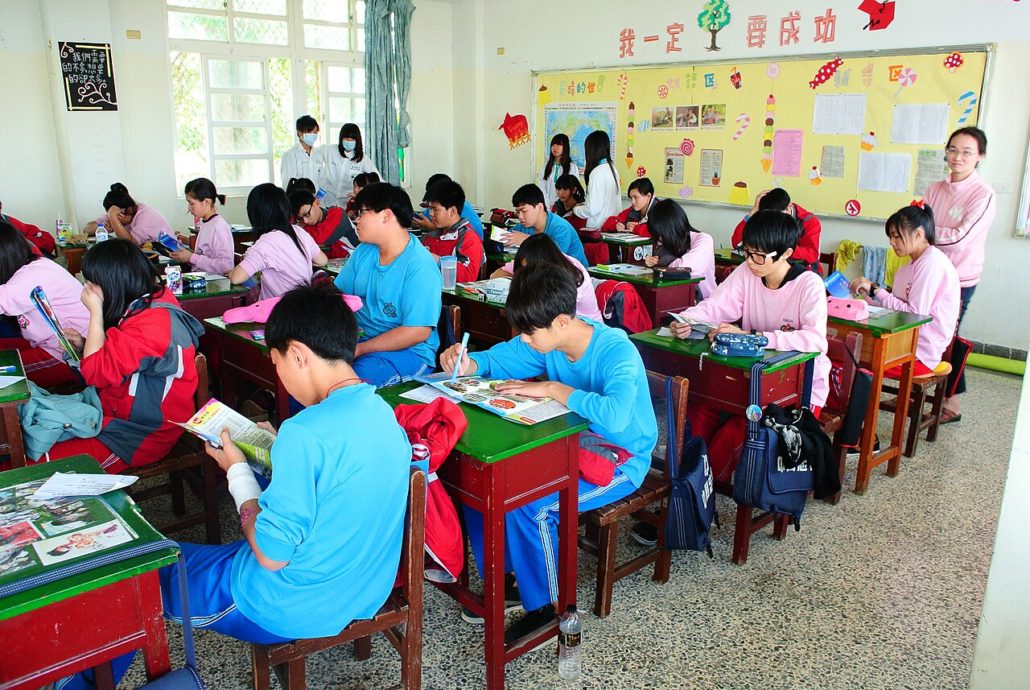
Despite Taiwan’s increasing educational success, students face various obstacles every day in their pursuit of good grades. Here are eight facts about Education in Taiwan – the good, the bad and the ugly.
1. The Chinese Government’s Role in Education in Taiwan
The Chinese government regulates education in Taiwan. China refuses to acknowledge Taiwan as an independent nation, so the central educational authority in the island country is the Ministry of Education of the Republic of China. Due to the issues of jurisdictional control, the official language of instruction is Mandarin Chinese.
2. Students Value Education
Students highly value education in Taiwan, not just adults. Taiwan’s literacy rate of 99.2%, as the government reported, places it among the most academically advanced nations. The first nine years are compulsory and many students participate in extra courses through junior high in order to attend better high schools.
Students can then attend secondary education – senior high school – or vocational school, either pursuing science and the liberal arts or more practically relevant skills such as computer science or engineering.
With more than 100 higher learning centers to choose from, tertiary education in Taiwan is extremely popular. According to the NCEE, more than 80% of students pursue a postsecondary education. Scholaro reported that 25% of the degrees awarded are for engineering.
3. Taiwanese Students Compared to US Students
Taiwanese students outperformed U.S. students in every subject in 2022. According to the National Center on Education and the Economy (NCEE), Taiwanese students scored higher in mathematics, reading and science tests administered by the Program for International Student Assessment (PISA) in 2022. Furthermore, Taiwanese students outperformed the average PISA scores of the Organisation for Economic Co-operation and Development (OECD), which consisted of 81 countries at the time of the report.
Furthermore, to keep their competitive advantage, Taiwan introduced the Bilingual 2030 policy in December 2024. The country’s goal is to attract more corporations to and increase the potential of its students in the workforce.
4. Reforms in the 2010s
Reforms in the 2010s redefined the importance of education in Taiwan, creating the success of the 2020s.
According to NCEE, the government passed a 2016 law raising budget allocations for education in Taiwan from 22.5% to 23% – 5% of the total GDP.
Reforms included loosened restrictions around curriculum, subsidies for disadvantaged students, improved vocational education and training, improved access to arts education, e-learning encouragement and easier access to upper secondary school.
5. Concerns About Preparation for Higher Education
There are concerns that students are not adequately prepared for higher education. NCEE reported that “University leaders and employers have expressed concern that the emphasis on admission to university has come at the expense of creative and critical thinking skills.” Taiwan utilized a testing-oriented education system, which also posed several issues.
Due to a memorization-heavy curriculum, problem-solving skills did not develop as widely in students. NCEE said that the Ministry of Education (MOE) in Taiwan hopes the new curriculum will improve these setbacks with its attention to “innovation and adaptation.”
6. The Effect of Population Decline
Population decline poses a real threat to higher education facilities in Taiwan. According to MSN, as of August 2025, Taiwan has experienced 19 consecutive months of population decline, a trend that is expected to continue through 2030.
As of 2023, The Guardian reported an average birth rate of 0.865 babies born per woman – a quantity much too low to fill the “replacement rate” needed to keep classrooms full. Experts like Wu Chun-chung, chairperson of the Union Private School Educators, and Chou Ping, president of the Taiwan Higher Education Union, expect universities – particularly in suburban areas – to shut down in the coming years.
Despite increased incentives from the Taiwan government, people remain reluctant to start families due to the rising costs of living and career stability. The Straits Times reported an increase in the average age of a first marriage, moving from 26.8 in 2002 to 30.7 in 2022 – older marriages equate to fewer children being born per couple, further compounded by younger women’s opposition to patriarchal gender role expectations.
In a December 2023 article, “Why Taiwan’s falling birth rate has become a national security issue,” the University of Melbourne’s Antonia Finnane writes, “Many more unmarried men (61.22%) than unmarried women (42.98%) wanted eventually to have children.” From the start, women are less inclined to have children, pointing to declining enrollment rates for education in Taiwan.
7. Mental Health
Mental health is a pressing concern for students in primary and secondary schools. Societal expectations and the rigor of academic dedication take their toll on many students performing as intensely as those in Taiwan. Anxiety, stress, depression and increased suicidal behavior are precedent in students aged 10 to 24.
The National Institute of Health (NIH) published the article, “Societal factors and psychological distress indicators associated with the recent rise in youth suicide in Taiwan: A time trend analysis.” In this article, the NIH stated, “Suicide rates and the prevalence of suicidal behaviors began to increase in Taiwanese youth in the 2010s.” While studies still need to be conducted on the exact causes, NIH reports an 11.5% increase in suicide rates annually between 2014 and 2019 for 10 to 24-year-olds.
Broken Chalk, an Amsterdam-based organization advocating against human rights violations in global education, suggested, “Promoting a supportive environment, addressing stigma, and prioritising students’ well-being are essential steps toward addressing these challenges and fostering a healthier educational culture in Taiwan.”
8. How NGOs are Address Students’ Mental Health
Non-governmental organizations are advocating for improvements in students’ mental health. In December 1991, child welfare advocates in Taiwan founded the Child Welfare League Foundation (CWLF). Its main objective is to establish amendments to the Child Welfare Act, analyzing student health and proposing solutions in education and health.
In a February 2025 article, the CWLF suggested four recommendations for the MOE and parents to pursue:
- The MOE should raise awareness and improve accessibility to one-on-one counseling options, scheduling around students’ stacked schedules.
- The government should “integrate mental health assessments into routine student health screenings,” opening the door for proactive assistance.
- Parents should encourage students to engage in sports and other physical activities – a proven solution in improving emotional distress.
- CWLF also provides several support systems for teenagers, such as the Heart Passport program for education, assessment and counseling; the Youth Helpline, which offers a safe space for students to speak freely and receive support; the Line@ Online Chat Service for counseling and referrals; and a free online course titled “Teenager Shouldn’t Always Be EMO.”
Looking Ahead
While education in Taiwan made leaps and bounds toward excellence in the 2010s, the 2020s have provided new challenges and tribulations for students. If the Ministry of Education and parents approach students’ issues with care, Taiwan may be able to maintain its top spot in educational achievement.
– Jacob Christopher
Photo: Wikimedia Commons
