• Link to X
  • Link to Facebook
  • Link to Instagram
  • Link to TikTok
  • Link to Youtube
  • About
    • About Us
      • President
      • Board of Directors
      • Board of Advisors
      • Financials
      • Our Methodology
      • Success Tracker
      • Contact
  • Act Now
    • 30 Ways to Help
      • Email Congress
      • Call Congress
      • Volunteer
      • Courses & Certificates
      • Be a Donor
    • Internships
      • In-Office Internships
      • Remote Internships
    • Legislation
      • Politics 101
  • The Blog
  • The Podcast
  • Magazine
  • Donate
  • Click to open the search input field Click to open the search input field Search
  • Menu Menu

Archive for category: Education

Information and stories on education.

Education

World Leaders Pledge to Boost Investments in Education

At the UN, World Leaders Pledge to Boost Investments in EducationFinancing and investments in education promote economic development, reduce gender disparities and are potentially the most effective way to accomplish all of the United Nations’ 17 Sustainable Development Goals (SDGs) developed by the U.N. Member States in 2015 and to prevent conflict and sustain peace.

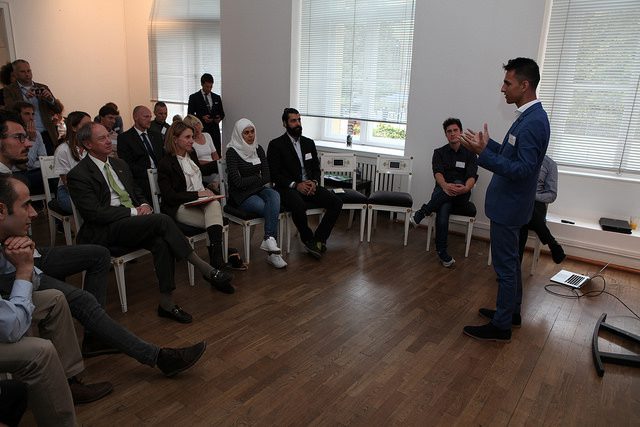
At the event titled “Financing the Future: Education 2030,” world leaders, advocates, children and students gathered in New York to underscore the importance of unreservedly financing global education. According to the U.N. News Centre, the event was co-organized by governments, the private sector, civil society and U.N. agencies to encourage greater investments and political commitments in quality education. This included education at all levels: early childhood, primary and secondary.

U.N. Secretary-General António Guterres delivered the opening remarks by speaking of his background as a teacher in his native Portugal, where he began to see education as “a basic human right, a transformational force for poverty eradication, an engine for sustainability and a force for peace.”

Guterres underlined four areas of focus where he urged world leaders to boost investments in education. Noting that about 260 million young children, most of whom are girls, are deprived of school education, he urged for greater investments by governments and donors in education funding. He also advocated for the reduction of gender-based disparities, adoption of lifelong learning habits and a particular focus on children, notably refugees, affected by wars and conflicts.

Guterres also envisioned the launch of an International Finance Facility for Education as early as next year through the G-20 Education Commission. Speaking of the wide range of barriers faced by girls in obtaining primary and secondary education, he noted that only 1 percent of poor rural women in developing countries completed their secondary education studies.

This means that half of any low-income country’s assets–women and girls–can not currently play a role in a country’s economic development simply because they lack proper access to education or suffer disproportionately in poor and vulnerable households. As Guterres reiterated, each year of secondary education can boost a girl’s future earning power by as much as 25 percent.

U.N. Messenger of Peace Malala Yousafzai, the youngest laureate of the Noble Peace Prize, built on this theme and urged world leaders to boost investments in education, especially for girls. She said that girls worldwide desire greater opportunities and are actively pushing back against poverty, war and child poverty.

“We have big goals,” said Malala, referring to the SDGs, “but we will not reach any of them unless we educate girls.”

The U.N. Special Envoy for Global Education, Gordon Brown, stressed the need to widen the circle of beneficiaries of quality education and labeled it as “the civil rights struggle of our time.”

“Confronted by the largest refugee crisis since the close of the Second World War, and with education receiving less than 2 percent of humanitarian aid, it is vital we marshal the funds to provide an education for all children–especially those left out and left behind: refugee children,” he said.

A recently released report from the United Nations Educational, Scientific and Cultural Organization (UNESCO) further breaks down the extent of the problem. More than half a billion children and adolescents worldwide are unable to meet the minimum proficiency levels in reading and mathematics and are headed towards a “learning crisis.”

Many of the global goals are dependent on SDG 4, which directs “inclusive and equitable quality education and the promotion of lifelong learning opportunities.” But lack of access to school, failure to maintain children’s attendance and the poor quality of education are among the three common problems hampering progress in quality education.

Speaking about the UNESCO report, Silvia Montoya, director of the UNESCO Institute of Statistics, stated that “[t]he figures are staggering both in terms of the waste of human potential and for the prospects of achieving sustainable development.”

The UNESCO report and the U.N. event show that tackling the global education crisis requires far greater investments in education than have been previously allocated. Greater resources are needed to promote equitable opportunities for children around the world seeking quality education.

Governments, the private sector and citizens can all play a critical role in ensuring that our most precious resources–our young population–are not deprived of the resources they themselves need to succeed and become tomorrow’s leaders. As Guterres concluded, “[f]inancing education is indeed the best investment we can make for a better world and a better future.”

– Mohammed Khalid

Photo: Flickr

October 22, 2017
https://borgenproject.org/wp-content/uploads/borgen-project-logo.svg 0 0 Borgen Project https://borgenproject.org/wp-content/uploads/borgen-project-logo.svg Borgen Project2017-10-22 07:30:592024-06-11 02:48:34World Leaders Pledge to Boost Investments in Education
Education

Education in Belgium: A Model for the World

Education in Belgium

Belgium has one of the most complex and successful education systems in the world. Between 2008 and 2012, 98.9 percent of male children and 99.2 percent of female children were enrolled in primary school. These statistics show that mandatory primary school is enforced and taken seriously in Belgium.

Compulsory education lasts 12 years, similar to the United States, and goes from age six to age 17. Belgium also has equal primary and secondary education enrollment rates for both boys and girls, showing equal access to education for both. What is even more impressive is that since 2007, at least 20 percent more women than men have enrolled in higher education.

Education in Belgium is monitored by a number of comprehensive policies. In 2002, the Decree on Equal Educational Opportunities created local consultation platforms to ensure fair school admission and enrollment processes. In March of 2014, the “M Decree” was passed, which is meant to promote the inclusion of students with special education needs in mainstream schools. The Decree indicates that schools may only refer students to “special education” if they can justify having tried all possible methods to allow them to follow mainstream education programs.

This system is very thorough and accounts not only for what happens while children are in school but also works to make sure they can integrate effectively into the labor market. It is this system that improves not only education and literacy rates, but economic success, crime rates and domestic stability.

Education in Belgium is setting an incredible example for the rest of the world. While it is a very rich country, its model can still be used to improve education in other, less financially stable, countries. It continues to improve further, as seen with its 2014-19 plans to implement measures to reduce dropout rates, and will hopefully help lead education systems in developing countries to similar heights.

– Liyanga De Silva

Photo: Flickr

October 22, 2017
https://borgenproject.org/wp-content/uploads/borgen-project-logo.svg 0 0 Kim Thelwell https://borgenproject.org/wp-content/uploads/borgen-project-logo.svg Kim Thelwell2017-10-22 01:30:472024-06-07 05:07:47Education in Belgium: A Model for the World
Education, Global Poverty

She’s the First to Finish School – Girls’ Education

She's the FirstOne of the side effects of poverty is an inability to start or finish one’s education. But one nonprofit is aiming to fight that effect by educating young women. She’s the First is a global nonprofit that “supports girls who will be the first in their families to graduate high school and trains students everywhere to be global citizens.” Their aim is to keep girls in school until they graduate so they can experience and learn more in school. In addition to poverty preventing young girls from finishing school, early marriage, long routes to school and expensive costs for higher schooling also affect girls’ education.

Two women wanted to combat all of that by helping young women get the education they need to succeed. She’s the First was started in November 2009 with a Youtube video and Facebook page by founders Tammy Tibbetts and Christen Brandt. Both had received scholarships for their schooling and wanted to do the same for other girls. It has been shown that education, specifically girls’ education, can help stop poverty.

It works with other international organizations to identify young women to sponsor. 11 countries are the current focus of the organization, including countries in West Africa, Eastern Africa, Latin America and East Asia.

Over 900 girls are She’s the First Scholars, meaning they have received a scholarship to allow them to pursue their education. The young women are provided with mentors in order to help them become successful leaders. These campus groups also aim to promote leadership and global citizenship within the campus community.

What are the benefits of improving education for young women? She’s the First says that a girl is likely to make “20 percent more per year of schooling she finishes”, is less likely to marry young and more likely to have fewer, but healthier, children.

Want to get involved? There are different levels of donor programs. You can become an Academic Ally, Equality Advocate, or a Girl Champion. There have also been more than 300 fundraisers to help raise money for the cause.

Since 2009, this organization has been able to help many young women finish school and give them the resources they need to do so. It has mobilized others across the country, specifically in communities and at universities. This organization’s message of investing in education to better the futures of these young women and girls is an amazing cause to help fight global poverty.

– Emilia Beuger

Photo: Pixabay

October 21, 2017
https://borgenproject.org/wp-content/uploads/borgen-project-logo.svg 0 0 Borgen Project https://borgenproject.org/wp-content/uploads/borgen-project-logo.svg Borgen Project2017-10-21 01:30:042020-04-04 08:45:14She’s the First to Finish School – Girls’ Education
Children, Education, Global Poverty

The Global Learning Crisis and How It Can Be Addressed

The Global Learning Crisis and How the Social Gap Continues to WidenAccording to a World Bank report, there is a global learning crisis that is continuing to threaten millions of young students, and as the social gaps widen, the learning crisis increasingly becomes a moral and economic crisis as well.

This current report states that without learning, education fails to deliver on its main goal of eliminating extreme poverty and creating important life opportunities for all. Even after spending several years in school, millions still cannot read, write or do basic mathematics.

Globally, approximately 264 million lives are shy of achieving the fourth Sustainable Development Goal (SDG4), quality education for all. Some of the hardest hit by this global learning crisis are youths in countries such as Syria, Yemen and Sudan, as well as thousands of Rohingya children that were driven from their homes by the Myanmar government.

The report also notes that when leaders of countries make “learning for all” a national priority for its citizens, education standards can improve dramatically. South Korea is an excellent example of this. What was once a war-torn country with very low literacy rates achieved universal enrollment by 1995, and its youth performed at some of the highest levels when it came to international learning assessments.

Not all hope is lost, however. Some countries have decided to take action when it comes to combating the global learning crisis, and in particular, there is one region that happens to be facing the most severe cases of these challenges. Ghana’s government has been actively investing in its future and is completely on board with SDG4 by pursuing innovative strategies that will ensure girls, in particular, can continue their education.

In all, World Bank Chief Economist Paul Romer states that “The only way to make profess is to ‘find the truth from facts.’ If we let them, the facts about education reveal a painful truth. For too many children, schooling does not mean learning.” Three factors that will work towards combating the global learning crisis include assessing learning, making schools work for all children and mobilizing anyone and everyone who has a stake in learning.

– Sara Venusti
Photo: Flickr

October 20, 2017
https://borgenproject.org/wp-content/uploads/borgen-project-logo.svg 0 0 Borgen Project https://borgenproject.org/wp-content/uploads/borgen-project-logo.svg Borgen Project2017-10-20 07:30:362024-06-11 02:48:34The Global Learning Crisis and How It Can Be Addressed
Education, Refugees

Education Programs Help Young South Sudanese Refugees

The civil war in South Sudan has forced nearly two million people to flee the country. They have traveled mostly to Ethiopia, Uganda and Sudan. But the youngest nation in the world also has a young population. The median age is 17, an issue that has affected refugee camps across northeastern Africa, since 62% of South Sudanese refugees are under 18 years old.

These numbers have highlighted the concern of the diverse foundations that are trying to ensure young South Sudanese refugees have basic rights, such as healthcare and employment aid. However, education has become a severe problem in several African camps because they lack classrooms, teachers and resources.

The current refugee situation started in 2011, after a referendum was held to define the future of South Sudan. Around 98% of people voted for separation from the northern part of the country. In the following years, violent conflicts between Sudan and South Sudan broke out over oil-producing areas. In 2013, the two governments signed an agreement in order to end the confrontations.

However, after a short period of peace, a domestic political problem divided the country when President Salva Kiir Mayardit dismissed his cabinet and a civil war began. Many South Sudanese have left the country, going mainly to Uganda. One million refugees, 85% of whom are women and children, now reside there. The following organizations are helping young South Sudanese refugees continue their studies.

Education Aid is a Global Effort

The overpopulation in the settlements makes it harder to provide facilities for children, especially in regards to education, where a classroom can have 200 students. The United Nations High Commissioner for Refugees declared the South Sudan refugee crisis as an emergency operation in 2013. Thanks to donations and agreements, the organization has enrolled 41,000 refugee children in primary school and 31,000 more received livelihood kits.

Save the Children is developing a project for relief education principally in Uganda, which hosts the largest number of young South Sudanese refugees. Along with the Ugandan government, NGOs and donations, the organization is planning to construct more than 400 schools and hire 5,307 primary and secondary teachers. In addition, Save the Children provides early schooling for young children and classes for those who have fallen behind.

Technology could be another solution for young South Sudanese refugees that are looking for a better education. Columbia University has developed a program called Teachers for Teachers that provides training, coaching and mobile mentoring to educators in refugee camps. The goal of this program is to generate highly qualified teachers that can provide quality education to refugee students. The system works through mobile technology, resource sessions, discussion, participation and photo and video content.

There are several education options that refugee camps can adopt in order to improve the education of young South Sudanese refugees. The success of these programs can translate into better education for refugees all across Africa.

– Dario Ledesma

Photo: Flickr

October 20, 2017
https://borgenproject.org/wp-content/uploads/borgen-project-logo.svg 0 0 Borgen Project https://borgenproject.org/wp-content/uploads/borgen-project-logo.svg Borgen Project2017-10-20 01:30:382024-05-29 22:27:39Education Programs Help Young South Sudanese Refugees
Education

The Successes and Blind Spots of Company-Run Schools

The Successes and Blind Spots of Company-Run Schools

In recent years, the challenge of educating young people in economically destitute areas has become more pronounced and vital to global security. Where traditional public and private schools have failed to provide economically feasible solutions to the education problem, company-run schools are stepping in to fill the gap — but they present their own set of challenges.

One such example is the Affordable Private Education Center. Also called APEC Schools, it is a joint venture between the Philippines-based Ayala Corporation and the United Kingdom’s Pearson PLC. The latter is well known in the U.S. for its role in the education publishing industry and for being at the center of debates over standardized tests and curriculum. For around ₱101 or $2 per day — about the cost of a monthly cell phone bill in cities like Manila, where these schools are thriving  APEC Schools provide children from humble means with a safe environment for learning.

APEC Schools’ Head of Teaching, Monette Sabio, has explained the schools’ philosophy: “As the collaborative element of learning becomes more important in today’s highly connected world, these kids are taught not just to leverage their own capacities, but to harness the strengths of the group or community to which they belong.” The CEO, Beth Lui, has emphasized the schools’ abilities to grant access to “modern and tech-enabled learning systems” as one of their core strengths.

On the other hand, research by Curtis Riep has found that APEC Schools, like similar for-profit chains in Kenya, Uganda and elsewhere, use scripted, pre-planned lessons, that teachers — often uncertified — only have to deliver to students. In other words, the programs lack the personalization that would come from teachers having the autonomy to design curriculum and plan and structure lessons themselves.

According to their research, for-profit chains tend to neglect creative depth in favor of data-driven results. With that approach, however, subjective and aesthetic qualities of learning get left behind.

Nevertheless, the fact remains that schools like APEC provide low-cost education to children with few viable alternatives. For parents who cannot afford expensive traditional private schools and find that their child is neglected in overcrowded and sometimes dangerous public schools, company-run schools can be a cost-effective way to ensure that their kids acquire the basic, objective knowledge they will need to succeed.

– Chuck Hasenauer

Photo: Flickr

October 20, 2017
https://borgenproject.org/wp-content/uploads/borgen-project-logo.svg 0 0 Borgen Project https://borgenproject.org/wp-content/uploads/borgen-project-logo.svg Borgen Project2017-10-20 01:30:102024-05-29 22:27:45The Successes and Blind Spots of Company-Run Schools
Education, Global Poverty

ASEAN My World Survey Shows Shift in Global Governance

 Indonesia

September 23 marked the 50 year anniversary of the formation of ASEAN, the Association of Southeast Asian Nations. ASEAN was created in 1967 by the leaders of Indonesia, Thailand, Malaysia, Singapore and the Philippines in order to promote cooperation in economic, social, technical and educational growth. While ASEAN has expanded to include more than just these five Southeast Asian states, the coalition has been very successful in its efforts to reduce poverty.

According to Adam Steiner, the United Nations Development Programme administrator, the combined poverty rate of ASEAN countries dropped from 47% in 1970 to 14% in 2015. This was well beyond the ASEAN Millennium Development Goals for 2015, and the 2030 goal is now to completely eradicate poverty from ASEAN nations.

One thing that is noteworthy about the way ASEAN countries are working to reach the Sustainable Development Goals is the unprecedented participation from the citizens of these nations. The governments of these countries are working very hard to involve the people in the processes of poverty reduction, mainly with the launch of the ASEAN My World survey by the U.N. Member States. The My World Survey asked for the opinions of over 10 million individuals worldwide regarding their hopes for the future. There were a quarter of a million participants from the ASEAN region, and the survey results were used to shape the 2030 Sustainable Development Goals.

The My World survey asked subjects to choose which goals were most important to them, with the options ranging from “freedom from discrimination and persecution” to “a good education.” The data was also split up by demographics such as gender, age, level of education and HDI. The data is quite comprehensive and will allow for more impactful policymaking.

The development of ASEAN countries is already becoming much more inclusive of citizens, and this is a great step towards more sustainable governance and development in any nation. The survey was launched in 2015, and the results have already been used to create the ASEAN Community Vision 2025 and the Agenda for 2030, which shows the dedication of ASEAN nations to a more people-centered future. Additionally, the My World survey is the largest survey the United Nations has attempted in over 70 years, showing a potentially significant shift in the future of global governance.

While the eradication of poverty, among the other 2030 goals, is very ambitious to attempt in 15 years, ASEAN, as well as the U.N. Member States, has shown a commitment to achieving the goals that citizens consider important. The ASEAN My World survey has presented a new attitude towards access and participation in government and policy in the Southeast Asian region.

– Liyanga De Silva

Photo: Flickr

October 19, 2017
https://borgenproject.org/wp-content/uploads/borgen-project-logo.svg 0 0 Kim Thelwell https://borgenproject.org/wp-content/uploads/borgen-project-logo.svg Kim Thelwell2017-10-19 07:30:532024-06-11 02:48:34ASEAN My World Survey Shows Shift in Global Governance
Education

Concentration on Tertiary Education Reduces Poverty

1. How to Help People in Mauritania 2. Causes of Poverty in Kenya: The Relevance of Education 3. Climate Change and Public Health: A Crucial Connection 4. Refugee Education Could End the Global Crisis 5. Vanuatu Poverty Rate 6. Cycle of Refugees 7. Strides Made for Development Through Education in the Dominican Republic 8. Why Is Tonga Poor? 9. Ways to Help People in Zimbabwe 10. Listening to Africa 11. Inescapable Poverty: Greenland Continues to Struggle 12. Sanitation Leads to Education for Girls in Ghana 13. Addressing the Macedonia Poverty Rate 14. Why Is Kuwait Poor? 15. Combatting Malaria Threat Important for Poverty Alleviation 16. How to Help People in Tuvalu 17. How to Help People in Swaziland 18. Human Rights in the Virgin Islands 19. Senator John McCain Takes a Stand Against Ethnic Cleansing in Burma 20. Differences Between the TPP and the RCEP 21. Hurdling Over Causes of Poverty in Palau 22. Human Rights in Azerbaijan Continue to Struggle 23. Braille Without Borders Is in Danger 24. US Is Extending Iran Sanctions Relief 25. How to Help Georgia: Social Assistance and Corruption 26. Natural Disasters Hit Poor the Hardest 27. The Political Promise of Young Cambodians 28. Google and the H&M Foundation Support Flood Relief in South Asia 29. Lessons in the Causes of Poverty in Guyana 30. Children's Human Rights in Saint Helena 31. The Hidden Face of Poverty in Brunei 32. How to Help Suriname: Development and Industry 33. A New Model for Education in Developing Countries 34. Chowberry 35. International Students in India 36. Poverty in Malta 37. Why Is Kazakhstan Poor? 38. Gas and Causes of Poverty in Turkmenistan 39. Mobile Market Technology Empowers Farmers in Sub-Saharan Africa 40. Things Are Okay, for Now: 10 Facts About Seychelles Refugees 41. Child Army 42. Data Collection 43. Concerns for Human Rights in Canada 44. Why Is Suriname Poor? Poor Planning and Unhealthy Dependence. 45. ZN Healthcare to Increase Access to Healthcare in Developing Countries 46. A Look at Human Rights in St. Kitts and Nevis 47. Environmental Sustainability in China 48. How to Help People in India 49. Senate Committee Votes "Yes" to Improving Global Health 50. How to Help Impoverished People in South Korea 51. Youth, Technology and Mental Health in South Asia 52. How the Elimination of U.S. Special Envoys Impacts Foreign Relations 53. Gastritis in Guatemala 54. Causes of Poverty in Tokelau 55. Nature's Most Valuable Forests Meets Mankind's Latest Technology: Myanmar's Tree Planting Drones 56.
Education, in general, diminishes poverty, encourages economic growth and increases income. It improves the prospects of having a healthy life, reduces maternal mortality and battles epidemics including HIV/AIDS. Education fosters gender equality, reduces child marriage and promotes peace.

In the late 20th century, the world shifted from being a skills-based society to a global, primarily knowledge-based system. Therefore, the focus of global education needs to expand from its previous focus on predominantly primary and secondary education. Enhanced concentration on tertiary education reduces poverty in this new world environment.

A knowledge-based civilization depends on well-educated societies that rely on the specialized education of citizens to stimulate innovation, entrepreneurship and the dynamism of that country’s economy. Education, science, culture and communication have replaced skills learned in apprenticeship and hands-on training geared toward manual trades.

Today’s economy requires STEM education. STEM is the acronym for science, technology, engineering and mathematics. Defined as “an interdisciplinary approach to learning,” STEM education instructs students in technological concepts. Advanced lessons allow students to employ science, technology, engineering and mathematics. Cooperation grows between school, community, work and the global enterprise. STEM literacy permits impoverished nations to compete in a modern economy.

Tertiary education reduces poverty by facilitating STEM learning. Post-secondary education challenges poverty. It empowers students from countries with a high poverty rate to acquire the skills needed to compete in a modern marketplace. Additionally, STEM education furnishes an opportunity for students to return to their homelands (and may yet have family members) to share educational gains with the governments and communities of their youth.

Once completing post-secondary degrees, students who travel from their country of origin for tertiary education acquire higher-paying jobs abroad. Subsequently, they send money back home to their families, a practice called “remittance.” For example, Mexico garners approximately $24.4 billion in remittances each year from immigrants in the U.S. This amount accounts for roughly two percent of the Mexican GDP, according to the World Bank. Across the globe, immigrants sent $583 billion to their home countries in 2014, $440 billion of which went to developing countries.

Although these funds may form just a small fraction of a country’s national GDP, they still account for almost four times the $135 billion in global foreign aid disbursed in 2014. India receives about $12 billion in remittances from the United Arab Emirates, and money sent home from the broader Gulf region plays a significant part in the economy of South Indian states like Kerala.

Completed tertiary education reduces poverty more effectively than secondary education. Those who complete tertiary education are six times less likely to fall below the poverty line. Tertiary instruction reduces poverty through the creation of social equality and empowerment. It creates personal and social opportunities through the development of social capital and assists in the allocation of funds by extending possibilities for employability, income and movement between social strata.

– Heather Hopkins
Photo: Flickr

October 18, 2017
https://borgenproject.org/wp-content/uploads/borgen-project-logo.svg 0 0 Borgen Project https://borgenproject.org/wp-content/uploads/borgen-project-logo.svg Borgen Project2017-10-18 07:30:412024-05-29 22:27:34Concentration on Tertiary Education Reduces Poverty
Children, Education

Efforts to Reduce the Syrian Education Crisis

Efforts to Reduce the Syrian Education Crisis

The Syrian education crisis is a direct result of the displacement of people during the Syrian Civil War, which began in 2011 with protesting and civil unrest that turned increasingly violent. The conflict continues today, after four years of fighting, and while there are innumerable effects of the war, among the worst and long-lasting effects is an uneducated generation of Syrians.

Before the beginning of the conflict in 2011, Syria reported that 97% of primary-school-aged children were enrolled, with high literacy rates for both men and women — higher than the regional average with neighboring countries like Lebanon, Turkey, Egypt and Jordan. Now, the United Nations estimates that over 500,000 Syrian refugee children are not receiving any education, which does not account for children who are still in Syria and are not being taught.

More than 4,200 schools, about 20% of schools in Syria, have been damaged, destroyed, or are currently shelters for displaced people. The U.N. believes that more than five million young lives are at risk of becoming a “lost generation.” Schools can provide shelter, structure and stability for students coping with trauma. The implications of an entire generation of youths not having access to a stable and fully developed educational system can be extensive, but include an increased risk of abuse, exploitation and recruitment into armed groups, as well as a lack of knowledge and skills needed to rebuild a community post-conflict.

Groups Advocating for Syrian Students

There are some notable organizations working to improve these conditions that have set goals and aspirations for the future of Syrian education.

UNICEF is one organization seeking to alleviate the Syrian education crisis with its No Lost Generation initiative. The strategy, as described by UNICEF, proposes “…$1 billion focused on expanding access to learning and psychosocial support, strengthening social cohesion and peacebuilding efforts, and restoring hope for the future to millions of children.” This initiative comes from leading international humanitarian organizations and key advocates and donors. The action that comes from the incentive expands vocational and remedial secondary education and alternative ways of delivering education, as well as “building life-skills for children and adolescents; vocational training; mobilizing communities to support peacebuilding (e.g. peace forums and…integrating peacebuilding into education, programs that directly confront conflict and its causes, sports and arts…).”

Save the Children is making ongoing efforts to aid Syrian children. They accept donations from as many people as possible and of any size. They describe their efforts as ensuring children are nourished, educated and warm through the winter while also giving families food and a means by which to earn income.

There are also smaller efforts being made across the globe, like that of Dubai Cares, who worked with Save the Children to give 50,000 refugees school kits in five provinces in Jordan. Small and large efforts combined are what can truly reduce and potentially eliminate the Syrian education crisis altogether, and guarantee a generation is not lost due to conflict they cannot control.

– Gabriella Paez
Photo: Flickr

October 18, 2017
https://borgenproject.org/wp-content/uploads/borgen-project-logo.svg 0 0 Borgen Project https://borgenproject.org/wp-content/uploads/borgen-project-logo.svg Borgen Project2017-10-18 07:30:262024-06-04 01:08:25Efforts to Reduce the Syrian Education Crisis
Education, Gender Equality

What Is the United Nations Girls’ Education Initiative?

What Is the United Nations Girls' Education Initiative?

Thirty-one million school-aged girls are not in school, and 17 million of them are likely never going to be. Almost 60% of those who do not complete primary school are girls, and two-thirds of the world’s illiterate are female.

The United Nations Girls’ Education Initiative (UNGEI) is an organization formed 17 years ago out of Dakar, Senegal. Then-U.N. Secretary-General Kofi Annan founded the initiative to improve the educational opportunities for girls and gender equality across the globe.

The UNGEI is in partnership with 24 other organizations including Campaign for Female Education (Campfed), The Commonwealth Secretariat and the Global Partnership for Education (GPE). The value in these partnerships contributes to the efficiency and functionality of the legal movement of these organizations’ collective goals via resident policymakers. By expanding its network through partnership, the presence of the organization is strengthened and enables the project to improve conditions globally by working locally.

All stakeholders in the UNGEI promote change through policy advocacy. According to their website, UNGEI cites these four crucial focuses as targets:

  1. The enhancement of marginalized groups.
  2. The prevention of gender-motivated violence in schools.
  3. A brighter future through education for girls.
  4. Continuation of school for girls.

These goals are accomplished through policy solutions that involve gender issues in education. UNGEI actively advocates to chief platforms that influence education policy and funding allocation.

In 2003, Annan stated that, “if we are to succeed in our efforts to build a more healthy, peaceful and equitable world, the classrooms of the world have to be full of girls as well as boys.” A growing economy and the formal education of girls are positively correlated. The prevention of HIV/AIDS and a decreased occurrence of infant and maternal mortality are guaranteed when more girls are educated, Annan argues.

A 2012 Education for All Global Monitoring Report found that if all mothers completed primary school education, maternal deaths would decrease by two-thirds. Furthermore, there would be a 15% reduction in child deaths, and malnutrition would affect 1.7 million fewer children.

On March 8, 2017, UNGEI and Global Partnership for Education launched the Guidance for Developing Gender-Responsive Education Sector Plans. This outline helps guide developing nations toward a gender-sensitive educational environment. UNGEI has greatly contributed to the increase in children attending school.

Today, the United Nations Girls’ Education Initiative continues to strive toward its mission’s core values. Data suggests that by 2050, only five countries will have a rate of above 20% of the population receiving no education, and with continued work by the UNGEI, perhaps these countries can someday reach a 100% education rate.

– Sloan Bousselaire

Photo: Flickr

October 18, 2017
https://borgenproject.org/wp-content/uploads/borgen-project-logo.svg 0 0 Borgen Project https://borgenproject.org/wp-content/uploads/borgen-project-logo.svg Borgen Project2017-10-18 01:30:352024-06-07 05:07:46What Is the United Nations Girls’ Education Initiative?
Page 155 of 241«‹153154155156157›»

Get Smarter

  • Global Poverty 101
  • Global Poverty… The Good News
  • Global Poverty & U.S. Jobs
  • Global Poverty and National Security
  • Innovative Solutions to Poverty
  • Global Poverty & Aid FAQ’s
Search Search

Take Action

  • Call Congress
  • Email Congress
  • Donate
  • 30 Ways to Help
  • Volunteer Ops
  • Internships
  • Courses & Certificates
  • The Podcast
Borgen Project

“The Borgen Project is an incredible nonprofit organization that is addressing poverty and hunger and working towards ending them.”

-The Huffington Post

Inside The Borgen Project

  • Contact
  • About
  • Financials
  • President
  • Board of Directors
  • Board of Advisors

International Links

  • UK Email Parliament
  • UK Donate
  • Canada Email Parliament

Get Smarter

  • Global Poverty 101
  • Global Poverty… The Good News
  • Global Poverty & U.S. Jobs
  • Global Poverty and National Security
  • Innovative Solutions to Poverty
  • Global Poverty & Aid FAQ’s

Ways to Help

  • Call Congress
  • Email Congress
  • Donate
  • 30 Ways to Help
  • Volunteer Ops
  • Internships
  • Courses & Certificates
  • The Podcast
Scroll to top Scroll to top Scroll to top