• Link to X
  • Link to Facebook
  • Link to Instagram
  • Link to TikTok
  • Link to Youtube
  • About
    • About Us
      • President
      • Board of Directors
      • Board of Advisors
      • Financials
      • Our Methodology
      • Success Tracker
      • Contact
  • Act Now
    • 30 Ways to Help
      • Email Congress
      • Call Congress
      • Volunteer
      • Courses & Certificates
      • Be a Donor
    • Internships
      • In-Office Internships
      • Remote Internships
    • Legislation
      • Politics 101
  • The Blog
  • The Podcast
  • Magazine
  • Donate
  • Click to open the search input field Click to open the search input field Search
  • Menu Menu

Archive for category: Development

Information and stories on development news.

Advocacy, Development

Gender Equality and the Developing World

1_opt-7
According to the World Bank, gender equality enhances economic development, improves prospects for future generations and strengthens political and social systems. Though women now comprise more than 40 percent of the world’s labor force, they still lag behind men in terms of earnings and productivity. Women also face greater obstacles when it comes to participation in social and political institutions. Particularly in developing nations, the gender gap hinders economic and social development and destabilizes the political environment.

In it’s 2012 World Development Report: Gender Equality and Development, the World Bank suggests four priority areas for improving gender equality. The first is reducing gender gaps in human capital, specifically female mortality and education. Second, improving female access to education and economic opportunities. Third, addressing women’s under-representation in communities and political systems. Finally, understanding how gender inequality applies across generations. These four priority areas help policymakers understand and address problems associated with the gender gap.

Many factors are helping alleviate the gender gap and promote gender equality in developing nations. Globalization and increased access to information are providing women with stronger connections to markets and economic opportunities. These factors also contribute to increasing knowledge about women’s roles in other cultures throughout the world. Perhaps most importantly, there seems to be a broad understanding and growing consensus about the importance of women’s economic, political, and social empowerment.

One area where gender equality seems particularly important is that of agricultural production and food security. The World Bank Report suggests that improving resource access for women could increase agricultural productivity by 4 percent in developing countries. For example, maize production increased by more than 15 percent in Malawi and Ghana when women farmers were provided with the same resources as men. And, according to the World Food Programme, the number of hungry people in the world could be reduced by as much as 150 million if women farmers had the same access to resources as men.

These reports and accompanying statistics suggest that improving gender equality in developing nations will enhance economic production and create stronger social and political systems. With these systems in place, nations and leaders will be better equipped to address the many issues that confront the developing world. Progress has certainly been made when it comes to gender equality. With more and more evidence confirming the importance of empowering women, policymakers would be well served to improve women’s access to healthcare, education, and economic opportunities as well as increasing female participation in social and political systems.

– Daniel Bonasso

Sources: Council on Foreign Relations, World Bank, World Food Program
Photo: Fincon

August 30, 2013
https://borgenproject.org/wp-content/uploads/borgen-project-logo.svg 0 0 Borgen Project https://borgenproject.org/wp-content/uploads/borgen-project-logo.svg Borgen Project2013-08-30 12:28:132024-12-13 17:49:35Gender Equality and the Developing World
Developing Countries, Development

Africa Aid: 10 Key Facts And Why They Matter

africa_aid

Here are 10 surprising facts about Africa that significantly influence aid and development within the continent. These facts about Africa are important to keep in mind when considering Africa within the larger international context. Moreover, these facts can illuminate both the challenges and prospects towards African development.

1. Africa is the second largest continent, both in size and population.

Making up 22% of the world’s total landmass and with 1.1 billion people, Africa is the second most populated continent on the planet. Moreover, Africa’s population is expected to double by 2050. Africa will become the fastest growing continent in the world, population-wise. However, this rapid population growth may not be such a bad thing. In Europe, there are 170 people living per square km; whereas in Africa, there are only 70. Hence, Africa has room to expand and accommodate the upcoming population growth. But in order to accommodate responsibly, much must be done to improve Africa’s infrastructure. Additionally, Africa’s population growth is not coming from an increase in birth rates, but from longer life expectancy. Furthermore, population growth and urbanization are  correlated, just as urbanization and economic growth are. From 1990-2009, Africa’s urban population increased by 114%. During the same period, the world’s urban population increased by only 51%. Sustained population growth will drive urbanization, which will in turn inspire innovation and economic development.

2. Other than Ethiopia and Liberia, all African countries were once colonized by non-African countries.

Africa was divided up in 1884-1885 at the Berlin Conference, which was attended by the UK, France, Belgium, Spain, Italy, Portugal and Germany. National borders were determined without knowledge or concern for local boundaries. The main concern of the colonizers was to assume control over populations and gain access to their natural resources, which they would later extract for their own profit. When the nations of Africa became independent from the colonial leaders, many nations were fraught with intense ethnic conflicts as tribes fought for power. This struggle for power oftentimes led to racial or ethnic oppression. Post-colonial powers often used the oppressed for hard labor and seldom educated these subjugated populations. Moreover, these practices contributed to generations of lost human capital.

3. 61% of all Africans live in rural areas

Poverty occurs in both rural and urban areas, but poverty takes on a different characteristic in rural areas. In developing nations, which most of the nations in Africa are, rural populations partake in subsistence farming, only producing enough to feed their immediate family. Without a steady source of income, families cannot contribute to the larger community’s infrastructure development and the community as a whole suffers. This makes access to education, health and other public services difficult if not impossible.

4. There are an estimated 1,500 languages spoken in Africa and over 3000 distinct ethnic groups (tribes)

Of the 1,500 languages spoken in Africa, hundreds of them are at risk of becoming extinct. As urbanization and globalization increasingly become a reality in Africa, many of the distinct ethnic groups are likely to lose their cultural identity and traditions. If globalization were to encourage the preservation of African cultural identity, these cultures could be preserved in museums and archives. However, passing these traditions down by generation and truly preserving them as living entities may not be possible without considerable efforts by the tribes themselves.

5. There are fewer people with internet access in Africa than New York City alone.

The United Nations recently stated that internet access should be an international human right. Without access to the internet, a majority of the world’s citizens cannot learn, share, or spread ideas. The internet plays a key role in how we interact with one another; our impact is magnified by the modern PA system, which is the Internet. Moreover, most of Africa is without internet access. To provide such services would be to create a market where one has never existed. As Africa develops and technology services become more wide-spread, we can expect to empower a generation.

6. The average life expectancy in Africa is 52.5 years, compared to 69.2 in the rest of the world.

The average life expectancy in Africa varies from country to country. Some nations, like Sierra Leone, have a low life expectancy of 47. Whereas other African nations, like Seychelles, have a long lifespan of 74. Although the average African lifespan is below the average world life expectancy, there is hope. The life expectancy in Africa increased by 5% between 2000-2009, compared to merely 3% in the rest of the world.

7. The prevalence of HIV for people 15-49 in Sub-Saharan Africa is 7 times that of the world prevalence.

HIV/AIDs is the most common cause of death in the Sub-Saharan region. Possible reasons for why HIV/AIDs is so much more common include: high rates of poverty, rapid urbanization, genetics, or gender inequality.

8. 90% of all malaria cases occur in Africa. 3,000 children die each day in Africa from malaria.

People who have limited immunity to malaria, such as young children, women, and travelers from out of the area are more susceptible the disease. In addition, lack of access to health care in rural areas makes treatment for malaria more difficult.

9. Merely 42% of the urban population has access to improved sanitation, while only 24% of the rural population does.

In developed countries, like the US and the UK, 100% of the population has access to improved sanitation. In order to provide better access to proper waste disposal systems and clean water, a hefty investment is required by the governments of African nations, or else by the private sector, in the continent’s sanitation infrastructure. Low access to proper sanitation can be a health risk to exposed communities, which can lower one’s expected lifespan.

10. In 21% of Sub-Saharan African Countries, one or two products accounts for at least 75% of total exports.

In most developed nations, a huge strategy towards economic proficiency is to diversify exports. With few exports at their disposal, Sub-Saharan African nations set themselves up for poor economic growth and a potentially stagnant private sector. Diversity in exports can reduce income volatility for countries with large populations in poverty and reduces vulnerability to sharp declines in trade. Diversification increases the potential for generating spillovers. Traditionally, as a country’s average income rises, their exports become more diversified. But to increase average national income, many of these countries require investment in the private sector. Investment in Sub-Saharan African nations, be it through enhanced public education or career services or through corporate foreign direct investment, can raise national average income.

– Kelsey Ziomek

Sources: Facts, About, Traveling Myself, World Bank, World Bank, World Bank, Brookings
Photo: The Guardian

August 26, 2013
https://borgenproject.org/wp-content/uploads/borgen-project-logo.svg 0 0 Borgen Project https://borgenproject.org/wp-content/uploads/borgen-project-logo.svg Borgen Project2013-08-26 11:51:232024-05-25 00:19:34Africa Aid: 10 Key Facts And Why They Matter
Development

Zonal Champions: Reinventing Word of Mouth Advertising in South Africa

zonal_champions
Despite advances in advertising in recent years, word of mouth is still considered by many marketing experts to be the best form of advertisement. As businesses look to increase their presence in South Africa, word of mouth publicity could be the key to appealing to otherwise unreachable demographics.

Zonal champions, as they are called by marketing agency Creative Counsel, are human advertisements. They are members of local communities who are employed to represent a brand and promote appropriate products during their everyday conversations. The potential consumers are able to freely question zonal champions about the products, allowing for all curiosities to be satisfied before a purchase is made.

Nontando Vena, a zonal champion for South African mobile phone company Vodacom, says she doesn’t have conventional work hours. Instead, she promotes the brand “24/7, 365,” and members of her community occasionally refer to her as “Miss Vodacom.”

The merits of zonal champions are numerous for both the customers and the providers. For businesses, zonal champions are able to reach rural parts of Africa that traditional advertisements are unable to. Upwards of 550 million people are without electricity in Africa, which represents a massive untapped market for businesses to sell products. A zonal champion only needs two to four days to be properly trained, and they can continuously reach rural customers on a daily basis.

South African consumers are more welcoming of zonal champions than they would be of commercials and billboards. Consumers are more trusting of a friend or family member than they are of an advertisement, and this is especially true in South Africa. Zonal champions are able to give a familiar face to otherwise detached companies, which let consumers feel more comfortable with new brand names.

Economically, zonal champions are also beneficial to the many rural consumers who are forced to be judicious with their income. While the income of South Africans has risen by upwards of 170% in the past decade, the average annual income is still about $6,258. As a result, South African consumers are extremely hesitant to invest in products they are unfamiliar with. By answering questions and recommending products, zonal champions are able to engage local citizens and let them know if the product being offered will meet their needs.

In addition to the benefits for businesses and consumers, the zonal champions themselves are able to benefit from this unique form of employment. Unemployment in South Africa remains very high, with up to 24% of citizens without work. Many of these people have no access to education, and therefore are considered “unemployable.” There are no prerequisites to become a zonal champion, and the work itself primarily involves being present in a community. This allows a new opportunity for these “unemployable” citizens to find work and curb the harsh unemployment rate in the process.

Africa’s economy is among the fastest growing in the world now, and international businesses are starting to take notice. President Obama’s recent trip to Africa highlights the continent’s growing relevance in the global economy, and zonal champions will surely play a large role in growing markets in these once impoverished parts of the country. With the numerous advancements in technology and advertising in recent years, zonal champions prove that old fashioned conversation is still as relevant as ever.

– Timothy Monbleau
Sources: Linkedin, How We Made It In Africa, CNN, Creative Counsel, BBC, Google Currency Conversion, World Bank, Vodacom
Photo: Riger Jabber


August 23, 2013
https://borgenproject.org/wp-content/uploads/borgen-project-logo.svg 0 0 Borgen Project https://borgenproject.org/wp-content/uploads/borgen-project-logo.svg Borgen Project2013-08-23 21:28:392024-05-25 00:18:34Zonal Champions: Reinventing Word of Mouth Advertising in South Africa
Developing Countries, Development, Food & Hunger, Food Aid, Foreign Aid, Global Poverty, Poverty Reduction, USAID

US Foreign Aid to Africa: What We Give and Why

us_foreign_aid

In 2012, the United States provided nearly $12 billion in official development assistance (“ODA”) to African nations. The ODA is allocated to education, health, infrastructure and economic development programs in recipient countries. Currently, the United States allocates foreign aid to 47 African nations and USAID operates 27 missions on the continent.

US Foreign aid to Africa began in the 1960s as many African nations gained independence and the United States sought strategic alliances to counter the influence of the Soviet Union. With the exception of disaster and famine relief, most foreign aid to Africa began to decrease with the collapse of the Soviet Union.

In the 2000s, President Bush more than tripled aid to Africa by establishing programs such as the Child Survival and Health Programs Fund as well as the Global HIV/AIDS Initiative.

Though foreign aid programs are designed to assist recipient nations with development, they also benefit the United States in a number of ways.

First, these programs help build strategic alliances and foster support for democratic transitions. It also stimulates Africa’s growth and development, which provides opportunities for increased trade and direct investment in the continent’s emerging markets.

But for all the benefits, foreign aid to Africa has no shortage of detractors. Many critics point out that much of the money allocated to Africa never reaches the people who most need the assistance. “Eighty percent of U.S. aid to Africa is spent right here in America — on American contractors, American suppliers, and so forth,” said George Ayittey, president of the Free Africa Foundation.

In more corrupt nations, politicians and civic leaders are often charged with misappropriating funds designated for the people. Others critics claim that foreign aid to Africa simply does not work—after 50 years of assistance, Africa still confronts the same issues.

But even critics would have to agree on one crucial point: foreign aid is an integral part of U.S. foreign policy. In Africa, aid programs support a large framework of social and economic assistance for developing nations.

Critics are correct that American companies and corrupt politicians siphon a large portion of foreign aid. But aid to Africa has also done much to improve infrastructure, bolster economic development and improve health care conditions for millions of people on the continent.

– Danial Bonasso
Sources: Foreign Policy Initiative, Washington Post, NPR, One.org
Photo: James Bovard

August 21, 2013
https://borgenproject.org/wp-content/uploads/borgen-project-logo.svg 0 0 Borgen Project https://borgenproject.org/wp-content/uploads/borgen-project-logo.svg Borgen Project2013-08-21 11:44:212024-12-13 17:49:39US Foreign Aid to Africa: What We Give and Why
Development

SoleRebels: Shoes With An Impact

soleRebels
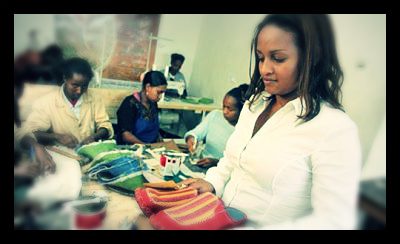
Recently profiled by both CNN and Forbes as an important businesswoman to watch, Bethlehem Tilahun Alemu is quite the success story. While growing up in the small Ethiopian town of Zenabwork, Alemu remembers waiting for a better life to develop for her friends and family, before realizing that she would have to create the reality that she wanted to see. And so, in 2004, she created soleRebels.

SoleRebels is a Fair Trade shoe company that harnesses the artisan skills and recycling habits inherent in Zenabwork’s culture. The company employs locals and pays four to five times the legal minimum wage and over three times the industry average, allowing workers to earn a respectable income and support their families. Workers are paid a straight wage without regard to individual quotas. Most workers live within walking distance of the factory, but transportation is provided for disabled workers who can’t make the trek. Workers and their families are also provided with complete medical coverage, including site visits by board-certified practitioners. Such site visits are especially important considering that competent doctors can be few and far between in Ethiopia.

The company’s original shoe design was based on the traditional selate and barabosso shoes made from recycled tires. In a poignant nod to Ethiopian history, these were the same shoes worn by rebel fighters who opposed colonization by westerners, and who helped make Ethiopia one of only two African countries never to be colonized. This is incredibly consistent with soleRebel’s mission, which is largely based on the need for more African start-up companies that fuel economic growth and independence, rather than NGOs and charity organizations that often do more harm than good.

Currently, their market has expanded considerably. The company now makes numerous different types of shoes, including tooTOOs (similar to TOMs), lace-ups, sandals, slip-ons and coZEEs (similar to UGGs). They even have a line of vegan footwear called b*knd. Their products are sold online and in 30 countries worldwide.

Although their production has increased substantially, almost all products are still made and sourced locally. For example, every piece of fabric used in the making of soleRebel’s shoes is hand-loomed using traditional eucalyptus looms. This process preserves an ancient craft, cuts down on electricity bills, produces absolutely no carbon output and creates beautifully unique fabrics. And the company still uses hand-cut recycled tires for the soles of every shoe, preserving tradition and saving the environment in one fell swoop.

SoleRebels is a great example of poverty fighting done right. This shoe company continues to empower countless numbers of people, who use their talents and preserve their traditions to stake their claim in the world market. Locally and fairly sourced products, combined with beautiful craftsmanship and entrepreneurial know-how, create some great-looking shoes that will leave you feeling even better.

– Katie Fullerton

Sources: soleRebels, Forbes, CNN
Photo: INSP

August 21, 2013
https://borgenproject.org/wp-content/uploads/borgen-project-logo.svg 0 0 Borgen Project https://borgenproject.org/wp-content/uploads/borgen-project-logo.svg Borgen Project2013-08-21 09:19:112017-03-20 13:04:03SoleRebels: Shoes With An Impact
Development, Global Poverty

McDonald’s as a Poverty Indicator?

McDonalds_Poverty
Today the fast food giant McDonald’s is so ubiquitous in the United States that it is hard to imagine a world where it doesn’t exist. McDonald’s has 34,480 restaurants in 119 countries. The fast food chain even has restaurants in Cuba. Despite vast numbers, 105 nations still do not have a McDonalds. These McDonald’s free nations include Ghana, Jamaica, Yemen and Tajikistan.

What is the significance of the spread of McDonald’s? The spread of McDonald’s Big Macs and French fries across the world is a clear  indicator of globalization. What started off as an American fast food restaurant has slowly but surely reached every continent. In a study by Princeton University, entitled “The Fries that Bind Us”, globalization is mapped by the concentration of McDonald’s restaurants in various countries. The map clearly reveals McDonald’s restaurants congregated around the U.S, Europe and part of China.

Most importantly, the distribution of McDonald’s restaurants can work as an indicator of the relative wealth of a nation. Michael Centeno, sociologist at Princeton University has stated “If you want a definition of what the rich world and the poor world are, well, if you can get a McDonald’s, you are in the rich world.” According to Centeno wealth and the number of McDonalds are directly correlated. Thus poorer nations in sub-Saharan African and poor and central Asia have far fewer opened McDonalds restaurants.

Additionally, the presence of McDonald’s restaurants is correlated with a nation’s economic development and stability. Ho Chi Minh City in Vietnam is about to open its first McDonald’s in the next year. What this mean is that Vietnamese consumers now have enough disposable income to indulge in American fast food. At the same time, nations may lose their McDonald’s due to declining economic situations. For example, Iceland has shut down all of its three McDonald’s chains following severe economic down turn and a currency crisis.

Some people may insist that the growth or decline of McDonalds in any region may be mostly related to the culture of the area. While culture does play a role in the spread of fast food, the growth of McDonald’s overseas can truly be a sign of wealth and development. That is to say, as poor or developing countries expand economically, they are able to take part in the luxuries of developed nations. Furthermore, economists have even developed what is known as the Big Mac Index, an informal way to compare currencies across nations. Whether or not more French fries or burgers are truly beneficial for the global poor, the spread of McDonald’s definitely indicates where wealth and poverty tend to linger.

– Grace Zhao

Sources: Princeton University, NPR, The Economist
Photo: 1-800-Politics

August 19, 2013
https://borgenproject.org/wp-content/uploads/borgen-project-logo.svg 0 0 Borgen Project https://borgenproject.org/wp-content/uploads/borgen-project-logo.svg Borgen Project2013-08-19 11:19:342024-12-13 17:49:38McDonald’s as a Poverty Indicator?
Developing Countries, Development, USAID

Leveraging the Private Sector

Brooksings
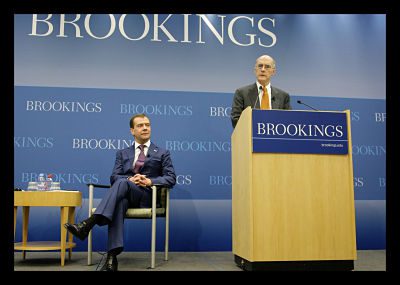
Last Sunday, the Brookings Institute held its 10th annual Blum Conference on global development. This year, the conference emphasized the increasingly significant role of the private sector in lifting the world out of poverty.

Currently, 1.2 billion people still languish in extreme poverty, which is defined as living on less than $1.25 a day. The head of the World Bank, Jim Yong Kim, recently made sweeping promises that by 2030, that number will have dwindled to less than 300 million. And, by all appearances, Kim’s claim has a solid basis: in the past decade, global extreme poverty rates have been cut in half.

The recent Brookings conference in Aspen, Colorado confirms that hope. And, more importantly, it lays out the path to achieve it: by engaging the private sector on a large scale. World leaders like Partners in Health co-founder Paul Farmer, UN Human Rights commissioner Mary Robinson, and former U.S. Secretary of State Condoleezza Rice used their voices on Sunday to reinforce this principle. Major development agencies have already been operating with this idea, including USAID which leveraged over $525 million in private investment last year alone.

The road forward, however, contains many obstacles. Homi Kharas, the author of Brookings’ policy brief, “Reimagining the Role of the Private Sector in Development,” lays out three major hurdles for partnerships between the private sector and the public, academic, and civil sectors.

The first is the massive project of adapting to private funding in development. As part of the process, Kharas recommends that development agencies project “leverage ratios” that link public dollars to private dollars. He applauds the Power Africa Act for using $7 billion in government spending to guarantee $9 billion in private investment pledges.

Secondly, innovation is the key to increasing agricultural productivity and improving access to necessities like water and medicine. Kharas argues that public subsidies for private-led innovation in these areas need to increase to harness the creative power of for-profit businesses.

Finally, Kharas suggests that perhaps the greatest obstacle to engagement is mistrust of private companies by public and civil actors. To build confidence and pave the way for future partnerships, companies need to make their footprints and supply chains more transparent.

“Every high-level development report and project now has private sector involvement,” wrote Kharas. “The time is ripe to systematize this approach and experiment with new forms of partnerships.”

– John Mahon

Sources: Devex, Brookings
Photo: Carnegie

August 19, 2013
https://borgenproject.org/wp-content/uploads/borgen-project-logo.svg 0 0 Borgen Project https://borgenproject.org/wp-content/uploads/borgen-project-logo.svg Borgen Project2013-08-19 05:38:012017-03-20 13:04:02Leveraging the Private Sector
Development, Politics and Political Attention

2012 USGLC Report on Reports: What We Can Learn

usglc
The United States Global Leadership Coalition (USGLC) has released a publication titled the “Report on Reports” every year since 2008. These publications are designed to analyze reports issued by different groups that address development and diplomacy, and to then come to a consensus about the best way to address certain areas.

The USGLC was established in 1995 and works with over 400 businesses and non-governmental organizations to create viable solutions for global development and diplomacy. They also work with religious leaders, academics, and community leaders in an effort to reach out to people from many different perspectives.

Members of the USGLC Advisory Board include Colin Powell, Madeleine Albright, Hillary Clinton, Henry Kissinger, and Condoleezza Rice.

The 2012 Report on Reports was issued in June of this year. The report, which analyzed more than 30 reports across the political spectrum, outlined six major areas of consensus that the USGLC wanted to focus on in order to improve the United States’ diplomatic relationships and development efforts across the globe.

The first area identified is to strengthen civilian power. The USGLC concluded that the civilian foreign service workforce must continue to grow in order to protect national security and promote our interests.

The second area of consensus is to ensure results-driven development, emphasizing transparency, accountability, and regular evaluations of all development efforts.

The third area is to leverage the private sector. Rather than focusing purely on public and governmental development efforts, the USGLC supports increased cooperation with private sector groups like academic institutions and foundations.

The fourth area identified is to maintain sufficient resources, particularly to support civilian contributions to national security.

The fifth area of consensus is to improve coordination among the players, especially streamlining government agencies to improve coordination, clarity of leadership, and consistency in our development and diplomacy.

The sixth and final area is simply to prioritize. The USGLC emphasizes that although the need for development will continue to increase, we must do our best to match that need with our efforts.

Clearly, the overall emphasis of the 2012 Report on Reports is increased civilian and private-sector participation in U.S. diplomacy and development efforts across the globe. The Center for Strategic and International Studies noted that this will require support for budget reallocation from both ends of the political spectrum to fund this increased participation in these efforts. Furthermore, the bipartisan emphasis of the Report on Reports indicates the need for policymakers to reach across political lines in order to pursue the best interests of both the United States and the developing world.

What does this mean for the United States and the way that it proceeds in its global development efforts? In simple terms, the 2012 USGLC Report on Reports seeks to expand the base of participants in global development by including the civilian and private sectors and also seeks to improve bipartisan cooperation about these efforts. As we move forward in the upcoming years, the USGLC’s recommendations will improve the efficiency, participation, and success of our diplomatic and developmental projects around the world.

– Sarah Russell Cansler

Sources: United Global Leadership Coalition, United States Global Leadership Coalition 2013 Reports on Reports, The Center For Strategic and International Studies
Photo: One

August 17, 2013
https://borgenproject.org/wp-content/uploads/borgen-project-logo.svg 0 0 Borgen Project https://borgenproject.org/wp-content/uploads/borgen-project-logo.svg Borgen Project2013-08-17 06:56:042017-11-30 10:46:282012 USGLC Report on Reports: What We Can Learn
Development, Global Poverty

Tourism in the Philippines to Help the Poor

Tourism_Philippines_Poverty
USAID and the Philippines Department of Tourism and Department of Social Welfare and Development recently announced a program to include pro-poor tourism activities in areas of high poverty in the country. The Departments and USAID signed a Memorandum of Understanding (MOU) August 5th. Tourism in the Philippines has significant potential to boost the economy and alleviate poverty.

The program, dubbed “The One-Step Project,” will seek to incorporate pro-poor aspects in the tourism trade in five pilot areas characterized by high poverty and high tourism. These five areas are chosen from the 78 tourism development areas designated by the Department of Tourism. Regional and provincial officers in the five areas will be consulted by a central technical working group. While a project amount has not yet been set, The One-Step Project will take place over four years and will focus on infrastructure, job creation through community-based projects, and private sector engagement.

In 2010, the Philippines received 3.5 million visitors, generating US$2.4 billion from tourism. The Philippine government has focused on the tourism industry in recent years, but, despite its many natural attractions the Philippines, still trails other regional countries in tourism numbers.

A variety of factors contribute to this sluggishness: remote location, susceptibility to natural disasters, and unrest often resulting in kidnappings. However, tourism does hold the potential for new job creation. Including the poor in tourism strategies and job creation is an important development opportunity within this sector. While the Department of Tourism has included these strategies in the past, this will be their first partnership with USAID.

This will not be the first time the Philippine Department of Tourism has focused on pro-poor tourism actions. In 2000, the Department’s regional branch helped villagers in Sta. Juliana organize in order to take advantage of a new influx of tourism.

Residents of the village, suffering from a decade of neglect, struggle to make ends meet. They are hampered by lack of appropriate infrastructure to get their agriculture goods to market and a lack of telecommunications. The regional Tourism department helped the villagers form the Sta. Juliana Tourism Council, Inc. which has educated residents on the trade’s benefits. New jobs and livelihoods evolved to capitalize on this influx.

The One-Step Project falls under USAID’s Partnership for Growth program, running until 2016. Additional projects in the Philippines will be implemented by USAID focusing on tourism. Most of these projects will take the form of technical assistance and policy reform. The USAID Philippine budget reached $102 million for fiscal year 2011. This is distributed across USAID’s four focus areas: democracy and governance, economic growth, health and education, and energy and environment. The US government is the Philippines largest grant donor. The collaborative One-Step Project has great potential to continue tourism-focused aid to the poorest communities in the Philippines.

– Callie D. Coleman

Sources: Business Mirror, CNN, The Philippine Department of Tourism , USAID
Photo: AUSTRONESIA

August 16, 2013
https://borgenproject.org/wp-content/uploads/borgen-project-logo.svg 0 0 Borgen Project https://borgenproject.org/wp-content/uploads/borgen-project-logo.svg Borgen Project2013-08-16 09:43:022024-05-25 00:15:35Tourism in the Philippines to Help the Poor
Advocacy, Development, Foreign Policy

InterAction 101

InterAction
InterAction is an alliance of 180 U.S.-based international organizations, predominantly NGOs, which work around the world to aid the poor. InterAction brings these organizations together to capitalize on their collective resources, mobilize members, and serve as the premiere thought leader in the NGO community. InterAction’s mission is to eliminate extreme poverty, uphold human rights, safeguard a sustainable planet, and ensure human dignity for poor and vulnerable populations.

InterAction is the largest coalition of NGOs in the United States. Through collaboration and transparency, InterAction partners support one another. According to Samuel Worthington, president and CEO of InterAction, “As development shifts toward multi-stakeholder partnerships, U.S. international NGOs are an important ally to reduce suffering and combat global poverty. The many participants in development aid bring different perspectives to the table and use varying means to achieve their goals. Many of these approaches complement each other; but to ensure efficient and flexible development programs, governments, NGOs, and the private sector must build effective partnerships.” In addition, InterAction holds their partners accountable, not only to donors, but also to the general public. Upon membership with InterAction, partner organization are held to high standards of accountability and compliance with international aid effectiveness.

InterAction’s programs focus on international development, accountability, humanitarian action, and policy and action.

International Development: Programs related to international development are intended to uphold the standards of the Millennium Development Goals (MDGs) and aid effectiveness principles. Such programs require participation from the private sector, governments, and citizens. One program, Post-2015, has studied the effectiveness of the MDGs and offered suggestions to the United Nations as to what should be done after 2015 to address extreme poverty.

Accountability & Learning: Programs related to Accountability and Learning empower citizens, governments and NGOs with up-to-date data related to program effectiveness and scope. InterAction believes that, by empowering citizens and NGOs with transparent and easily-accessible data, they can improve NGO programs and ultimately make them more efficient. Such programs include NGO mapping, PVO standards, and regular monitoring & evaluation.

Humanitarian Action: InterAction’s Humanitarian Action programs are guided by the principles of human dignity, neutrality, independence and impartiality. Without taking into account race, gender, ethnicity or political affiliation, humanitarian efforts can save lives and alleviate poverty. InterAction supports NGO humanitarian work by offering a framework for consultation, coordination and advocacy in such situations. In the past, InterAction partners have responded to crises on the Ivory Coast, Liberia, and the Horn of Africa. In June, InterAction pledged to invest $750 million in nutrition programs over the next five years. The program focuses on the critical first 1,000 days of a child’s life in which they are most vulnerable from malnutrition. InterAction estimates that for every dollar invested, $138 will be generated from improved health and increased productivity.

Policy & Advocacy: In addition, InterAction supports the policy and advocacy efforts of their partner NGOs by encouraging substantial US government investment in humanitarian aid. InterAction’s lobbyists and policy experts advocate for Budget and Appropriations, Foreign Assistance Reform, Development Policy and G8/G20. One such campaign, known as Not Just Numbers, seeks to counter the recent budget cuts to the State, Foreign Operations (SFOPs) bill. The bill, which was recently unveiled in the House of Representatives, cuts Foreign Aid by 15% from 40.1% to only 34.1%. The social media campaign, which can be found at #NotJustNumbers, seeks to get the Senate foreign aid fund allocation higher than it has been proposed in the House.

– Kelsey Ziomek

Sources: InterAction ThousandDays.org Post2015hlp.org

August 14, 2013
https://borgenproject.org/wp-content/uploads/borgen-project-logo.svg 0 0 Borgen Project https://borgenproject.org/wp-content/uploads/borgen-project-logo.svg Borgen Project2013-08-14 06:11:162024-05-25 00:15:28InterAction 101
Page 151 of 163«‹149150151152153›»

Get Smarter

  • Global Poverty 101
  • Global Poverty… The Good News
  • Global Poverty & U.S. Jobs
  • Global Poverty and National Security
  • Innovative Solutions to Poverty
  • Global Poverty & Aid FAQ’s
Search Search

Take Action

  • Call Congress
  • Email Congress
  • Donate
  • 30 Ways to Help
  • Volunteer Ops
  • Internships
  • Courses & Certificates
  • The Podcast
Borgen Project

“The Borgen Project is an incredible nonprofit organization that is addressing poverty and hunger and working towards ending them.”

-The Huffington Post

Inside The Borgen Project

  • Contact
  • About
  • Financials
  • President
  • Board of Directors
  • Board of Advisors

International Links

  • UK Email Parliament
  • UK Donate
  • Canada Email Parliament

Get Smarter

  • Global Poverty 101
  • Global Poverty… The Good News
  • Global Poverty & U.S. Jobs
  • Global Poverty and National Security
  • Innovative Solutions to Poverty
  • Global Poverty & Aid FAQ’s

Ways to Help

  • Call Congress
  • Email Congress
  • Donate
  • 30 Ways to Help
  • Volunteer Ops
  • Internships
  • Courses & Certificates
  • The Podcast
Scroll to top Scroll to top Scroll to top