• Link to X
  • Link to Facebook
  • Link to Instagram
  • Link to TikTok
  • Link to Youtube
  • About
    • About Us
      • President
      • Board of Directors
      • Board of Advisors
      • Financials
      • Our Methodology
      • Success Tracker
      • Contact
  • Act Now
    • 30 Ways to Help
      • Email Congress
      • Call Congress
      • Volunteer
      • Courses & Certificates
      • Be a Donor
    • Internships
      • In-Office Internships
      • Remote Internships
    • Legislation
      • Politics 101
  • The Blog
  • The Podcast
  • Magazine
  • Donate
  • Click to open the search input field Click to open the search input field Search
  • Menu Menu

Archive for category: Development

Information and stories on development news.

Children, Development, Global Poverty

ANDENI Aiding Orphans and Adoptive Families

ANDENI
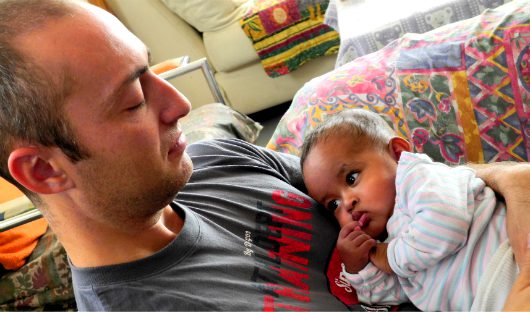
In September of 1997, Gloria Nieto and her husband, Angel, adopted a baby girl from China. They already had a 4-year-old biological daughter and wanted a second child. Adoption from a developing country seemed like a great option.

Adopting baby Irene was an arduous process—more than they believed it should have been. One big legal issue was that the Spanish government did not understand that the adopted children would have to become Spanish citizens.

When Gloria and Angel came back to their home in Spain, they met with other adoptive parents and decided to start a non-governmental organization that would help future Spanish adoptions from China. The group of adoptive families met in Madrid and made the NGO official. ANDENI translates into English as the National Association for Defense of Children.

There are two avenues for foreign adoption in Spain. One is through the government, the other is with private adoption agencies. ANDENI helps families adopting through the government.

The organization has a central office in Madrid. A small number of administrative people work there for a salary. The remaining workers are volunteers. Each part of Spain has its own leader that serves as a spokesperson and a source of guidance for families. Instead of having to contact the government for help, parents can contact their section leader.

Parents who begin the process of adopting from China join ANDENI by donating every three months or so to the organization. Donations are based on what the family decides it can pay—there is no obligatory donation amount.

The organization provides families with adoption assistance for every step of the journey. They learn what has to be done in Spain before they go to get their child as well as what has to be done in China. The organization helps parents fill out adoption papers, prepares them for their trip to China and provides them with a translator and a safe travel agency.

After parents successfully adopt their child, they become a part of the ANDENI community of adoptive families. The group supports each other and their adoptive children as they grow up. Both of Gloria and Angel’s daughters, Aida and Irene, now work with grown adopted children. Irene counsels teenagers on how being adopted affects their identity.

In its 18 years, ANDENI has helped 4,500 families. Spain is second to the U.S. in the number of children adopted from China. Proportionally, they are #1. Spain is currently home to 18,000 adopted Chinese children.

In recent years, Chinese adoptions have been slowing worldwide. There are fewer children in orphanages and the Chinese government gives priority to national adoptions. People that began the adoption process in 2006, are just now starting to get their children.

This is great news for orphans in China and suggests a positive outlook for poverty levels there. Yet for ANDENI, it means fewer families are joining and fewer volunteers are needed. Volunteer numbers have fallen from 2,100 at its peak to just 1,600. Many families have stopped paying since they have lost their jobs due to the Spanish economy.

To adapt, ANDENI began to focus on orphans and people living in poverty in China. They started collecting money to send to Chinese orphanages to pay for amenities like washing machines, air conditions, food, clothing, etc. One of the poorest providences in China, Yunnan, received enough money from ANDENI to build four schools and hospitals.

In total, ANDENI has raised and sent one million dollars to China. The organization collaborates with the Chinese government to ensure that the funds are doled out appropriately.

As for the future of ANDENI, Gloria’s family sees it collaborating with other NGOs helping orphans and others in need living in third-world countries such as Sierra Leone in Africa.

– Lillian Sickler

Sources: ANDENI, ANDENI Valencia
Photo: Flickr

July 27, 2015
https://borgenproject.org/wp-content/uploads/borgen-project-logo.svg 0 0 Borgen Project https://borgenproject.org/wp-content/uploads/borgen-project-logo.svg Borgen Project2015-07-27 08:56:522020-07-14 10:38:51ANDENI Aiding Orphans and Adoptive Families
Development, Global Poverty, Human Rights

Lauren Conrad at The Little Market

little_market
The Little Market is making a big difference. A fair trade project based in Los Angeles, the online company works with artisans around the world, making handcrafted goods available to all and supplying a living wage to the artisans that create them.

Co-founded by fashion designer Lauren Conrad and Human Rights Watch member Hannah Skvarla in 2013, the Little Market “seeks to empower women artisans to rise above poverty and support their families”. The company is committed to building self-sufficient, economically independent women in impoverished countries around the world.

The Little Market sells a variety of handmade goods, from home décor and kitchen necessities to backpacks and bracelets. Conrad and Skvarla visit local markets in countries such as Kenya, Bolivia, India and Peru to gain inspiration, insight and appreciation for the talent, time and treasures provided by the artisans.

In order to benefit the artisans and themselves, the company searches for items with the potential to succeed in the U.S. market.

This month, The Little Market began selling olive wood products from Le Souk Olivique, an olive wood studio in Tunisia. Founded in 2013, Le Souk provides finely crafted wooden kitchen tools, including basic utensils, salad bowls and cutting boards.

The Tunisian company treats its artisans very well, setting payment above minimum wage and providing healthcare and social security payments. Le Souk will soon receive Tunisia’s Fair Trade certification.

The beautifully handcrafted kitchen tools sell at The Little Market for $12 to $44, depending on the type and size of the object. They are all made with olive wood.

Making olive wood products, however, is an intricate and time-consuming process. The raw wood must initially dry outside for a year before cutting and sanding the pieces to create a wood product fit for a kitchen.

Conrad and Skvarla expressed excitement about carrying this new line of products, available now on the company website. The Little Market has served as a catalyst in the sale of handmade goods from around the world, including those of Le Souk. As website sales increase, the demand for more products also increases, resulting in a need for more employees and thus creating more jobs for more artisans around the world, lifting many out of poverty.

– Sarah Sheppard

Sources: LA Times, The Little Market 1, The Little Market 2
Photo: Style News

July 27, 2015
https://borgenproject.org/wp-content/uploads/borgen-project-logo.svg 0 0 Borgen Project https://borgenproject.org/wp-content/uploads/borgen-project-logo.svg Borgen Project2015-07-27 08:53:292020-06-29 14:49:56Lauren Conrad at The Little Market
Aid, Development, Foreign Aid, Global Poverty

How Transparency Leads to Sustainable Development

How Transparency Leads to Sustainable Long-Term Development
Ever wondered where that money you donated went? The U.S. government, in partnership with USAID, has made a commitment to track international aid to more closely monitor sources of aid abroad and hold international leaders accountable for development. Up-to-date, truthful data about where international funds are going helps governments, civil service organizations and private sponsors track their money and increase the efficacy of donations.

The government recently signed on to the International Aid Transparency Initiative (IATI), an international organization that encourages NGOs, governments and international aid organizations to report data on foreign aid spending. This group estimates that $4.8 billion of EU-given aid, $2.8 billion U.S.-given aid and $13.8 billion in international donor aid was not visible. The initiative aims to have 80 percent of aid be visible; this amount, it estimates, will make the aid useful. This makes development easier to track and organizations more transparent in how they use their funds. It will encourage further donations and trust in the work of these organizations. Furthermore, IATI has developed a tool to compare spending by different aid groups and the amount of money going to different countries.

Anyone with Internet connection can now track the U.S. government’s aid efforts by country, sector and year on www.foreignassistance.gov.

Through this initiative, USAID has made a commitment to increasing its transparency in regards to foreign aid spending. Through developing a cost management plan, the organization upped its accountability and made it clear to donors where their money goes. As a result of this, USAID’s Aid Transparency Review jumped 20 points in the last year, from the “fair” category to the “good” one. The organization predicts improved donor understanding and confidence in its future projects and improvement in international development through its and other organizations’ efforts at increased accountability.

Progress does not end at transparency, however. USAID hopes to improve the knowledge base of its donors so that they can better understand the organization’s international efforts, understand where funds are going and hold governments, both those donating and accepting aid, accountable.

Through initiatives like these, international aid can become more sustainable, efficient and successful.

– Jenny Wheeler

Sources: USAID, Road To 2015
Photo: The Spectator

July 27, 2015
https://borgenproject.org/wp-content/uploads/borgen-project-logo.svg 0 0 Borgen Project https://borgenproject.org/wp-content/uploads/borgen-project-logo.svg Borgen Project2015-07-27 08:50:312024-05-27 09:25:47How Transparency Leads to Sustainable Development
Development, Global Poverty

Mozambikes: Bringing Transportation to Rural Mozambique

MozambikesWhile traveling through rural Mozambique, founders of Mozambikes Lauren Thomas and Rui Mesquita were disturbed by the region’s lack of transportation. Locals had to walk miles in harsh heat to reach basic necessities like water, food, healthcare, education and jobs.

50 percent of people in Mozambique live below the poverty line and mortality rates are highly exacerbated by lack of transportation.

Lauren Thomas and Rui Mesquita set out to solve this issue with Mozambikes, a for-profit social interest company that sells bicycles to locals at highly subsidized prices.

“It began as an idea, though we knew it had the potential to have a tremendous impact on the lives of rural Mozambicans. However, the first step was to import a container of bicycles and test the market. Given the risk implicit at such an early stage, Mozambikes started entirely with shareholder funding,” explains founder Lauren Thomas, a former New York City investment banker, to How We Made it In Africa.

It is a sustainable business model. Advertisers buy ad space on the bicycles, exposing a relatively secluded consumer base to brands or ideas that these rural Mozambicans would not otherwise see. The advertisements highly subsidize the price of the bicycles for the rural residents of Mozambique.

Companies can also purchase the bicycles directly, paint on their advertisements and logos, then sell them to local residents at lower prices as “promotional marketing” or “corporate social responsibility” explains How We Made it In Africa.

“Our most successful marketing has been our 7,000 bicycles on the roads in the country. When a company sees Mozambikes branded with another organisation, they want to know – who made those? Therefore, word of mouth has been very effective in getting sales over the last few years, now that we have a presence in the market. Mozambique is still a traditional market and we have also been successful with aggressive direct marketing – emails and phone calls to arrange meetings with target clients,” says Thomas.

Mozambikes has the potential to stimulate the local economy in a variety of ways. Bikes do not only open the door to health-related treatment options, education and more, but bicycles also enable Mozambicans to reach their jobs, and perhaps even obtain better jobs.

And the bikes are assembled by local Mozambiquians, generating jobs and income for residents. Locals also assemble bike accessories like accompanying trailers and bike ambulances.

“Our first donation event gave bicycles to 20 rural women in southern Mozambique. When we arrived, they began to clap and sing, and when they received the bicycles they were crying and singing. A bicycle may seem like such a small item to many, but it is quite literally life-changing in rural Africa. It means access to clean water. It means mothers can bring their babies to the clinic when they are sick. It means that they can return home from their farming plots in time to make their children dinner at night,” explains Thomas.

– Aaron Andree

Sources: Mozambikes, How We Made It In Africa, Inclusive Business Hub
Photo: Wikimedia Commons

July 27, 2015
https://borgenproject.org/wp-content/uploads/borgen-project-logo.svg 0 0 Borgen Project https://borgenproject.org/wp-content/uploads/borgen-project-logo.svg Borgen Project2015-07-27 02:38:382024-05-27 09:26:20Mozambikes: Bringing Transportation to Rural Mozambique
Development, Global Poverty, Human Rights, Human Trafficking

Safeway Becomes First US Supermarket to Offer Fair Trade Fish

Fair_Trade

Earlier this year, Safeway, in a partnership with the nonprofit organization Fair Trade USA, became the first U.S. supermarket to offer Fair Trade seafood. The initiative is part of a program aimed at expanding the social and environmental considerations of the Fair Trade movement into the world seafood market, which currently employs over 120 million people across the world.

The supermarket chain began its Fair Trade seafood program in March with the distribution of wild-capture tuna from small-scale fishing operations in Indonesia. Those products are being supplied by four Fair Trade associations representing 120 fishermen in Indonesia’s Maluku province.

In order for seafood to become Fair Trade certified, suppliers must source and trade in compliance with standards established by Fair Trade USA’s Capture Fisheries Program. Those criteria include standards for empowerment and community development, which prioritize the well-being of communities in trade activities; fundamental human rights, which protect workers from forced labor and ensure their right to organize; and wages, working conditions and access to services, which aim to improve wages and benefits as well as working hours.

The Capture Fisheries Program is especially significant given an Associated Press investigation conducted in March, which found that hundreds of men in the Indonesian island village of Benjina were being forced to catch seafood against their will. Most of those interviewed were found to have been Burmese immigrants who were taken to Indonesia and forced to fish. A number of workers were deemed by employers to be “flight risks,” and were consequently forced into cages to prevent their running away.

“All I did was tell my captain I couldn’t take it anymore, that I wanted to go home,” said Kyaw Naing to an Associated Press (AP) video camera snuck into the work site by a fellow worker. “The next time we docked, I was locked up.”

These labor conditions are not limited to the Indonesian market. Although the waters encompassing the Maluku province are Indonesian territory, it sees a large amount of illegal fishing activity, including from Thailand, one of the United States’ foremost seafood providers. While the United States purchases 20% of the country’s $7 billion in seafood exports, the State Department blacklisted Thailand for failing to address human trafficking and labor abuses.

The Indonesian supply-chain is such that tainted and ethically caught fish are generally processed side-by-side. AP found that the two products were mixed and very well could end up being sold in American supermarkets including Walmart, Safeway and Albertsons.

Though American and Indonesian officials have decried the labor conditions that define much of the region’s seafood industry, the most immediately effective method of combating this race to the bottom is to popularize Fair Trade initiatives like the Capture Fisheries Program. However, until supermarkets prioritize Fair Trade products and eliminate ethically tainted ones from the market, these human rights abuses will continue to have moral implications for both suppliers and consumers.

– Zach VeShancey

Sources: SFChronicle, Fair Trade USA, New York Times, Food Tank
Photo: Fair Trade USA

July 26, 2015
https://borgenproject.org/wp-content/uploads/borgen-project-logo.svg 0 0 Borgen Project https://borgenproject.org/wp-content/uploads/borgen-project-logo.svg Borgen Project2015-07-26 11:35:202020-07-03 15:22:11Safeway Becomes First US Supermarket to Offer Fair Trade Fish
Development, Global Poverty

Ho Chi Minh City Creates Innovative Development Projects

Ho_Chi_Minh_City
Outside of the United States, Ho Chi Minh City is one of the largest urban cities in the world. For the last 10 to 15 years, the city has been growing rapidly. The gross domestic product is now USD $3000. Thanks to the vast development of its infrastructure and improved access to community devices, the city’s resiliency is slowly bringing civilians out of poverty.

Urban poverty had been on the rise since the start of the 21st century. The city has dealt with flooding and lack of sanitation, leading to serious problems for many residents. In some cases, alleyways had no drainage. They flooded, accumulated garbage and gave mosquitoes a place to thrive.

Back in 2010, 54 percent of residents in Ho Chi Minh City did not have access to social security systems or educational, health-related and social services. Basic needs such as tap water and the instillation of drainage systems were not available; neither was proper housing.

A 2012 report showed improvement. With a population of 9 million, Ho Chi Minh City’s GDP of USD $3000 is one fifth of Vietnam’s total GDP. Its market has expanded and so has its resiliency. Though the center’s population growth is stable, urban and suburban areas are expected to increase steadily.

There has been economic growth. However, inequality and access to services have kept people in poverty; income had little to nothing to do with their status. Those who were unregistered had it worse. Struggles with population compression was congesting traffic and minimizing expansion efforts.

In 2014, Nguyen Xe of the Steering Committee for Poverty Reduction designed a plan to use data collected from multidimensional poverty (MDP) research to alleviate the problem. Because urban poverty is caused by the incompatibility of public services, the MDP report gathered from 2013 helped the city focus its development on certain targets.

A program known as The Vietnam Urban Upgrading Project has been implementing changes in Hai Phong, Nam Dinh, Ho Chi Minh City and Can Tho. It has benefited 7.5 million people total in Vietnam. This project also handed out 95,000 loans to the bottom 40 percent in poverty. Nearly 100 percent of these loans are paid back.

Supported by the World Bank, this project has helped 200 low-income regions and changed the lives of 2.5 million people in the city. It paved wider and cleaner streets; now, vehicles like ambulances and firetrucks can pass through quickly. According to statistics, 360 miles of roads have been upgraded.

Canals, lakes, sewers and bridges were reconstructed and have managed to benefit five million residents. Canals up to 18 miles long have been redone. Seventeen acres of lakes are now in contact with drainage. Three hundred and ten miles of these drain systems have been improved.

This has taken away the possibility of flooding hazards, increased environmental safety and made it more secure for children to run and play. Kindergartens, schools, health clinics and community centers have been improved in poor regions with the project’s help.

The World Bank is actively involved in financing changes for the city, having sent $382 million to improve the economy. An amount of $140 million was provided by the Vietnamese government to help change the lives of many.

Keiko Sato, the World Bank County Director from Vietnam, hopes to alleviate poverty by 2030 as part of the Sustainable Development Goals. The World Bank is committed to improving the infrastructure of Ho Chi Minh City; it provided the city with $124 million in May 2015.

The goal is to upgrade public transportation and turn it into a sustainable system. The places affected by the change include the Bus Rapid Transit between An Lac and Rach Chiec. This will benefit 14 miles of urban transportation and 28 stations. At least 28,300 people will be given improved transportation in metro, rail and bus lines.

Busses will be running on natural gas that is cleaner than what is currently being used, and pollution is expected to decrease as a result. Additions will also help those who are disabled and women with strollers to access the system. This new foundation will let Ho Chi Minh City develop institutions that manage public transportation more efficiently.

The city has a long way to go. Increasing infrastructure is one way to benefit the economy and reach out to all livelihoods. Many are still out of touch and pollution is a problem. But with these development projects and funding from communities, governments and the World Bank, Ho Chi Minh City and the rest of Vietnam are on their way to solving some of their toughest problems with poverty.

– Katie Groe

Sources: World Bank 1, World Bank 2, New Geography, UNDP 1, UNDP 2
Photo: New Geography

July 26, 2015
https://borgenproject.org/wp-content/uploads/borgen-project-logo.svg 0 0 Borgen Project https://borgenproject.org/wp-content/uploads/borgen-project-logo.svg Borgen Project2015-07-26 10:01:212020-07-03 15:26:46Ho Chi Minh City Creates Innovative Development Projects
Developing Countries, Development, Global Poverty

Could Plastic Be the Future for Roads?

Roads_in_the_Developing_World

The U.S. is blessed with an incredible system of roads, highways and streets that for the most part seamlessly connect people across the country. In other countries, this is not the case.

Roads form the basis for economic and social activities, not only in the developed world but also all over the globe. They enable people to access doctors, markets and schools. Usually they carry 60 to 90 percent of all freight and passenger transport. It is for this reason that they are so important in development work.

Even with their importance recognized, most roads in the developing world are under-resourced and poorly managed. Because of this, somewhere between 30 and 50 percent of roads in developing countries are in bad condition. This ends up costing countries a ton of money: two to five percent of their gross domestic products go toward fixing the roads as well as increased vehicle operating costs.

Poor road quality was identified as an issue all the way back in 1988, and following a study that year, many different efforts started to improve the situation. A new one has surfaced today, however: using recycled plastic to build pieces that can snap together to form roads.

A company in the Netherlands, KWS Infa, has developed their “PlasticRoad” material using things like plastic. There are a multitude of benefits to building roads in the developing world using this material as opposed to asphalt.

The original intention of KWS Infa to develop a plastic road was because they would not break down as easy as asphalt when laid on poor soil, which is a widespread phenomenon in the Netherlands. While bringing this capacity to developing countries, plastic roads last as much as three times longer than their paved counterparts. To go along with this longevity is an ability to withstand a wider range of temperatures – -40 to 176 degrees Fahrenheit.

The roads also benefit the environment. Instead of filling landfills and the sides of roads with plastic that does not make it into recycling, it can instead be used to make road pieces. There is also the added benefit of reduced emissions that are involved with paving roads.

Roads made of plastic can be put into place much quicker than paved roads as well. Simply snap in place the Lego-like sections of the road and viola. Paving can take weeks and weeks. Part of the road is damaged? Simply change out the “Lego piece” section for another one.

India is an ideal place for plastic roads because of the ready supply of the material in the streets, on trees and in fields. Estimates say that around 15,000 tons of plastic waste are created in the country every year. But according to Rajagopalan Vasudevan, it’s a “gift from the gods” because it provides such a huge wealth from which to build roads. So far, only 3,000 miles of road have been laid in 11 states around India.

There are a few concerns regarding plastic roads. While the building blocks are hollow, allowing for pipes and electricity wires to run through them, there is concern with how this will work when only one segment of the road needs to be replaced. There is also concern about how well cars will grip to plastic roads. Only time and more implementation can decide whether plastic road’s positives can outweigh the negatives.

– Gregory Baker

Sources: NBC, Bloomberg
Photo: VolkerWessels

July 24, 2015
https://borgenproject.org/wp-content/uploads/borgen-project-logo.svg 0 0 Borgen Project https://borgenproject.org/wp-content/uploads/borgen-project-logo.svg Borgen Project2015-07-24 19:29:172024-05-27 09:26:17Could Plastic Be the Future for Roads?
Development, Global Poverty

Internet Plays Crucial Role in African Job Development

Internet Plays Crucial Role in African Job Development - TBP
The economies of African nations are growing at levels never before seen, but so is the continent’s youth population. As a result, job creation is at a critical point.

For Africa to maintain its current growth trajectory, it’s estimated that 400 million people under 25 will need viable employment by 2050.

Unemployment isn’t a concern solely in Africa, however, as the U.N. reported in 2014 that global unemployment hit over 201 million people, with a large percentage of these people being women and children.

With rising levels of unemployment, the Internet is starting to play a large role in helping create jobs, especially for populations in Africa. One organization, the Rockefeller Foundation, started its own initiative to jumpstart employment opportunities in certain African nations.

The foundation launched its Digital Jobs Africa program in 2013, with the goal of creating sustainable jobs focused on information communications technology for the youth in Africa.

Specifically, the foundation wanted to have a positive effect on at least one million lives in Egypt, Ghana, Kenya, Morocco, Nigeria and South Africa.

Digital Jobs Africa emphasizes three pathways used in its approach: generating digital jobs in assorted sectors by building promising business environments, prioritizing the hiring of youth in the private sector, and partnering with organizations that provide job training to help make sure the youth have the necessary skills for these jobs.

In starting Digital Jobs Africa, the foundation partnered with the World Bank Group. Since doing so, the two organizations have done lots of work to boost digital job creation opportunities in Africa.

The Rockefeller Foundation and the World Bank Group focus on the Internet because of the impact it can have on the traditional ways of working.

Using the Internet in the workforce creates new opportunities; it therefore has the ability to change lives for the better in both developed and developing nations.

By using the Internet, employers can extend jobs and reach talent on any corner of the globe. People can also work from anywhere.

This strategy is a business model referred to as online outsourcing, or online work.

The World Bank Group was the first organization to take a deeper look into online outsourcing, as it carried out the first comprehensive study having to do with this particular business model. It was called “The Global Opportunity in Online Outsourcing.”

The results of the study, which the World Bank Group did in partnership with Dalberg Consulting and with support from The Rockefeller Foundation, were released in June.

The group wanted to help connect governments, companies and people to online outsourcing, which it did by completing the study.

The study was released side-by-side with a web-based toolkit that can, according to the World Bank Group’s website, “diagnose the feasibility for establishing the online outsourcing industry in developing countries, in order to increase access to employment and income-generation opportunities.”

In the study, the group analyzed experiences people had with online outsourcing in different parts of the world and how it could impact job creation, economic growth and social inclusion.

In doing so, the World Bank Group recommended policy ideas for developing countries to allow them to use online outsourcing as leverage for promoting inclusive growth. It also explained what possible tasks could be available through the business model and which skills were necessary to be successful.

The influence of online outsourcing is expected to grow, as estimates say that by 2020 the market size could hit between $15-$25 billion and have the potential to employ 30 million registered workers.

So how can companies and workers benefit from online outsourcing?

For starters, it gives employers wider access to specific skill sets and faster hiring. It also allows for productivity around the clock, as companies can have workers all over the world.

For those seeking digital jobs, online outsourcing gives them international job opportunities and a flexible work atmosphere.

In terms of societal impact, online outsourcing has the ability to push social change for women.

In India, for example, women who take care of children and elderly family members can make money while at home by having an online job. In Egypt, women can use online outsourcing instead of having to go to workplaces dominated by men.

But online outsourcing isn’t a lucrative alternative to the traditional ways of working just because of flexibility – it could also be the more profitable option.

One aspect of the study conducted by the World Bank Group found that in Kenya, Nigeria and India, full-time online workers earned a salary equal to or greater than their counterparts in a traditional workforce.

Not only can online outsourcing lead to higher wages, but through its flexibility, inclusiveness and innovation, it also has the ability to reach women and youth. This is proof that the Internet can boost economic growth and drive social inclusion.

– Matt Wotus

Sources: The Rockefeller Foundation, The World Bank
Photo: The Guardian

July 24, 2015
https://borgenproject.org/wp-content/uploads/borgen-project-logo.svg 0 0 Borgen Project https://borgenproject.org/wp-content/uploads/borgen-project-logo.svg Borgen Project2015-07-24 18:42:052024-12-13 17:51:30Internet Plays Crucial Role in African Job Development
Development, Global Poverty, Water

The Jompy Water Boiler: A Lightweight, Inexpensive Solution

water_boiler
From 1990 to 2011, over 2 billion people gained access to an improved water source—that’s a hugely improved standard of living for more children, families and communities worldwide. However, not all water is clean drinking water, which is exactly what Celsius Global Solutions aimed to fix with the Jompy Water Boiler.

The Jompy Water Boiler is a lightweight, inexpensive device that simultaneously enables people to cook a meal and heat water to bacteria-killing temperatures, making the water safe for drinking and bathing.

The boiler itself is a flat metal disk with a handle connected to a container of water through a tube. The flat disk is placed over the heat source. Its shape allows the user to put cooking tools right on top of it. As the disk gets hot, the heat is transferred through the tube to the water container, which quickly heats up, and the water becomes decontaminated. The Jompy Water Boiler works equally well on stovetops and on open fires, making it useful in urban and rural settings.

In 2006, Glasgow University did a test run of the Jompy Water Boiler in Uganda. The test was conducted with 99 families, 49 of which were given water boilers. The World Health Organization set the objective of this research to have zero water-born diseases, such as E. coli, in the families that used the product.

The results were impressive. Of the 49 families with Water Boilers, only one family had a case of E. coli. Meanwhile, of the 50 families without water boilers, there were several cases of the water-born disease.

On top of reducing the risk of disease, families reported that they saved an average of 3 kg of firewood per day and more than three hours of their time due to reduced cooking times using the Jompy Water Boiler. It saves time and effort, all while consuming less fuel and reducing CO2 emissions.

The Jompy Water Boiler is currently used in India, Kenya and Uganda, but it has the potential to make a serious impact on the lives of those living in developing countries. It is efficient, cheap and worthwhile.

– Hannah Resnick

Sources: Empowering People, Jompy, UNICEF, Venture Beat, Wikia
Photo: Siemens

July 24, 2015
https://borgenproject.org/wp-content/uploads/borgen-project-logo.svg 0 0 Borgen Project https://borgenproject.org/wp-content/uploads/borgen-project-logo.svg Borgen Project2015-07-24 18:30:002024-12-13 17:52:01The Jompy Water Boiler: A Lightweight, Inexpensive Solution
Development, Global Poverty

Medellín, Colombia’s Urban Transformation

Colombia's_Urban_Transformation
In the 1990s, Medellín, Colombia had the highest murder rate in the world. The city set out to transform itself and lift its poorest sectors out of extreme poverty through architecture, the revitalization of public spaces, education and improved transportation.

Medellín’s new transportation systems are a major component of the city’s transformative project. The Metro Cable, a cable car that travels above the city, connects informal settlements in the upper regions of Medellín to the metro system in the lower regions, enabling much faster access to transportation. The metro system is clean, modern, and efficient. It reduces travel time from an hour to around ten minutes. The cable car system moves tens of thousands of citizens each day.

Medellín’s urban landscape sits upon steep hillsides. Residents used to have to climb hundreds and hundreds of stairs up these hills to commute to work and back. Today, the city has installed an escalator on this hill. It ascends 1,300 feet. For 12,000 residents, what was once a dreaded 30 story climb is now a quick 5 minute ride.

Another fundamental aspect of this urban transformation is the creation of public squares in the poorest areas of Medellín. Architects Horacio Valencia, head of Sustainable Urban Interventions at EPM (Empresas Públicas de Medellín), Carlos Pardo and Nicolás Hermelin, as well as the CEO of EPM (explain), Juan Esteban Calle, looked at images of the city from the air, and saw some unused, wooded areas. These, they thought, would be excellent ways to create public realms and bring a sense of community to impoverished, dangerous sections of the city.

Each public space is specifically adapted to the context and needs of the neighborhood it is situated in. One square, entitled Los Sueños, or The Dreams, “surrounds the solid concrete tank with jets of water, slides, plays of light and a designated area for events. Enclosed rooms are built into the topography to free up the largest possible area of open space, and house two multi-purpose classrooms, an internet café, public toilets and a launderette – a novelty in a city where it is not uncommon to rent a washing machine for half a day, and home-deliver it on a motorbike – describes The Architectural Review. The fresh public spaces have drawn residents out of their homes to interact with the urban fabric of their city.

Other initiatives involved in Medellín’s transformation involve education and the creation of libraries throughout the city. Residents voted to direct government funds towards funding new schools and college scholarships. In 2002, under 20 percent of public school students used to test at the national average. In 2009, over 80 percent do. Futuristic looking libraries enable all classes of citizens access to computers and the infinite information that comes with them.

EPM’s chief of operations, Federico Restrepo, now Medellín’s city planner, said “We took a view that everything is interconnected — education, culture, libraries, safety, public spaces. Obviously it is not just that we built and renovated schools. You have to work on the quality of teaching and nutrition in conjunction with architecture. But the larger point is that the goal of government should be providing rich and poor with the same quality education, transportation and public architecture. In that way you increase the sense of ownership.”

The Empresas Públicas de Medellín supplies the city with water, gas, sanitation, telecommunications and electricity. In Bogotá, the most impoverished slums lack basic needs like water and electricity, but in Medellín the EPM, mandated by the constitution, provides the most remote slums with these basics. The EPM has helped fund many of Medellín’s transformative projects such as schools, public plazas, metros and parks.

– Aaron Andree

Sources: Architecture in Development, Architectural Review, The Guardian, The New York Times, Planetizen
Photo: Flickr


July 24, 2015
https://borgenproject.org/wp-content/uploads/borgen-project-logo.svg 0 0 Borgen Project https://borgenproject.org/wp-content/uploads/borgen-project-logo.svg Borgen Project2015-07-24 18:28:132020-11-18 12:20:20Medellín, Colombia’s Urban Transformation
Page 130 of 163«‹128129130131132›»

Get Smarter

  • Global Poverty 101
  • Global Poverty… The Good News
  • Global Poverty & U.S. Jobs
  • Global Poverty and National Security
  • Innovative Solutions to Poverty
  • Global Poverty & Aid FAQ’s
Search Search

Take Action

  • Call Congress
  • Email Congress
  • Donate
  • 30 Ways to Help
  • Volunteer Ops
  • Internships
  • Courses & Certificates
  • The Podcast
Borgen Project

“The Borgen Project is an incredible nonprofit organization that is addressing poverty and hunger and working towards ending them.”

-The Huffington Post

Inside The Borgen Project

  • Contact
  • About
  • Financials
  • President
  • Board of Directors
  • Board of Advisors

International Links

  • UK Email Parliament
  • UK Donate
  • Canada Email Parliament

Get Smarter

  • Global Poverty 101
  • Global Poverty… The Good News
  • Global Poverty & U.S. Jobs
  • Global Poverty and National Security
  • Innovative Solutions to Poverty
  • Global Poverty & Aid FAQ’s

Ways to Help

  • Call Congress
  • Email Congress
  • Donate
  • 30 Ways to Help
  • Volunteer Ops
  • Internships
  • Courses & Certificates
  • The Podcast
Scroll to top Scroll to top Scroll to top