Malala Fund Aims to Secure Free Education for Children
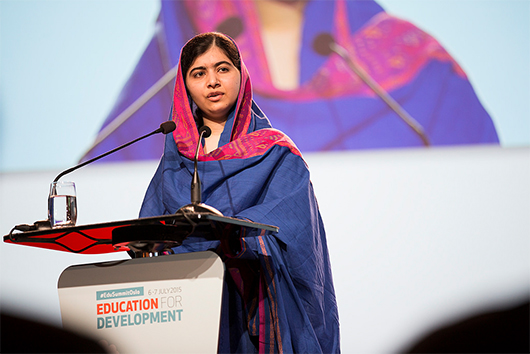 Activist and Nobel Peace Prize laureate Malala Yousafzai is pressuring world leaders to annually invest $39 billion more to ensure primary and secondary education is a right for all children. This is part of the upcoming U.N. Sustainable Development Goals meeting in September in New York.
Goal 4 of the proposed SDGs is to “ensure inclusive and equitable quality education and promote life-long learning opportunities for all.” By 2030, the U.N. hopes to ensure that primary and secondary education is free and easily accessible, as well as more equal for boys and girls.
Malala spoke at the Oslo education summit in July, urging leaders to invest in SDG 4 in order to reduce gender disparities and the negative outcomes of non-enrolled children. If the world can meet the goal by 2030, and every girl attends primary and secondary education, child marriage rates would decrease 64 percent and under 5-year-old child deaths would decrease 49 percent.
“In fact, and unfortunately, $39 billion is spent on [the] military in only eight days,” she said.
There are many challenges to providing universally free primary and secondary education, even if the $39 billion annual investment goal is reached. Many families send their children to the labor force because they live in extreme poverty, conflict plagues the ability to send children to school, and other countries lack infrastructure and resources to provide effective education.

Currently, the cost of 12 years of free education is $340 billion per year, which means lower-income countries need to invest 20 percent of their budget to education. Right now, the average budget spent on education is 15 percent.
In May 2015, more than 100 countries promised to provide free education to their children by signing the Incheon Declaration in Korea. The agreement will coincide with the SDGs to reach this goal by 2030.
Enrollment in primary education reached 90 percent by 2010, an increase from 82 percent in 1999, but 61 million children remained unenrolled in school. 31 million primary-aged school children dropped out worldwide and 32 million more repeated a grade. The Millennium Development Goals and the World Food Program provided support for the increase but more educational investments are needed to make a significant impact.
The Malala Fund pushes for the empowerment of education for girls. About two-thirds of the women in the world are illiterate. Also, education helps reduce population growth. For example, educated women in Mali have three children on average compared to the average of seven for uneducated women.
Despite the progress made through the MDGs, there are significant gaps between countries and regions.
“Conflicts remain the biggest threat to human development, with fragile and conflict-affected countries typically experiencing the highest poverty rates,” the U.N. said in a statement.
– Donald Gering
Sources: Do Something, Huffington Post, IB Times, Malala Fund, UN 1, UN 2, Yahoo News
Photo: Flickr
