• Link to X
  • Link to Facebook
  • Link to Instagram
  • Link to TikTok
  • Link to Youtube
  • About
    • About Us
      • President
      • Board of Directors
      • Board of Advisors
      • Financials
      • Our Methodology
      • Success Tracker
      • Contact
  • Act Now
    • 30 Ways to Help
      • Email Congress
      • Call Congress
      • Volunteer
      • Courses & Certificates
      • Be a Donor
    • Internships
      • In-Office Internships
      • Remote Internships
    • Legislation
      • Politics 101
  • The Blog
  • The Podcast
  • Magazine
  • Donate
  • Click to open the search input field Click to open the search input field Search
  • Menu Menu

Archive for category: Development

Information and stories on development news.

Development, Global Health, Global Poverty, Technology

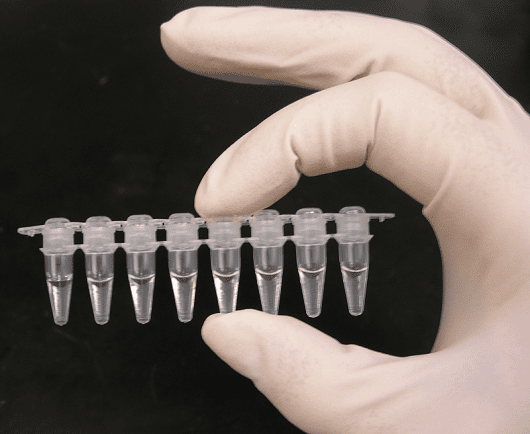
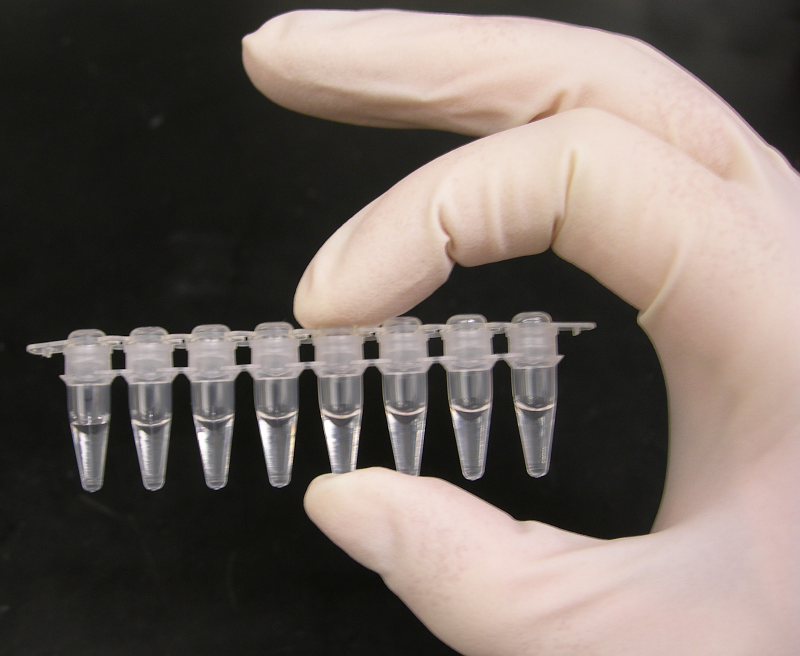
DEBUT Challenge Produces Innovative Medical Technology

DEBUT challenge

Every year the National Institute of Biomedical Imaging and Bioengineering (NIBIB) hosts a challenge for teams of undergraduate students to create cost-effective solutions to clinical needs that have yet to be met.

The winning design of the 2015 DEBUT challenge was the Viral Diagnostic Technology designed by a group of students from Lehigh University. This device was designed to help meet the World Health Organization’s recommendation that everyone diagnosed with HIV take a yearly viral load test to monitor the effectiveness of treatment. The viral load test is important in diagnosing and monitoring HIV.

The design addresses the issue of the lack of HIV treatment monitoring devices in impoverished areas where the majority of HIV-infected patients live, specifically in sub-Saharan Africa. The technology used allows for a simpler, faster and more affordable option of the viral load test with results coming out within the hour.

This design comes at a critical time as 35 million people in the world are living with HIV. Seventy-one percent of those are living in sub-Saharan Africa.

One of the runner-ups of the challenge was the FreePulse. The FreePulse was designed by a group of undergraduate students from the University of Texas at Austin. The patient monitor was decided upon when the team realized the unbalanced ratio of patient monitors to patient beds.

Thus, FreePulse was created. It is a low-cost patient monitor designed with the developing world in mind. It is durable, simple, and more affordable than conventional patient monitors. The average patient monitor costs between $1,000-$10,000. FreePulse has an estimated manufacturing price of $72, making it much more affordable for small hospitals in impoverished countries.

The NIBIB’s DEBUT Challenge is just one example of how biomedical technology has advanced society’s ability to improve global health and make it affordable. Global health is one step closer to reality through the advanced technology of biomedical engineering.

– Iona Brannon

Sources: U.S. Department of Health & Human Services, NIH 1, NIH 2

Photo: Wikipedia

September 2, 2015
https://borgenproject.org/wp-content/uploads/borgen-project-logo.svg 0 0 Borgen Project https://borgenproject.org/wp-content/uploads/borgen-project-logo.svg Borgen Project2015-09-02 13:54:452020-07-01 12:04:54DEBUT Challenge Produces Innovative Medical Technology
Development, Global Poverty, Nonprofit Organizations and NGOs, Technology

NGOs are Becoming More Effective Thanks to ICT

NGOs
Information and Communications Technology, or ICT for short, is the way of the future for non-government organizations (NGOs). By effectively using new ICT, all types of NGOs are becoming more efficient in how they track and record data, as well as plan for future projects.

This new technology breaks down the complexity of information that NGOs handle on a daily basis and helps format it in a way that makes it simpler for these groups to utilize in their future endeavors.

Information and Communications Technology encompasses all sorts of specific fields. It covers things such as radio, television, cellular phones, and computer technology.

By using ICT, NGOs can spread their messages more efficiently through a wider array of platforms, develop better on-site technologies in third-world countries, and establish long-term methods to record information on poverty levels around the world.

An article by the Dhaka Tribune delved into the many benefits that ICT brings with it for non-government organizations. An excerpt from this article, published on July 31, 2015, reads, “Using ICT for social development helps NGOs to have accessible, timely, relevant, and updated information to make on-time decisions and improve social policy.”

The article goes on to pose a scenario in which an NGO makes monthly visits to an area to provide villagers with resources and other aid.

The scenario focuses on two children who received inadequate amounts of milk based on their growth in between visits from the NGO. When ICT is instituted into this scenario, the NGO workers can enter into their phones the exact height, weight, and age of the children each visit in order to chart growth and provide the necessary amount of food and aid.

Today’s society is all about maximizing efficiency. Technology has evolved faster in this period of time than at any other point in history. With this evolution comes the betterment of all mankind. By using technology as a means to maximize the eradication of poverty, people all over the world can begin to feel hopeful that their lives are about to change.

– Diego Catala

Sources: Dhaka Tribune, Tech Target
Photo: Dhaka Tribune

September 1, 2015
https://borgenproject.org/wp-content/uploads/borgen-project-logo.svg 0 0 Borgen Project https://borgenproject.org/wp-content/uploads/borgen-project-logo.svg Borgen Project2015-09-01 12:06:302020-07-01 12:12:05NGOs are Becoming More Effective Thanks to ICT
Development, Global Poverty, Nonprofit Organizations and NGOs

The What Took You So Long Foundation Solving Local Issues

The What Took You So Long Foundation Solving Local Issues
The What Took You So Long Foundation (WTYSL), founded on June 14, 2009, is a team of storytellers that uses multimedia outlets to tell the stories of farmers, nomads and entrepreneurs from around the world. They use these stories to inspire small communities to work together to solve issues with health, education and social justice. Through lectures, workshops and movies, the organization works with people living in rural villages in overcoming speed bumps preventing them from using their resources to create new markets.

The organization collaborates with NGOs, friends and institutions to develop projects in communities based on the issues they are facing. They document the process using videos and photographs, which in turn are used in future workshops or lectures in new communities. WTYSL uses guerrilla filmmaking, a form of filmmaking that works with a low budget, skeleton crews and simple props, to capture the situation, culture and people of different countries.

During the filmmaking process, the members of WTYSL live where they’re filming and build relationships with members of the community. They also follow local customs, use local transportation and encourage residents to participate in their project to gain a better understanding of their everyday life.

In total, WTYSL has filmed in over 60 countries, including Mauritania, Mongolia and Papua New Guinea. The members of WTYSL believe everyone, no matter what their age is, has an imagination and can use their imagination to help those in need. WTYSL will take on amateur filmmakers and train them on the job in creating quality films and working with underdeveloped communities. Working together, the team is able to motivate positive change in these communities.

The team of WTYSL consists of a variety of filmmakers, storytellers and photographers from various backgrounds. The team’s most recent project had them travelling to Rwanda to document the impact of solar energy on the community. Before Rwanda, WTYSL created films in Liberia to observe the quest for camel milk. The team continues to travel the world, documenting achievements, encouraging empathy and creating projects to make the world a better place.

– Julia Hettiger

Sources: What Took You So Long, Co.Exist, Afritorial
Photo: What Took You So Long

August 30, 2015
https://borgenproject.org/wp-content/uploads/borgen-project-logo.svg 0 0 Borgen Project https://borgenproject.org/wp-content/uploads/borgen-project-logo.svg Borgen Project2015-08-30 01:30:352024-12-13 18:04:47The What Took You So Long Foundation Solving Local Issues
Children, Development, Education, Food & Hunger, Global Poverty, Health, Water

Why Clean Water Matters

Why Clean Water Matters
It’s all too easy to take for granted all of the conveniences available to us as citizens of a developed country. Having access to clean water is a privilege that goes far beyond just being able to use it for drinking or cooking. It can significantly improve the lives of people in poverty for a number of reasons.

For example, access to clean water usually means a person is more likely to have food to eat. After all, 70 percent of our global water use is for irrigation and agriculture. Often, a lack of clean water means a corresponding lack of food, because communities are unable to grow their own. About 84 percent of the people who don’t have access to clean water live on subsistence agriculture, which means that they are dependent on the growth of their own food for survival.

If people have access only to dirty, contaminated water, then they are in constant danger of waterborne diseases like diarrhea, cholera, fluorosis, HIV, malaria, typhoid and parasites such as intestinal worms. All of these run rampant through unsafe water supplies.

If people are getting sick, then someone in the family has to take care of them. That leaves two people out of school or work. Two people whose education or livelihood is put on hold because there isn’t an accessible clean water source.

Oftentimes, women undertake the time-consuming act of hauling water from its source to the villages where it is needed. In Sub-Saharan Africa, 40 billion hours a year are spent hauling water. This leads to to a sort of “time poverty,” where there is less time for endeavors like receiving an education or making money.

Without access to proper sanitation, many girls drop out of school when they reach puberty. Unsafe water acts as a barrier to education for young women in particular, perpetuating the global poverty and gender inequality cycle.

When mothers fear their children are going to die of diseases, they have more children in the hopes that some of them will survive, which often leads to poor maternal health and overpopulation problems. Poor maternal health can also lead to orphaned children who are left to fend for themselves and do not have time for education because they are focused on survival.

In fact, access to clean water is something that underlays almost all of the Millennium Development Goals – eradicating extreme poverty and hunger, achieving universal primary education, promoting gender equality and empowering women, reducing child mortality, improving maternal health, combating disease and ensuring environmental sustainability. In the new set of Sustainable Development Goals, ensuring access to water and sanitation for all is a goal in itself.

Gary Evans of Living Water International put it like this: “We’re in a world where there are 900 million people barely treading water, and the water’s too low for them to reach the ladder. They don’t need a boat. They don’t need a helicopter to rescue them. They just need a little boost so they can reach the ladder. Then they can climb out on their own. Clean water provides that boost.”

So, it’s clear why clean water is important. And the best part? There really is plenty to go around. Groups like The Water Project and Living Water International are working to build sand dams, wells and devices for water collection and sanitation. Every dollar invested in water and sanitation generates about eight dollars worth of health, time and productivity.

Unsafe water and lack of water causes a lot of problems, but what this really means is that there is one simple fix that will address a multitude of global poverty issues. Clean water means a better world in terms of equality, education, health, food security and more.

– Emily Dieckman

Sources: UN 1, UN 2, UN 3, UNICEF, Water, The Water Project
Photo: Easy Drug Card

August 23, 2015
https://borgenproject.org/wp-content/uploads/borgen-project-logo.svg 0 0 Borgen Project https://borgenproject.org/wp-content/uploads/borgen-project-logo.svg Borgen Project2015-08-23 08:30:542024-06-11 02:48:12Why Clean Water Matters
Development, Global Poverty, Health, Technology

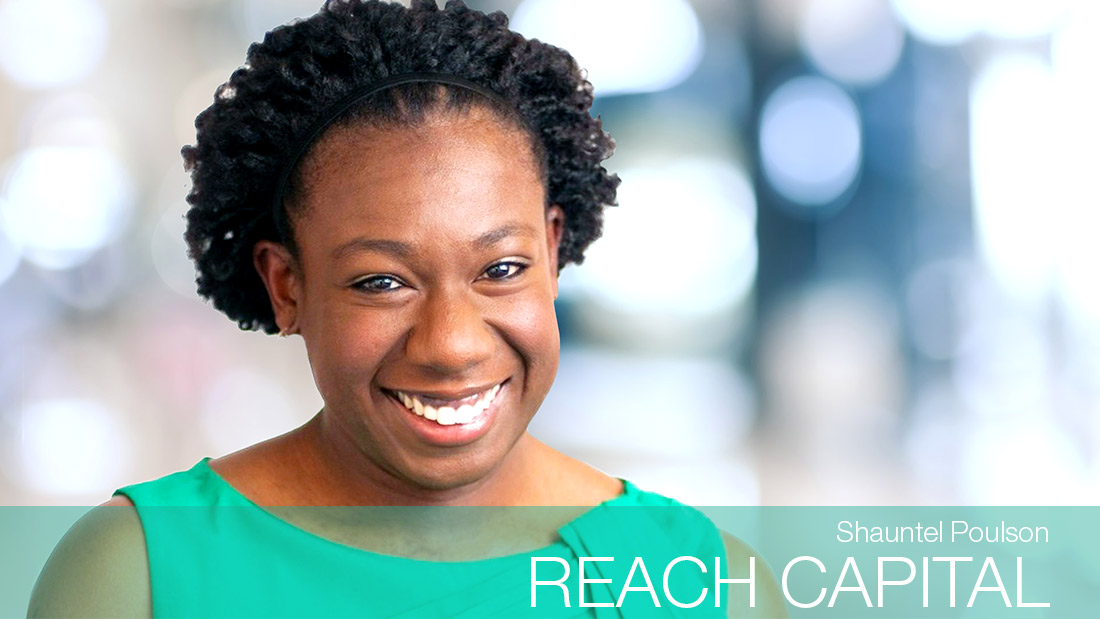
CNNMoney’s Upstart 30 Project

upstart
CNNMoney launched its Upstart 30 Project in late June. It profiles 30 young innovative startups and their respective founding entrepreneurs and investors.

The list is broken down into five categories: the idealists, the funders, the simplifiers, the playmakers and the futurists. All of which comprise individuals from a variety of fields.

To take part, startups must be established in the United States, be no younger than five-years-old, and harness technology in hopes of making the world a better place. After a series of tests, the Upstart 30 Project was formed. The list is diverse in geography, gender, race, and industries.

Whether it is a solution to the current archaic U.S. school system, an agricultural phenomenon in a box, or an ingenious medical tool, Upstart 30 spotlights visionaries that are making serious headway, all before the age of 40.

While many of the startups tackle commonplace inefficiencies, several address national and global issues, and have the potential of reducing global poverty in unlikely ways.

BioBots brings personalized medicine tools. According to its profile on CNNMoney, the startup’s first product was a 3D printer for building cells, tissues and organs. BioBots’ printer is uniquely small and inexpensive. It can fit on a desktop and is priced at around $5,000. For now, the bio printer is for research. CEO Danny Cabrera, 22, said that his two co-founders and him are hoping to broaden their client base to include pharmaceutical companies who could use their products for testing cancer drugs. BioBots has a bright future in the United States, but could do wonders internationally.

Freight Farms is a farm in a box. Founders, Brad McNamara and Jonathan Freidman, created the boxes out of old shipping containers. The insulated, camera-equipped devices use LED lights and advanced monitors to regulate weather conditions, nutrient intake and carbon dioxide levels, all without soil. The startup launched in 2011, and already made $5 million. At $76,000 apiece, restaurants, schools, and hotels have mainly bought the boxes. While this is very expensive, the payoffs are incredible: each container produces 4,000 to 6,000 plants a week according to Shawn Cooney, a small business owner testing the Freight Farm. This is nearly 80 times more than Cooney would have gotten from a conventional farm space. The high cost keeps Freight Farms away from the developing world but, if ever brought down, Freight Farms could increase food security around the world.

uBiome scans a person’s body and micro biome. uBiome kits locate where diseases take root, and how they escalate. According to CNNMoney, uBiome completely changes the ways we examine anxiety, diabetes and heart disease. The $79 kits test bacteria, analyze results, and compare data to other profiles. This quick and cutting-edge device could easily help millions of people in developing nations.

Plangrid is a paper-saving blueprint alternative for construction engineers. By using a tablet to alter and share blueprints, Tracy
Young, Ryan Sutton-Gee, Ralph Gootee and Kenny Stone are making sure buildings are drawn from reliable sources. So far, Plangrid has been a success since it began only three years ago. The app helped build over 90,000 projects worldwide. Plangrid, however, has a long way to go until it can reach rural populations most in need of new buildings.

– Lin Sabones

Sources: PlanGrid, CNN
Photo: CNNMoney

August 21, 2015
https://borgenproject.org/wp-content/uploads/borgen-project-logo.svg 0 0 Borgen Project https://borgenproject.org/wp-content/uploads/borgen-project-logo.svg Borgen Project2015-08-21 10:23:502024-12-13 17:54:01CNNMoney’s Upstart 30 Project
Aid, Development, Global Poverty, Health

Backpack PLUS Project Empowers Health Workers


The Backpack PLUS project was established in 2013 with the purpose of empowering community health workers (CHWs). These CHWs are the front-line workers of health delivery; they are often unpaid, volunteer workers that carry out the goals of a given health project.

When it comes to making a difference in global poverty, CHWs are absolutely vital. According to the Backpack PLUS research, a well-trained, well-deployed CHW can decrease child mortality of a community by 25 percent.

The purpose of Backpack PLUS is to “create a reference framework to gather the best practices, assess gaps and align partners to scale up existing and future CHW initiatives.” The project is more than just a tool kit for the workers; it is a system of solutions to real-world problems.

Backpack PLUS has two faces: physical and structural. The physical backpacks that CHWs receive contain key drugs, commodities, diagnostics and tools. The structural side of the program has to do with training, efficiency and thoroughness. This aspect of the program is deeply researched to maximize their results.

In 2013, the project launched into its design phase, where technical partners, policy makers, suppliers and other initiatives collaborated in search of a solution. Since 2013, the project has been focused on field research in Uganda and Senegal where they work to find the most efficient system for CHW aid relief.

The next phase of the project will be developing country plans, mobilizing resources and sharing tools, with a focus on collaboration between workers and between countries.

As of now, Backpack PLUS has partnered with UNICEF, MDG Health Alliance, Save the Children, PSI, the One Million CHW Campaign and Frog Design. This project aims to attack global poverty by empowering workers.

This project is large scale. The purpose is widespread, systematic change that will have a huge impact. Undeniably, the current health delivery system is fragmented, which is why Backpack PLUS’s goal is to unify the process.

– Hannah Resnick

Sources: Backpack PLUS, One Million CHW Campaign, UNICEF, UNICEF
Photo: Frog Design

August 19, 2015
https://borgenproject.org/wp-content/uploads/borgen-project-logo.svg 0 0 Borgen Project https://borgenproject.org/wp-content/uploads/borgen-project-logo.svg Borgen Project2015-08-19 10:36:442024-12-13 17:51:49Backpack PLUS Project Empowers Health Workers
Development, Economy, Global Poverty

Growing Investment in Africa Spurs Domestic and International Growth

Investment in AfricaRecently, international investors have turned their sights to Africa, whose expanding consumer class and abundant natural resources make it the next prime location for development and innovation. According to the Africa Attractiveness Survey, investment in Africa totaled $128 billion dollars in 2014, up 136 percent from the previous year. Investment reached $174 million per project, an increase from $67.8 million in 2013. This vast increase is largely spurred by several megadeals on the continent rather than many smaller ones. Although this “big money” form of investment may crowd out smaller investors, it paves the way for future funding from all types of businesses.
According to Charles Brewer, managing director for DHL Express Sub-Saharan Africa, an update in the way investors perceive the continent has been the source of increased funding. Economic growth, coupled with an improved business environment and strengthened infrastructure, has caused foreign investment to hit a historic high. Sufficient infrastructure is key to successful development because it lowers the expense of logistics. In the past, supply chain costs were nine times greater in Africa than in other continents. Deals, such as DHL Express’s, not only expands the frontier for international corporations but also lends to growth within Africa as well. Brewer predicts millions more in investment dollars from his company alone in 2015.

“With increased Foreign Development Investment and macroeconomic growth, I believe that Africa will become an economic powerhouse in the future. The region is abound with untapped opportunities and has much scope for growth,” says Brewer.

With more and more people benefiting from international aid and earning money, the consumer base in Africa has grown rapidly. This provides immense opportunities for companies to move into these countries and provide previously undeveloped services. Brewer lists 18 countries where his company has planned major projects. Such economic development will also provide more jobs to African workers and increase spending across the economy, leading to even more economic growth and future foreign investment. Companies such as DHL Express will help reinforce the business environment and create opportunities for African businesses all over the world. In this way, Africa is not a market to be cornered by the rest of the world; the world is a market soon to be cornered by Africa.

– Jenny Wheeler

Sources: IT News Africa

Photo: Flickr

August 19, 2015
https://borgenproject.org/wp-content/uploads/borgen-project-logo.svg 0 0 Borgen Project https://borgenproject.org/wp-content/uploads/borgen-project-logo.svg Borgen Project2015-08-19 08:01:022020-04-03 13:46:40Growing Investment in Africa Spurs Domestic and International Growth
Children, Development, Global Poverty

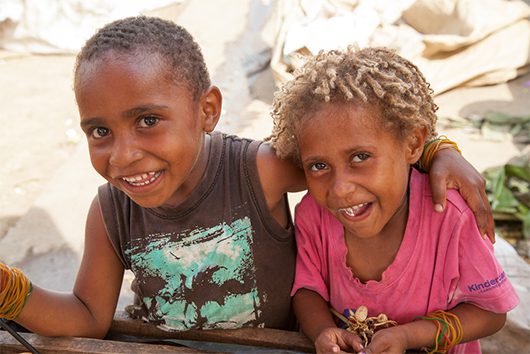
The Power of a Smile: Hope in the Midst of Poverty

power_of_a_smile
When children are photographed, smiles come beaming through; this is generally true regardless of a person’s wealth or lack thereof. Smiles are indicators of happiness and hope that people in poverty can exhibit. While it is very true that many in poverty do not smile as their hope and joy are syphoned away by the cares of harsh everyday living, smiling is still exhibited by many throughout the globe.

Ron Gutman spoke at a TedTalk conference about the power of a smile. He cited studies done by UC Berkeley and Wayne State University who measured the width of alumni yearbook pictures and pre-1950 MLB player baseball cards respectively. They found that the wider the measure of a person’s smile, the longer that person lived and had a more fulfilling life.

This is not just a Western phenomenon. A separate study done by Paul Ekman in Papua New Guinea found that the aboriginal people perceived another person’s smile in the same way the rest of the world does, “to express joy and satisfaction.”

Smiling can be used as an emotional superpower. Gutman says that on average a person will smile around 20 times per day, yet “those with the most amazing superpowers are actually children, who smile as much as 400 times per day.”

Recently, a German study took fMRI images of people smiling and found “that facial feedback modifies the neural processing of emotional content in the brain, in a way that helps us feel better when we smile.”

This research is evidenced, in part, by photographs of people who live in poverty. When photo journalists are on assignment in areas of extreme poverty—in conditions that would strip most people of hope—smiles are spread across the faces of children.

Sebastian Cuvelier witnessed this when he traveled to the slums of Manila for a two month stay. He took pictures of children playing in the filthy streets, children taking baths in a blow-up swimming pool due to the lack of a proper bathroom, a mother smiling as she watched her children play and people living in make-shift houses.

The people of Manila are living in conditions that are heart breaking, but their smile is infectious, lights up their eyes, and draws the viewer in. Their hope shines through, a life that is grounded in family and not letting poverty steal their joy even when they have every reason to lose faith.

Part of the Manila street children’s hope, and the smiles, is through a Nongovernmental Organization (NGO) called The Virlanie Foundation. Their goal says that they are “giving back the smile to street children.” The organization was founded in 1992 and they work to help and protect the street children who are most vulnerable, such as the abused, neglected and orphaned, in order for those children to grow into productive, responsible adults.

Work by organizations like the Virlanie Foundation is important because while a smile is an indicator of hope, poverty tries to steal a person’s smile away. There are just as many pictures of smiling children in slums as there are children who have no smile because they have no future in their current condition. Giving a child hope through practical life-changing resources restores the smile and gives that child a chance to see their hope turn into something tangible. Then that child can use their smile to spread hope to others who need their own superpower smiles restored.

– Megan Ivy

Sources: Daily Mail, TedTalk, Virlanie Foundation
Photo: Flickr

August 15, 2015
https://borgenproject.org/wp-content/uploads/borgen-project-logo.svg 0 0 Borgen Project https://borgenproject.org/wp-content/uploads/borgen-project-logo.svg Borgen Project2015-08-15 05:09:472024-05-27 09:27:22The Power of a Smile: Hope in the Midst of Poverty
Development, Global Poverty

7 Resources Focus on Good News Stories

good-news-stories
Sometimes, when one is trying to make a difference in the world, it is all too easy to get caught up in how grim things can seem. We are constantly being bombarded with evidence that the world is in a desolate decline, and it is hard to even know where to start.

When these sort of feelings start to catch up with you, here are several resources to turn to that focus on good news stories and how, in many ways, the world is improving.

1. Don’t Panic
This Hans Rosling documentary challenges some of the biggest misconceptions people have about the direction the world is going in. For example, birthrates are declining as access to family planning increases and people become more educated. This engaging video features specific case studies, polls of a live audience and the continual presentation of surprising data.

2. TED.com
Well-known, this website has several uplifting playlists that exemplify how the world is getting better. For example, the “Freedom Rising” playlists are made up of talks about groups who have overcome oppressive governments. “Social Good, Inc.” is a set of talks about companies that are making progress towards a greater social good. “The Road to Peace” includes 10 talks that talk about the ways in which peace has prevailed in the past and can in the future.

3. 26 “Charts and Maps That Show the World is Getting Much, Much Better”
This article on Vox.com, with a self explanatory title, shows a variety of items, like economic prosperity, rising life expectancy and homicide rates in the U.S. and Europe.

4. “The world looks like it’s getting worse. Here’s why it’s not.”
This article by John Stackhouse includes this calming line: “If the world seems more volatile, it is. If it seems more dangerous, not so much. Welcome to the war of perceptions, in which an ever-improving planet seems ever more at risk largely because of the noise.” It includes information on topics like human rights, poverty and American hegemony.

5. Positive News
A U.K. website, it reports on some of the good that is occurring in the world. On the official “about” page of the website, it says, “we take a solution-focused perspective on the challenges facing society.” This is not a place of wallowing in pity and sorrow, but in seizing opportunities for change.

6. The Good News Network
Attempting to counterbalance the barrage of bad news reported in the mainstream media, this website contributes positive stories that are occurring and aims to help create a balanced, realistic worldview for consumers. It features this reflective quote from editor Norman Cousins: “If news is not really news unless it’s bad news, it may be difficult to claim we are an informed nation.”

7. Flickr
This might seem like a general resource and saying “photography” makes it even more vague, but, as the saying goes, “a picture is worth a thousand words.” Sometimes all it takes to feel inspired or be reminded of all of the beauty in the world is to see a moment of it frozen in time.

Flickr comes up just because it tends to be a more trusted resource for high-quality photos, but even something like Google Images would work. Type in the name of a place you hear about in the news. One ravaged by poverty, war or oppression.

What you see are images of the place at its most beautiful. Its unique landscapes, its strong people, its magnificent architecture. From Africa to Syria to Mexico, there is beauty in the uniqueness of each place, even the ones wracked by turmoil. Rarely is there a news story covering the sheer beauty of a Middle Eastern desert, or a tree silhouetted against the sky in the Congo or the beaming face of a child in Mali.

With the mainstream media so hyper-focused on all that is wrong with the world, it is easy to forget about all that is right. But the wonderful thing is that taking the time to seek out goodness usually leads to finding it, especially in today’s world, where the Internet makes so much available right at our fingertips. These resources should act as a reminder that the world is filled with beautiful people and places and stories, and that we should continually strive to make it a better and better place because such efforts have been proven to pay off.

– Emily Dieckman

Sources: Reuters, Gapminder, Good News Network, Positive News, TED, VOX, Flickr
Photo: Flickr

August 15, 2015
https://borgenproject.org/wp-content/uploads/borgen-project-logo.svg 0 0 Borgen Project https://borgenproject.org/wp-content/uploads/borgen-project-logo.svg Borgen Project2015-08-15 01:30:482024-12-13 18:04:457 Resources Focus on Good News Stories
Development, Global Poverty, Humanitarian Aid

The Nepal Recovery Act

Nepal RecoveryOn July 29, Senator Cardin (D-MD), a Ranking Member of the Senate Foreign Relations Committee, and Senator Kirk (R-IL) introduced the Nepal Recovery Act in the Senate. This act would provide humanitarian assistance to the Nepalese people, given that there were two earthquakes that killed 8,700 people in April and May.

The Nepal Recovery Act approves funding for over three years to help Nepal rebuild infrastructure, like schools and hospitals. Over 47,000 classrooms and 1,000 health facilities were destroyed around Kathmandu after the earthquake. This act would help Nepal rebuild and gain back infrastructure, schools, and health clinics that were destroyed.

Additionally, the legislation aims to help the Nepalese economy. Nepal has a GDP of about 19 billion and a population of 27.8 million, making Nepal one of the poorer countries in the world. Additionally, the earthquake has caused one million people to fall below the poverty line. The Nepal Recovery Act takes measures to stimulate the economy, so the Nepalese people can move on from this tragedy.

The legislation includes debt relief and promotes donor transparency in the reconstruction effort. The bill allows the Administration to tap the private sector to support Nepal.

The bill would also designate resources to prevent the trafficking of children following the earthquake. Nepal already has a human trafficking problem, but the earthquake has exacerbated the problem. The bill aims to protect children and stop traffickers from taking advantage of the crisis situation.

Currently, this bill has been referred to the Senate Foreign Relations Committee. It is clear that Nepal needs substantial humanitarian aid following the earthquakes earlier this year. This bill considers improving infrastructure, improving the economy, and preventing trafficking in Nepal. Since this bill would provide aid for over three years, Nepal could have sufficient time to rebuild. After the Nepalese people recover from this earthquake, the country can more easily and rapidly combat poverty.

– Ella Cady

Sources: Senate 1, Senate 2, Huffington Post, India Times
Photo: Flickr

August 15, 2015
https://borgenproject.org/wp-content/uploads/borgen-project-logo.svg 0 0 Borgen Project https://borgenproject.org/wp-content/uploads/borgen-project-logo.svg Borgen Project2015-08-15 01:30:442020-07-02 13:13:58The Nepal Recovery Act
Page 126 of 163«‹124125126127128›»

Get Smarter

  • Global Poverty 101
  • Global Poverty… The Good News
  • Global Poverty & U.S. Jobs
  • Global Poverty and National Security
  • Innovative Solutions to Poverty
  • Global Poverty & Aid FAQ’s
Search Search

Take Action

  • Call Congress
  • Email Congress
  • Donate
  • 30 Ways to Help
  • Volunteer Ops
  • Internships
  • Courses & Certificates
  • The Podcast
Borgen Project

“The Borgen Project is an incredible nonprofit organization that is addressing poverty and hunger and working towards ending them.”

-The Huffington Post

Inside The Borgen Project

  • Contact
  • About
  • Financials
  • President
  • Board of Directors
  • Board of Advisors

International Links

  • UK Email Parliament
  • UK Donate
  • Canada Email Parliament

Get Smarter

  • Global Poverty 101
  • Global Poverty… The Good News
  • Global Poverty & U.S. Jobs
  • Global Poverty and National Security
  • Innovative Solutions to Poverty
  • Global Poverty & Aid FAQ’s

Ways to Help

  • Call Congress
  • Email Congress
  • Donate
  • 30 Ways to Help
  • Volunteer Ops
  • Internships
  • Courses & Certificates
  • The Podcast
Scroll to top Scroll to top Scroll to top