• Link to X
  • Link to Facebook
  • Link to Instagram
  • Link to TikTok
  • Link to Youtube
  • About
    • About Us
      • President
      • Board of Directors
      • Board of Advisors
      • Financials
      • Our Methodology
      • Success Tracker
      • Contact
  • Act Now
    • 30 Ways to Help
      • Email Congress
      • Call Congress
      • Volunteer
      • Courses & Certificates
      • Be a Donor
    • Internships
      • In-Office Internships
      • Remote Internships
    • Legislation
      • Politics 101
  • The Blog
  • The Podcast
  • Magazine
  • Donate
  • Click to open the search input field Click to open the search input field Search
  • Menu Menu

Archive for category: Development

Information and stories on development news.

Development, Global Poverty

Three American Companies Investing in Africa

american_companies_invested_in_africa's_growth
Africa was once known as “The Dark Continent,” a place of mystery and hardship. While many hardships continue today, Africa is not nearly so dark as it once was: with electricity and economic growth sweeping across the continent, wealthy foreign investors have set their eyes on the potential wealth hidden in emerging African markets, and some American companies are making it their mission to launch Africa into the future. As of 2011, U.S. companies had invested over $48 billion in Africa. The following are three American companies investing in Africa.

Google
The search engine giant turned jack-of-all-trades has been pursuing countless investment opportunities over the last decade, the least of which is its foray into Africa. With mobile technology and Internet access rapidly changing the face of Africa, it’s a no-brainer that the tech mogul wants in. Google Africa has a number of on-going projects in Africa, from simply expanding its network, to installing the hit Google Fiber, to hosting a development summit for technical officers, devs and designers. The massive corporation has even invested in renewable energy development, which some economists have touted as the “cure for poverty.” In addition to developing its own enterprise, Google also launched Google.org in 2004, a nonprofit formed to create awareness about climate change, global public health and global poverty.

Cummins
This global designer and manufacturer of diesel engines has been present in Africa since 1946. The company describes its activities across the continent as including “an extensive network of company-owned, joint venture, and independently owned distributors and dealers.” Much of their business in the 51 of 54 African countries they operate in is selling and servicing products, namely power generators for homes and businesses. Unlike many large multinational corporations, Cummins works to keep a portion of its works dedicated to establishing locally-owned branches of the company, keeping a portion of the profits within the local community. The company also makes a point of embracing its responsibility as a corporate leader “to help improve the communities in which employees work and live,” and Cummins works to have a positive impact in its areas of operation.

Ford
The original auto manufacturer has also had a long-standing presence in Africa, having been involved in the South African automotive industry since the 1920s. Ford employs over 3,700 people in South Africa and recently announced plans to establish a production plant in Nigeria, hoping to eventually spread throughout Sub-Saharan Africa. Besides making cars, the Ford Motor Company has been developing a customizable electric bike that they hope will revolutionize urban travel and expand local business opportunities. Ford is also working with a number of African initiatives to improve access to education and healthcare, including World Vision in Africa and Riders for Health.

“As much as we are a car company, Ford is also a people company. Our investment in the community across Africa–through various health, education and mobility projects is as fundamental to our business as producing vehicles, as this is key to unleashing the potential of the African continent,” said Jeff Nemeth, president & CEO of Ford Motor Company of the Sub-Saharan Africa region.

Africa’s emerging and veritably booming economy is drawing more and more international attention, with investors convinced that “the dark continent” will be the home of the next gold rush. Whether or not all corporations eyeing Africa for their next venture are considering the positive impact they can make across the impoverished continent, their presence is having a dramatic impact and is pulling the struggling economy towards a brighter future.

– Gina Lehner

Sources: American Outlook, Automotive World
Photo: IB Times

August 15, 2015
https://borgenproject.org/wp-content/uploads/borgen-project-logo.svg 0 0 Borgen Project https://borgenproject.org/wp-content/uploads/borgen-project-logo.svg Borgen Project2015-08-15 01:30:372024-05-27 09:27:25Three American Companies Investing in Africa
Development, Global Poverty

The Labor Market in Developing Countries – A Case Study

The Labor Market in Developing Countries – A Case Study
Any poverty reduction strategy must include measures that ensure people are employed. Spending on public goods and focusing on rendering basic life-sustaining services such as healthcare and sufficient nutrition are absolutely essential. Beyond the basics, however, long-term development strategies must target employment to drive economic growth and contribute to a prosperous environment.

South Africa represents an interesting case study of the labor market in the developing world. It has the potential for a large amount of growth, yet is plagued by persistent unemployment. It is neither among the poorest developing nations, nor has it experienced robust growth. Across the spectrum of development, it is somewhere in the middle, and therefore the challenges it faces are broadly representative of much of the developing world’s challenges.

A 2015 World Bank report on the state of the labor market in developing countries provides an enlightening description of South Africa’s predicament. The report describes a “youth bulge,” where a young population saturates the labor market, dampening wage growth. The antidote to this economic affliction is investment in skills development and policy reforms which enhance market entry and private sector expansion.

South Africa, after the end of apartheid in 1994, managed to reduce absolute poverty via a social grant system. However, the grant system simply doesn’t measure up to the average salaries of even low-skill labor. Unemployment and inequality are still quite high in the country, so innovative economic solutions are necessary to create the kind of long-term growth which will help those remaining at the bottom of the economic ladder.

In South Africa, and sub-Saharan Africa in general, as many as 11 million young people will join the labor force every year, and will continue to do so for at least the next decade. With sufficient opportunities, this increase in labor supply could translate to a lot of economic growth. However, unemployment is rampant in South Africa, and long-term strategies for growth and poverty reduction must focus on harnessing the burgeoning young workforce to be effective.

One way of doing so is by investing in worker education and training. Presently, the availability of skilled labor is quite low. Unemployment remains high even among a growing college-educated workforce. A combination of private-sector worker training and public-sector skills development and educational subsidies could drive the expansion of a diverse, skilled workforce. This would encourage multinational firms to hire locally, as well as promote home-grown business growth.

Some private firms already recognize the need for greater investment in a skilled workforce. The Rockefeller Foundation’s Digital Jobs Africa initiative aims to create tech-based employment opportunities for African labor markets. The MasterCard Foundation also has an education and skills training program for disadvantaged African youth.

One South African company that provides a sustainable growth model that suits South Africa’s labor market conditions is Sibanye Gold. Sibanye Gold is a mining company which provides significant worker training and educational resources to its employees. The company also engages in profit sharing. The mining industry is naturally supportive of a localized labor force, for much of their workers come from areas surrounding mines. Unfortunately, socially sustainable companies like Sibanye are hamstrung by a hostile policy environment that does not support them, or worse, buries them in bureaucracy. Sibanye CEO Neal Froneman said, “[Industries such as mining] should be nurtured by the government. But it is not. It is despised.”

Clearly, private interventions alone will never create the kind of opportunities for which a growing, skilled labor force can take advantage. Real change needs to happen at a governmental level, specifically by creating public policies that diversify economic opportunity and create the kind of conditions where companies like Sibanye Gold can thrive. Doing so will harness the economic energies of a massive young workforce, providing a pathway to grow out of poverty.

– Derek Marion

Sources: World Bank, Devex, The Conversation, Daily Maverick
Photo: Brookings

August 15, 2015
https://borgenproject.org/wp-content/uploads/borgen-project-logo.svg 0 0 Borgen Project https://borgenproject.org/wp-content/uploads/borgen-project-logo.svg Borgen Project2015-08-15 01:30:362024-12-13 17:51:52The Labor Market in Developing Countries – A Case Study
Development, Food & Hunger

Clif Bar: Sustainable Nutrition and Development

Clif_bar
You’ve probably heard of Clif bars. Whether you are leaving for work or school, running to the gym or caught up in the daily rush, Clif bars provide sustainable, long-term energy and doesn’t sacrifice taste or nutrition.

But beyond helping you attain a more sustainable body and mind, Clif Bar is also working to build a more resilient world. It is built on a bottom line of five “aspirations”: strengthening the company through long-term investment, creating a brand that is sustainable in its ethics, quality and authenticity, forming the company around the best interests of its employees’ creating strong, healthy communities, both locally and globally and forwarding conservation and restorative environmental practices. One way Clif Bar does this is through continual work toward a 100 percent organic brand.

“We start every recipe with the goal of [fully] organic products, but we don’t always get there depending on supply,” says Sue Hearn, senior director of communications. In pursuance of increasing the availability of organic crops, the company has invested in research, creating the nation’s first endowed research position focusing on plant breeding for organic crops at the University of Wisconsin-Madison.

“It is critically important that our young people know the benefits of organics and leverages them to develop solutions for all of agriculture. We deeply believe that healthy seeds and healthy soils are key to healthy plants and animals,” commented funder George Siemon.

The company’s headquarters — a former World War II valve factory that was remodeled using reclaimed materials primarily from railroad construction — is also a model of responsible development. It boasts soundproofing technology made from recycled jeans and one of the largest solar panel conglomerations in the United States. Despite its innovative, high-tech design, the company headquarters retains a utilitarian feel, much like Clif Bars themselves do. As further confirmation of the company’s environmental initiatives, its headquarters received LEED Platinum certification for the utmost environmentally-conscious design.

The company also encouraged employees to pursue a minimum of 20 hours of volunteer time a year, amounting to a massive 10,000 hours of community service logged in one year. Beyond building sustainably, the company is working to actively encourage growth in communities and impoverished areas all over the world through service work and research initiatives, such as its agricultural funding. Each year, employees participate in a company-wide bike ride to commemorate the company’s commitment to low-impact development and healthy living.

As a further example of encouraging sustainable, healthy living, the company pays its 320 employees to use its in-house gym for 30 minutes per day, take part in fitness classes and get nutrition counseling and subsidized meals. Rather than trying to balance work and life, founder and former CEO Kevin Cleary works toward integrating the two, providing payment for employees to do their dog-walking and dry-cleaning while on the clock, as well as daycare services alongside the company gym. Its commitment to the wellness of its employees, as well as its customers, has helped it become a reputable brand for empowering and supporting its workers.

This commitment has paid off. Clif Bar has a voluntary turnover rate of around 5 percent. Beyond worker benefits, it offers employees 20 percent shares in the company, increasing shareholder value and encouraging workers to lead initiatives in creating a more sustainable, productive brand. The worker engagement that has resulted, Cleary says, is remarkable.

So next time you need some fuel for a workout, workday or work-in-progress, consider a brand that is derived from and promotes healthy, sustainable ideas and projects to build a more responsible global community.

– Jenny Wheeler

Sources: TriplePundit, Clif Bar
Photo: TriplePundit

August 14, 2015
https://borgenproject.org/wp-content/uploads/borgen-project-logo.svg 0 0 Borgen Project https://borgenproject.org/wp-content/uploads/borgen-project-logo.svg Borgen Project2015-08-14 01:30:032024-05-27 09:27:24Clif Bar: Sustainable Nutrition and Development
Development, Extreme Poverty, Global Poverty

New Anti-Poverty Initiative for the Middle East

anti-poverty
The Islamic Development Bank and the Bill & Melinda Gates Foundation have teamed up to launch a new $2.5 billion sharia-compliant fund targeting extreme poverty in the Middle East. By partnering with the world’s richest charitable institution, the IDB hopes to successfully combat poverty in the Islamic world.

Although the Middle East is home to some of the richest countries worldwide, it also includes some of the world’s poorest, such as Burkina Faso and Chad. Additionally, some countries show a combination of extreme wealth and poverty, such as Egypt and Indonesia. Others are known simply for their extreme violence, like Yemen and Syria.

Without the assistance of a strong partner, regions like these would normally have a much harder time bringing in grants and skills into their territories. Key players hope that the various connections established through the partnership will prove to be even more effective than the partnership itself.

Hassan Al Damluji, head of Middle East Relations at the Bill & Melinda Gates Foundation, recently discussed the Lives and Livelihoods Fund in an interview, stating, “We are engaging Gulf donors who will be around and are sustainable, unlike the Foundation, which is a family fortune and is thus finite.”

Al Damluji went on to explain that one of the key features of the fund is its encouragement of investment from the poor countries themselves. Another essential working part of the fund is that it gives aid linked to the loans taken by recipient countries, so these countries are held accountable for their own development.

The plan is for the fund to finance projects in four different areas: agriculture and food security, primary health care, infectious disease control and eradication, and basic infrastructure. Al Damluji explained that all of these areas represent major drivers of inequality across the globe.

The overarching goal is to maximize the beneficiaries of this partnership, regardless of race, country or religion. With the additional long-term goal of sustainability in mind, the fund will be strategically housed in and administered by the IDB.

So far, the IDB has provided $2 billion, and a remaining $500 million will come from donors over the next five years in the form of grants. Both partners will work together to determine which projects deserve priority. The partners will meet twice annually in order to ensure cooperation and coordination.

The reasoning behind the choice of the four main project areas is that over time, effects like improved health and increased farmer productivity will work to boost economies. The key to understanding the way the new fund will work is to operate from a big picture perspective and to take into account its long-term consequences.

This will be the first major fund of its kind to actually be based in the Middle East. Al Damluji boasted that the fund will also have a bank of shareholders that are not OECD countries and not traditional donors.

Both the IDB and the Bill & Melinda Gates Foundation understand the necessity of a well-functioning partnership in order to accomplish real change in the Middle East. The new partnership is more important than the fund itself and cooperation is absolutely necessary.

Additionally, both partners understand that two minds are better than one—especially when dealing with such a deeply rooted, complex problem. Together, the IDB and the Bill & Melinda Gates Foundation have raised the bar in the global anti-poverty fight.

– Sarah Bernard

Sources: Nonprofit Quarterly, Gulf News
Photo: Time USA Newsweek

August 13, 2015
https://borgenproject.org/wp-content/uploads/borgen-project-logo.svg 0 0 Borgen Project https://borgenproject.org/wp-content/uploads/borgen-project-logo.svg Borgen Project2015-08-13 01:30:492024-06-05 03:46:41New Anti-Poverty Initiative for the Middle East
Development, Global Poverty

Successful Poverty Reduction in Peru

peru
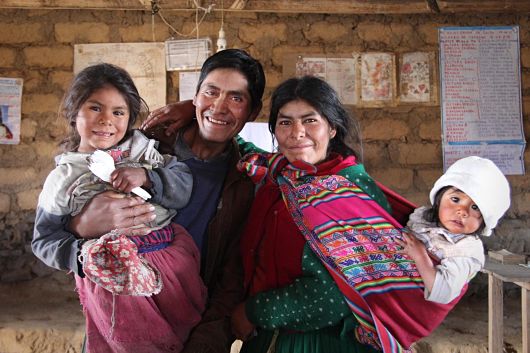
Poverty rates in Peru have dropped significantly over the past four years. Specifically, extreme poverty rates among those with non-social assistance-based income have dropped from 32.8 percent to 24.1 percent in the poorest, most rural parts of the country. While Peru has faced its fair share of challenges, progress is being made.

Ana Revenga, the Senior Director of the Poverty Reduction Unit of the World Bank, recently stated that Peru’s economic growth and poverty reduction is one of the best in the region. Revenga explained, “The significant and sustained growth of the Peruvian GDP benefited the poorest, which resulted in a decrease in inequality.”

These impressive economic improvements throughout the country have come as a result of a major collective effort. In particular, a variety of social initiatives have proven to be key in combating extreme poverty and inequality.

Programs like the National Strategy for Development and Social Inclusion — or “Incluir para Crecer” — are working to close gaps in available public services. Perhaps even more importantly, this type of social program works to expand exclusive economic growth that neglects to help those suffering most severely.

As the country strives to continue moving forward, additional programs like Juntos and Pension 65 will be offering support to Peru’s poorest population. These programs will be working to ensure the longevity of recent improvements in the economic and living conditions of the extremely poor.

The Juntos program has directly contributed to the reduction in child malnutrition under the country’s current government. Within the framework of the program, conditional transfers of state subsidy guarantee good health and growth for unborn and young children alike.

Amongst Peru’s rural population, child chronic malnutrition has declined from 37 percent to 28.8 percent. At the national level, it has dropped from 19.5 percent from just four years ago to 14 percent in 2015. This number is encouragingly close to the 10 percent target set for the end of the current administration period.

The country’s Minister of Development and Social Inclusion, Paola Bustamante recently stated that since 2012, there has been over $1 billion invested in these types of social programs.

She explained that all social programs are implemented under a performance-based budgeting framework, which prevents funds from being used for other purposes besides social programs.

However, despite the above mentioned critical steps in the right direction, Peru is still facing its fair share of structural challenges. In early July 2015,  the Organization for Economic Cooperation and Development requested that Peru review and reorganize its denomination of rural and urban regions.

Such obstacles have not significantly curtailed the rates of improvement in poverty reduction and inequality, however. In fact, Bustamante Suarez, another government official, has assured the public that current social inclusion policy will most definitely be continued by subsequent administrations.

Strategically targeted social initiatives will continue to level the economic playing field. As explained by Suarez, these programs will continuously work to close basic services gaps, thus improving the living conditions of the poor population. Peru still has a long road ahead, but leaders are confident that it will come out on top.

– Sarah Bernard

Sources: Andina, Peru This Week
Photo: Peace and Hope International

August 12, 2015
https://borgenproject.org/wp-content/uploads/borgen-project-logo.svg 0 0 Borgen Project https://borgenproject.org/wp-content/uploads/borgen-project-logo.svg Borgen Project2015-08-12 01:30:252024-12-13 18:04:45Successful Poverty Reduction in Peru
Development

The Social Progress Index: Measuring What Matters

Social_Progress_Index
Almost everyone is familiar with the term “Gross Domestic Product,” or “GDP,” a yardstick against which the progress and development of nations is measured. It is defined as the monetary value of all goods and services created within a country in a time period.

But, as Robert F. Kennedy once pointed out, “it does not allow for the health of our families, the quality of their education… it measures everything, in short, except that which makes life worthwhile.”

Stanley Kuznets, the economist who created the GDP measurement, said that “the welfare of a nation can scarcely be inferred from a measure of national income.”

So why is the GDP consistently considered the most important indicator of a country’s success level?

In 2009, The New York Bureau Chief of The Economist rephrased the question: “What if countries competed with each other to become the most socially innovative in the world?” After all, the world that matters on a most visceral level is not made up of dollar signs and algorithms. Rather, it is a living, breathing planet full of people who live and die and face challenges ranging from survival to social injustice.

Consideration of this simple fact led to the birth of the Social Progress Imperative, a movement to measure the success of countries, companies and organizations in a new way, but also in tandem with economic measurements such as GDP.

Current CEO of the Imperative, Michael Green, demonstrated that the two are positively correlated, but not inextricably so. For example, in the 2015 ranking, New Zealand and Norway achieved similar Social Progress Index (SPI) scores, even though New Zealand’s GDP is about 50 percent of Norway’s.

There have been previous efforts to measure national progress beyond the scope of the GDP, such as the Human Development Index (HDI), the Your Better Life Index, and the Legatum Prosperity Index. The primary feature that sets SPI apart from these indexes is that it focuses solely on social outcomes rather than economic ones. With this focus, it tries to take the scope of these previous initiatives to a new level. The Social Progress Index measures the success of a country in three core areas: basic human needs, foundations of wellbeing, and opportunity. And, it measures the outcomes occurring in a country, such as actual availability and accessibility of goods and services, not laws passed with the intention of providing them.

The possibilities of looking at success through this new lens are practically endless. Once there is a better understanding of which countries have the highest overall success, economists, politicians, nonprofits and members from every sector can start to examine what works and what doesn’t work. Goals can be created and prioritized, and opportunity and wellbeing can be increased, which will likely drive economic progress and increase GDP. With more GDP, more resources can be created and provided that will increase SPI.

And, it’s not only countries that can be measured using SPI. Smaller governments, such as cities and states, can view the effect of policies and shape new ones.

Charitable organizations could be ranked so that they can understand their own success levels. Potential patrons can be aware of how effectively their donations are being utilized.
Companies could understand their effect on the world beyond the economic sphere.

Understanding what leads to overall success can help shape initiatives that will create more success, no matter the organization or venue. The Social Progress Index is an exciting way to foster progress on a very human level.

– Emily Dieckman

Sources: TED, OECD Better Life Index, Social Progress Imperative 1, Social Progress Imperative 2
Photo: TED

August 9, 2015
https://borgenproject.org/wp-content/uploads/borgen-project-logo.svg 0 0 Borgen Project https://borgenproject.org/wp-content/uploads/borgen-project-logo.svg Borgen Project2015-08-09 01:30:192024-06-04 01:03:13The Social Progress Index: Measuring What Matters
Development, Global Poverty

India’s Poverty Reduction Potential

poverty_reduction
With a population of over 1.2 billion, India is in a similar position as China was years ago. China lifted hundreds of millions out of poverty by itself due to its unprecedented economic growth. India may not have incredible growth, but with a large population and a growing role in international markets, there is huge potential to reduce poverty enormously.

A UN report compared the differences in growth between both China and India, both being high-growth, high-population states. The report outlines China and India’s differing political systems and openness to foreign markets as strong factors that contributed to both increased growth and a high reduction in poverty. India’s lack of poverty reduction is in part due to the country not being able to fully leverage tools that could have led to greater economic growth similar to China’s. Lack of infrastructure spending and not being an “attractive destination for financial capital until 2004” has also constrained India’s economic potential. Coupled with the 2008 economic crisis, these factors all hurt India’s poverty reduction at the time.

Now, India has a chance to make up for lost time. As one of the countries with the most people in poverty in the world, public policy in India has a substantial impact on the future of the globally impoverished. In 2011, the percentage of India’s population under the national poverty line was over 20 percent. What is needed for India to meet its own domestic challenge of reducing poverty and simultaneously have an influence on the global statistics of poverty?

Today, millions of people in India do not have access to toilets. Sewage systems in many cities are outdated, broken, unhygienic or simply nonexistent. These facts are signifiers of the investments that India needs to make in order to help alleviate suffering of the lives of many poor citizens. Infrastructure of all types must be heavily sought after by government officials. This would allow for rural towns to have greater access to goods and services and provide better services to the nation, such as sewage and improved public health.

Education is still below ideal in India as well. It is well documented that education for both sexes is vital to creating a base of knowledge with which workers are likely to have more social mobility and job opportunities. The literacy rate in India is about 65 percent. Improving basic literacy translates to creating a section of future workers who can occupy jobs that grow rapidly in developing nations, thus preparing a workforce for tomorrow.

With hundreds of millions still in poverty, India could be the next bastion of poverty reduction if the right steps are taken. Nothing revolutionary is needed to change the course of millions of Indian livelihoods, but adhering to the tried and proven concepts would go a long way. Now that India has overcome its past stumbles and has emerged onto the world scene, it has a chance to take a look around and see where the paths diverge. Choosing a path that invests heavily in basic needs for the poor, such as education, public health and infrastructure, would go a long way in ensuring a strong economic future for a country that has yet to fully extend its wings.

– Martin Yim

Sources: The World Bank 1, United Nations, The World Bank 2, BBC
Photo: Flickr

August 8, 2015
https://borgenproject.org/wp-content/uploads/borgen-project-logo.svg 0 0 Borgen Project https://borgenproject.org/wp-content/uploads/borgen-project-logo.svg Borgen Project2015-08-08 01:30:192020-07-06 11:21:45India’s Poverty Reduction Potential
Development, Global Poverty

Global Nonprofit Focuses on Prize Model in India

XPrize
The XPrize is a highly sought-after award that is given when seemingly unsolvable goals are incentivized to change the world for the better. Associations of nearly every kind make several of the same mistakes that lead to market failure, and one of those mistakes is not addressing an issue when it’s thought to be impossible.

According to XPrize’s mission statement, “We believe that challenges must be audacious, but achievable, tied to objective, measurable goals. And understandable by all. We believe that solutions can come from anyone, anywhere and that some of the greatest minds of our time remain untapped, ready to be engaged by a world that is in desperate need of help.” Anyone, no matter the background or training, can participate in helping to make achieving the goals of XPrize a reality.

India is the second most heavily populated nation in the entire world as well as a leader in innovation, so it’s no surprise that there are already two confirmed donors. Gregory S. Thomas of the Deccan Herald reports, “Besides Coca-Cola, the Motwani-Jadeja Foundation is another [donor]. But the latter is at a much [more] preliminary stage, with Asha Jadeja, wife of late Professor Rajeev Motwani, a mentor to Google founders Sergey Brin and Larry Page, merely expressing her intent to fund another Grand Challenge on the theme of women and girls.”

Zenia Tata, representative for and Program Director of XPrize, announced the contest last month. It focuses on the theme of water; she says that it “will completely change perceptions on where water comes from and how you can use it.”

But the global nonprofit hopes to also take its incentivized prize model a step further and solve other challenges that India, along with other developing countries, has faced. These include improving energy consumption and sourcing, education, healthier lifestyles, shelters, social justice, waste and global connectivity.

With these goals in mind, XPrize hopes to expand and bring its methods to other developing countries across the globe to inspire others to help create a healthier and more sustainable world.

– Anna Brailow

Sources: Deccan Herald, XPrize 1, XPrize 2, XPrize 3
Photo: Indie Gogo

August 8, 2015
https://borgenproject.org/wp-content/uploads/borgen-project-logo.svg 0 0 Borgen Project https://borgenproject.org/wp-content/uploads/borgen-project-logo.svg Borgen Project2015-08-08 01:30:092020-07-06 12:17:15Global Nonprofit Focuses on Prize Model in India
Development, Global Poverty, Health, Water

E-Health Point Provides Access in Rural India

E-Health_Point
E-Health Point is a series of medical units owned by Healthpoint Services India that provide medical care, clean water and medicines to families living in rural regions in India. They specialize in unique concepts and models to improve wellness, productivity and quality of life. E-Health Point also follows a Social Business Enterprise Model that demonstrates democratizing healthcare, social impact, sustainability, growth potential and innovation.

The organization was launched in 2009 with the goal of providing preventative and curative healthcare to people in impoverished communities. E-Health Point operates based on Electronic Medical Records which provide doctors and patients knowledge of proper healthcare and real-time disease surveillance capability. Clinics are initially formed as water services and become clinics over time. As of 2011, there were eight clinics and 16 water stations in India.

E-Health Point works with multiple unique technologies and methods like Broadband and Telemedicine and Point of Care/Mobile diagnostics and combines models used by private and public organizations to pioneer the rural health industry. They have collaborated with organizations such as Bhati AirTel, Athenahealth USA and Procter and Gamble to provide funds and resources to ensure physicians and patients give and receive proper medical attention.

E-Health Point treats water for contaminants by using advanced reverse osmosis, a process that uses a semipermeable membrane to remove large particles from drinking water and applied pressure to eliminate chemicals. Reverse osmosis can also remove molecules, ions and bacteria to make water potable.

To democratize the healthcare system in India, E-Health Point provides healthcare to citizens regardless of their gender, caste, social or economic status. They create a social impact by helping residents living in rural regions and semi-urban communities receive access to healthcare especially when the majority of them do not have the funds or resources to obtain it.

E-Health Point was founded by Amit Jain, Dr. Allan Hammond and their team of health and business professionals. With a global and local team, the organization has successfully teamed up with multiple business partners to keep healthcare systems intact in multiple regions in India including Malout, Bathinda and Goniana. The organization hopes to increase its medical coverage to rural regions of Africa and South America.

– Julia Hettiger

Sources: Health Market Innovations, Changemakers, Forbes
Photo: NPR

August 8, 2015
https://borgenproject.org/wp-content/uploads/borgen-project-logo.svg 0 0 Borgen Project https://borgenproject.org/wp-content/uploads/borgen-project-logo.svg Borgen Project2015-08-08 01:30:022024-12-13 18:04:39E-Health Point Provides Access in Rural India
Development, Global Poverty

Cecil the Lion and the Effects of Poaching

Cecil_the_Lion
According to reports from The Telegraph, Cecil the lion, the most famous creature in Zimbabwe’s Hwange National Park, was killed—rather, poached—by an American hunter.

The Telegraph reveals that Mr. Walter James Palmer, a dentist from Minnesota, reportedly paid an estimated $50,000 to shoot and kill the lion. The weapon in question that was used to kill the lion was a bow and arrow. According to reports, Palmer used the bow and arrow in order to hide his tracks.

Palmer allegedly has a hunting felony history, which includes bears, deer, cougars and other various animals, some of which were endangered. Palmer faces charges from both the United States and Zimbabwe. The latter is seeking to extradite the dentist over the killing.

So, along with this tragedy and many others, what can happen when men like Palmer ignore the sanctity of wildlife preserves and poach for profit or “sport”?

Excessive poaching can lead to the degradation of natural habitats and eventually lead to a widespread state of environmental chaos. However, research has shown that it can also influence the lives of people living in poverty-stricken areas where the majority of poaching takes place.

In the past several years, the World Bank has expanded its understanding of how organized crime, corruption, illegal trade and money laundering affect development outcomes. In response, it has stepped up its work on issues such as stolen asset recovery, governance and anti-corruption work.

It has found that because of the lack of economic alternatives for people in the area, the poaching trade seems like the only alternative to provide a means to an end. Yet, what might seem like a lucrative venture can instead be the opposite. Many of these individuals are taken advantage of by the poachers, and they also do it at a heavy risk of prison time. All of these factors can lead to the degradation of their lives.

While fighting poaching by itself may only work to protect the endangered animals of the world, fighting the severe poverty in some of these areas may one day remove the incentive for poaching and the enabling of it, thus helping the impoverished communities, animals and habitats as well.

– Alysha Biemolt

Sources: World Bank, Borgen Project, IT News Africa, CNN 1, CNN 2, Telegraph, NBC News
Photo: Flickr

August 7, 2015
https://borgenproject.org/wp-content/uploads/borgen-project-logo.svg 0 0 Borgen Project https://borgenproject.org/wp-content/uploads/borgen-project-logo.svg Borgen Project2015-08-07 08:16:322024-12-13 18:04:38Cecil the Lion and the Effects of Poaching
Page 127 of 163«‹125126127128129›»

Get Smarter

  • Global Poverty 101
  • Global Poverty… The Good News
  • Global Poverty & U.S. Jobs
  • Global Poverty and National Security
  • Innovative Solutions to Poverty
  • Global Poverty & Aid FAQ’s
Search Search

Take Action

  • Call Congress
  • Email Congress
  • Donate
  • 30 Ways to Help
  • Volunteer Ops
  • Internships
  • Courses & Certificates
  • The Podcast
Borgen Project

“The Borgen Project is an incredible nonprofit organization that is addressing poverty and hunger and working towards ending them.”

-The Huffington Post

Inside The Borgen Project

  • Contact
  • About
  • Financials
  • President
  • Board of Directors
  • Board of Advisors

International Links

  • UK Email Parliament
  • UK Donate
  • Canada Email Parliament

Get Smarter

  • Global Poverty 101
  • Global Poverty… The Good News
  • Global Poverty & U.S. Jobs
  • Global Poverty and National Security
  • Innovative Solutions to Poverty
  • Global Poverty & Aid FAQ’s

Ways to Help

  • Call Congress
  • Email Congress
  • Donate
  • 30 Ways to Help
  • Volunteer Ops
  • Internships
  • Courses & Certificates
  • The Podcast
Scroll to top Scroll to top Scroll to top