• Link to X
  • Link to Facebook
  • Link to Instagram
  • Link to TikTok
  • Link to Youtube
  • About
    • About Us
      • President
      • Board of Directors
      • Board of Advisors
      • Financials
      • Our Methodology
      • Success Tracker
      • Contact
  • Act Now
    • 30 Ways to Help
      • Email Congress
      • Call Congress
      • Volunteer
      • Courses & Certificates
      • Be a Donor
    • Internships
      • In-Office Internships
      • Remote Internships
    • Legislation
      • Politics 101
  • The Blog
  • The Podcast
  • Magazine
  • Donate
  • Click to open the search input field Click to open the search input field Search
  • Menu Menu

Archive for category: Developing Countries

Information and stories about developing countries.

Developing Countries, Development, Global Poverty

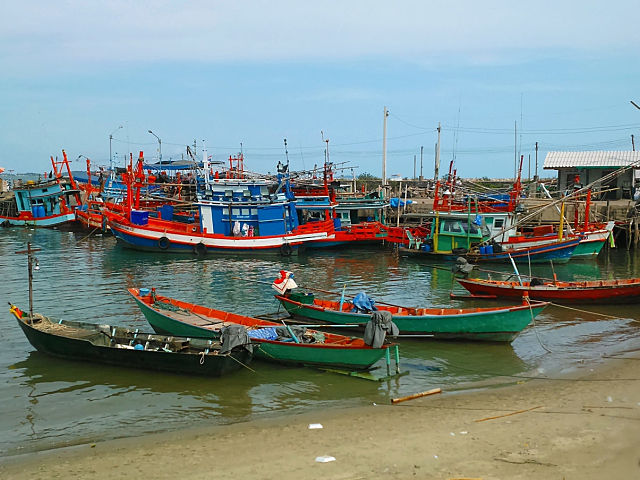
Five Projects Set to Improve Development in Thailand

Development Projects in ThailandEconomic development in Thailand has been increasing rapidly over the past 40 years. Poverty has declined considerably from 67 percent in 1986 to just 7.2 percent in 2015. The rate of economic recovery and the reignition of growth will both depend on how fast Thailand can address structural constraints. To this end, there is hope since, according to the World Bank, there are many opportunities available to help with development in Thailand and to help the many people in the country.
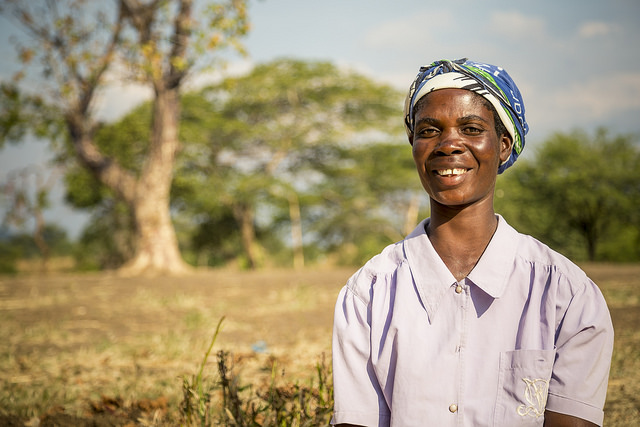
There are a variety of options that can help with development in Thailand such as improving the business environment, expanding trade through better integration with the global economy, implementing public investments to private capital, stimulating domestic consumption and improving the quality of public services across the country. Beginning in 2017, in order to be recognized as a developed country, Thailand set long-term economic goals that address many key issues in the country. The Minister of Transport in Thailand, Prajin Juntong, has created five development projects in to help boost the infrastructure sector and encourage growth and prosperity for the Southeast Asian country:

  1. Project one: Developing urban connection, which includes buses, sky trains, metros and taxis, to help improve connectivity between different parts of Bangkok and enhance travel for passengers. Advancing these forms of transportation will also promote the use of public transportation as opposed to private cars.
  2. Project two: Connecting railway tracks between cities within Thailand and with neighboring countries. The current railway system is a one-meter single track system but a one-meter dual-track system will be installed in its place. This will help ensure a timely and safe delivery of passengers and goods around the country. The targeted distance for this expansion is 3,000 kilometers or about 1,864 miles.
  3. Project three: Upgrading airports to accommodate the extra five million passengers at the Suvarnabhumi airport, Don Mueang airport and the Royal Thai Navy’s Utapao airport, all of which are international airports. Parts of this project include adding additional terminals and parking spots to airports and constructing extra runways. Smaller, more domestic airports like the one in Phuket will also receive upgrades so that there can be a high functioning airport available to take in the many travelers to the highly popular island.
  4. Project four: Expanding seaports in the southern part of Thailand, to and from the Andaman Sea, to expand trade between Europe and Asia. The main part of this project is a venture called the Dawei project, an international joint expansion project of seaports with Myanmar. Domestic ports like The Songkhla seaport and Chumporn seaport will be upgraded in the future and another new port, Pak Bala, will be built.
  5. Project five: Expanding roads and highways to increase public convenience and accommodate the increasing population. This project aims to connect people to newer economic zones. Recently, 12 of these economic zones have been added in Thailand so it is important that cities are connected to each other and economic areas are connected to neighboring countries.

Thailand’s economy is expected to develop further in 2018, with an increase of around 3.6 percent. Even faster growth may be possible in the long run with the inclusion of public infrastructure management. When these five development projects in Thailand are carried-out more opportunities will develop and economic growth will increase.  

–Lorial Roballo

Photo: Flickr

November 14, 2017
https://borgenproject.org/wp-content/uploads/borgen-project-logo.svg 0 0 Borgen Project https://borgenproject.org/wp-content/uploads/borgen-project-logo.svg Borgen Project2017-11-14 01:30:012019-11-21 01:45:21Five Projects Set to Improve Development in Thailand
Developing Countries, Global Poverty, Technology

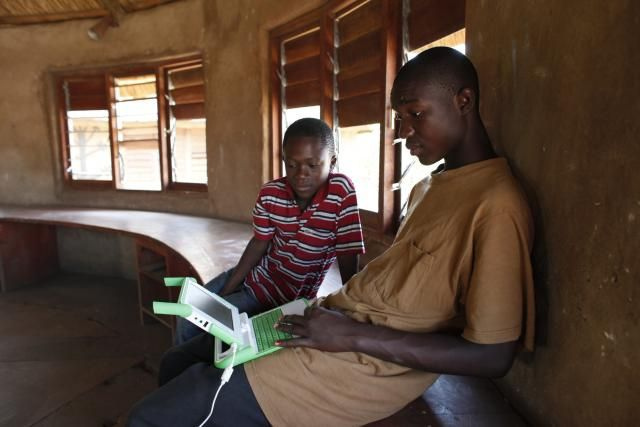
ZubaBox: An Innovation Bringing the Internet to Remote Areas

ZubaBox: An Innovation Bringing Internet to Remote AreasFor the technologically privileged, access to the Internet is considered a tool of our everyday lives. But out of the world’s entire population, only a third of people in developing countries have access to an Internet connection, according to a 2015 report by the International Telecommunications Union. Countries with no access to the Internet are disadvantaged economically, as they are do not have the knowledge and resources to widen their professional opportunities.

But the appearance of a container in remote areas, including refugee camps, has changed the lives of several marginalized communities. Countries such as Ghana, Kenya, Nigeria, Togo, Zambia and Zimbabwe were finally able to bring digital literacy into their neighborhoods through a shipping container, also called ZubaBox, converted into a “solar-powered Internet café or classroom”.

“Zuba” means “sun” in Nyanja, a common language spoken in Malawi and Zambia, which refers to the solar power by which the Internet hub functions. In addition to being environmentally friendly, solar power is crucial for remote populations who often lack the electricity to benefit from standard technologies. The ZubaBox constitutes an innovation that benefits the most remote communities with no access to a stable power supply.

The organization fueling this technology is Computer Aid International, who decided to design the ZubaBox to enhance the online presence of remote rural areas. In each container, they provide refurbished PCs, visualisation cards, monitors, keyboards, mice, an Internet connection, mobile chargers, a ventilation system and benches.
The box can contain enough components for up to 11 individuals, which brings isolated communities together and develops a sense of inclusion. It also enables every individual to grow personally and professionally, which ultimately benefits the neighborhood as a whole. In fact, David Barker, former chief executive of Computer Aid, spoke about the technology as beneficial for doctors who need to contact specialists in the nearest city hospital, school children who want access to educational material or even local people who are looking for ways to expand their professional outlets.

By May 2016, Computer Aid had already placed its 12th Zubabox in a suburb of Bogota, Colombia. Another project on Computer Aid’s agenda is to build a box in the Kakuma refugee camp in Kenya, where 150,000 people found refuge after fleeing 20 different African nations. For the largest refugee camps in the world, having a ZubaBox could enable them to open up to the world and provide them with the opportunity to rebuild their lives and find work once outside the camp.

– Sarah Soutoul

Photo: Flickr

November 9, 2017
https://borgenproject.org/wp-content/uploads/borgen-project-logo.svg 0 0 Borgen Project https://borgenproject.org/wp-content/uploads/borgen-project-logo.svg Borgen Project2017-11-09 07:30:352019-12-23 11:48:22ZubaBox: An Innovation Bringing the Internet to Remote Areas
Developing Countries, Development, Global Poverty

Is Urbanization in Developing Countries Reshaping the World?

UrbanizationSince 2013, the U.N. has celebrated October 31 as World Cities Day in support of global urbanization and sustainable urban development. This year’s theme of “Innovative Governance, Open Cities” highlights the important role of urbanization as a source of global development and social inclusion. Urbanization in developing countries contributes to poverty reduction, access to sanitation facilities and education equality if managed correctly.
Urbanization is the result of an increase in population in urban areas. Urban areas differ from rural areas due to numerical and occupational differences in population. For the most part, urban areas have more inhabitants with more industrial professions than the less populated, more agriculture-centric rural areas. Each country sets certain criteria to distinguish urban areas; “some countries define any place with a population of 2,500 or more as urban; others set a minimum of 20,000.”


These six numbers represent urban development in the world:

  • 54.5 percent
    In 2016, more than half of the world’s population resided in urban areas. From 30 percent in 1950, the urban population of the world has grown rapidly. An estimated 54.5 percent of the globe now resides in urban agglomerates. By 2030, 60 percent of the world is expected to reside in urban areas.
  • 33.2 million
    The biggest city in the world today, Tokyo, has a population of 33.2 million. Tokyo’s high population, over 10 million, qualifies the city as a megacity. In 1970, Tokyo and New York were the only megacities in the world. Today, Tokyo is one of 23 megacities, including 13 in Asia, four in Latin America and two each in Africa, Europe and North America.
  • $600 million
    UN-Habitat has set aside $600 million to focus exclusively on urbanization issues, including “growth of slums, inadequate and out of date infrastructure and escalating poverty and unemployment.” While urbanization brings many positive changes, the related potential for dislocation and destabilization is the focus of the UN-Habitat for a better urban future.
  • 99 percent
    According to the Center for Strategic and International Studies 2015 report, “nearly 99 percent of urbanization between now and 2050 will take place in the developing world.” The report maps out urbanization as an economic opportunity for donors of developing nations, as long as urban challenges are addressed.
  • 80 percent
    In 2013, the World Bank reported that over 80 percent of global goods and services are produced in cities. Just the year before, “large cities made up 33 percent of the world’s global population, but produced more than 55 percent of all global economic output.” The amount of goods and services produced in cities exceeds those produced elsewhere in the world.
  • 82 percent
    The most urbanized region in the world is Northern America, with 82 percent urbanization, according to the U.N. Latin America and the Caribbean follow with 80 percent urbanization and Europe with 73 percent urbanization. Africa and Asia are urbanizing faster than any other region. While they are mostly rural now, Africa and Asia are projected to become 56 and 64 percent urban respectively by 2050.

Urbanization is spreading across the world at a growing pace. If managed properly, urbanization in developing countries can help lift many people out of poverty by providing better access to jobs, education and services. Supporting this goal is a worldwide effort.

– Eliza Gresh

Photo: Flickr

November 8, 2017
https://borgenproject.org/wp-content/uploads/borgen-project-logo.svg 0 0 Borgen Project https://borgenproject.org/wp-content/uploads/borgen-project-logo.svg Borgen Project2017-11-08 07:30:412024-05-29 22:29:09Is Urbanization in Developing Countries Reshaping the World?
Developing Countries, Global Poverty

World Bank President Jim Yong Kim on Eradicating Poverty

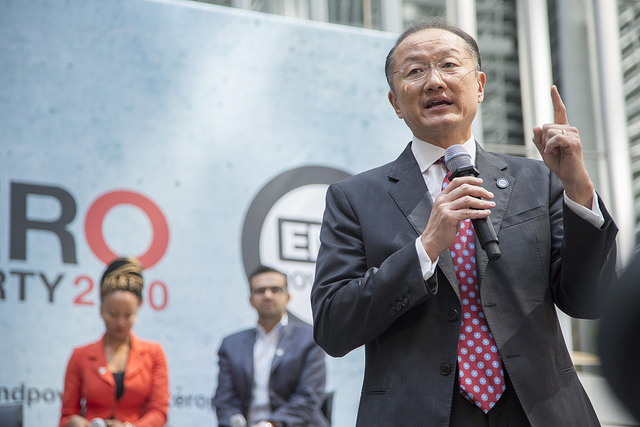
Jim Yong KimWorld Bank President Jim Yong Kim said at the start of his term in July 2012 that he wants to eradicate poverty by the year 2030. Jim Yong Kim is the 12th president of the World Bank Group, nominated by Barack Obama in 2012, and unanimously reappointed in September 2016 to an additional five-year term to head the global financial and technical assistance program. Kim established these twin goals to inspire the work he accomplished throughout his term: alleviating poverty by 2030 and increasing shared prosperity.
In a speech delivered at Stanford Graduate School of Business in 2015, Kim proposed that efforts be refocused on improving health in developing nations. If we want to end poverty and stimulate the global economy, redirecting efforts to improve healthcare systems is the best way to accomplish these goals. Kim wants to capitalize on the World Health Organization’s goal of reducing the number of stunted children in the world by 40 percent by 2025. Kim proposes to completely rid the world of cognitive impairments brought on by malnourishment and understimulation by 2030 as well.

The secretary is well on his way to achieving the goals he put in place at the start of his term. In a press conference held in October 2017, Kim revealed that over 800 million people have escaped the grip of poverty as a result of China’s poverty reduction efforts. The World Bank’s involvement with China will continue in the form of improving its healthcare system, promoting access to social services in rural regions and supporting China’s focus on increasing domestic consumption. Similarly, multicomponent efforts have reduced the world’s population who live on less than $1.90 a day from 1.86 billion to 767 million people. This means that nearly 1.1 billion people have been lifted out of extreme poverty since 1990.

In addition to these accomplishments, the World Bank also reached its target goal of disbursing $518 million to support countries affected by the Ebola outbreak in 2016. World Bank President Jim Yong Kim’s career has been dedicated to global health, education and ameliorating the conditions of the world’s poor. With these goals in motion, the year 2030 should be a beautiful one.

– Sloan Bousselaire

Photo: Flickr

November 7, 2017
https://borgenproject.org/wp-content/uploads/borgen-project-logo.svg 0 0 Borgen Project https://borgenproject.org/wp-content/uploads/borgen-project-logo.svg Borgen Project2017-11-07 07:30:382019-12-27 15:08:28World Bank President Jim Yong Kim on Eradicating Poverty
Developing Countries

Nanoly: Delivering Vaccines to Developing Countries

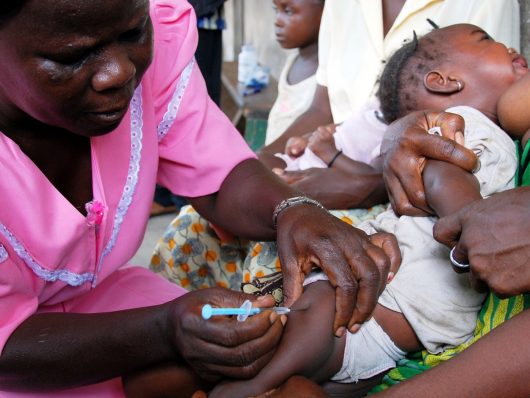
Delivering Vaccines to Developing CountriesIn the developed world, vaccines are readily available: they are kept refrigerated until they are needed in a doctor’s office or in a hospital. Unfortunately, delivering vaccines to developing countries is a big issue that needs to be addressed. Nanoly, a bioscience company, hopes to address the issue of vaccine transportation without refrigeration, through the use of its revolutionary polymer called NanoShield.

The proteins within a vaccine need to have a controlled environment to survive, thus, controlling storage temperature is the most important factor. The polio, measles and tetanus vaccines all need to be kept within a 35-45 degrees Fahrenheit temperature. These are also some of the most important vaccines that developing countries need.

If the vaccines are not stored in that temperature range, the proteins in the vaccine cease to function, rendering the vaccine useless.

The current “cold chain” method of delivering vaccines to developing countries requires the use of a chain of cold storage units that maintain the optimal temperature for vaccines during transport. However, the cold chain becomes difficult to maintain when it gets closer to rural areas due to the lack of electricity.

Nanoly’s creation is a new way to keep the vaccines temperature regulated and is more reliable than the cold chain. By blending the proteins with NanoShield, the polymer protects the proteins in the vaccines from outside temperatures.

During tests with high temperatures over a two week period, vaccines with NanoShield had an 88 percent efficacy rate while vaccines without it had only an 18 percent efficacy rate. The NanoShield protected the proteins and a large number of the vaccines were still usable. NanoShield can be applied to anti-viral vaccines, antibody drugs and therapeutics to help keep the temperature regulated.

It seems that there are also no adverse reactions to the polymer as well. Not only does the polymer protect the proteins from deteriorating due to high temperatures, it also does not need to be removed to administer the vaccine.

Delivering vaccines to developing countries can be difficult due to the lack of electricity. Thanks to Nanoly and their NanoShield polymer, delivering the vaccines becomes much more viable.

Developing countries need these vaccines to help protect their citizens from diseases like polio and measles. Nanoly can potentially save millions of lives thanks to the polymer they have developed.

– Daniel Borjas

Photo: Flickr

November 7, 2017
https://borgenproject.org/wp-content/uploads/borgen-project-logo.svg 0 0 Borgen Project https://borgenproject.org/wp-content/uploads/borgen-project-logo.svg Borgen Project2017-11-07 01:30:522024-12-13 17:58:31Nanoly: Delivering Vaccines to Developing Countries
Developing Countries, Global Poverty

Combating Global Poverty by Partnering With Local Artists

Local ArtistsIn the fight to end global poverty, people often think of just donating money and food to people in the developing world. While this is helpful, many other companies see the benefit in creating opportunities for people in impoverished communities throughout the world to earn a sustainable income that allows them to provide for their families and have something to look forward to. These are five companies that give local artists work and help impoverished communities with every purchase.

Pura Vida bracelets
Pura Vida is a bracelet company created by Griffin Thall and Paul Goodman in 2010 during a college graduation trip to Costa Rica. The two bought bracelets from bracelet makers Juan and Joaquin, who were living in poverty and selling bracelets to survive. Paul and Griffin decided to take 400 of Juan and Joaquin’s bracelets back home and they sold quickly, so they decided to partner with Juan and Joaquin to create Pura Vida. The company has since grown, providing full-time jobs for over 150 artisans around the world. The company has partnered with over 190 different charities and has raised $1,500,000.

Serengetee
Serengetee is a company that specializes in t-shirts with bold pockets made from fabrics from artisans in over 25 countries, which supports “artisans, their families and ancient fabric-making traditions.” The company also donates 10 percent of their profits to a range of grassroots causes.

Visible clothing
Visible is a clothing company that makes every step of the clothes-making process transparent, allowing customers to know exactly who made their clothes and know that they are treated fairly. The workers they hire are all from the developing world, because the company feels that since 98 percent of clothes in the United States are outsourced to these countries anyway, having their company work with these people but actually treat them fairly is a good way to help end poverty.

Krochet Kids
Krochet Kids was founded by three men who as teenagers liked to crochet their own hats for ski trips, and eventually began selling them at school. During college, one of the men traveled to Uganda and realized that teaching people in impoverished countries to crochet would allow them to sustain themselves and their families. They then traveled to Uganda to educate women on how to crochet. Since becoming a nonprofit in January 2008, Krochet Kids has employed over 150 people in Uganda and Peru, allowing them to work, get an education and receive mentorship.

Ten Thousand Villages
Ten Thousand Villages sells a variety of products, including pottery, baskets, ornaments, jewelry and clothing, created by people in communities throughout the developing world. Ten Thousand Villages is dedicated to providing good working conditions, long-term partnerships, fair pay, sustainability, and empowerment to their workers. Since being founded in 1946, Ten Thousand Villages’ employees have earned $140 million in sustainable income when they would otherwise be unemployed or underemployed.

By shopping with one of these companies, you can know that your money is going toward the fight to end global poverty while supporting local artists.

– Téa Franco

Photo: Flickr

November 3, 2017
https://borgenproject.org/wp-content/uploads/borgen-project-logo.svg 0 0 Borgen Project https://borgenproject.org/wp-content/uploads/borgen-project-logo.svg Borgen Project2017-11-03 07:30:062024-05-27 09:18:15Combating Global Poverty by Partnering With Local Artists
Developing Countries, Development, Global Poverty, Technology

Smart Developments Network: Innovations Against Poverty

Innovations Against PovertyEven with active funding partners, some development agencies may fall short if lacking internal infrastructure. While funding is certainly an important aspect of achieving sustainable development goals, it may be just as important to ensure that the strategists and support for development projects are up to date and relevant. SNV: Smart Development Works is a nonprofit that works toward providing such resources through an expansive network of professionals in a variety of different sectors. SNV works with policy experts, local governments, private business and institutes of higher learning to provide lasting differences in extremely poor communities.

SNV was founded in the Netherlands in the mid-’60s and has since established itself in Asia, Africa and Latin America. Expertise in sectors relating to agriculture, energy, water, sanitation and health have helped solve problems locally and provide sustainable solutions to poverty. SNV is funded by the Swedish International Development Agency and managed in partnership with BoP Innovation Center and Inclusive Business Sweden.

SNV has several projects on the ground and one in particular worth noting. Innovations Against Poverty is working in the private sector to develop products and services that can aid in fighting global poverty. This particular mission has focused its efforts on younger demographics as well as women in order to empower groups to shift gender and age paradigms. Companies can apply for the Innovations Against Poverty program to get funding that incentivizes innovation, entrepreneurship and consumption of goods and services in their communities.

Innovations Against Poverty was created with the idea that the private sector is a powerful mechanism for creating jobs and increasing incomes while also providing necessary goods and services to a community. Low-income markets in impoverished communities contain business opportunities that can be sustainably exploited with adequate startup funds and resources. Innovations Against Poverty exists to stimulate development where it otherwise would not exist, with financial support ranging from $60,000 to $200,000. Innovations Against Poverty gains a non-reimbursable capital return and provides advisory support for its investors. This support includes training and coaching from international experts. The program also narrows its support to cases that are not seen as “risk free”, thereby investing in businesses that may not receive support in most cases.

Innovations Against Poverty has registered over 1300 companies since its inception and is expected to grow. These innovative solution investments have primarily been made in Cambodia, Ethiopia, Uganda, and Zambia, with a focus in the agriculture and energy sectors. With continued success, Innovations Against Poverty can foster development in more countries all over the world.

– Casey Hess

Photo: Flickr

November 3, 2017
https://borgenproject.org/wp-content/uploads/borgen-project-logo.svg 0 0 Borgen Project https://borgenproject.org/wp-content/uploads/borgen-project-logo.svg Borgen Project2017-11-03 01:30:292024-05-29 22:28:03Smart Developments Network: Innovations Against Poverty
Developing Countries, Development, Global Poverty

The Importance of UNESCO

Importance of UNESCOThe United Nations Education, Scientific and Cultural Organization, better known by its acronym, UNESCO, is under scrutiny after the United States stated it will withdraw from the organization by December 31, 2018. Founded in 1945 in response to the horrific aftermath of both World War I and II, the organization currently has 195 member states and 10 associated states.

UNESCO Director-General Irina Bokova said the U.S. withdrawal would be a loss to the U.N. and “a loss to multilateralism…At the time when the fight against violent extremism calls for renewed investment in education, in dialogue among cultures to prevent hatred, it is deeply regrettable that the United States should withdraw from the United Nations agency leading these issues…”

“Building peace in the minds of men and women” is UNESCO’s slogan and is rooted in efforts to coordinate international cooperation in its named components: education, science and culture, as well as communication. These efforts made by the United Nations agency have a goal to mobilize societies across the globe so that each child and citizen “…has access to quality education; a basic human right and an indispensable prerequisite for sustainable development. May grow and live in a cultural environment rich in diversity and dialogue, where heritage serves as a bridge between generations and peoples. Can fully benefit from scientific advances; and can enjoy full freedom of expression; the basis of democracy, development and human dignity.”

The importance of UNESCO is highlighted by an interview with Jaroslava Moserova, president of the General Conference in 1999, who was convinced of the role that the organization could play in a post-Cold War world. She said in the interview that “The aim of UNESCO is to improve the quality of life. It is not a political organization at all… the main pillar of UNESCO is education, access to education. When you hear the delegates from different parts of the world, different cultures, different traditions, there is one thing all of them agree on, and that is that the only tool for better or worse is education.”

The note Moserova made when acknowledging that education is an indispensable tool is only one of the ways to see the importance of UNESCO. The other pillars of UNESCO also point to the significance of their work and efforts. When considering that preserving heritages and promoting scientific advancement are the other focuses of the organization, the importance of UNESCO and the benefits of the agency can be subtle. Seeing as how encouraging positive cultural experiences, scientific development and educational growth are all components that lead to overall poverty reduction and socioeconomic advancement for countries.

UNESCO puts an emphasis on children, and as UNICEF reiterates, reducing poverty begins with children and the things that improve their quality of life. Education is one of the most important pieces, and UNESCO’s efforts to improve it benefit people the world over.

– Gabriella Paez

Photo: Google

November 3, 2017
https://borgenproject.org/wp-content/uploads/borgen-project-logo.svg 0 0 Borgen Project https://borgenproject.org/wp-content/uploads/borgen-project-logo.svg Borgen Project2017-11-03 01:30:152024-06-04 01:08:26The Importance of UNESCO
Developing Countries, Development, Education, Global Poverty

Education Superpowers and What We Can Learn from Them

Education_SuperpowersIn 2015, 72 countries participated in The Organization for Economic Cooperation and Development’s (OCED) triennial Programme for International Student Assessment. The test examines 15-year-olds’ aptitude in reading, math and science. Singapore, China, Japan, South Korea, Estonia, Canada and Switzerland are consistently among the top 10 performing countries in all subjects, with Singapore ranking number one across the board.

Science

  1. Singapore
  2. Japan
  3. Estonia
  4. Chinese Taipei
  5. Macao (China)

Reading

  1. Singapore
  2. Canada
  3. Ireland
  4. Estonia
  5. South Korea

Math

  1. Singapore
  2. China
  3. Japan
  4. South Korea
  5. Switzerland

What makes these countries different from low performing ones? Four notable components emerge from experts’ conversations about what makes education superpowers successful.

  1. Equality and a strong education policy
  2. High-quality instructors
  3. Parental involvement
  4. Objectivity

Equality and education policy
There is only a narrow socioeconomic discrepancy between schools in the top-ranked countries, proof of a remarkably consistent educational system. For example, Canadian students score high regardless of being an economically advantaged or disadvantaged student.

In Macao and Vietnam, students with unfavorable socioeconomic conditions still outperform advantaged students internationally on PISA exams, citing a successful and consistent educational framework as one of the reasons for this.

High-quality teachers
The support and training for teachers in education superpower countries is extensive. These countries tend to have high salaries and comprehensive policy frameworks that support teachers and reflect the importance of teacher quality and preparation.

In a three-year study, the Stanford Center for Opportunity Policy in Education’s leading researcher Linda Darling-Hammond found that countries that best prepare their students focus on two things: building an effective and long-term educational system and professionalizing the teaching career.

The qualifications and training process of becoming a teacher are denser, but systems are in place to make this a more affordable process. In Canada, teachers are paid salaries comparable to that of engineers and other societal professionals. Singaporean primary school teachers earn an average of S$51,000 annually.

Parental involvement
In a comparative study reading parents’ involvement in the learning process between American and Chinese students, Cecilia Sin-Sze Cheung and Eva Pomerantz found that parental involvement was positively associated with the child’s achievement in both countries, especially in the education superpower of China.

Andreas Schleicher, OECD’s education director, argues that Singapore’s success is in part due to the high priority that parents in Asian countries put on education. This ultimately contributes to their child’s educational success and achievements.

Education superpowers don’t buy into the myths
Contrary to popular belief, a high rate of immigrants does not necessarily contribute to a lower success average in schools. In Canada’s case, embracing immigrant students has contributed to the overall success of the Canadian educational system.

OCED acknowledges that counties with high immigrant student populations are not associated with poor student performance.

The cost of being an education superpower
The top-performing countries also rank high on the World Health Organization’s adolescent suicide rate chart. Hong Kong, Japan and South Korea all near the top of both lists. Countries such as Albania and Peru that are among PISA’s lower test performers have a higher proportion of students who enjoy school.

Though preparing students for a global economy and cultivating abilities to compete on a universal level is worth applauding, it may be at the cost of happiness. The most important things for education superpowers to work on are reducing the stress put on students and making their education enjoyable as well as enriching.

– Sloan Bousselaire

Photo: Flickr

November 2, 2017
https://borgenproject.org/wp-content/uploads/borgen-project-logo.svg 0 0 Borgen Project https://borgenproject.org/wp-content/uploads/borgen-project-logo.svg Borgen Project2017-11-02 01:30:132024-05-29 22:27:58Education Superpowers and What We Can Learn from Them
Developing Countries, Education, Global Poverty

Education in Cabo Verde Successes: Enrollment

Education in Cabo Verde

Cabo Verde is a small nation that consists of a group of islands just under 400 miles off Africa’s northeast coast. Nine of the 10 islands are inhabited and they are divided into two groups. The Barlavento group in the north includes the islands of Santo Antão, São Vicente, Santa Luzia, São Nicolau, Sal and Boa Vista. The Sotavento group in the south includes the islands of Maio, Santiago, Fogo and Brava.

According to a 2014 report by the World Bank, 3 percent of primary school aged children were not enrolled in school. Girls were less likely to receive an education in Cabo Verde; only 1 percent of primary school aged boys were not in school compared to 4 percent of girls. The rate of completion of primary education in Cabo Verde is 99 percent, which shows that the small nation is making progress towards its goal of universal primary education.

Compared to other low to middle-income nations, access to education in Cabo Verde ranked among the 85th percentile, but it only ranked at the 61st percentile in learning. Despite this, the literacy rate of the youth population was 98 percent, which was higher than the average in other lower to middle-income nations. This is good news for education in Cabo Verde, because literacy is a necessary skill for accessing higher levels of education.

Although Cabo Verde has made great strides in access to education, there are still some obstacles to overcome. One problem for education in Cabo Verde is that many students and teachers alike speak Creole at home and have a weak command of Portuguese, which is the language used in the academic setting. Aside from that, there is not enough spending on supplies, books and lunches, and there is also a high rate of repetition. Students are more likely to repeat grade two during their primary education. The rate of repetition in grade two was 18 percent in Cabo Verde, which was double the average of other primary grades.

Cabo Verde‘s high enrollment and literacy rates show that education is a priority in the country. By addressing its students’ obstacles to learning, it can ensure that they get the most out of the education they are receiving.

– Fernando Vazquez

Photo: Google

November 1, 2017
https://borgenproject.org/wp-content/uploads/borgen-project-logo.svg 0 0 Borgen Project https://borgenproject.org/wp-content/uploads/borgen-project-logo.svg Borgen Project2017-11-01 07:30:332024-05-29 22:27:56Education in Cabo Verde Successes: Enrollment
Page 114 of 157«‹112113114115116›»

Get Smarter

  • Global Poverty 101
  • Global Poverty… The Good News
  • Global Poverty & U.S. Jobs
  • Global Poverty and National Security
  • Innovative Solutions to Poverty
  • Global Poverty & Aid FAQ’s
Search Search

Take Action

  • Call Congress
  • Email Congress
  • Donate
  • 30 Ways to Help
  • Volunteer Ops
  • Internships
  • Courses & Certificates
  • The Podcast
Borgen Project

“The Borgen Project is an incredible nonprofit organization that is addressing poverty and hunger and working towards ending them.”

-The Huffington Post

Inside The Borgen Project

  • Contact
  • About
  • Financials
  • President
  • Board of Directors
  • Board of Advisors

International Links

  • UK Email Parliament
  • UK Donate
  • Canada Email Parliament

Get Smarter

  • Global Poverty 101
  • Global Poverty… The Good News
  • Global Poverty & U.S. Jobs
  • Global Poverty and National Security
  • Innovative Solutions to Poverty
  • Global Poverty & Aid FAQ’s

Ways to Help

  • Call Congress
  • Email Congress
  • Donate
  • 30 Ways to Help
  • Volunteer Ops
  • Internships
  • Courses & Certificates
  • The Podcast
Scroll to top Scroll to top Scroll to top