• Link to X
  • Link to Facebook
  • Link to Instagram
  • Link to TikTok
  • Link to Youtube
  • About
    • About Us
      • President
      • Board of Directors
      • Board of Advisors
      • Financials
      • Our Methodology
      • Success Tracker
      • Contact
  • Act Now
    • 30 Ways to Help
      • Email Congress
      • Call Congress
      • Volunteer
      • Courses & Certificates
      • Be a Donor
    • Internships
      • In-Office Internships
      • Remote Internships
    • Legislation
      • Politics 101
  • The Blog
  • The Podcast
  • Magazine
  • Donate
  • Click to open the search input field Click to open the search input field Search
  • Menu Menu

Archive for category: Developing Countries

Information and stories about developing countries.

Developing Countries, Global Poverty, Malaria

PMI Expansion Malaria Treatment for 90 Million More People

PMI ExpansionIn late September, the U.S. Agency for International Development (USAID) announced that they would be leading an enterprise to expand the President’s Malaria Initiative (PMI). The PMI expansion is expected to bring life-saving malaria prevention and treatment to four additional countries: Cameroon, Cote D’Ivoire, Niger and Sierra Leone. With these additions, PMI will have programs operating in 24 Sub-Saharan African countries where malaria poses a genuine public health threat.
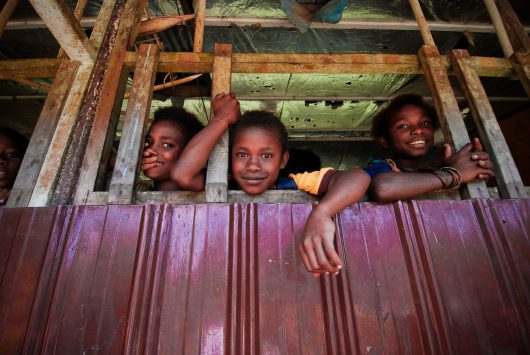
Launched in 2005, PMI is an interagency initiative in collaboration with USAID and in conjunction with the U.S. Centers for Disease Control and Prevention. PMI was originally established with the goal of cutting mortality caused by malaria in half across 15 African countries. This came during a time when the U.S. decided to put malaria control at the forefront of its global aid agenda. It seeks to approach this goal by increasing concentration on four essential malaria treatment and prevention measures: insecticide-treated mosquito nets, indoor residual spraying, accurate diagnoses and preventative prenatal treatments. With its focused strategy, PMI has contributed to the aversion of 6.8 million malaria-related deaths between 2001 and 2015. In 2016 alone, PMI protected over 16 million people by spraying homes with insecticide and distributed 42 million bed nets.

In total, approximately 480 million people have benefited from the work being done by PMI. This latest PMI expansion will bring malaria treatment and prevention to an additional 90 million people. This is spectacular news given how life-threatening the disease still is, even after so much progress has been made. Today, malaria still takes the life of a child every 30 seconds, amounting to a staggering 3,000 children every single day. Though heartbreaking, this statistic should not come as a surprise, considering 40 percent of the world’s population lives in high-risk regions for malaria. With the continued effort aid agencies like PMI and USAID, that number is projected to decrease significantly. Hopefully, sometime in the coming years, the world will witness the complete eradication of malaria.

– Micaela Fischer

Photo: Flickr

October 31, 2017
https://borgenproject.org/wp-content/uploads/borgen-project-logo.svg 0 0 Borgen Project https://borgenproject.org/wp-content/uploads/borgen-project-logo.svg Borgen Project2017-10-31 07:30:492024-05-29 22:27:53PMI Expansion Malaria Treatment for 90 Million More People
Developing Countries, Global Poverty, Hunger

Organizations Working to Relieve Hunger in Guinea

Hunger in GuineaSituated in West Africa, Guinea is a country populated with around 12 million people. As in many impoverished countries, hunger and malnutrition are issues primarily affecting the rural areas of the nation. Over half of the population lives in extremely poor conditions, and 17.5 percent are food-insecure. Coupled with poor socioeconomic conditions and a weak government, natural disasters and disease further add to the chronic malnourishment issue. There are several programs, however, that have contributed to alleviating the consequences of hunger in Guinea over the past few decades.

The World Food Programme (WFP) has been working on reducing hunger in Guinea since the mid-1960s. In the time the organization has spent in Guinea, WFP has effectively improved nourishment by promoting education programs in schools, providing nourishment to women and children specifically with HIV, tuberculosis and Ebola and promoting locally grown foods. Another area of focus for food insecurity that the WFP is addressing is access to healthcare supplies by supporting government incentives for air transport.

Similarly, Action Against Hunger (AAH) is helping Guinea move forward in food security and nutrition. AAH began work in the mid-1990s and has worked to fight disease such as cholera, while also promoting better practices relating to hunger in Guinea. AAH assisted 264,124 people in 2016.

Earlier in 2017, two native Guineans were celebrated on International Women’s Day for their contributions to the fight against hunger in Guinea. The food security, resiliency and archeology project team of the Stop Hunger foundation awarded the two women for their work in involving local parboiling in schools in rural areas that experience food-insecurity. Supported by local government, the program is an excellent example of mobilization of local communities and the effectiveness that larger nonprofits have in sparking efforts toward reliving hunger in Guinea.

– Casey Hess

Photo: Flickr

October 31, 2017
https://borgenproject.org/wp-content/uploads/borgen-project-logo.svg 0 0 Borgen Project https://borgenproject.org/wp-content/uploads/borgen-project-logo.svg Borgen Project2017-10-31 07:30:002024-05-29 22:27:54Organizations Working to Relieve Hunger in Guinea
Developing Countries, Global Poverty, Water Quality

Suny Clean Water Solar Still

Suny Clean WaterWater is one of the most basic human necessities, yet millions of people lack access to clean drinking water. Fortunately, researchers are coming up with new solutions every day to help create purified drinking water in impoverished countries to help resolve this issue.

Throughout the years there have been many methods implemented to purify water such as heating, distillation and boiling. Researchers at the State University of New York have created a fast and cheap solar still that could potentially provide drinking water to those who currently don’t have access.

The solar still is first set on top of any body of water. After a few minutes, the water that goes inside the still heats up, begins to evaporate and becomes trapped in the clear topping. Once the trapped evaporated water cools down, it is then collected in a vessel free of impurities.

The method itself is not that innovative. Solar stills have been around for thousands of years. What makes the Suny Clean Water solar still different is how efficiently and cheaply it purifies water.

A large number of solar stills use solar nanomaterials on the bottom to collect heat and energy from the sun. Unfortunately, these nanomaterials can end up making the solar still cost up to $200 per square meter. At that price, it cannot be sold in impoverished countries. Not only that, these expensive solar stills do not efficiently use solar energy and can only lead to one liter of water a day. These issues prevent the stills from effectively purifying drinking water in impoverished countries.

Suny Clean Water has found a solution to both of these problems. The biggest issue is the cost of creation. Given that the nanomaterials drive up the price, the researchers looked for a way to bring it down. The solution they found was a black fiber-rich paper, similar to what is used to print money. It functions similarly to the nanomaterials, absorbing sunlight to assist in evaporating the water.

This black material is much cheaper than the nanoparticle. It would only cost about $2 per square meter, which is 1/100th of the price of the nanoparticles per square meter. That low cost could lead to each unit of this solar filter costing only $5 once it is completely put together using the black fiber paper.

Not only is this solar still model cheaper to produce, it is also energy efficient. The Suny Clean Water solar still has 88 percent thermal efficiency to evaporate the water. According to Qiaoqiang Gan, the lead author of the study, that is nearly three times as efficient as natural evaporation. Due to how efficiently water is evaporated, this new solar still can end up providing up to one liter of water an hour.

This new solar still took all the issues that previous stills faced and conquered them. It is cheap and provides water relatively quickly. Currently, it is not commercially available but Suny Clean Water hopes that will soon change. Once it becomes available, creating purified drinking water in impoverished countries will become affordable and easy.

– Daniel Borjas

Photo: Pixabay

October 31, 2017
https://borgenproject.org/wp-content/uploads/borgen-project-logo.svg 0 0 Borgen Project https://borgenproject.org/wp-content/uploads/borgen-project-logo.svg Borgen Project2017-10-31 01:30:512019-12-31 12:41:06Suny Clean Water Solar Still
Children, Developing Countries, Education, Global Poverty, Health

Child Vision: Glasses for Children in Impoverished Countries

Child Vision: Glasses for Children in Impoverished CountriesThere are 100 million young people in the world that have poor vision, and about 60 percent of them lack access to corrective glasses. Glasses are considered a luxury in these parts of the world. This has a big impact on kids in school, as they cannot see the blackboard clearly and lose about half a year of schooling as a result. Child Vision glasses are a cheap alternative to normal prescription glasses for children in impoverished countries.

Child Vision glasses are different from conventional glasses because they are adjustable. Each lens is actually two lenses with space in the middle. After taking a simple eye chart test, kids put on the Child Vision glasses and they can adjust it themselves. They cover one eye and turn a knob that will adjust the glasses.

The knob adjusts the liquid that is inside the lenses. The liquid causes the lenses to expand or contract, thus adjusting the prescription of the glasses. Kids turn the knob until they can see clearly. Once they can see clearly, they take off the adjustors to seal the prescription. Unfortunately, that means that kids only have one opportunity to correct their vision, but it seems that the success rate is high.

Out of all the users of adjustable glasses, 92 percent of them were able to correct their vision. One of the main reasons why glasses are considered a luxury is because of their price. The average price for glasses is about $196. The creators of Child Vision recognized this problem and worked to make the adjustable glasses affordable for those in the developing world. The average cost for Child Vision glasses is €16, or about $19.

One of the best things about these glasses is that they do not need an optometrist to correct their vision. Anyone with basic training can administer an eye chart exam to help kids learn if they need glasses.

Thanks to Child Vision, glasses for children in impoverished countries are now available. These low-cost adjustable glasses are easy to adjust and give to kids. Child Vision is giving kids the glasses they need so they can better participate in school and make the most of their education.

– Daniel Borjas

Photo: Flickr

October 27, 2017
https://borgenproject.org/wp-content/uploads/borgen-project-logo.svg 0 0 Kim Thelwell https://borgenproject.org/wp-content/uploads/borgen-project-logo.svg Kim Thelwell2017-10-27 07:30:322020-01-10 12:30:45Child Vision: Glasses for Children in Impoverished Countries
Developing Countries, Education, Global Poverty, Hunger, Women and Female Empowerment

10 Educational Obstacles Throughout the World


In a perfect world, education would be free and easily accessible for citizens of all countries. As education seems to be unattainable for a lot of people in certain countries, there are a lot of people and organizations that want to help, but just do not know how or they  may not understand the many obstacles to obtaining an education. Here are 10 obstacles that citizens around the world struggle with when trying to obtain an education.

Classrooms
Finding an adequate space to teach students can be one of the major issues countries find when looking to start a school. Often, without a large enough teaching space, there are overcrowded classrooms or teachers are forced to teach outside, in which case they are not in a proper learning environment. The existing classrooms and buildings are sometimes poorly built and falling apart, lacking proper facilities such as toilets and water.

Learning Materials
Tools and materials students need access to in order to have a decent education are hard for them to obtain, often because living in poverty means that their families simply cannot afford them. A lot of textbooks are old and in bad condition and may be shared by six or more students. Not only do the students need proper materials, but the teachers often lack these supplies as well. Lesson plans and chalkboards may seem like basic materials, but a lot of countries lack these essentials for the classroom.

Expenses
Fees for tuition, school uniforms, transportation, supplies and any other fees add up very quickly. For families living on a low household income, this means that school is not an option for them; aside from this, these families often require their children to work instead of spending time in school.

Gender
Females are about two and a half times more likely to not attend school than males in conflict-affected countries. Therefore, even being born a female can prevent a student from obtaining an education. Often times this is due to the risk of a violent attack when attempting to attend class, an early marriage or pregnancy or discrimination. Some countries discriminate against women and girls from going to school because of longstanding social beliefs that men dominate women.

Rural Living
Children and students living in rural areas are at a disadvantage when it comes to their education. The distance is much farther than those who live in the city and closer to the schools, and it can be hard to find proper transportation to and from class.

Funding
A lot of poor countries do not receive enough government funding to establish a school, and often, the existing schools are not well built or sanitary. In some instances, there are not even private restrooms for females to use and this can prevent them from attending school.

Disabilities
Developmental disabilities are common of children in developing countries. Due to these – often cognitive – disabilities, families often suffer from an economic and social disadvantage. These children may not be able to learn and retain information properly, and therefore may have a hard time keeping up in school. This can prevent the child from attending school in general.

Teachers
Filling teaching positions is one of the many educational obstacles that countries face. Unfortunately, for there to be universal primary education, there would need to be 28.5 million new teachers by the year 2030. A lot of educators are given a class that contains way too many kids, with a variety of languages being spoken and not many materials to use.

Hunger
Malnutrition is known to make children very ill and hurt their immune system. Hunger can also cause things like anxiety and depression as well as behavioral problems, which can result in difficulty focusing. Not eating enough can impair childrens’ development and their achievement and can cause psychological problems.

War Zones
Education becomes less important when living in a war zone. An estimated 28 million children – 42 percent of the world’s total – do not have access to education, as they are living in war zones. Governments often donate and help with food, water and shelter, as the primary needs during an emergency, and education is an afterthought.

Although there are many obstacles prohibiting educational attainment around the globe, many of them can themselves be prevented. There are so many different organizations that people throughout the world can choose from to contribute their time to or donate to. Save the children, an organization founded in the U.S., was able to help over 13 million children receive an education in 2016. This is evidence that our donations and contributions through charities are indeed effective and changing lives, and that we are able to tackle these obstacles one by one.

– Chloe Turner

Photo: Flickr

October 27, 2017
https://borgenproject.org/wp-content/uploads/borgen-project-logo.svg 0 0 Kim Thelwell https://borgenproject.org/wp-content/uploads/borgen-project-logo.svg Kim Thelwell2017-10-27 01:30:352024-05-29 22:28:0210 Educational Obstacles Throughout the World
Developing Countries, Development, Global Poverty

Innovations for Poverty Action Conducts Life-Changing Study

Innovations for Poverty Action Conducts Research That Changes LivesWhen people donate money to nonprofits, they want to know that their money is being used well. The same goes for governments allocating funds for international aid. While money intended for alleviating poverty is rarely wasted, there are many different ways the funds could be used to help those in need. Sometimes, it is not clear what program the money should be put towards. Thankfully, there are organizations such as Innovations for Poverty Action (IPA) that are dedicated to researching how to best help the poor.
IPA finds evidence of what works to help the poor and helps turn that evidence into better programs and policies. Working with top researchers in the field, IPA conducts randomized controlled trials. This method allows researches to isolate the effects of a program from other factors. Researchers will assign participants to separate groups, at random. One or more groups, known as “treatment” groups, receive a program and another group functions as the “control” group.

IPA develops strong connections in the countries in which they conduct research. These partnerships, along with a knowledge of local contexts, help make their research projects successful. Their teams work in 20 countries, with various NGOs and government institutions. IPA has more than 1,000 research staff who conduct research on the ground. Studies can last from a few months to years or even decades.

Jeffrey Mosenkis, a policy communications manager at IPA, told the Borgen Project that one IPA study in particular strikes him as particularly influential: a study on school-based deworming conducted from 1998 to 2001. The study took place within 75 primary schools in Busia, Kenya. The school-based deworming reduced serious worm infections by 61 percent and reduced school absenteeism by 25 percent. The study only cost $0.60 per child per year. A long-term follow-up study found that the deworming increased the rate at which girls passed their secondary school entrance exam by 9.6 percent and increased the likelihood that men would work in higher-wage jobs than their peers or engage in entrepreneurial activities. School-based deworming campaigns have expanded into Ethiopia, India and Kenya, reaching over 200 million children. Since then, researchers have also discovered that treating kids for parasites also helps their siblings do better in school.

“I think it was also an eye opener for the field of development, says Mosenkis, “because it showed that one of the most cost-effective education interventions was actually a health intervention, and helped sparked interest in using data and evidence to find the most effective programs, which might not be the ones we’d normally think of.”

Other important studies conducted by IPA include improving financial behavior with a tablet app, improving math skills in Paraguay, reducing child mortality with health promoters in Uganda and using mobile technology to fight malaria. These and other studies are conducted in places all over the globe. Sometimes the exact location of the study can present unique challenges. “It’s not just the country but the local area,” says Mosenkis, “how good the infrastructure, like the roads are, or electricity and phone access, that makes more of a difference in our day-to-day work collecting data than the national picture.”

IPA was started by Dean Karlan, after traveling throughout Latin American before grad school. What began originally as an idea pitched by Karlan to his graduate advisers at MIT became a nonprofit organization bridging the gap between academia and development policy in practice.

IPA plans to continue building on what it has already achieved. The plan is to continue creating useful evidence to answer the questions of decision-makers at the front lines of development. The work of IPA has been and will continue to be instrumental in improving the lives of the global poor.

– Brock Hall
Photo: Flickr

October 27, 2017
https://borgenproject.org/wp-content/uploads/borgen-project-logo.svg 0 0 Borgen Project https://borgenproject.org/wp-content/uploads/borgen-project-logo.svg Borgen Project2017-10-27 01:30:342020-01-10 12:33:57Innovations for Poverty Action Conducts Life-Changing Study
Developing Countries, Education, Global Poverty

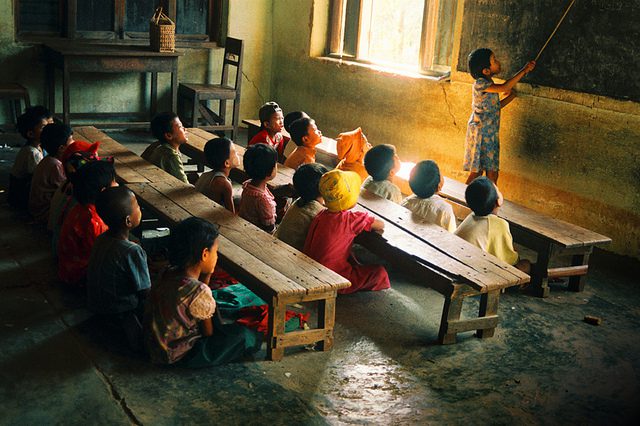
Seven Things to Know About Education in Myanmar

Education in Myanmar

Due to a variety of factors, the access to quality education in Myanmar is generally poor. Below are seven things everyone should know about education in Myanmar.

  1. The amount of money invested into education in Myanmar is low. Only 1.3 percent of the country’s GDP is allocated to education. This is lower than the average reported by the Organization for Economic Cooperation and Development. Myanmar now ranks 164th out of 168 by the U.N. Human Development Index for public spending on education.
  2. In the 1940s and 1950s, Myanmar had one of the highest literacy rates out of all of the countries in Asia. Compared to its counterparts, Myanmar was expected to be one of the fastest developing areas in the region. However, a lack of funding has since decreased the access to quality education in Myanmar.
  3. Students do not get to choose what they study. Even if students choose to pursue secondary education, they have little choice in terms of their area of study. Students will be assigned to study a subject based on their previous test scores, even if the area they are forced to go into does not provide many job opportunities.
  4. Education in Myanmar is only mandatory for five years. After the five required years, many students drop out of school due to family financial struggles. At 50 percent, the number of kids enrolled in secondary education in Myanmar is about half of the enrollment percentage of secondary school students in the United Kingdom.
  5. Politics play a significant role in access to quality education in Myanmar. After trying to pass an education bill proposed in 2014 – that would give citizens less autonomy over their education – many students protested against the government. Though their behavior might have had them arrested in the past, they were successful in getting the government to reconsider the education bill, which was passed in 2015.
  6. The Quality Basic Education Program (QBEP) and UNICEF are working to improve access to education for all children in Myanmar. The QBEP strives to provide quality education services to 34 areas in Myanmar. Of QBEP’s aims, one of them is to provide help to children and communities that are the most disadvantaged.
  7. Over recent years, investment in education has improved. In a span of only two years, from 2012 to 2014, public spending on education in Myanmar increased by 49 percent.

Though the investment in education in Myanmar has improved in recent years, there is still a lot of progress to be made within the country’s education system. Many organizations, such as QBEP and UNICEF, are taking steps in the right direction by working to provide better access to education for all children in Myanmar.

– Haley Rogers

Photo: Flickr

October 26, 2017
https://borgenproject.org/wp-content/uploads/borgen-project-logo.svg 0 0 Borgen Project https://borgenproject.org/wp-content/uploads/borgen-project-logo.svg Borgen Project2017-10-26 01:30:252024-06-07 05:07:47Seven Things to Know About Education in Myanmar
Developing Countries, Development, Global Poverty

The Need for Sustainable Advancement in Developing Countries

Sustainable Advancement in Developing CountriesMore countries are becoming developed, according to the 2016 Human Development Report done by the U.N. Development program. People are living longer, there are more social service programs and more children are enrolled in school. There is still more progress to be made in developing countries but, more than ever before, more countries are making significant advancements. While developing countries start to industrialize, it is important to keep in mind the environmental costs caused by more emissions in the air. To cut down on emission levels, it is important to invest in sustainable advancement in developing countries, so their economies can still grow but they can cut down on pollution at the same time.

According to CAIT Climate Data Explorer, there are a few developing countries – including Indonesia, India and Brazil – that are on the list of top 10 highest emitters of greenhouse gases. Additionally, CAIT’s 2017 report analysis shows that all developing countries contribute 60 percent of global emissions. This means that developing countries are growing industrially, but it also means there is a more negative impact on the environment that comes with this growth. In compliance with the Paris Agreement, developed countries are initiating programs to be more sustainable, so it is important to invest in sustainable practices in developing countries as well.

Sustainable advancement in developing countries is not hard to achieve. For example, the Deep Decarbonization Pathways Project by ClimateWorks is a global collaboration program that identifies problems of carbon emissions and finds solutions, while still sustaining economic growth. Research done by the World Resource Institute shows that 21 countries have reduced their greenhouse gas emissions by using sustainable practices, while still maintaining economic growth.

Knowing how beneficial sustainability can be for economic growth as well as for the environment, the U.N. has adopted Sustainable Development Goals in 2015. These goals are aimed at increasing human prosperity by giving access to education and equal rights, but balancing this with sustainable practices that will protect our planet. By combating these two issues at once, programs such as the Sustainable Development Goals will help developing countries prosper.

– Deanna Wetmore

Photo: Flickr

October 26, 2017
https://borgenproject.org/wp-content/uploads/borgen-project-logo.svg 0 0 Borgen Project https://borgenproject.org/wp-content/uploads/borgen-project-logo.svg Borgen Project2017-10-26 01:30:012024-05-29 22:27:53The Need for Sustainable Advancement in Developing Countries
Developing Countries, Development, Global Poverty

6 Effective Health Innovations for Underdeveloped Areas

Health InnovationsMedical equipment can be very expensive, especially for hospitals and medical clinics in underdeveloped areas. While there are organizations that donate medical supplies to underdeveloped areas, the issue that arises with these donations is the lack of resources needed to run the equipment. Due to unreliable access to electricity and a lack of access to clean water, some equipment cannot be used or even sterilized. There are many companies that create inexpensively-made equipment which is just as effective as more expensive products. Here are six examples of health innovations for underdeveloped areas.

6 Effective Health Innovations for Underdeveloped Areas

  1. ReMotion – ReMotion is a very cost-effective and high-performing prosthetic knee for amputees. While it is being prepared for mass production around the world, its target is those who do not have access to more expensive models. An estimated cost of $80 per unit is exponentially cheaper than other prosthetic knees, which can cost upwards of $10,000.
  2. Solarclave – Hospitals generally use an expensive device called an autoclave to sterilize medical equipment, which uses heat and pressure. However, these devices are impossible to get ahold of in underdeveloped areas, so MIT developed the Solarclave, which uses nothing but solar energy to sterilize equipment. It is easy to use and works in as little as one hour.
  3. The Komera – The Komera is an innovative and cheaply-made sanitary pad for women in the developing world. Through the use of banana tree fibers, pads can be created at a more affordable price through an efficient manner. These banana fibers can be acquired at an affordable price and turned into absorbent and fluffy materials for sanitary purposes.
  4. Pocket Colposcope – Cervical cancer screening is hard to come by in underdeveloped areas, due to the high costs and lack of infrastructure of poor communities. A preventive screening can cost upwards of $20,000 using the typical equipment. The purpose of the pocket colposcope is to significantly reduce the cost of cervical cancer screenings in underdeveloped areas. The device also makes it simple for people to use at the community level, while also being easy to clean and reuse.
  5. ReMeDi Solution – The ReMeDi Solution was created by a company called Neurosynaptic Communications. This company creates devices that are for portable use, including ECG machines, pulse oximeters, blood pressure monitors and many others. These devices are easy to integrate into hospital networks and are very versatile in how they work. By using ReMeDi Solution products as well as similar products, hospitals in underdeveloped areas can have access to quality equipment that works well in specific conditions.
  6. Wound-Pump – The Wound-Pump is a patent-pending device that is used for wound therapy. The Wound-Pump is a simplified negative pressure wound therapy (NPWT) device that makes it less expensive to care for wounds. NPWT devices speed up the process of wound healing, reducing the chances of people dying from open, uncleaned wounds. The Wound-Pump takes this technology and applies it, for similar healing at a more affordable price. Furthermore, the Wound-Pump does not require electricity to run and is extremely portable.

All of these health innovations have provided great support for hospitals and medical clinics in developing and underdeveloped areas at a much more affordable price than what was previously available. While the ultimate goal is to be able to use more expensive equipment, these medical innovations provide a solution to improving healthcare in these areas for the time being.

– Rebekah Covey

Photo: Flickr

October 26, 2017
https://borgenproject.org/wp-content/uploads/borgen-project-logo.svg 0 0 Borgen Project https://borgenproject.org/wp-content/uploads/borgen-project-logo.svg Borgen Project2017-10-26 01:30:012024-05-29 22:27:546 Effective Health Innovations for Underdeveloped Areas
Developing Countries, Global Poverty, Technology

Tech Solutions That Improve Humanitarian Service Delivery

Tech Solutions That Improve Humanitarian Service Delivery

With natural disasters like the recent earthquakes in Mexico and Hurricanes Harvey, Irma, Jose and Maria wreaking untold havoc, the question of how to improve humanitarian service delivery is all the more pertinent. Technology is quickly changing the way we respond to crises and will continue to transform our responses in the future.

According to the GSM Association, increased mobile connectivity is a lifeline that has made service delivery more efficient. Network operators can get in touch with anyone connected to a mobile device to warn them of incoming disasters and provide them with strategies to prepare for the worst. The rise of social media has given political leaders and news organizations similar powers to connect with their citizens and audiences.

In addition, mobile devices make humanitarian cash transfers easier—it is far more convenient and quicker to send digital money than cash—and improve access to energy. Especially in the developing world, many people live off the traditional “grid” but are covered by pay-as-you-go energy providers, who partner with mobile services, to ensure easy and orderly digital payments.

According to the World Economic Forum, robots are making a difference in how humanitarian aid is deployed, and they will likely do so to an even greater extent in the future. Certain areas become too dangerous during disasters for human responders to be able to assess needs or deliver aid, and robots (including drones) have the potential to mitigate that. Indeed, drones are currently being used, albeit in a limited manner.

With the number of people affected by humanitarian crises nearly doubling over the course of the past decade, technological solutions like these will be vital to minimizing the effects of the growing displacement crisis and the security risks and poverty it causes.

Gisli Rafn Olafsson believes one of the most important effects of technology on humanitarian service delivery is its potential to encourage a “bottom-up” approach that will soon replace the current, unwieldy “top-down” paradigm. With technology, the beneficiaries of humanitarian response can organize their own responses to wars and natural disasters rather than wait for help to arrive. A grassroots network is invariably the strongest tool and the best solution to improve humanitarian service delivery.

– Chuck Hasenauer
Photo: Flickr

October 16, 2017
https://borgenproject.org/wp-content/uploads/borgen-project-logo.svg 0 0 Kim Thelwell https://borgenproject.org/wp-content/uploads/borgen-project-logo.svg Kim Thelwell2017-10-16 01:30:172024-06-07 05:07:46Tech Solutions That Improve Humanitarian Service Delivery
Page 115 of 157«‹113114115116117›»

Get Smarter

  • Global Poverty 101
  • Global Poverty… The Good News
  • Global Poverty & U.S. Jobs
  • Global Poverty and National Security
  • Innovative Solutions to Poverty
  • Global Poverty & Aid FAQ’s
Search Search

Take Action

  • Call Congress
  • Email Congress
  • Donate
  • 30 Ways to Help
  • Volunteer Ops
  • Internships
  • Courses & Certificates
  • The Podcast
Borgen Project

“The Borgen Project is an incredible nonprofit organization that is addressing poverty and hunger and working towards ending them.”

-The Huffington Post

Inside The Borgen Project

  • Contact
  • About
  • Financials
  • President
  • Board of Directors
  • Board of Advisors

International Links

  • UK Email Parliament
  • UK Donate
  • Canada Email Parliament

Get Smarter

  • Global Poverty 101
  • Global Poverty… The Good News
  • Global Poverty & U.S. Jobs
  • Global Poverty and National Security
  • Innovative Solutions to Poverty
  • Global Poverty & Aid FAQ’s

Ways to Help

  • Call Congress
  • Email Congress
  • Donate
  • 30 Ways to Help
  • Volunteer Ops
  • Internships
  • Courses & Certificates
  • The Podcast
Scroll to top Scroll to top Scroll to top