• Link to X
  • Link to Facebook
  • Link to Instagram
  • Link to TikTok
  • Link to Youtube
  • About
    • About Us
      • President
      • Board of Directors
      • Board of Advisors
      • Financials
      • Our Methodology
      • Success Tracker
      • Contact
  • Act Now
    • 30 Ways to Help
      • Email Congress
      • Call Congress
      • Volunteer
      • Courses & Certificates
      • Be a Donor
    • Internships
      • In-Office Internships
      • Remote Internships
    • Legislation
      • Politics 101
  • The Blog
  • The Podcast
  • Magazine
  • Donate
  • Click to open the search input field Click to open the search input field Search
  • Menu Menu

Archive for category: Developing Countries

Information and stories about developing countries.

Developing Countries, Global Poverty

The Importance of Pediatric Surgery in the Developing World


Healthcare programs often dismiss the importance of pediatric surgery in the developing world. Access to surgeons is treated as a superfluous medical resource rather than a necessity and therefore becomes extremely limited. The only pediatric surgeons in Kenya are located in Nairobi, making them difficult for most Kenyans to visit. In actuality, the demand for surgery among children in developing nations is strikingly high and the shortage of surgical care has extremely detrimental consequences.

In sub-Saharan health clinics, up to 11 percent of all child patients are in need of surgery. Of these children requiring surgery, nearly 90 percent are admitted with issues easily corrected by surgery such as congenital anomalies and injuries. Unfortunately, many children cannot obtain the surgical care they need. Even in urban communities with more convenient access to healthcare, approximately 217 out of 100,000 people die due to injuries, which could be corrected via surgery. By the age of 15, there is an 85 percent chance that children in Sub-Saharan Africa will experience a condition requiring surgery; without surgical attention, children can develop lifelong disabilities.

In impoverished countries that experience war and conflict, the chance of childhood injury is even higher. Children are often injured by stray bullets and explosives, and are even sometimes coerced into fighting. The Central African Republic experienced many child casualties during its most recent conflict (2012-2014), which put significant strain on its subpar healthcare system.

Even prior to the conflict, the Central African Republic had the sixth highest mortality rate of children under the age of five. Bangui Pediatric Hospital was overwhelmed by the influx of child patients during the war, but the U.N. supplied surgical kits and other medical supplies to temporarily rectify the void of surgical care.

Many other aid organizations are working to make pediatric surgical care more accessible in the developing world. The Global Pediatric Surgery Network has volunteer surgeons at work in various parts of the world, including Tanzania, Uganda, Ethiopia, India, Pakistan, Cambodia and Vietnam. The Pacific Association of Pediatric Surgeons teaches surgical skills to general practitioners in impoverished countries in order to create more permanent solutions to the inadequacy of pediatric surgery in the developing world.

The most common issues faced by volunteer pediatric surgeons in developing countries are financial constraints, inadequate healthcare facilities, insufficient infrastructure and geographically isolated populations. Fixing these problems is tantamount to improving surgical care for children in the developing world. Correcting surgical conditions in childhood increases a person’s quality of life, which strongly illustrates how surgery is such a necessary component of a complete healthcare system.

– Mary Efird

Photo: Flickr

December 13, 2017
https://borgenproject.org/wp-content/uploads/borgen-project-logo.svg 0 0 Borgen Project https://borgenproject.org/wp-content/uploads/borgen-project-logo.svg Borgen Project2017-12-13 01:30:062024-05-29 22:29:43The Importance of Pediatric Surgery in the Developing World
Children, Developing Countries, Global Poverty

How Safe Spaces Help Children In Extreme Poverty


“Safe spaces” are places or environments in which people can feel confident that they will not be exposed to discrimination, criticism, harassment or any other emotional or physical harm. Often, safe spaces are discussed with respect to American colleges. However, psychological aid and safe spaces help children in developing countries as much as food and water. Here are therapeutic success stories from around the globe.

Bangladesh

The South Asian country became host to hundreds of thousands of child refugees from Rohingya. In addition to basic survival needs, UNICEF has provided Bangladesh’s children with facilities for psychological therapy. Trained therapists have become just as vital as Art Corners in providing refugee kids a childhood. “I try to heal them by talking about their drawings,” said counselor Mosammat Mili Akhter in an interview with Al Jazeera.

In the UNICEF guide to developing Child-Friendly Spaces (CFS), the organization highlights the importance of providing toys and art supplies. After a disaster, reasons UNICEF, children lack social settings and avenues for play, which are essential for developing resilience and dignity.

Nepal

Children can be just as devastated by material loss as adults. When a magnitude 7.8 earthquake struck Nepal in 2015, many families lost everything. World Vision set up CFS centers to give kids an escape from local chaos. Volunteers led children in drawing, coloring, singing and puzzle solving.

Young victims in an emergency, according to UNICEF, lose their routines and social protection networks in addition to their possessions. Emergencies affect children’s cognitive and emotional development. These safe spaces help children overcome trauma and become self-sufficient later in life.

Arpanah Rongong, the child protection specialist working for World Vision, defended devoting resources to entertaining children instead of just feeding them. “It’s important for the children to get back to a schedule, and to have something they can enjoy that they know is going to happen at a certain time each day,” said Rongong.

Uganda

The safe center set up by the Christian Children’s Fund in Northern Uganda not only gives children a place to play, but it also teaches children about basic hygiene and nutrition. A comparative study of two camps, one with a safe center and one without, proved that safe spaces help children in extreme poverty. According to UNICEF, “children who had participated in the CFS seemed more prepared to return to school and less violent with other children.”

UNICEF adds that the Uganda CFS center was designed to support adolescents aged seven to 13, though it was soon adapted to help younger children. This discovery suggests that therapy is a useful tool for trauma survivors of any age. These safe spaces help children with the power to match the most generous charity donation.

– Nick Edinger

Photo: Flickr

December 9, 2017
https://borgenproject.org/wp-content/uploads/borgen-project-logo.svg 0 0 Borgen Project https://borgenproject.org/wp-content/uploads/borgen-project-logo.svg Borgen Project2017-12-09 01:30:382024-05-29 22:29:43How Safe Spaces Help Children In Extreme Poverty
Developing Countries, Economy, Global Poverty, Technology

How Technology is Helping Economies in Developing Countries

The Internet and other advances in communication technology have helped make the spreading of globalization even quicker. For developing countries, access to technology can have many benefits —  one such improvement being the boost of a nation’s economy. Other ways that technology is helping economies in developing countries include reducing the costs of production, encouraging the growth of new business and advancing communication.
An issue that developing countries must bypass is prioritizing technology innovation, not just adapting to technology. Another issue is that the distribution of technology needs to be equal across a country; so far the poor have not been able to have the same amount of access to technology. It is important for organizations to monitor technology and to encourage innovations and job creation in order to solve these issues.

One organization that works to do just that is Broadband for Good, a group that gives internet access to rural areas and encourages programs to utilize the technology in creating progress in communities.

When technology is used correctly it can be extremely helpful in furthering the prosperity of economies. One such example of technology creating a positive impact on the economy is in regard to India — the Self-Employed Women’s Association uses SMS to send agricultural workers messages about commodity prices. This information helps farmers determine the best places to sell their produce. Farmers who participated in this program have said that they have been able to sell their products over wider areas, which has increased their incomes.

Another example, also in India, is the Hand in Hand Partnership (HIHP). The HIHP is an organization that provides women with mobile devices so that they can launch their own tech-driven businesses. The HIHP helps train and provide technical support for these women. By encouraging women to innovate ideas instead of just giving them technology, HIHP is helping to better the economy in a sustainable and long-term way.

Other countries successful in creating businesses are Nigeria, Egypt and Indonesia. 38 percent of these countries’ gross domestic product (GDP) was generated by micro-entrepreneurs. In a 2011 World Bank report, figures showed that small businesses like these create new jobs and generate new ideas — both of which are great for helping economies.

– Deanna Wetmore

Photo: Flickr

November 29, 2017
https://borgenproject.org/wp-content/uploads/borgen-project-logo.svg 0 0 Borgen Project https://borgenproject.org/wp-content/uploads/borgen-project-logo.svg Borgen Project2017-11-29 01:30:232019-12-23 07:43:24How Technology is Helping Economies in Developing Countries
Developing Countries, Development, Global Poverty

5 Development Projects in Angola

development projects in AngolaAngola has an extremely diverse population of approximately 29 million people. It is a developing country with over 40 percent of its population living beneath the poverty line. There are various projects underway to develop the country. Here are 5 development projects in Angola.
  1. Institutional and Sustainability support to Urban Water Supply and Sanitation Service Delivery. Fifty percent of the population does not have access to clean water and sanitation facilities. This program would finance 5 Provincial Water and Sanitation Utilities in order to increase sanitation, increase water connections and promote hygiene.
  2. Local development project. According to the World Bank, the purpose of this project is to improve access of poor households to basic services and economic opportunities and to enhance local institutional capacities among Angola’s municipalities.
  3. Smallholder Agriculture Development and Commercialization Project. This project would increase smallholder agriculture productivity, production and marketing for selected crops in the project areas. This is beneficial since 10 percent of the population works in agriculture. Smallholder agriculture is key to food security in the region.
  4. Fisheries sector support project. The project will result in an increase of income from artisanal fishery and fishery-related activities, like fishing, processing, marketing, servicing and trade, according to African Development Bank. Since one of the agricultural products Angola is known for is fish, this is an exceptional development project in Angola.
  5. The Lauca Dam. The Lauca Dam is one of the largest projects underway in Africa. The dam will greatly affect Angola’s economy as it will provide access to more reliable energy and has provided jobs to 8,000 workers.

Due to the creation of these projects, Angola is moving forward and sparking development within the country. Angola is usually dependent on its oil, but as demand for oil changes so too does Angola’s market. With these development projects in Angola, the country can decrease the poverty faced by citizens.

– Dezanii Lewis

Photo: Flickr

November 22, 2017
https://borgenproject.org/wp-content/uploads/borgen-project-logo.svg 0 0 Borgen Project https://borgenproject.org/wp-content/uploads/borgen-project-logo.svg Borgen Project2017-11-22 01:30:482024-05-28 00:00:035 Development Projects in Angola
Developing Countries, Development, Global Poverty

Five Major Development Projects Reshaping Colombia

Development Projects in ColombiaIn February 2017, President Manuel Santos and the Revolutionary Army Forces of Colombia (FARC-EP) successfully completed a definitive cease-fire agreement which ended violence in specific zones of the South American country. This event raised many Colombian citizen’s enthusiasm. But, not all problems in the nation have been solved, as Colombia’s economy depends on oil, exportation and tourism, which have been negatively affected in recent years.

However, the Colombian government and other investors are attempting to reverse this situation, developing new projects in order to help the country’s economy to grow. New highways, ports, as well as advanced infrastructure and stylish developments in several Colombian cities will attempt to improve economy over the next 10 years. Here are the five development projects in Colombia that are changing the nation’s face.

  1. Alfonso Bonilla and El Dorado airports
    The Colombian government has invested $230 million in modernization for the Alfonso Bonilla airport. The remodeled facility will have a new international terminal and six new boarding bridges. In addition, the old terminal was redesigned and new public spaces were added. In total, the airport located in Cali, one of the most important cities in Colombia, will be around 55,000 square meters. In Bogota, a $200 million investment has improved El Dorado airport’s landing zones and infrastructure. Now, it has better logistics that allows aircraft traffic to move faster.
  2. Cartagena port
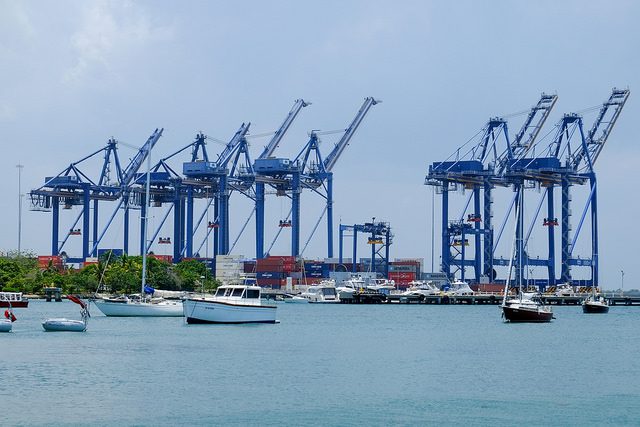
    In July 2017, the Colombian government approved an investment of $93 million for the Cartagena port. With this contribution, it is expected that the port will triple its cargo capacity thanks to the new infrastructure, better operation and giant cranes that can receive bigger vessels. President Santos defined the Cartagena port as the most important in the Colombian Caribbean, as in 2016, it moved around 201 million tons of cargo containers.
  3. Agora Convention Center
    The new convention center, located in the capital city of Bogota, is the third biggest center in South America in terms of capacity and the most modern on the continent. In October 2017, the building held its first massive meeting for the United Nations First Young World; this left an economic impact of 14 million pesos for Colombia. Conventions and meetings generate 27 percent of Colombian tourism economy. The Agora project cost 414 million pesos and created 15,000 jobs in its construction.
  4. Bogota’s Elevated Railway
    Among all transportation development projects in Colombia, this particular one is essential. The new elevated railway is a local public transportation project that has been in planning for almost 15 years in Bogota. The first construction attempt was in 2000, but multiple government branches failed to reach an agreement. However, this year, President Santos’ administration and Bogota’s authorities revealed the construction will begin in 2018 and that the trains will be electric. It is expected that 35,000 Colombians will use the railway every hour. Authorities commented that the elevated railway construction will finish in 2024 and will be the first development of this kind in the country’s capital.
  5. 4G Project
    The 4G project is the most ambitious road infrastructure project in Colombia. The four generation plan will connect the entire country, making mobility easier and faster for citizens. More than 7,000 kilometers of roadway will be constructed and rehabilitated over the next several years with an investment of $50 billion. In addition, this project will work on bridges and tunnels that link the cities and towns over the mountains of the country. Projects such as Conexion Pacifico 3 and Girardort-Honda-Puerto Salgas have already begun.

These development projects in Colombia will positively affect the country’s future, improving the lives of Colombians as well as the Colombian economy. Although some projects are still in development, within the next 10 years, the Colombia will certainly be one of the most developed nations in South America.

– Dario Ledesma

Photo: Flickr

November 21, 2017
https://borgenproject.org/wp-content/uploads/borgen-project-logo.svg 0 0 Borgen Project https://borgenproject.org/wp-content/uploads/borgen-project-logo.svg Borgen Project2017-11-21 01:30:472024-05-29 22:29:21Five Major Development Projects Reshaping Colombia
Developing Countries, Development, Global Poverty

5 Development Projects in Pakistan

KarachiPakistan is currently undergoing many development projects in order to improve the safety and general quality of life for its people. Here are five development projects in Pakistan that are currently underway.

The Strategic Strengthening of Flood Warning and Management Capacity of Pakistan

In 2010, around 2 million homes were damaged and 20,000 lives were lost due to flooding caused by heavy monsoon rains. There was no system set in place to warn individuals of the impending flooding and no recovery programs to assess the damages. The Strategic Strengthening of Flood Warning and Management Capacity of Pakistan project, developed by the United Nations Educational, Science and Cultural Organization began in 2011. $2.5 million in aid was provided in order to upgrade flood warning systems, asses damages caused by flooding, and update flood hazard maps in order to help with recovery efforts as well as prevent future catastrophes.

Sindh Resilience Project

Another one of the development projects in Pakistan which focused on disaster management is the Sindh Resilience Project. The main goals of this project are to mainstream disaster risk reduction in development budgeting, support restoration and improvement of high-risk sites, and construct rainwater dams in drought regions. Starting in 2016, the Pakistan government allocated $120 million for this project.

Karachi Neighborhood Improvement Project

Many Pakistani people live in neighborhoods that are not easy for pedestrians to navigate and do not have safe transportation. The objective of the Karachi Neighborhood Improvement Project is to create usability of public spaces, increase mobility, improve traffic safety, and provide better city management. Funded by the International Development Association, this project will cost around $98 million.

The Polio Eradication Project

Pakistan is one of the only polio-endemic countries in the world, along with Afghanistan and Nigeria. Due to an increasing trend of polio cases in Pakistan, the government announced the National Emergency Action Plan for Polio Eradication. In order to support these efforts in collaboration with the Bill and Melinda Gates Foundation, the Polio Eradication Project allocated $43 million to provide polio vaccines and to implement campaigns focusing on bringing light to the polio-endemic. 

Ranolia Hydropower Project

Imported oil is Pakistan’s main source of power. The high price of oil is causing a strain on the country and causing power outages. The Ranolia Hydropower Project was started in order to harness clean energy and create jobs. The Renewable Energy Development Sector Investment Program, a $510 million program, is funding the construction of a hydropower plant fueled by the Indus river, which will generate three times the electrical capacity of Pakistan’s current national demand.

These five development projects in Pakistan are all working to make Pakistan a better place to live thanks to the support and cooperation of generous organizations committed to public health and safety in Pakistan.

– Jenae Atwell

Photo: Flickr

November 18, 2017
https://borgenproject.org/wp-content/uploads/borgen-project-logo.svg 0 0 Borgen Project https://borgenproject.org/wp-content/uploads/borgen-project-logo.svg Borgen Project2017-11-18 01:30:392019-11-21 01:05:045 Development Projects in Pakistan
Developing Countries, Development, Global Poverty

5 Coffee Industry Development Projects in Guatemala

5 Coffee Industry Development Projects in GuatemalaAfter oil, coffee is the second most traded commodity in the world. Although the coffee industry generates profits of over 60 billion dollars annually, it is estimated that less than 10 percent of those earnings end up in the countries where coffee is produced. Slightly less than 0.5 percent of the total earnings translate into wages for those who labor to produce coffee.

Thus, in a country such as Guatemala, where coffee is the nation’s largest export, extreme poverty and malnutrition are pervasive for a significant portion of the population.

According to USAID reports, an estimated 56 percent of the Guatemalan population lives in poverty, and around 20 percent live in extreme poverty. High poverty rates render infants and children especially vulnerable: infant mortality is among the worst in the region (39 per 1,000 live births), and maternal mortality is extremely high (153 per 100,000 births). Although statistics vary, it has been reported that 85 percent of children under five are malnourished in Guatemala.

Although the Guatemalan government mandated a legal daily rural minimum wage of $2.488, a rapid decrease in the global price of coffee has depressed laborers’ already low wages. The average daily wage for laborers in the coffee industry has fallen from around $3 a day to the current average of just $2 a day.

Experts highlight two primary catalysts to the drop in global coffee prices over the past decade.

In the 1990s, large American corporations such as Nescafé and Maxwell House began to adopt neoliberal economic policies that favored the abandonment of previous agreements with coffee growers that provided for protections against price variation. These agreements, which had maintained coffee prices within predetermined margins regardless of variable harvest qualities, were seen as contradictory to the values of “free trade”.

Then, when Vietnam was introduced to the market as a new, rapidly producing coffee country after the World Bank made significant contributions to the industry through loans, the flood of additional coffee crops caused the bottom to drop out of the market. Per the dictates of the economic principles of supply and demand, the sudden and significant increase in coffee commodity supply once Vietnam entered the market caused prices to plummet.

In addition to market destabilization, discrimination against rural workers, many of whom are of Mayan ancestry and are non-Spanish speakers, as well as the lack of workers’ rights have been identified as causative factors in the economic hardship experienced by most coffee industry laborers in Guatemala.

Many plantation owners hire temporary workers as a means of keeping wages low, avoiding paying any types of benefits and preventing worker organization. Coffee industry laborers don’t complain as they may lose the opportunity for any work at all.

Numerous international organizations have recognized the need for change in the Guatemalan coffee industry. The following are five development projects in Guatemala that have been implemented with the intent to support and advocate for the rights and livelihoods of coffee industry laborers.

  1. Manos Campesinas – The Association of Small Coffee Producers, “Farmers’ Hands” is an organization of small-scale coffee producers in the highlands of southwestern Guatemala that has created a supportive community for over 1,073 members. Unlike the temporary laborers who work on large plantations, these producers own their own smaller plots of land and have control over the entire production process. The Manos Campesinos initiative was formed to help these small-scale producers compete with larger plantations by providing them with technical and marketing support.
  2. Café Teresa – The UNDP (United Nations Development Programme) funds several small coffee producers’ associations in the Guatemalan department of Huehuetenango, where poverty is especially dire. Café Teresa, which also receives funds from the Italian government, is one of the supported development projects in Guatemala. This producers’ organization helps its members achieve certifications relating to sustainability and organic practices, which can sometimes be costly to obtain but have significant positive impact on the price that farmers can ask for their products. Café Teresa is exclusively organized by women, and is dedicated to helping Guatemalan women be successful in the coffee industry.
  3. Pueblo a Pueblo – This nonprofit organization is dedicated to improving the “health, education and food security of families in rural coffee-growing communities in Latin America through integrated community and school-based programs”. The foundation was established in 2001 in Guatemala, and its successes in ameliorating the widespread poverty, illiteracy and poor health afflicting the communities surrounding Santiago Atitlan have spurred it to expand across other Latin American nations. Its initiatives of this development project in Guatemala include providing funding for consistent access to healthcare for children, establishing libraries at schools and providing schools with additional learning resources.
  4. The Coffee Trust – This organization works with coffee producers and laborers in the Ixil region of Guatemala, where it provides trainers for those struggling to make a living in the coffee industry. These trainers are established members of the Guatemalan coffee industry that help their peers by sharing the agricultural practices that have made them successful. The Coffee Trust has found that their Farmer-to-Farmer techniques is an especially effective means of empowering individuals and creating a cohesive community.
  5. De la gente – This organization has partner communities in Guatemala in which is strives to create economic sustainability, empowerment in the coffee industry, healthy and thriving livelihoods, as well as resilience to shocks in the coffee industry and emergencies. It does this through programs that focus on capacity building through farmer-to-farmer training, leadership and business development, and funding access to industry conferences, knowledge-sharing platforms and networking opportunities. De la gente also has programs that foster access to credit and economic diversification.

These development projects in Guatemala are each doing a small part to address the serious issues facing the coffee industry and ensure future prosperity for the nation and its producers.

– Savannah Bequeaith

Photo: Flickr

November 16, 2017
https://borgenproject.org/wp-content/uploads/borgen-project-logo.svg 0 0 Borgen Project https://borgenproject.org/wp-content/uploads/borgen-project-logo.svg Borgen Project2017-11-16 01:30:082024-06-05 02:36:415 Coffee Industry Development Projects in Guatemala
Developing Countries, Global Poverty

Solar Sister: A Solution for Energy Poverty

Solar Sister: A Solution for Energy Poverty NationsCurrently, there is an energy disparity worldwide, and not everyone has equal access to energy resources. This growing trend is most notable in less developed nations, most particularly in rural regions of the countries. Energy is one of the most vital resources for the development of a nation; without it, countries are left to follow a path with no progression.

World Bank Vice President Rachel Kyte stated: “Access to energy is absolutely fundamental in the struggle against poverty…it is energy that lights the lamp that lets you do your homework, that keeps the heat on in a hospital, that lights the small businesses where most people work. Without energy, there is no economic growth, there is no dynamism, and there is no opportunity.”

A lack of energy leaves less-developed nations without a necessary resource that allows them to improve their developmental industries, healthcare and education. Without the essential access to energy, less developed nations are left to resort to biomass energy, a type of renewable that utilizes organic materials such as wood for fuel. But there are drawbacks to relying on biomass energy, such as the release of carbon dioxide and the overharvesting of organic material.

Wood is one of the most common sources used for cooking, and greatly affects both women and children, according to National Geographic. “About 3.5 million people, mainly women and children, die each year from respiratory illness due to harmful indoor air pollution from wood and biomass cookstoves.” Women and children are more impacted by the effects of energy poverty because of their heavy interactions with the use of biomass materials (such as women cooking with wood-fueled cookstoves) and an inhibited ability to complete education (such as students being unable to do homework after dark).

Solar Sister is an organization dedicated to eradicating energy poverty by providing women with economic opportunities in rural regions of Africa. One of their main focuses is not only providing women with economic opportunities, but also supporting women’s access to sustainable energy resources.

Through Solar Sister, women are supplied with the necessary skills to create an effective business market within their communities. Once trained, the organization supplies women with solar lanterns to sell in their communities. Gradually, through interactions, communities come to trust the solar lantern and demand increases. With increased demand, communities gradually transition away from biomass energy to solar energy, a much safer and more accessible energy resource. As a woman’s interactions within the community increase, she becomes revered as a role model and is trusted throughout her community. That trust also allows the gender gap within small communities to decrease and further creates more opportunities for women. Not only do the women themselves benefit from the effects of Solar Sister, but the community in turn also benefits. Communities that transition away from biomass energy gain a cleaner source of energy, promoting an overall more sustainable environment and in turn a better quality of health and life.

Although Solar Sister primarily focuses on rural regions in Africa, the techniques and results derived from the organization pose a possible solution to the energy poverty trend. It is important to learn from Solar Sister’s success and use it as a stepping stone for future work in other countries.

– Carla Salas

Photo: Flickr

November 15, 2017
https://borgenproject.org/wp-content/uploads/borgen-project-logo.svg 0 0 Borgen Project https://borgenproject.org/wp-content/uploads/borgen-project-logo.svg Borgen Project2017-11-15 01:30:402019-11-21 01:32:35Solar Sister: A Solution for Energy Poverty
Developing Countries, Development, Global Poverty

China Assists Venezuela with Five Development Projects

VenezuelaThe South American country of Venezuela was once one of the most successful oil industries in the world, with a thriving economy. After oil prices dropped drastically in the 1980s, Venezuela has been searching for ways to recover their largest money-maker and restore their crippling economy.

China and Venezuela have been working together for over 15 years as part of the Mixed China-Venezuela High Commission. They are energy-supply partners that have signed 480 agreements together since 2001. As Venezuela has continued struggling economically, China has contributed efforts to help save the country’s economy. There are five development projects in Venezuela underway to do just that:

  1. China and Venezuela have signed a total of 22 new deals worth 2.7 billion U.S. dollars in order to stimulate economic development in Venezuela and strengthen their partnership. This development will include infrastructure, import and cargo transport projects. Six of the 22 agreements are focused on energy output and the oil industry.
  2. China has agreed to assist in the supply and export of Venezuela’s oil production. China will build a refinery in southeast China’s Guangdong Province, Nanhai which will process around 400,000 barrels of extra-heavy crude oil from Venezuela’s land. The mission of this project is to increase the amount of oil output and exports.
  3. Venezuela spent 9,576 million on imports in 2015. China and Venezuela have begun to build an industrial plant in Anaco, Venezuela whose purpose will be to produce seeds, fertilizers and agrochemicals that are normally imported to help reduce the amount of money spent on imports.
  4. China is also a major investor in Venezuela’s new food supply distribution network Local Supply and Production Committees (CLAP). Venezuela’s food supply has taken a major hit since the economy’s decline. The decline of the country’s food supply has reached a point of crisis where basic food needs are not obtainable. The CLAP project will work to get food to Venezuelan residents. In addition, CLAP will serve as a way to regulate food distribution from house to house in order to ensure a proper amount of food for each family. CLAP representatives carry essential food and products to households. This system is meant to prioritize the needs of families and has already made deliveries to 504,000 families.
  5. Venezuela has launched a mining project called Arco Minero del Orinoco. Companies in China will be involved in the project. Two of the groups working with this project are China CAMC Engineering Co. and the Yankuang Group. Arco Minero is located in the northern part of Venezuela and is a prime spot for mining gold, diamonds, coltan, copper, iron and bauxite. The exploitation of these minerals will be a stepping stone in the quantification and certification of mineral reserves. As a result, mining will be a more widespread way to raise exports.

China has provided massive assistance to Venezuela over the years in an effort to help the country’s economy. With this new set of agreements, the trade partners will work together to make Venezuela’s economy more prominent. These five development projects in Venezuela are a start in the strengthening of Venezuela’s oil industry, economy and relationship with China.

– Brianna Summ

Photo: Flickr

November 15, 2017
https://borgenproject.org/wp-content/uploads/borgen-project-logo.svg 0 0 Borgen Project https://borgenproject.org/wp-content/uploads/borgen-project-logo.svg Borgen Project2017-11-15 01:30:142024-12-13 17:58:31China Assists Venezuela with Five Development Projects
Advocacy, Children, Developing Countries, Global Poverty, Human Rights

Ending Child Marriage Could Reduce Global Poverty

Global Partnership for EducationIn many developing countries it is common practice to marry off girls before the age of 18. Consequently, when girls are married at such a young age, they do not receive an education. This practice can cost countries billions of dollars, according to the World Bank. However, recent studies show that ending child marriage could reduce global poverty.

Child marriage, which primarily affects girls, has many consequences. It causes overpopulation, poor health for said child and it tends to lead to violence. Conversely, ending child marriage would have lasting social advantages and economic benefits, such as an increase in the girls’ earnings.

“Child marriage not only puts a stop to girls’ hopes and dreams. It also hampers efforts to end poverty and achieve economic growth and equity,” said Quentin Wodon, lead author of the World Bank’s report on the economic cost of child marriage. “Ending this practice is not only the morally right thing to do but also the economically smart thing to do.”

Ending child marriage would save countries a lot of money — by 2030, countries could save $327 million in education budgets alone. In Africa, seeing an end to child marriage could save up to $5 billion as a result of lower malnutrition, according to the Global Partnership for Education. It could also reduce fertility rates by 10 percent, which would reduce overpopulation and global poverty by extension.

So, what’s the best way to end child marriage? Simply keeping girls in school.

Education is the best way to end child marriage because it allows girls to be more independent and strong-minded. The longer a girl is in school, the less likely it is that she will be married young. Unfortunately, there are societies that deem education a luxury and a “waste of resources.” Such societies are also threatened by the independence a female would gain by being educated.

Failure to educate girls has its own negative implications. In the same manner that ending child marriage can increase a girl’s earnings in the future, so too can having an education. In fact, some countries lose out on an estimated $92 billion of economic growth for failing to properly educate their girls.

Pooja (not her real name), a girl from Nepal, knew education would have given her a better life. “If I had studied I would have been working. But my parents held my marriage and I couldn’t do anything after marriage. I now have children to look after,” she said.

Everything is connected. Seeing girls educated could potentially end child marriage which would potentially reduce global poverty.

– Dezanii Lewis

Photo: Flickr

November 14, 2017
https://borgenproject.org/wp-content/uploads/borgen-project-logo.svg 0 0 Borgen Project https://borgenproject.org/wp-content/uploads/borgen-project-logo.svg Borgen Project2017-11-14 01:30:202024-05-27 23:59:47Ending Child Marriage Could Reduce Global Poverty
Page 113 of 157«‹111112113114115›»

Get Smarter

  • Global Poverty 101
  • Global Poverty… The Good News
  • Global Poverty & U.S. Jobs
  • Global Poverty and National Security
  • Innovative Solutions to Poverty
  • Global Poverty & Aid FAQ’s
Search Search

Take Action

  • Call Congress
  • Email Congress
  • Donate
  • 30 Ways to Help
  • Volunteer Ops
  • Internships
  • Courses & Certificates
  • The Podcast
Borgen Project

“The Borgen Project is an incredible nonprofit organization that is addressing poverty and hunger and working towards ending them.”

-The Huffington Post

Inside The Borgen Project

  • Contact
  • About
  • Financials
  • President
  • Board of Directors
  • Board of Advisors

International Links

  • UK Email Parliament
  • UK Donate
  • Canada Email Parliament

Get Smarter

  • Global Poverty 101
  • Global Poverty… The Good News
  • Global Poverty & U.S. Jobs
  • Global Poverty and National Security
  • Innovative Solutions to Poverty
  • Global Poverty & Aid FAQ’s

Ways to Help

  • Call Congress
  • Email Congress
  • Donate
  • 30 Ways to Help
  • Volunteer Ops
  • Internships
  • Courses & Certificates
  • The Podcast
Scroll to top Scroll to top Scroll to top