• Link to X
  • Link to Facebook
  • Link to Instagram
  • Link to TikTok
  • Link to Youtube
  • About
    • About Us
      • President
      • Board of Directors
      • Board of Advisors
      • Financials
      • Our Methodology
      • Success Tracker
      • Contact
  • Act Now
    • 30 Ways to Help
      • Email Congress
      • Call Congress
      • Volunteer
      • Courses & Certificates
      • Be a Donor
    • Internships
      • In-Office Internships
      • Remote Internships
    • Legislation
      • Politics 101
  • The Blog
  • The Podcast
  • Magazine
  • Donate
  • Click to open the search input field Click to open the search input field Search
  • Menu Menu

Archive for category: Developing Countries

Information and stories about developing countries.

Developing Countries, Development, Global Poverty

Rapid Change: Top 10 Countries Seeing Economic Growth

economic growth
Gross Domestic Product, or GDP, is the measure of goods and services produced in an economy — an often-used tool to measure the success of a nation’s economic growth. While this has been the main measure of success over the last century or so, many are starting to questions its effectiveness at measuring total welfare of a country. While it is important to look at other factors in country growth, GDP remains a key aspect of reflecting the top ten countries with growing business.

The average world GDP growth is slightly under 3 percent, annually. As of 2017, the following countries have made the top ten list of fastest growing economies; interestingly, they are all developing countries.

10 Countries Seeing Economic Growth

  1. Ethiopia: 8.3 Percent
    Ethiopia has predominantly been an agricultural country — a fact that is still one of the main sources of business used. However, the country is growing into other fields that shows promising investment opportunities, such as construction or real estate and manufacturing items that range from anything from consumer purchasing to company purchasing.At this point, income for the average citizen still remains at one of the lowest levels, but the continued economic growth has had a positive effect i.e. bringing extreme poverty from 55.3 percent in 2000 to 33.5 percent in 2011.
  2. Uzbekistan: 7.6 Percent
    Uzbekistan is mainly known for its natural gas, gold and copper exports; however, when Russia and China’s markets decreased, this had a directly negative impact on the nation from 2013 to 2016. The Uzbekistan government evaluated its form of market and created space for investment and business growth within its systems. This evaluation had a positive impact, as Uzbekistan moved from fifth on the GDP growth list in 2015 to second in 2017.
  3. Nepal: 7.5 Percent
    A good deal of business has been drawn to Nepal and developed within Nepal due to a need for basic resources such as water, electricity and communication within the nation, especially after the 2015 earthquake. While this market still exists, Nepal’s ability to take the natural disaster and use it as an opportunity to grow and develop is a sign of its imagination and strength.
  4. India: 7.2 Percent
    India is the highest country for outsourcing, and the nation’s ability to use its resources of education and skills has created a unique market to many other countries. Inequality still holds India back from reaching its full potential, but many are speaking out against caste systems and gender inequality, thus drawing attention to the varying gaps (wage and education) surrounding different demographics.
  5. Tanzania: 7.2 Percent
    Tanzania’s rapid economic growth has been attributed to its gold export and tourism influx, but this development has led to new business in energy fields, real estate, infrastructure and agriculture. Tanzania still remains one of the poorest, but this is mostly attributed to population growth rather than an inability to grow business as the poverty rate fell from 60 percent in 2007 to 47 percent in 2016.
  6. Djibouti: 7 Percent
    Djibouti is a small country next to Ethiopia based off the water — a location creating a perfect market for shipping and trade. The nation’s recent spike in economic growth has been largely attributed to foreign investors finding opportunities in port facilities and construction. While the extreme heat in the country and low resources on clean water is still a battle for many citizens, the steady growth of market and job opportunities will surely increase quality.
  7. Laos: 7 Percent
    Laos possesses rich natural resources and a high utilization for hydroelectricity. Its central location in southeast Asia created strong trade with its neighboring countries, and also a growing global interest in the nation has created increased levels of tourism.
  8. Cambodia: 6.9 Percent
    Cambodia is in a similar situation as Laos, particularly with being in the same region. While starting a business in Cambodia can be difficult, especially without bribes, the nation’s economy continues to develop with the help of tourism, natural resources and water-based operations.
  9. Myanmar: 6.9 Percent
    In the past, Myanmar attracted an influx of foreign investment due to its many opportunities to expand business fronts such as telecom, tourism, natural resources and infrastructure; however, foreign investment in the nation has dropped in recent years. In 2017, the Myanmar government began to make a real push to increase investment again by restructuring its government and economy to a democracy form of government (from a military-based one) and creating a more market-oriented economy.
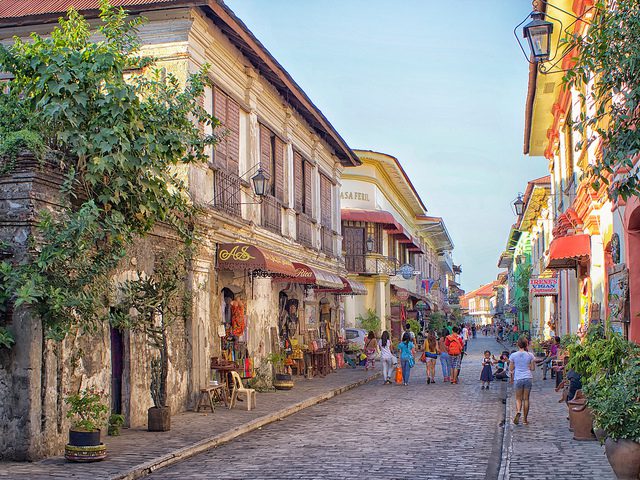
  10. Philippines: 6.9 Percent
    Many tourists flock to the Philippines to visit inexpensive hotels and visit beautiful beaches, particularly in recent years,. While this interest has increased economic growth, Phllippinian stubbornness is actually what continues to keep the economy moving despite the nation’s corrupt government and natural disasters.

While citizens fight for more freedom and better business opportunities, the Philippines’ economy and quality of life will improve even more quickly once government and citizens are able to reach more amicable agreements.

– Natasha Komen

Photo: Flickr

March 22, 2018
https://borgenproject.org/wp-content/uploads/borgen-project-logo.svg 0 0 Borgen Project https://borgenproject.org/wp-content/uploads/borgen-project-logo.svg Borgen Project2018-03-22 01:30:332019-11-21 14:13:45Rapid Change: Top 10 Countries Seeing Economic Growth
Developing Countries, Development, Global Poverty

What is the Definition of a Third World Country?

definition of a third world country

What is the definition of a third world country? In many countries, when people hear the phrase “third world country”, visions of impoverished countries struggling to meet basic human needs are the first to pop up. This might be true in today’s society, but the original definition of a third world country referred to the nations that lacked an alliance with either the U.S. or the former Soviet Union during the Cold War.

In recent years, the term has come to define countries that have high poverty rates, economic instability and lack basic human necessities like access to water, shelter or food for its citizens. These countries are often underdeveloped, and in addition to widespread poverty, they also have high mortality rates.

Definition of a Third World Country Underlying Meaning

In terms of the “worlds” system, they are ranked from first world to third world. The first world refers to the countries that are more developed and industrialized societies; in other words, capitalist societies that aligned with the U.S. and NATO during the Cold War. This includes North America, Japan, Western Europe and Australia.  

Second world countries refer to the countries that lean more toward a socialist society, and generally were allied with the Soviet Union during the Cold War. These countries include Russia, Poland, China and some Turk states.  

Third world countries are all the other countries that did not pick a side. This includes most of Africa, Asia and Latin America. However, this definition includes countries that are economically stable, which does not fit the currently accepted definition of a third world country.

As a society, the term “third world country” refers to countries with high mortality rates, especially infant mortality rates. They also have an unstable and inconsistent economy. These are countries that contain massive amounts of poverty and in some cases have fewer natural resources than other nations throughout the world. These countries often have to rely on more industrialized countries to aid them and help stabilize their economy.

These countries usually lack economic stability because of the lack of a functioning class system. Usually, the country will have an upper class and a lower class. Without a middle class to fill the gap, there is almost no way for a person to escape poverty because there is no next step for them on the economic ladder. This also allows the wealthy to control all the money in the country. This is detrimental to the economy of the country, and both increases and helps to sustain the poverty running rampant throughout the country while allowing the upper class to keep their wealth to themselves.

These countries often accrue a copious amount of debt from foreign countries because of the constant aid they need from other countries to keep their economy afloat and provide some financial stability to the citizens of the country.

The definition of a third world country has evolved from the political meaning during the Cold War to the economic meaning of today. Today’s meaning refers to countries that are in financial trouble and need help from other countries to keep their economy sustainable, at least for a short time.

– Simone Williams

Photo: Wikipedia


March 12, 2018
https://borgenproject.org/wp-content/uploads/borgen-project-logo.svg 0 0 Borgen Project https://borgenproject.org/wp-content/uploads/borgen-project-logo.svg Borgen Project2018-03-12 01:30:412019-12-16 12:21:46What is the Definition of a Third World Country?
Developing Countries, Global Poverty, Nonprofit Organizations and NGOs

Looking from All Angles: Fighting Poverty with Humanity Unified

Looking from All Angles: Fighting Poverty with Humanity UnifiedRwanda seems to be the focus of many humanitarian organizations, yet the job never seems to be done. After a conflicted history culminating in genocide, its citizens have been left impoverished and in desperate need of support from all walks of life. The country is home to around 11.6 million people and is landlocked by the Democratic Republic of Congo, Tanzania, Burundi and Uganda. Organizations like Humanity Unified are enhancing their approaches to fighting poverty to improve the lives of those that live here.

Flashback to How It Began

Rwanda has long been an ethnically divided country. The citizens were faced with a brutal civil war and genocide in 1994 that left more than 800,000 dead. This conflict also caused an extreme economic downturn that left survivors in ruin.

The Borgen Project had the opportunity to interview Maria Russo, founder and executive director of Humanity Unified. She was a travel writer and her husband a web developer and photographer; they combined their talents to create the organization. Russo says she “became interested in international development, particularly in the areas of women’s issues as pertaining to gender inequality, education for women and girls and global food security”. The organization they created uses a variety of approaches, with a focus on women, to combat poverty globally and specifically in Rwanda.

A Big Picture Approach

Russo states that the goal of Humanity Unified is “empowering communities to rise above poverty through education, food security programs and economic opportunities.” It does this through a varied program that includes partnering with local NGOs to accomplish tasks and employing a team directly in Rwanda because, as Russo says, “this creates a greater sense of trust between our team and the communities we work with”.

Humanity Unified invests in women in several ways, beginning with education. Its education programs include specific focuses on human rights, business, literacy and health. They specifically target women because they are ten times more likely to use this education to better their communities. The organization also collects donations to provide food security to rural communities that are commonly neglected by aid programs. Lastly, it provides economic opportunities through business, leadership and vocational training. Several communities of rural women farmers have benefited from this training as well through positive masculinity for their male partners.

Proven Success

So far, Humanity Unified’s methods have proven effective. Eighty-five percent of women said their lives had changed since becoming involved with these programs, 96 percent were able to purchase health insurance for their families, and 96 percent reported that violence against women had decreased within their communities. The organization also works to connect personally with these women in what they call a “humanist approach”. They make visits to Kigali, the country’s capital, where women tell them of their specific successes and the ways in which their individual lives have improved.

The hope is that the organization will only expand in 2018. Russo elaborates that “the goal for 2018 is to continue to support the women in their entrepreneurial endeavors and provide education on how to properly run a small business”. With the support of donors, volunteers, local NGOs and the people themselves, Humanity Unified will be able to accomplish these goals.

– Megan Burtis

Photo: Flickr

March 2, 2018
https://borgenproject.org/wp-content/uploads/borgen-project-logo.svg 0 0 Borgen Project https://borgenproject.org/wp-content/uploads/borgen-project-logo.svg Borgen Project2018-03-02 07:30:412024-05-29 22:39:37Looking from All Angles: Fighting Poverty with Humanity Unified
Developing Countries, Disease, Global Poverty

Apple Product (RED) and the Fight Against AIDS

Product (RED)Apple is the world’s most valuable company and remains the most innovative company of 2018 according to the coveted Fast Company Magazine annual tally. Apple’s financial success began with the maturing of the iPod market in 2005. A year later, U2 frontman Bono worked with the then-CEO and founder Steve Jobs to launch a limited-edition iPod Product (RED).

Apple’s Product (RED) has raised more than $160 million. The contribution helps people affected by HIV in Ghana, Lesotho, Rwanda, South Africa, Swaziland, Tanzania, Kenya and Zambia. (RED) has raised more than $475 million, and Apple generated two-thirds of the total. Funds collected by Apple through Product (RED) support The Global Fund, an organization that has granted $4 billion to local medical experts in more than 140 countries.

The partnership between corporations and nonprofits spearheaded by (RED) has boosted innovation and investments in the race to find a cure for AIDS. Fifty percent of all profit collected through Apple Product (RED) goes to the fight against AIDS. With Apple leading the way since 2006, a myriad of other notable companies has joined the fight including Starbucks, Bank of America, Coca-Cola and Beats by Dre.

Apple created a dedicated online storefront that features limited edition red colored products. The most recent additions include Apple Watch, Beats by Dre, iPad Type Cover, iPod Touch and now Apple Pay purchases made via Bank of America cards donate one dollar for every purchase.

The ultimate goal of (RED) has been to eliminate the transmission of the AIDs virus from mothers to their babies using innovative medical techniques like antiretrovirals which are supplied to mothers to prevent HIV from growing and multiplying within their bodies. Additionally, the babies are given Nevirapine daily for about six weeks or more, based on individual circumstances. Typically, mothers who adhere to this regimen can reduce the risk of transmission to their unborn children down to five percent.

Apple is a behemoth that has enamored many people around the planet. With its support of Product (RED) not only does it increase funding, but it helps bring awareness to the issues faced by underdeveloped countries. Links to Product (RED) and The Global Fund are directly embedded into Apple’s online storefront, and annually on World AIDS day the company launches merchandising material in all of its physical stores including digital marketing on Apple.com and the Apple App Store.

Apple has historically always used unique methods to achieve goals, and during recent world events like the earthquakes that took place in Haiti and Japan, it leveraged its mega-customer base on iTunes and the App Store to collect donations ranging from five dollars to 200 dollars. Apple is The Global Fund’s most substantial corporate donor, and CEO Tim Cook has continued to make philanthropy a central aspect of his legacy at Apple.

Apple aims to continue to revolutionize the world with its products, while also helping nonprofits implement technology that betters the planet. Through campaigns like Product (RED) and its ability to connect at a deep level with its customers, Apple has more than achieved this goal.

– Hector Cruz

Photo: Flickr

February 27, 2018
https://borgenproject.org/wp-content/uploads/borgen-project-logo.svg 0 0 Borgen Project https://borgenproject.org/wp-content/uploads/borgen-project-logo.svg Borgen Project2018-02-27 01:30:002019-07-31 21:09:49Apple Product (RED) and the Fight Against AIDS
Developing Countries, Global Poverty, War and Violence

The Devastating Effects of Cluster Bombs in Poor Countries

Effects of Cluster Bombs in Poor CountriesCluster bombs contain hundreds of submunitions that can saturate an area up to the size of several football fields. Groups utilize cluster bombs to maximize destruction impact and exert the least effort possible. These particular weapons are indiscriminate, meaning anyone within range of the bomb’s detonation —whether civilian, military or terrorist— can be injured or killed as one of the effects of cluster bombs. 

More than 98 percent of known cluster bomb victims are innocent civilians, and 40 percent of these are children. Cluster bombs are most prevalent in poor countries because these areas tend to be high in crime, corruption and war. These weapons undergo the following process that may result in detonation:


The Drop

A cluster munition is dropped from a plane and can fly around nine miles before releasing its submunitions. This ability makes for highly inaccurate targeting, meaning the bombs are a disproportionate hazard to civilians.

The container begins to spin a short time before releasing its submunitions. It opens at an altitude between 330 and 3,300 feet. The cluster munition’s height, rotation speed and velocity determine how large of an area will be impacted.


Parachutes Open

Submunitions deploy parachutes as they descend. The parachute ensures that each submunition is stable and descends with its nose down. Each submunition is about the size of a soda can and made of a copper cone containing over 300 steel fragments and incendiary material. The cone can pierce through seven inches of armor and its contents are designed to burn the targeted area and destroy its inhabitants.


Effects of Cluster Bombs

Depending on altitude and wind speed, a cluster bomb’s submunition strikes can cover an area up to 861,120 square feet. The detonation of a single submunition can cause fatalities in a 65-foot radius and injure anyone within a 328-foot radius.

Cluster bombs lack consistency; they are prone to external factors such as weather and deployment tactics. Their volatility renders it near impossible to predict the exact size of an area affected. The effects of cluster bombs usually include numerous civilian and child deaths because of the bomb’s unpredictability.

Many submunitions fail to detonate on impact, resulting in the scattering of explosive “duds” throughout the targeted area. Duds contaminate the area even after conflict ends, essentially becoming landmines that injure and kill civilians. The percentage of unexploded submunitions from older canisters can be as high as 30 percent, but modern canisters typically range from two to 20 percent.

Currently, 63 countries are stockpiling submunitions and this number continues to grow. Cheaper variations of the bombs are likely to be used by countries that brutalize their own civilians or by violent no-state agents that disregard civilian safety.

The Convention on Cluster Munitions prohibits the use, production, transfer and stockpiling of cluster bombs. The international agreement was created in August 2010 and has been signed by 111 countries and ratified by 70. The U.S. has not signed the Convention on Cluster Munitions.

It is possible to combat the effects of cluster bombs by supporting the clearance of unexploded bombs and encouraging countries to sign the treaty banning cluster munitions. With continued effort, civilians’ and children’s lives can be spared.

– Carolyn Gibson

Photo: Flickr


February 14, 2018
https://borgenproject.org/wp-content/uploads/borgen-project-logo.svg 0 0 Borgen Project https://borgenproject.org/wp-content/uploads/borgen-project-logo.svg Borgen Project2018-02-14 07:30:082024-05-29 22:39:16The Devastating Effects of Cluster Bombs in Poor Countries
Children, Developing Countries, Global Poverty

Closing the Gap for Children with Disabilities in Vietnam

Closing the Gap for Children with Disabilities in VietnamChildren with disabilities are one of the many marginalized groups in the world that often face discrimination. In many countries, cultural beliefs dictate that disabilities arise from the influences of past lives, supernatural forces or the past actions of a parent.

Education is one of the most effective ways of not only breaking these myths, but also breaking the cycle of discrimination experienced by children with disabilities. According to information gathered from the Global Disability Rights Now, approximately 5.8 percent of Vietnam’s population, 5,203,180 people, are living with disabilities. Of these, 23.3 percent are children with disabilities in Vietnam under the age of 19.

Disabled children are less likely to finish or even begin school for many reasons, including gaining little to no access to adequate learning materials, having a lack of trained professionals who understand their needs and having no proper facilities to attend school. Denying these children the right to education not only impacts their learning, but also any hinders any chances of employment opportunities and social and personal development. In order for all children to benefit from basic human rights without facing prejudice, disability inclusion needs to be integrated into all policies and plans devised by a country.

The World Bank has shown support for integrating inclusive education practices for children with disabilities through lending projects and activities. One of the programs implemented for children with disabilities in Vietnam is the Vietnam Intergenerational Deaf Education Outreach Project (IDEO). Under the IDEO, sign language is taught to deaf children and their families in the comfort of their own homes by a mentor who is hearing impaired, a sign language interpreter and a teacher who can hear.

Evaluations documented and recorded from the project showed that using sign language helped to improve deaf children’s language and cognitive development and also their ability to communicate with others. The outreach project has also helped more than 50 deaf adults become mentors to children who are hearing impaired, trained approximately 200 hearing teachers to use sign language in order to effectively support deaf children and instructed more than 50 hearing people as communication facilitators or sign-language interpreters.

The implementation of the IDEO project has strengthened school involvement and organizations in backing the education of deaf children, and has also opened a new method to teaching sign language for these children with disabilities in Vietnam. With the support of similar projects being integrated in the near future, the gap for achievement for disabled children will hopefully decrease.

– Zainab Adebayo

Photo: Flickr

January 31, 2018
https://borgenproject.org/wp-content/uploads/borgen-project-logo.svg 0 0 Borgen Project https://borgenproject.org/wp-content/uploads/borgen-project-logo.svg Borgen Project2018-01-31 07:30:272019-11-08 02:30:50Closing the Gap for Children with Disabilities in Vietnam
Developing Countries, Development, Global Poverty, Poverty Reduction

What Makes a Country Developed? Moving Past Poverty

what makes a country developedWhat makes a country developed? The commonalities between developed countries include an improved quality of life and greater access to basic necessities. Conversely, underdeveloped nations around the world also share common characteristics. Citizens suffer from preventable diseases, extreme poverty and lack of access to healthcare and clean water. Understanding the characteristics of underdeveloped countries can allow for a more strategic aid process to contribute to their development.

The former Secretary of the United Nations, Kofi Annan, said that a developed country is “one that allows all its citizens to enjoy a free and healthy life in a safe environment.” While this may be an oversimplified statement, it highlights key issues that must be addressed in order for a country to develop. Here are some characteristics of underdeveloped countries.

Low life expectancy 

While the life expectancy of developed countries is typically in the 70s and 80s, underdeveloped countries often have life expectancies in the low 50s. This is common in African nations and is due to high birthrates and low contraception use, poor access to health care and potable water, lack of education and disease. All of this can easily be prevented.

Many measures can raise life expectancy while decreasing overpopulation and deaths resulting from preventable diseases. This includes using technology to help medical clinics in rural areas, increasing the number of wells, utilizing solar sanitation systems, revamping national education standards and having a sharper focus on vaccines.

Poor education and literacy 

Similarly to life expectancy, literacy rates and educational systems are telltale signs of a developed country. While countries like Norway consistently maintain a 100 percent literacy rate, underdeveloped countries, such as Niger, maintain an estimated 19 percent. While primary school is mandatory for most of the world’s children, many drop out in underdeveloped countries. The lack of secondary and vocational education for children prevents them from entering the workforce later in life. This can be combated by revamping curriculum and teacher training and by enforcing internationally recognized standards.

Poverty rates 

The economy factors greatly into what makes a country developed. Lack of income prevents people from access to basic human rights such as clean water, food and preventable measures against disease. While only 15 percent of Americans live in poverty, over 60 percent in the Congo and neighboring countries do. With additional aid, underdeveloped countries can increase credit access and improve agricultural and infrastructural systems, which would produce food and create jobs simultaneously.

High fertility rates 

Overpopulation is another characteristic of underdeveloped countries. Lack of education and birth control have contributed greatly to high fertility rates. In countries like Chad, for instance, only five percent utilize contraception. It has contributed to high birth rates, a population in which the majority are adolescents and have low life expectancies. Better education and access to birth control can balance the booming population in underdeveloped countries.

It is clear that the steps to helping underdeveloped countries are simple. Healthcare, education and credit access contribute to what makes a country developed. By addressing the aforementioned issues, underdeveloped countries can take steps to develop further and contribute to eliminating global poverty.

– Eric Paulsen

Photo: Flickr

January 26, 2018
https://borgenproject.org/wp-content/uploads/borgen-project-logo.svg 0 0 Borgen Project https://borgenproject.org/wp-content/uploads/borgen-project-logo.svg Borgen Project2018-01-26 01:30:102024-05-29 22:30:08What Makes a Country Developed? Moving Past Poverty
Developing Countries, Education, Global Poverty

Why Education Matters, Especially in Times of Crisis

When a developing country is in crisis or conflict, education is an area that suffers immensely. Education is a transitional platform that propels students in developing nations out of the cycle of poverty if implemented consistently. However, the relationship between education and conflict is negatively correlated: though education helps prevent conflict and crisis, once conflict and crises arise, education suffers.

Today, one in six children ages three to 15 are directly affected when a country experiences conflict and crisis. This number in itself explains why education matters, especially for these primary and secondary school-aged children.

According to the U.N.’s tracking of Millennium Development Goals (MDGs), “in countries affected by conflict, the proportion of out-of-school children increased from 30 percent in 1999 to 36 percent in 2012.” In 2015, in succession to the MDGs, the U.N. established the Sustainable Development Goals (SDGs). The new SDGs pledge to “ensure inclusive and quality education for all.” This objective exemplifies the international importance of the universal human right to education.

So, if all people have the right to education, why are children in conflict left out?

The World Economic Forum found a recent OECD report that details why education matters economically. According to the report, “providing every child with access to education and the skills needed to participate fully in society would boost GDP by an average 28 percent per year in lower-income countries.” Conflict and crises have an expensive effect on the economy of the affected country. From 2011 to 2016, for example, the war in Syria exacerbated cumulative losses of $226 billion to the country’s GDP. The correlation between conflict and the economy is buffered when access to education persists. 

The World Economic Forum points out that there are 37 million out-of-school children and youth in countries affected by conflict and crisis. This translates to about 33 percent of out-of-school students across the globe. The Global Partnership for Education (GPE) estimates that it will only cost $74 annually to educate each child affected by conflict and crisis. If these students remained in school during times of crisis, the economic consequences, like in Syria, might not be so drastic. 

An infographic published by the GPE looks at the relationship between education and conflict or crisis. When a conflict or protracted crisis arises, no matter what the cause, schools are commonly destroyed or used for strategic purposes. In Yemen, BBC reports, “more than 1,700 schools are currently unfit for use due to conflict-related damage, the hosting of displaced people or occupation by armed groups.” During violence and rebellion, children and teachers are targeted and forced to flee. Education suffers immensely as a result of conflict and crisis and is difficult to reestablish. 

The GPE infographic contrasts the detrimental effects of conflict and crisis to education with the promising relief education can bring in these situations. For each year of education, the risk of conflict reduces by 20 percent. And, if the average secondary school enrollment rate increases by only 10 percent, the risk of war will reduce by three percent.

Education not only reduces the risk of conflict and crisis, it provides opportunities for citizens to stimulate the economy and support democratic processes. The GPE further points out that, “across 18 Sub-Saharan African countries, people with a primary school education are 1.5 times more likely to support democratic processes.”

When nations experience tension like conflict or protracted crisis, education empirically suffers. However, if education can become a developmental focus, as in the U.N. SDGs plan, the risk of conflict and crisis in developing countries can correspondingly decrease. From encouraging future growth to maintaining socioeconomic homeostasis, it is easy to see why education matters, especially in times of crises and conflict.

– Eliza Gresh

Photo: Flickr

January 16, 2018
https://borgenproject.org/wp-content/uploads/borgen-project-logo.svg 0 0 Borgen Project https://borgenproject.org/wp-content/uploads/borgen-project-logo.svg Borgen Project2018-01-16 07:30:052024-05-29 22:30:11Why Education Matters, Especially in Times of Crisis
Developing Countries, Disease, Extreme Poverty, Global Poverty, Health

Top 20 Countries with the Lowest Life Expectancy

countries with the lowest life expectancyThere are a lot of factors that contribute to a country’s life expectancy. Some of these contributing factors are economic conditions, diet, public health, access to medical care, wars, crime rate etc. Because of this, a lot of the countries on this list are African countries plagued by poverty.

According to the CIA’s World Factbook, these are the top 20 countries with the lowest life expectancy as of 2017.

  1. Chad – 50.6
  2. Guinea-Bissau – 51.6
  3. Afghanistan – 51.7
  4. Gabon – 52.1
  5. Swaziland – 52.1
  6. Zambia – 52.7
  7. Central African Republic – 52.8
  8. Somalia – 52.8
  9. Lesotho – 53
  10. Mozambique – 53.7
  11. Nigeria – 53.8
  12. Burkina Faso – 55.9
  13. Niger – 55.9
  14. Uganda – 55.9
  15. Sierra Leone – 58.6
  16. Cameroon – 59
  17. Cote d’Ivoire – 59
  18. Republic of the Congo – 59.8
  19. Zimbabwe – 59.8
  20. Angola – 60.2

The overwhelming majority of these countries are in sub-Saharan Africa. According to Africa Check, the top five causes of death in 2017 in Africa were lower respiratory tract infections, HIV/AIDS, diarrheal diseases, stroke and Ischemic heart disease. The major reasons for these causes of death are unsafe water, poor sanitation, insufficient hygiene, lack of resources and economic conditions. Living conditions dramatically affect life spans and are a major reason why these countries have the lowest life expectancy.

However, there has been a significant improvement in a lot of these countries and their life expectancy numbers. For example, Zimbabwe and Zambia’s longevity has increased by 38 percent since the year 2000. And, overall, of the 37 countries that have seen increases in their life expectancy numbers by more than 10 percent since 2000, 30 are in sub-Saharan Africa. Additionally, not even one sub-Saharan country had its life expectancy fall between the years 2000-2014.

There is still a lot of progress that needs to be made in order for these countries with the lowest life expectancy to increase their numbers, but regardless, there has been a substantial improvement in these struggling countries.

– McCall Robison

Photo: Flickr

January 3, 2018
https://borgenproject.org/wp-content/uploads/borgen-project-logo.svg 0 0 Borgen Project https://borgenproject.org/wp-content/uploads/borgen-project-logo.svg Borgen Project2018-01-03 07:30:452024-05-29 22:30:01Top 20 Countries with the Lowest Life Expectancy
Developing Countries, Global Poverty

Sightsavers Protects Vision in Developing Countries

vision in developing countriesOver 90 percent of visually impaired people worldwide live in developing countries. Sightsavers partners with local entities to protect vision in developing countries from the Caribbean to Africa and Asia. The organization has treated over 200 million people for potentially blinding conditions.

To date, Sightsavers has facilitated seven million eye operations in 30 countries to prevent blindness. The organization has also trained almost 500,000 medical providers in eye care and has rehabilitated 91,000 visually impaired people.

Sightsavers specifically treats neglected tropical diseases (NTDs), cataracts and refractive errors that negatively affect vision in developing countries. The nongovernmental organization also advocates for disability-inclusive development.

Neglected Tropical Diseases

Over one billion people globally are impacted by neglected tropical diseases. Sightsavers targets five NTDs that affect eyesight – trachoma, river blindness, lymphatic filariasis, intestinal worms and schistosomiasis.

In 2016, the organization distributed almost 47 million treatments for river blindness. Further, it treated over 16.5 million people for intestinal worms and treated over 5.7 million people for schistosomiasis. Sightsavers aims to totally eliminate trachoma and lymphatic filariasis from its covered countries by 2020.

In 2016, Sightsavers and its partners distributed 154 million treatments for NTDs. Sightsavers facilitates initiatives that fight neglected tropical diseases in 29 developing countries.

Cataracts

Worldwide, 20 million people have lost vision due to cataracts. In some of the African countries covered by Sightsavers, 60 percent of cases of blindness are caused by cataracts.

Since the organization’s inception in 1950, Sightsavers has facilitated 6.6 million cataract surgeries. Furthermore, it has trained over 1,000 healthcare professionals to treat the condition. A child’s cataract surgery costs Sightsavers only $78.

Refractive Errors

Globally, 124 million people have untreated refractive errors like nearsightedness and astigmatism. Sightsavers has distributed almost three million pairs of eyeglasses in developing countries. Additionally, the organization trained 726 optometrists.

In 2016, Sightsavers’ School Health Integrated Programming (SHIP) initiative checked school-aged children in Cambodia, Ethiopia, Senegal and Ghana for poor eyesight. The program examined 57,400 children and provided 1,000 pairs of eyeglasses.

Advocacy

Worldwide, one billion people — 15 percent of the population — live with a disability. Eighty percent of disabled persons live in developing countries. In addition to protecting vision in developing countries through medical care, Sightsavers advocates for disability-inclusive development.

The organization’s “Put Us in The Picture” program has campaigned for incorporation of disabled persons in the development process since 2013. The initiative works to ensure that the needs of disabled residents of developing countries are considered in global development.

Sightsavers also advocates for equal access for disabled people to quality education and healthcare. The organization also works to ensure disabled people can find employment and participate in their political systems.

– Katherine Parks

Photo: Flickr

December 31, 2017
https://borgenproject.org/wp-content/uploads/borgen-project-logo.svg 0 0 Borgen Project https://borgenproject.org/wp-content/uploads/borgen-project-logo.svg Borgen Project2017-12-31 01:30:212024-05-29 22:30:00Sightsavers Protects Vision in Developing Countries
Page 112 of 157«‹110111112113114›»

Get Smarter

  • Global Poverty 101
  • Global Poverty… The Good News
  • Global Poverty & U.S. Jobs
  • Global Poverty and National Security
  • Innovative Solutions to Poverty
  • Global Poverty & Aid FAQ’s
Search Search

Take Action

  • Call Congress
  • Email Congress
  • Donate
  • 30 Ways to Help
  • Volunteer Ops
  • Internships
  • Courses & Certificates
  • The Podcast
Borgen Project

“The Borgen Project is an incredible nonprofit organization that is addressing poverty and hunger and working towards ending them.”

-The Huffington Post

Inside The Borgen Project

  • Contact
  • About
  • Financials
  • President
  • Board of Directors
  • Board of Advisors

International Links

  • UK Email Parliament
  • UK Donate
  • Canada Email Parliament

Get Smarter

  • Global Poverty 101
  • Global Poverty… The Good News
  • Global Poverty & U.S. Jobs
  • Global Poverty and National Security
  • Innovative Solutions to Poverty
  • Global Poverty & Aid FAQ’s

Ways to Help

  • Call Congress
  • Email Congress
  • Donate
  • 30 Ways to Help
  • Volunteer Ops
  • Internships
  • Courses & Certificates
  • The Podcast
Scroll to top Scroll to top Scroll to top