Why Education Matters, Especially in Times of Crisis
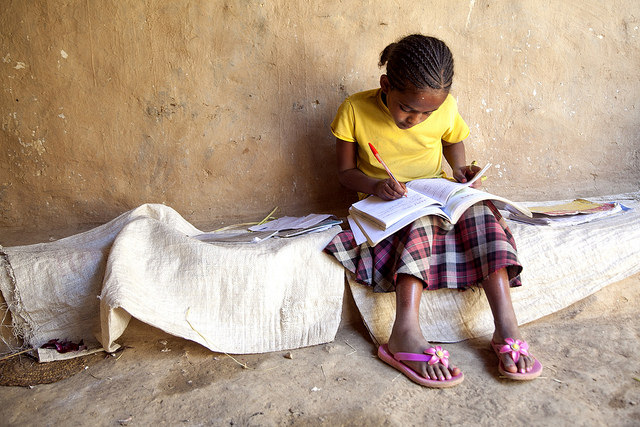 When a developing country is in crisis or conflict, education is an area that suffers immensely. Education is a transitional platform that propels students in developing nations out of the cycle of poverty if implemented consistently. However, the relationship between education and conflict is negatively correlated: though education helps prevent conflict and crisis, once conflict and crises arise, education suffers.
Today, one in six children ages three to 15 are directly affected when a country experiences conflict and crisis. This number in itself explains why education matters, especially for these primary and secondary school-aged children.
According to the U.N.’s tracking of Millennium Development Goals (MDGs), “in countries affected by conflict, the proportion of out-of-school children increased from 30 percent in 1999 to 36 percent in 2012.” In 2015, in succession to the MDGs, the U.N. established the Sustainable Development Goals (SDGs). The new SDGs pledge to “ensure inclusive and quality education for all.” This objective exemplifies the international importance of the universal human right to education.
So, if all people have the right to education, why are children in conflict left out?
The World Economic Forum found a recent OECD report that details why education matters economically. According to the report, “providing every child with access to education and the skills needed to participate fully in society would boost GDP by an average 28 percent per year in lower-income countries.” Conflict and crises have an expensive effect on the economy of the affected country. From 2011 to 2016, for example, the war in Syria exacerbated cumulative losses of $226 billion to the country’s GDP. The correlation between conflict and the economy is buffered when access to education persists.
The World Economic Forum points out that there are 37 million out-of-school children and youth in countries affected by conflict and crisis. This translates to about 33 percent of out-of-school students across the globe. The Global Partnership for Education (GPE) estimates that it will only cost $74 annually to educate each child affected by conflict and crisis. If these students remained in school during times of crisis, the economic consequences, like in Syria, might not be so drastic.
An infographic published by the GPE looks at the relationship between education and conflict or crisis. When a conflict or protracted crisis arises, no matter what the cause, schools are commonly destroyed or used for strategic purposes. In Yemen, BBC reports, “more than 1,700 schools are currently unfit for use due to conflict-related damage, the hosting of displaced people or occupation by armed groups.” During violence and rebellion, children and teachers are targeted and forced to flee. Education suffers immensely as a result of conflict and crisis and is difficult to reestablish.
The GPE infographic contrasts the detrimental effects of conflict and crisis to education with the promising relief education can bring in these situations. For each year of education, the risk of conflict reduces by 20 percent. And, if the average secondary school enrollment rate increases by only 10 percent, the risk of war will reduce by three percent.
Education not only reduces the risk of conflict and crisis, it provides opportunities for citizens to stimulate the economy and support democratic processes. The GPE further points out that, “across 18 Sub-Saharan African countries, people with a primary school education are 1.5 times more likely to support democratic processes.”
When nations experience tension like conflict or protracted crisis, education empirically suffers. However, if education can become a developmental focus, as in the U.N. SDGs plan, the risk of conflict and crisis in developing countries can correspondingly decrease. From encouraging future growth to maintaining socioeconomic homeostasis, it is easy to see why education matters, especially in times of crises and conflict.
– Eliza Gresh
Photo: Flickr
