• Link to X
  • Link to Facebook
  • Link to Instagram
  • Link to TikTok
  • Link to Youtube
  • About
    • About Us
      • President
      • Board of Directors
      • Board of Advisors
      • Financials
      • Our Methodology
      • Success Tracker
      • Contact
  • Act Now
    • 30 Ways to Help
      • Email Congress
      • Call Congress
      • Volunteer
      • Courses & Certificates
      • Be a Donor
    • Internships
      • In-Office Internships
      • Remote Internships
    • Legislation
      • Politics 101
  • The Blog
  • The Podcast
  • Magazine
  • Donate
  • Click to open the search input field Click to open the search input field Search
  • Menu Menu

Archive for category: Children

Information and stories addressing children.

Children, Development, Education, Global Poverty

Rwanda and Microsoft Team Up to Improve Education

Microsoft and the Rwandan Ministry of Education are teaming up to bring a better learning experience to Rwandan children. Through its Partners in Learning Program, Microsoft hopes to increase information and communications technology (ICT) throughout the Rwandan school system. Both parties feel that improved ICT access will facilitate teaching and learning while also increasing the chances every child receives a quality education.

Microsoft’s Partners in Learning program seeks to improve the student and teacher experience through technology. The program has invested over $750 million throughout the world, helping 12 million educators in 134 countries. In sub-Saharan Africa alone, 13 million students  have received benefits due to Microsoft’s initiative.

On the other hand, Rwanda’s educational system is in desperate need of aid. Only 6% of primary schools and 18% of secondary schools are connected to the Internet. Additionally, the student-to-computer ratio in Rwandan secondary schools is a feeble 40-to-1. Without adequate resources, it is difficult for many of these children to receive the technological background that is needed to survive in the modern age.

Rwanda is a country with a tumultuous history.

It has experienced the worst genocide in modern history, when clashes in 1994 between the minority Tutsi population and the majority Hutus left up to a million Rwandans dead and eliminated approximately three-quarters of the Rwandan Tutsis. Since the tumultuous violence of the 1990s, Rwanda has been working to remake its image.

In fact, it has made substantial gains in bringing stability, and subsequently the country has experienced average growth of 7% to 8% since 2003.

Microsoft and Rwanda’s partnership goes along with the government’s desire to become a regional leader in information and communication technologies. It has taken steps, such as establishing a Specialized Economic Zone in Kigali, to attract further private investment in the area and help jump-start the economy.

Through increased investment, Rwandan hopes to build up its infrastructure and lower poverty.

Currently, 44.9% of its population, almost six million people, lives below the poverty line. Additionally, Rwanda suffers from energy shortages and a lack of adequate transportation linkages to other countries. Through efforts such as the Partners in Learning program with Microsoft, Rwanda is making the correct moves to attract private investment and improve both its economic potential and the lives of its people.

– Martin Levy

Sources: IT News Africa, CIA Factbook

March 12, 2014
https://borgenproject.org/wp-content/uploads/borgen-project-logo.svg 0 0 Borgen Project https://borgenproject.org/wp-content/uploads/borgen-project-logo.svg Borgen Project2014-03-12 07:39:242024-05-26 23:18:58Rwanda and Microsoft Team Up to Improve Education
Activism, Advocacy, Aid Effectiveness & Reform, Charity, Children, Developing Countries, Development, Global Poverty

Orphanage Tourism

orphanage tourism
The number of orphanages in Cambodia has nearly doubled since 2007, yet the United Nations Children’s Fund (UNICEF) reports that there are now fewer orphans in Cambodia than ever before. The reason for this discrepancy? Orphanage tourism.

Volunteering at a local orphanage has become a bucket-list item for many tourists and the preferred feel-good end to a trip full of festivals, massages, cooking classes, and guided tours. Regardless of skill-sets or language barriers, most orphanages throw open their doors to well-meaning travelers, but for a price.

UNICEF’s statistics show that of the estimated 12,000 children living in Cambodian orphanages today, only 28 percent have lost both their parents. Most of the children in these establishments are serving as — for lack of a kinder expression — tourist attractions.

The inflation of orphanages has come an explosive 250 percent increase of travelers into the country.

Parents who cannot afford to feed or educate their children have started sending them to one of the newly sprung-up orphanages in the hopes that they will find a better life through the pocket change of tourists. But while a few orphanages deliver on their promises to desperate parents that their children will be educated, most do not.

Tuk tuk drivers are often commissioned by orphanages to deliver optimistic tourists, and again by market vendors if the tourists are brought to them first to purchase school supplies.

Smart travelers are able to find the few genuine orphanages, but it takes determination, and a willingness to accept their own limitations; trained child workers and long-standing volunteers are almost always more qualified to care for orphans, and the quick turn-around time of visitors often just deepens a child’s feelings of abandonment.

It’s common for unwieldy volunteers to pamper their own conscience more than those they are aiming to help, because while this sometimes leads to a life of humanitarian work, most times it just leads to cool Facebook pictures. Travelers wishing to spend some of their vacation doing volunteer work must be careful to put their money in the hands of people with similar motives.

– Lydia Caswell

Sources: The Telegraph, Forbes
Photo: Mangine

March 12, 2014
https://borgenproject.org/wp-content/uploads/borgen-project-logo.svg 0 0 Borgen Project https://borgenproject.org/wp-content/uploads/borgen-project-logo.svg Borgen Project2014-03-12 04:00:542024-12-13 17:50:09Orphanage Tourism
Child Soldiers, Global Poverty, Human Rights

Human Rights Violations in Somalia for 23 Years

The history of human rights violations against Somali citizens by their government under the rule of Siad Barre contributed to an overthrow that forced him to flee in 1991. The subsequent power vacuum led to the Somali civil war that continues to rage on to this day. For over 23 years, Somalia has been ravaged by human rights abuses, war crimes and the lack of a developed justice system to deal with these issues.

The main players at this moment are the Islamic backed forces, al-Shabaab, and the pro-government forces, the Federal Republic of Somalia, Ethiopian troops and African Union troops operating under the African Union Mission to Somalia. While the faces have changed throughout the 23 year conflict, the main points of contention  remain the same.

The Islamic forces wish for the country to become an Islamic state ruled under Sharia law, while government forces aim for the country to follow through with the constitution that founded the federal republic in 2012. Major human rights violations are committed on both sides of the Civil War, limiting positive change in the country.

Human rights violations include indiscriminate attacks against civilians, displacement of persons, restrictions on humanitarian aid, rape, recruitment and use of child soldiers, unlawful killings and torture by armed groups and armed piracy off the Somali coast. Various treaties including the Geneva Convention and the Universal Declaration of Human Rights forbid the indiscriminate use of force against civilians. According to Amnesty International, “all parties to the conflict use mortars and heavy weapons in areas populated or frequented by civilians, killing and injuring thousands of people, many of which are women and children under the age of 14.”

The killings not only affect those being killed, but they also the education of the Somalis. A report by Amnesty International states that, “in Somalia’s capital, Mogadishu, many schools have closed down as students and teachers fear being injured and killed on their way to school.” These indiscriminate killings by forces on both sides will lead to the further destruction of the country and its future. The Somalis need to continue their education in order to push the country towards a better path.

The topic of child soldiers has gained popularity in the last few years due to campaigns such as “Kony 2012.” The use of child soldiers is not limited to Uganda, however, and Somalia is a prime example of the horrible atrocities that occur while using them. According to a January 2013 Human Rights Watch report, “al-Shabaab has increasingly targeted children for recruitment, forced marriage, and rape, and has attacked teachers and schools.”

However, government forces have also used child soldiers, as described later in the same article. “In July 2012, the TFG [Transitional Federal Government] signed a plan of action against child recruitment; yet the same month, 15 children were identified among a group of new recruits sent to a European Union-funded training in Uganda.” Abuses are occurring on on both sides of the conflict, and further action may need to be taken by outside parties.

The problems with human rights violations occurring in Somalia do not seem to be getting any better. Unfortunately, humanitarian access to those who need aid is limited at the moment because of restrictions from allies to the conflict, diversion of aid and insecurity. The few humanitarian workers still in the country are being targeted, further limiting access to much needed aid.

– Kenneth W. Kliesner

Sources: Amnesty International, Human Rights Watch, Human Rights Watch
Photo: Global Post

March 9, 2014
https://borgenproject.org/wp-content/uploads/borgen-project-logo.svg 0 0 Borgen Project https://borgenproject.org/wp-content/uploads/borgen-project-logo.svg Borgen Project2014-03-09 04:00:572024-05-26 23:17:43Human Rights Violations in Somalia for 23 Years
Children, Developing Countries, Development, Global Poverty

Olympic Youth Development Center Celebrates Third Year

Zambia_Olympics_youth
The International Olympic Committee (IOC) thinks sports are the answer to improving life in developing countries. The IOC’s “Sports for Hope” program provides communities with better opportunities to exercise and learn about the values of Olympism.

The organization believes practicing sports in a safe and welcoming environment has the power to bring hope and positivity to developing countries. Sports have the ability to foster cognitive development, social interactions and community integration. The program involves building multi-functional sports facilities in developing countries.

Besides improving the health of those who participate, the program will also help young athletes actively develop their minds. Other goals of “Sports for Hope” include offering athletes professional training opportunities, organizing sports competitions and providing health services.

The pilot project for the program is in Lusaka, Zambia. In addition to the Olympic Youth Development Center, the project provides community development services, Olympic education, health services and sports administrators’ seminars. The Olympic education covers girls’ empowerment and civic education.

The Center, costing a total of about $10 million, includes outdoor sports fields, indoor multi-purpose courts, a boxing arena, a gym, classrooms, administrative offices, locker rooms and storage rooms. The IOC partnered with the Government of the Republic of Zambia and the National Olympic Committee of Zambia to bring the center to the people of Zambia.

Now in its third year, the Center welcomes about 10,000 children and teenagers each month. The facility offers opportunities for young athletes to train in 16 different sports.

Following the success of The Center in Zambia, the IOC is currently building its second Olympic Youth Development Center, this one in Port-au-Prince, Haiti. The Haitian Center will feature large shaded areas to protect athletes from the heat of the region.

The Centers offer educational classes, including HIV/AIDS programs. Zambia has one of the world’s most devastating HIV/AIDS epidemics; at least one in every seven adults in the country live with HIV. Woman and girls aged 15 years old to 24 years old are most vulnerable to the disease with double the prevalence of men in the same age group. The educational programs on female empowerment focus on positivity, including safe sexual practices to prevent the transmission of HIV/AIDS.

Zambia’s Olympic Youth Development Center is an example of how a sports complex and sports in general, can be so much more than what meets the eye. Zambian Olympian Samuel Matete says, “As an Olympian myself, I look forward to using the Center to provide great opportunities for young people to achieve their dreams.”

– Haley Sklut

Sources: Olympic, Olympic, Olympic Youth Development Center, Avert, YouTube
Photo: Asian Wave Mag

March 7, 2014
https://borgenproject.org/wp-content/uploads/borgen-project-logo.svg 0 0 Borgen Project https://borgenproject.org/wp-content/uploads/borgen-project-logo.svg Borgen Project2014-03-07 04:00:072024-12-13 17:53:51Olympic Youth Development Center Celebrates Third Year
Children, Disease, Health

Exclusive Breastfeeding Promotes Infant Health

breast_feeding
Children ages 12 to 23 months receive an estimated 30-40% of total energy from breast milk. This milk serves as a source of energy and essential fatty acids for them and the fat content appears critical for utilizing pro-vitamin A carotenoids, which exist predominantly in plant-based diets. Moreover, these nutrients offer necessary protection against diseases and help children recovery from infections.

Breastfed children face a significantly reduced risk of chronic illness. The contribution of breast milk to overall nutritional status protects children from developing noncommunicable diseases as adults. Breast milk also improves cognitive development. This benefit could serve to assist with the second Millennium Development Goal of achieving universal primary education. Education coupled with decline of disease increases productivity in developing countries subsequently offering greater food security and the reduction in poverty.

For young girls, greater learning potential offers financial independence. Mothers, in addition to their daughters, benefit from exclusive breastfeeding as well. Breastfeeding naturally delays fertility and as a result, this increases the period between births in populations without contraception. At this time, developing nations account for 99% of global maternal deaths.

A delay in childbirth protects the lives of many women who marry young and give birth frequently. Those who give birth before the age of fifteen risk dying during childbirth at five times the rate of those in their twenties. The World Health Organization offers a number of guidelines to improve breastfeeding and complimentary feeding practices. The annual loss in GDP to vitamin and mineral deficiencies far exceeds the cost of these interventions. For instance, Peru loses $637 million a year to malnutrition. Yet increasing its micronutrient interventions costs less than $16 million annually. To promote the timeline of exclusive breastfeeding, the organization could implement these low-cost interventions:

  • Advocate for natural breastfeeding, as opposed to the use of water-based substitutes
  • Adopt and enforce maternity leave policies
  • Provide training on infant and young child feeding to health care professionals
  • Implement a cash-conditional program for mothers to breastfeed and regularly visit clinics
  • Develop and support work sit lactation programs

Exclusive breastfeeding within the first six months nourishes infants and acts as a safeguard against the spread of diseases. However, globally, less than 40% of infants benefit from exclusive breastfeeding. Affordable and direct solutions to this issue exist, holding the potential to drive this rate to 100%worldwide.

– Ellery Spahr


Photo: She Rights Sources: WHO, World Bank


March 3, 2014
https://borgenproject.org/wp-content/uploads/borgen-project-logo.svg 0 0 Borgen Project https://borgenproject.org/wp-content/uploads/borgen-project-logo.svg Borgen Project2014-03-03 15:44:422024-05-26 23:16:00Exclusive Breastfeeding Promotes Infant Health
Children, Global Poverty

6 Facts about Child Poverty in the United Kingdom

child_poverty_uk
The United Kingdom is the 6th largest economy in the world. Even though the country is developed, there are a large number of children living in poverty. The disparity between the country’s impoverished and wealthy is so sharp that doctors from the Medical Research Council said that the number of children who do not have proper access to food is a ‘public health emergency.’

Many people do not think that in a country with such a large and developed economy that child poverty would be such an issue, but the problem has actually grown worse in the last few years. Experts blame the rise in poverty on the spending cuts in social services such as welfare. Here are six facts that characterize what poverty in the United Kingdom looks like:

1. 1 in 5 children in the UK are living in relative poverty. Relative poverty is defined as a family’s net income that falls below 60% of median net disposable income, which is currently £250 or less per week.
2. 2.3 million UK children were living in poverty in 2011-12. The number of children living in poverty in 2012-13 rose by 300,000.
3. 66% of children living in poverty lived in a household with at least one employed person.
4. In 2009-10, single parent households in the United Kingdom are twice as likely to be living in poverty as two parent households.
5. Inadequate benefits leave people who do not make enough money at their job without a safety net. Ideally, benefits provided by employers and social services such as welfare will help people who are in low paying jobs or jobs with little potential for growth. Many new government policies have cut funding to social services leaving people worse off than before.
6. Under current government policies, child poverty is expected to dramatically increase by over 600,000 children by 2015.

-Colleen Eckvahl

Sources: Child Poverty Action Group, BBC News, The Independent
Photo: The Guardian

March 2, 2014
https://borgenproject.org/wp-content/uploads/borgen-project-logo.svg 0 0 Borgen Project https://borgenproject.org/wp-content/uploads/borgen-project-logo.svg Borgen Project2014-03-02 04:00:112017-11-29 12:56:236 Facts about Child Poverty in the United Kingdom
Activism, Child Soldiers, Children, Global Poverty

China’s Soldiers Have Grown, PLA Reports

china's soldiers
China’s People’s Liberation Army (PLA), the largest army in the world, recently released a report on the physical well-being of its troops. The study, published in the PLA’s official newspaper, reported that China’s soldiers have gotten physically bigger in recent years, growing .8 inches taller and two inches larger around the waist in the last 20 years.

While this increase in size has caused some problems with army equipment, experts are celebrating the news and attributing better nutrition in China for the growth.

Malnutrition has long been a problem in China, especially in rural areas. Poor Chinese soldiers were traditionally more likely to be malnourished and underweight. As China modernized, so did its military, which was forced to design its own military technology due to trade sanctions.

The equipment created during this period, however, is based on a now-outdated body type. Rifle butts are proving too short for soldier’s arms; tanks are becoming more crowded by the bigger average bodies of soldiers.

The United States military is experiencing similar problems, but it is largely due to higher obesity rates.

The size increase in both the U.S. and China is related to development. As China has modernized and become a wealthier nation, the Chinese population, including China’s soldiers, have become more nourished. In the case of the U.S., as nations move from middle-income to high-income status, obesity rates tend to increase.

Experts warn that as the nation continues to develop, China may be headed on the path towards an obesity problem.

According to the World Health Organization, only 5 percent of Chinese people are obese, but that figure can jump to 20 percent in certain parts of the country. Furthermore, 45 percent of Chinese men and 32 percent of women are overweight.

Youth in urban areas are those particularly represented in the increased obesity rates, with wealthier people having higher obesity rates than those with less money. This economic link to obesity is the opposite of many nations such as the U.S.

Along with greater wealth, access to fast food and better nutrition, placing less emphasis on physical activities starting in childhood is contributing to the average size increase of Chinese people.

Athena Foong of University of Southern California’s Institute for Global Health explains, “The only way people look at the way you advance in life [in China] is getting a better education so you can get a better job, and sports is not considered a job.”

Despite rising obesity rates, many Chinese people are also still going hungry. In China, there are roughly 12.7 million children with stunted physical growth caused by chronic nutritional deficiency in the first 1,000 days of life. In low-income, rural parts of the country, 10 percent of children under the age of 5 have stunted growth.

While these figures are concerning, they have also been steadily declining in recent decades. In 1987, 22 percent of Chinese people were underweight. This number decreased to 12 percent by 1992.

Improvements in the health of Chinese people have many causes including economic advances, better access to clean water, increased distribution of food and better health facilities and resources.

China’s rapid development has brought better health and nutrition to its populace, but as long as childhood malnutrition and obesity rates persist and rise, the nation will be combating development-related public health issues.

– Kaylie Cordingley

Sources: The Washington Post, Telegraph, UNICEF, Food and Agriculture Organization of the United Nations, World Health Organization, US-China Today, National Geographic, Financial Times
Photo: Growing Taller

March 1, 2014
https://borgenproject.org/wp-content/uploads/borgen-project-logo.svg 0 0 Borgen Project https://borgenproject.org/wp-content/uploads/borgen-project-logo.svg Borgen Project2014-03-01 04:00:122024-12-13 17:50:07China’s Soldiers Have Grown, PLA Reports
Children, Food & Hunger, Global Poverty

Japanese Model Kurara Chibana as WFP Ambassador

WFP_Kurara_Chibana
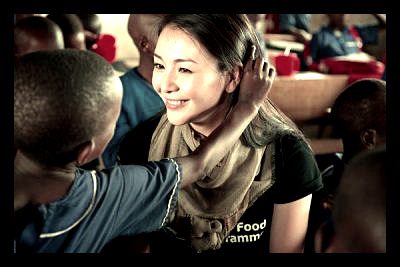
Japanese model Kurara Chibana was recently appointed as the first Japanese National Ambassador to the United Nations World Food Programme (WFP). The 31-year-old model and Japanese celebrity uses her status to bring attention to those communities with scarce food resources and the issues faced in those communities.

As a former Miss Universe contestant, Chibana was the first runner-up for the 2006 competition cycle. The Okinawa native has since focused her energy on fighting world hunger alongside the WFP.

Chibana has held the position of WFP Celebrity Partner since 2007. Chibana has traveled to several developing countries.  To date, those countries include the Philippines, Zambia, Tanzania, Ethiopia and Sri Lanka.

The WFP is the largest humanitarian agency in the world fighting against hunger, and the Japanese government itself has consistently donated to the WFP.

In Tanzania, Chibana visited the Longido district of Arusha. There, Chibana spent time with the children of the Engikaret Primary School, a recipient school of WFP Tanzania. WFP Tanzania provides two meals to over 1,167 schools in regions vulnerable to droughts; meals that feed an estimated half million schoolchildren.

For her part, Chibana shared a meal with the children of Engikaret Primary School and visited the community of one of the school’s pupils. In 2011, donations amounted to $290 million, both from the public and private sector. The funds went to over 30 different countries in the form of foreign aid.

Furthermore, as an ambassador for the WFP, Chibana hopes to learn more about disaster preparedness and emergency protocols following natural disasters.

Oftentimes, celebrity power can draw hundreds of donors to a particular fundraiser that goes toward relief aid. Other times, celebrities such as Chibana use their international presence as a means to draw attention to otherwise globally voiceless communities.

– Miles Abadilla

Sources: Japan Times, Japan Update, Ryukyu Shimpo, Trust.org, World Food Programme 1, World Food Programme 2
Photo: WFP

February 27, 2014
https://borgenproject.org/wp-content/uploads/borgen-project-logo.svg 0 0 Borgen Project https://borgenproject.org/wp-content/uploads/borgen-project-logo.svg Borgen Project2014-02-27 04:00:182024-06-04 03:01:15Japanese Model Kurara Chibana as WFP Ambassador
Advocacy, Children, Development, Global Poverty, Human Rights

Young Migrants Focus of UN Report

young migrants
On February 14th, the UN Department of Economic and Social Affairs (DESA) released the 2013 World Youth Report, aimed at addressing the significant impact of young migrants on both origin and destination countries. The report also highlights the specific concerns, challenges and successes faced by migrants across the globe.

Whether it be for work, study or family reasons, voluntary migration continues to increase every year. The UN estimates that there are 232 million international migrants worldwide, representing 3.2% of the world’s total population. More than 30% of these migrants are considered youth migrants under the age of 29 and approximately half of these are female.

Youth migration has a significant impact on not only individual lives, but also global economies. Many young migrants leave their country of origin in search of better job opportunities and often send remittances home to benefit their families. These individuals improve their financial situations while engaging in economic transactions that will benefit their destination country.

However, countries of origin often suffer the negative effects of “brain drain,” or human capital flight. This is the process by which professionals, often in the fields of health or education, leave developing countries in search of a higher salary and better living conditions.

The report also goes into detail about the specific struggles and opportunities that young migrants can face.

In the preparatory stage, migrants cited the difficulties they faced in obtaining accurate information about their intended destination, as well as in obtaining needed documents and making travel accommodations.

On arrival, migrants noted experiencing both culture shock and loneliness. Often communication barriers had to be overcome and in the long term, many faced both stereotyping and discrimination.

The report notes some recommendations made by migrants to ease the transition from origin to destination country. Among these is the development of tools to assess the readiness of a migrant and to help facilitate decision-making and planning. They recommended peer-to-peer initiatives, pre-departure orientation programs, and awareness-raising campaigns.

Despite these challenges, many young migrants have become exemplary examples of what can be achieved in the face of adversity.

As the report notes, “their capacity as agents of social change and development should not be underestimated.”

– Mollie O’Brien

Sources: UN News Centre, United Nation Regional Information Centre for Western Europe
Photo: Caritas

February 26, 2014
https://borgenproject.org/wp-content/uploads/borgen-project-logo.svg 0 0 Borgen Project https://borgenproject.org/wp-content/uploads/borgen-project-logo.svg Borgen Project2014-02-26 16:36:442024-06-05 01:57:10Young Migrants Focus of UN Report
Children, Education, Global Poverty

The Cost of Education

cost of education
How much does it actually cost to build and run a school in some of the world’s poorest countries?

Everything comes back to education: areas that are the most overpopulated are also the poorest and least educated. Children that don’t receive an education will most likely spend a lifetime in extreme poverty, and, chances are, they will not educate their own children. So how much is the actual cost of education?

1. Angola

Lynn Cole, a resident of Illinois, runs RISE International – an organization that builds schools for as little as $12,000. Fueled by donations, the residents of Angola construct and run the school themselves.

2. Kenya

In January 2003, as an attempt to raise school enrollment, Kenya’s government eliminated fees and wrote a policy that provides textbooks and notebooks to schools. While more children are in school now because of this new policy, the cost of school uniforms has sky-rocketed. Each school has its own uniform, and discharges students who are not wearing one.  The average cost of school uniforms in Kenya is now $5.59 for girls and $6.10 for boys.

3. Nigeria

Similar to Kenya, formal school fees are no longer levied. However, books and uniforms now cost much more than they did previously, jumping from $1.63 per uniform to $4.22.

4. Bangladesh

CO-ID (Co-Operation In Development Australia Inc.) led by Fred Hyde, builds schools in the poorest areas of Bangladesh. Donation-run, it costs $8,000 to build a charity school, and another $8,000 each year to keep it running.

5. Congo

In the village of Butembo, about 75% of the population live on less than $2 a day. The average annual school fee per child is $25-$35 for primary school and $30-$50 for secondary school, which means that for most children, school isn’t an option.

6. Liberia

A school without an educated teacher benefits no one, meaning that teachers are often a school’s largest expense. To sponsor a teacher through the basic Liberian Teacher Training costs $120. To provide latrines for a school costs $500. The cost of 3-days residential teacher training for 60 teachers is $1,000. Aside from their training, the materials used by teachers also cost more than what is used by students. The books to teach a child for one year cost $8; a mathematics or science text book for one teacher costs $15.

7. Cameroon

Through the organization Building Schools for Africa, ten sets of school uniforms cost about $67; the tools and seeds for a school farm run at about $225; textbooks for ten children cost $250; it takes $1,000 to build new toilets; installing drinking water is roughly $1,671; a new classroom costs an average of $6,686.

8. Madagascar

A school that can offer its students at least one meal a day had an increased likelihood of maintaining its enrollment because some students aren’t fed at home. Feeding a school of 580 for 60 days costs $730.

9. Pakistan

A month of education for a child is attained by $10; $120 educates a child for a year; $710 stocks a primary school library; $955 stocks a secondary school library; $1,340 educates a child from KG-Grade X (11 years); $7,775 equips a computer lab; $180,500 supports an entire school for a year.

This demonstrates how much can be done with just a little funding, and how much more complicated running a school is after the initial construction. Contrary to Oprah Winfrey’s extravagant donation-budget, it doesn’t take $40 million to build a school. Sometimes the school already exists and it’s the teacher or the pencils that are missing. Sometimes schooling is available, but children can’t attend because they haven’t been dewormed.

Building a school is the easy part. The hard part is getting parents to send their kids, getting materials like paper, chalk as well as textbooks out to rural areas and maintaining a level of education that prepares student to be future leaders in their community.

– Lydia Caswell

Sources: Young Lives, Global Giving, Illinois Review, Fred Hyde, IRIN News, Ethnics Daily, SIM, Schools for Africa
Photo: Huffington Post

February 26, 2014
https://borgenproject.org/wp-content/uploads/borgen-project-logo.svg 0 0 Borgen Project https://borgenproject.org/wp-content/uploads/borgen-project-logo.svg Borgen Project2014-02-26 16:35:512024-06-05 01:57:11The Cost of Education
Page 127 of 137«‹125126127128129›»

Get Smarter

  • Global Poverty 101
  • Global Poverty… The Good News
  • Global Poverty & U.S. Jobs
  • Global Poverty and National Security
  • Innovative Solutions to Poverty
  • Global Poverty & Aid FAQ’s
Search Search

Take Action

  • Call Congress
  • Email Congress
  • Donate
  • 30 Ways to Help
  • Volunteer Ops
  • Internships
  • Courses & Certificates
  • The Podcast
Borgen Project

“The Borgen Project is an incredible nonprofit organization that is addressing poverty and hunger and working towards ending them.”

-The Huffington Post

Inside The Borgen Project

  • Contact
  • About
  • Financials
  • President
  • Board of Directors
  • Board of Advisors

International Links

  • UK Email Parliament
  • UK Donate
  • Canada Email Parliament

Get Smarter

  • Global Poverty 101
  • Global Poverty… The Good News
  • Global Poverty & U.S. Jobs
  • Global Poverty and National Security
  • Innovative Solutions to Poverty
  • Global Poverty & Aid FAQ’s

Ways to Help

  • Call Congress
  • Email Congress
  • Donate
  • 30 Ways to Help
  • Volunteer Ops
  • Internships
  • Courses & Certificates
  • The Podcast
Scroll to top Scroll to top Scroll to top