• Link to X
  • Link to Facebook
  • Link to Instagram
  • Link to TikTok
  • Link to Youtube
  • About
    • About Us
      • President
      • Board of Directors
      • Board of Advisors
      • Financials
      • Our Methodology
      • Success Tracker
      • Contact
  • Act Now
    • 30 Ways to Help
      • Email Congress
      • Call Congress
      • Volunteer
      • Courses & Certificates
      • Be a Donor
    • Internships
      • In-Office Internships
      • Remote Internships
    • Legislation
      • Politics 101
  • The Blog
  • The Podcast
  • Magazine
  • Donate
  • Click to open the search input field Click to open the search input field Search
  • Menu Menu

Archive for category: Children

Information and stories addressing children.

Children, Global Poverty, Health

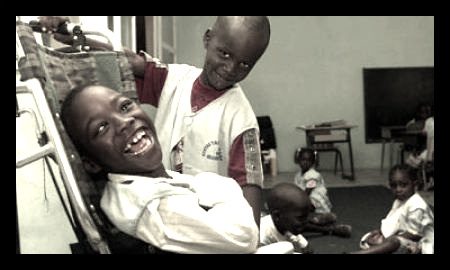
Why We Must Fight for Disabled Children in Africa

disabled_children_south_afria
93 million children around the globe have a moderate or severe disability.  Many of these children live in developing nations that do not have the financial or social tools to make necessary accommodations for special needs children.  Even more disturbing is the discrimination against children with special needs, making children who need our support the most feel abandoned.

This is where Able Child Africa (ACA) steps in.  ACA was founded in the wake of the Ugandan Civil War in 1984 with a vision of helping children with disabilities realize a future of equality and inclusion in society.

The organization seeks to break down the social barriers that demean special needs people.  These barriers are broken down into three categories: physical and environmental barriers that prevent access to buildings, transportation and the like as well as institutional barriers such as governmental policy that fails to recognize the equality of disabled people and negative popular attitudes about disability.

ACA works locally with communities in order to help create a sustainable culture of change for special needs children.  For example, ACA is partnered with the Ugandan Society for Disabled Children.  Together, the two organizations oversee support groups for parents of special needs children and run training programs to teach elementary and secondary school teachers how to be more inclusive.  ACA also runs two centers in Kenya and Tanzania, respectively.

Although 63 percent of children in African countries are now completing a primary education, only two percent of children with disabilities complete this stage.  In 2006, the United Nations held the Convention on the Rights of Persons with Disabilities, which requires all member nations to be inclusive for disabled persons in all levels of education.  With such a gap between traditional and special needs students, much work must be done.  ACA is willing to take up the fight.

– Taylor Diamond

Sources: UNICEF, Able Child Africa
Photo: The Guardian

February 6, 2014
https://borgenproject.org/wp-content/uploads/borgen-project-logo.svg 0 0 Borgen Project https://borgenproject.org/wp-content/uploads/borgen-project-logo.svg Borgen Project2014-02-06 04:00:272019-10-29 15:20:14Why We Must Fight for Disabled Children in Africa
Children, Global Poverty, War and Violence, Women & Children

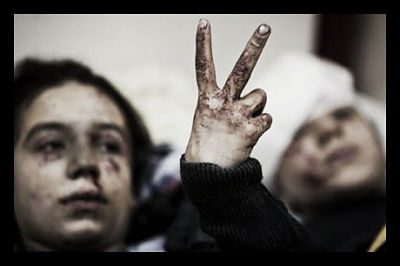
Protecting the Rights of Syrian Children

syrian_children
On January 22, the Geneva II Middle East Peace Conference opened in Montreux, Switzerland. One of the major focuses of the conference is an attempt to curb the civil war in Syria.

Since the beginning of Syria’s civil war in spring 2011, over 100,000 people have been killed. The Oxford Research Group posted an independent study estimating that 11,420 of civilian casualties, over 10 percent have been children.

While the majority of casualties have resulted from explosive weapons or Syrian army assaults on civilian neighborhoods, there have also been targeted attacks on children, with 112 recorded cases of torture leading to death.The situation for Syrian children is dire. In many cases, the children are forced to flee Syria as refugees. As refugees, the situation is not much better, with limited access to food and water.

World Vision has released its January report on the crisis in Syria focusing on bringing the conditions of the regions children to light. The report, “Stand With Me – Children’s Rights, Wronged” emphasizes the conditions in which Syrian children live and outlines what is needed to support them.

The report discusses the violations against Syrian children’s basic human rights. Affected children in Syria endure child labor at as young as 4 years old, with 10 percent of refugees replacing education with work.

This inability to access education is emphasized as one of the greatest misfortunes of the war. World Vision’s report explains how important it is to keep Syrian children in school not just to educate them, but also to keep them safe from dangerous situations on the streets and in the workplace.

Additionally, many Syrian children are being exploited to smuggle goods, perform sexual acts and to work and fight on the front lines of the civil war.

In addition to highlighting the conditions that Syrian children face, World Vision calls for three demands regarding the safety of these children to be met:

1. “All parties to the conflict to cease hostilities and come together to negotiate a peaceful resolution to the conflict, with support from the international community.

2. All parties to do everything within their power to respect and ensure the protection of children and their rights by immediately ceasing all violence, exploitation, and abuse against children.

3. Donors to meet the $1 billion call to fund education and child protection programming for children affected by the crisis…”

In light of the Geneva II Middle East Peace Conference, World Vision’s January report calls for action on the part of the global community in order to curtail further violence against the children of Syria.

– Cameron Barney

Sources: World Vision, NBC News, NPR, NPR, BBC
Photo: The Big Story

February 5, 2014
https://borgenproject.org/wp-content/uploads/borgen-project-logo.svg 0 0 Borgen Project https://borgenproject.org/wp-content/uploads/borgen-project-logo.svg Borgen Project2014-02-05 04:14:192024-05-26 23:08:32Protecting the Rights of Syrian Children
Children, Education, Global Poverty

The Problems of Dressing for Success in Kenyan Schools

Kenyan Schools
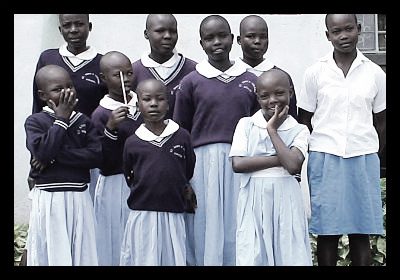
Global access to education should not always be uniformly approached. Many countries have been successful in reducing school fees since the installment of the UN Millennium Goals, and attendance has skyrocketed. However, the expense of the school uniform is still preventing too many children from the benefits of an education.

Kenya progressively eliminated tuition in 2002, under the leadership of President Mwai Kibaki. Yet the strictly enforced tradition of uniforms is still very much in place. Students in the Sub-Saharan African country are required to dress appropriately, or else risk dismissal at the discretion of their teacher.

Even if a child is not sent away, the lack of a uniform greatly inhibits education and encourages drop out rates. Just like in school, environments anywhere else have the pressure to fit in and the fear of ridicule can be crippling for Kenyan adolescence. Stigmatization and reprimand from teachers and peers are highly demotivational in the classroom, leading to attendance and concentration issues.

These sentiments have been proven by ISC-Africa, and NGO that funds the Child Sponsorship Program and focuses on the distribution of school supplies. Since the program began providing annual school uniforms to sponsored children in rural Kenyan schools, drop out rates decreased almost in half, from 15% to 8.6%.

Uniforms remain an unaffordable luxury, though, for many Kenyan families. The cost could be anywhere between 325 and 550 shillings, or $4.33-$7.33, per outfit. Although their educational purpose is essential, the value of a uniform naturally ranks lower in the household budget than, say, the next meal.

So, if uniforms are so detrimental to the access of education, then why are they still in place? Many parents support them because they encourage good behavior in the classroom and qualify students for reduced fees on public transportation. A more cynical theory speculates that teachers, whose regional assignments are decided based on student test scores, are motivated to exclude the lowest income, and most likely lowest scoring, students.

Cheaper alternatives have been explored such as matching badges or a school color scheme. The fact remains though, that providing education for all is a complicated and multi-faceted issue. The Millennium Goals must take this into account in its approach to reducing global poverty.

– Stefanie Doucette

Sources: World Bank, CESLA
Photo: Rabondo Community Project

February 2, 2014
https://borgenproject.org/wp-content/uploads/borgen-project-logo.svg 0 0 Borgen Project https://borgenproject.org/wp-content/uploads/borgen-project-logo.svg Borgen Project2014-02-02 21:47:132024-05-26 23:10:02The Problems of Dressing for Success in Kenyan Schools
Aid Effectiveness & Reform, Children, Economy, Extreme Poverty, Global Poverty

Are Needy Children in Nigeria Invisible?

children_nigeria
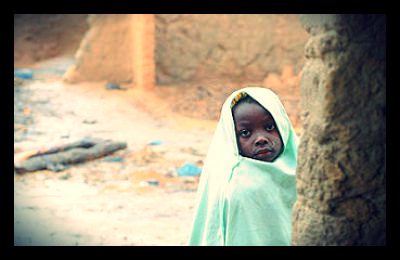
As the most populous country in all of Africa, the Federal Republic of Nigeria is made up of over 250 ethnic groups. The following are the most populous: Fulani and Hausa, 29 percent; Yoruba, 21 percent; Igbo, 18 percent and Ijaw 10 percent.  They also have a significant split in religion, with 50 percent of the population being Muslim and 40 percent of the population being Christian.

With the largest population in Africa, Nigeria has 174,507,539 people and is ranked as having the 8th highest amount of people in the world.  Of all those people, 76,461,896 are fourteen years of age or younger, meaning 43.8 percent of Nigerians are children.  Of that 43.8 percent, about 60 percent lack birth certificates, meaning they are not permitted to use many government facilities that would normally be free with proper proof of citizenship.

Nigeria’s government is trying to reform its petroleum-based economy, but through all the corruption in that sector, it is not focusing as much on the youth in need.  On top of that, presidential elections are tarnished by substantial violence and irregularities and the country has been undergoing long-lasting religious and ethnic conflicts, which also takes focus away from the children in need.  These children need help; about 1,000,000 children die each year in Nigeria before their fifth birthday (10 percent of the global total.) What they need to save more lives is continuous investment and organized scaling up of essential newborn, maternal, and juvenile health interventions.

In Nigeria, there are numerous state hospitals that are free for children under the age of five, but the only dilemma is that the majority of these children do not have birth certificates.  This is a catch-22 because the hospitals admit patients under five for free with proof of age, but these children have never had any way to prove how old they truly are.  From there, they have no choice but to go to a private hospital for treatment where they are forced to pay $45 (a trivial amount for a life-saving medication in the United States,) but an unfathomable expense for the people living in this region, especially since most of them live on less than a dollar per day.

The number of children lacking birth certificates in Nigeria is up to about 17,000,000, a number second only to India, which has 71,000,000 unregistered children.  According to UNICEF, one out of every three children in Sub-Saharan Africa does not “officially exist,” but does that mean that they do not still need help?  The undocumented children in Nigeria are denied education and healthcare and often times have their rights abused.  Their parents often times cannot even help them because in these rural areas many are uneducated and are not aware of how important it is to register their children.

The deficiency of birth records in Nigeria also causes an error in the government’s efforts to track demographic information.  Without the proper information on how many children need hospitalization or immunization, the government cannot tell how many vaccines it needs from organizations like UNICEF, it cannot tell how many children have already died nor the cause of death.

The good news is UNICEF is trying to convince people to register their children and trying to increase the number of registration centers in Nigeria so the families can have easier access.  They plan on having 65 percent to 70 percent of children be registered with official birth certificates within the next few years.

– Kenneth W. Kliesner

Sources: CIA World Factbook, Voice of America ,UNICEF
Photo: The Guardian

February 2, 2014
https://borgenproject.org/wp-content/uploads/borgen-project-logo.svg 0 0 Borgen Project https://borgenproject.org/wp-content/uploads/borgen-project-logo.svg Borgen Project2014-02-02 04:00:382024-05-26 23:07:46Are Needy Children in Nigeria Invisible?
Children, Global Poverty, War and Violence

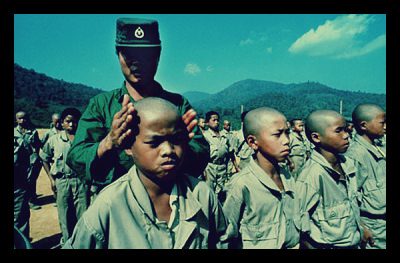
Child Soldiers Released in Myanmar

Child Soldiers Released in Myanmar
With over 400,000 soldiers serving in the national army of Myanmar (known as 
Tatmadaw Kyi), it’s nearly impossible to estimate the number of child soldiers hidden among the hundreds of base camps all over the country – nor is it easy to track down the ones that have been reported. In 2011 the International Labour Organization (ILO) reported that it had received 236 complaints of child soldier recruits, and that in response to these complaints 57 underage soldiers had been released.

Children find their way into combat when they run out of other ways to feed themselves, when they are forced at gunpoint to accept a forged birth certificate and enlist, when they are dropped off by their families to be taught discipline, or when they volunteer for any number of nationalistic reasons. Regardless of how they get there, all are under violation of the UN’s Optional Protocol to the Convention on the Rights of the Child, which sets the minimum age of volunteering for armed combat at 18.

In June 2012, Myanmar’s Ministry of Defense signed a joint Action Plan with the UN that promised to work toward the release all of its soldiers and guards under 18, as well as prevent future underage recruits. The army also stated that they meant to assist the released children in attending school or finding civilian employment, as well as providing the necessities for their trip back home.

The plan was set to be implemented within the first 18 months of it being signed, and within that time, a total of 272 children, as well as adults who were recruited as children, have been released. Moreover, while the act is now due to be extended, representatives of the UN are planning to meet with armed groups across the country to discuss and encourage more releases.

As Human Rights Watch (HRW) representative Smith suggests, “The real test [of Myanmar’s dedication to eradicating underage soldiers] will be if the army is willing to give full access to the UN and hold soldiers and officers accountable for falsifying documents, and for other crimes related to the recruitment of child soldiers.”

Since the signing of the Action Plan on behalf of the Country Task Force on Monitoring and Reporting of grave violations of child rights in armed conflict (CTFMR), actions have been taken against 40 military officers and 229 military personnel for their role in the recruitment of underage soldiers.

While the UN praised this as a “historic step” toward ending the practice of using children in the military, Myanmar still employs more child soldiers than nearly any other country, and the work of eradicating all involvement of children in armed forces is far from over.

– Lydia Caswell
Sources: Australian Network News, Child Soldiers International, Eleven , GMA News , Irin News
Photo: AATOP

February 1, 2014
https://borgenproject.org/wp-content/uploads/borgen-project-logo.svg 0 0 Borgen Project https://borgenproject.org/wp-content/uploads/borgen-project-logo.svg Borgen Project2014-02-01 03:47:162020-07-02 12:23:06Child Soldiers Released in Myanmar
Children, Global Poverty, Women

3 Facts on Child Marriage from Tall as the Baobab Tree


One in three Senegalese girls are married before the age of 18, while the number worldwide nears 14 million. These girls are at a higher risk for abuse, health complications and dropping out of school. Tall as the Baobab Tree is being screened in villages in Senegal to promote dialogue and understanding between generations. This internationally acclaimed film is set in the Senegalese village Sinthiou Mbadane and follows two sisters who are the first from their family to attend school.

1. Respect for Elders vs. Dreams for the Future

In the film, the older sister, Coumba tries to save her younger sister, Debo, from being sold by their father into an arranged marriage. New and old worlds collide as the sisters struggle with whether respecting their elders has to mean betraying their own future. In countries like Senegal where education is becoming more accessible, it is important to engage in dialogues about the dangers associated with child marriage.

2. Dialogue can Positively Influence Attitude

The dialogues about child marriage have the potential to change the attitudes of village elders and leaders, who play an important role in determining the fate of children in the community. The film and the surrounding dialogues help girls in Senegal to realize that they are not alone in their struggle. The dialogues presented by the film are respectful towards girls and families, with the ultimate goal of bridging the generational misunderstanding.

“The main experience that this film focuses on is educating versus early marriage, which seems, in my experience, to be the single biggest challenge that this younger generation faces, coming from these traditionally conservative, rural villages,” said director Jeremy Teicher.

3. Grow Roots at Home to Strengthen Your Community

Because of poverty, a family may feel obligated to either send their children from a village to a large city to find work, or to marry off their daughters to older, wealthier men. With the help of Plan International (https://plan-international.org/where-we-work/africa/senegal/what-we-do), children in Senegal have been able to stay in their home villages and either learn or work. The organization help set up training courses in needlework, hairdressing and metal work in villages to give children vocational opportunities. In this way, the children are able to grow up to be supporters and active community members in their villages.

– Haley Sklut

Sources: The Guardian, Tall as the Baobab Tree, Voice of America
Photo: View of the Arts

January 31, 2014
https://borgenproject.org/wp-content/uploads/borgen-project-logo.svg 0 0 Borgen Project https://borgenproject.org/wp-content/uploads/borgen-project-logo.svg Borgen Project2014-01-31 23:11:552024-05-26 23:09:493 Facts on Child Marriage from Tall as the Baobab Tree
Children, Global Poverty

Poverty in Mexico City Persists

Although Mexico has the 13th largest economy in the world, poverty in Mexico City remains commons.

According to an article by The Huffington Post, poor people in Mexico make up half of the country’s population. “While the number of people living in extreme poverty fell… many more Mexicans are now worse off than they were when former President Felipe Calderon entered the last two years of a six-year term in which poverty swelled by nearly 3 percent”, the article states.

On the other hand, despite Mexico City being home to historical monuments and rich neighborhoods, another reality exists in which almost half of the city’s inhabitants are poor. Another article published by the BBC in 2006 argues that 40 percent of the city’s population lives below the line of poverty.

“This is a place of homeless street kids, piracy, pollution, crime, and 100,000 street vendors. At the same time, the rich live in a world of gated communities, rooftop swimming pools, and commuting by helicopter,” stated the author.

It is estimated that approximately 15,000 children live on the streets of Mexico City. Many children prefer such a lifestyle due to family disintegration and physical abuse, which are symptoms of poverty itself. Poverty in Mexico City causes devastation at home and cause arguments. But, sometimes these arguments become violent.

To make some pesos here and there, children would dress like clowns and entertain traffic at stoplights.

If drivers were impressed they would give them some money. Most of the time, however, drivers tend to ignore these children. With 15,000 children living in the streets, the working class in Mexico City has probably become desensitized to such an image.

On the national level, the number of Mexican children living in poverty is more absurd. According to a report by Fusion, the United Nations Children’s Fund “estimates that more than 20 million children and adolescents live in poverty in Mexico with more than five million living in extreme poverty.”

Whether people live in the streets or not, the BBC states, “at least 40% of the economy in the city is informal – people who do not pay taxes, and who make a living based on selling small amounts of things, from children’s books to luminous stars.”

These articles combined serve to show that despite Mexico’s progress throughout history, poverty is one of the many social issues that the country struggles to defeat. They also suggest that the poverty in Mexico City is bad, but not as bad as the poverty on the national level.

– Juan Campos

Sources: BBC, The Huffington Post
Photo: Nick Rain

January 27, 2014
https://borgenproject.org/wp-content/uploads/borgen-project-logo.svg 0 0 Borgen Project https://borgenproject.org/wp-content/uploads/borgen-project-logo.svg Borgen Project2014-01-27 21:02:432024-05-26 23:08:06Poverty in Mexico City Persists
Children, Developing Countries, Development, Education, Family Planning and Contraception, Global Health, Global Poverty, Health, Women & Children

Big Impact of Baby Footprints

baby elephant
In one of the largest countries in Africa, a new program is working to change the outcome of premature births with a simple footprint.  Tanzania is home to an estimated 46,218,000 people who earn an average of $570 per year.  With about one third of its people living below the national poverty line, Tanzania is regarded as a ‘developing country.’  The term ‘developing country’ is described by Princeton as “a nation with a low level of material well-being.”  A common reality in developing countries is the limited or complete lack of access to medical assistance, whether a hospital, pharmaceuticals or a birth attendant.

The latter is an issue that can have devastating consequences.  In low-income countries, about 40% of births are unattended by a trained, medical professional.  Whether or not they are equipped with modern tools and resources, a trained professional is better able to determine the dangers and necessary steps to take before, during, and after birth, especially regarding premature babies.  Of the approximately 10% of infants worldwide born prematurely each year, about one million die, with over 80% of those deaths occurring in South Asia and Sub-Saharan Africa.

At present, Dr. Joanna Schellenberg and a team at Ifakara Health Institute (IHI) in Tanzania are researching a strategy with the potential to have a global impact.  The research began by attempting to solve how to reduce premature infant deaths without requiring entire health systems to be constructed (and funded) first. This is especially important since one of the greatest obstacles facing health care in rural areas is the absence of equipment.  However, the World Health Organization (WHO) estimates that 75% of preterm infant deaths could be prevented without the use of intensive care and modern resources.  Premature infant weights are under 5lb 5oz, yet since scales cannot be assumed to be available, the IHI team came up with another measurement: the size of a baby’s footprint.

Volunteer health workers visit villages with a laminated card picturing two footprints.  The health workers measure infants’ feet against the pictures and determine how to proceed based on their size.  If the infant’s footprint is the same size or larger than the bigger footprint, then the child is not premature.  If the footprint is between the two sizes, it may be premature but not necessarily in danger.

Health workers then proceed with suggestions on how to promote infant health such as holding the child skin-to-skin for warmth, or how to breastfeed effectively.  Finally, if the footprint is smaller than both samples, about 67mm or less, the mother is directed to the nearest health center where the infant can receive potentially life-saving care.

The strategy just described is called “Mtunze Mtoto Mchanga” which translates to “Protect the newborn baby,” a concept that local women have been quick to support.  With the persistent visits and encouragement by the project’s health workers, support has grown into a greater compliance by the public. Though the project will continue for another six months before clear results are available, the team is already poised to implement it throughout Tanzania.

The laminated-card system is not only relatively simple to duplicate, it also demonstrates potential self-sufficiency amongst rural women.  Moreover, once the procedure and subsequent actions are ingrained, the individuals could monitor their babies themselves without the need for health workers help with premature birth testing.

The versatility of the project only heightens anticipation for the results of the study.  If successful, the IHI project could mean saving up to three-quarters of a million infants each year with just a footprint.

– Katey Baker-Smith

Sources: World Health Organization, Princeton University, United Nations Data, The World Bank, BBC
Photo: Giphy.com

January 16, 2014
https://borgenproject.org/wp-content/uploads/borgen-project-logo.svg 0 0 Borgen Project https://borgenproject.org/wp-content/uploads/borgen-project-logo.svg Borgen Project2014-01-16 04:00:062024-05-25 00:51:41Big Impact of Baby Footprints
Activism, Advocacy, Children, Developing Countries, Gender Equality, Global Poverty, Slums, Women & Children, Women and Female Empowerment

Katherine Boo’s Behind the Beautiful Forevers

christmas
Pulitzer Prize winner Katherine Boo spent years in Annawadi, a slum outside the bustling metropolis of Mumbai, India. With most people living without electricity or stable income in makeshift shelters, the slum stands in stark contrast to the bustling airport and luxury hotels a few miles away.  Over the course of her stay, Boo followed the lives of the people that call Annawadi home. She describes the stories she heard and the events she saw in her book, Behind the Beautiful Forevers.

Boo introduces us to many residents such as Asha, who uses the corrupt political climate to gain influence and prestige. Her daughter, Maniu, studies education and rejects many of the gender norms of her society.

Young children in the village compete for short-term jobs at the Mumbai hotels. These children are easily exploited and often work for next-to-nothing in stressful conditions before collecting garbage to sell as scraps and recyclables.

Corrupt police and vague laws govern the people of Annawadi. Mysterious deaths are not investigated, false accusations fly around without evidence and gangs run the streets. Religious tension is obvious as Muslim families are singled out in the predominately-Hindu village.

Though Boo paints a dark picture of poverty in India, there is still hope. International organizations are moving in to help the people in India, especially since the slums of the region are in dire need of schools, permanent housing and job opportunities. The children of the region believe that one day they will have permanent jobs in Mumbai, own a house and send their own children to school.  The young girls in the village also believe that the time has come to stand up for their rights and make a living for themselves.  Furthermore, children are becoming motivated to stay in school while families plan to move on to permanent housing projects.

– Stephanie Lamm

Sources: Behind the Beautiful Forevers, New York Times
Photo: Vintage 3D

January 15, 2014
https://borgenproject.org/wp-content/uploads/borgen-project-logo.svg 0 0 Borgen Project https://borgenproject.org/wp-content/uploads/borgen-project-logo.svg Borgen Project2014-01-15 17:19:032024-06-04 03:01:13Katherine Boo’s Behind the Beautiful Forevers
Activism, Advocacy, Children, Education, Global Poverty

Life Lessons from The Little Prince

princess
Published in 1943 amidst the chaos of the Second World War, Le Petit Prince by Antoine de Saint-Exupéry is classified as a children’s book. Being both the most sold and most translated French piece ever written, however, the novella about a peculiar young boy is much more than that. Told from the point of view of a pilot stranded after his plane crashes in the Sahara desert, it is an emotional, deeply meaningful and philosophically-loaded journey.

More than half a century after being written, The Little Prince still has a few things to teach anyone willing to listen. A tale of love, sacrifice, loneliness, greed and the importance of staying true to oneself, it is a profound study of human nature, told in the simplest of jargon and skillfully presented through the unlikely platform of fairy tales.

The Little Prince himself is a confused character: traveling in space away from his home planet, he is driven by heartbreak from caring for someone who was too vain and spoiled to love him back – a beautiful rose which mysteriously came to grow on his planet.

The Prince’s journey takes him to many planets; he encounters various characters who through their actions symbolize vanity, redundancy, close-mindedness and others alike. As shown through the eyes of, essentially, a child, these and other vices seem all the more pointless and illogical. For example, on one of the destinations our hero encounters a drunkard. He tells the prince that he drinks so that he may forget his shame. “Of what?” asks the Prince. “The shame of drinking!” the drunkard retorts. Commenting on the weirdness of adults, our boy leaves the man alone.

Eventually he reaches Earth, where he meets the narrator and later on, a lonesome fox. The Prince always brings up his rose, obviously angry and frustrated, but also increasingly worried about her. The fox comes to tell him a simple truth: “You become responsible forever for what you’ve tamed. You’re responsible for your rose.” The value of this quote can be translated as such: this world is our rose. To neglect any part of it is to betray the ties we’ve established – it’s selfish as it is unthinkable.

Another essential thing the fox tells us is that “the most beautiful things in the world cannot be seen or touched; they are felt with the heart.” That is, materialistic things can never bear the same importance as kindness, selflessness, friendship and affection. If more people could live by these words, issues such as global poverty would doubtfully be as prevalent.

Visiting a train station, the Little Prince gets to witness in awe, the locomotives go by, speeding away in the distance. People are in a hurry to get somewhere, but what important things are they pursuing – he wonders? “’They are pursuing nothing at all,’ said the switchman. ‘They are asleep in there, or if they are not asleep they are yawning. Only the children are flattening their noses against the windowpanes.’” Surely, these passengers have lost their ways. Consumed by greed, or perhaps laziness or conceit, they waste their lives away in an endless road leading to nowhere. Children are innocent, selfless; that’s why they are superior to the adults in this quote’s context.

Inspirational and pure, The Little Prince’s tale should be known to everyone in the world. Too often we are too blinded by materialist concepts to see the beauty of other human beings. Truth is, each and every one of us was once an innocent, hopeful, positive and loving child – channel that child more often and influence others to do the same.

– Natalia Isaeva

Sources: Good Reads, The Little Prince
Photo: Giphy.com

January 15, 2014
https://borgenproject.org/wp-content/uploads/borgen-project-logo.svg 0 0 Borgen Project https://borgenproject.org/wp-content/uploads/borgen-project-logo.svg Borgen Project2014-01-15 17:17:572017-11-30 10:50:49Life Lessons from The Little Prince
Page 129 of 137«‹127128129130131›»

Get Smarter

  • Global Poverty 101
  • Global Poverty… The Good News
  • Global Poverty & U.S. Jobs
  • Global Poverty and National Security
  • Innovative Solutions to Poverty
  • Global Poverty & Aid FAQ’s
Search Search

Take Action

  • Call Congress
  • Email Congress
  • Donate
  • 30 Ways to Help
  • Volunteer Ops
  • Internships
  • Courses & Certificates
  • The Podcast
Borgen Project

“The Borgen Project is an incredible nonprofit organization that is addressing poverty and hunger and working towards ending them.”

-The Huffington Post

Inside The Borgen Project

  • Contact
  • About
  • Financials
  • President
  • Board of Directors
  • Board of Advisors

International Links

  • UK Email Parliament
  • UK Donate
  • Canada Email Parliament

Get Smarter

  • Global Poverty 101
  • Global Poverty… The Good News
  • Global Poverty & U.S. Jobs
  • Global Poverty and National Security
  • Innovative Solutions to Poverty
  • Global Poverty & Aid FAQ’s

Ways to Help

  • Call Congress
  • Email Congress
  • Donate
  • 30 Ways to Help
  • Volunteer Ops
  • Internships
  • Courses & Certificates
  • The Podcast
Scroll to top Scroll to top Scroll to top