• Link to X
  • Link to Facebook
  • Link to Instagram
  • Link to TikTok
  • Link to Youtube
  • About
    • About Us
      • President
      • Board of Directors
      • Board of Advisors
      • Financials
      • Our Methodology
      • Success Tracker
      • Contact
  • Act Now
    • 30 Ways to Help
      • Email Congress
      • Call Congress
      • Volunteer
      • Courses & Certificates
      • Be a Donor
    • Internships
      • In-Office Internships
      • Remote Internships
    • Legislation
      • Politics 101
  • The Blog
  • The Podcast
  • Magazine
  • Donate
  • Click to open the search input field Click to open the search input field Search
  • Menu Menu

Archive for category: Children

Information and stories addressing children.

Children, Global Poverty

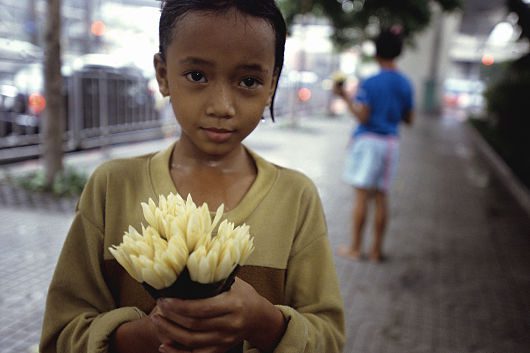
Children on the Streets of Bangkok

Bangkok's street childrenMost beggars in Bangkok are not from Thailand. They are migrants from neighboring countries, such as Cambodia or Burma, who are drawn to the city’s lucrative begging opportunities. These beggars must accept a high level of risk when they travel to Thailand; many are thrown in jail and then deported in a worse state than before. But the biggest issue arises when they bring their children with them. These children are often abandoned and left to work on the streets of Bangkok. They are at risk of being abused and exploited, are often unhealthy and are in danger of being hit by cars or motorcycles.
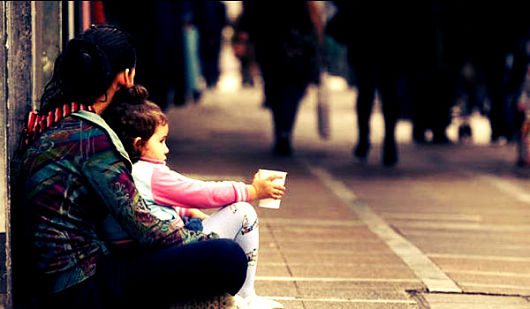
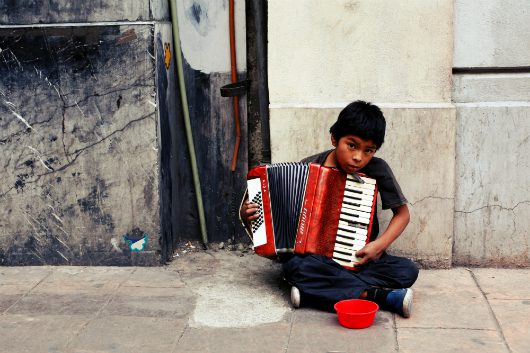
There are more than 20,000 street children in Thailand’s major urban areas. In a single day, a child can earn 300 baht ($10) to 1,000 baht ($30) – much more than the amount a Cambodian or Burmese living in poverty makes back home. In Phnom Penh, for instance, scavenging rubbish all day will only earn a child 16 baht ($0.50).

Cambodians make up around 80 percent of Thailand’s child beggars. Cambodia is one of the poorest countries in the world and half of its population is children.

Beggars who are from Thailand usually hail from the northeast Isan region, where 40 percent of the country’s poor comes from. Their parents come to Bangkok to find work, usually as motorcycle taxi drivers or construction workers. When they have children, they realize they cannot afford to take care of them. Distrustful of the government-run orphanages, many simply abandon their children in the hands of babysitters, hoping they will find a home there. However, these children are often made to work on the streets to earn some money for their upkeep, according to chairwoman Darat Pitaksit of the Young Women’s Christian Association (YMCA) in Bangkok, an organization that works with underprivileged children.

Because going to school is mandatory until the sixth grade, most Thai children manage to attend at least primary school. Secondary school attendance in Bangkok, however, drops by 20 percent. Despite it being the richest area of Thailand, rates of attendance are lower in Bangkok than anywhere else in the country because of the presence of migrant workers’ children and the lifestyles they are made to lead.

Contrary to common perception, street children, both from Thailand and neighboring countries, do not fall into crime, drugs, or other illicit activity. “Thai children are raised to respect their elders,” Pitaksit says. “In addition, the belief in karma helps them to be more accepting of their hardships in life.” Similarly, Cambodian children would often rather beg on the streets than go to school, says Chantana Sueprom, a staff member of the UNICEF supported NGO Friends International. They feel it is their duty to help their parents earn money.

– Radhika Singh

Sources: Reuters, UNICEF, Asian Development Bank
Photo: Jimmy Lam Photography

June 18, 2015
https://borgenproject.org/wp-content/uploads/borgen-project-logo.svg 0 0 Borgen Project https://borgenproject.org/wp-content/uploads/borgen-project-logo.svg Borgen Project2015-06-18 10:39:572024-12-13 17:51:31Children on the Streets of Bangkok
Children, Food & Hunger, Global Poverty

1 in 5 Children in France Living in Poverty

Children-in-France-in-Poverty
A new report by UNICEF France has revealed that over three million children in France live in poverty. In a span of four years, the number of children living under the poverty line increased by 440,000. Also touched on, was the high level of discrimination and human rights violation of poor migrant children. The report also addressed France’s failure to implement a strategy for children, and suggested 36 policy adjustments.

We often think of France as a sturdy, developed world power, but the widening gap between the rich and the poor, lack of policies aimed at children and widespread discrimination against migrants, show that developing countries aren’t the only places for progress to be made. In fact, many European countries face higher rates of child poverty and an estimated 1 in 3 children lives in poverty in both the United Kingdom and Spain.

These findings seem astonishing, especially for a country with the financial status and power as France, but it goes to show how important policies are. Without the proper policies in place, countries will not make progress. This new report and the investigation as a whole will provide a prime example for governments all over the world. Policy is what gives a country the power to grow. For example, we have seen poverty reduction programs go into developing countries with the good intentions of providing or creating capital only to see it stop there because of a lack of regulation or policies in place to continue growth, and to protect that growth.

The lack of policy aimed at French youth is alarming from any standpoint. The high rate of poverty among children suggests a lack of investment in youth, which will hurt France in the long term. With 3 million impoverished children, the outlook on the future working generation is not good. The rates of homelessness and school dropouts should be a serious wake up call for the French government. As more and more children fall below the poverty line, fewer children are enrolled in school, which translates directly to less economic and political participation in the future. The decreased participation will make for a less productive nation and France, as a whole will face a number of resulting problems needing urgent attention.

France has a reputation for discrimination against migrants and foreigners and this report as a part of a broader investigation and the changes the French government makes as a result should hopefully loosen some of those longstanding divisions. In order to succeed and grow as a nation, France desperately needs to become more progressive. There needs to be less marginalization and more positive policy aimed at children and at migrants to encourage them to succeed, which will in turn help France as a whole to grow.

– Emma Dowd

Sources: Eurostat, France 24, Newsweek, World Bulletin
Photo: FarsNews


June 17, 2015
https://borgenproject.org/wp-content/uploads/borgen-project-logo.svg 0 0 Borgen Project https://borgenproject.org/wp-content/uploads/borgen-project-logo.svg Borgen Project2015-06-17 01:38:062024-06-05 03:46:341 in 5 Children in France Living in Poverty
Activism, Children, Education, Global Poverty

5 Organizations Fighting Poverty in Mexico

poverty_in_mexico
According to a study made by the Mexican government agency, Consejo Nacional de Evaluación de la Política de Desarollo Social (CONEVAL), there were 53.3 million people living in poor conditions in 2012.

This number equates to 45.4 percent of Mexico’s total population.

In Mexico, poverty is strictly linked to the decisions and actions that the government takes. According to a newspaper from Guadalajara, Jalisco, the secretaries of social development from the different Mexican states only invest between the four and five percent of their budget to social programs that do not just focus on poverty.

Education, health care, nutrition, shelter and clean water are some of the aspects that many organizations are working on to bring to the Mexican poor citizens:

1) VAMOS!

This is a non-profit organization based in Vermont that fights to offer education and job opportunities to the poor in Cuernavaca, Morelos, Mexico. The organization also offers basic human services to these people living in poor conditions.

2) Children International

This organization provides assistance to children and families that live in extreme poor conditions. Their mission is to bring real change to those living in poverty. This organization is based in Kansas, and operates in different countries such as Colombia, Ecuador, Guatemala, India, Honduras and, of course, Mexico. Their agency in Mexico is located in Guadalajara, Jalisco.

3) Flying Samaritans

This is a non-profit organization, based in California, that operates free medical clinics in the state of Baja California, Mexico. The organization counts with different professionals such as nurses, dentists, physicians, pilots, and translators that offer their work at no charge to people in rural areas that have no access to medical care.

4) Project Amigo

This is an organization founded by California businessman Ted Rose based in Cofradia de Suchitlan, Colima. The organization focuses in providing marginalized, disadvantaged, poor children in the state of Colima, Mexico with education. Project Amigo has the belief that education is a powerful key that can benefit the children’s future. The organization provides scholarships, material support, health care and supports the children to continue studying even during a college level.

5) TECHO

Techo is a non-profit organization present in Latin America and the Caribbean that focuses on eliminating poverty. This organization is lead by young volunteers that promote community development by providing solutions to families living in slums, foster social awareness and action, and advocate politically in order to promote changes that could stop poverty from emerging.

All these organizations focus on overcoming poverty and creating a better life quality for Latinos and Mexicans that live in poor conditions and lack of access to some basic needs.

According to CONEVAL, in the years of 2010 and 2012 there was a decrease in the percentage and number of people that had an educational backwardness, lacked access to health services, quality and living spaces, basic housing services, and nutrition.

The results and efforts that these individual non-profit organizations have obtained, each with their own beliefs, missions, and methods, are a big contribution to the Mexican poor community, creating change and providing opportunities to the ones in need.

– Diana Fernanda Leon

Sources: CONEVAL, INFORMADOR.MX, VAMOS!, Children International, Flying Samaritans, Project Amigo, Techo
Photo: Flickr

June 16, 2015
https://borgenproject.org/wp-content/uploads/borgen-project-logo.svg 0 0 Borgen Project https://borgenproject.org/wp-content/uploads/borgen-project-logo.svg Borgen Project2015-06-16 17:01:412024-06-04 03:53:025 Organizations Fighting Poverty in Mexico
Children, Health

Bangladesh Launches Immunization Campaign

Bangladesh_ immunization_campaign
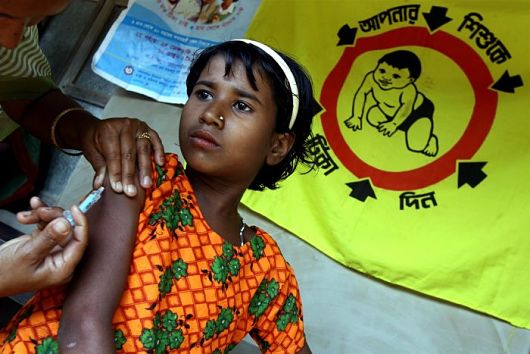
The introduction of the Inactivated Polio Vaccine (IPV) and pneumococcal vaccine (PCV) has benefited over three million children in Bangladesh. These additional immunizations in Bangladesh are now given regularly to children in accordance with the country’s national immunization program.

In 1979, Bangladesh started the Expanded Program on Immunization (EPI) to reduce child deaths from vaccine preventable deaths. The first six vaccines administered against infectious diseases included tuberculosis, polio, diphtheria, whooping cough, tetanus and measles.

Currently, Bangladesh is administering vaccines against nine diseases to children under the age of 1. More than 85 percent of children are vaccinated, an achievement that helped Bangladesh to become one of the six countries in the world that achieved Millennium Development Goals (MDG) on child mortality before the 2015 deadline.

WHO, UNICEF, Gavi the Vaccine Alliance and the Global Polio Eradication Initiative partners support the addition of these novel vaccines to the country’s national immunization program. In 2013, the government of Bangladesh doubled its vaccine storage capacity to allow the storage of the PCV.

Seth Berkley, the CEO of Gavi the Vaccine Alliance, says “Pneumonia is one of the leading causes of child mortality in Bangladesh, accounting for 22 percent of deaths of children under the age of 5, so the introduction of pneumococcal vaccine will have a major positive impact on child survival”.

By adding the IPV into Bangladesh’s national immunization campaign, it is fulfilling the Polio Eradication & Endgame Strategic Plan 2013-2018.

To ensure that the IPV and the PCV are added to every child’s immunization card, over 45,000 community health workers play the key role to ensure that parents bring their children in for their immunization sessions.

In order for these new immunizations to become a success, the community health workers had to complete extensive training in order to administer the vaccines, and to also be knowledgeable to answer any of the parents’ questions.

Aside from the necessary training, health workers in Bangladesh faced other challenges in the course of administering the new vaccines. The equipment that keeps the vaccines cold and vital, the national cold chain, had to be modified in order to adjust to the varying temperatures during the monsoon season. In addition to the varying temperatures, rickshaws had to be used for transportation through the crowded cities in order to deliver the vaccines in time for immunization sessions.

There have been many obstacles for the vaccines to be administered to the three million children in Bangladesh. From extreme temperatures, extensive training and implementation, the PCV and IPV have had a difficult undertaking to make it to the immunization sessions.

However, these vaccines will lower the mortality rate for children under five dying from pneumonia. Pneumonia, a bacterial or viral infection, has been an illness prevented in many countries. With the immunization in Bangladesh, more children will build immunity against the illness and survive the infection if contracted.

– Kerri Szulak

Sources: Bdnews24, Gavi the Vaccine Alliance, Vaccine News Daily
Photo: UNICEF New Zealand

June 16, 2015
https://borgenproject.org/wp-content/uploads/borgen-project-logo.svg 0 0 Borgen Project https://borgenproject.org/wp-content/uploads/borgen-project-logo.svg Borgen Project2015-06-16 14:48:552024-05-27 09:24:20Bangladesh Launches Immunization Campaign
Children, Women & Children

How Guatemala is Trying to Decrease Child Marriage

Guatemala-Trying-to-Decrease-Child-Marriage
Guatemala has one of the highest rates of child marriages, with over 30 percent of girls getting married by age 18 and 7 percent of girls getting married by age 15. It is also one of the only countries in which the rate of childbirths to girls under the age of 15 rose from 1990 to 2011.

In Guatemala, it is legal for girls to marry at age 14 as long as they have parental consent. However, many girls younger than 14 are forced to marry, resulting in early childbirth. In the village of Almolonga, a 13 year old’s childbirth caused a national scandal because her wedding—which took place when she was only 12—had been officiated by the mayor of the village.

Marriage at such a young age results in many complications because the girls’ bodies are not ready for childbirth. As the Council on Foreign Relations states, one of the most common problems girls face is an obstetric fistula, which can lead to chronic incontinence. Maternal mortality is also extremely prevalent, and childbirth is the leading cause of death for girls between the ages of 15 to 19 in low to middle income countries. In addition, babies born to younger mothers are more likely to die at a young age because they tend to have higher risks of malnutrition and weaker immune systems.

Child marriage is also problematic because many girls are forced to rely on their spouses economically. Therefore, even if they are trapped in an abusive relationship, many girls are not able to leave their husbands. Also, many of those who enter into child marriages drop out of school once they are married, and therefore do not have the education to get a job, which would allow them to support themselves.

Child marriage has been prevalent for a long time, and in Guatemala it is rooted in indigenous cultures and a patriarchal idea that states that women are normally confined to housekeeping and childbirth. However, this idea is slowly changing. At Wings, a nonprofit that works for family planning and reporductive health in Guatemala, director Shilpa Kothari states that ‘at the local level, parents, teachers, and even young women are saying that 14 is a bit too young to become pregnant’.

There is also a societal movement for child marriages to be counted and no longer regarded as normal. Organizations like The Reproductive Health Observatory in Guatemala (OSAR) have helped to enforce that the government trains state employees to identify child mothers. In 2014, there were 5,119 documented cases of mothers under the age of 15.

This identification of child mothers has led to more criminal complaints being filed, since child mothers are rape victims in the eyes of the law. In 2013, 608 formal criminal complaints were filed, and in 2014, 921 were filed.

There is still a stigma surrounding rape, which has led to few of these criminal complaints resulting in convictions. Moreover, many girls are scared to testify because they rely on their husbands for economic dependence.

The Guatemalan congress is sitting on a bill that will change the legal marriage age to 16, but whether this bill will pass is debatable.

Guatemala is making strides regarding child marriage, but it still has a ways to go. Luckily, there is work being done through the UN that will help Guatemala reduce its rate of child marriage. In 2013, the HRC adopted its first resolution on child, early and forced marriage, recognizing them as human rights violations. This resolution was co-sponsored by over 100 countries, including Guatemala, and aims to help define the development agenda for after 2015, when the Millennium Development Goals expire.

There are steps being taken to help reduce child marriages—changing patriarchal ideas on the local level, helping to encourage the reporting of childbirths and enforcing that child, early and forced marriages are human rights violations—but there is still room for improvement. As Dr. Montenegro of OSAR states, even if the law changes regarding child marriages, this change in law has to be accompanied by public policies that will empower girls and help them have a plan for their lives.

There are many organizations one can donate to which work to empower girls and reduce child marriages. Some of the organizations that work directly with residents of Guatemala are the Population Council, which works to connect girls with mentors and support, and the Fundación Nueva Esperanza, which gives girls scholarships to attend school.

— Ashrita Rau

Sources: The New York Times, Council on Foreign Relations, Girls Not Brides, Girls Not Brides, MSN, UN Popluation Fund,
PBS
Photo: Girls Not Brides

June 16, 2015
https://borgenproject.org/wp-content/uploads/borgen-project-logo.svg 0 0 Borgen Project https://borgenproject.org/wp-content/uploads/borgen-project-logo.svg Borgen Project2015-06-16 14:17:512020-07-15 23:17:51How Guatemala is Trying to Decrease Child Marriage
Children, Disease, Global Health, Global Poverty

Children in Yemen at Risk for Epidemic

Children-in-Yemen-at-risk-for-Epidemic
With the outbreak of conflict in Yemen, health centers have to shut down. Forces continue to attack hospitals and health care centers. There are medical shortages as the conflict hinders the delivery of medical supplies. As a result, children cannot receive the crucial vaccines and treatments they need to fight communicable diseases.

Vaccines save 2.5 million children worldwide from preventable diseases. Without basic vaccines, about 1.5 million children die. There are already cases of Measles reported in Yemen. Doctors are worried about reports of other diseases like Polio. If children in Yemen continue to not receive the vaccines, then these two diseases could continue to spread.

Parents are hesitant to take their children to health care centers to get the vaccines because the centers continue to be targets for attack, and because just getting there is dangerous. That leaves the health workers going into the field to vaccinate children. This can make it difficult to properly track how much of the child population has been vaccinated.

Another often overlooked aspect of vaccinating children is the protection of the vaccines themselves. Doctors have to make sure that vaccine centers maintain a supply of the vaccines needed. However, the conflict can make it difficult for WHO officials to deliver the medical supplies to the vaccine centers. Fuel shortages also cause problems, as there needs to be enough to ensure that the vaccines have the proper cold chain needed.

Issues like this can limit the number of children that can be reached and vaccinated. If supplies cannot be replenished or maintained, then it becomes difficult to keep children safe from diseases.

Contributing to the issue is food insecurity. Before the civil war, Yemen was already importing most of its food. Now, with conflict preventing food from being delivered, Yemen is struggling to feed its people. Without the nutrients to stay healthy and prevent malnutrition, the children’s immune systems are at a higher risk for contracting diseases.

Diseases could spread rapidly, as children in Yemen do not have access to enough food and clean water, people live in close proximity in refuge areas, and there is limited health access. The WHO workers try to combat the spread with consistent monitoring of medical supplies and going out and finding those who need the vaccines.

– Katherine Hewitt

Sources: Bill & Melinda Gates Foundation, UN News Centre, World Health Organization,
Photo: Twitter

June 15, 2015
https://borgenproject.org/wp-content/uploads/borgen-project-logo.svg 0 0 Borgen Project https://borgenproject.org/wp-content/uploads/borgen-project-logo.svg Borgen Project2015-06-15 08:11:152024-06-11 02:48:06Children in Yemen at Risk for Epidemic
Children, Global Poverty

Orphans in Kuwait

orphans-in-kuwait
On April 3, the Middle East honored Arab Orphans Day with university campus-based movements to honor abandoned children. Students in Cairo held an event in which individual participants would treat an orphan like a younger sibling for a day, while Kuwaiti Minister of Planning and Development Hind Al-Sabeeh touted the legislation of protective laws

Orphans in Kuwait are one of the most disadvantaged groups in terms of legal protections. In addition to the initial injury of parental abandonment, these children suffer the stigma of “illegitimacy.”

Many in the Middle East discriminate against children born to unwed parents. Often, they base their prejudice on a misinterpretation of the Qur’an. Their choice can have deleterious effects, ranging from overt displays to more subtle denials of academic and job opportunities.

That said, Kuwait has made some significant strides. Abandoned children are first sent to social care facilities for 30 days while the Ministry of Social Affairs attempts to find their parents.

If and when the children are not found, they become wards of the State. In Kuwait’s case, state guardianship grants the orphans Kuwaiti nationality, free health care, fiscal stipends, and free housing.

Kuwait treats its orphans well. According to UNICEF, life expectancy for these orphans was 74.2 in 2012 and approximately 93.9 percent of orphaned youth are literate. The high literacy rate is largely due to a high enrollment rate in primary schools, which UNICEF estimates to be around 98 percent.

The disadvantage, though, lies in the wards’ legal inaccessibility. Once Kuwaiti orphans are declared as wards of the State, only Kuwaiti citizens can adopt them.

This is a particularly problematic law in part because of the popularity of non-White orphans among adopting couples in developed countries. Most of these adoptive parents are financially secure and outfitted to accommodate fewer children at a time, ensuring that the lucky adoptee gets the personal attention and care that she needs.

Kuwaitis may be generous with their aid to orphans, but no amount of generosity can replace parental love. The nation often acts as a mecca for wartime orphans, but its people usually cannot restore a child’s birth parents.

Furthermore, little is reported regarding the care of orphans once they age out of the institution. According to the ILO, the Middle East has some of the highest youth unemployment rates worldwide, with an average of one in four young adults out of work.

This statistic places additional pressure upon Kuwaiti citizens, who have to pay for orphan care through taxes. Kuwait’s economy may enjoy high incomes across the board, but as long as its neighbors suffer, the nation will be operating upon heightened political risk. If it becomes involved in its neighbors’ conflicts, the country’s orphans may very well become the first victims.

Evidence of orphan victimization has already made the news. In 2011, an anonymous blogger commented on a story run in Al Qabas about Kuwaiti orphanages that had been turned into brothels where rape, drugs, smoking, and prostitution were rampant.

While exaggeration by the media is not improbable, orphans remain one of the most frequently vulnerable groups. Kuwait, like its neighbors, is still in development and its media may not always be trustworthy. In any event, it is imperative that the reader checks the validity of news sources. Conditions in Kuwait may not be as rosy as recent propaganda may imply.

– Leah Zazofsky

Sources: KUNA, Middle East Eye, Muslim Observer, SOS USA, The Aggressor, UNICEF
Photo: Flickr

April 25, 2015
https://borgenproject.org/wp-content/uploads/borgen-project-logo.svg 0 0 Borgen Project https://borgenproject.org/wp-content/uploads/borgen-project-logo.svg Borgen Project2015-04-25 16:00:292024-05-27 09:23:48Orphans in Kuwait
Children, Development, Education

Education in Tuvalu: Past & Present

education_in_tuvalu
Tuvalu is one of the smallest and most remote countries on Earth. The total land area of the country is approximately 26 square kilometers, or comparatively 0.1 times the size of Washington, DC. Located in Oceania, the country is an island group consisting of nine coral atolls in the South Pacific Ocean with a population of 10,782.

Education System Restructure: Late 1990s

Prior to the restructuring of the education system in 1998, communities operated early childhood education and  had no support from the government. Preschools were operated under a voluntary basis and teachers were poorly appointed and often untrained. Tuvalu also did not have the proper infrastructure to support schools.

When education in Tuvalu was restructured, the following five strategies were put in place: the government would provide financial assistance to all preschools; formal training would be offered to preschool teachers; new salaries would be granted to preschool teachers; funds for building preschool classrooms were secured by the government; and preschool education linked with the primary section would be provided for three year olds.

Tuvalu’s education system at the primary level was also restructured and revamped. Goals and targets contained in the Tuvalu National Education Policy Document included compulsory education for all Tuvaluan children between the ages of six and 15, redesigning and strengthening the administration of the education system, access to education and training for all, development of a national curriculum, as well as improvements to school buildings, teacher training and programs for students with special needs.

Many other improvements and goals were to be met following the restructuring of the system. Children were not the only focus of the reform—education for survival with reference to community life skills was also made available. The skills that adults were offered included secretarial skills (typing, computing, office skills, etc.), carpentry, pluming, engineering and home economics.

Additionally, strategies were put in place to improve the overall quality of life and standards of living. Basic housing, clothing, water, food and nutrition, access to health and education as well as the ability to participate in community life and cultural pursuits strengthened the communities of Tuvalu.

Tuvalu Today

Many of the strategies and Millennium Development Goals have improved conditions in Tuvalu. For example, Tuvalu’s youth literacy rate (ages 15-24) rose from 95 percent in 1991 to 98.6 percent in 2007. The percentage of cohorts reaching grade five also rose dramatically from 72.7 percent in 2000 to 91.2 percent in 2004.

According to the IMF, although cases of extreme poverty are rare, poverty in Tuvalu has risen in the last few years despite improvements in education. Given Tuvalu’s limited land area, poor soil and geographic isolation, it is difficult to create large private-sector employment opportunities domestically. Therefore, citizens of Tuvalu will need to better utilize overseas job opportunities, including seafarer employment and the temporary labor migration scheme in New Zealand.

Vocational training will need to be strengthened in order to enhance the competitiveness of Tuvaluans for these important sources of foreign exchange earnings and to reduce poverty.

– Eastin Shipman

Sources: International Council for Open and Distance Education, UNESCO 1, UNESCO 2, UNESCO 3, CIA Factbook,
IMF

Photo: UNESCO

March 24, 2015
https://borgenproject.org/wp-content/uploads/borgen-project-logo.svg 0 0 Borgen Project https://borgenproject.org/wp-content/uploads/borgen-project-logo.svg Borgen Project2015-03-24 04:00:012024-06-04 03:53:00Education in Tuvalu: Past & Present
Children, Global Poverty

Bethany Christian Services Global Brings Families Together

bethany christian services global
Due in large part to the consequences of poverty, 150 million children around the world are considered orphans. Institutionalized care such as orphanages have been found to be anywhere from 20 times to 100 times more expensive than community-provided care. This community-provided care is available for some children who are taken in by extended family members, but these family members do not always have the resources to care properly for the children due the poverty rampant in their communities. This makes institutionalized care the usual and sometimes only option. In addition, children raised in orphanages are not likely to receive the individual care that children with families receive.

As the number of orphans has only increased with time, Bethany Christian Services Global has made it a priority to place children with foster families around the world. By partnering with organizations in vulnerable countries, Bethany Christian Services Global helped 100,761 children—including the potentially disenfranchised such as children with special needs— find loving and nurturing environments last year. Starting in 1944 for finding homes for U.S. orphans, the organization expanded their reach to up to 14 countries in 1980. They have even introduced the concept of adoption to countries where adoption was not originally considered an option due to their culture and traditions.

Bethany Christian Services Global advocates for the welfare of children in multiple ways by providing culturally-sensitive education and financial assistance to families willing to take care of an orphaned child in their community. They are one of the few (if not the only) U.S.-based adoption organizations that are allowed to bring together families internationally. From Albania to Uganda, the organization believes that a child can truly prosper when given a structured and loving family environment.

Not only is community-based care considered a better option fiscally and for a child’s welfare, Bethany Christian Services Global follows through by providing services for a family post-adoption, giving support to the families and adopted children for years to come. Every child deserves not just to have their basic needs met, but also a group of people who love and care for them. When a child is given this love and care, he or she can benefit them for a lifetime.

– Melissa Binns

Sources:Bethany Global, Better Care Network
Photo: Our Quiet Hope

February 25, 2015
https://borgenproject.org/wp-content/uploads/borgen-project-logo.svg 0 0 Borgen Project https://borgenproject.org/wp-content/uploads/borgen-project-logo.svg Borgen Project2015-02-25 12:00:052020-07-16 09:44:51Bethany Christian Services Global Brings Families Together
Children, Education

Improving Education in Zambia a Priority

Read more
February 16, 2015
https://borgenproject.org/wp-content/uploads/borgen-project-logo.svg 0 0 Borgen Project https://borgenproject.org/wp-content/uploads/borgen-project-logo.svg Borgen Project2015-02-16 11:00:582025-10-15 11:23:28Improving Education in Zambia a Priority
Page 117 of 137«‹115116117118119›»

Get Smarter

  • Global Poverty 101
  • Global Poverty… The Good News
  • Global Poverty & U.S. Jobs
  • Global Poverty and National Security
  • Innovative Solutions to Poverty
  • Global Poverty & Aid FAQ’s
Search Search

Take Action

  • Call Congress
  • Email Congress
  • Donate
  • 30 Ways to Help
  • Volunteer Ops
  • Internships
  • Courses & Certificates
  • The Podcast
Borgen Project

“The Borgen Project is an incredible nonprofit organization that is addressing poverty and hunger and working towards ending them.”

-The Huffington Post

Inside The Borgen Project

  • Contact
  • About
  • Financials
  • President
  • Board of Directors
  • Board of Advisors

International Links

  • UK Email Parliament
  • UK Donate
  • Canada Email Parliament

Get Smarter

  • Global Poverty 101
  • Global Poverty… The Good News
  • Global Poverty & U.S. Jobs
  • Global Poverty and National Security
  • Innovative Solutions to Poverty
  • Global Poverty & Aid FAQ’s

Ways to Help

  • Call Congress
  • Email Congress
  • Donate
  • 30 Ways to Help
  • Volunteer Ops
  • Internships
  • Courses & Certificates
  • The Podcast
Scroll to top Scroll to top Scroll to top