• Link to X
  • Link to Facebook
  • Link to Instagram
  • Link to TikTok
  • Link to Youtube
  • About
    • About Us
      • President
      • Board of Directors
      • Board of Advisors
      • Financials
      • Our Methodology
      • Success Tracker
      • Contact
  • Act Now
    • 30 Ways to Help
      • Email Congress
      • Call Congress
      • Volunteer
      • Courses & Certificates
      • Be a Donor
    • Internships
      • In-Office Internships
      • Remote Internships
    • Legislation
      • Politics 101
  • The Blog
  • The Podcast
  • Magazine
  • Donate
  • Click to open the search input field Click to open the search input field Search
  • Menu Menu

Archive for category: Children

Information and stories addressing children.

Children, Global Poverty

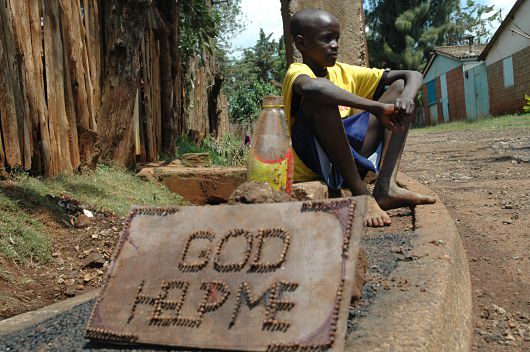
Street Children in Kenya

Street-Children-in-Kenya
“Give me sweets” is one of the phrases filling the air of Nairobi and the streets of Kenya as a whole.

Anyone who has ever been a tourist in Kenya is probably familiar with those words and the collection of palms pressing themselves onto the windows of the tourist vans. While it may have seemed like an annoyance or an adorable group of Kenyan children, what is really pressing itself against those cars is one of Kenya’s greatest problems.

According to Kenya Children of Hope, there are over 250,000 children living on the streets of Kenya. However, with the 1.1 million children orphaned by HIV/AIDS, the numbers are likely higher than what is reported.

Many of these children are sent by their parents to work or beg on the streets. Others are either orphaned or abandoned.

I remember walking through Nairobi with my parents as a young child and wondering why children and teenagers were lying down in the middle of squares in Nairobi. The answer I was given was that they were “sniffing glue.” I did not know what that meant at the time, but this drug problem is one of the many issues facing Kenyan street children.

The other issues facing these children include harassment (sexual and otherwise), a general danger of violence, sexual exploitation, HIV/AIDS and other sexually transmitted diseases, abuse, neglect, hunger, lack of shelter, pregnancy and lack of sanitary conditions.

Yet another problem facing street children in Kenya is the information surrounding them. Kenya Children of Hope states that the number of street children that are counted and reported differ from study to study. There is little consistency and it is hard to target a problem that is not fully understood.

How can the United States, the Kenyan government or outside organizations know how much aid to put toward street children in Kenya if they do not know how many there are?

Another issue with the research on street children in Kenya is the under representation of street girls. Kenyan Children of Hope reports that 25 percent of street children in Nairobi District are girls. Part of the reason for lower coverage of street girls may be because of the occupations taken my each gender.

While boys tend to collect garbage, beg and find odd jobs, street girls often end up in the sex trade.

There are many good people working to help and feed these children on a small scale, like a teacher described by BBC news. Other organizations such as SOS Children’s Villages are doing good work and raising money to sponsor one child at a time.

While this work is necessary, the organizations working to help Kenyan street children need more funding. Rather than helping one child at a time, focus should be put on aiding all of the poor children in Kenya.

– Clare Holtzman

Sources: BBC, Kenya Children of Hope, SOS Children’s Villages
Photo: Amka Kenya

July 6, 2015
https://borgenproject.org/wp-content/uploads/borgen-project-logo.svg 0 0 Borgen Project https://borgenproject.org/wp-content/uploads/borgen-project-logo.svg Borgen Project2015-07-06 15:19:022024-12-13 17:51:47Street Children in Kenya
Children, Development, Global Poverty

New Formulation of HIV Treatment to Save More Children’s Lives

New Formulation of HIV Treatment Will Save More Children’s Lives-TBP

The United States Food and Drug Administration has granted approval for a new form of antiretroviral treatment for HIV that can be mixed into children’s food. This will make it easier for children living with HIV to receive life-saving medicine.

This new formulation of HIV treatment will replace unpleasant and bad-tasting medicines that were once the only treatments available. This breakthrough in medicine will make it easier for children living with HIV to not only consistently take the medicine, but to stay healthy.

According to the Executive Director of UNAIDS, Michel Sidibé, only 24% of children living with HIV have access to antiretroviral medicines.

CIPLA is an Indian generic medicines manufacturer that produces the new oral pellets. An attractive quality about these oral pellets is that they are heat-stable. This is necessary in countries where temperatures frequently fluctuate or remain consistently high.

In these oral pellets is an antiretroviral mixture of lopinavir and ritonavir, necessary prescription drugs when treating HIV in patients that are 3 years of age and younger.

This treatment is predicted to be successful with young children because the oral pellets can be mixed into their food. Many HIV treatments have an unpleasant taste, which deters children from consistently taking their medicine.

Craig McClure, UNICEF’s chief of HIV/AIDS section, says that “This new formulation is a step in the right direction towards saving more lives of children living with HIV. We expect it to greatly improve treatment access for many more children and support UNICEF’s equity-focused programming aimed at reaching the most disadvantaged children throughout the world.”

HIV infection progresses rapidly in children due to their weak immune systems. In highly impacted countries, HIV is a main contributor to child morbidity and mortality, as “Without treatment, one in three children who become infected with HIV will die before their first birthday. Half will die before their second birthday.”

The World Health Organization (WHO) recommends an early initiation of antiretroviral treatment in children infected with HIV to significantly reduce the risk of death.

However, many countries have not been able to implement the WHO’s recommendation because they do not have an appropriate, heat-stable pediatric treatment. “Despite global efforts to accelerate access to HIV pediatric care and treatment, fewer than 800,000 of the 3.2 million children living with HIV worldwide had access to antiretroviral medicines in 2013.”

This can all change with the introduction of these oral pellets.

– Kerri Szulak

Sources: Pulse, UNAIDS,
Photo: Caribbean News

July 6, 2015
https://borgenproject.org/wp-content/uploads/borgen-project-logo.svg 0 0 Borgen Project https://borgenproject.org/wp-content/uploads/borgen-project-logo.svg Borgen Project2015-07-06 10:35:062024-12-13 17:51:38New Formulation of HIV Treatment to Save More Children’s Lives
Children, Global Poverty

How Yuwa Empowers Girls in India Through Football

How Yuwa Empowers Girls in India Through Football-TBP
India currently has the highest number of child brides on the planet, with 47 percent of girls married before they turn 18. The practice is more common in rural areas. In some states, the number reaches 69 percent. The rate of marriages is increasing for girls between the ages of 15 and 18.

There are many factors that account for this high number of child brides. Oppressive gender roles in India’s patriarchal society make it difficult for girls to pursue other options. They are typically expected to be mothers and care for the entire household. Girls often receive little schooling and have lower rates of literacy. It can be difficult for them to find work and become financially independent, so they have no choice but to marry young and depend on their husband while being burdened with domestic responsibilities. Families may also push girls to get married young out of concern for their safety and “honor.”

Child brides face risks to their mental, physical, and emotional health. Since many become pregnant at a young age, they are more likely to die in childbirth. They also have a greater chance of contracting HIV. They suffer more domestic violence: Indian child brides are twice as likely to be abused than girls who marry after 18. They also face higher rates of sexual abuse, and often exhibit symptoms of Post Traumatic Stress Disorder such as hopelessness and depression.

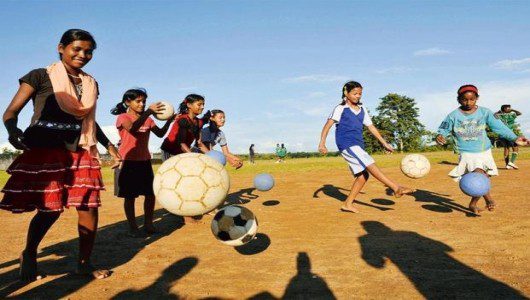
The Yuwa organization, an NGO based in the state of Jharkhand, is dedicated to using football (soccer) as a means to promote social development and discourage child marriage. Citizens of Jharkhand struggle with poverty and illiteracy, and it is a dangerous place for young women to grow up. Yuwa was founded in 2009, and since the program began, it has had 600 members. Currently, 250 girls participate in the program, with 150 practicing on a daily basis.

Through Yuwa, girls can organize new football teams or join an already existing team. Players collectively choose a team captain, who is responsible for tracking attendance. If a girl suddenly drops out or shows up less and less, her teammates can contact her to help her through whatever is keeping her from practice.

Yuwa’s program goes beyond football. They also work to educate girls so they can strive for a future beyond child marriage. Girls can attend their academic bridge program, which provides classes in math, science, and English, and computers. They also provide summer school and personal tutoring, and assist with transferring girls to better schools. Furthermore, Yuwa holds hour-long weekly workshops that focus on teaching life skills. These workshops are run by local female staff or other Yuwa girls, and they cover topics such as health, gender, gender-based violence, sexuality, self-esteem, and basic finances.

Yuwa’s primary objective is to inspire girls to take their futures into their own hands so they can fight child marriage, illiteracy, and human trafficking. Girls and their coaches can meet with their families to discuss options beyond marriage. Although some parents are not understanding at first, and want their daughters to follow the conventional path, many change their minds and begin to push for better futures for their daughters.

The Yuwa girls have seen success on and off the field. In 2013, a Yuwa team placed 4th in an under-14 tournament in Spain, and in 2014, they were invited to Schwan’s USA cup. Although football is not enough to undo all of the inequalities that Indian women struggle with on a daily basis, Yuwa’s girls are helping change attitudes and inspire girls to strive for new opportunities.

– Jane Harkness

Sources: Foundation for Sustainable Development, Girls Not Brides, The Guardian, International Center for Research on Women, Yuwa
Photo: Yuwa

July 6, 2015
https://borgenproject.org/wp-content/uploads/borgen-project-logo.svg 0 0 Borgen Project https://borgenproject.org/wp-content/uploads/borgen-project-logo.svg Borgen Project2015-07-06 09:52:162024-06-05 02:12:08How Yuwa Empowers Girls in India Through Football
Child Soldiers, Global Poverty, Slavery

Modern Slavery in Africa and How Americans Can End It

Americans-Can-End-Modern-Slavery-in-Africa
Thousands living in poverty and inhumane conditions are forced into slavery for their survival. Many of the victims are woman and children who flee countries in search of refuge but, instead, are captured by human traffickers and sold into what is known as modern-day slavery.

Many of those who end up in modern slavery rings are fleeing persecution in their native countries. This is a particularly prominent issue in African countries that neighbor South Africa. South Africa is a desired destination for many Africans who suffer from poverty and corruption in other countries. It is on their travels from other nations to safety that they unfortunately get sucked into the horrors of modern slavery in Africa.

Some children are forced into becoming child soldiers, while some, along with women, are sold into sex trafficking. Others are used to provide cheap or unpaid labor in agricultural work, factories or domestic work. The number of people enslaved are staggering, with approximately 193,000 in Ghana and about 762,900 in the Congo.

It is important that, instead of just ignoring modern slavery like many have been, we know the power we have in ending slavery around the world. Modern day slavery has been uncovered everywhere, even in the United States in the last 15 years. Ignoring the horrific acts just won’t do.

How can we not only show that we do not support this atrocity but also want to work towards its end?

Many enslaved people are those who make the products we use every day. This includes agricultural goods, clothes and other items. Many who use slaves use other terminology in order to hide the atrocities. Many people are enslaved to make clothes and products in factories, working for inhumane hours at a time for either very little or even no pay. There are ways for consumers to research quickly online about where their products come from and how those who make the clothing are treated.

Much of this information is provided by advocacy organizations that have dedicated time and research into finding these victims.

There are many organizations that work to find and free enslaved individuals, while also dismantling groups that enslave them. One international organization is “Free the Slaves.” Free the Slaves is an advocacy group that speaks for those throughout the world who have fallen victim to such atrocities.

For more information about how everyone can make a difference and end modern slavery in Africa, go to www.freetheslaves.net.

– Alexandrea Jacinto

Sources: Free the Slaves 1, Free the Slaves 2, African Holocaust
Photo: Rita Bay’s Blog

July 6, 2015
https://borgenproject.org/wp-content/uploads/borgen-project-logo.svg 0 0 Borgen Project https://borgenproject.org/wp-content/uploads/borgen-project-logo.svg Borgen Project2015-07-06 09:22:072020-07-13 12:08:58Modern Slavery in Africa and How Americans Can End It
Children, Development, Global Poverty

Millions of Births Have Never Been Registered

unregistered_births_developing_countries
What if you did not have a birth certificate, driver’s license, passport or health insurance card? There is no way of proving who you are. This is the reality for some children in developing countries.

Millions of people, mostly in the developing world, were not officially registered when they were born. In wealthy countries like the U.S., almost every birth is registered upon arrival with a government agency and documented with a birth certificate.

But in much of Africa and Asia, documentation only happened for a fraction of newborns. And living as an undocumented person is a lifelong problem. You cannot obtain a driver’s license, passport or a health insurance card.

Kerry Neal, a child protection specialist with UNICEF, explains, “A birth certificate is the document from which all others spring. Without one, it can be hard to get into school, get exam certificates, get a passport or even a SIM card for your phone in some countries. You often need to show proof of identity and citizenship to get medical and social services.”

Without proper documentation, children cannot prove their age. This causes children more likely to be trafficked, conscripted or forced to work or marry while underage.

Births should also be registered because governments need to know how many people are being born where in order to plan for services such as schools, hospitals and roads. Birth registrations are the best way to track demographics.

This information piqued the interest of President Obama.

“Earlier in June, President Obama signed the Girls Count Act, which authorizes the Department of State and the U.S. Agency for International Development to promote birth registration systems around the world.”

The issue of birth registrations has also been getting increasing attention from UNICEF. In December 2013, UNICEF published groundbreaking reports.

The reports estimated that some 230 million children under the age of five, one out of three children worldwide, never had their birth registered.

The reasons for the million of births never registered are unknown. Some parents in the developing world may not have known about the process, found it too difficult, too expensive or a combination of all these reasons.

Often, registration offices are only found in cities. Many rural families cannot afford to take time off of work, and to spend the money required for the trip. Statistically, children in urban areas have higher registration rates than those living in rural areas.

Parents may also hold religious views that do not support government registration of children. In some areas of the developing world, there may not even be a government system available for registering the births.

For example, the UNICEF report found that in war ravaged Somalia and Liberia, fewer than five percent of births are registered.

Without proper documentation, some children do not exist. This leads to a life full of problems, including lack of schooling, underage trafficking and inability to apply for a job.

Lack of documentation is negatively affecting the developing world. With the help of the Girls Count Act, future generations of children hold a chance to be registered, and to live their life with proper documentation.

– Kerri Szulak

Sources: Take Part, UNICEF
Photo: Save the Children

July 6, 2015
https://borgenproject.org/wp-content/uploads/borgen-project-logo.svg 0 0 Borgen Project https://borgenproject.org/wp-content/uploads/borgen-project-logo.svg Borgen Project2015-07-06 08:58:572024-05-27 09:25:39Millions of Births Have Never Been Registered
Children, Food & Hunger, Global Poverty

Micronutrient-Hungry Children

micronutrient_hungry_children
Hunger and malnutrition often result from a person not eating enough calories. But there are some children who may eat enough calories per day, yet not receive adequate nutrients and are still, therefore, malnourished. These are children who are micronutrient-hungry, or have “hidden hunger.” Their bodies are deteriorating, stunted and/or underperforming because their food in not nutritious enough.

Hidden hunger can affect anyone, but growing children and pregnant mothers are at the most risk since the developing children desperately need micronutrients to grow into healthy adults.

Micronutrients are vitamins and minerals that are present in a healthy diet. There are many micronutrients that are needed for optimal living, but UNICEF considers four to be the most vital: iron, Vitamin A, iodine and folate.

Vitamin A helps a person’s vision and keeps a body strong enough to combat diseases that can often take a child’s life such as measles, diarrhea, malaria and pneumonia.

Iodine helps the thyroid function properly. A healthy thyroid “regulates growth and metabolism.” Iodine deficiency is also a leading cause of preventable mental disabilities that often start in utero if the mother does not get enough iodine.

Iron and folate are both vital in the formation of red blood cells.

Often children are at risk to become malnourished after disasters or wars occur since access to food is one of the major issues for those in refugee camps.

But even in areas that are more stable, if poverty is rampant, then access to proper food is still compromised.

People who live in countries that are considered middle class have micronutrient-hungry children because the cheapest, most filling food is often processed or carbohydrate/energy dense food that have the least amount of the necessary micronutrients.

Much good is being done to ensure that the poverty cycle that is perpetuated by poor nutrition is stopped.

The World Health Organization (WHO) has a plan in place to help specifically with vitamin A deficiency. They are taking a multifaceted approach: “The arsenal of nutritional ‘well-being weapons’ includes a combination of breastfeeding and vitamin A supplementation, coupled with enduring solutions, such as promotion of vitamin A-rich diets and food fortification.”

Part of their plan includes helping those in poverty by “planting seeds,” both in the sense of promoting breastfeeding and of planting a physical garden. Helping rural families plant a garden with fruits and vegetables that are naturally micronutrient dense is a great way to help reduce vitamin A deficiency.

UNICEF is working on the problem of iodine deficiency in the Dominican Republic. Most Americans consume iodized salt on a regular basis, but that commodity is not a part of every culture. Since iodized salt is an easy solution to the devastating issue of iodine deficiency, UNICEF has created an educational initiative in the Dominican Republic to raise public awareness about iodized salt consumption.

The Micronutrient Initiative (MI) in a nonprofit organization based out of Ottawa, Canada and works with the Canadian government, private businesses, global partnerships and individuals to end micronutrient hunger. They are a large scale operation that has an impact around the globe providing education and direct resources to those who are suffering from hidden hunger.

Malnutrition is multifaceted. It cannot be solved through feeding hungry people cheap, calorie dense yet micronutrient-deficient food.  Thankfully, many great organizations also stand on this principle and the issue of micronutrient-hungry children is making great strides.

– Megan Ivy

Sources: Micronutrient Initiative , UNICEF 1, UNICEF 2, World Health Organization 1, World Health Organization 2
Photo: Zomppa

July 6, 2015
https://borgenproject.org/wp-content/uploads/borgen-project-logo.svg 0 0 Borgen Project https://borgenproject.org/wp-content/uploads/borgen-project-logo.svg Borgen Project2015-07-06 08:53:472024-05-27 09:25:39Micronutrient-Hungry Children
Children, Human Trafficking

Street Children in Costa Rica

Costa-Rica-Street-Children

Costa Rica is known worldwide for its rich rainforests and beautiful beaches. As a result of this scenic beauty, there is an inherent marketability from which Costa Rica benefits, especially in regards to the tourism industry. Education, health and social security are other areas in which Costa Rica has seen positive development. While regionally Costa Rica is viewed as a fairly stable and successful country, it is not without its own set of serious economic and social issues.

Economically speaking, the top 20 percent of the country’s population account for about half of the total national income. The GDP per capita of Costa Rica is just over $10,000. However, about 10 percent of Costa Ricans are living on approximately $1.25 per day. It is clear that there is a significant disparity in terms of wealth distribution. Costa Rica is also a very young country, with roughly 26% of its 4.3 million people under the age of 14.

According to UNICEF estimates, there are upwards of 280,000 children not regularly attending school or enrolled in classes. 93% of children under 12 attend school, compared to only 86% and 78% for 14- and 16-year-olds, respectively. The older a child gets, the likelihood that they will graduate from school decreases by a few percentage points. The combination of these factors indicates why approximately 9% of all children between the ages of 5-14 are working to contribute to their families’ income. The majority of these children are either working in the fields, selling wares on the streets or working from home with family members.

UNICEF estimates that there are 36,000 children living on the streets of Costa Rica. One of the reasons for this high number is because children have either been orphaned or they have left home. In 2010, the National Children’s Hospital treated 2,555 cases of violence and assault toward children. Social attitudes toward corporal punishment in Costa Rica are severely outdated, and it would appear that many children run away from home to escape this abuse. These children in particular are often distressed, hungry and afraid. Because of their desperation, they also are susceptible to being abducted into drug cartels in the local barrios. Being on the streets places children in danger of gang violence, drug trade and sexual abuse.

The child sex industry in particular is a major issue in Costa Rica, as there is a rampant sex tourism industry. The Protection Project estimates that over 5,000 people visit Costa Rica for the sex tourism annually. The majority of these tourists are coming from the United States and Western Europe. Orphaned girls living on the street are the most vulnerable to being lured into underground businesses.

The abuse comes in the form of prostitution, trafficking, and pornography. Child prostitutes can potentially earn hundreds of dollars per day, and trafficking a single child can bring in a profit of $10,000. Costa Rica also has one of the highest HIV/AIDS prevalence rates in Central America with 0.3% of the population affected, or approximately 10,000 cases. Costa Rican street children are at particular risk.

In 2004, World Vision, an international humanitarian group, received funding from the United States to help end child sex trafficking worldwide. The organization’s strategies included using deterrent messages, law enforcement assistance, and prevention programs. In 2008, UNICEF partnered with the Law on the Right of Children and Adolescents to Discipline Free of Corporal Punishment or Humiliating Treatment. This program seeks to reform social attitudes and provide families with advocacy resources on safe child rearing practices.

Additionally, in 2009 UNICEF partnered with the Costa Rican government’s National Council for Children and Adolescents to enact the Public Policy for Children and Adolescents.The purpose of this initiative was to implement a series of educational standards and regulations for children’s rights by 2021, Costa Rica’s 200th anniversary. The government has been heralded internationally for their compliance with international standards on children’s rights.

– The Borgen Project

Sources: SOS Children’s Village International, UNICEF 1, Protection Project 1, UNICEF 2, ABC News, Protection Project 2
Photo: Latest News Link


July 6, 2015
https://borgenproject.org/wp-content/uploads/borgen-project-logo.svg 0 0 Borgen Project https://borgenproject.org/wp-content/uploads/borgen-project-logo.svg Borgen Project2015-07-06 06:27:162024-12-13 17:51:36Street Children in Costa Rica
Children, Education

Improvements in Vietnamese Education System

vietnam_education
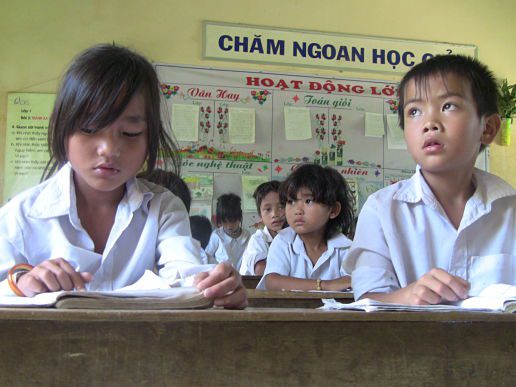
Vietnam has been making strides in its development over the past few decades; the country has seen a reduction in poverty and an increase in the standard of living. The Vietnamese government has invested heavily in its reformed education system, especially when it comes to literacy. Ninety percent of the working-age population is now literate and 98% of primary-school-age children are enrolled in school. The gender gap in education that plagues many other countries is nearly nonexistent in Vietnam, as the enrollment rates are comparable for boys and girls. Furthermore, 25% of college-age adults are enrolled in tertiary education.

These numbers are the product of many years of change in the Vietnamese education system. In the 19th and 20th centuries, the French colonized Vietnam, and very few citizens were able to attend school. With French considered the dominant language of the country at the time, nearly the entire population was illiterate. After Vietnam gained independence in 1945, the government began focusing on improving literacy rates and reforming the education system. Violent conflicts and economic crises made this difficult for many years, but the most recent decade has seen steady progress.

Vietnam first entered the PISA test in 2012. This test measured how 500,000 students from schools in 65 countries answered written and multiple-choice questions. Vietnam ranked 17th in math, eighth in science, and 19th in reading, thus outranking some developed countries such as the United States and the United Kingdom. These results were a positive surprise worldwide.

There has been much discussion about the reasons behind Vietnam’s recent success. The government has been focused on investing in the education system — 21% of all government expenditure is devoted to education. Furthermore, teachers have been traditionally highly respected in Vietnamese culture and they are expected to meet high standards and stay committed to professional development. However, there is concern that strong PISA performance does not tell the whole story.

While the enrollment rates are high for primary school, only 65% of secondary school-age students attend school. Poor or disadvantaged students often drop out, and their scholastic abilities (or lack thereof) were not reflected in the PISA scores. While more privileged students scored high, students who may have lowered the scores were left out of the picture entirely.

Some Vietnamese schools have the resources to focus on creativity and critical problem solving, but most encourage rote learning and memorization. These methods can result in impressive test scores, but do not serve students well once they are out of school. Sadly, corruption is also an issue in Vietnamese schools, particularly elite schools, which sometimes sell students places for extremely high prices.

Although the Vietnamese education system has a long way to go, the recent PISA scores are positive signs of things to come. In the long process of recovering from years of conflict, these reforms in the school system have brought about progress and a more educated populace. As Vietnam develops, schools can continue to improve and effectively serve students of all economic backgrounds.

– Jane Harkness

Sources: BBC, The Economist, World Education News and Reviews, World Bank
Photo: Global Playground

July 3, 2015
https://borgenproject.org/wp-content/uploads/borgen-project-logo.svg 0 0 Borgen Project https://borgenproject.org/wp-content/uploads/borgen-project-logo.svg Borgen Project2015-07-03 07:22:082020-07-14 08:51:02Improvements in Vietnamese Education System
Children, Developing Countries, Global Poverty

Vision Not Victim Program Helps Girls Reach Goals

vision_not_victim
Girls in developing nations have been facing hardships like violent civil wars and survival in unfamiliar countries as refugees. Their gender and age makes them vulnerable to harassment, exploitation, violence and being bought and sold as child brides.

Many are prevented from attending school and receiving proper health care. Instead of being able to develop their own identity and pursue their personal dreams, they are urged to work for the benefit of their family.

A program by the International Rescue Committee called Vision Not Victim was started to supply girls with the skills and support they need in order to realize their potential and make their dreams a reality.

Meredith Hutchison traveled to the Democratic Republic of Congo in the summer of 2010 to work with local girls. There, she saw the widespread dangers of domestic violence and sexual assault women face all too frequently.

Three years later, Hutchinson began the Vision Not Victim Project which uses photography to impact the lives of girls in poverty. Girls understand the difficulties associated with poor health care and corrupt leadership. Even more, they have their own ideas about how to make positive changes in their community.

“I believe that as much as photographs help us understand terrible truths about war and poverty, as in Congo, they can also help us see the world in a new light: they can showcase our triumphant moments, illuminate role models and create positive visions of the future.”

Here’s how it works: girls ranging in ages 11 to 16, with the help of female leaders from their community, talk about their goals and design a vision for the future. Girls then sketch a tangible picture that represents these goals and the program gets to work recreating it in a photoshoot.

During each session, Hutchinson has noticed the confidence that builds for girls when they see their goals play out before them. Just by providing some props and an appropriate location, participants ‘try on their future’ with courage and grace.

This is promising. As young women, these girls play a very important part in the future of their community and their own lives. True, a photograph is not a final solution, but it does work to propel them in the right direction. Seeing pictures of themselves achieving their goals is very motivating.

Once the photographs are printed, girls share them with their families and community. It can inspire others to envision their own goals as well as realize the potential of young women.

These photographs also have the ability to motivate people in developed countries. It puts faces to the disasters. People are reminded that when they donate to aid groups, they are improving the lives of real people working towards a brighter future for the whole world.

The Vision Not Victim program has worked with girls in the Democratic Republic of Congo and girls in Jordan as Syrian refugees. It is being spread to other developing countries and even for refugee girls resettled in the United States.

– Lilian Sickler

Sources: International Rescue Committee, USAID, The Daily Beast, Women in Foreign Policy
Photo: The Daily Beast

July 2, 2015
https://borgenproject.org/wp-content/uploads/borgen-project-logo.svg 0 0 Borgen Project https://borgenproject.org/wp-content/uploads/borgen-project-logo.svg Borgen Project2015-07-02 15:55:422024-12-13 17:51:39Vision Not Victim Program Helps Girls Reach Goals
Children, Education, Health

How the SHEVA Company is Helping Girls Stay in School

How the SHEVA Company is Helping Girls Stay in School
In developing countries, girls often miss school or drop out entirely when they begin menstruating. Many are reluctant to tackle this issue because of the taboo that still surrounds menstruation, but it is a widespread problem that affects the education of millions of girls worldwide. In India, girls’ schools often lack functioning toilets, and in Burkina Faso and Niger, there are usually no places at schools for girls to change sanitary pads or dispose of waste. In Ghana, inadequate sanitation facilities, lack of access to sanitary products and physical discomforts related to menstruation, such as cramps, cause girls to miss an average of five days of school over the course of any given month.

Girls who drop out of school continue to struggle throughout their lives. They are more likely to marry and engage in sexual activity earlier. Because they are also less likely to use contraception, they typically have more children than girls who complete their schooling. This can trap them in the cycle of poverty. When girls miss school because of menstruation, they are held back from many opportunities by a completely natural physical process that should never have to interfere with their education.

That’s why SHEVA, a company launched in October 2014 by Marisabel Ruiz, is currently working in Guatemala to provide girls with sanitary hygiene products. Ruiz, who was born in Guatemala, decided to start these efforts in her native country because she already had connections there that could help SHEVA to reach more girls. Women can go to SHEVA’s website to purchase a variety of products, such as pads from familiar brands like Kotex and Playtex, or other items related to sexual health like condoms and pregnancy tests. With every purchase, SHEVA donates a month’s supply of sanitary pads to a girl in need.

SHEVA has also partnered with the organization Abriendo Oportunidades to provide health education to girls. They have created a two-year program that primarily focuses on what menstruation is, personal hygiene and women’s rights.

So far, SHEVA has provided sanitary pads to 300 girls, and 25 girls have enrolled in the educational program. A total of 5 million people have accessed free educational information on their website. Their next goal is to teach girls to make sanitary pads on their own, using biodegradable, locally available materials such as banana fibers.

Currently, only people in the U.S. can order from SHEVA’s website, but they plan to expand both their shipping and on-the-ground services to other countries in order to help as many girls as possible. SHEVA’s support for girls has helped them continue pursuing their education and has taught many that menstruation is nothing to be ashamed of.

– Jane Harkness

Sources: Girl Effect, Mashable, Menstrual Hygiene Day, SHEVA

July 2, 2015
https://borgenproject.org/wp-content/uploads/borgen-project-logo.svg 0 0 Borgen Project https://borgenproject.org/wp-content/uploads/borgen-project-logo.svg Borgen Project2015-07-02 15:52:442024-05-27 09:25:23How the SHEVA Company is Helping Girls Stay in School
Page 115 of 137«‹113114115116117›»

Get Smarter

  • Global Poverty 101
  • Global Poverty… The Good News
  • Global Poverty & U.S. Jobs
  • Global Poverty and National Security
  • Innovative Solutions to Poverty
  • Global Poverty & Aid FAQ’s
Search Search

Take Action

  • Call Congress
  • Email Congress
  • Donate
  • 30 Ways to Help
  • Volunteer Ops
  • Internships
  • Courses & Certificates
  • The Podcast
Borgen Project

“The Borgen Project is an incredible nonprofit organization that is addressing poverty and hunger and working towards ending them.”

-The Huffington Post

Inside The Borgen Project

  • Contact
  • About
  • Financials
  • President
  • Board of Directors
  • Board of Advisors

International Links

  • UK Email Parliament
  • UK Donate
  • Canada Email Parliament

Get Smarter

  • Global Poverty 101
  • Global Poverty… The Good News
  • Global Poverty & U.S. Jobs
  • Global Poverty and National Security
  • Innovative Solutions to Poverty
  • Global Poverty & Aid FAQ’s

Ways to Help

  • Call Congress
  • Email Congress
  • Donate
  • 30 Ways to Help
  • Volunteer Ops
  • Internships
  • Courses & Certificates
  • The Podcast
Scroll to top Scroll to top Scroll to top