• Link to X
  • Link to Facebook
  • Link to Instagram
  • Link to TikTok
  • Link to Youtube
  • About
    • About Us
      • President
      • Board of Directors
      • Board of Advisors
      • Financials
      • Our Methodology
      • Success Tracker
      • Contact
  • Act Now
    • 30 Ways to Help
      • Email Congress
      • Call Congress
      • Volunteer
      • Courses & Certificates
      • Be a Donor
    • Internships
      • In-Office Internships
      • Remote Internships
    • Legislation
      • Politics 101
  • The Blog
  • The Podcast
  • Magazine
  • Donate
  • Click to open the search input field Click to open the search input field Search
  • Menu Menu

Archive for category: Advocacy

Information and news on advocacy.

Activism, Advocacy, Aid Effectiveness & Reform, Charity, Global Poverty

IKEA Brighter Lives for Refugees Campaign

IKEA_Syria_refugees
The devastating Syrian refugee crisis has brought to the forefront the plight of millions of refugees around the world.  It is estimated that today there are 10.5 million refugees globally, nearly half of whom are children. United Nations High Commissioner for Refugees (UNHCR) Antonio Guterres has noted that in 2013 alone, over two million refugees were registered, a record number not seen in 20 years.

In response to the dire conditions faced in refugee camps, the Swedish megastore IKEA, most popular for its range of modern and ready-to-assemble furniture and home accessories, recently launched their ‘Brighter Lives for Refugees’ Campaign, where they will donate one euro (roughly $1.38) to UNHCR for each LED light bulb sold in IKEA stores between February 3 and March 29, 2014.

Funds raised through the Brighter Lives for Refugees Campaign will provide a variety of renewable energy technologies to hundreds of thousands of refugees in Jordan, Chad, Sudan and Ethiopia.  Such technologies include solar streetlights, indoor solar lanterns, and fuel-efficient cooking stoves.

It is estimated that a refugee family will spend, on average, 12 years in a camp. This would make it more like a home rather than a temporary refuge.  Life in a camp usually stops when the sun goes down, making even the simplest activities a dangerous endeavor.  The goal of providing lighting and renewable energy technologies is to make camp life more humane, where using the toilet, collecting water or working inside the home is no longer an impossible feat.

It is important to take note of the IKEA campaign because it does not simply seek to provide temporary assistance to refugees.  The idea behind providing sustainable lighting is to transform the refugees’ quality of life, thereby allowing them to be active forces, rather than passive receivers, in improving their lives.  The Brighter Lives for Refugees Campaign website lists a number of positive effects that access to lighting will have on quality of life for refugees:

  • Improving safety by reducing the risk of crime
  • Improving results in school by allowing children more time to study after sundown
  • Enhancing camaraderie by enabling community gatherings and social activities
  • Allowing for the continuation of income-generating activities after sundown
  • Allowing refugees to keep their small shops open after sundown and earn a sustainable income

The IKEA Foundation has been partnering with UNHCR since 2010 to address the fundamental needs of children, including shelter, care, and education.  While the Foundation has committed 73 million euros ($100.448 million) to support UNHCR activities, it has also supported dozens of other organizations, donating 82 million euros ($112.832 million) in 2012 alone.

– Rifk Ebeid

Sources: IKEA Foundation, UNHCR, IKEA, AbuDhabi Week, IKEA Family Live Magazine
Photo: Humanosphere

February 24, 2014
https://borgenproject.org/wp-content/uploads/borgen-project-logo.svg 0 0 Borgen Project https://borgenproject.org/wp-content/uploads/borgen-project-logo.svg Borgen Project2014-02-24 12:49:502024-06-05 01:57:10IKEA Brighter Lives for Refugees Campaign
Advocacy, Global Poverty

Amy Poehler Delivers Hope and Laughter

Amy Poehler
Saturday Night Live (SNL) alumna and comedienne Amy Poehler has a knack for keeping audiences on their toes. Alongside Tina Fey’s portrayal of Sarah Palin, She delivered one of the greatest moments in SNL history with her spot-on impersonation of Hilary Clinton during the 2008 presidential election. Poehler also served as a co-anchor for SNL’s “Weekend Update” for four years.

Now most well known for her starring role on NBC comedy “Parks and Recreation,” Poehler is considered to be female comedic royalty. However, Poehler is creating a legacy of charity to rival her acting resume.

Poehler serves as the Ambassador of Arts for the Worldwide Orphans Foundation (WWO.) The WWO is dedicated to supporting orphaned children and assisting at-risk children in becoming healthy and successful world citizens. Poehler has been a crucial propent of WWO since 2010. During this time, Poehler has hosted numerous fundraising events for the organization, including auctioning off a tour of the Parks and Recreation set; all proceeds went to the WWO.

In 2012, Poehler traveled to Haiti with WWO founder Dr. Jane Aronson to help at-risk children in the rural community of Kenscoff. While in Haiti, Poehler helped to build new soccer and recreation fields, implement a library of toys for children in the community, and promote a youth training program to prepare young people of the community for future opportunities.

During the 2013 Emmy Awards, Poehler hosted a “Losers Party” for those passed over for an award at the ceremony. Hosting the event alongside Mad Men star Jon Hamm, Poehler raised $20,000 for the WWO.

In addition to her constant advocacy for children across the globe, Poehler also runs her own non-profit organization, Amy Poehler’s Smart Girls. Smart Girls encourages women to achieve self-acceptance and empowerment by making charity and kindness a cornerstone in their lives.

“Giving to charity is good for your skin, and it makes your butt smaller,” Poehler teased at Variety’s Power of Women Banquet in 2013. Touching on a more emotional note, Poehler stated, “There are so many children living in the world who have nothing. Who are we to be in this room and be living this life without helping them?” Her words are a striking example of Poehler’s unparalleled ability to inspire through both laughter and charity.

– Taylor Diamond

Sources: Bustle, Amy Poehler’s Smart Girls
Photo: UPI

February 24, 2014
https://borgenproject.org/wp-content/uploads/borgen-project-logo.svg 0 0 Borgen Project https://borgenproject.org/wp-content/uploads/borgen-project-logo.svg Borgen Project2014-02-24 12:21:002020-07-31 13:17:18Amy Poehler Delivers Hope and Laughter
Advocacy, Children, Developing Countries, Extreme Poverty, Global Poverty

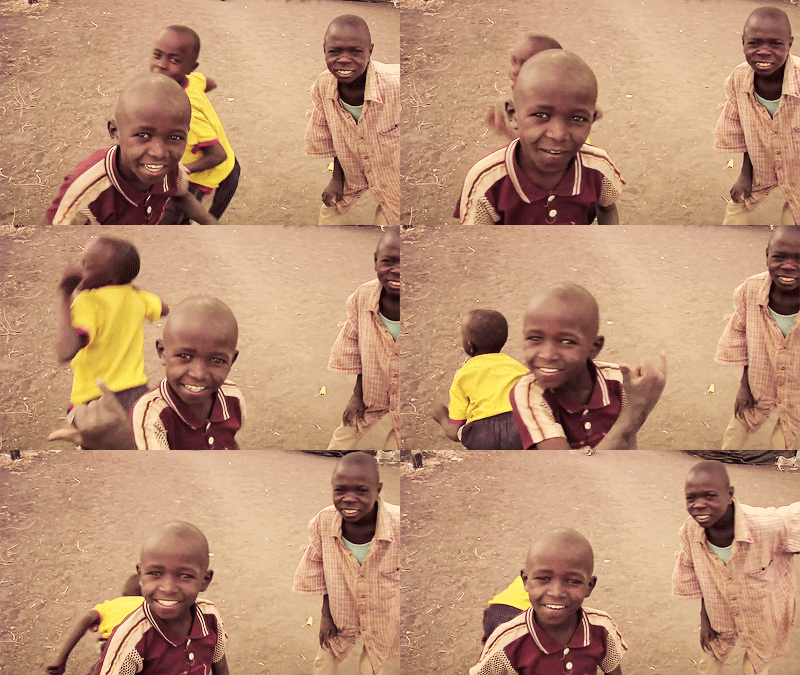
Best Solution for Poverty: Investing in Children

L_children_playing_africa
Across the world, almost one billion children live in poverty. They live without access to proper nutrition, healthcare and especially, adequate education. Children are the future of the world and need to be nurtured to become successful. When children grow up with skills to join the labor force, they can help pull their countries out of poverty by making changes in the political system and economy. As educated citizens, they will be less likely to engage in unethical behavior and more likely to have fewer children. As a result, both mortality and overpopulation rates decline.

By ignoring children’s education, developing countries are also unaware of talented children.

Talented children are more likely to achieve higher degrees and may go into professions such as being educators, business leaders and scientific researchers. These children have the capacity to make huge contributions to society in various fields that will support economic growth in developing countries.

Therefore, nurturing talent, both physically and psychologically is a crucial to reducing global poverty in the long run.

From a physical perspective, children need to have a good nutritional diet so that they can be healthy both physically and mentally. Lacking necessary nutrition can cause children to develop slower and not be able to absorb education properly.

From a psychological point of view, education systems and societal support are the keys to unlock the full potential for young talents. Good education gives children the chance to prove themselves as well as the basic knowledge to pursue their dreams. At the same time, support from society gives them the motivation to overcome challenges in their daily life and strive to become a better citizen of the world.

– Phong Pham

Sources: Spring: Gifted Children, Spring, UNICEF
Photo: Borgen Project

February 24, 2014
https://borgenproject.org/wp-content/uploads/borgen-project-logo.svg 0 0 Borgen Project https://borgenproject.org/wp-content/uploads/borgen-project-logo.svg Borgen Project2014-02-24 12:11:012024-12-13 17:53:49Best Solution for Poverty: Investing in Children
Activism, Advocacy, Global Poverty, Philanthropy, Poverty Reduction, Volunteer

Peace Corps Preparation

peace corps
Since it was established by J.F.K in 1961, the Peace Corps has been fighting first-hand the systematic effects of global poverty. Beginning as a small handful of good samaritans in only six participating countries, it has since then extended its humanitarian influence to 139 countries with the help of more than 210,000 volunteers. If you’ve ever been curious about joining the Peace Corps yourself, here is some information you must read.

How to Apply for the Peace Corps:

The process of becoming an advocate against global poverty is not as daunting as it might seem. The first step is the online application, which asks for basic information and some statements regarding one’s motivation to volunteer abroad. This is then followed by a personal interview with a local recruiter, to see if the Peace Corps seems like a good fit. If all goes well, this could lead to a formal invitation, complete with destination, departure date and project assignment information.

Then comes the fun part – preparing for departure. In the weeks prior to leaving, the Peace Corps will request the volunteer receive comprehensive dental and medical exams, as well as an array of immunizations, to make sure they are good to go. On the day of departure, volunteers head to training at an orientation site within the United States. The training continues in the volunteer’s assigned country, where they will train for three months while also living with a host family to establish skills for their cultural and linguistic adaption.

What the Peace Corps Looks for:

It is true that the demands of being a Peace Corps volunteer require a specific type of person, and thus the application process is very selective. Living and working in another region of the world, often in extremely dire situations, is a job for those with an abundance of determination, adaptability, independence, social sensitivity and emotional maturity. Those who already have some experience with volunteer work usually make the best candidates, as they have probably developed the previously mentioned qualities within themselves. The Peace Corps, furthermore, has many partner organizations such as City Year and the Special Olympics which interested volunteers can explore.

There are also some logistical pre-requisites, concerning the volunteer’s education, skills and ability to deliver aid to a community. While it is still possible to join without one, 90% of Peace Corps jobs require a minimum of a bachelor’s degree. Many jobs require pre-existing skills, such as special education, engineering and urban planning as well as agroforestry. Others can be developed on site, such as a teaching English, youth development and health education. The Peace Corps looks comprehensively at every applicant, however, and there are opportunities for non-degree volunteers who have experience working in construction, agriculture and with other non-profit organizations. By and large, the most promising candidates are those with some understanding of another language.

The Life of a Volunteer:

There is not one, quintessential Peace Corps experience, as the regions and types of work are all so diverse. The Peace Corps works in many countries and continents worldwide, in both rural and urban areas, and volunteers are expected to immerse themselves entirely so as to best serve their assigned communities. Although it is possible to have a preference for a location, flexibility helps during the application process. Regional availability also varies quickly based on need. For example, the Philippines are asking for significantly more volunteers than usual, due to the effects of typhoon Haiyan. Once there, a volunteer will be assigned to one of six main areas of specialized aid, which are: education, youth in development, health, agriculture, environment and community economic development. The commitment is 24 months, plus three months of training, thus totaling 27 months. Living accommodations are provided by the Peace Corps, and also vary greatly depending on the norm for that region.

Why Volunteer:

Helping a community build a more sustainable future for itself is an incredibly rewarding experience, as many veteran volunteers can attest to. All countries where the Peace Corps works have requested the presence of volunteers and aid programs, thus proving that the need is strong.

The benefits of joining the Peace Corps extends after service, as well. Upon return, volunteers receive $7,425 as an “adjustment” allowance, to help re-establish their lives in the United States after over two years abroad. Eligibility for student loan deferral is also provided, as well as a number of scholarships and financial aid packages to graduate degree programs. Over 70 graduate schools are partnered with the Peace Corps, and seek out returning volunteers who wish to incorporate their development experiences into their course work, such as the Paul D. Coverdell Fellow Program. For those wishing to enter directly into a career at home, the Peace Corps is invaluable for its professional connections in fields like federal employment and other non-profit organizations.

– Stefanie Doucette

Sources: Peace Corps, Time, National Archives
Photo: Salon

February 21, 2014
https://borgenproject.org/wp-content/uploads/borgen-project-logo.svg 0 0 Borgen Project https://borgenproject.org/wp-content/uploads/borgen-project-logo.svg Borgen Project2014-02-21 21:11:262014-02-23 23:29:39Peace Corps Preparation
Advocacy

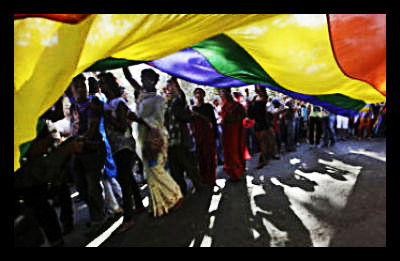
LGBT Rights in India

lgbt_rights_india
As awareness of homosexuality and Lesbian, Gay, Bisexual, and Transgender (LGBT) rights circle around nation-states, some nations are less willing to accept the concept. In India, for example, there have been conflicts concerning the nation’s ban against homosexual marriages and connections. This is a serious issue as the banning of LGBT rights in India has violated a universal human right. According to the Universal Declaration of Human Rights, every individual has the right to their own marriage and family, freedom of expression and freedom of thought.

Homosexuality is a matter of concern for the country of India; to combat it, the government has put LGBT laws into place that ban the presence of homosexuality. These laws have caused citizens in India to seek freedom from political constraints by revolting against the government. The government has responded to this heightened homosexual presence by increasing regulations.

In 2009, the New Delhi high court established Section 377 of the Indian Penal Code, which punishes “carnal intercourse against the order of nature” with a penalty of life in prison. The Indian Penal Code is a moral code of conduct that all citizens of India must live by. The establishment of Section 377 led to serious discrimination against people engaging in homosexual acts, who were subjected to frequent beatings and blackmail by the police. NGOs working with sexual minorities have also been harassed and sometimes charged under Section 377.

By denouncing homosexuality and threatening to imprison gay men, Section 377 has likely impeded the battle against HIV. Graeme Reid, director of the LGBT rights program at the Human Rights Watch, argued, “The Supreme Court’s ruling is a deeply disappointing setback for basic rights to privacy, equality, and non-discrimination.”

New laws have led to increased violence and beatings of people in the LGBT community. People who oppose Section 377 of the Indian Penal Code are arrested and sentenced from 10 years to life in prison. Those who support LGBT rights, but are not gay, bisexual or transgender themselves, get beaten by Indian government officials. How would the United States react if American citizens were beaten for supporting LGBT rights?

Many human rights activists have revolted against the Indian Supreme Court, demanding that the Indian government review the Indian Penal Code and rewrite Section 377 to satisfy the people of India. By comparing LGBT rights in India with LGBT rights in America, it becomes clear the extent to which social justice is still evolving all over the world. Citizens that want to help the international LGBT community can take steps to advocate for human rights by volunteering with an NGO in their community.

– Kenneth Kleisner
Sources: Science Direct, Human Rights Watch
Photo: NPR

February 21, 2014
https://borgenproject.org/wp-content/uploads/borgen-project-logo.svg 0 0 Borgen Project https://borgenproject.org/wp-content/uploads/borgen-project-logo.svg Borgen Project2014-02-21 04:00:102024-06-05 01:57:10LGBT Rights in India
Advocacy, Children, Global Poverty

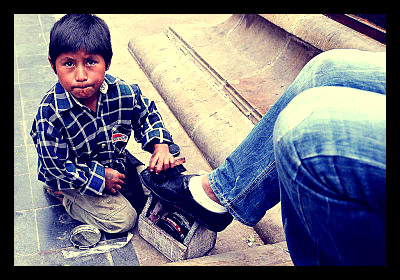
Bolivia: Advocacy Against Child Labor

Bolivia_Child_Labor
Human Rights Watch (HRW) has recently emphasized that the Bolivian government should reject proposals to lower its minimum age of employment below 14 years old. President Evo Morales has expressed support for proposals to abolish a minimum age for “independent work” and to lower the minimum age to 12 years old for all other jobs.

Jo Becker, children’s rights advocacy director at Human Rights Watch (HRW,) stated that, “Child labor perpetuates the cycle of poverty. Lowering minimum age of employment is counterproductive and out of step with the rest of the world.”

Reductions in child labor are attributed to increasing access to education, strengthening national legislation and monitoring and bolstering social protection plans such as Bolivia’s Juancito Pinto cash transfer program.

The International Labor Convention stipulates a minimum employment age of 15 years old. Bolivia, along with 166 other countries, is a part of this. The only stipulation is countries whose economy and educational facilities are insufficiently developed may under certain conditions have a minimum age of 14 years old. Bolivia has a reported 850,000 child laborers.

“Poor families often send their children to work out of desperation, but these children miss out on schooling and are more likely to end up in a lifetime of low-wage work,” Becker said. “The Bolivian government should invest in policies and programs to end child labor, not support it.”

Human rights across Latin America are struggling with a seemingly intractable dilemma, according to The Guardian. Countries such as Bolivia, Colombia, Argentina, Ecuador and Brazil hope to benefit from the commodity boom in global markets that are fueled by demand in China and other areas of the world.

Social movements across Latin America are helping to remold politics and political discourse. These countries democratization depend on the support of increasingly active social movements in both rural and urban areas.

Along with the protesting and movements transpiring in Latin America, HRW joined the Global March against Child Labor and Anti-Slavery International on January 24. The group sent a letter to Morales completely opposing any sort of movement to lower the minimum age of employment. HRW explained that it would be extremely counterproductive to the Bolivian economy.

– Lindsey Lerner

Sources: Human Rights Watch, The Guardian
Photo: Bicultural Mom

February 19, 2014
https://borgenproject.org/wp-content/uploads/borgen-project-logo.svg 0 0 Borgen Project https://borgenproject.org/wp-content/uploads/borgen-project-logo.svg Borgen Project2014-02-19 10:20:002019-08-08 12:48:03Bolivia: Advocacy Against Child Labor
Activism, Advocacy, Global Poverty

2014 Justice Conference in Los Angeles

Justice_Conference
Possibly the most globally conscious conference in the world, the Justice Conference brings together hundreds of equality minded people, humanitarian organizations, peace workers and charities alike.

This year, the speakers gather at the Orpheum Theatre in Los Angeles in February to reach out to tens of thousands of viewers. Entrepreneurs, artists and speakers discuss issues of poverty, education, hunger, government policies and more. Inspiring and moving, viewers can learn about all of the issues facing the world today and how they can help to solve them.

The 2014 Justice Conference covers everything from organizations benefiting refugees of national disaster and war crimes to societies suffering from hunger and disease.

Entrepreneurs are popular at this conference especially now that business is currently being considered as a real solution to ending poverty. Mutually beneficial business practices that supply a market of poor people with a way to increase their income could increase the quality of life of billions of people.

Guests can participate in both the conference and the accompanying film festival taking place at a hotel nearby. Documentaries about those suffering from poverty and oppression are featured as well as films about the people who help them.

The conference is slightly religious and has a base in theological justice. Their values and mission are to promote global justice and bring together like minded organizations to better the societies both in the United States and all over the world. Educating and collaborating with artists, businesses, charities and other foundations to help solve the world’s problems are the main issues discussed at the conference.

Ideas are generated and complex concepts of hunger, health, and equality are discussed in depth.

The Justice Conference Twitter shares tweets, articles and videos from appearing artists and more. Inspiring articles and videos filled with facts about social inequality are common among the Twitter feed. Anyone with a desire to learn about problems facing the world today, including causes and effects as well as potential solutions, should tune into the Justice Conference of 2014.

The next generation can eradicate poverty for good. Knowledge is power, and the more people know and understand about what works and what doesn’t in the fight against suffering and corruption, the more help they can lend and the quicker things can get done.

Talking only does so much, it is the actions of everyone involved that truly matter.

– Kaitlin Sutherby

Sources: The Justice Conference, Facebook, Twitter
Photo: The Justice Foundation

February 19, 2014
https://borgenproject.org/wp-content/uploads/borgen-project-logo.svg 0 0 Borgen Project https://borgenproject.org/wp-content/uploads/borgen-project-logo.svg Borgen Project2014-02-19 04:00:422024-12-13 17:50:032014 Justice Conference in Los Angeles
Activism, Advocacy, Developing Countries, Development, Global Poverty, Human Rights

Dalai Lama: Non-Violent Resolve to Tibetan Oppression

dalai_lama_tibetan
The Chinese occupation of Tibet has been going on since 1949. The Tibetan people, under command of the “Holy Dalai Lama,” have been attempting to win back their freedom and independence through non-violent means. All over the world, international networks of people have been forming Tibet Support Groups, or TSG’s.

The support groups serve as initiatives that raise awareness among foreign nations and generate support and aid towards freeing the Tibetan people.

China is trying to gain membership status in the United Nations Human Rights Council, but the nation has an ongoing ban on all information concerning the exiled Dalai Lama. Although the Central Tibetan Administration and the Dalai Lama believe they can solve the oppression of the Tibetans and still remain a part of China, anti-Tibet propaganda still runs throughout the occupied territory.

Jiang Zemin was the former President of China, replaced this year by Xi Jinping. The previous leader was under investigation for crimes against Tibetan humanity, but the Spanish Government abruptly let the situation drop without consequences and the oppression continues today.

In January, the Intercontinental Hotel Group was issued a complaint by Tibetan protesters for plans to construct a high-class hotel in occupied Tibet. The Intercontinental Hotel Group has yet to respond to this complaint, and the U.N. Global Compact (UNGC) has given them a deadline to answer these complaints.

The UNGC was an initiative signed by the Intercontinental Hotel Group that serves to provide the most honorable and genuine business practices among companies with holdings in multiple countries. Another complaint with the hotel in Lhasa involves the main executive being corrupt and participating in fraudulent business dealings, but so far nobody has responded to any of the issues raised.

The Dalai Lama is adamant about solving Tibet’s problems through non violent means as a way to bolster the Buddhist way. The Chinese wants to build water powered projects on the large Brahmaputra river that originates in Tibetan India.

In a business-standard.com article, the Dalai Lama said, “The mighty Brahmaputra river, which flows through many parts of India and southeast Asia, has its origin in Tibet. The success of the Tibetan movement is an imperative for saving the environment and ecology of the entire world.”

The struggle against Tibetan oppression in China, especially its non-violence, is an important lesson for everyone to learn. The Tibetan movement is trying to prove that morally sound, peaceful, and righteous action against an enemy can be just as effective and more beneficial to everyone. Politicians, leaders and citizens on all sides of the earth can use this information to their advantage and take it forward into the future that we all share together.

– Kaitlin Sutherby

Sources: Tibet.net, Business Standard, Tibet.org
Photo: Telegraph

February 15, 2014
https://borgenproject.org/wp-content/uploads/borgen-project-logo.svg 0 0 Borgen Project https://borgenproject.org/wp-content/uploads/borgen-project-logo.svg Borgen Project2014-02-15 09:01:212024-12-13 17:50:02Dalai Lama: Non-Violent Resolve to Tibetan Oppression
Activism, Advocacy, Developing Countries, Development, Global Poverty, Government, Human Rights, Inequality

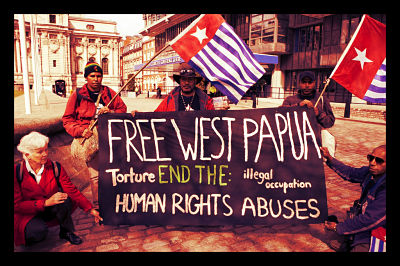
Human Rights Abuses in West Papua

west_papua_human_rights
The region of West Papua does not make the news often; in fact, it rarely merits a news blurb in most Western headlines. However, West Papua is arguably one of the most under-reported cases of exploitation an indigenous groups in the 21st century.

Since 1969, the people of West Papua have been in conflict with the government of Indonesia in one way or another. The University of Sydney’s Center for Peace and Conflict Studies put out a report stating that for the better part of 40 years, the people of West Papua have been under the boot heel of the Indonesian Security forces.

The report goes on to state that due to wide scale incursions by Indonesia’s armed forces, West Papua has seen over 100,000 of its citizens die and much of its national resources depleted.

A report by The Guardian also notes the devastating effect that Indonesian resource extraction is having on the people of West Papua. It notes the case of the Mooi people, who are one of the 250 indigenous tribes that are having their way of life destroyed due to the deforestation of their lands by timber and palm oil companies.

The oceans off the coasts of West Papua are also being devastated due to nickel mining in the area, which is flooding the bountiful coral reefs with polluted sediment.

It is not only the eco-system of West Papua that is being destroyed. Even though it has been close to 45 years, the Indonesian military is still cracking down severely on people who are part of the Free Western Papua Movement.

Last year, the Free Western Papua Movement’s Facebook published the photo of a dead Papuan named Edward Apaseray, who was reportedly tortured and killed by the Indonesian Special Police Forces for being a “separatist.” The Diplomat, a current affairs magazine for the Asian-Pacific region, published a report in which a recent study noted that in West Papua, an incident of torture occurred every six weeks for the past half-century.

The human rights organization Tapol that monitors human rights abuses in West Papua published the story of Yawan Wayeni. He was a tribal leader and formal political prisoner who was tortured and killed by Indonesian security forces in brutal fashion.

The media have long overlooked the plight of the people of West Papua. It has only recently begun to receive real traction in Western media. The International Parliamentarians for West Papua (IPWP) is a group of politicians around the world who support the right self-determination for the people of West Papua.

One of its members, Benny Wenda, an exile from West Papua, recently had an article published in which he decried the recent statement of Australian Prime Minister Tony Abbot, who stated that things in West Papua are “better and not worse.”

West Papua is one of the forgotten atrocities of the 21st century; the responsibility making sure that it does not continue to be rests with us and our elected officials. The Arab Spring occurred with the help of Facebook and a determined populace. The plight of West Papua needs the same type of support from those who have the ability to stand up to the Indonesian government.

– Arthur Fuller

Sources: Amnesty International, The Guardian, Tapol,  The Diplomat, The University Of Sydney, Tapol,  CNN, The Guardian, Tempo, Australia News Network
Photo: London Mining Network

February 13, 2014
https://borgenproject.org/wp-content/uploads/borgen-project-logo.svg 0 0 Borgen Project https://borgenproject.org/wp-content/uploads/borgen-project-logo.svg Borgen Project2014-02-13 16:33:352024-06-11 02:29:34Human Rights Abuses in West Papua
Activism, Advocacy, Charity, Global Poverty, Philanthropy

Charity Through Hip-Hop

Hip-Hop-Marley
Rap and hip-hop music has a rich and diverse culture with its roots linked all the way back to the era of slavery within United States history.  Hip-hop evolved into a music genre in the 1970s when DJs performed at block parties in the boroughs of New York City using the breaks of popular funk, disco and soul music.  As the genre progressed, hip-hop became an outlet of artistic expression for the youths growing up in the inner cities.

Hip-hop blessed the world with popular artists such as 2Pac, the Notorious B.I.G., KRS-One and Eminem, among others.  The lyrical content gave the rest of the world a lens in which we could try to understand and empathize with the people living in impoverished conditions within the inner city where kids had little to no economic opportunity, faced rampant drug infestations and constant battles with authorities.

As hip-hop music gained popularity, it gave some individuals a chance to make a living while creating work that inspired millions.  Since the hip-hop genre is directly infused with the universal struggle of the worlds poor and underprivileged, it is always great to hear about those individuals that were able to escape that life and use their fame and fortune to benefit others.  Here are a few prominent members of the hip-hop community that do just that:

  • Russell Simmons – the co-founder of the influential hip-hop music label Def Jam,  Russell Simmons is involved with over 20 different charities and foundations.  He is the founder of the Diamond Empowerment Fund which supports education initiatives in African diamond mining countries.  Simmons also created the Rush Philanthropic Arts Foundation which provides art and educational programming to New York City youth.
  • Nas & Damian Marley – These two artists collaborated on an album called Distant Relatives which features themes related to African ancestry and poverty.  Proceeds of this album were donated to various projects in Africa including building schools and raising AIDS/HIV awareness.
  • Immortal Technique – This underground artist combines gritty hip-hop with politically conscious messages in order to raise awareness of social issues plaguing the inner city and underdeveloped nations.  He collaborated with Omeid International to open the Amin Institute in Kabul, Afghanistan, an orphanage, school and medical facility for children.
  • Akon – Akon created the Konfidence Foundation to help kids in Senegal and the United States have a chance at an education and healthy life.  The foundation assists undeveloped schools in constructing key infrastructure projects so that they can become operational.  In Ecole Elementaire P.A.Y. Unite #3, the foundation completed construction on unfinished classrooms, drilled drinking wells, and provided educational materials.

 – Sunny Bhatt

Sources: Look to the Stars, Konfidence Foundation, Omeid International, Culture Bully
Photo: DrJays

February 12, 2014
https://borgenproject.org/wp-content/uploads/borgen-project-logo.svg 0 0 Borgen Project https://borgenproject.org/wp-content/uploads/borgen-project-logo.svg Borgen Project2014-02-12 01:36:132024-06-05 02:51:42Charity Through Hip-Hop
Page 59 of 77«‹5758596061›»

Get Smarter

  • Global Poverty 101
  • Global Poverty… The Good News
  • Global Poverty & U.S. Jobs
  • Global Poverty and National Security
  • Innovative Solutions to Poverty
  • Global Poverty & Aid FAQ’s
Search Search

Take Action

  • Call Congress
  • Email Congress
  • Donate
  • 30 Ways to Help
  • Volunteer Ops
  • Internships
  • Courses & Certificates
  • The Podcast
Borgen Project

“The Borgen Project is an incredible nonprofit organization that is addressing poverty and hunger and working towards ending them.”

-The Huffington Post

Inside The Borgen Project

  • Contact
  • About
  • Financials
  • President
  • Board of Directors
  • Board of Advisors

International Links

  • UK Email Parliament
  • UK Donate
  • Canada Email Parliament

Get Smarter

  • Global Poverty 101
  • Global Poverty… The Good News
  • Global Poverty & U.S. Jobs
  • Global Poverty and National Security
  • Innovative Solutions to Poverty
  • Global Poverty & Aid FAQ’s

Ways to Help

  • Call Congress
  • Email Congress
  • Donate
  • 30 Ways to Help
  • Volunteer Ops
  • Internships
  • Courses & Certificates
  • The Podcast
Scroll to top Scroll to top Scroll to top