• Link to X
  • Link to Facebook
  • Link to Instagram
  • Link to TikTok
  • Link to Youtube
  • About
    • About Us
      • President
      • Board of Directors
      • Board of Advisors
      • Financials
      • Our Methodology
      • Success Tracker
      • Contact
  • Act Now
    • 30 Ways to Help
      • Email Congress
      • Call Congress
      • Volunteer
      • Courses & Certificates
      • Be a Donor
    • Internships
      • In-Office Internships
      • Remote Internships
    • Legislation
      • Politics 101
  • The Blog
  • The Podcast
  • Magazine
  • Donate
  • Click to open the search input field Click to open the search input field Search
  • Menu Menu

Archive for category: Advocacy

Information and news on advocacy.

Advocacy, Global Poverty, Human Rights

Buycott: App that Advocates Against Global Poverty

buycott_app
Human rights? There’s an application for that. Launched in May 2013, the free application called ‘Buycott’ is revolutionizing the way social justice is approached by providing consumers with a detailed background into company ethics before making a purchase. Now 10th in the App Store, advocacy is trending with the use of popular technology.

After one scans the barcode, Buycott will trace the product or brand’s owning company and crosscheck it for ethical injustices within a matter of seconds. To make it easier to organize the user’s philanthropic goals, the application enables searches around specific personal conflicts such as human trafficking, labor rights, genetically modified organism labeling, animal welfare and more.

Even more impressively, it encourages grassroots political activism. Users can freely create their own campaigns, which are then incorporated in searches throughout the application and available for others to join. By combining a goal with a problematic company to target, anyone with a Smartphone can inform the world of which products should be avoided.

Many of the popular campaigns today demand opposition to major companies such as Monsanto, Koch Industries, Coca-Cola or Johnson & Johnson. Buycott also has a large presence of positive campaigns, in support of socially conscious companies. For example, Starbucks Coffee Beans made an early appearance on the application for its political support of marriage equality and for its fair trade initiatives.

Sadly, today’s global economy often functions off inhumane sweatshop labor to put cheap products on the shelves of wealthy nations. Sweatshops are known for their poor working conditions, unfair wages, lack of benefits, unreasonable hours and physical abuse. It is estimated that several hundred millions individuals worldwide, mostly women and children, are currently working for wages as low as 13 cents per hour.

Although they are present everywhere, sweatshops are more prevalent in developing nations, such as those in Southeast Asia and Central America, due to an absence of unions and labor laws. Some items most commonly produced through the sweatshop abuses of human rights are shoes, clothing, toys, chocolate, coffee, rugs and bananas.

Sweatshop labor and economically unjust institutions make it next to impossible for surrounding communities to rise out of a state of poverty. They are not truthfully increasing the number of jobs available for local people because the wages earned are too minuscule to provide a family with financial stability. Additionally, they are contrary to more beneficial, sustainable development efforts, stalling any real economic advancement.

Boycotting, or ‘Buycotting’ products manufactured under these contexts supports the broader fight against global poverty, by confronting companies with the injustices they promote and the demand for changed business practices.

 – Stefanie Doucette

Sources: Forbes, ABC News, Institute for Global Labour and Human Rights, PBS, Buycott
Photo: Sydney Morning Herald
February 11, 2014
https://borgenproject.org/wp-content/uploads/borgen-project-logo.svg 0 0 Borgen Project https://borgenproject.org/wp-content/uploads/borgen-project-logo.svg Borgen Project2014-02-11 16:39:432017-11-30 10:53:16Buycott: App that Advocates Against Global Poverty
Advocacy, Global Poverty

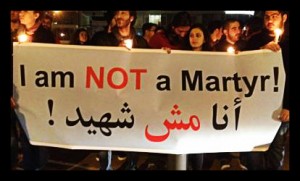
#NotaMartyr: Lebanon’s New Twitter Revolution

NotaMartyr_Lebanon_Revolution_Twitter
Social media is proving itself once again a vital medium for advocacy.  In a movement reminiscent of the 2011 Arab Spring, the younger generation of Lebanon is organizing on Twitter around the mantra #notamartyr. The online phenomenon was sparked by the death of 16-year-old Mohammad Chaar, a bystander in Beirut.

The December 26, 2013 explosion was targeting former Lebanese ambassador to the United States, Mohamad Chatah. It killed Chaar instead, who was hanging out with friends nearby. The press and government authorities immediately transformed him into a figure of patriotic martyrdom, as is customary in such cases.

According to the subsequent outcries from Lebanese activists, the glorification of martyrs is a problem in their culture and disrespectful to Chaar’s memory. They are adamant that he was a victim, and not a martyr. #Notamartyr is a promotion of pacifism and the choice of life. It also demands that the Lebanese government to be held accountable for violent harms perpetrated against their citizens.

Recent times in Lebanon, and especially in the capital city of Beirut, have seen a lot this type of martyrdom. The country still feels a degree of political and economic instability in the wake of their 15-year civil war, which ended in 1990. Violent spillover and ethnic tension from their neighbor Syria has significantly increased this. Beirut has seen six fatal bombings in the past six months, averaging one per month.

Violence has only resulted in breeding further problems for Lebanon, which is quickly declining into an economic crisis. Limited job opportunities have forced more and more Lebanese youth to reluctantly leave their home country.

The #notamartyr movement has now developed into a means of voicing a wide range of dissatisfaction, along with resolutions for the future. Poverty, corruption and human rights violations are just a few topics highlighted. It is also consciously challenging negative media misrepresentations of Lebanese culture.

As the accompanying Facebook group states, “We can no longer desensitize ourselves to the constant horror of life in Lebanon. We refuse to become martyrs. We refuse to remain victims. We refuse to die a collateral death.”

Tweets from Lebanese activists:

@LebaneseVoices: I’m tired of head counting my family every other week to check if they have survived explosions #notamartyr #انا_مش_شهيد #لبنان #Lebanon

@Akananmariam: I want my hijab to represent my faith and my love of peace, not my political affiliation or party.

@Safran3: I want to raise my kids in Lebanon #notamartyr #lebanon

@Hamedleila: I would like to hold my boyfriend’s hand without being afraid of the police #notamartyr

– Stefanie Doucette

Sources: Al Jazeera, BBC, CNN
Photo: Huffington Post

February 11, 2014
https://borgenproject.org/wp-content/uploads/borgen-project-logo.svg 0 0 Borgen Project https://borgenproject.org/wp-content/uploads/borgen-project-logo.svg Borgen Project2014-02-11 15:19:212024-05-26 23:09:48#NotaMartyr: Lebanon’s New Twitter Revolution
Advocacy, Global Poverty

Research Ideas for the Humanitarian Student

students_study_poverty_advocates
Developing a research topic can prove quite daunting to a young adult. Once a student is able to narrow down at least a general topic, however, the options become both focused and limitless. School reports do not have to feel like a burden, and instead should be thought of as an opportunity to go beyond the surface and dig deeper into a topic of interest to learn more about its nuances and shades of grey.

The world we live in is rife with a plethora of issues that would make an interesting and thoughtful read.  Below is a list of research ideas that will dazzle your teacher and prove a worthwhile and beneficial experience for you:

1. Compare/contrast poverty reduction strategies of U.S. government foreign-aid programs to those of other donor countries, focusing on the end goals of such programs.  For example, do the programs aim to increase income?  Or, instead, do they focus on improving quality of life?  At the end of your school report, analyze the pros and cons of such strategies and develop your own strategy for how you think poverty should be addressed.

2. Explore the structure and strategies of U.S. based non-profit organizations working to reduce global poverty.  What do their programs focus on?  Who are their top donors?  How do they raise funds?  Where are their funds allocated?  What are their milestones/achievements?

3. The UN General Assembly designation of February 20th as the “World Day of Social Justice.”  First explore and analyze the concept of social justice.  Then specifically delve into the World Day of Social Justice by answering the questions: What is the purpose of this day?  How/why was it developed?  What are its achievements?

4. With one more year left until the UN Millennium Development Goals (MDGs) target date, discuss what the MDGs are, as well as the various efforts made so far by UN member nations and global development institutions toward achieving the MDGs.

5. Research poverty reduction measures taken by your local elected representatives.  How often do they focus on poverty related issues?  How much poverty related legislation have they drafted or co-sponsored?  Discuss what their primary focus is and why.  How can a constituent make poverty a priority for them?

Students should view school reports as a challenge and an opportunity to dig deeper into topics that interest them.  The issue of global poverty spans many fields that are ripe with information for critical analysis.  The topics listed above are just one of many poverty-related school report ideas to help give you a head start!

 – Rifk Ebeid

Sources: UN News Centre, Take Apart, United Nations Millennium Development Goals
Photo: ksvoboda

February 10, 2014
https://borgenproject.org/wp-content/uploads/borgen-project-logo.svg 0 0 Borgen Project https://borgenproject.org/wp-content/uploads/borgen-project-logo.svg Borgen Project2014-02-10 20:51:432024-06-11 02:26:32Research Ideas for the Humanitarian Student
Advocacy, Charity, Children, Global Poverty, Human Rights

Lumos Foundation: J.K. Rowling’s Magical Venture

J.K. Rowling may be most famous for her adventurous and classic tales of witchcraft and wizardry, but the author of the Harry Potter franchise has much more up her sleeve. The Lumos Foundation, Rowling’s charitable organization, has bettered the lives of millions.

A well-known advocate for international human rights, Rowling spent time volunteering for Amnesty International prior to her breakout success.  Rowling cites her time with the organization for teaching her about the kind of impact she wishes to have for humanity.  In the wake of her celebrity status, Rowling became the 12th richest woman in the world.  With her wealth, Rowling decided to donate half of it to charitable causes, taking a pledge alongside other billionaires and initiated by Bill Gates.


The Lumos Foundation


Rowling’s shining charitable achievement, however, is the Lumos Foundation. The Lumos Foundation is an organization committed to providing basic human rights services for over eight million children living in institutions.  The organization seeks to provide community-based services such as primary education and healthcare as replacements for institutions that often neglect these basic needs.

While the Lumos Foundation is globally minded, it focuses most specifically on Eastern European nations.  Moldova, for example, has one of the highest institutionalization rates among children of any nation.  “Most of these vulnerable young people are not orphans and poverty has separated them from their parents,” says Lumos, concerning orphanages in Moldova.  Furthermore, many of these children are placed in institutions due to gaps in the education system.  Children with disabilities are especially at a disadvantage and have a high chance of being institutionalized.

“Lumos works on every level, with every actor, to transform an outdated and harmful system into one which supports and protects children and enables them to have a positive future.”  Founding the Lumos Foundation and supporting the development of the world’s most vulnerable citizens, children, shows how dedicated Rowling is to advocacy (even without Hogwart’s training.)

– Taylor Diamond

Sources: Lumos, The Borgen Project
Photo: Mirror

February 6, 2014
https://borgenproject.org/wp-content/uploads/borgen-project-logo.svg 0 0 Borgen Project https://borgenproject.org/wp-content/uploads/borgen-project-logo.svg Borgen Project2014-02-06 04:00:352024-05-26 23:09:23Lumos Foundation: J.K. Rowling’s Magical Venture
Advocacy, Economy, Extreme Poverty, Global Poverty

What $10 Buys in World’s 10 Poorest Countries

Often, the assumption is that the world’s poorest countries must have a low cost of living; unfortunately, the average annual income (GNI) in poor countries is often too low to purchase many of the things Western Civilization considers basic necessities of life. With this discrepancy, it is possible to see how so many people are going without food and an education. Below is a list of what you can buy with $10 in the World’s 10 poorest countries.

Afghanistan (GNI = $426): $10 buys 35 pounds of Pakistani sugar, or 17 pounds of rice

Madagascar (GNI = $450): $10 buys five dozen eggs, five liters of domestic draft beer or two seats for an international film release at the cinema

Malawi (GNI = $900): $10 buys 22 pounds of rice

Niger (GNI = $3,716): $10 buys 20 cigarettes

Central African Republic (GNI = $800): $10 buys four and a half pounds of apples, or 11 pounds of potatoes

Eritrea (GNI – $403): $10 buys ten liters of gasoline

Liberia (GNI = $436): $10 buys 15 liters of mineral water

Burundi (GNI = $160): $10 buys five and a half pounds of rice, or one combo meal at a local fast food joint

Zimbabwe (GNI = $150): $10 buys a meal in an inexpensive restaurant, or five cappuccinos

Democratic Republic of the Congo (GNI = $120): $10 buys financial literacy training material for one woman

This list demonstrates how important it is to provide the means rather than the product; shipping water across the ocean rings up an endless bill, but digging a well could save hundreds and is a one-time labor. A small loan is all it takes to provide a woman with the knowledge to later provide for herself and her children.

The cost of food skyrockets when there is a shortage and evaporates when there is abundance, so rather than a single meal, they often need support for their agricultural systems to provide a cushion for farmers. Our money would be well served providing farmers with the knowledge and equipment to maintain a reliable price on their product. This would not only allow farmers to feed and care for their families, but keep food available and affordable for the masses.

– Lydia Caswell

Sources: Asia Times, FINCA, Global Giving, International Women’s Rights Action Watch, Maps of World, The Richest, The Washington Post, The World Bank, World Vision
Photo:
Vando Nascimento

February 5, 2014
https://borgenproject.org/wp-content/uploads/borgen-project-logo.svg 0 0 Borgen Project https://borgenproject.org/wp-content/uploads/borgen-project-logo.svg Borgen Project2014-02-05 05:00:242024-12-13 17:50:00What $10 Buys in World’s 10 Poorest Countries
Advocacy, Global Poverty, Nonprofit Organizations and NGOs

The Launch of the Philomena Project

Philomena_project_adoption
The story of Philomena Lee, an Irish woman forced to give up her son for adoption over 50 years, was the inspiration for an Oscar-nominated film this year. The film, “Philomena,” stars Dame Judi Dench and depicts Lee’s search for her son that leads her to the United States.

On January 24, Lee launched the Philomena Project in Dublin, Ireland to campaign for the release of over 60,000 adoption files currently in the possession of the state, churches and private agencies. In Ireland, adoption was sometimes forced on unmarried mothers and neither child nor mother was given information on the identity or whereabouts of the other.

Lee was single and pregnant at the age of 18 and was sent to a home for unmarried mothers in Roscrea, Ireland run by the Catholic Church when Lee was forced into the adoption of her 3-year-old son, Anthony. When he was taken, she had no idea that he in fact had been sold by the abbey to an American couple.

Lee tried to get information about Anthony, but was not given any indication of where he was sent after his adoption. Anthony, in turn, went looking for his mother in Ireland many years later but was told by the abbey that his mother had left him.

Lee’s story brought attention to this reprehensible practice and after the film’s success, Lee joined forces with the Adoption Rights Alliance. Lee said that she and her daughter decided to found The Philomena Project after receiving such a large amount of responses to her story.

The Philomena Project seeks to get these previously withheld adoption files released, ones that prevent any mother and child who wish to be reunited from doing so.

Susan Lohan, co-founder of the Adoption Rights Alliance, has said Lee’s story has effectively “woken up many people to the crimes committed against thousands of unmarried mothers and their children under the guide of so-called legal adoption.”

Lohan has additionally vowed to end toleration of Ireland’s “deny ‘til we die” strategy and has named the state, private agencies and representatives of the Catholic Church as being in possession of information that people could use to find their natural families.

The Philomena Project hopes to have the Irish Government bring in legislation that would make the thousands of withheld files available to anyone who wants to find either their natural mother or child.

The backers of the Philomena Project have additionally asked the Catholic Church to cooperate with them and also plan on lobbying politicians in both Britain and the United States.

The project has also found support in Maeve O’Rourke, a lawyer from London, well-known for her campaigning for victims of Ireland’s Magdalene Laundries.

O’Rourke has said that “the right of a child to preserve her identity and family relations without unlawful interference is today recognized internationally, and without hesitation, as a basic human right.”

Lee has also expressed her “hope that this effort will help us find solutions that ensure every mother and child who wants to be reunited are able to come together once again.”

– Julie Guacci

Sources: BBC, The Irish Post
Photo: The Independent

February 3, 2014
https://borgenproject.org/wp-content/uploads/borgen-project-logo.svg 0 0 Borgen Project https://borgenproject.org/wp-content/uploads/borgen-project-logo.svg Borgen Project2014-02-03 04:00:542024-06-04 01:08:01The Launch of the Philomena Project
Activism, Advocacy, Global Poverty

#GlobalPOV

global_poverty_nepal #GlobalPOV
Everyone can help end global poverty, even Twitter. #GlobalPOV was created by the Blum Center for Developing Economies at University of California, Berkeley. The Global Poverty Project started by students working with the Blum Center thought of using a hashtag to trend topics surrounding global poverty. The students wanted to get people thinking, reading, and writing about concepts related to global poverty and what causes it as well as how it can be resolved.

Some hashtags are just fact or comments about the world’s poor. Some topics are news headlines about natural disasters and relief efforts across the globe. They include links to charities and organizations that are providing aid to victims of the disaster, and ways everyone can contribute.

#GlobalPOV can follow a post about an article detailing events in other countries related to politics and foreign aid. One tweet talks about social entrepreneurship ending global poverty with a link to Forbes Magazine cover photo of Bono and Bill Gates, two high profile charity donors. Another tweet links a YouTube video that describes how people become dependent on welfare in different societies.

The great thing about Twitter is that using the #GlobalPov phrase in the search bar connects audiences to a wealth of links and information that they can browse on their own time.

The best part of the Global Poverty Project, besides the impact it makes on the lives of poverty victims, is the convenience of spreading the word. One button can share the tweet with potential hundreds of followers. No one has to tediously search through different websites for the information since it is directly accessed via the link.

Richard C. Blum is the founder of the Blum Center at Berkeley. He is also the founder of the American Himalayan Foundation that helps provide food and education to people living in the Himalayas. Mister Bloom serves as a board member today and as the Honorary Consul of Nepal. His dream to help people has touched people all across the world. Starting the Blum Center at Berkeley University was intended as a place to bring together people of all different experiences and backgrounds to help those struggling with poverty.

Brainstorming, education, business, technology, and more are subjects that students working at the Blum Center use to help solve poverty across the globe. Their Global Poverty Project continues to grow with the hashtag #GlobalPOV, which can also be read as Global Point-of-View. This project challenges readers to act against widespread misconception and become educated about the issues facing people today.

Anyone can log onto Twitter.com right now and tweet about global poverty, or search for the hashtag and start reading.

– Kaitlin Sutherby

Photo: AIIA
Sources:
Himalayan Foundation, Wall Street Journal

February 2, 2014
https://borgenproject.org/wp-content/uploads/borgen-project-logo.svg 0 0 Borgen Project https://borgenproject.org/wp-content/uploads/borgen-project-logo.svg Borgen Project2014-02-02 21:47:592014-12-17 09:56:48#GlobalPOV
Advocacy, Global Poverty

Boundless City – Art For Global Justice

Renamed “Boundless City,” Art for Global Justice began when a team of young people decided they could use art to change the world. After a trip to Accra, Ghana, these young people realized that the world is struggling with poverty and civil hardships. They discuss how when traveling to other nations, everyone has cultural differences and perceptions about the nation and its residents.

Economic inequality, political strife and violence often contribute to the complex issue of global poverty and the understanding of the general public. Fielding requests from communities, Boundless City works as a collaborative partner with schools and city programs to educate children from struggling backgrounds.

They discuss the misconceptions created around other nations, religions, cultures and people. Allowing children to draw and express themselves through art helps them develop healthy outlets for their emotions while giving them a common ground with children from all sorts of backgrounds. Planting the seed of understanding and empathy can help prevent conflict and inequality from growing in the future.

Setting up inner city workshops and gallery showings, Boundless City shared its love of art with cities and young residents while teaching them to think of others. Focusing on New York, Ghana, and Guatemala, the newly christened Boundless City teaches communities to express their desire to help and relate to people all over the world.

Using a wordpress blog, students living in foreign nations can post articles about their trips and discoveries abroad. A recent post from a student living South Africa describes how sculptures constructed in busy intersections give people a sense of community.

The whole point of public art is to foster an ideal of brotherhood and belonging to everyone involved. Art can be made by any soul, anywhere, at almost any time. Conflict and war do not decrease art but rather inspire more of it to spread the fight against injustice — and Boundless City, formerly Art for Global Justice, is an important aspect of this message.

Starting Boundless City was a way to show everyone how a simple image can open someone’s mind and change the way they see something, even how the view the world.

Art can express emotion and encourage change in the hearts of its audience. For  years, people have been telling the history of life through art. Whether elaborately displayed on church ceilings or drawn crudely in the dark with spray paint, artists send their messages into the world.

It is a universally understood form of communication, like a smile.

– Kaitlin Sutherby

Sources: Art for Global Justice (blog), Start Some Good, Art for Global Justice
Photo: Nathan Midgley

February 2, 2014
https://borgenproject.org/wp-content/uploads/borgen-project-logo.svg 0 0 Borgen Project https://borgenproject.org/wp-content/uploads/borgen-project-logo.svg Borgen Project2014-02-02 04:00:082024-05-26 23:01:48Boundless City – Art For Global Justice
Advocacy, Global Poverty

Male Victims of Sexual Violence During Conflict

Male Victims of Sexual Violence During Conflict
When most people think of sexual violence during armed conflict, they picture the rape of women and girls. While sexual violence against women is an enormous human rights issue, sexual violence against men frequently occurs but is not often talked about.

Men all around the world suffer from sexual violence during war and conflict. Victims can be military or rebel groups, and perpetrators can be men or women. While men are sometimes raped, they are also subject to an array of other horrific indecencies.

Castration, beating and mutilation of the genitals, undressing men and making them remain naked while in prison and even forcing men to rape their own family members  have been documented.

The United Nation Commission of Inquiry reports that the extreme sexual violence against both men and women has occurred in detention centers during the current Syrian conflict. There have also been reports of sexual violence against men in the Democratic Republic of the Congo and the Central African Republic. An academic study found that that 23.6 percent of men in the eastern part of the Democratic Republic of the Congo had experienced sexual violence.

Another study by the Journal of the American Medical Association found that 32.6 percent of the males surveyed had been victims of sexual violence during the conflict in Liberia. While many people were aware of the rape of Bosnian women during the 1992 conflict in the former Yugoslavia, a report from the Peace Academy accounts that rape and sexual torture also happened to men during this war.

The extent of sexual violence in armed conflict varies significantly between regions and between armed groups. Some armed groups permit sexual violence in war and others do not. However, wartime sexual violence occurs across all geographic regions and ethnic groups. State forces are more likely to be named as perpetrators of sexual violence than rebel groups.

In addition, perpetrators of sexual violence are not always armed forces at all; often sexual violence is committed by civilians. Wartime rape and sexual violence is not often ordered or planned but rather tolerated by commanding officers.

Feminist and women’s rights groups have pushed for awareness, education and intervention around wartime sexual violence against women. Because of this there has been significant research and policy work into preventing sexual violence against women. There are also many organizations that exist to support and treat women who have been victims to sexual violence during armed conflict.

There has been little research on male victims of sexual violence in conflict, although it is increasing.

Few human rights groups openly speak about wartime sexual violence against men, this may be because of gender stereotypes and taboos such as the belief that “real men are unreadable.” It is important that researchers, practitioners and the public alike begin to realize that sexual violence is not gender-bias and that men and women can be both victims and perpetrators.

Is it urgent that organizations that support and aid female victims of sexual violence need to equally expand their services to include men.

– Elizabeth Brown
Sources: CNN, Peace Academy, United States Institute of Peace
Photo: Tumblr

January 31, 2014
https://borgenproject.org/wp-content/uploads/borgen-project-logo.svg 0 0 Borgen Project https://borgenproject.org/wp-content/uploads/borgen-project-logo.svg Borgen Project2014-01-31 23:38:002024-05-26 23:09:37Male Victims of Sexual Violence During Conflict
Activism, Advocacy, Global Poverty, Philanthropy

10 Quotes from Business Executives on Poverty

Business_Executives_On Poverty
Too often there is a disconnect between the business world and those around the globe suffering from poverty.  These two worlds are perceived as either completely unrelated, or to a certain extent, antagonistic.  However, funding global development and combating poverty are smart business choices.

When business promotes development in ailing communities, healthy and prosperous people create new markets.  As stated by current Secretary of Defense Chuck Hagel, “We need to stop viewing it as aid.  It’s an investment.”

Viewing global aid in that vein, it becomes much easier to see how the determination it takes to create a successful business is quite similar to the dedication necessary to fight global poverty.

Here, then, are ten quotes from business executives that you should apply in your daily fight to end poverty worldwide.

1. “When your values are clear to you, making decisions becomes easier.” – Roy Disney

2. “Education’s purpose is to replace an empty mind with an open one.” – Malcolm Forbes

3. “Think P.I.G. – that’s my motto.  P stands for persistence, I stands for integrity, and G stands for guts.  These are the ingredients for a successful business and a successful life.” – Linda Chandler

4. “We’re here to put a dent in the universe.  Otherwise, why even be here?” – Steve Jobs

5. “Good business leaders create a vision, articulate the vision, passionately own the vision and relentlessly drive it to completion.” – Jack Welch

6. “Nothing so conclusively proves a man’s ability to lead others as what he does from day to day to lead himself.” – Thomas J. Watson, Sr.

7. “Apply yourself.  Get all the education you can, but then, by God, do something.  Don’t just stand there, make it happen.” – Lee Iacocca

8. “Someone is sitting in the shade today because someone planted a tree long before.” – Warren Buffet

9. “I believe if you show people the problems and you show people the solutions, they will be moved to act.” – Bill Gates

10. “Creativity often consists of merely turning up what is already there” – Bernice Fitz-Gibbon

– Taylor Diamond

Sources: ThinkExist, Thought Catalog, BrainyQuote
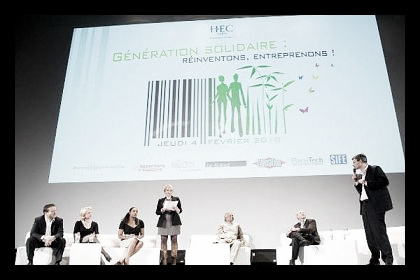
Photo: HEC

January 30, 2014
https://borgenproject.org/wp-content/uploads/borgen-project-logo.svg 0 0 Borgen Project https://borgenproject.org/wp-content/uploads/borgen-project-logo.svg Borgen Project2014-01-30 04:00:542024-05-26 23:08:1110 Quotes from Business Executives on Poverty
Page 60 of 77«‹5859606162›»

Get Smarter

  • Global Poverty 101
  • Global Poverty… The Good News
  • Global Poverty & U.S. Jobs
  • Global Poverty and National Security
  • Innovative Solutions to Poverty
  • Global Poverty & Aid FAQ’s
Search Search

Take Action

  • Call Congress
  • Email Congress
  • Donate
  • 30 Ways to Help
  • Volunteer Ops
  • Internships
  • Courses & Certificates
  • The Podcast
Borgen Project

“The Borgen Project is an incredible nonprofit organization that is addressing poverty and hunger and working towards ending them.”

-The Huffington Post

Inside The Borgen Project

  • Contact
  • About
  • Financials
  • President
  • Board of Directors
  • Board of Advisors

International Links

  • UK Email Parliament
  • UK Donate
  • Canada Email Parliament

Get Smarter

  • Global Poverty 101
  • Global Poverty… The Good News
  • Global Poverty & U.S. Jobs
  • Global Poverty and National Security
  • Innovative Solutions to Poverty
  • Global Poverty & Aid FAQ’s

Ways to Help

  • Call Congress
  • Email Congress
  • Donate
  • 30 Ways to Help
  • Volunteer Ops
  • Internships
  • Courses & Certificates
  • The Podcast
Scroll to top Scroll to top Scroll to top