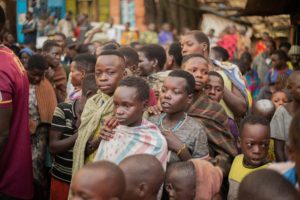
 The decision to dismantle USAID was devastating for millions of people around the world. Several countries suffered immediate effects from the cuts in foreign aid, which provided necessities such as food, education and health care. Uganda is one of the hardest-hit areas for two reasons:
- It hosts the largest refugee population in Africa, nearly 2 million people, 81% of whom are women and children; and
- It faces a severe, chronic HIV epidemic and relies heavily on U.S. support for HIV treatment and prevention.
Uganda lost 66% of the funding received from USAID, which is approximately $307 million. As a result, many areas have been affected, including food aid, which has been cut due to a funding shortage, leading to increased hunger and malnutrition. However, nongovernmental organizations (NGOs) are hard-pressed to continue providing services on the same scale with less funding.
The Impact of Foreign Aid Cuts on Uganda
1. Education:
USAID funding supported school construction and the procurement of learning materials in Uganda. The funding also supported teacher training programs. Digital learning tools provided schools in remote areas, improving access to education. The lack of funding results in under-resourced schools and a reduced ability to meet growing demands.
This affects girls explicitly as it decreases their access to education regarding reproductive and menstrual health. Girls, seeking security, will marry early and lose hard-fought gains in gender equity. In refugee communities, funding shortages have led to staffing shortages. In one refugee settlement, there were 36 teachers with more than 3,400 students. Following funding cuts, nine teachers are left to manage classes of up to 500 students each.
2. Health:
USAID administers close to 60% of the President’s Emergency Plan for AIDS Relief (PEPFAR) bilateral funding, which provided more than half of the medication and staff needed to respond to the HIV epidemic in Uganda. PEPFAR also accounted for nearly 90% of pre-exposure prophylaxis (PrEP) initiatives on a global scale. Millions now are at risk of contracting HIV due to foreign aid cuts.
PrEP is restricted to pregnant and lactating mothers. Funding cuts cause immediate disruptions in care for thousands who depend on consistent medication (i.e., Anti-Retroviral Therapy). This increases the risk of babies being born with HIV. Vaccine shortages caused by foreign aid cuts increase the risk of contracting other diseases like TB, Ebola and Malaria.
Foreign aid cuts also lead to staffing shortages, making it challenging for those who remain to deliver the same level of health care with fewer resources and a reduced number of qualified staff.
One NGO in particular, St. Francis Health Care Services, provided HIV testing, medication and prevention products to sex workers in Uganda, but this was stopped due to cuts in foreign aid. Mwesigye, a country representative with the U.K.-based NGO All We Can, stated, “You know, there was almost an alarm… people were being told to run as fast as they could to the next health unit to get their dose for a few months… but that is also going to run out.”
The Response
When formal protection systems collapsed, local citizens and/or refugees stepped up to fill the gap. The NGO St. Francis Health Care Services received funding from PEPFAR several years earlier. However, its funding was cut after Uganda passed its anti-homosexuality act. The nonprofit was able to secure the funding again; however, its leadership began to realize how dangerous it could be for them and their ability to continue providing the vital services needed in the community.
After the organization’s funding was cut the first time, it began seeking private donors. It increased its revenue by offering paid services, such as surgery, maternal care, radiology and dental exams. As a result, it was less vulnerable to the effects of the foreign aid cuts. However, health leaders still had to make decisions in response to the cuts to foreign aid.
Other strategies implemented include moving away from standalone HIV/TB clinics and referring patients to government outpatient clinics; utilizing a large network of private clinics, seeking non-U.S. international collaborations, increasing donor outreach and implementing technological solutions (e.g., AI). Health officials propose using AI to identify high-risk patients, allowing them to be seen sooner.
Another NGO, Soft Power Health, continues to care for approximately 50,000 patients. This organization operates on a $699,000 budget, which is funded by private organizations and individual donors. It was also more insulated against the foreign aid cuts and continued its work. Services provided include transportation, free HIV medication and gardening and health education. Another clinic lost its funding and donated medical equipment to Soft Power Health, allowing it to continue testing for TB.
Grassroots Groups in Uganda
In response to the aid cuts, grassroots groups in Uganda have turned to farming, petty trade and vocational activities, selling milk and produce, while youth join skills programs to learn trades like tailoring. Women have formed support groups for survivors of gender-based violence and girls at risk, which have become lifelines through regular meetings and check-ins.
These community efforts are complemented by Volunteer Village Health Teams, who refer survivors to clinics that remain open, provide mental health services and conduct awareness sessions on gender rights and protection. Boda Boda riders, a network of volunteer motorcycle riders, transport survivors from remote villages to clinics, legal aid offices, or safer areas and have organized informal night patrols to discourage exploitation and monitor hotspots known for abuse.
Forging a Path Forward
Joy Kawanguzi, team leader of FABIO-Uganda, discusses the abruptness of the foreign aid cuts in Uganda: “It did not give us time to prepare. So the abruptness alone is an inconvenience.” She adds that the foreign aid cuts “put local organizations in a place where they start feeling like they are more implementers of donor ideologies. Because if a local organization were a key player, this decision would not have been drastic. There would have been consultations.”
Mwesigye agrees and advocates for organizations to be able to use funding for core costs instead of just fulfilling projects: “…if core costs are paid for; if you build the institution rather than fulfill project goals, then the institution will be bold enough to be able to work and do what it needs to do.”
These statements are indicative of a desire to move away from dependence on outside donors. Their sentiment is fueled by the question no one can answer: “What if this happens again?” The path forward for the people of Uganda is one where they have free rein with the resources they are given and the opportunity to achieve independence.
– Danielle Milano
Danielle is based in Pineville, LA, USA and focuses on Good News and Global Health for The Borgen Project.
Photo: Pexels

Empowering Women to Close the Gender Pay Gap in Malawi
Women are at an increased disadvantage due to social norms, creating an even bigger disparity in equality. The gender pay gap in Malawi affects not only women, as equality in the workplace, at home and societal beliefs can benefit everyone.
Conditions for Women in Malawi
Women hold low economic power in their homes and workplaces, balancing unpaid childcare with paid jobs in productive sectors such as agriculture and mining, while still consistently being offered fewer hours and lower wages than men.
Girls are typically married before 18, having to abandon their education to care for their children. This limits their opportunities in the workforce and continues to perpetuate the notion that women are less skilled and deserve less pay. By taking away the chance for a full education, women are left at a disadvantage compared to men, who can finish their education and enter the workforce.
Women as Leaders in Poverty Reduction
A 2023 UN Study focusing on the gender pay gap in East and Southern Africa supports the idea that women can become leaders in poverty reduction. Empowering women and giving them financial autonomy could help lift the entire country out of poverty. Women are more likely to share their income with the household, investing more in their children’s health, housing and education. Prioritizing investing in their own families further stimulates the economy and fuels the next generation to create better overall living conditions.
To integrate women confidently into the labor market, the U.N. is calling for legislative change, creating transparency in the hiring process and prohibiting discrimination based on gender or marital status. Malawi can achieve this by developing regulations for minimum wage, increasing benefits and making salaries publicly available. All of this contributes to the elimination of the glass ceiling, bringing women to the forefront of economic progress.
Malawi must work to change societal norms, while also implementing work-life balance policies to ensure that unpaid child care is no longer the only option. Progressing to share child care responsibilities will empower women and unlock the full potential of the Malawian workforce. Uplifting women will facilitate socioeconomic growth, working to lift the entire country above the poverty line.
The good news is that progress has already begun. Malawi has achieved an equal representation of genders in schools by removing education fees and creating a safe space for girls to learn. This is key in empowering young girls to enter the workforce with confidence and the knowledge necessary to succeed.
Empowered Women Advocating for Change
Advocacy and the creation of support programs are essential in closing this gender divide. The Young Feminists Network (YFN) is an organization that lobbied to establish an Executive Committee at the end of 2024, representing the interests of women nationwide. Its work is pivotal to bringing the gender pay gap in Malawi to the forefront of government policy changes and giving women a voice at the political level.
YFN’s Equal Pay Day event in 2025 brought women together to discuss the “Untapped Societal Potential due to the Persistent Gender Pay Gap.” This shift in narrative, driven by young women, places an increased emphasis on the value women have to the economy. YFN is working to reshape the idea that women are less by recognizing their potential to become integral members of society.
This is vital work, increasing awareness and empowering women across the country to be confident and demand equal pay. YFN is an effective example of how societal norms are shifting and how women are asking for more. The full potential for Malawi’s economic growth is being unlocked as women find their collective confidence to demand equal pay. Young women are at the forefront of calling for change, not just to benefit themselves, but to help everyone in Malawi.
With government support and legislative change to close the gender pay gap in Malawi, women will continue to rise and bring prosperity to their country. Empowering women and giving them financial autonomy will lead to poverty reduction, powering the economy to create a sustainable future. All Malawian women need is the space to succeed.
– Hope Jowharian
Photo: Flickr
3 Initiatives Fighting Pollution and Plastic Waste in Nigeria
Nigeria itself is a major contributor to ocean pollution, ranking ninth globally, where proposed bans often struggle with inconsistency across the country. Studies also show alarming levels of microplastics in water sources such as the Osun River.
However, numerous organizations are actively trying to combat plastic waste and pollution in Nigeria and the city of Lagos. Below are three organizations creating a significant impact towards fighting pollution in Nigeria.
Recycling Scheme for Women and Youth Empowerment (RESWAYE)
What’s unique about this organization is that it tackles plastic pollution and empowers women and young people economically through recycling and waste collection. Focusing its area of work in the coastal communities of Lagos for marine pollution, the target demographic for volunteers is females 16 and older.
Doyinsola Ogunye founded the organization in 2019 while previously attending the University of Lagos and went to Nigerian Law School.
One of the most prominent projects within the organization is the plastic buy-back scheme in Ibeju Lekki, a coastal area made up of 16 communities heavily affected by plastic pollution. Supported by The Coca-Cola Foundation and carried out in partnership with the Mental and Environmental Development Initiative for Children (MEDIC), the project aimed to reduce plastic waste while creating economic opportunities for women and young people.
As a result, the program collected about 150,000 kilograms of plastic waste, preventing it from entering waterways and coastal ecosystems. Besides the environmental impact made, it was reported that more than 2,000 women and youth received training, support, and income-generating opportunities through recycling.
Besides this initiative, the organization’s main goal is to engage with and educate the community, host beach cleanups and collaborate with partners. In 2022, RESWAYE partnered with Unity Bank to remove over 100,000 plastic bottles from a Lagos beach on World Earth Day.
Splendour Empowerment Foundation (SEF)
SEF has a mission to integrate digital technology with community-led recycling to transform plastic waste into economic benefit. The organization has developed mobile platforms and applications that let residents log their plastic-collection activity and track how much waste was collected and what type of waste was collected. The information is stored in a tamper-proof digital record or a “digital ledger” to help with transparency and prevent greenwashing, which is when companies or groups make themselves look environmentally responsible without real proof or action
Splendour Joe-King, a well-known Nigerian child rights activist, founded the organization and gained public attention very young. At age 9, she authored a book, Effects of Terrorism on Children, drawing on her experiences and interviews.
Beyond environmental work, SEF focuses on peace in Nigeria. In 2022, the organization launched a “Peace Club Nigeria” project in schools to train children to become peace ambassadors. That same year, the organization announced it will be focusing on improving education for children ages 0-18.
The SEF’s original mission was to support children’s education, health, and peacebuilding. In recent years, it has expanded its mission to address environmental issues.
RecyclePoints
Based in Nigeria, this social benefit venture tackles pollution’s main challenge: sustaining its effectiveness. To combat this, the organization is using a points-based incentive model to encourage recycling, where properly disposing of plastic bottles, used beverage cans, glass bottles, old newspapers and brown corrugated cartons can bring citizens points that redeem household items.
The collection program uses “points” to quantify the number of recycled items at the time of disposal. Members get weekly messages through their cellphones, updating them how many points they have. The points redeemed reach the iRecycle Store, where subscribers can choose to use their points for any household product they need. Members can also earn bonus points for any additional environmentally sustainable activity.
However, under the WastePickers Initiative (WPI), members can trade in their points for cash instead of products. The amount of money an individual receives is based on the calculated weight of materials being recycled.
In addition to educating residents, the organization also partners with companies and schools to expand recycling efforts citywide.
Founded in 2012 by Mazi Ukonu (CEO) and Chioma Uko (COO), the organization has since been in partnership with the Lagos State Waste Management Authority (LAWMA). In 2021, RecyclePoints launched a partnership with the Mastercard Foundation to scale their initiative under Project DORI where they procured and installed 40 recycling bins across Lagos, Port Harcourt, and Owerri.
Plastic waste in Nigeria is a prominent global challenge, RecyclePoints demonstrates that change can begin with ordinary households and everyday habits.
– Zosia Paciorek
Photo: Flickr
NGOs Partnerships Following Foreign Aid Cuts in Uganda
Uganda lost 66% of the funding received from USAID, which is approximately $307 million. As a result, many areas have been affected, including food aid, which has been cut due to a funding shortage, leading to increased hunger and malnutrition. However, nongovernmental organizations (NGOs) are hard-pressed to continue providing services on the same scale with less funding.
The Impact of Foreign Aid Cuts on Uganda
1. Education:
USAID funding supported school construction and the procurement of learning materials in Uganda. The funding also supported teacher training programs. Digital learning tools provided schools in remote areas, improving access to education. The lack of funding results in under-resourced schools and a reduced ability to meet growing demands.
This affects girls explicitly as it decreases their access to education regarding reproductive and menstrual health. Girls, seeking security, will marry early and lose hard-fought gains in gender equity. In refugee communities, funding shortages have led to staffing shortages. In one refugee settlement, there were 36 teachers with more than 3,400 students. Following funding cuts, nine teachers are left to manage classes of up to 500 students each.
2. Health:
USAID administers close to 60% of the President’s Emergency Plan for AIDS Relief (PEPFAR) bilateral funding, which provided more than half of the medication and staff needed to respond to the HIV epidemic in Uganda. PEPFAR also accounted for nearly 90% of pre-exposure prophylaxis (PrEP) initiatives on a global scale. Millions now are at risk of contracting HIV due to foreign aid cuts.
PrEP is restricted to pregnant and lactating mothers. Funding cuts cause immediate disruptions in care for thousands who depend on consistent medication (i.e., Anti-Retroviral Therapy). This increases the risk of babies being born with HIV. Vaccine shortages caused by foreign aid cuts increase the risk of contracting other diseases like TB, Ebola and Malaria.
Foreign aid cuts also lead to staffing shortages, making it challenging for those who remain to deliver the same level of health care with fewer resources and a reduced number of qualified staff.
One NGO in particular, St. Francis Health Care Services, provided HIV testing, medication and prevention products to sex workers in Uganda, but this was stopped due to cuts in foreign aid. Mwesigye, a country representative with the U.K.-based NGO All We Can, stated, “You know, there was almost an alarm… people were being told to run as fast as they could to the next health unit to get their dose for a few months… but that is also going to run out.”
The Response
When formal protection systems collapsed, local citizens and/or refugees stepped up to fill the gap. The NGO St. Francis Health Care Services received funding from PEPFAR several years earlier. However, its funding was cut after Uganda passed its anti-homosexuality act. The nonprofit was able to secure the funding again; however, its leadership began to realize how dangerous it could be for them and their ability to continue providing the vital services needed in the community.
After the organization’s funding was cut the first time, it began seeking private donors. It increased its revenue by offering paid services, such as surgery, maternal care, radiology and dental exams. As a result, it was less vulnerable to the effects of the foreign aid cuts. However, health leaders still had to make decisions in response to the cuts to foreign aid.
Other strategies implemented include moving away from standalone HIV/TB clinics and referring patients to government outpatient clinics; utilizing a large network of private clinics, seeking non-U.S. international collaborations, increasing donor outreach and implementing technological solutions (e.g., AI). Health officials propose using AI to identify high-risk patients, allowing them to be seen sooner.
Another NGO, Soft Power Health, continues to care for approximately 50,000 patients. This organization operates on a $699,000 budget, which is funded by private organizations and individual donors. It was also more insulated against the foreign aid cuts and continued its work. Services provided include transportation, free HIV medication and gardening and health education. Another clinic lost its funding and donated medical equipment to Soft Power Health, allowing it to continue testing for TB.
Grassroots Groups in Uganda
In response to the aid cuts, grassroots groups in Uganda have turned to farming, petty trade and vocational activities, selling milk and produce, while youth join skills programs to learn trades like tailoring. Women have formed support groups for survivors of gender-based violence and girls at risk, which have become lifelines through regular meetings and check-ins.
These community efforts are complemented by Volunteer Village Health Teams, who refer survivors to clinics that remain open, provide mental health services and conduct awareness sessions on gender rights and protection. Boda Boda riders, a network of volunteer motorcycle riders, transport survivors from remote villages to clinics, legal aid offices, or safer areas and have organized informal night patrols to discourage exploitation and monitor hotspots known for abuse.
Forging a Path Forward
Joy Kawanguzi, team leader of FABIO-Uganda, discusses the abruptness of the foreign aid cuts in Uganda: “It did not give us time to prepare. So the abruptness alone is an inconvenience.” She adds that the foreign aid cuts “put local organizations in a place where they start feeling like they are more implementers of donor ideologies. Because if a local organization were a key player, this decision would not have been drastic. There would have been consultations.”
Mwesigye agrees and advocates for organizations to be able to use funding for core costs instead of just fulfilling projects: “…if core costs are paid for; if you build the institution rather than fulfill project goals, then the institution will be bold enough to be able to work and do what it needs to do.”
These statements are indicative of a desire to move away from dependence on outside donors. Their sentiment is fueled by the question no one can answer: “What if this happens again?” The path forward for the people of Uganda is one where they have free rein with the resources they are given and the opportunity to achieve independence.
– Danielle Milano
Photo: Pexels
Misconceptions About Poverty in Jamaica
Hurricane Relief
The government of Jamaica is working tirelessly to provide relief to communities across the island. Hurricane Melissa cost more than a trillion dollars in damages, which has impacted sources of income, such as tourism. The hardest-hit parishes, like St. Elizabeth and Hanover, received the largest aid packages of $10 million each. The remaining constituencies received between $3 million and $5 million due to the minimal damage. The representatives of each constituency had the tasks of allocating these funds to communities in need and pressing issues. The prime minister made it clear that these funds are to aid the immediate aftermath rather than in the long term. Otherwise, the country has received billions in aid from outside organizations and countries it has relationships with like the United States.
The United States and Canada have pledged $22 million and $11 million, respectively, in funds to Jamaica post-hurricane. These funds included search teams, emergency needs like food and water and the establishment of shelters. Even though the hurricane hit the Caribbean, countries like Guyana and the Dominican Republic donated tons of water and various materials like generators and tarpaulins. Large companies like T-Mobile and Walt Disney Company committed to the recovery efforts by donating both to the government and aiding the people directly.
Poverty in Jamaica
One misconception about poverty in Jamaica is that it persists across the island. Recent reports show this is not the case. In fact, in May 2025, the Jamaican government reported a record-low poverty rate, noting that poverty fell from 16.7% in 2021 to less than 9% in 2023. The government has shown a continued commitment toward improving the quality of life for every Jamaican on the island. Jamaica’s government has taken action to address poverty in Jamaica, including social investments, job creation and economic programs, to continue decreasing the country’s poverty level.
Another misconception is that Caribbean countries lack the knowledge or resources to prepare for extreme weather events. However, there has been a lack of research conducted into the country and the materials used to build houses. Houses in Jamaica are largely constructed with cement blocks and steel, which are far more resistant to extreme weather conditions than wood or drywall. Newer homes are also built under updated building codes that require reinforced cement and hurricane shutters.
Final Remarks
Despite the fears ignited by unprecedented events of Hurricane Melissa, Jamaicans continue to rebuild and pour into the island they love. Jamaica is a country that surpasses the outside opinions. Its government continues to take action to improve the quality of life and stand strong in the face of disasters.
– Nickaylia Anderson
Photo: Flickr
The Impact of Water Pollution in Bangladesh
Environmental Vulnerability and Water Pollution
Bangladesh is one of the most polluted countries in the world. Climate change causes extensive damage to Bangladesh’s environment through floods, cyclones and tidal surges. According to Harvard University, the land’s vulnerabilities are caused by the shoreline’s shape and its low-lying topography. As the landscape has been studied, the data reveal that toxins, including groundwater arsenic content between 2000 and 2019, negatively impact public access to clean drinking water.
Government Action on Sanitation and Waterways
Since then, the Bangladesh government has been determined to address the impact of water pollution in Bangladesh, toxic waterways and poor sanitation that cause inadequate public health in the country. Its waterways provide resources for food and hygiene throughout the country; however, chemical and plastic water pollution contaminates wetlands and rivers. After the meeting in New Delhi, it became evident that intervention from the local city government is imperative to repair the outdated water supply system installed by the British in 1963.
Arsenic Contamination and Seasonal Water Access
The impact of water pollution in Bangladesh dates to the 1970s, when water sourced from ground deposits absorbed arsenic. However, residents have effectively obtained clean water through rainwater collection in cisterns. The short period of heavy rainfall does not occur between April and May, making government organizations necessary to facilitate access to a clean water supply during the dry months. For the Bangladesh government, the solution to water contamination requires ending the use of tube wells, building water storage systems and replacing old pipelines that supply potable water to the population.
Urban Water Conservation in Rajshahi
Alternative sanitation systems have been implemented in the city of Rajshahi, west-central Bangladesh, where the city government discovered techniques that increase the productivity of water conservation. By creating systems and maintaining surface water with assistance from an urban infrastructure development project, 20 ponds in Rajshahi filled water reservoirs.
By conserving water resources, residents in the city now have reliable access to clean water, improving public health in the area. These developments have enacted further structural change by incorporating modern technology. “The city government authority has also enacted bylaws that compel businesses to use carbon capture and recycling technology and restrict water emissions.”
Industrial Pollution and Manufacturing Accountability
Based on data concerning toxic water pollution emissions from manufacturers, the BBC found that 80% of the nation’s exports contribute to toxic wastewater discharge into rivers. Customer concerns over the mishandling of chemical waste and employee safety have influenced the impact of water pollution in Bangladesh. Aldi, the textile manufacturer under scrutiny, now educates staff on proper chemical handling and wastewater disposal. Given that Bangladesh’s waterways serve a population of 163 million people, regulations of this significance serve as a blueprint for future manufacturers.
UNICEF and WASH Initiatives
The Bangladesh government is committed to improving public health and has outlined a plan to address outdated plumbing systems that contribute to inadequate sanitation. To implement these changes, the Bangladesh government partnered with the United Nations Children’s Fund (UNICEF) to implement a Sustainable Development Goal Water, Sanitation and Hygiene (SDG WASH) model oriented toward public health and safety. UNICEF’s goal is to install WASH facilities to serve children and vulnerable populations in rural communities.
Over the years, UNICEF found that untreated sewage threatened Bangladesh’s access to freshwater resources while intensifying the impact of water pollution in Bangladesh and the spread of disease.
WASH services provide safe water and sanitation materials while making those resources readily available. These facilities improve sanitation by promoting essential hygiene protocols that contribute to public health and reduce disease transmission.
Scaling Rural Sanitation Systems
Plans to scale and oversee water networks in rural communities are in progress. Bangladesh aims to focus on modern toilet installations and updated sanitation facilities. Despite limited grant funding from development partners such as U.N. agencies, UNICEF can help Bangladesh raise service standards through appropriate procedures. Integrating testing before launching systems provides insight into the most effective approach for expanding access to safe drinking water and essential hygiene facilities. Given the strategic nature of these systems, other underdeveloped countries may use Bangladesh as a blueprint for advancing sanitation and public health.
– Lala McCullough
Photo: Flickr
5 Ways Zambia’s Free Education Policy Helps Children in Poverty
Within a few years of the policy’s introduction, more than 2.3 million previously out-of-school learners returned to classrooms. Since the policy began, millions of learners have returned to the classroom and early evidence shows that the reform is creating new pathways out of poverty. Here are five ways in which free education is transforming children’s lives across Zambia.
Education Is Now Accessible to All Children
Before the policy came about, many families could not afford tuition fees, exam charges or contributions to parent-teacher associations. These costs often pushed children out of school or prevented them from enrolling in the first place. However, with Zambia’s Free Education Policy, these financial barriers have been removed.
As of 2025, 80% of Zambians say that someone in their family has benefited from free schooling and it is estimated that roughly eight million learners (from early childhood to secondary school) are covered under the free education system. For children living in low-income households, this reform gives them their first real opportunity to access continuous education, opening many more doors for them later in life.
It Reduces the Risk of Child Labor and Exploitation
When families face extreme poverty, children are sometimes sent to work in agriculture, informal labor or other household enterprises to help bring in income, especially when education costs are high. Fortunately, by making education free, the policy reduces one of the main financial pressures that results in pushing children toward exploitation instead of having a better well-being by being in school. The Zambian government and education sector researchers have linked the increase in school enrollment to declines in drop-outs and reduced pressure toward child labor.
This shift gives vulnerable children a much safer and healthier alternative: attendance in school rather than engaging in exploitative work.
It Expands Future Job Opportunities
Education remains one of the most reliable paths out of poverty. By giving children the opportunity to complete primary and secondary education, Zambia’s free education policy opens doors to future jobs that require literacy, numeracy or more advanced skills. With a growing base of educated youth, more young people from disadvantaged backgrounds may access stable employment and obtain skilled professions.
Analysts describe the policy as a major investment in human capital formation and social mobility. For many children living in poverty, this offers a real chance to change their economic trajectory and contribute positively to their communities and national development.
It Creates New Teaching Jobs and Strengthens Communities
The surge in school enrollment triggered by free schooling has led to one of the largest teacher recruitment drives in Zambia’s history. In 2022 alone, the government recruited 30,496 teachers and staff. This expansion provides employment opportunities, especially in communities where poverty and unemployment are significant.
Teacher recruitment also ensures that growing class sizes can be managed, which supports better learning outcomes and helps to stabilize local economies. For families living in impoverished or rural areas, this presents a new path to stable income through teaching, helping strengthen social stability and building a more educated workforce within those communities.
School Supports Social and Emotional Development
Attending school does more than teach reading, writing and mathematics. It provides a structured environment where children build friendships, develop social skills, learn discipline and gain confidence. These social and psychological benefits are widely acknowledged by sociologists and developmental psychologists as early social interaction and peer learning foster emotional resilience, collaborative skills and a sense of belonging.
For children growing up in poverty, who may otherwise lack stable social structures or supportive environments, free access to schooling gives them a place of security, routine and community. Though quantitative data on social development under the policy is not yet robust, the general principle that schooling supports socialization is well-established. In Zambia, by making education accessible across socioeconomic divides, free education helps ensure that all children, not only those from wealthier families, have access to the social and emotional benefits school can provide.
Final Remarks
Zambia’s Free Education Policy is already reshaping opportunities for children living in poverty. By removing financial barriers, reducing the risks of exploitation, opening future career paths, creating new teaching jobs and supporting healthy social development, the policy is proving to be a powerful investment in human potential. If the government continues to support education with adequate infrastructure, resources and funding, every child in Zambia could have the chance to learn, grow and build a better future.
– Daisy Winstone
Photo: Flickr
China’s Aid in Africa
Chinese Aid in Africa
In 2024, China committed an additional $50 billion to projects on the African continent, according to NPR. China’s investment has focused on critical infrastructure. China has invested heavily in transit infrastructure and energy projects involving nuclear energy. Such investment lays the groundwork for greater industrialization and economic growth, made ever more critical by Africa’s rapid urbanization.
China has been involved in building and renovating government buildings and offices for the African foreign affairs staff—bases for different parts of the security apparatus. Importantly, China has been responsible for fourteen key intergovernmental telecom networks on the African continent. This building surge in Africa has given considerable sway over states seeking partners for future projects.
Debt Trap
Credible accusations state that Chinese aid in Africa is part of a strategy of debt trap diplomacy. Indeed, some of its development and aid projects have put countries at risk of debt. Ethiopia borrowed billions from China, which helped build critical transit infrastructure. Now the Ethiopian debt outstrips GDP, according to LSE. Such behavior is not unique to China. Western aid has been criticized for the same colonial behavior. Aid from the West frequently comes with conditionalities that hinder self-sustaining growth, producing a cycle of dependency. Parallels in exploitative behavior does not absolve China of scrutiny.
The results of China’s aid efforts have been heterogeneous. China has leveraged unfair loans to gain access to critical infrastructure. In other cases, China has been more forgiving than other lenders when providing relief to African countries.
The Future of Aid in Africa
While the United States stands to lose by not participating in development and aid in Africa, its withdrawal has implications far more pressing than the dominant realpolitik. Some have foreseen China filling the void left by the United States, but even with funding surges, there are huge gaps in health and infrastructure development, according to Bloomberg. This funding surge has yet to meet the needs of some of the poorest states in Africa. China’s projects have an uneven record, with some programs being extractive and others facilitating real economic growth.
China’s aid in Africa has adopted a bilateral approach. China’s loans are aimed at building critical infrastructure assets that can generate sustained growth and capacity. The United States’ most successful projects have been multilateral and partnered with a diverse range of actors from intergovernmental organizations, NGO’s, and businesses. The focused scope of Chinese aid in Africa means its effects tend to be localized. China’s assistance makes a difference, but it still lacks the scope and, most critically, the integration of the United States’ previous aid efforts in Africa. By conservative estimates, the closure of USAID has already caused more than half a million deaths globally. Africa and the world as a whole benefit from a diversity of foreign aid sources. When developing states can choose between aid sources, they can leverage more equitable and sustainable aid projects.
– Atticus Flanagan
Photo: Wikimedia Commons
Combating Malaria in Rohingya Refugee Camps
Malaria in Rohingya Refugee Camps: 5 Key Facts
Here are five key facts about how collaboration is helping protect vulnerable families from malaria:
Looking Ahead
Together, these efforts show that even in one of the world’s most challenging humanitarian settings, coordinated action can significantly reduce malaria risks. However, continued investment, community involvement and sustained prevention strategies will be essential to protecting Rohingya families.
– Chris Tang
Photo: Flickr
ONE Campaign: Tackling Inequality in Africa
ONE
ONE is a global, strictly nonpartisan organization that uses activism, expert data and analysis and public campaigning to pressure lawmakers to support essential policies for Africa. Bono, lead singer of U2, co-founded ONE and its sister organization RED in 2004. Since then, ONE has secured $1 trillion in investments and taken 25 million actions to create more economic opportunities and improve the lives and health of those living in Africa.
ONE’s recent work focused on the reauthorisation of the African Growth and Opportunity Act and the Development Finance Corporation.
Economic Insecurity
Africa is the second-fastest-growing region in the world in 2025, with the African Development Bank predicting a 4.3% growth rate in the economy. However, there are still 464 million people living in poverty on the continent. Furthermore, there has been a slight decrease in the number of people living in extreme poverty (less than $3 a day) in the last few years in some regions.
For example, in sub-Saharan Africa, 46% of the population faced extreme poverty last year, a slight decrease from 46.4% in 2022. However, these persistently high rates can be partly attributed to widespread economic insecurity. According to the U.N. Trade and Development, the “high debt, trade imbalances and inflation” experienced by some countries in Africa lead to more vulnerable economies and, therefore, higher poverty rates.
Economic insecurity is, of course, an extremely concerning and pressing issue and has been exacerbated by the recent reduction in foreign aid. A spokesperson from ONE states that “U.S. foreign aid cuts have been devastating to the African continent.” They explain that “when donor countries step back, domestic governments pay more to borrow, forcing painful trade-offs in national budgets.”
This ultimately results in reduced workforce capacity, slower economic growth and continued inequality. However, the ONE Campaign is tackling inequality in Africa by supporting “economic development policies that empower partnership, trade, power access and entrepreneurship between Africa and the global economy.” These efforts offer hope for a more economically stable future for the continent.
Health
Health care infrastructure across Africa often fails to meet population needs because of chronic underfunding. High disease rates place even greater strain on these systems, causing the most vulnerable to suffer disproportionately, deepening poverty and slowing economic growth as the workforce weakens. While many diseases remain pressing issues in Africa, the rising rates of HIV/AIDS are among the most alarming.
According to UNAIDS, 5.2 million people in Central and Western Africa and 240,000 people in the Middle East and North Africa were living with HIV in 2024. ONE’s spokesperson says the recent foreign aid cuts have placed additional strain on Africa’s health care systems, particularly amid the resurgence of the HIV/AIDS epidemic. According to them, the cuts have led to reduced disease testing and tracing, long delays in accessing medications and support and limited communication to rural and other vulnerable communities.
They also report a rise in babies born with HIV and an increase in HIV-related deaths. However, according to ONE, while Africa urgently needs stronger health care infrastructure, hope lies in the continent’s growing innovation. One major breakthrough, according to ONE’s spokesperson, is a game-changing HIV drug, lenacapavir, which has shown nearly 100% effectiveness in preventing transmission.
They add that with sustained global investment, this drug has the potential to help end the epidemic. To continue tackling inequality in Africa, it is clear that while the continent is not short on health innovations, it urgently needs consistent funding to sustain progress and improve lives.
The Future
Speaking regarding the future, ONE’s spokesperson states, “Africa is an incredibly diverse continent. Every country and every region within each country faces its own unique challenges, which must be addressed through political, cultural and socially relevant lenses,” rather than grouping all countries under a single “challenge set.” ONE is working to move perception away from a generalist view and challenge “prevailing negative stereotypes…that suggest Africa is ‘bad for investment,'” instead highlighting the promise and opportunities that investment in Africa can bring.
By supporting organizations like ONE in addressing inequality, there is hope for stronger public health systems, greater economic opportunities and reduced poverty across the continent.
– Victoria Adrados
Photo: Flickr
The Fight Against The Sex Trade in Cambodia
“Many Asian men, especially those over 50, believe sex with virgins gives them magical powers to stay young and ward off illness,” says Chhiv Kek Pung, president of Cambodia’s leading human rights organization, Licadho. “There is a steady supply of destitute families for the trade to prey on here, and the rule of law is very weak.” Although few people hold this belief, it combines with poverty and limited economic opportunities to make struggling families easy targets for traffickers.
The Scale of the Problem
In 2024 alone, Cambodian authorities reported 197 human trafficking cases, rescuing 523 victims and prosecuting 273 perpetrators. Around 44% of those rescued were children, highlighting the particularly severe risks for minors. Yet these numbers likely underestimate the true scope of the problem, as many incidents remain hidden, unreported, or undocumented. Exploitation often occurs under the radar, with traffickers taking advantage of systemic poverty, migration patterns, and inadequate protections for women and girls.
Poverty and Vulnerability
Poverty drives many women and girls into exploitation and the sex trade in Cambodia. The Hagar study notes that Cambodia’s vulnerability to trafficking happens due to high unemployment and poverty rates, especially among adolescents and youth. Poverty is particularly severe in rural areas, creating unsafe migration pathways and making young people more likely to be deceived by traffickers or pushed into sex work.
Children from extremely poor families are especially at risk, with some having to beg on the streets of Thailand or work in agriculture, construction, domestic servitude, or prostitution. Trauma researchers also note that poverty, hunger, and exhaustion can mimic trauma responses, leaving young survivors stressed and disconnected – conditions traffickers exploit. Combined with stigma, social marginalisation and a cultural expectation for women to endure suffering in silence, poverty becomes not just an economic issue. It acts as a multiplier of vulnerability, trapping girls in cycles of exploitation.
Women Leading the Fight
In Cambodia, women are not just surviving—they are leading the charge against exploitation. Survivors of the sex trade are stepping forward as mentors and advocates, using their experiences to protect others. At the Cambodian Women’s Crisis Centre (CWCC), women who once faced abuse now guide new arrivals through safe shelters, teaching skills, and sharing strategies to avoid traffickers.
Organizations like AFESIP empower women to reclaim their lives. They provide secure housing, counselling, medical care, and legal support, while helping survivors return to school or train in trades like tailoring and hairdressing. Some ambitious women even pursue university degrees in psychology, IT, or accounting, transforming personal trauma into tools for advocacy and change.
According to The Guardian, Mu Sochua, former Minister of Women’s Affairs and opposition leader, stresses that tackling the sex trade in Cambodia requires addressing broader gender inequality, raising awareness of women’s rights, and enforcing a rule of law that punishes buyers rather than sellers of sex.
Government Response
The Cambodian government has laws criminalizing sex and labour trafficking, with penalties ranging from seven to 20 years depending on the victim’s age. In practice, however, enforcement remains inconsistent. Corruption and weak courts let many traffickers escape punishment, while some victims do not receive justice. Amnesty International has criticized the government for failing to adequately investigate abuses in scamming compounds, highlighting concerns about official complicity and weak enforcement. NGOs report that while some traffickers face conviction, many cases do not result in meaningful penalties, and the system struggles to protect survivors effectively.
The Fight Is Not Over
Across Cambodia, women are rewriting the narrative. They are not just victims – they are mentors, leaders, and advocates, fighting back against a system that seeks to silence them. Their courage and determination show that the battle against the sex trade in Cambodia is being pursued not just in courtrooms, but in the lives of every woman who refuses to stay invisible.
– Iona Gethin
Photo: Flickr