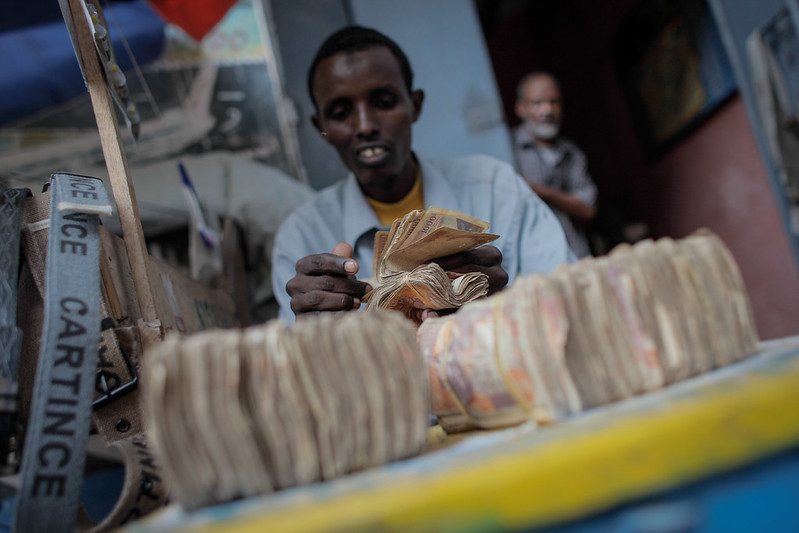
 On Dec. 3, the African Development Bank Group announced that it approved additional debt relief for Somalia, amounting to $17.68 million and marking another milestone on the path to full debt-free status. The Bank Group’s lead operations adviser for Somalia, Bubacarr Sankareh, said, “Somalia has earned this moment through determination and discipline.”
This milestone represents the convergence of persistent national effort and a strategic international partnership. Through coordinated bilateral and multilateral engagement, Somalia secured debt alleviation, most notably under the Heavily Indebted Poor Countries Initiative, launched in 1996 by the International Monetary Fund and World Bank to provide relief to countries burdened by unsustainable debt, while simultaneously reforming its economy and reconstructing state institutions. These efforts are notable for a country that endured decades of conflict and institutional collapse.
The Weight of Historical Debt
Most of Somalia’s debt accumulated during Siad Barre’s military dictatorship, which collapsed in 1991 and plunged the nation into civil war. These debt levels, coupled with instability, limited investment in health, education and infrastructure. In 1993, Somalia’s Human Development Index stood at 0.221, reflecting the lived consequences of these conditions. The debt crisis also severed Somalia’s engagement with global financial markets, deterring investors, creditors and potential trade partners who might otherwise have contributed to reconstruction efforts.
The Path to Relief
Breaking free from this debt trap required Somalia to meet exacting standards under the HIPC framework, which supported more than 30 heavily indebted nations. Participation required demonstrated implementation of domestic structural reforms. Somalia’s reform package was comprehensive and prioritized rebuilding state institutions and restoring public finances while incentivizing a competitive private sector.
With more than two-thirds of the population living on less than $2.15 a day, the government launched Baxaano, the nation’s first social safety net program. This initiative provided nutrition-linked cash transfers and emergency assistance to 3.7 million people. These reforms enabled Somalia to complete the HIPC process in December 2023, securing $4.5 billion in debt cancellation.
In March 2024, nearly all debt owed to members of the Paris Club, a group of wealthy creditor nations, was canceled. This cancellation is set to be finalized by the end of December 2025. In June, a further relief agreement with the OPEC Fund for International Development cleared $36 million. In November 2024, the United States, Somalia’s largest bilateral lender, which held approximately 20% of total external debt in 2018, forgave $1.1 billion in loans.
The cumulative impact of these measures reduced external debt from 64% of GDP in 2018 to 4.9% in 2025. This fiscal transformation occurred alongside measurable poverty reduction and strengthened institutional capacity.
Unlocking Resources for Development
Debt relief in Somalia means resources previously used for debt servicing can now fund social programs and infrastructure, allowing the government to better implement its National Transformation Plan. Sankareh stated that alleviation “opens the door for stronger institutions, better services and brighter prospects for Somali citizens, with impacts felt in classrooms, clinics, farms and markets.” Improvements have already been noted in health care, education and infrastructure.
Restored creditworthiness may reverse the investment drought that persisted for decades, particularly following Somalia’s recent integration into the East African Community, which provides access to regional markets of more than 300 million people. Somalia’s coastline positions it to develop blue economy sectors ranging from fisheries and port infrastructure to maritime transport.
Somalia stands at a turning point, with the potential to follow the paths of Uganda and Rwanda, where foreign investment flows and capital reforms following conflict and debt relief supported sustained investment in public infrastructure and transformative sectors.
Debt forgiveness provides fiscal breathing room, but sustaining momentum requires transitioning from grant dependence toward broader financial market participation. This includes developing sovereign bond capacity, expanding equity markets and deepening microfinance penetration. The International Monetary Fund identifies strengthened financial oversight and regulatory reform, including modernized fiscal codes and streamlined customs, as essential for attracting sustained investment. An effective tax system also remains necessary for long-term domestic resource mobilization.
A Model for Post-Conflict Recovery
Somalia’s debt relief trajectory offers insights for countries facing legacies of conflict and underdevelopment. It demonstrates that fragile states can rebuild credibility through governance reforms and transparent financial management. While international cooperation proved essential, progress ultimately depended on Somalia’s ownership of the reform process.
As Somalia’s deputy prime minister, Salah Jama, told the World Bank’s Fragility Forum, “We are out of failure … and working very hard to get out of fragility,” a statement that reflects both progress made and the vigilance still required. Debt relief in Somalia demonstrates that countries committed to reform, supported by coordinated international engagement, can overcome deeply entrenched challenges.
– Caroline Sheehan
Caroline is based in Edinburgh, UK and focuses on Good News, Politics for The Borgen Project.
Photo: Flickr

Renewable Energy in Suriname: A Pathway Out of Poverty
Renewable energy initiatives in Suriname, supported by government partners and international institutions, are expanding continuous electricity access to remote areas. These programs improve educational opportunities, reduce household energy costs and bring dependable power to villages that previously relied on expensive diesel generators. Here are five Ways that renewable energy reduces poverty in Suriname:
1. Solar Microgrids Bring Power To Remote Villages
The Suriname Village Photovoltaic Microgrid Project is a major step toward expanding renewable energy in Suriname’s interior. The initiative uses solar photovoltaic battery storage and hybrid systems to provide uninterrupted electricity to remote forest villages that historically had only a few hours of power each evening. As of 2024, 12 remote villages are connected to the first phases of the project and this infrastructure is being expanded to serve 34 villages with continuous electricity at a combined capacity of approximately 5,314 MWh once fully completed. These microgrids enable households to use lighting, refrigeration and phone charging throughout the day and night improving quality of life and creating new economic possibilities for residents.
2. Clean Energy Reduces Expenses at a Household Level
Although Suriname has a high national electricity access rate, rural communities continue to lag behind. More than 99% of urban residents have access to grid electricity, while rural access falls below 90% and many remote villages rely on diesel generators that provide power for only a few hours each day. Renewable energy infrastructure is expanding through solar mini-grids and hybrid systems that combine solar panels, battery storage and diesel backup to bring more reliable power to isolated communities. For example, in addition to the Suriname Village Microgrid Photovoltaic Project’s accomplishments, PowerChina is building additional hybrid solar microgrid plants to supply electricity to 25 villages across regions such as Daume, Cajana and Galibi. By replacing diesel generation, these renewable systems reduce fuel costs and price volatility while improving the stability of daily life for rural families.
3. Renewable Projects Create Skilled Jobs
Renewable energy projects like the solar microgrid deployments often create opportunities for local employment in installation operations and maintenance. International development frameworks for rural renewable projects typically include capacity building components to strengthen local skills and workforce readiness. For example, technical cooperation programs supported by institutions like the Inter-American Development Bank aim to increase local capacity for energy infrastructure development and productive use of electricity in rural areas.
4. Clean Energy Empowers Small Businesses and Farmers
Consistent electricity from renewable sources allows students to study after dark and supports digital learning tools in rural schools. Stable energy also enables small businesses such as shops and refrigeration services to operate reliably beyond daylight hours. Hybrid microgrids and solar PV systems moving into Suriname’s interior are part of this broader trend empowering communities to plan and expand entrepreneurial activities with a dependable power supply.
5. Renewable Energy Strengthens Climate Resilience
Changing weather patterns threaten Suriname’s rural economy through flooding and disruptions to traditional livelihoods. Renewable energy in Suriname, especially decentralized solar PV and hybrid systems, improves energy resilience by reducing reliance on imported fossil fuels and fossil fuel price shocks. Decentralized systems also provide essential power for critical services such as health clinics and water supply systems even during severe weather events or grid interruptions.
Conclusion
Renewable energy in Suriname plays a critical role in reducing poverty by expanding electricity access, lowering household costs and creating employment opportunities. Solar microgrids, home systems and hybrid energy projects strengthen education, health care and small businesses while improving resilience to changing weather patterns. As these initiatives continue to grow, renewable energy in Suriname offers a sustainable pathway toward economic stability and long-term poverty reduction.
– Shahzeb Khan
Photo: Unsplash
Understanding Hunger in Türkiye
However, a 2023 report from the Turkish Statistical Institute revealed that nearly one in three people in Türkiye faces the risk of poverty or social exclusion.
Persistently High Inflation
Türkiye’s inflation rate remains high at around 70%, significantly impacting the cost of essential goods, including food. In some instances, prices have doubled, with people struggling to afford basic products.
Moreover, the minimum wage often falls below the hunger threshold, making it difficult for families to meet their nutritional needs.
Children are particularly affected by the worsening economic conditions. Approximately one-third of Turkish children live in poverty, with many experiencing malnutrition, stunted growth and increased rates of child labor.
Economic hardship has led to increased child poverty, with many children forced to work to support their families. This not only affects their education and development but also reflects the broader issue of food insecurity within households.
Natural Disasters
Natural disasters, such as earthquakes, have disrupted food production and distribution networks. For instance, the devastating earthquake in February 2023 caused significant infrastructure damage, aggravating food insecurity in affected regions. The earthquake resulted in over 50,000 deaths, injured 107,000 people, and either damaged or destroyed 1.9 million homes, leaving 3.3 million people displaced—two million of whom required emergency shelter. The cost of recovery and reconstruction is estimated at $81.5 billion, adding strain to an already fragile situation.
The Long Term Impact of Refugees
Türkiye is home to one of the largest refugee populations globally, with over 3.1 million Syrians and nearly 300,000 refugees and asylum seekers from other countries. Since 2011, the country has allocated nearly €10 billion to support both refugees and the communities that host them, with the help of EU funds.
The long-term presence of Syrian refugees in Türkiye has brought both challenges and benefits, affecting the economy, labor market and society. Syrian refugees, many of whom are employed in the informal sector, have intensified competition for low-skilled jobs—particularly in agriculture and construction—affecting Turkish workers in these fields. However, some studies indicate that their presence has also contributed to the creation of formal, higher-wage employment opportunities. In areas with large refugee populations, rising demand has driven up prices for housing and services. Despite these challenges, refugees have helped boost the Turkish economy through increased consumption and investment, positively impacting GDP in certain sectors, accounting for around 2% of the country’s GDP in 2017. Their presence also led to a production boost of 30.6 billion TL across various sectors, which resulted in about 20.9 billion TL in added economic value—equivalent to 1.51% of GDP.
Organizations Fighting to Eradicate Hunger in Türkiye
Several organizations are actively working to address hunger and food insecurity in Türkiye:
While notable progress was made in reducing poverty and hunger in Türkiye over the past decade, the country continues to face challenges related to hunger, driven by high inflation and natural disasters. Through targeted support, sustainable development strategies, and humanitarian aid, there is a path forward to reduce hunger in Türkiye and help vulnerable communities access the food, resources and opportunities they need to thrive.
– Arianna Distefano
Photo: Pexels
Lights, Camera: Africa’s Film Industry Can End Poverty
International Effort
Nigeria’s collaboration with China demonstrates how international cooperation can accelerate skills development, financing and technology transfer while creating jobs for mutual benefit. At the summit, China presented the documentary Voices from the Frontline: China’s War on Poverty, which documented China’s success in lifting more than 800 million people out of poverty over 40 years. Nigerian officials considered these lessons to understand how Africa’s film industry can help end poverty by leveraging creative sectors as engines of socioeconomic growth.
IFC and AfDB Supporting Africa’s Film Industry
The International Finance Corporation (IFC) and the African Development Bank (AfDB) partnered with EbonyLife Media, Nigeria’s leading media company, to explore creating a pan-African investment vehicle for the film sector. The initiative aims to improve access to financing for productions that showcase African stories globally and support domestic job creation, particularly among youth. EbonyLife Media has produced some of the region’s highest-grossing films and maintains partnerships with Sony Pictures Television, Westbrook Studios, Stars, Macro Film Studios and Idris Elba’s 22 Summers.
Africa has the youngest population in the world, with 70% of sub-Saharan Africans under 30. By 2030, young Africans are projected to make up 42% of global youth, creating a large talent pool and an expanding audience for film and media content. Initiatives that show how Africa’s film industry can help end poverty must target this demographic to ensure sustained economic growth.
Economic Impact
South Africa’s film industry demonstrates measurable economic impact. In 2016–17, operational expenditure of R4.4 billion contributed to a total economic output of approximately R12.2 billion, with an employment multiplier of 4.9, meaning nearly two additional people benefited for each R1 invested.
Nigeria’s Nollywood produces roughly 50 films per week, generates an estimated R8.1 billion annually and ranks as the country’s second-largest employer after agriculture. Kenya produces higher-cost, higher-quality films, but lower revenue per film limits investment and scale.
Recent successes, including the Nigerian Netflix thriller The Black Book, which reached 5.6 million views in two days and ranked third globally, illustrate how Africa’s film industry can help end poverty by reaching global audiences and creating economic opportunities for local creators.
Looking Forward
Investment in skills development, production infrastructure, business support services and policy reform will transform Africa’s creative talent into sustainable economic outcomes. Coordinated efforts by governments, development finance institutions and private investors remain essential to realizing how Africa’s film industry can help end poverty, expand employment and promote inclusive economic growth.
– Mollie Skogen
Photo: Flickr
The Relocation of Poverty in Colombia
HelpAge International
The Borgen Project spoke with Daniela Vasquez Moncaleano, project officer for HelpAge International.
Moncaleano works for HelpAge International in Bogotá, the capital of Colombia. A city once rumored to be one of the most dangerous cities in the world during the 1990s has since transformed into a thriving, tourist-friendly capital and one of the most developed cities in Colombia.
Specifically, HelpAge International is a nongovernmental organization that aims to support the aging population by protecting its rights and helping it live healthy, fulfilling lives away from poverty and homelessness. Moncaleano is a project officer for the organization and works explicitly on poverty-prevention projects.
Observed Changes in Poverty
She has observed a decrease in poverty. “Yes, poverty has decreased in Colombia.” Statistical poverty reduction suggests that its steadily declining rate will yield long-lasting positive effects.
A primary reason for the poverty decrease is Colombians moving out of rural areas and into city life. “There is internal immigration that is heading to cities like Cali. But not many migrate to Bogota.” Many people who are experiencing poverty move to urban areas for job opportunities and income.
Common Misconceptions About Poverty
“There are more forms of poverty than just monetary poverty,” says Daniela Vasquez Moncaleano, a manager who works for HelpAge International, a nongovernmental organization that supports the elderly experiencing poverty. Moncaleano explains that there are two main types of poverty. The most common type is monetary poverty, a measuring system that financially classifies households by income. Then there is multidimensional poverty, which is difficult to measure since it considers many aspects beyond finances, such as education, health care, sanitation and environmental safety.
“Multidimensional standards are important to consider,” Moncaleano says. Poverty is experienced differently depending on the situation and geography. For instance, rural areas grow their own food, whereas urban areas buy groceries from supermarkets. In other words, rural areas are not poor in access to food like urban areas are; instead, rural areas are poor in resources such as access to local schools or hospitals.
Hope for Addressing Poverty in Colombia
To explore this broader national shift, Daniela Vasquez Moncaleano has shed light on the evolving landscape of poverty in Colombia and provided a human lens through which to understand its many dimensions. “I have so much hope for poverty reduction.” Moncaleano began working with HelpAge International because she believed in the Colombian community and the power of generations working together. “When the skies are gray, you can make the sun appear.”
Solutions to Poverty Reduction
Moving forward, Colombia will continue to reduce poverty but may have some gray-sky days. Moncaleano suggests two solutions to reduce the poverty rate. Her expertise lies in the elderly, and she suggests creating aging-friendly cities. Moncaleano has shared that there are few job opportunities or activities for the elderly past the age of 40.
The creation of more jobs or community-based events for elders can potentially provide income and purpose and reduce poverty among the elderly population. “The elderly always want to work. They want to feel life and want to feel productive.”
– Mireya Aguilar
Photo: Flickr
Thailand Is Granting Myanmar Refugees Access to Employment
Background
A violent military regime drove the refugees out of Myanmar. Since then, they have been living in nine camps spread across the Thai border and have been completely dependent upon foreign aid. A diminishing foreign aid budget, particularly from the United States, has contributed to this decision.
According to Léon De Riedtmatten, executive director of the Border Consortium (TBC), the United States was one of the largest donors to the refugee camps. The TBC is one of the largest suppliers of food to the camps. The current administration has significantly reduced the overseas budget this year, which has, in turn, forced the TBC to provide aid only to the most vulnerable. According to De Riedmatten, Thai officials knew that no other government would be willing to support as much as the United States would.
As a result, Thai officials approved employment access for Myanmar refugees to reduce labor shortages and protect human rights. Cambodian workers leaving the labor force following an armed conflict at the border also influenced this policy change.
Economic Impacts
Tammi Sharpe, a UNHCR representative, has emphasized this development as a turning point. According to Sharpe, “With this policy shift, Thailand transforms hosting refugees into an engine of growth – for refugees, for host communities and for the nation as a whole.” She further confirms that providing employment access to Myanmar refugees benefits both Thailand and the refugees themselves.
Refugees will have the opportunity to provide for themselves and their families while also stimulating the Thai economy. Job growth is expected to increase as thousands of Myanmar refugees join the workforce and, in turn, the national GDP is also projected to rise. This marks a positive step toward poverty reduction.
As more refugees gain employment, dependence on aid is expected to decrease, while social mobility improves. Sharpe explained that the UNHCR has partnered with the World Bank to analyze economic data tracking how refugees are entering and participating in the formal job market. Humanitarian organizations also hope to expand employment access for refugees living outside the camps.
Conclusion
Granting Myanmar refugees access to employment marks a turning point in their relationship with Thailand. It will serve as a mutually beneficial process; Myanmar refugees will receive the means to support themselves and increase their standard of living, while the Thai economy will experience a boost in job growth and GNP. Poverty will diminish directly for the refugees and indirectly over time for people living in Thailand via systemic change. Overall, this policy change provides a hopeful trajectory for the country’s economic future.
– Sasha Banaei
Photo: Flickr
Building a Nation Out of Trash – How India Recycles Plastic
Fortunately, a new hero has arisen. India is rapidly emerging as the number one recycling nation, known not only for recycling 70% of the waste it generates, but also for the unique ways in which plastic waste is recycled.
Using Trash as a Currency
Poverty is a major problem in India, a country struggling to support more than 1.35 billion people. Most families are unable to afford basic necessities, so 62 million children — approximately one in every two children in India — suffer from malnutrition.
Fortunately, India recycles plastic and addresses its malnutrition problems by turning plastic waste into a new form of currency. India recycles plastic efficiently by establishing these “garbage cafes,” which exchange plastic waste for meals.
A typical garbage cafe can be built inside a converted bus shelter and offer a full meal for just two pounds of rubbish. In cities like Ambikapur, the trash is then sent to local waste collection centers, where the plastic trash is sorted into 63 different categories to be recycled. Garbage cafes offer endless benefits to the environment and the impoverished public.
The Benefits of Garbage Cafes
Garbage cafes help to spread awareness of plastic pollution by encouraging the public to collect plastic waste. Anyone can collect trash — factory workers, the homeless, mothers and their children — and earn a hot meal for their efforts.
The rising trend of garbage cafes has opened more job opportunities for women at the plastic collection centers. The collection centers in Ambikapur currently employ around 480 women. These employees, called “cleanliness sisters,” are able to earn a steady income of 8,000 to 10,000 rupees (about $100) a month and help their families.
Since 2016, garbage cafes have helped collection centers gather and recycle more than 50,000 tonnes of dry waste, including plastic, paper and cardboard. In addition, the garbage cafe trend is spreading to other states such as Telangana and Karnataka, helping to reduce the impact of plastic waste all over India. In 2019, 23 cafes opened in Delhi alone.
The Dangers of MLPs
Besides households, India has another big contributor to plastic waste. Its industries produce a highly durable type of plastic, known as multilayered plastics (MLPs), by combining materials such as aluminum to make packaging for products. Such plastics cannot be conveniently recycled and can quickly pile up in landfills. To solve this problem, WoWMaterials, an Indian company that produces sustainable building materials, has found a way to use MLPs to construct buildings.
An Efficient and Eco-Friendly Solution
Normally, India’s construction workers use plywood frame molds to shape concrete into solid walls. However, WoWMaterials is able to recycle MLPs into concrete construction molds. The company calculated that if all of India recycled plastic through these recycled plastic sheets, 25-30% of all nonrecycled plastics would be repurposed into reusable plastic frames.
In addition, RNS Infrastructure Limited General Manager G.S. Satheesh has remarked that these plastic molds are more durable than their wooden counterparts. Not only are the plastic versions lighter and easier to transport, but these MLP recycled molds can be reused more times — up to 21 repetitions compared to the 10-12 repetitions achieved with the use of standard plywood frames.
There are currently 34 km of recycled plastic roads in India. Their insulating properties make the roads more resilient to India’s frequent searing temperatures.
Plastic paver tiles: Nonrecyclable plastic waste can also be used to make cheap and eco-friendly paver tiles, which can be used in pedestrian walkways.
Looking Ahead
From using plastic trash to build houses to buying meals, India recycles plastic through innovative methods and sets an example for other nations by fighting both plastic pollution and poverty through the power of innovation.
– Isaac Lin
Photo: Flickr
How AI Systems Are Predicting Outbreaks of Malaria in Ghana
Traditional malaria tracking methods often create delays because they rely on slow reporting and limited surveillance tools, which prevent health officials from responding quickly to rising cases. Recently, Ghana has begun integrating artificial intelligence into its disease surveillance systems to enhance malaria control. AI-powered malaria prediction systems, such as the District Health Information Management System (DHIMS2) and the Noguchi Memorial Institute for Medical Research (NMIMR), collect real-time health data and conduct malaria surveillance. These systems use climate information, satellite images and health reports to predict outbreaks.
Background
Ghana, located in West Africa and home to about 33.8 million people, shares borders with Burkina Faso, Ivory Coast and Togo. Historically known as the Gold Coast due to its abundant gold resources, Ghana has played a significant role in Africa’s development. Despite this history, malaria continues to affect the country heavily.
Ghana ranks among the top 15 countries with the highest malaria burden, accounting for about 5.3% of all malaria cases in West Africa. Ghana’s tropical climate provides perfect conditions for mosquitoes to breed rapidly, resulting in year-round malaria transmission. However, over the years, Ghana has introduced various malaria control strategies, ranging from early treatments such as chloroquine and quinine to modern interventions.
These include artemisinin-based combination therapies (ACTs), insecticide-treated bed nets and indoor residual spraying. Even with these efforts, malaria continues to strain Ghana’s health care system. Rural communities often submit reports late, struggle to access prevention tools and face drug resistance—factors that reduce the effectiveness of malaria control. These ongoing challenges have pushed Ghana to adopt AI-powered malaria prediction systems to strengthen early detection and reduce malaria cases.
AI-Driven Malaria Prediction Tools in Ghana
AI gives Ghana a more accurate and efficient way to understand and manage malaria. AI enhances data processing, health record management, feature identification, machine learning analysis, geospatial mapping and technical infrastructure—tools that aid researchers in studying malaria patterns more effectively. In recent years, Ghana has expanded the use of advanced AI-powered malaria prediction systems, such as the DHIMS2 and AI models developed by the NMIMR. These tools represent a major shift toward proactive, technology-driven malaria prediction.
DHIMS2
DHIMS2 serves as Ghana’s national digital health information management system, enabling health workers to collect and analyze data for enhanced health care management. Hospitals and clinics across the country upload information, including confirmed malaria cases, test results, treatment records and patient demographics. Because health workers enter data continuously, researchers and health officials can quickly identify unusual increases in malaria cases, rather than waiting for the slow processing of paper-based reports.
The platform covers every region, which helps experts create malaria risk maps, track seasonal changes and train AI models that forecast new outbreaks. By delivering fast and accurate data, DHIMS2 enhances Ghana’s ability to respond to malaria trends in real-time.
Noguchi Memorial Institute’s AI Surveillance Models
The NMIMR enhances malaria surveillance by gathering detailed data on mosquitoes, climate conditions and local disease patterns. Supported by a $3.5 million USAID grant, Noguchi researchers study malaria parasites, mosquito resistance and transmission trends.
The organization’s work contributes to the development of geospatial risk-mapping tools that combine health data with environmental factors, including rainfall, humidity, aridity and access to health care. These models help identify communities with a higher risk of malaria. Noguchi researchers also build on earlier studies that explore how climate conditions and mosquito behavior influence the spread of malaria. By producing this critical data, the NMIMR enhances Ghana’s early warning systems and improves malaria prediction.
Looking Ahead
As Ghana expands its use of AI-powered malaria prediction systems for malaria control, the country moves toward a more efficient and responsive public health system. Improving internet access, data accuracy and digital training for health care workers will further improve the effectiveness of AI tools. Partnerships with research institutions, technology companies and global health organizations will enhance Ghana’s ability to predict outbreaks in different regions.
With continued investment, Ghana can detect malaria risks earlier, direct resources to communities that need them most and reduce the incidence of new infections. Indeed, by embracing AI-powered solutions, Ghana can become a leader in modern malaria control and make significant progress toward long-term malaria reduction.
– Emmanuel Fagbemide
Photo: Unsplash
Debt Relief in Somalia: Billions for Growth and Development
This milestone represents the convergence of persistent national effort and a strategic international partnership. Through coordinated bilateral and multilateral engagement, Somalia secured debt alleviation, most notably under the Heavily Indebted Poor Countries Initiative, launched in 1996 by the International Monetary Fund and World Bank to provide relief to countries burdened by unsustainable debt, while simultaneously reforming its economy and reconstructing state institutions. These efforts are notable for a country that endured decades of conflict and institutional collapse.
The Weight of Historical Debt
Most of Somalia’s debt accumulated during Siad Barre’s military dictatorship, which collapsed in 1991 and plunged the nation into civil war. These debt levels, coupled with instability, limited investment in health, education and infrastructure. In 1993, Somalia’s Human Development Index stood at 0.221, reflecting the lived consequences of these conditions. The debt crisis also severed Somalia’s engagement with global financial markets, deterring investors, creditors and potential trade partners who might otherwise have contributed to reconstruction efforts.
The Path to Relief
Breaking free from this debt trap required Somalia to meet exacting standards under the HIPC framework, which supported more than 30 heavily indebted nations. Participation required demonstrated implementation of domestic structural reforms. Somalia’s reform package was comprehensive and prioritized rebuilding state institutions and restoring public finances while incentivizing a competitive private sector.
With more than two-thirds of the population living on less than $2.15 a day, the government launched Baxaano, the nation’s first social safety net program. This initiative provided nutrition-linked cash transfers and emergency assistance to 3.7 million people. These reforms enabled Somalia to complete the HIPC process in December 2023, securing $4.5 billion in debt cancellation.
In March 2024, nearly all debt owed to members of the Paris Club, a group of wealthy creditor nations, was canceled. This cancellation is set to be finalized by the end of December 2025. In June, a further relief agreement with the OPEC Fund for International Development cleared $36 million. In November 2024, the United States, Somalia’s largest bilateral lender, which held approximately 20% of total external debt in 2018, forgave $1.1 billion in loans.
The cumulative impact of these measures reduced external debt from 64% of GDP in 2018 to 4.9% in 2025. This fiscal transformation occurred alongside measurable poverty reduction and strengthened institutional capacity.
Unlocking Resources for Development
Debt relief in Somalia means resources previously used for debt servicing can now fund social programs and infrastructure, allowing the government to better implement its National Transformation Plan. Sankareh stated that alleviation “opens the door for stronger institutions, better services and brighter prospects for Somali citizens, with impacts felt in classrooms, clinics, farms and markets.” Improvements have already been noted in health care, education and infrastructure.
Restored creditworthiness may reverse the investment drought that persisted for decades, particularly following Somalia’s recent integration into the East African Community, which provides access to regional markets of more than 300 million people. Somalia’s coastline positions it to develop blue economy sectors ranging from fisheries and port infrastructure to maritime transport.
Somalia stands at a turning point, with the potential to follow the paths of Uganda and Rwanda, where foreign investment flows and capital reforms following conflict and debt relief supported sustained investment in public infrastructure and transformative sectors.
Debt forgiveness provides fiscal breathing room, but sustaining momentum requires transitioning from grant dependence toward broader financial market participation. This includes developing sovereign bond capacity, expanding equity markets and deepening microfinance penetration. The International Monetary Fund identifies strengthened financial oversight and regulatory reform, including modernized fiscal codes and streamlined customs, as essential for attracting sustained investment. An effective tax system also remains necessary for long-term domestic resource mobilization.
A Model for Post-Conflict Recovery
Somalia’s debt relief trajectory offers insights for countries facing legacies of conflict and underdevelopment. It demonstrates that fragile states can rebuild credibility through governance reforms and transparent financial management. While international cooperation proved essential, progress ultimately depended on Somalia’s ownership of the reform process.
As Somalia’s deputy prime minister, Salah Jama, told the World Bank’s Fragility Forum, “We are out of failure … and working very hard to get out of fragility,” a statement that reflects both progress made and the vigilance still required. Debt relief in Somalia demonstrates that countries committed to reform, supported by coordinated international engagement, can overcome deeply entrenched challenges.
– Caroline Sheehan
Photo: Flickr
Homelessness in Palau: Providing Affordable Housing
Challenges to Palau
Palau faces numerous challenges to its socioeconomic stability. The COVID-19 pandemic presented setbacks to the country’s economy, one that centers largely on tourism. According to the Palau government’s Development Plan for 2023-2026, rising costs of construction materials and an unequal growth between incomes and housing prices make it harder to afford a home in Palau, especially amidst high demand. Additionally, land disputes resulting in displacement complicate matters of housing security.
Micronesian states like Palau are also highly vulnerable to natural disasters and the impacts of changing weather, including rising sea levels and extreme weather events. This is innately threatening to economic and housing stability, as changing weather patterns and homelessness have innate links.
Successes and Setbacks
According to the 2015 Pacific Regional MDG tracking report, there are no recorded informal settlements or squatters in Palau. This can indicate a lack of a significant homeless population in the state.
There are several programs and efforts to maintain access to affordable housing and prevent homelessness in Palau. Organizations like the Palau Housing Authority (PHA) and Housing Development Loan Program (HDLP) work to support those struggling to afford housing.
The Palau Housing Authority (PHA) provides low-income housing for families in Palau. According to the Island Times of Palau, last year the PHA was able to supply two home renovations and six new homes with $500,000 from the state’s supplemental budget. However, the PHA hopes for consistent annual funding from the Palau government in order to meet increasing demand for affordable housing. As of March 2025, the organization is facing financial shortfalls and struggling to repay loans amid increasing repayment costs. The organization has requested funding from numerous sources, including the Palau government, as well as the United States Department of Agriculture.
The Housing Development Loan Program is a $15 million program that originated in 2019 as the Palau government’s response to the worsening housing crisis in the state. According to the Island Times of Palau, this program resulted in the purchase of 36 homes as of 2020. Of the 36, two were displaced persons. Several states in Palau have requested funds for infrastructure for necessities like roads, power and water, that will allow for further housing projects to be completed.
Palau in a Global Context
Statistics for countries worldwide indicate Palau does relatively well in terms of human development and poverty rates, which suggests low rates of homelessness in Palau. While considered a developing country, Palau is upper-middle-income, according to the U.N. Micronesia Palau National Study. According to UNICEF, data estimates from 2006 indicate approximately 25% of the population in Palau lives below the national poverty line. This is significantly lower than the countries hardest hit by poverty, including South Sudan with a rate of 82%, according to the World Bank.
The Human Development Index (HDI) is a measure for progress in major areas of human development, including a decent standard of living. According to U.N. Human Development Reports, Palau’s HDI score of 0.786 ranks it high amongst countries around the globe. While it rose steadily since the year 2000, it decreased in the years following 2019. This is likely in part due to challenges posed by the COVID-19 pandemic, which had adverse impacts on Palau, a country whose economy relies heavily on tourism. The HDI score has remained steady since 2022.
– Emma Kelsey
Photo: Wikimedia Commons
5 Charities Operating in Kosovo
As of 2016, Kosovo’s unemployment rate is a high 34.8%. By 2022, the World Bank estimated 25.4%-30% of the 1.8 million people in Kosovo to be living in poverty and earning incomes below the poverty line. Many issues, including women’s rights and freedom of expression, plague the country, leaving many feeling powerless. However, Kosovo’s poverty rates declined by 2022 and the World Bank expects them to decline even further. From child welfare to employment opportunities, many Kosovars and volunteers have united to fight for a brighter future. Since the political atmosphere of the 1990s, humanitarian organizations have helped vulnerable Kosovars by providing the resources they need to build their economy. While many nonprofit organizations are making a difference, five charities operating in Kosovo are making notable strides in combating poverty and improving the quality of life.
5 Charities Operating in Kosovo
The Bigger Picture
While seemingly unrelated to tackling the broader issue of poverty, these five charities operating in Kosovo have helped struggling people access resources to improve their social standing. Education, health care and social support can create long-term benefits, including economic growth and stronger global stability. Through continued efforts by charities like these, Kosovars can strengthen their ability to build a more secure and hopeful future.
– Cindy Nguyen
Photo: Unsplash