 Black carbon is the second largest contributor to global climate warming after carbon dioxide. In 2019, 5.8 million tons of black carbon were released into the atmosphere.
This pollutant is produced through the incomplete combustion of fuels such as wood, coal and other forms of biomass. In many rural communities in Nepal, burning biomass remains essential for both daily cooking and the country’s brick manufacturing industry. However, these traditional methods release significant amounts of black carbon into the air. Black carbon contributes to climate change and poses serious risks to human health. Exposure has been linked to respiratory and cardiovascular diseases, and the pollutant is responsible for $8.1 trillion in annual health costs globally.
The government of Nepal (GoN), alongside other organizations, is working to reduce black carbon pollution in Nepal. Through initiatives promoting cleaner cooking technologies and improved brick kiln designs, these efforts aim to improve the health of the population.
Household Cooking and the Health Risks of Black Carbon
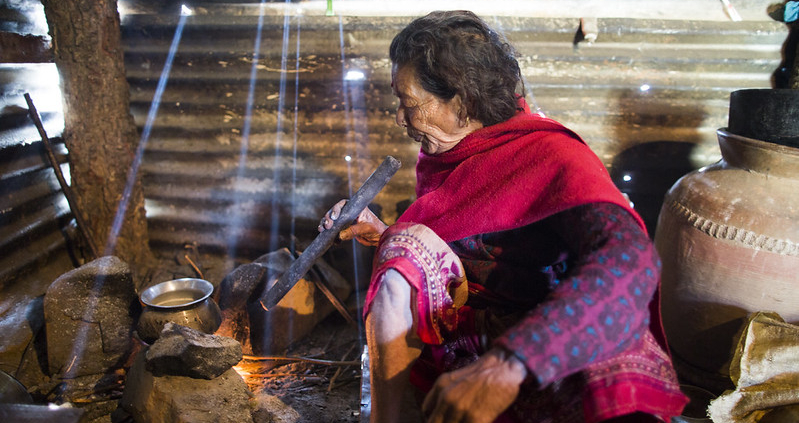
Globally, around 2.3 billion people still lack access to clean cooking fuels. In Nepal, nearly 70% of families burn wood and cow dung in open fires or biomass stoves for daily cooking, a practice that remains common for its cultural significance and affordability.
The black carbon emitted from such cooking methods has harmful effects on human health. When inhaled, it can damage the lungs and cause a range of conditions, including cardiovascular disease and blood pressure complications.
These health impacts are most prevalent among women and children, who are more likely to spend extended periods near cooking areas due to domestic responsibilities. Studies suggest that inhaling black carbon during pregnancy may contribute to the development of cardiovascular conditions in the fetus, leading to intergenerational health risks.
Cleaner Cooking Solutions
Governments and international organizations are increasingly working together to reduce black carbon pollution in Nepal by improving household cooking. The GoN is encouraging households to adopt cleaner cooking methods by 2030 as part of its environmental and public health strategy. The government aims for 25% of households across Nepal to adopt electric cooking methods by 2030.
To support this transition, the GoN has provided financial incentives to make clean cooking technologies more affordable. The government has also launched awareness campaigns to promote the benefits of clean energy and the health risks associated with traditional biomass cooking. These campaigns particularly target rural communities where biomass stove use remains most common.
International organizations have also played a key role in supporting Nepal’s transition to cleaner cooking. The Clean Cooking Alliance (CCA), founded in 2010, has partnered with the GoN to expand access to cleaner cooking solutions. Since its establishment, the CCA has supplied more than 400 million households with access to cleaner cooking techniques such as improved biomass cookstoves and electric cooking technologies. As a result, more than 4.6 million people have been spared the harmful health effects associated with black carbon exposure.
UNICEF implemented the Eco-Zone project in Nepal from 2021 to 2024, which focused on providing eco-cookstoves to 11,000 households in the provinces of Karnali and Sudurpaschim. The project also generated awareness about clean cooking techniques by distributing 23,000 flyers to households about black carbon pollution in Nepal and its health effects.
Zigzag Kiln Technology
Brick kilns are another major source of black carbon pollution in Nepal. Much of the country’s brick production still relies on traditional technologies that are often inefficient and produce large amounts of harmful pollutants.
To address this, cleaner technologies are increasingly being introduced within Nepal’s brick manufacturing sector. One of the most promising innovations is the zigzag brick kiln. This technology involves stacking bricks in a zigzag pattern, which redirects airflow inside the kiln. By improving air circulation, the design enables more complete fuel combustion, increasing energy efficiency while significantly reducing pollution. The design does not require a change in fuel source but rather improves the efficiency of existing methods already used in Nepal’s brick kiln industry.
Organizations such as the International Centre for Integrated Mountain Development (ICIMOD) and the Federation of Nepal Brick Industries (FNBI) have led the transition to zigzag brick kiln technology across Nepal, Bangladesh and India. The adoption of zigzag kilns has produced measurable benefits, including a 20% reduction in coal consumption and improved brick quality.
Cleaner Air and Healthier Communities
Although black carbon pollution in Nepal remains a serious environmental and public health challenge, the country’s growing commitment to cleaner technologies is producing results. Efforts to promote electric and eco-friendly cooking solutions are helping households reduce harmful indoor air pollution, while innovations such as zigzag brick kilns are transforming industrial practices. Together, these initiatives demonstrate how practical and accessible technological changes can reduce black carbon pollution in Nepal.
– Lucy Kerr
Lucy is based in Coventry, UK and focuses on Good News and Politics for The Borgen Project.
Photo: Flickr
 Although Lagos is one of
  Trinidad and Tobago,
  Bangladesh, located in South Asia, is home to more than 170 million people. The capital, Dhaka, has seen its
  The Republic of Chad, an independent nation in Central Africa, is landlocked by Niger, Libya, Sudan, South Sudan, the Central African Republic, Cameroon and Nigeria. With a population of approximately 17.7 million, according to the World Bank, Chad suffers from some of the