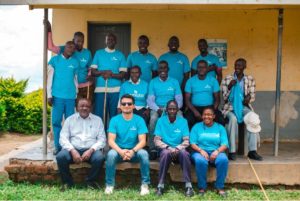
 Emata is a fintech founded in 2020 that provides AI-driven digital loans in Uganda for smallholder farmers. This innovative, quick and reliable approach is meant to empower the smaller farmers in the East African region.
Uganda: A Rich Land
The COVID-19 pandemic wreaked havoc on financial stability worldwide. Its impact on low-income countries was devastating for vulnerable communities. According to the Uganda National Household Survey (UNHS), the level of poverty in Uganda had decreased in 2016 and 2017. In 2020, it increased again to 21.9%.
The land, however, is far from poor. The Food and Agriculture Organization of the United Nations (FAO) reports that as much as 80% of Uganda’s 241,038 square kilometers of territory is fertile land that could be used for agriculture. Nonetheless, only 35% of its land is being cultivated. Dairy, maize and beef, among others, are of crucial value for food security and export revenue.
Filling in the Gaps
According to the Consultative Group to Assist the Poor (CGAP), only 10% of smallholder farmers own an account with a bank or financial institution. Because they are seen as risky investments, financial help remains out of reach for most small farmers. AgEcon Search research reports that in the region, 80% of the rural population depends on agriculture; however, the lack of access to credit limits the farmers’ ability to grow.
In an interview with The Borgen Project, Emata founders Bram van den Bosch and Dario Raffaele explain how they have found a way to contribute to smallholder farmers through AI-driven digital loans in Uganda: “They’re hardworking but trapped: they know which inputs would increase yields, but can’t afford them upfront. That’s the gap we fix—and we fix it for the good farmers, the ones already showing the discipline, consistency and grit needed to professionalize.”
Emata’s mission is to fill these gaps through a thoroughly different approach from local financial institutions:
- Using data instead of land titles
- Automation reduces operating costs
- Speed over painstaking banking processes
- Lower interest rates
- Digitizing the value chain to promote traceability
Loans normally range from $25 to $1,200. Beneficiaries can be smallholders, middle farmers or professionals. In addition, Emata can help borrowers meet other unmet or unexpected financial needs, such as school fees, health emergencies, small business support and cash flow between seasons.
The Farmer’s Journey
In practice, a farmer begins by delivering their product to their local agri cooperative. The company registers the transaction in Emata’s system. From their data, Emata uses AI to calculate their risk and capabilities, assigning them an alternative credit score.
This score determines credit limits for the borrower. The agent then assists the farmers in sending a mobile request to Emata, which approves the loan instantly. The money is then sent via mobile or as input-on-credit.
Repayment is made when the borrower sells their harvest to Emata’s local partner. The founders told The Borgen Project about the farmers who come to them: “The vast majority earn low, volatile farm-based income and would be invisible to traditional banks. Emata is often the first formal lender they have ever worked with. Our data shows that 90% earn under $5/day and 60% earn under $2/day. With Emata, farmers on average grow their income by 30%.”
Women’s Representation
Emata’s most common borrowers are smallholders who did not qualify for credit from financial institutions. According to its metrics, 26% are women. “One of the toughest barriers isn’t financial or technological—it’s cultural,” Emata says, “…women are still underrepresented in many value chains simply because they are not recognized as the ‘primary farmer’ in their household or cooperative.”
A study published by FAO confirms that Uganda’s women who are heads of households and live in rural areas are among the most impoverished. While women are involved in up to 68% of the agricultural process, only 7% officially own the land and less than 1% have access to credit.
To Emata, it is important to make a positive change: “These gaps reflect decades of gendered agricultural norms. And this is exactly where we are slowly making a difference: digitizing records, formalizing farmer identity and embedding lending inside organized value chains is already pulling more women into financial visibility and giving them a documented track record for the first time.”
The Right Tool for the Job
AI-driven digital loans in Uganda that are approved and granted instantly have proven to be an efficient method to reach the most vulnerable but determined farmers. The founders admit that without AI, “we wouldn’t be able to build a profitable and sustainable portfolio and we wouldn’t be able to serve tens of thousands of farmers in minutes.”
Notably, LLMs have been accused of showing racial bias due to training data that reflects society’s prejudices. Emata addresses these concerns by excluding demographic data from its scoring process. Its model takes only harvest records into account to determine credit allowances.
At the same time, Emata uses explainable models rather than generative AI. Explainable models allow humans to understand how the system came to a specific conclusion. This makes it possible to track every step of its decision-making process. Human oversight ensures fairness and inclusion.
A Final Look Into the Future
As the need for more efficient and sustainable lending methods continues to affect East Africa, Emata’s plan is to expand to Tanzania, Rwanda and Ethiopia within the next two years, thanks to its cooperation with multinational agri companies. Through these AI-driven digital loans in Uganda, Emata works to advance financial inclusion and progress for low-income farmers, especially women, who were left behind by formal institutions and their unreachable lending requirements.
– Johanna Lorena Arredondo Gonzalez
Johanna is based in Pittsburgh, PA, USA and focuses on Technology and Solutions for The Borgen Project.
Photo: Interviewee

Innovations in Poverty Eradication in Romania
According to the Brookings Institution, more than 25% of the population lives on less than $5.50 a day. This problem worsens because most affected individuals live in rural regions, where 75% of the population experiences poverty. Many of the citizens lack drinkable water and children struggle to maintain a well-resourced education; 40% of the children in Romania cannot read or write at a functional level, and one in five children drop out of school entirely. Romania’s communist roots in the mid-20th century account for much of the country’s persistent poverty.
Romania’s Escape From Communism
Communist leaders imposed centralized control over Romania after World War II. Nicolae Ceaușescu became ruler in 1965 and oversaw the forced industrialization that contributed to severe poverty and repression, according to Local Histories. The Romanian Revolution in 1989 ended the regime and Romania transitioned toward a market economy. This shift continues to influence innovations in poverty eradication in Romania.
This transition proved difficult because the communist regime directly controlled many key industries. With the collapse of these industries, many small-to-medium cities relying on these industries stagnated. Eventually, through liberalization, privatization and political reform, Romania improved economically. Romania’s acceptance into NATO in 2004 and the EU in 2007 marked a turning point for citizens, but it also revealed gaps in development and social justice. This felt especially true for many of the children living in vulnerable populations.
Community-Driven Change
In 2014, to address the extreme poverty that families in Romania experienced, Foundation Botnar partnered with UNICEF and the Norwegian and Romanian Governments to develop a pilot program in 45 communities in the Bacǎu region. Their solution, the Minimum Package of Services (MPS) model, aimed to expand Romanian children’s access to necessary services and improve their educational outcomes.
An innovation in poverty eradication in Romania resulted from the digital platform Aurora, which efficiently organizes and evaluates data for the MPS model. A trained team consisting of a social worker, community nurse and a school counselor used this platform to collect data on each of the family’s needs.
The program’s nontraditional approach to social change delivered many benefits:
Impact of the MPS Program
UNICEF conducted independent evaluations in 2017 and 2019 to determine the effectiveness of the program. The 2017 report found a decrease of 20% in households with children at risk of domestic violence and estimated costs fell under $46 USD per child. Furthermore, the 2019 evaluation reaffirmed its cost-effectiveness, determining that the cost per person for the MPS model was one-third for active cases and one-eighteenth for closed cases compared to similar projects funded by European programs.
By strengthening community-based services and emphasizing prevention in health, education and social protection, this initiative set the standard for innovation in poverty eradication in Romania and across Europe.”
– Sachin Kapoor
Photo: Unsplash
Kaspi: The Future of Online Banking in Kazakhstan
Background
However, this change does not come without a few issues. With the increase in daily technology usage in the country, digital scams have become more common. The Times of Central Asia reports that since July 2024 alone, anti-fraud centers have suspended more than 63,000 suspicious transactions across the country that amounted to over four million dollars. Most of these scams, according to the Times, stem from the use of cell phones. Another large factor in these scams includes the use of SIM cards under false identities. These scams can target anyone, but they have a devastating impact on those who struggle financially or are otherwise vulnerable.
Kaspi
Defined as “the largest consumer-focused ecosystem in Kazakhstan” through its website, Kaspi is much more than a banking platform. Besides allowing its users to pay for utilities or their education with their app, the Central Asian banking platform also has its own marketplace, where users can buy anything from cell phones to stuffed animals through different merchants. Think of the Shop App as Kaspi, but without the banking aspect; with both apps, you can track your purchases, pay for almost anything through installments, and find unique offers on products from merchants.
Unlike the Shop App, Kaspi is allowing its users to pay with a part of their body. When it comes to paying with facial recognition or a fingerprint, like many Apple Pay or Samsung Pay users experience as a way of verifying any day-to-day purchase, Kaspi has launched a new service where customers are able to pay with the palm of their hand. The “Kaspi Alaqan,” service is “easier” than paying with your card, phone or digital wallet, according to the company, particularly because there is no WiFi connection necessary for the payment to go through.
Safety
Kazakhstan’s leading financial tech company promises that this new service is safe, going as far as to say that “palm payment is one of the most secure methods of payment,” referencing the decade-old usage of the technology in Japan, as well as the current developments of it in China and the United States. The company states that due to the unique structure of your palm, it is “virtually impossible” that someone would be able to access this form of payment.
Furthermore, the company reassures that this is a safe practice, as it collects palm’s biometric data, converts it into a digital code, encrypts and then stores it for future use, only accessible within Kaspi. This makes it harder for scammers to steal your information, given that they don’t need your banking password to drain your entire banking balance, but instead, the live palm of your hand, which can only be used to make purchases.
The Future
Kazakhstan’s leading financial services company, Kaspi, has stated that in December, this form of payment is going to become available at ATMs in Almaty, the country’s largest city, before a larger rollout nationwide. On an additional note, Kazakhstan’s government has set a goal of a $450 billion gross domestic product (GDP) by 2029, and digital technologies, such as Kaspi Alaqan, are “central” in reaching this national goal. In order to do this, the government launched the National Artificial Intelligence Platform earlier this year, hosting more than 100 AI agents that expand access to technology. Recently, this technology has become available to start-ups, universities, and research programs.
– Megan Akers
Photo: Kalpak Travel
Education in Botswana
Addressing Poverty in Uruguay
Poverty in Uruguay
About 18.9% of its population are in poverty, per the Multidimensional Poverty Index (MPI). The MPI classifies multidimensional poverty as a deficit in four or more areas of housing, employment, education and government services. About 17.5% of households have at least one member without adequate education. 29.2% of households have at least one informally employed member, and 17.4% of residents have unreliable housing. The government supplies direct payments through a Conditional Cash Transfer (CCT) program, membership is reliant on school attendance and routine health checks. Payments increase with the number of children per household.
The government also provides additional benefits to retirees with childcare exceptions, along with disability and survivor benefits. Simultaneously, the government also provides benefits to widowed individuals or children with lost or disabled parents. The previous year’s median wage index determines annual cost of living. However, despite social programs’ impact, poverty is still largely disproportionate.
Groups Experiencing Higher Numbers of Poverty in Uruguay
The Multidimensional Poverty Index (MPI) uncovered higher rates of poverty among Afro-descendants and children aged 0-14. One of South America’s more homogeneous countries, less than 5% of Afro-descendants comprise its population, with 2% identifying as Indigenous, and a smaller percentage identifying as “other.” Afro-descendants make up a fourth of Latin America and are regionally 2.5% more likely to face poverty. In Uruguay alone, extreme poverty most likely affects Afro-descendants. Afro-descendants’ disposable income is 41% lower than white’s, and indigenous people’s is lower by 27%. Consequently, Afro-descendants and indigenous people receive more financial assistance, largely through programs including CCT. In 2018, the government allocated 6.1% towards Afro-descendants through CCT programs and 7.9% towards food transfer programs.
As for child poverty, the lack of child assistance programs likely leads to these disparities. In contrast, Uruguay holds a Human Capital Index (HCI) value of 0.06, relatively high in Latin America. The HCI measures the probability of a child’s success based on rates of employment, education and health.
Looking Ahead
Progressively, Uruguay’s social assistance programs have been successful in lessening national poverty. The MPI and other programs introduce factorial approaches to understanding poverty. As poverty remains disproportionate among certain populations, implementation of new programs, through demographic-specific programs and education may address income disparities between racial minority groups and create not just regional, but global records as well.
– Sarah Licon
Photo: Flickr
Argentina’s Housing Crisis: The Rise of Community-Led Solutions
A Housing Crisis Fueled by Inflation and Inequality
Argentina’s housing deficit has reached an alarming scale. Recent estimates show that more than 3.2 million households lack adequate housing or essential infrastructure such as water, sewage, or secure tenure.
This deficit has deepened as chronic inflation, which surpassed 200% over the past year, pushes rent prices far beyond what most families can afford, only intensifying Argentina’s housing crisis.
Reports from the Housing Yearbook for Latin America show that in 2023, rents in Buenos Aires surged to 72% of the average formal income, nearly double historic levels, making formal housing increasingly out of reach for low-income households. As affordability collapses and mortgage access remains at record lows, many families are pushed into Argentina’s informal settlements, or villas, where overcrowding and limited public services deepen existing poverty.
Housing insecurity does not just mean losing a home. It affects education, employment, health and stability. For families already living at or below the poverty line, rising housing costs are often the tipping point into deeper economic hardship. The scale of Argentina’s housing crisis makes these risks widespread.
Government programs exist, but they frequently face delays, limited budgets and inconsistent political support. Subsidies often fail to keep up with inflation, and large-scale housing construction cannot meet the speed or scale of current needs. As a result, communities have begun to create their own solutions, many of which are proving both innovative and effective.
Community-Led Urban Upgrading
Across Buenos Aires, community-driven urbanization projects are reimagining what housing policy can look like. Instead of relocating families, these programs upgrade existing neighborhoods by improving roads, sewage lines, electricity access, and public spaces, all while keeping residents deeply involved in planning and decision-making.
In Villa 20, for example, residents have collaborated with municipal authorities and civil society groups to map risks, design new housing units, and improve long-term housing security. Additionally, the project is part of a broader effort to connect families with legal titles, improve safety, and expand access to services. These changes improve housing and directly reduce poverty by stabilizing neighborhoods, expanding economic opportunities, and preventing displacement.
Participatory upgrading models have been highlighted by C40 Cities and other international networks as examples of how bottom-up solutions can address poverty when traditional housing markets exclude low-income populations.
Cooperatives and Social Movements
Grassroots organizations like the Movimiento de Ocupantes e Inquilinos (MOI) have long championed self-managed housing cooperatives. These initiatives give working-class families control over their homes, emphasizing affordability, collective decision-making, and long-term stability.
Meanwhile, the Instituto de Vivienda de la Ciudad (IVC) has helped formalize property rights for cooperative members and families in informal settlements, giving them the legal tools needed to access credit, invest in their communities, and escape vulnerability.
International platforms like the Affordable Housing Activation Atlas document how these participatory, community-led housing models create long-term affordability in ways that market-driven systems rarely achieve.
Why Argentina’s Community Solutions Matter Globally
Today, close to 1.1 billion people live in informal settlements worldwide, making housing a central development challenge. Furthermore, secure housing is closely linked with poverty reduction, as inadequate housing is a key dimension in global poverty assessments. Community participation and on-site upgrading help strengthen social resilience and maintain access to jobs and services for low‑income residents.
By highlighting how bottom-up, community-led solutions can create durable, equitable housing, Argentina’s housing crisis provides a model for global efforts to make housing a pathway out of poverty rather than a barrier.
A Crisis With Transformative Potential
Argentina’s housing crisis remains severe, but its community-led responses prove that even in economic turmoil, progress is possible. These projects do more than build homes. They expand rights, strengthen neighborhoods, and create pathways out of poverty. As global organizations search for scalable models to tackle urban poverty, Argentina’s grassroots housing innovations stand out as both practical and profoundly hopeful.
– Ella Bogdan
Photo: Flickr
5 Facts About Hunger in Uruguay
Hunger in Uruguay is Very Low
The 2024 Global Hunger Index designates hunger in Uruguay as Low, with a score of less than 5. This score has been consistently low, trending downward since 2000 when it was 7.6, and dropping below 5 beginning in 2016. The country is “very low” on all four component indicators: undernourishment (<2.5%), child mortality (0.7%) and child wasting (1.3%), with its highest indicator being child stunting (9.1%).
The most recent Global Nutrition Report’s 13-target profile shows Uruguay as “on course” for childhood stunting and wasting, and overweight, as well as for elevated blood pressure for men and women, with “some progress” on low birthweight. However, it is “off course” for obesity, diabetes and sodium intake for both men and women. Anemia among women of childbearing age has made no progress or is worsening, with a steady increase since 2010, and is significantly higher for pregnant women.
Poverty
Although Uruguay has one of the lowest poverty rates in the region (0.1% International Poverty Line, 10.1% National Poverty Line), child poverty is still twice the national average. In addition, 18.9% of the population suffers from multidimensional poverty, deprived of education, housing, basic services, social protection and employment.
Food Security Strengths and Challenges
Food insecurity is related to both hunger and nutrition. Despite its excellent economy, there are still Uruguayans who experience moderate or severe food insecurity. Food insecurity was reported in 2023 to affect approximately 15% of households, primarily those with children and adolescents. Food insecurity became more visible during the economic stresses caused by the COVID-19 pandemic.
The 2022 Global Food Security Index breaks down the nature of Uruguay’s food insecurity as follows:
The country’s strengths are disaster risk management, policy commitments regarding food security and access and food safety legislation and mechanisms, along with low poverty and the presence and nature of food safety-net programs. Challenges are average food costs, dietary diversity, farm infrastructure and ocean and land “health.”
Food Self-Sufficiency
The nature of Uruguay’s farmland (flat and fertile) is the basis of its food self-sufficiency ability, as is the fact that it is one of the largest exporters of grains, soybeans and beef. In addition, there is the presence of strategies such as frequent crop rotations, government policies focused on healthy soil and animals, and satellite imagery that pinpoints higher-risk erosion areas so responsible farmers can take corrective action.
With a cow population four times the size of its human population, legislation prohibiting the use of antibiotics and hormones in cattle promotes both human health and animal welfare. Farming biotechnologies, for example, genome sequencing, enhances product quality. Cold tanks, mandatory pasteurization at the industrial level and measures to lower the risk of contaminants have improved the quality of its dairy products, 70% of which are exported. The country’s attention to both safety and food system innovation has made it “a top competitor for the most food-self-sufficient countries in the world.”
The Future
Uruguay demonstrates how strategic agricultural practices, robust public policies and a strong commitment to social welfare can address hunger and support self-sufficiency. However, while it is one of the world’s most food-secure nations, it faces challenges such as obesity, child poverty and uneven nutrition outcomes, especially among women and children. As Uruguay continues to build on its strengths, it models valuable lessons for other nations striving to balance food availability, affordability and nutritional well-being.
– Staff Reports
Photo: Wikimedia Commons
Emata’s AI-Driven Digital Loans in Uganda
Uganda: A Rich Land
The COVID-19 pandemic wreaked havoc on financial stability worldwide. Its impact on low-income countries was devastating for vulnerable communities. According to the Uganda National Household Survey (UNHS), the level of poverty in Uganda had decreased in 2016 and 2017. In 2020, it increased again to 21.9%.
The land, however, is far from poor. The Food and Agriculture Organization of the United Nations (FAO) reports that as much as 80% of Uganda’s 241,038 square kilometers of territory is fertile land that could be used for agriculture. Nonetheless, only 35% of its land is being cultivated. Dairy, maize and beef, among others, are of crucial value for food security and export revenue.
Filling in the Gaps
According to the Consultative Group to Assist the Poor (CGAP), only 10% of smallholder farmers own an account with a bank or financial institution. Because they are seen as risky investments, financial help remains out of reach for most small farmers. AgEcon Search research reports that in the region, 80% of the rural population depends on agriculture; however, the lack of access to credit limits the farmers’ ability to grow.
In an interview with The Borgen Project, Emata founders Bram van den Bosch and Dario Raffaele explain how they have found a way to contribute to smallholder farmers through AI-driven digital loans in Uganda: “They’re hardworking but trapped: they know which inputs would increase yields, but can’t afford them upfront. That’s the gap we fix—and we fix it for the good farmers, the ones already showing the discipline, consistency and grit needed to professionalize.”
Emata’s mission is to fill these gaps through a thoroughly different approach from local financial institutions:
Loans normally range from $25 to $1,200. Beneficiaries can be smallholders, middle farmers or professionals. In addition, Emata can help borrowers meet other unmet or unexpected financial needs, such as school fees, health emergencies, small business support and cash flow between seasons.
The Farmer’s Journey
In practice, a farmer begins by delivering their product to their local agri cooperative. The company registers the transaction in Emata’s system. From their data, Emata uses AI to calculate their risk and capabilities, assigning them an alternative credit score.
This score determines credit limits for the borrower. The agent then assists the farmers in sending a mobile request to Emata, which approves the loan instantly. The money is then sent via mobile or as input-on-credit.
Repayment is made when the borrower sells their harvest to Emata’s local partner. The founders told The Borgen Project about the farmers who come to them: “The vast majority earn low, volatile farm-based income and would be invisible to traditional banks. Emata is often the first formal lender they have ever worked with. Our data shows that 90% earn under $5/day and 60% earn under $2/day. With Emata, farmers on average grow their income by 30%.”
Women’s Representation
Emata’s most common borrowers are smallholders who did not qualify for credit from financial institutions. According to its metrics, 26% are women. “One of the toughest barriers isn’t financial or technological—it’s cultural,” Emata says, “…women are still underrepresented in many value chains simply because they are not recognized as the ‘primary farmer’ in their household or cooperative.”
A study published by FAO confirms that Uganda’s women who are heads of households and live in rural areas are among the most impoverished. While women are involved in up to 68% of the agricultural process, only 7% officially own the land and less than 1% have access to credit.
To Emata, it is important to make a positive change: “These gaps reflect decades of gendered agricultural norms. And this is exactly where we are slowly making a difference: digitizing records, formalizing farmer identity and embedding lending inside organized value chains is already pulling more women into financial visibility and giving them a documented track record for the first time.”
The Right Tool for the Job
AI-driven digital loans in Uganda that are approved and granted instantly have proven to be an efficient method to reach the most vulnerable but determined farmers. The founders admit that without AI, “we wouldn’t be able to build a profitable and sustainable portfolio and we wouldn’t be able to serve tens of thousands of farmers in minutes.”
Notably, LLMs have been accused of showing racial bias due to training data that reflects society’s prejudices. Emata addresses these concerns by excluding demographic data from its scoring process. Its model takes only harvest records into account to determine credit allowances.
At the same time, Emata uses explainable models rather than generative AI. Explainable models allow humans to understand how the system came to a specific conclusion. This makes it possible to track every step of its decision-making process. Human oversight ensures fairness and inclusion.
A Final Look Into the Future
As the need for more efficient and sustainable lending methods continues to affect East Africa, Emata’s plan is to expand to Tanzania, Rwanda and Ethiopia within the next two years, thanks to its cooperation with multinational agri companies. Through these AI-driven digital loans in Uganda, Emata works to advance financial inclusion and progress for low-income farmers, especially women, who were left behind by formal institutions and their unreachable lending requirements.
– Johanna Lorena Arredondo Gonzalez
Photo: Interviewee
5 Facts About Hunger in Tuvalu
5 Facts About Food and Hunger in Tuvalu
Ongoing Efforts to Strengthen Food Security in Tuvalu
In recent years, various stakeholders have been working to address food insecurity in Tuvalu through collaborative initiatives aimed at improving agricultural resilience, promoting local food production and reducing dependence on imported goods.
Tuvalu’s Department of Agriculture, in partnership with the Taiwan International Cooperation and Development Fund, has worked on the development of government gardens. These initiatives introduced composting facilities, heat-tolerant crops and raised garden beds to improve local food production. Alongside these technical improvements, the government has promoted healthier diets by offering nutrition education and local recipes to encourage better use of homegrown produce. A particularly impactful initiative has been the Department of Agriculture’s push for home gardens, encouraging households to grow vegetables on their own land. These gardens not only help diversify diets and reduce food imports but also promote physical activity and mental well-being.
Another initiative to address food insecurity in Tuvalu is the one promoted by the NGO Live & Learn Environmental Education (LLEE) through its “Tuvalu Food Futures” project. The project has supported food garden development both in Funafuti and on outer islands like Nukufetau and Nukulaelae.
While Tuvalu continues to face challenges from the changing climate, economic limitations and a growing reliance on imported food, local and international efforts are helping to build a more food-secure future. By investing in sustainable agriculture, promoting homegrown solutions and reviving traditional practices, Tuvalu is taking important steps toward restoring resilience and self-sufficiency in the face of uncertainty.
– Seona Maskara
Photo: Flickr
Improving the Response to HIV/AIDS in The Gambia
The Background
The Republic of the Gambia experienced its first detection of HIV/AIDS in 1986. In response, they created a new department within the Ministry of Health called the National AIDS Control Programme (NACP). While the HIV/AIDS prevalence in the general population remains relatively low, at less than 2%, key subpopulations such as men who have sex with men (MSM) and female sex workers (FSW) experience disproportionately high prevalence rates. While the country continuously progresses in its treatment services for HIV/AIDS since 1986, progress stalled during the COVID-19 pandemic. Many resources, skills, personnel and medical equipment essential to HIV/AIDS treatment were repurposed during the pandemic to treat COVID-19 patients. In response to the dual HIV and COVID-19 epidemics, the Gambia improved its HIV/AIDS reduction strategies by investing in better prevention services, especially targeting key subpopulations and increasing the utilization and accessibility of treatment services.
Key Statistics:
National HIV/AIDS Policy 2022-2027
UNAIDS and the Gambia created a Joint Programme in 2022 to develop the National HIV/AIDS Policy 2022-2027. The policy advances the prevention and treatment of HIV/AIDS and diminishes societal and legal barriers limiting access to treatment services. The Joint Programme prioritizes the revision and implementation of stronger National HIV prevention policies and strategizing preventive measures targeting key populations to improve the response to HIV/AIDS in the Gambia.
Key Results:
Education Plus Initiative
The Education Plus Initiative (2021-2025) is a preventative effort against HIV/AIDS specifically in girls and young women in sub-Saharan Africa. This joint Initiative includes UNAIDS, UNESCO, UNFPA, UNICEF and UN Women in response to the startling amount of young women and girls infected with HIV and dying from AIDS in sub-Saharan countries. The Gambia joined eight other countries in 2022 by launching the Education Plus Initiative. The initiative integrates expanded access to secondary education for adolescent girls as an entry point for comprehensive health education, HIV prevention strategies and women empowerment.
Key Results:
Prevention of Mother-to-Child Transmission Programme
The Gambia initiated the Prevention of Mother-to-Child Transmission Programme (PMTCT) in the early 2000s to prevent the transmission of HIV from HIV-positive mothers to their infants during pregnancy, childbirth and breastfeeding. The programme outlined several strategies and objectives to reduce mother-to-child transmission. Strategies to increase the utilization of services and testing included establishing Voluntary Confidential Counseling and Testing (VCCT) sites in health facilities, dissemination of information on the programme to the community and offering VCCT services to all women attending antenatal clinics. Strategies for effective treatment included providing antiretroviral (ARV) therapy to HIV-positive women, Cotrimoxazole to exposed children and counseling for infant feeding to HIV-positive mothers.
Key Results:
HIV Training Services for Maternal and Health Facilities
With support from the Joint Programme, the Gambia improves the treatment of mothers and pregnant women with HIV and the prevention of vertical transmission. Training on providing comprehensive HIV services such as counseling, ARV treatment and infant feeding became accessible to health care workers working in maternal and health facilities. Advancements in HIV training for health workers is an important strategy to improve the response to HIV/AIDS in the Gambia.
Key Results:
Nutrition Education and Services for People Living With HIV
The Ministry of Health and the National Nutrition Agency in the Gambia collaborated to provide a three-month period of specialized nutritious food for breastfeeding women with HIV to optimize health status and outcomes. The National AIDS Control Programme (WFP) partnered with the Joint Programme to create a social and behavioral change communication training empowering community members to inform HIV-positive people on nutrition and breastfeeding with HIV.
Key Results:
Poverty and HIV/AIDS
Living in extreme poverty increases the risk of contracting HIV, and living with HIV/AIDS only exacerbates the burden of poverty. Basse is a region with one of the highest HIV/AIDS prevalence rates within the Gambia. The Basse region also has the highest rate of food insecurity, at 19%, in the country. Gender inequality and poverty make women in Africa especially vulnerable to infection due to lack of access to information, health care, formal education, financial opportunity and increased exposure to sexual violence. Furthermore, financial insecurity and violence against women lead to more FSW in impoverished communities. Indeed, FSW are a key population disproportionately affected by HIV/AIDS in the Gambia.
Conclusion
The Gambia has taken various innovative measures to improve HIV/AIDS response. The focus on key subpopulations while developing prevention initiatives improved access to services and distribution of resources to those who need it most. Women and girls benefit from the integration of secondary education and HIV/AIDS information and enhanced nutritional services for breastfeeding women with HIV. The country used lessons learned from the halt in progress during the COVID-19 pandemic to reform and improve their reduction and prevention strategies to eliminate the HIV/AIDS epidemic.
– Sarah Merrill
Photo: Pixabay
Education in Andorra
Andorra is a high-GDP state, ranking 23rd out of 222 ($64,600 in 2023). Its primary industry is tourism (skiing). A nontax haven financial sector makes banking and finance other critical industries. It has a 100% literacy rate, despite ranking 187th out of 201 on GDP for education (1.9% GDP in 2023).
A Unique System of Education
Andorra’s free and compulsory (through age 16) educational system reflects its unique geographic location and its tripartite cultural diversity and comprises multiple systems. Primary age children (first 6 of 12 years) are approximately equally divided among Andorran-, French- and Spanish-medium schools. Facilities and Andorran-speaking teachers are provided by the government. Schools with Spanish- or French-speaking teachers provide their own. The core language in the Andorran schools is Catalan, with French, English and Spanish as secondary languages.
There are approximately 5,500 primary school children each year. There are three options for secondary school: a general program, a technical program and a special needs program, but less than half of those who wual go on to one of the programs.
School Skiing
A unique aspect of Andorran education is the ski school component, required as part of the physical education curriculum in first grade and optional after that. In 2003, the Andorran government formalized the skiing part of the public school curriculum and updated and amended it in 2012. The government supports oversight for ski school trips, monitors and companions, discounted lift passes for ski school participants and subsidized equipment for children on social assistance.
Tertiary Education in Andorra
Agora Andorra was founded in 1999 as the principality’s first private school. In 2017, it was renamed Agora Andorra International School, providing multilingual education, plus the official language of Andorra, Catalan. The most recent (2018) addition to the three systems is The British College of Andorra, offering early years (from age three), primary and secondary education, plus the International Baccalaureate Diploma Program (year 13).
At the college level, the University of Andorra has a small, primarily long-distance enrollment, or students may choose to attend college in France or in Spain. Ud’A offers in-person degree programs in business, humanities, law and nursing. Computing, communication and language programs are virtual programs in collaboration with other universities. There are also several master’s and other postgraduate programs.
A Changing Environment for Education?
A state with a high quality of life and low taxes, approximately 68% of Andorra’s residents are foreign-born (mostly from Spain). In addition, 2024 saw 9.6 million tourists. The country’s education system, therefore, reflects the reality of its economic environment, as well as its cultural diversity.
At the same time, Andorra is diversifying its tourism-focused economy with investments in digital infrastructure and technological services. Its capital, Andorra la Vella, has been defined as a “hotspot” for the growth of e-commerce. In addition to the challenge of creating a balance between tourism and the technological sector, it will be interesting to see whether and how such a change in the economic sector might affect the educational sector, at all levels.
– Staff Reports
Photo: Pixabay