5 Ways Zambia’s Free Education Policy Helps Children in Poverty
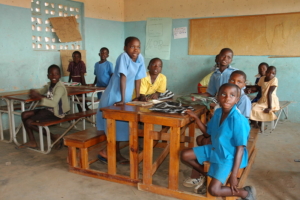 In 2022, Zambia removed school fees for all public primary and secondary students through a nationwide Free Education Policy (also referred to as “Education for All”). For children living in poverty, this decision changed everyday life. Families that once struggled to cover fees can now send their children to school without facing impossible financial choices.
Within a few years of the policy’s introduction, more than 2.3 million previously out-of-school learners returned to classrooms. Since the policy began, millions of learners have returned to the classroom and early evidence shows that the reform is creating new pathways out of poverty. Here are five ways in which free education is transforming children’s lives across Zambia.
Education Is Now Accessible to All Children
Before the policy came about, many families could not afford tuition fees, exam charges or contributions to parent-teacher associations. These costs often pushed children out of school or prevented them from enrolling in the first place. However, with Zambia’s Free Education Policy, these financial barriers have been removed.
As of 2025, 80% of Zambians say that someone in their family has benefited from free schooling and it is estimated that roughly eight million learners (from early childhood to secondary school) are covered under the free education system. For children living in low-income households, this reform gives them their first real opportunity to access continuous education, opening many more doors for them later in life.
It Reduces the Risk of Child Labor and Exploitation
When families face extreme poverty, children are sometimes sent to work in agriculture, informal labor or other household enterprises to help bring in income, especially when education costs are high. Fortunately, by making education free, the policy reduces one of the main financial pressures that results in pushing children toward exploitation instead of having a better well-being by being in school. The Zambian government and education sector researchers have linked the increase in school enrollment to declines in drop-outs and reduced pressure toward child labor.
This shift gives vulnerable children a much safer and healthier alternative: attendance in school rather than engaging in exploitative work.
It Expands Future Job Opportunities
Education remains one of the most reliable paths out of poverty. By giving children the opportunity to complete primary and secondary education, Zambia’s free education policy opens doors to future jobs that require literacy, numeracy or more advanced skills. With a growing base of educated youth, more young people from disadvantaged backgrounds may access stable employment and obtain skilled professions.
Analysts describe the policy as a major investment in human capital formation and social mobility. For many children living in poverty, this offers a real chance to change their economic trajectory and contribute positively to their communities and national development.
It Creates New Teaching Jobs and Strengthens Communities
The surge in school enrollment triggered by free schooling has led to one of the largest teacher recruitment drives in Zambia’s history. In 2022 alone, the government recruited 30,496 teachers and staff. This expansion provides employment opportunities, especially in communities where poverty and unemployment are significant.
Teacher recruitment also ensures that growing class sizes can be managed, which supports better learning outcomes and helps to stabilize local economies. For families living in impoverished or rural areas, this presents a new path to stable income through teaching, helping strengthen social stability and building a more educated workforce within those communities.
School Supports Social and Emotional Development
Attending school does more than teach reading, writing and mathematics. It provides a structured environment where children build friendships, develop social skills, learn discipline and gain confidence. These social and psychological benefits are widely acknowledged by sociologists and developmental psychologists as early social interaction and peer learning foster emotional resilience, collaborative skills and a sense of belonging.
For children growing up in poverty, who may otherwise lack stable social structures or supportive environments, free access to schooling gives them a place of security, routine and community. Though quantitative data on social development under the policy is not yet robust, the general principle that schooling supports socialization is well-established. In Zambia, by making education accessible across socioeconomic divides, free education helps ensure that all children, not only those from wealthier families, have access to the social and emotional benefits school can provide.
Final Remarks
Zambia’s Free Education Policy is already reshaping opportunities for children living in poverty. By removing financial barriers, reducing the risks of exploitation, opening future career paths, creating new teaching jobs and supporting healthy social development, the policy is proving to be a powerful investment in human potential. If the government continues to support education with adequate infrastructure, resources and funding, every child in Zambia could have the chance to learn, grow and build a better future.
– Daisy Winstone
Daisy is based in Cardiff, Wales and focuses on Good News for The Borgen Project.
Photo: Flickr
