Uganda Vision 2040: Foreign Direct Investment
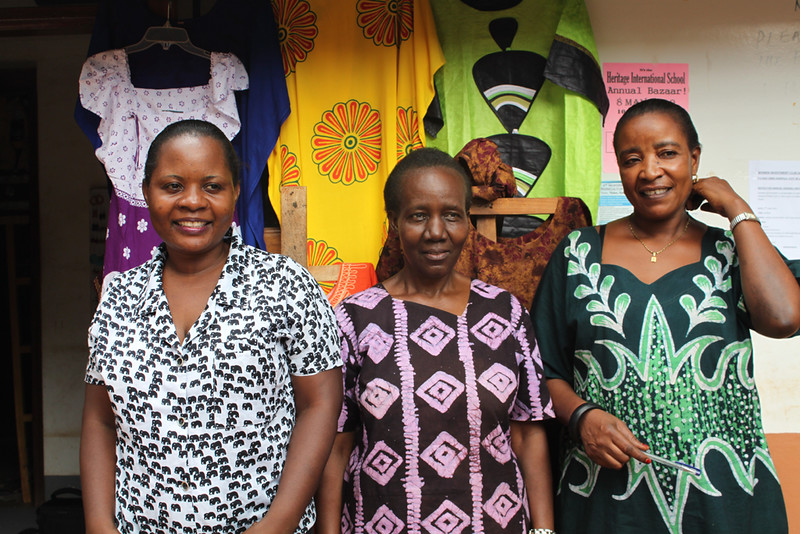 Four decades after the implementation of the Bretton Woods Institutions’ controversial financial liberalization policies on the African continent, Uganda is retaking control of its economic future. This means cutting dependency on aid and focusing on sustainable economic growth. As stated in Uganda Vision 2040, the Ugandan government envisages “A Transformed Ugandan Society from a Peasant to a Modern and Prosperous Country within 30 years.” Key to fulfilling this aspirational vision is foreign investment, the encouragement of which forms a principal role of the country’s diplomatic service.
Moving Beyond Aid
The Ugandan government’s vision for the nation’s future is one of economic independence and prosperity, a vision that a high dependence on aid renders impossible. Recent years have also seen a sharp decline in the global aid budget, with many wealthier nations slashing the amount spent on overseas assistance in favor of internal spending.
This comes at a time when poverty is still a persistent challenge in Uganda. Using the World Bank’s international poverty line of $3 a day, 59.78% of Uganda’s 50 million inhabitants live in poverty. It is important to note, however, that this figure was more than 80% before the turn of the century, showing remarkable progress. Using Uganda’s national poverty line, the percentage of people in poverty has dropped to 16.1%, though this figure stands at 74.2% in the arid northeastern region of Karamoja.
The Borgen Project spoke with H.E. Philip Rukikaire, Uganda Deputy High Commissioner to the U.K. He said, “Whereas Uganda has relied heavily on multilateral and bilateral aid since the late 1980s to support the recovery of the economy and also to transform into a middle-class economy, the government acknowledges that Aid is not sustainable.”
Set Targets
Recognizing the unsuitability of an aid-dependent economy to Uganda’s specific context, prompted the Ugandan government to implement Vision 2040, a 2013-launched document outlining the steps required to increase per capita income to $9,500, with a focus on driving investment.
Ten years later, Uganda Vision 2040 was supplemented with the Tenfold Growth Strategy. “The Tenfold Growth Strategy is the specific economic blueprint designed to achieve the quantitative leap required to meet the Vision 2040 goal,” said Ambassador Rukikaire. The strategy is anchored on four high-potential sectors: agro-industrial, tourism, mineral development (including oil and gas) and science, technology and innovation (ATMS). Many see these sectors as key to growing the economy tenfold from $50 billion to $500 billion by 2040.
Potential for Investment in Uganda
Uganda’s potential for foreign investment is vast. In 2024, the inward flow of Foreign Direct Investment (FDI) totaled $3.3 billion, an almost 200% increase from 2019. With a young, rapidly growing population, fertile soils, a substantial market size and regional integration through the East African Federation — and more recently the African Continental Free Trade Agreement — there are many advantages to potential investors.
As part of its broader strategy, the Government of Uganda has taken major steps to increase investment in the country. These include a 75% reduction in tariffs on machinery for factory use and a 100% tax deduction on costs related to training, research and mining. Additionally, the government has also offered additional benefits to incentivize investment in ATMS.
The Role of Foreign Service
A large role in stimulating investment in Uganda is played by the country’s diplomats. Indeed, in a recent meeting of Uganda’s Heads of Mission, the integral role of the foreign service in national development was restated. In the United Kingdom (U.K.), the Uganda High Commission works to encourage investment in each ATMS sector. This includes promoting Uganda Coffee, facilitating partnerships between NHS trusts in the U.K. and medical institutions in Uganda, and partnering with the Uganda Tourism Board to bring attention to Uganda’s unique tourist offerings.
U.K. Investments in Uganda
Many agreements have already been made, with the total U.K. Export Finance (UKEF) portfolio with Uganda set to surpass $1 billion in the coming year.
- Kabalega International Airport. To support Uganda’s oil exploration, construction began in April 2018 on a second international airport in the country. Located in western Uganda, the project was funded by a €264 million loan from the U.K.’s Standard Chartered Bank and UKEF and carried out by U.K.-based infrastructure company COLAS. At the time, it represented the largest ever UKEF loan to an African government. Ambassador Rukikaire stated, “The airport is near the Albertine Graben area where oil wells at Kingfisher and Tilenga projects are in advanced stages of producing ‘first oil’ for sale (2026). It will facilitate cargo transportation but also improve connectivity around the country and region for tourism and trade, creating many jobs in the area in different sectors.”
- Kampala City Roads and Bridges Upgrading Project (KCRBUP). In a project fully funded by UKEF, the Kampala Capital City Authority will upgrade and rehabilitate more than 118 roads across the capital, directly employing up to 300 Ugandans. The €250 million agreement was signed with COLAS and will overhaul the road network.
- Kitgum-Kidepo Road. In Uganda’s northeast, UKEF facilitated a loan of up to €110.5 million from Standard Chartered Bank to upgrade the 116 km Kitgum-Kidepo Road. Ambassador Rukikaire noted, “For local communities, the project aids in developing the Karamoja sub-region, one of the poorest in Uganda, by improving market access for agricultural products and facilitating trade with South Sudan and Kenya. For the tourism sector, it transforms the currently difficult, dusty or muddy access road to the Kidepo Valley National Park into a reliable route, significantly boosting visitor numbers and unlocking the region’s vast tourism potential.”
Current Challenges
Despite progress, challenges remain in actualizing the aims of Uganda Vision 2040. Corruption is a persistent barrier to investment, as is insecurity in the country’s border regions with South Sudan and the Democratic Republic of the Congo. Though there have been infrastructural improvements, investors remain disincentivized by poor connectivity.
Speaking on the U.K.’s relationship with Uganda, Ambassador Rukikaire stated, “The Labour government has signaled in its new ‘Africa Approach’ strategy its intention to prioritize Uganda in terms of investment that ultimately increases youth employment.” Through its international relationships, Uganda continues to make positive strides toward achieving the goals of Uganda Vision 2040 and the Tenfold Growth Strategy. Though challenges persist, the country demonstrates how to reduce poverty without overreliance on aid.
– Henry Weiser
Henry is based in Cornwall, UK and focuses on Technology and Politics for The Borgen Project.
Photo: Flickr
