Combating Malaria in Rohingya Refugee Camps
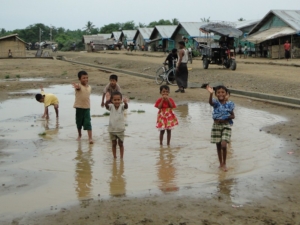 Malaria has been a threat to the Rohingya refugee population living in crowded, resource-limited camps in Bangladesh for years. Currently, about 1.3 million Rohingya refugees remain in temporary shelters, where conditions are ideal for mosquito breeding and the rapid spread of disease. Yet despite these challenges, coordinated efforts between local authorities, nongovernmental organizations (NGOs) and health agencies have led to significant progress in combating malaria in Rohingya refugee camps.
Malaria in Rohingya Refugee Camps: 5 Key Facts
Here are five key facts about how collaboration is helping protect vulnerable families from malaria:
- Distribution of Long-Lasting Insecticidal Nets. Bangladesh’s National Malaria Elimination Programme (NMEP), in partnership with BRAC and supported by the Global Fund, has expanded access to long-lasting insecticidal nets (LLINs), distributing 350,000 LLINs to Rohingya refugees between 2021 and 2024. While endemic Bangladeshi districts have reached the World Health Organization (WHO) benchmark of about one LLIN for every two people, coverage among the Rohingya population falls short. Only 44.3% had sufficient coverage, and utilization rates were significantly lower, with 65.7% sleeping under LLINs. The study notes that although LLIN distribution efforts have been successful, supply remains inadequate, and further improvements are necessary to fully protect vulnerable communities and sustain malaria elimination progress.
- Rapid Diagnostic Tests Ensure Early Detection and Treatment. Rapid Diagnostic Tests (RDTs) remain one of the strongest tools in combating malaria in the Rohingya refugee camps. RDTs formed the backbone of detection between 2017 and 2020. During this period, 30,460 individuals were tested as part of routine health care in the Kutupalong Registered Camp and Nayapara Mega Camp. The study found very few malaria cases and no deaths among 86,490 Rohingya refugees in two camps, showing how fast, accessible RDT-based diagnosis prevents severe illness and stops transmission in densely populated settings.
- Community-Led Efforts in Combating Malaria. Environmental conditions in the Rohingya camps play a major role in malaria transmission, and waste mismanagement has become a critical threat. The camps generate more than 10,000 tons of solid waste per month, about 460 grams per person per day. With no formal system, waste is often dumped in open areas where it clogs drainage channels, causes flooding and contaminates soil and water. These conditions increase respiratory illnesses, waterborne diseases and vector-borne diseases such as malaria. To address this crisis, Community Partners International (CPI) launched a community-led waste management program in Kutupalong Camp, where trained refugee volunteers collect and process six tons of waste per month. These efforts show how community-driven solutions can strengthen environmental resilience and public health by lowering mosquito breeding sites and protecting camp residents.
- Prevention Efforts Are at the Center of Combating Malaria. The WHO emphasizes that malaria prevention succeeds when surveillance is strengthened, underserved communities are reached and investments in better diagnostics and tools are made. Indeed, across the Southeast Asia Region, these strategies have helped cut malaria incidence by 54% and mortality by 46% in five years. The same lessons apply to the refugee camps. Hard-to-reach, mobile and vulnerable populations must be actively protected. Early detection through improved diagnostics and consistent monitoring remains essential to preventing outbreaks.
- Community Radio Expands Health Awareness and Malaria Prevention. Community health efforts in the Rohingya camps are strengthened through expanded access to reliable, language-appropriate health information. The United Nations High Commissioner for Refugees (UNHCR) reports that a community radio station in Teknaf, previously reaching only 50% of the refugee response zone, has now expanded coverage to 90%. Supported by the Emergency Telecommunications Sector (ETS), the station partners with organizations such as the United Nations Children’s Fund (UNICEF), the United Nations Development Programme (UNDP) and BBC Media Action to broadcast programs on health, water and sanitation, disaster preparedness, malaria, sexually transmitted infections and trafficking. Community radio plays a crucial role in improving health literacy by delivering accessible information directly to households and encouraging disease prevention behaviors.
Looking Ahead
Together, these efforts show that even in one of the world’s most challenging humanitarian settings, coordinated action can significantly reduce malaria risks. However, continued investment, community involvement and sustained prevention strategies will be essential to protecting Rohingya families.
– Chris Tang
Chris is based in Beijing, China and focuses on Good News and Technology for The Borgen Project.
Photo: Flickr
