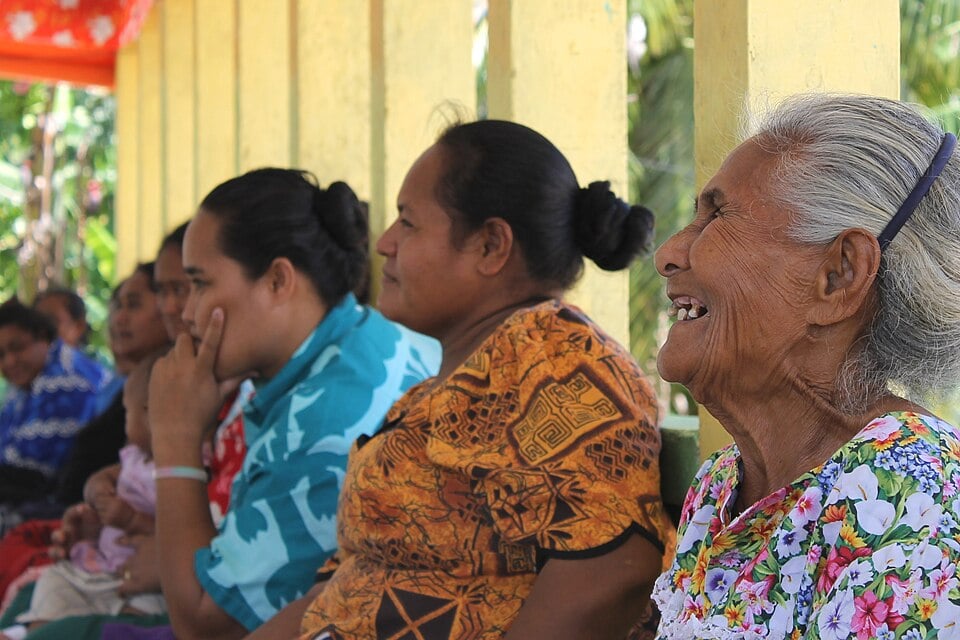
The beautiful island of Samoa has countless great things about it: many waterfalls and waterholes, colorful and delicious dishes primarily with fish and the many coral reefs that surround the island. As it continues to thrive, the gender wage gap in Samoa and fewer opportunities for women in the workforce than for men keep a stranglehold on the country. For the past five years, this has been a major problem looming over Samoa and several other countries. Here is information about the gender wage gap in Samoa.
About the Gender Wage Gap in Samoa
The gender wage gap is the yearly average of men’s and women’s earnings across a wide variety of jobs, then comparing the totals for both. Using Samoa in 2022 as an example, men earned $11.7 per hour and women earned $11.2 per hour. Now, a common misconception is that this means women literally receive less pay to do the same job as men, which is not true for most jobs.
In 2022, the jobs that Samoan men dominated the most were construction, electricity and transport, and about 18.1% of working men made a quarterly wage of $19,546. As for women, their most dominant jobs in 2022 were in financial service, health and education, and 16.8% of working women made a quarterly wage of $20,571. This means that while women made more money in their fields, less women were in those fields, which brought down their average money per hour to 50 cents less than men.
The Reason for the Gender Wage Gap in Samoa
A multitude of things cause the gender wage gap in Samoa including what each gender works at, how many hours they work, education differences, medical conditions and outside responsibilities. For example, in 2019, the gender wage gap in Samoa had women doing better than men. In fact, men earned an average annual wage of $22,044, while women’s average annual wage was $24,201, a 9.8% difference.
In 2019, a huge measles epidemic broke out in Samoa, causing the country to shut down and put most work on hold to make sure the virus stopped spreading. This meant that most male-dominated fields such as construction and fishing were put on pause, while the need for female-dominated fields like financial services and health went up. The gendered wage gap is often much more complicated than what simple numbers or graphs tell.
Education and Poverty
In 2023, statistics showed that 15.2% of Samoans were in poverty, and most commonly in rural areas like Upolu. While both men and women sit at nearly the same poverty percentage on average, the biggest different in men and women’s poverty rates are for those who went to vocational schools. Men who attended vocational schools had a 9.4% poverty rate while women who went to vocational schools had a 16.7% poverty rate.
CARE’s Efforts
There are currently efforts in place to address the gender wage gap in Samoa, mostly thanks to NGOs like CARE, an Australian charity that focuses its efforts and money on solving women’s problems in countries that struggle with poverty. It has been doing work for Samoa since 2021, supporting women farmers and independent workers with financial support and giving them what they need to be climate-prepared in case of emergencies, along with their partner Women in Business Development Inc.
Looking Ahead
The gender wage gap is a nuanced and complicated situation for Samoa to settle, let alone for any country. It takes time, many studies and an understanding of outside factors to narrow the gap between working men and women. Samoa doesn’t have it as bad as other countries; the efforts needed to bring the gender wage gap to balance are tough but definitely manageable. While Samoans struggle with the gender wage gap in the present, the future looks bright. That’s the true present.
– Ares Bryant
Ares Bryant is based in Portland, OR and focuses on Politics for The Borgen Project.
Photo: Wikimedia Commons
 The
The 
 Located between the Philippines and Hawaii, the