Can the Private Sector Replace USAID?
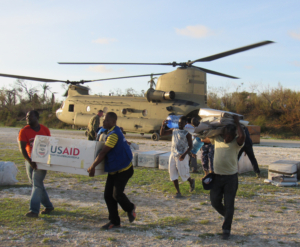 The USAID freeze has affected up to $40 billion in humanitarian and development aid worldwide. However, a combination of international donors, corporate responsibility initiatives and development finance investors is working to assist the vulnerable communities. Organized by the World Bank and development investors, initiatives like the International Development Association (IDA) have raised billions that can be used to assist countries affected by the USAID freeze.
Additionally, nonprofit investment funds like Acumen, which focuses on renewable energy in the developing world, can help mitigate the rippling effect of suspending the tens of billions awarded to international organizations on the ground fighting poverty.
The Scale of USAID’s Impact and Its Absence
Before the USAID cuts and freezes, the U.S. provided $64 billion of the $223 billion in international aid. These funds go to a network of governments, international organizations and on-the-ground partners. Roughly half of the $64 billion is administered through USAID. Most of this is distributed through local and international partners. The cuts are likely to force these partners to look for other donors.
USAID’s work has had measurable success: saving six million lives from malaria by 2017 and contributing to the elimination of wild poliovirus in 2020. However, despite those achievements, USAID is under threat. USAID efforts were initially frozen for 90 days starting in January, which was then extended another 30 days. Unfortunately, these cuts are here to stay, despite their devastating effects on communities worldwide.
Can the Private Sector Replace USAID?
Making the private sector replace USAID will be incredibly difficult. Rob Nabors, the North America director for the Gates Foundation, explained, “There is no foundation — or group of foundations — that can provide the funding, workforce capacity, expertise or leadership that the United States has historically provided to combat and control deadly diseases and address hunger and poverty around the world.”
Still, a coalition of governments, NGOs and development investors is working to step in. The IDA is a coalition of 175 countries that periodically evaluates budget priorities to help relieve poverty and assist developing countries in growing their economy. Fifty different countries currently operate as donors. Late last year, IDA donors helped secure $100 billion for the impoverished groups in developing countries.
IDA can assist in achieving many of the goals of USAID, like connecting hundreds of millions of people in Africa to reliable electricity. IDA’s model has also helped 35 countries graduate into developed countries that can act as donors, such as South Korea, highlighting what international aid can accomplish.
The Role of Philanthropy and Development Finance
Additionally, private organizations can help alleviate the harm from the recent cuts. One of the main issues is coordination and focusing funds where they can help the most. The Center for Global Development organization helps host Project Resource Optimization (PRO). Led by former USAID employees, PRO helps donors prioritize the most effective projects. Robert Rosenbaum, an independent consultant for PRO and former USAID staffer, notes, “Private philanthropy cannot replace bilateral aid, but it can lead the way in demonstrating what the future of development should look like: simpler, more transparent and relentlessly focused on results.”
Lastly, international finance can play a major role in replacing USAID. Investors like Nimrod Gerber, a managing partner at Vital Capital, see the freeze as a potential opportunity for a more effective and sustainable funding strategy for humanitarian projects. One of the main ways development investors could assist is by directing the hundreds of billions in African pension funds into projects that return on investment and improve the quality of life of people on the ground.
The Open Road Alliance (ORA) is a great example of this model. The ORA funds loans to organizations, both corporations and NGOs, in the developing world. These function as bridge loans to survive a sudden and unexpected funding crisis, like budget cuts. One of the projects the ORA funded was OnePower, which created electrical mini-grids in rural Lesotho. Not only did this provide increased health care access, but it also paid back its investors. Usually, investors get anywhere between a 2% and 4% return.
A Shift, Not a Replacement
Completely replacing USAID is not a reasonable goal. The ideal is for the U.S. to regain its place as the go-to coordinator and donor of international aid. However, this crisis has allowed many other governments, NGOs and financiers to create inventive ways to fill the gaps.
– Joseph Laughon
Joseph is based in Sacramento, CA, USA and focuses on Good News and Technology for The Borgen Project.
Photo: Wikimedia Commons
