NGOs Partnerships Following Foreign Aid Cuts in Uganda
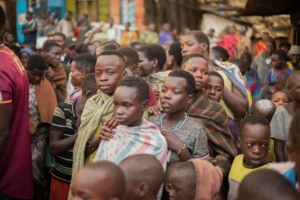 The decision to dismantle USAID was devastating for millions of people around the world. Several countries suffered immediate effects from the cuts in foreign aid, which provided necessities such as food, education and health care. Uganda is one of the hardest-hit areas for two reasons:
- It hosts the largest refugee population in Africa, nearly 2 million people, 81% of whom are women and children; and
- It faces a severe, chronic HIV epidemic and relies heavily on U.S. support for HIV treatment and prevention.
Uganda lost 66% of the funding received from USAID, which is approximately $307 million. As a result, many areas have been affected, including food aid, which has been cut due to a funding shortage, leading to increased hunger and malnutrition. However, nongovernmental organizations (NGOs) are hard-pressed to continue providing services on the same scale with less funding.
The Impact of Foreign Aid Cuts on Uganda
1. Education:
USAID funding supported school construction and the procurement of learning materials in Uganda. The funding also supported teacher training programs. Digital learning tools provided schools in remote areas, improving access to education. The lack of funding results in under-resourced schools and a reduced ability to meet growing demands.
This affects girls explicitly as it decreases their access to education regarding reproductive and menstrual health. Girls, seeking security, will marry early and lose hard-fought gains in gender equity. In refugee communities, funding shortages have led to staffing shortages. In one refugee settlement, there were 36 teachers with more than 3,400 students. Following funding cuts, nine teachers are left to manage classes of up to 500 students each.
2. Health:
USAID administers close to 60% of the President’s Emergency Plan for AIDS Relief (PEPFAR) bilateral funding, which provided more than half of the medication and staff needed to respond to the HIV epidemic in Uganda. PEPFAR also accounted for nearly 90% of pre-exposure prophylaxis (PrEP) initiatives on a global scale. Millions now are at risk of contracting HIV due to foreign aid cuts.
PrEP is restricted to pregnant and lactating mothers. Funding cuts cause immediate disruptions in care for thousands who depend on consistent medication (i.e., Anti-Retroviral Therapy). This increases the risk of babies being born with HIV. Vaccine shortages caused by foreign aid cuts increase the risk of contracting other diseases like TB, Ebola and Malaria.
Foreign aid cuts also lead to staffing shortages, making it challenging for those who remain to deliver the same level of health care with fewer resources and a reduced number of qualified staff.
One NGO in particular, St. Francis Health Care Services, provided HIV testing, medication and prevention products to sex workers in Uganda, but this was stopped due to cuts in foreign aid. Mwesigye, a country representative with the U.K.-based NGO All We Can, stated, “You know, there was almost an alarm… people were being told to run as fast as they could to the next health unit to get their dose for a few months… but that is also going to run out.”
The Response
When formal protection systems collapsed, local citizens and/or refugees stepped up to fill the gap. The NGO St. Francis Health Care Services received funding from PEPFAR several years earlier. However, its funding was cut after Uganda passed its anti-homosexuality act. The nonprofit was able to secure the funding again; however, its leadership began to realize how dangerous it could be for them and their ability to continue providing the vital services needed in the community.
After the organization’s funding was cut the first time, it began seeking private donors. It increased its revenue by offering paid services, such as surgery, maternal care, radiology and dental exams. As a result, it was less vulnerable to the effects of the foreign aid cuts. However, health leaders still had to make decisions in response to the cuts to foreign aid.
Other strategies implemented include moving away from standalone HIV/TB clinics and referring patients to government outpatient clinics; utilizing a large network of private clinics, seeking non-U.S. international collaborations, increasing donor outreach and implementing technological solutions (e.g., AI). Health officials propose using AI to identify high-risk patients, allowing them to be seen sooner.
Another NGO, Soft Power Health, continues to care for approximately 50,000 patients. This organization operates on a $699,000 budget, which is funded by private organizations and individual donors. It was also more insulated against the foreign aid cuts and continued its work. Services provided include transportation, free HIV medication and gardening and health education. Another clinic lost its funding and donated medical equipment to Soft Power Health, allowing it to continue testing for TB.
Grassroots Groups in Uganda
In response to the aid cuts, grassroots groups in Uganda have turned to farming, petty trade and vocational activities, selling milk and produce, while youth join skills programs to learn trades like tailoring. Women have formed support groups for survivors of gender-based violence and girls at risk, which have become lifelines through regular meetings and check-ins.
These community efforts are complemented by Volunteer Village Health Teams, who refer survivors to clinics that remain open, provide mental health services and conduct awareness sessions on gender rights and protection. Boda Boda riders, a network of volunteer motorcycle riders, transport survivors from remote villages to clinics, legal aid offices, or safer areas and have organized informal night patrols to discourage exploitation and monitor hotspots known for abuse.
Forging a Path Forward
Joy Kawanguzi, team leader of FABIO-Uganda, discusses the abruptness of the foreign aid cuts in Uganda: “It did not give us time to prepare. So the abruptness alone is an inconvenience.” She adds that the foreign aid cuts “put local organizations in a place where they start feeling like they are more implementers of donor ideologies. Because if a local organization were a key player, this decision would not have been drastic. There would have been consultations.”
Mwesigye agrees and advocates for organizations to be able to use funding for core costs instead of just fulfilling projects: “…if core costs are paid for; if you build the institution rather than fulfill project goals, then the institution will be bold enough to be able to work and do what it needs to do.”
These statements are indicative of a desire to move away from dependence on outside donors. Their sentiment is fueled by the question no one can answer: “What if this happens again?” The path forward for the people of Uganda is one where they have free rein with the resources they are given and the opportunity to achieve independence.
– Danielle Milano
Danielle is based in Pineville, LA, USA and focuses on Good News and Global Health for The Borgen Project.
Photo: Pexels
