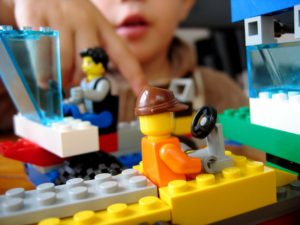
 LEGO bricks have long sparked the imaginations of people of all ages. Ole Kirk Kristiansen founded the LEGO Group in 1932, with its name being an abbreviation of the Danish words “leg godt,” meaning “play well,” emphasizing the power of play. Today, LEGOs serve as building blocks of hope, learning and opportunity for underprivileged children.
This is the mission of Creations For Charity (CFC), a nonprofit organization dedicated to brightening children’s holidays with LEGO bricks by uniting fans from around the world. Nannan Zhang is an adult fan who has been active in the online community for eight years. Initially, a college student with a lot of free time dedicated to LEGO sets, he wanted to see fellow builders in the community use their extensive building skills to give to others.
As such, Zhang founded the CFC in 2009 with the intent of showcasing the talents of fellow LEGO fans and giving to needy youths.
How It Works
The CFC is entirely volunteer-run and hosts an annual fundraiser. The nonprofit prides itself on its unique fundraising strategy, which involves selling one-of-a-kind creations donated by volunteers from around the world from October 15 to November 30. Coordinators then use the funds to purchase new LEGO sets for underprivileged children.
In hopes of brightening children’s holidays with LEGO bricks, the CFC’s coordinators travel around the world and use these funds to purchase brand-new LEGO sets, donating them to local organizations of their choice that serve underprivileged children. Such organizations include shelters, orphanages, hospitals and impoverished schools. People can also make monetary donations through the organization’s website.
Zhang has acknowledged the high prices of the creations displayed in the CFC’s store. He explained that those who have put in immense effort into their creations deserved recognition. Near the end of the sale, discounts are made for remaining items.
The CFC has collaborated with popular LEGO event organizers, including Brick Convention and Beyond the Brick. Brick Convention is a long-running event that features numerous LEGO attractions, including massive creation displays, retired LEGO sets and life-size models. A portion of the money raised during the convention goes to the CFC, supporting its goal of brightening children’s holidays with LEGO.
Beyond the Brick’s YouTube channel, hosted by Joshua Hanlon, houses the CFC’s annual 24-hour livestreams. Hanlon founded Beyond the Brick in November 2011, initially as an audio-only podcast. It is usually held on the day after Thanksgiving.
Many LEGO fans from around the world have participated in the livestream since 2014. In 2025, Beyond the Brick delivered sets to Transformation Ministries, an organization that provides food and other necessities to underprivileged children.
Successes and Contributions
The Creations for Charity has traveled to both developed and developing countries in support of its cause. For example, the team has traveled to Hungary, Kenya, Brazil, Chile and Japan. Since 2009, CFC has raised approximately $17,000 annually, which it used to donate more than 1,100 new LEGO sets to organizations such as Make-A-Wish and children’s hospitals.
In 2024, CFC donated 150 LEGO kits to refugee children in Nairobi, Kenya, where more than 800,000 refugees sought shelter from war, famine and natural disasters. In 2025, the CFC raised $25,906, with $4,500 from the sale of custom creations and $7,000 from the live stream. The rest came from donations from the Brick Convention, Brickworld and the Great Palia Charity Hunt.
LEGO builders and event organizers alike have collaborated for the sake of brightening children’s holidays with LEGO sets. As of now, the CFC plans to travel to 17 locations around the world, which have yet to be fully disclosed.
The Impact of LEGOs
It may seem surprising how the Creations for Charity’s mission focuses on brightening children’s holidays with LEGOs. However, the truth is that the language of play is universal. As freshman computer science major Jenna Curtis put it: “That’s why they’re so relevant, because you don’t have to change the formula. You can just rearrange what pieces you use and create something different.”
Not only do LEGO bricks encourage creativity, but they also help to hone fine motor skills, vocabulary, cooperation and problem-solving abilities. Approximately 90% of brain growth occurs before the age of 5. LEGO kits facilitate learning through imagination and independent play. A 2022 study found that LEGO sets have been used for developmental art therapy for children.
These building blocks are versatile and can enhance social and behavioral skills in children, which are crucial to a child’s future.
Conclusion
Through his simple love for LEGO bricks, Zhang has built the Creations for Charity into a foundation for fostering creativity and brightening children’s holidays with LEGO bricks. When children play with LEGO blocks, they aren’t just building for fun. They’re also building their futures with one brick at a time.
– Cindy Nguyen
Cindy is based in Albuquerque, NM, USA and focuses on Good News and Global Health for The Borgen Project.
Photo: Flickr

Mobile Technology & Community Health Care in Malawi
Limited access to health care increases the risk of death among young children in Malawi, as people who live far from health centers are less likely to receive medical care. This also affects pregnant women who live farther away from those facilities, as they are less likely to get prenatal checkups or professional help during childbirth. To address these challenges, Malawi has increasingly relied on Community Health Workers (CHWs), locally known as Health Surveillance Assistants (HSAs), who serve as important links between communities and health systems.
Recently, the introduction of mobile technology has paved the way for more effective health care delivery. Using mobile phones, digital reporting tools and health apps, CHWs can now track patient data, communicate with clinics and respond more quickly to medical needs and emergencies. These digital efforts are supported by organizations such as the Malawi Ministry of Health, which oversees community health programs and digital health systems and VillageReach.
This global nonprofit organization strengthens supply chains and digital health tools for frontline health workers in Malawi. Together, these technologies improve access to health care, support health education and strengthen health systems in rural communities.
Mobile Technology Strengthening Community Health Work
Mobile technology has become an important tool in strengthening HSAs across Malawi. Smartphones, tablets and SMS-based platforms enable HSAs to collect patient data, monitor symptoms and communicate directly with health facilities. One of the most widely used systems is the Malawi Ministry of Health’s mobile system, which enables live disease surveillance and medicine stock monitoring.
The Integrated Community Health Information System (iCHIS) is a mobile system implemented by the Malawi Ministry of Health. It supports HSAs by enabling them to record patient data digitally and submit accurate, up-to-date reports. This system replaces paper-based reporting and data collection, improving accuracy and speeding up communication with district health offices.
By helping track diseases and monitor maternal and child health, iCHIS strengthens community-level health care and improves response times in rural areas of Malawi. In a published report, Malawi’s Ministry of Health emphasized that digital reporting systems such as the iCHIS have reduced delays in community-level data reporting and improved decision-making at district health offices. Officials noted that real-time digital data allows faster responses to disease outbreaks and improves monitoring of maternal and child health services, particularly in hard-to-reach rural areas.
In addition, digital systems support health education by providing HSAs with updated information on nutrition and disease prevention. These tools strengthen communication between health workers and communities, improve trust in local health services and help ensure that patients receive timely and appropriate care. Overall, mobile technology has become an important tool for strengthening community-based health care delivery in Malawi, particularly in rural areas.
Organizations Supporting Digital Health Initiatives in Malawi
Through the combined efforts of these organizations, the workload of CHWs has been greatly reduced. These efforts show how combining community health work with mobile technology can expand health care access and improve outcomes even in developing regions.
Looking Ahead
As Malawi continues to invest in digital health, mobile technology is becoming an important tool for improving health care delivery. Indeed, expanding mobile network access, strengthening digital skills among health workers and improving data systems will help ensure progress. With continued support and partnerships, mobile health systems can address health care challenges, improve patients’ well-being and strengthen the country’s health system.
By giving HSAs better digital tools, Malawi shows how technology can help to reduce challenges in health care access. These systems support CHWs and provide a practical example for other low-income countries seeking to improve rural health care in affordable, effective ways.
– Emmanuel Fagbemide
Photo: Unsplash
Everything To Know About Hunger in Rwanda
The State of Food Security in Rwanda
Rwanda has made notable progress in reducing hunger, however food insecurity continues to affect a significant portion of its population. According to data obtained in 2022, food insecurity remains a reality for approximately 20.6% of the population, with the majority experiencing moderate levels of insecurity. In 2024, the overall Dietary Energy Supply gradually increased by 1.7%, indicating some “improvement in national food energy availability.” Currently, 32.4% of children under the age of five suffer from chronic malnutrition.
Root Causes of Hunger
Hunger in Rwanda is driven by a complex combination of environmental and economic factors:
Who Is Most Affected?
Rural populations, women and children are disproportionately affected by food insecurity. Children under the age of five are increasingly vulnerable to chronic malnutrition, which may chronically impact physical and cognitive development.
According to the United Nations Refugee Agency, refugees fleeing Rwanda’s neighboring countries also face acute food insecurity. Limited access to land and employment opportunities around refugee camps leads many to heavily depend on humanitarian food assistance. However, due to a lack of funding, refugees are at a greater risk of nutritional deficiencies.
Government and Policy Responses
The Rwandan government has invested in programs and policies to strengthen food security and agricultural production, including:
International Support and Challenges
By supporting refugees, assisting vulnerable rural communities and working with farmers, international partners like the United Nations World Food Programme (WFP) play a crucial role in addressing hunger in Rwanda by providing “specialized nutritious food, for the prevention and treatment of malnutrition, to vulnerable groups.” However, funding gaps and global crises have strained humanitarian assistance, leading to ration cuts for refugee camps.
Looking Ahead: Challenges and Opportunities
As aligned with Sustainable Development Target 2, Rwanda has seen measurable successes regarding access to food, but progress remains uneven as the changing climate, inflation and demographic trends continue to pose significant risks. According to the WFP, to sustain gains and close the gap, it is critical to boost agricultural activity, invest in infrastructure and improve nutrition education.
Sustained investment, enhanced regional cooperation and targeted programs could help build a more food-secure Rwanda. Community leaders and international partners must continue collaborating to ensure that everyone in Rwanda, citizens and refugees, have access to enough nutritious food that supports long-term health.
– Sara Aboulela
Photo: Wikimedia Commons
How Surf Tourism is Helping Fight Poverty in Bali
Tourism and Inequality in Bali
Over the past two decades, tourism has driven extraordinary economic growth in Bali. Before the pandemic, the island welcomed more than six million international visitors a year, generating jobs, foreign investment and global visibility. But this growth has not been evenly shared.
As tourism expands, wealth tends to concentrate in already-popular areas, widening the gap between those who benefit from the industry and those who are left behind. Developers have increasingly converted agricultural land, including Bali’s iconic rice terraces, into hotels, beach clubs and shops aimed at foreign tourists. For many rural and working-class communities, this shift has meant higher living costs, fewer traditional livelihoods and mounting pressure to adapt or relocate.
Surf Tourism in Bali
What surf tourism in Bali occasionally reveals is not a solution to poverty, but a different way tourism value can circulate at the margins. At Kima Surf, the surf camp embeds charitable work into its everyday operations. Kima Surf instructors bring children from the Bali Orphan Day Center into the water for surf sessions, while guests and staff take part in beach clean-ups that address the environmental pressures tourism generates.
Beyond the beach, Kima Surf supports initiatives such as the NF Kinder Foundation. The foundation funds health care, research and aftercare for families facing the high and ongoing costs of Neurofibromatosis, helping them avoid financial strain that could push them deeper into poverty. Similarly, Bali Green Surf School supports educational access by providing food, clothing, toys and essential school supplies to local orphanages, helping reduce material barriers to learning for children from low-income backgrounds.
Fundraising for SurfAid’s Make a Wave Challenge and awareness campaigns promoting disability inclusion in Bali also support groups that are often excluded from tourism jobs and social services. These interventions remain limited in scale and cannot offset the structural inequalities that tourism development produces; however, they illustrate how surf tourism can contribute, albeit incrementally and unevenly, to poverty alleviation. It eases access to care, skills and resources where state support is often insufficient.
What This Means for Poverty Reduction in Bali
Examples like Kima Surf and Bali Green Surf School show how surf tourism in Bali can intersect with poverty in ways that are often overlooked. Rather than transforming the economy or reversing gentrification, surf tourism can create smaller, more immediate forms of support. These include reducing financial vulnerability by improving access to health care and educational resources that might otherwise push families further into poverty.
These impacts are limited and uneven, but they matter in a place where tourism dominates everyday life. Surf tourism in Bali does not solve poverty. However, when its benefits reach local people, it can make everyday life more affordable for some families.
– Iona Gethin
Photo: Flickr
The Productive Safety Net Program Combats Poverty in Ethiopia
Background
The Climate Policy Initiative reports that Phase V of the PSNP began in November 2020 under the Strengthen Ethiopia’s Adaptive Safety Net Project. This project received a $200 million credit and a $312.5 million grant. It also received $430 million from USAID, $281 million from the United Kingdom’s Foreign, Commonwealth and Development Office and $600 million from the Government of Ethiopia.
This phase aims to expand the geographic scope of the program, improve PSNP implementation and strengthen disaster response efforts. These objectives support broader policy goals. According to the European External Action Service, this focuses on reducing extreme poverty in targeted rural areas and strengthening household resilience to recurrent shocks.
It also aims to prevent harmful coping mechanisms, promote sustainable livelihoods and improve food security and access to essential services for vulnerable populations.
Project Components
The PSNP includes a range of components and policies. The European External Action Service reports that this program provides cash or food payments to about seven million people who participate in public works initiatives. Participants receive benefits for up to six months while engaging in community-building tasks.
One million people identified as chronically impoverished or unable to work receive unconditional benefits for 12 months. The program implements public works projects in both livestock-based and non-livestock-based areas to protect residents from resource losses linked to poverty and disasters. These projects focus on strengthening infrastructure, improving soil and water conservation and supporting environmental protection efforts.
Some policies include developing roads and schools, planting seedlings for reforestation, preventing soil erosion and creating or rehabilitating irrigation systems. PSNP provides financial and social services to beneficiaries. This program facilitates grants and loans for farming and nonfarming activities to support poverty reduction.
This program connects beneficiaries to social support services across nutrition, health and education. The Shock Responsive Safety Net administers assistance to beneficiaries facing food insecurity, particularly those affected by droughts and other shocks.
Environmental Shocks
Environmental policy plays a key role in the PSNP. As stated by the European External Action Service, integrating climate shift adaptation into public works projects helps minimize the impact of climate shocks on food insecurity. For example, watershed rehabilitation and area closures can promote vegetation growth for livestock feed.
In addition, environmental management efforts can lessen the risk of landslides, floods and soil erosion. According to the World Bank, a significant portion of Ethiopia’s population depends on rain-fed agriculture. The country has endured recurrent droughts in previous decades, historically occurring every three to five years.
While the frequency of environmental shocks has varied over the years, they remain a consistent concern that has shaped Ethiopia’s social protection response. The World Bank further states that droughts and famines have affected millions of people over multiple periods. Environmental degradation, weak resource management and shrinking landholdings driven by constraints in policy implementation have worsened the effects of droughts.
These factors have led to the degradation of productive assets and the erosion of household and community resilience.
Economic Impacts
Programs like the Productive Safety Net Program help stabilize incomes and productive assets, enabling households to participate in local and regional markets. By reducing financial uncertainty connected to recurrent shocks, PSNP helps create a predictable economic environment that supports trade and investment. Over time, these factors can expand consumer markets and reinforce supply chains, creating trade opportunities for companies based in the U.S. and the U.K.
– Sasha Banaei
Photo: Flickr
Creations for Charity: Brightening Children’s Holidays With LEGO
This is the mission of Creations For Charity (CFC), a nonprofit organization dedicated to brightening children’s holidays with LEGO bricks by uniting fans from around the world. Nannan Zhang is an adult fan who has been active in the online community for eight years. Initially, a college student with a lot of free time dedicated to LEGO sets, he wanted to see fellow builders in the community use their extensive building skills to give to others.
As such, Zhang founded the CFC in 2009 with the intent of showcasing the talents of fellow LEGO fans and giving to needy youths.
How It Works
The CFC is entirely volunteer-run and hosts an annual fundraiser. The nonprofit prides itself on its unique fundraising strategy, which involves selling one-of-a-kind creations donated by volunteers from around the world from October 15 to November 30. Coordinators then use the funds to purchase new LEGO sets for underprivileged children.
In hopes of brightening children’s holidays with LEGO bricks, the CFC’s coordinators travel around the world and use these funds to purchase brand-new LEGO sets, donating them to local organizations of their choice that serve underprivileged children. Such organizations include shelters, orphanages, hospitals and impoverished schools. People can also make monetary donations through the organization’s website.
Zhang has acknowledged the high prices of the creations displayed in the CFC’s store. He explained that those who have put in immense effort into their creations deserved recognition. Near the end of the sale, discounts are made for remaining items.
The CFC has collaborated with popular LEGO event organizers, including Brick Convention and Beyond the Brick. Brick Convention is a long-running event that features numerous LEGO attractions, including massive creation displays, retired LEGO sets and life-size models. A portion of the money raised during the convention goes to the CFC, supporting its goal of brightening children’s holidays with LEGO.
Beyond the Brick’s YouTube channel, hosted by Joshua Hanlon, houses the CFC’s annual 24-hour livestreams. Hanlon founded Beyond the Brick in November 2011, initially as an audio-only podcast. It is usually held on the day after Thanksgiving.
Many LEGO fans from around the world have participated in the livestream since 2014. In 2025, Beyond the Brick delivered sets to Transformation Ministries, an organization that provides food and other necessities to underprivileged children.
Successes and Contributions
The Creations for Charity has traveled to both developed and developing countries in support of its cause. For example, the team has traveled to Hungary, Kenya, Brazil, Chile and Japan. Since 2009, CFC has raised approximately $17,000 annually, which it used to donate more than 1,100 new LEGO sets to organizations such as Make-A-Wish and children’s hospitals.
In 2024, CFC donated 150 LEGO kits to refugee children in Nairobi, Kenya, where more than 800,000 refugees sought shelter from war, famine and natural disasters. In 2025, the CFC raised $25,906, with $4,500 from the sale of custom creations and $7,000 from the live stream. The rest came from donations from the Brick Convention, Brickworld and the Great Palia Charity Hunt.
LEGO builders and event organizers alike have collaborated for the sake of brightening children’s holidays with LEGO sets. As of now, the CFC plans to travel to 17 locations around the world, which have yet to be fully disclosed.
The Impact of LEGOs
It may seem surprising how the Creations for Charity’s mission focuses on brightening children’s holidays with LEGOs. However, the truth is that the language of play is universal. As freshman computer science major Jenna Curtis put it: “That’s why they’re so relevant, because you don’t have to change the formula. You can just rearrange what pieces you use and create something different.”
Not only do LEGO bricks encourage creativity, but they also help to hone fine motor skills, vocabulary, cooperation and problem-solving abilities. Approximately 90% of brain growth occurs before the age of 5. LEGO kits facilitate learning through imagination and independent play. A 2022 study found that LEGO sets have been used for developmental art therapy for children.
These building blocks are versatile and can enhance social and behavioral skills in children, which are crucial to a child’s future.
Conclusion
Through his simple love for LEGO bricks, Zhang has built the Creations for Charity into a foundation for fostering creativity and brightening children’s holidays with LEGO bricks. When children play with LEGO blocks, they aren’t just building for fun. They’re also building their futures with one brick at a time.
– Cindy Nguyen
Photo: Flickr
Parliamentary Quotas Increase Women’s Political Representation
Parliamentary Quotas Aim To Correct Political Imbalances
Multiple nations in the Western Balkans have now adopted quota systems to address the existing gender disparities within their political institutions, including Montenegro, North Macedonia and Serbia. Parliamentary gender quotas require a political party to include a minimum percentage of women on candidate lists during elections. Legislators design these measures to tackle the persistent structural barriers.
Unequal access to party networks, campaign financing and political mentorship are all consequences of the absence of gender quotas. By incorporating gender quotas into electoral law, women’s visibility in politics can increase and governments can expand opportunities for female politicians to compete for office on an equal footing with men.
Women’s Representation Has Increased Following Quota Laws
The implementation of quota legislation resulted in countries in the Western Balkans achieving measurable gains in women’s parliamentary representation. Serbia is now ranked among the top nations in Europe for women’s representation in the national parliament, with women holding 37.2% of parliamentary seats. Additionally, steady increases were reported in Montenegro and North Macedonia.
This reflects the effectiveness and positive impact of quota requirements on election eligibility, as well as how they can rapidly change the gender composition of political institutions when properly enforced.
Effective quota systems rely on enforcement and in Montenegro and Serbia, electoral commissions require parties to comply with quota laws; failure to do so may result in disqualification from elections. These stringent enforcement mechanisms have prompted political parties to recruit and train female candidates, rather than placing them in symbolic or noncompetitive positions. As a result, parties have expanded leadership pipelines for women, increasing long-term political participation beyond a single election cycle.
Why Women’s Political Representation Matters for Poverty Reduction
Women’s political participation plays a crucial role in poverty reduction. Research indicates that women legislators are more likely to prioritize policies related to education, health care, social protection and labor rights compared to men. Effectively, these policy areas disproportionately benefit low-income households, including children and marginalized communities.
In the Western Balkans, inclusive governments have supported the expansion of social assistance programs, gender-responsive budgeting and family benefits. All these reforms play a massive role in reducing poverty risk, especially for single mothers and rural populations.
Despite notable gains, challenges remain as cultural resistance, unequal access to campaign financing and uneven enforcement continue to limit women’s political advancement in parts of the Western Balkans. Women from rural areas, ethnic minorities and low-income backgrounds remain underrepresented. This highlights the need for complementary reforms. Without continued political persistence, quota systems risk stagnation or symbolic compliance.
Looking Ahead
The effectiveness of parliamentary gender quotas in the Western Balkans has proven to be an impactful strategy for increasing women’s political representation in the region. With continued international support and legal reform, women’s leadership can further expand and reduce poverty by promoting an inclusive and responsive government system. As the region advances toward greater political and economic integration, women’s representation remains essential to maintaining long-term stability and equitable growth.
– Hana Abulkheir
Photo: Flickr
Addressing Child Marriage in Argentina
In Argentina, the gender pay gap is leading more girls and women to poverty. UN Women states that “Women and girls aged 15+ spend 23.4% of their time on unpaid care and domestic work, compared to 9.2% spent by men.” The power dynamics girls face regularly put them in a position where they do not have the resources to withstand poverty, therefore, leading them to child marriage in Argentina.
Leading Factors for Child Marriage
Girls Not Brides has stated that “16% of girls in Argentina marry or enter a union before age 18, and 2% marry before age 15.” The percentage of girls getting married as adolescents is proof of the scary reality that women and girls have to live through every day.
The law in Argentina works to prevent marriage before 18, however, parents and guardians have the right to enforce marriage at 16. This power dynamic is another social norm which influences gender inequalities to prevail. Other factors that result in child marriage include getting pregnant at a young age, which socially isolates young girls from their families and education. Girls also may feel compelled to stay in a union if it is their only support.
Improvements to Child Marriage in Argentina
Thankfully, there is a plan to eradicate child marriage in Argentina by 2030. Argentina is actively co-sponsoring legislation to prevent child marriage. It also aims to prevent violence, which enforces gender-based inequality and leads to issues such as child marriage. Significantly, the government will be prioritizing services to support those involved in child marriage.
People all over the world have been actively helping to stop child marriage in Latin America as well. This includes organizations such as Girls Not Brides. It has given a voice to girls and women who feel like they cannot speak freely.
In Argentina specifically, Girls Not Brides is improving the lives of young girls by utilizing The Foundation for Studies and Research on Women (FEIM). It researches and advocates against the issue of child marriage in Argentina, while training people to provide education on child marriage.
Meanwhile, SOS Children’s Villages has actively been working to stop adolescents from falling into the trap of entering marriage before 18. This organization creates a living environment for children to grow up in, providing them with education and support in their childhood and helping them move into the future independently. So far, “SOS Children’s Villages supports 1,270 adults and children, 1,610 attend their school and further training, 150 children grow up in their care and 840 are supported on their way to independence.” These factors all play a part in preventing child labor and marriage, and increasing quality of life.
Looking Ahead
While the injustice many young girls in Argentina face is immense, Argentina’s government and various organizations have actively worked toward protecting the rights of girls and improving the quality of life for girls in the country. Hopefully, with continued action, child marriage in Argentina will completely disappear.
– Freya Bryers
Photo: Flickr
Addressing HIV/AIDS in Malta
What Are HIV and AIDS?
HIV, also known as human immunodeficiency virus, is a virus that results in illness from a weakened immune system. The virus attacks healthy cells in the body, ultimately exposing the body to other infections. People most commonly spread it through unprotected sex, contact with the body fluids of someone with HIV or even when sharing injection equipment.
Eventually, if people leave it untreated, it can lead to AIDS, which stands for Acquired Immunodeficiency Syndrome. AIDS is described as the last stage of HIV, where the body’s cells and immune system are severely damaged. It can eventually lead to death if people leave it untreated during the initial HIV stage.
The Times of Malta recorded Malta’s first case of AIDS in 1984. In 1986, an estimated 25 individuals had a positive HIV test, which triggered a national health response. The Health Education Unit published leaflets named Fatti dwar 1-AIDS, to warn people of the untreatable infection. Moving into the 2000s, positive HIV tests mounted to 210 in 2003. According to The Times of Malta, “HIV was then named a notifiable infection on January 27, 2004.”
According to the HIV Justice Network, Malta passed a disease transmission law in 2005, which made it a crime for someone with an HIV infection to recklessly or intentionally pass it on to another. The sentencing powers include life imprisonment, and monthly sentences or fines.
Poverty in Malta – HIV/AIDS Prevalence Amongst Migrant Groups
While Malta’s economy continues to excel as a developed nation, poverty still affects the less fortunate, in this case, migrants fleeing their home to settle elsewhere. According to Trading Economics, Malta’s risk of poverty in 2024 reached 16.8%. Over the years, Malta has seen a fluctuating poverty rate, with both high and low peaks. Its highest recording reached 17.1% in 2019. The factors influencing poverty in Malta include variations in living conditions, unemployment rates and income inequality.
Across Malta, HIV/AIDS prevalence in migrants is more common than in nationals. To date, the country has welcomed 2,000 asylum seekers and 11,000 refugees, according to the World Health Organization (WHO). HIV testing is free for all individuals in Malta; however, if migrants receive a positive test, the treatment policy differs. Ultimately, those who do not have legal employment must pay for their treatment, resulting in higher untreated cases amongst migrants, due to high medical costs ranging between €600 to €1,500 monthly according to HIV Malta.
Background on HIV Malta
HIV Malta is a non-governmental organization working to help focus on the well-being and necessary quality of life of those with HIV/AIDS in Malta. The NGO addresses HIV in Malta by implementing educational programs, prevention methods, advocacy groups and support services. Its main aims also include:
Key Accomplishments and Collaborations
We Are Positive is an advocacy group that HIV Malta created in partnership with Checkpoint Malta and activist/artist Emma Grima. It aims to humanize HIV and promote sexual health in communities.
Its first artistic action, held in 2014 at the LOVE Monument in Spinola Bay, St Julian’s, included plastering the monument with 620 self-testing boxes and urging people to interact with them. The general public engaged in conversations, and people received encouragement to tell their HIV journey story. The box contained cards and stickers explaining where people could get tested. They highlighted the success of the campaign across their web page.
Checkpoint Malta also set up monthly peer support in 2024, encouraging those living with HIV to share their experiences in a confidential and safe space. Their ongoing monthly meetups provide an opportunity for people to communicate outside of medical settings.
The Future of HIV/AIDS in Malta
With HIV Malta leading as a forefront NGO in providing expertise to reduce the spread and risk of HIV transmission across Malta, the country is looking at a promising decline in infections. According to the World Health Organization (WHO), the number of new HIV infections in Malta (per 1,000 uninfected population) has remained at 0.1 per 1,000 since the 1990s up until 2024. HIV/AIDS in Malta is showing promising progress with the availability of testing methods, prevention methods and treatment from expert clinics and hospitals. However, changes to treatment availability across the country, particularly for migrants, will help tackle the decline in positive infections.
– Zara Ashraf
Photo: Unsplash
Women’s Cooperatives in Guatemala
Economic Independence
The most immediate impact is a dramatic rise in household income. Cooperatives like the Cojolya Association guarantee members more than twice the local market rate, shattering legacies of exploitation and establishing women as primary economic actors. This empowerment was a product of necessity, born from the ravages of a civil war that left countless women widowed.
Survivors, now solely responsible for the welfare of their families and the rehabilitation of their communities, founded cooperatives like Trama Textiles, which has grown into a network of more than 400 weavers. Cooperatives like Ixoq Ajkeem demonstrate the power of a collectivist approach with their strategy of pooling resources, leveraging bulk orders and constructing common storefronts. In this way, women’s cooperatives in Guatemala integrate vulnerable and disparate artisans.
They unite them under a single, resilient organizational model. This structure protects families from economic volatility. It also shields individual producers from the unpredictability of the market.
Investing in Health and Nutrition
This economic power creates a direct second ripple: improved family health and nutrition. As primary earners, women consistently reinvest in their families’ well-being, marking a critical shift in a country where a severe poverty crisis drives chronic malnutrition. Through cooperatives, this care becomes institutionalized.
UPAVIM, for instance, has channeled its collective resources into a medical and dental clinic while also initiating targeted campaigns, like a soymilk program, to combat child malnutrition. The women of rural Guatemala continue to teach a lesson in ingenuity by using the cooperative model to transform earnings directly into community health care, ensuring the windfalls of their work are felt throughout their entire locality.
Keeping Children in School
The third ripple and perhaps the most foundationally transformative, manifests in education. Protection from poverty enables children to return to the classroom instead of toiling away in the workforce of manual labor. This commitment is structurally embedded in cooperatives like UPAVIM, which operates its own school.
It also provides members’ children with scholarships for school supplies and meals. These efforts significantly reduce costs and make education accessible to many more families. The result is both tangible and visible. Children in school uniforms are now a common sight.
This change reflects their mothers’ success in securing a right to education denied to earlier generations by poverty. It also signals systemic transformations capable of breaking long-standing cycles of deprivation.
Building Skills and Confidence
The impact of women’s cooperatives in Guatemala transcends material gain, mounting to a fourth ripple of personal empowerment. Beyond the loom, women receive vital training in financial literacy, business management and leadership, highlighting cooperatives as institutions for holistic human development and collective self-sufficiency. This newfound expertise fuels a powerful shift in communal identity. As one weaver from the Aj To’ooneel cooperative asserted, “Women today are entrepreneurs.”
This transformed identity is reproduced at home, reshaping the perceptions of forthcoming generations. “The children of the artisans are seeing that women also have an important role or they occupy the same position as men in the family,” observed Lidia Garcia of Mercado Global. This cycle of empowerment, once begun, becomes self-perpetuating.
Strengthening the Entire Community
These individual ripples converge into a fifth: community fortification, transforming cooperatives into vital civic institutions. Aside from its school, UPAVIM established a health clinic and bakery, establishing a grassroots community support system. This role as a community pillar becomes most evident and most critical during crises.
Throughout the COVID-19 pandemic, cooperatives like Multicolores, Kakaw Designs and Mercado Global leveraged their networks to facilitate emergency food baskets, hygiene supplies and public health information when state aid was insufficient. Ultimately, these women’s textile cooperatives in Guatemala amount to something far greater than the sum of their parts; they weave a stronger, more resilient social fabric for the future.
Final Remarks
The story of Guatemala’s cooperatives is a testament to how women’s empowerment creates a cascade of change. From individual economic independence to healthier families, educated children and resilient communities, the ripple effect is lifting rural communities in Guatemala out of poverty. These cooperatives demonstrate that the most sustainable path to development is not through top-down aid alone, but by empowering those at the heart of communities to become the architects of their own futures.
– Georgio Moussa
Photo: Wikimedia Commons
Educational Reform in Egypt: Successes and Setbacks
According to Egypt’s government, Egypt established Strategic Vision 2030 in 2016, a national agenda for sustainable development across social, economic and environmental dimensions. A key intention of the strategy is to enhance the quality of life for Egyptian citizens and achieve inclusive, sustainable economic growth. In 2018, the Egyptian government introduced an educational reform program as part of Vision 2030.
Egypt’s reform program was backed by the World Bank in 2018, with a $500 million project between the two. Egypt has also established an Education Sector Plan for 2023-2037, a strategy outlined to effectively transform Egypt’s educational system.
Reform Goals
The investment and prioritization of educational reform in Egypt underscores the intrinsic importance of education within the broader context of sustainable development, enhancing lives and reducing poverty. According to 2021 World Bank Data, the poverty rate (the percentage of the population that lives below the national poverty line) in Egypt is 33.5%. According to the World Bank, education is “one of the strongest instruments for reducing poverty and improving health, gender equality, peace and stability.”
By working to improve educational outcomes, Egypt enhances the country’s economic and social standing, as well as that of its population. Egypt’s educational reform occurs within the context of a contemporary job market where employees require skills that traditional education systems have been unable to provide. A major goal of the project is to transform the examination system into one that fosters analytical and critical thinking skills, better equipping students for career success.
A feature story published by the World Bank includes testimony from a secondary student in Egypt. They say the new examination system has given them a greater sense of personal responsibility for their education and the ability to apply their learning to real-world situations. The student states, “My father is ill; sometimes my biology readings enable me to help him.”
Other goals of educational reform in Egypt include improving access to and the quality of early childhood education, expanding access and use of education technology and “enhancing the capacity of teachers and education leaders.”
Persistent Challenges
While there have been several victories for educational reform in Egypt, challenges endure as well. According to Egypt’s 2023-2027 Education Sector Plan, some of the setbacks include: overcrowding and insufficient infrastructure in schools, a shortage of fully trained and qualified teachers and gaps in educational participation across different demographic groups. According to the report, Egyptian students rank low in foundational knowledge and skills internationally.
These setbacks underscore the need for ongoing reform and adaptable strategies. Though challenges may prove persistent, Egypt’s strides in educational reform show the potential of such reform projects.
Project Successes
University of Illinois professor Linda Herrera documented the ongoing reform of Egypt’s educational system, recognizing the digital transformation of education in Egypt. According to Herrera, in 2016, the Egyptian Knowledge Bank was established, featuring 120 databases, videos, books and other materials. The online library is accessible free of charge to anyone with an Egyptian ID.
Herrera notes the significance of this reform when considering Egypt’s greater context: it is the largest country in the Arab world by population, with a major influence on other Arab countries. According to Herrera, Egypt is an exporter of teachers, learning materials and ideas to its Arab neighbors. What Egypt does to bolster its own education system can have a reverberative effect across an entire region.
Summary
The successes of the educational reform in Egypt have been a result of several projects and partnerships, including with the U.S. According to the 2018 USAID audit report, USAID’s collaboration with MOE resulted in nine STEM schools being established in Egypt by 2016, surpassing the initially expected three to five schools. The report states that this is a testament to MOE’s capability not only to implement but also to advance and replicate the STEM model.
In 2017, numerous STEM students in Egypt participated in local and international science competitions and many received international scholarships or were placed in exchange programs. The fact that there had been no students achieving such things previously shows the impact of Egypt’s advancements in STEM education. Subsequently, the Egyptian Government planned to open more STEM schools in each of the 27 governorates, indicating the program’s staying power and potential for expansion.
– Emma Kelsey
Photo: Wikimedia Commons