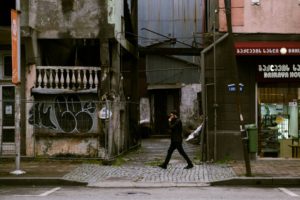
 For thousands of vulnerable Georgians, poverty is not an abstract concept; it directly means an empty refrigerator, untreated illness or aging alone. The Chernovetskyi Fund tries to close these gaps by giving concrete help and necessary aid to those living in unfortunate circumstances and who poverty inflicts most severely.
What Is the Chernovetskyi Fund?
The Chernovetskyi Fund is one of Georgia’s largest private charitable organizations, launched by philanthropist Leonid Chernovetskyi in April 2012. The organization works to support Georgians struggling to meet basic needs due to income insecurity, illness, disability or age. The Fund’s mission focuses on supporting socially vulnerable groups, including those living below the poverty line, large families and the most vulnerable individuals facing illness, including children and adults.
Its programs are rooted in practical assistance that meets immediate needs while upholding dignity.
Home Care for the Elderly and Bedridden
The Fund’s most consequential program includes home care for older people and bedridden. Caregivers help beneficiaries perform their daily chores, including cleaning, food preparation and taking medicine. The program helps reduce health risks and helps families who can’t afford private care.
The home care initiative protects older adults from medical emergencies or institutionalization in homes and communities.
Family-Type Orphanages and Child Protection
Children who lack parental care are significantly less likely to achieve upward mobility in life and far more likely to experience long-term poverty. According to a report, children raised in unstable family environments face higher levels of social exclusion, poorer educational outcomes and greater economic disadvantage later in life. The Chernovetskyi Fund addresses this issue by supporting family-type orphanages that provide children with stable housing, education and emotional support.
Unlike large institutional settings, these homes offer a family-based environment that leads to stronger long-term outcomes and a lower risk of poverty in adulthood.
Day Centers, Canteens and Social Patrols
Food insecurity is still a daily fact for many low-income Georgians. The Fund has day centers and canteens that serve hot food to older people, people with disabilities and people without homes. Social patrol teams broaden this outreach and help locate individuals requiring immediate support.
By carrying out outreach in neighborhoods and public spaces, these teams make sure that people who do not choose to seek assistance still obtain it. This strategy not only protects against devastating deprivation but also against social isolation itself. In addition to well-defined initiatives, the Chernovetskyi Fund provides direct assistance, including food parcels, medications and household items.
Staff members assess each case individually to match aid with specific needs, ensuring appropriate support. For chronically ill children or adults caring for children, medical expenses can push families deeper into poverty. Targeted aid and caregiving help cover these costs, enabling caregivers to remain employed while keeping the household intact.
Scale and Measurable Impact
The Chernovetskyi Fund has provided more than $9 million for social assistance initiatives since its inception. In other words, thousands of vulnerable people across Georgia have benefited from its programs. The Fund’s scale enables it to respond quickly to crises while also delivering long-term support.
Reliable funding ensures continuity of care, which is crucial for addressing chronic poverty rather than offering only short-term relief.
Success Stories
Six-year-old Anna-Maria grew up in a family struggling with both poverty and illness. According to the Chernovetskyi Fund, her home once lacked consistent access to food and basic supplies, making everyday life a challenge for her and her family. After the Fund provided targeted assistance, including food, clothing and essential household items, Anna-Maria’s mother began to recover from the health issues that had heavily burdened the household.
The most joyful change came from Anna-Maria herself: she thanked supporters for helping her mother and shared, “Now she laughs and plays with me,” a profound shift from their earlier hardships.
Three young siblings—Tornike, Lazare and Luka—represent another heartwarming example of the Chernovetskyi Fund’s impact. According to the organization, the boys once lived in conditions of hardship and uncertainty. With the Fund’s support, they received essential care, meals and family outreach services that helped stabilize their home life.
Today, the brothers are healthy and happy, participating in family and community activities that poverty had once made out of reach.
Many elderly Georgians face poverty and loneliness, especially without family support or sufficient income. The Chernovetskyi Fund has reached people like Grandma Oliko and Grandpa Givi, who once lived with daily uncertainty and minimal access to care. The Fund provided regular food assistance, companionship through social visits and coordinated support that helped them remain safely in their home.
Staff and volunteers report that the couple is deeply grateful, not only for the material aid but also for the dignity and respect that come from sustained attention and care.
These personal stories show how a charity like the Chernovetskyi Fund can go beyond statistics to create real change in people’s lives. From a child’s laughter to a family finding peace and from elderly neighbors feeling seen to receiving care, the Fund’s work demonstrates a key lesson: when communities and donors engage in targeted, human-centered support, poverty becomes less permanent and more preventable.
Each example reflects the Fund’s core mission—to ensure that no one in Georgia is left behind in accessing food, health care, shelter or social support—and highlights how individual lives can improve when everyday kindness is paired with organized action.
A Compassionate Path Forward
The Chernovetskyi Fund’s work demonstrates that the most harmful effects of poverty can be mitigated when programs are targeted and human-centered. Its approach shows that dignity-focused aid, delivered consistently and at scale, can stabilize lives and strengthen communities. In the face of Georgia’s inequality and demographic challenges, the Chernovetskyi Fund plays an indispensable role.
– Salome Jincharadze
Salome is based in Tbilisi, Georgia and focuses on Good News, Politics for The Borgen Project.
Photo: Unsplash

5 Charities Operating in China
Poverty Persists
However, poverty in China has not disappeared entirely. While China has eliminated extreme poverty under the national standard of $2.30 a day, the World Bank, using a higher poverty benchmark of $8.30 a day, shows that around 15% of the population still lives in poverty, which is nearly 300 million people. Using a higher poverty standard line typical of upper-middle-income countries such as China, set at $6.85 a day, around 17% of the population still lives in poverty, with close to half living in rural areas.
Following the elimination of extreme poverty, China has shifted its focus toward the goal of common prosperity with charities operating in China playing a key role in supporting vulnerable communities and reducing inequality.
China Charity Federation
Founded in 1994, the China Charity Federation is a national nonprofit organization dedicated to poverty alleviation and helping disadvantaged and vulnerable groups across Chinese society.
The Federation assists people living in poverty or facing other difficulties through a wide range of initiatives, including emergency relief, elderly and orphan assistance, as well as medical and educational aid. Over the years, it has raised more than 160 billion yuan ($ 22.4 billion) in charitable funds, benefiting tens of millions of people.
The Happy Home Village and Community Mutual Aid Project provides rural villages with a digital platform to raise and manage funds for projects supporting poverty alleviation, rural revitalization and community development. Beyond fundraising, the project also provides volunteers to support children, the elderly, the poor and other groups requiring assistance.
Red Cross Society of China
The Red Cross Society of China is part of the International Federation of Red Cross and Red Crescent Societies (IFRC), the world’s largest humanitarian network. It aims to protect human life and health, safeguard human dignity and promote peace and progress. The society provides emergency relief and humanitarian assistance in emergencies, such as war or natural disasters.
Following the 2008 Sichuan Earthquake, the organization raised funds, collected supplies and distributed aid, clothing and emergency items. It also supported the reconstruction of homes for vulnerable families, providing training and financial assistance to help them rebuild earthquake-resistant houses. In addition, it implemented programs to help families generate income and recover economically, while building disaster preparedness systems to strengthen communities’ capacity to respond to future emergencies.
China Foundation for Rural Development
The China Foundation for Rural Development focuses on tackling the root causes of rural poverty. One major challenge it addresses is child malnutrition in rural areas, where many students lack access to balanced meals or to meals at all. The problem is that many schools do not have the necessary equipment to prepare nutritious meals, and many communities are unaware of the importance of proper nutrition.
Its Nutritious Meals Program aims to improve rural children’s nutrition by providing a daily serving of milk and eggs to students, equipping schools with kitchen facilities and equipment and offering nutrition training and education for parents and teachers. Since 2008, the program has delivered around 57 million nutritious meals to more than 1 million children and established approximately 2,000 “Love Kitchens.”
The Amity Foundation
The Amity Foundation is an independent Chinese organization committed to public health, social welfare and community development. One of its programs focuses on the education of young people in rural areas, aiming to provide students in underdeveloped regions with access to equal educational opportunities. This initiative seeks to provide educational equity by improving access to quality education and creating supportive learning environments. Schools benefit from upgraded infrastructure, along with sports and learning equipment, to support both academic and physical development. The program places particular emphasis on supporting orphans and girls, for example, by offering financial aid to female college students. It helps students return to school and supports university students in completing their studies. Amity’s work contributes to multiple Sustainable Development Goals (SDGs) by fostering inclusive, continuous and holistic education for disadvantaged children in China.
One Foundation
Founded in 2007, One Foundation is dedicated to public welfare for all, focusing on three main areas: disaster relief, childcare and development and public welfare support and innovation.
Its Water Purification Plan aims to improve drinking water conditions in rural school campuses by providing water, purification equipment, drinking cups and water and health education to students and staff.
Coca-Cola partnered with the initiative by creating a bottled water brand that supports providing clean drinking water to rural schoolchildren. Under the slogan: “Drink Good, Do Good,” their sales supported One Foundation’s efforts to build water facilities and improve access to safe water in rural areas.
The Path to Common Prosperity
Charities operating in China play a vital role in supporting vulnerable communities, providing education, healthcare, nutrition, disaster relief and other essential services. Their work helps reduce inequality and lays the groundwork for the country’s broader goal of common prosperity.
China has made common prosperity, a society in which wealth and opportunity are widely shared, a central policy objective. The country aims to make significant progress by 2035 and fully realize this vision by 2050. Xi Jinping has described common prosperity as transforming China’s current income distribution, which he compares to a pyramid, with many poor people at the bottom and a few very rich, into the shape of an olive with very few people at either extreme and a more balanced distribution of wealth. Key strategies include implementing rural revitalization and urbanization initiatives, ensuring equal access to basic services such as health care and education, revitalizing underdeveloped regions and supporting low-income individuals facing special difficulties. Common prosperity aims to reduce the wealth gap between China’s rich and poor.
– Jeanne Pellet
Photo: Unsplash
How Internet Access in the Solomon Islands Reduces Poverty
Limited electricity further worsens the situation, as many rural schools are not connected to a stable power grid and depend on generators or solar systems to operate basic technology. Teachers working in these communities often face severe resource shortages. They must adapt their lessons creatively without access to modern teaching tools.
Why Internet Access Remains Uneven
The Solomon Islands comprise hundreds of islands scattered across a vast oceanic area, making infrastructure development challenging and costly. Although fiber-optic cables now connect some provincial centers, many outer islands still rely on slower satellite-based connections. This uneven development has created a digital divide in which urban communities experience stronger connectivity while rural areas remain largely offline.
As a result, internet access in the Solomon Islands varies sharply depending on geography.
How Digital Exclusion Deepens Poverty
More than 25% of the Solomon Islands’ population lives below the poverty line, with more than 80% of those affected residing in rural areas. Limited internet access prevents many families from using digital financial services such as e-wallets and electronic transfers. In regions where bank branches are scarce or nonexistent, poor connectivity makes it difficult for households to save money, receive remittances or build financial security.
Small businesses, women and young entrepreneurs also struggle to reach broader markets or adopt digital payment systems, which limits their income growth and innovation. Students face similar challenges, as weak digital infrastructure hinders their ability to acquire the skills necessary for future employment.
The Solomon Islands government has identified digital transformation as a key pathway toward inclusive economic development. Its ICT in Education Master Plan aims to connect schools to the internet and equip them with computer labs to support digital learning. Earlier initiatives, such as the Distance Learning Centers Project, expanded satellite-based internet access to rural schools and community centers.
Together, these efforts help reduce isolation by improving affordable access to information and communication technologies.
Evidence of Progress and Future Impact
Improved connectivity has supported platforms such as the iResource online portal, which distributes educational materials digitally across the country’s islands. The national curriculum directly links digital skills to self-reliance and paid employment, showing how technology supports improved living standards. Expanded internet access in the Solomon Islands also improves the growth of an inclusive digital economy that benefits women, youth and small businesses.
By continuing to invest in digital infrastructure, the Solomon Islands can reduce geographic isolation and create new opportunities to help families lift themselves out of poverty.
Conclusion
Better internet access in the Solomon Islands can make a real difference for people living in remote areas. When communities can access the internet, students have more opportunities to learn, families can utilize basic financial services and small businesses have a better chance to grow. These changes may seem small, but together they can help reduce poverty over time.
By continuing to expand internet access, the Solomon Islands can give more people the tools they need to improve their lives and build a more connected future.
– Aila Alsakka
Photo: Pixabay
How the Chernovetskyi Fund Supports Georgia’s Vulnerable
What Is the Chernovetskyi Fund?
The Chernovetskyi Fund is one of Georgia’s largest private charitable organizations, launched by philanthropist Leonid Chernovetskyi in April 2012. The organization works to support Georgians struggling to meet basic needs due to income insecurity, illness, disability or age. The Fund’s mission focuses on supporting socially vulnerable groups, including those living below the poverty line, large families and the most vulnerable individuals facing illness, including children and adults.
Its programs are rooted in practical assistance that meets immediate needs while upholding dignity.
Home Care for the Elderly and Bedridden
The Fund’s most consequential program includes home care for older people and bedridden. Caregivers help beneficiaries perform their daily chores, including cleaning, food preparation and taking medicine. The program helps reduce health risks and helps families who can’t afford private care.
The home care initiative protects older adults from medical emergencies or institutionalization in homes and communities.
Family-Type Orphanages and Child Protection
Children who lack parental care are significantly less likely to achieve upward mobility in life and far more likely to experience long-term poverty. According to a report, children raised in unstable family environments face higher levels of social exclusion, poorer educational outcomes and greater economic disadvantage later in life. The Chernovetskyi Fund addresses this issue by supporting family-type orphanages that provide children with stable housing, education and emotional support.
Unlike large institutional settings, these homes offer a family-based environment that leads to stronger long-term outcomes and a lower risk of poverty in adulthood.
Day Centers, Canteens and Social Patrols
Food insecurity is still a daily fact for many low-income Georgians. The Fund has day centers and canteens that serve hot food to older people, people with disabilities and people without homes. Social patrol teams broaden this outreach and help locate individuals requiring immediate support.
By carrying out outreach in neighborhoods and public spaces, these teams make sure that people who do not choose to seek assistance still obtain it. This strategy not only protects against devastating deprivation but also against social isolation itself. In addition to well-defined initiatives, the Chernovetskyi Fund provides direct assistance, including food parcels, medications and household items.
Staff members assess each case individually to match aid with specific needs, ensuring appropriate support. For chronically ill children or adults caring for children, medical expenses can push families deeper into poverty. Targeted aid and caregiving help cover these costs, enabling caregivers to remain employed while keeping the household intact.
Scale and Measurable Impact
The Chernovetskyi Fund has provided more than $9 million for social assistance initiatives since its inception. In other words, thousands of vulnerable people across Georgia have benefited from its programs. The Fund’s scale enables it to respond quickly to crises while also delivering long-term support.
Reliable funding ensures continuity of care, which is crucial for addressing chronic poverty rather than offering only short-term relief.
Success Stories
Six-year-old Anna-Maria grew up in a family struggling with both poverty and illness. According to the Chernovetskyi Fund, her home once lacked consistent access to food and basic supplies, making everyday life a challenge for her and her family. After the Fund provided targeted assistance, including food, clothing and essential household items, Anna-Maria’s mother began to recover from the health issues that had heavily burdened the household.
The most joyful change came from Anna-Maria herself: she thanked supporters for helping her mother and shared, “Now she laughs and plays with me,” a profound shift from their earlier hardships.
Three young siblings—Tornike, Lazare and Luka—represent another heartwarming example of the Chernovetskyi Fund’s impact. According to the organization, the boys once lived in conditions of hardship and uncertainty. With the Fund’s support, they received essential care, meals and family outreach services that helped stabilize their home life.
Today, the brothers are healthy and happy, participating in family and community activities that poverty had once made out of reach.
Many elderly Georgians face poverty and loneliness, especially without family support or sufficient income. The Chernovetskyi Fund has reached people like Grandma Oliko and Grandpa Givi, who once lived with daily uncertainty and minimal access to care. The Fund provided regular food assistance, companionship through social visits and coordinated support that helped them remain safely in their home.
Staff and volunteers report that the couple is deeply grateful, not only for the material aid but also for the dignity and respect that come from sustained attention and care.
These personal stories show how a charity like the Chernovetskyi Fund can go beyond statistics to create real change in people’s lives. From a child’s laughter to a family finding peace and from elderly neighbors feeling seen to receiving care, the Fund’s work demonstrates a key lesson: when communities and donors engage in targeted, human-centered support, poverty becomes less permanent and more preventable.
Each example reflects the Fund’s core mission—to ensure that no one in Georgia is left behind in accessing food, health care, shelter or social support—and highlights how individual lives can improve when everyday kindness is paired with organized action.
A Compassionate Path Forward
The Chernovetskyi Fund’s work demonstrates that the most harmful effects of poverty can be mitigated when programs are targeted and human-centered. Its approach shows that dignity-focused aid, delivered consistently and at scale, can stabilize lives and strengthen communities. In the face of Georgia’s inequality and demographic challenges, the Chernovetskyi Fund plays an indispensable role.
– Salome Jincharadze
Photo: Unsplash
5 Facts About Education in Iran
Yet, even in a fast-paced, tech-driven world, literacy remains an important skill. Many countries continue to struggle to provide children with safe and effective education. In recent years, Iran has taken steps to strengthen its education system, introducing several reforms aimed at improving learning outcomes.
With that being said, here are a few facts about education in Iran:
Literacy Rates
As of 2023, the literacy rate in Iran is relatively the same for both men and women. According to a study by the World Bank Group, women, specifically those aged 15 to 24, have a literacy rate of 99%. Currently, this represents the country’s peak literacy rate for this group, with the lowest rate recorded at 42% in 1976.
Similarly, the literacy rate among men in Iran mirrors that of women. As of 2023, men, specifically those aged 15 to 24, had a literacy rate of 99%. The lowest literacy rate among men in Iran was 71% in 1976.
With that data in mind, historically, Iranian women have had a lower literacy rate than men, with a 29% gap between the two groups. In another study by UNESCO, in 2019, it was reported that around 2% of Iranians, particularly those under the age of 24, were considered to be “absolute illiterates.” Of course, with the newly presented data, this statistic may not be as accurate following the release of the World Bank Group’s 2023 literacy data.
Low Education Funding
Education in Iran is very underfunded. The National Council of Resistance in Iran reports that the annual salary or the amount of money earned by Iranian teachers in a year, is less than $2,000, even below the international wage average in the country. This may be the contributing factor to the current national teacher shortage.
After completing mandatory primary education (ages 6–11), students spend three years in a guidance cycle designed to assess their academic strengths and determine which vocational track they will follow in high school. These tracks may be academic, vocational or science-based.
Unsafe Learning Environments
Budget cuts affect far more than teachers’ salaries. Beyond staff shortages caused by low pay, many schools struggle to provide safe learning environments. Issues range from unsafe transportation, sometimes resulting in the deaths of school-aged children, to poor infrastructure, including faulty heating systems and collapsed walls.
In rural areas, classes are often held in mud huts, temporary shelters or tents, creating additional health and safety risks for students.
What’s To Come?
The U.N.’s Convention on the Rights of the Child calls on Iranian authorities to guarantee every child’s right to education on an equal basis. It urges the government to make primary education fully free and to expand access to secondary education, providing more opportunities without cost to children or their families.
– Megan Akers
Photo: Flickr
All About Higher Education in Chile
Workers with higher education earn 112% more than the average income in Chile. Education level is a widely recognized social determinant of health and the completion of higher education is associated with more positive health outcomes.
Inequality in Higher Educational Attainment
In Chile, disparities in tertiary education attainment are closely linked to social factors, including parental education, socioeconomic status and gender. Children of parents who have completed tertiary education are more likely to pursue higher education than those whose parents have not. In 2023, 68% of adults aged 25-34 with at least one parent who had completed tertiary education also attained tertiary education, compared to 25% for adults whose parents did not complete tertiary education.
However, the rate of young adults pursuing tertiary education whose parents did not complete tertiary education increased by 7% between 2012 and 2023. Higher family socioeconomic status is also associated with an increased likelihood of completing higher education. In 2006, 12.7% of adults aged 25-34 from the lowest income decile enrolled in tertiary education, compared to 53.3% of the top income decile.
Furthermore, women enrolled in tertiary education are less likely to pursue a degree in STEM and other high-earning fields of study. In 2023, only 19.8% of students pursuing degrees in a STEM field were female.
A Largely Privatized System
Chile’s higher education system consists of three main types: universities, professional institutes (Instituto Profesional – IP) and technical training centers (Centro de Formación Técnica – CFT). While overall enrollment in tertiary education has continued to rise, the majority of growth since 2010 has occurred in private institutions. As a result, Chile has one of the most privatized higher education systems in the world.
In 2023, fewer than 20% of students enrolled in a tertiary education institution attended a public institution. Hence, Chilean families pay more than 75% of costs for higher education, compared to 40% for U.S. families and 5% in Scandinavian countries.
Gratuidad
A notable wave of protests demanding more affordable, high-quality higher education in Chile occurred in 2011. In 2016, the Chilean congress passed a tuition-free policy known as gratuidad to provide free university education for families in the bottom 60% of the income range. A lack of studies on the impact and effectiveness of gratuidad makes its success in creating a more equitable tertiary education system unclear.
The reform’s implementation has initiated slow progress toward expanding access to financial aid for low-income students, as approximately 90% of students who qualify have already received financial aid before the reform. However, the idea of free education likely incentivizes people from low-income families to pursue higher education, as 15% of students in the gratuidad program claim they would not have pursued higher education otherwise.
Conclusion
Attaining a higher education in Chile reduces the likelihood of living in poverty. Creating a more equitable and inclusive education system is key to reducing the 6.5% of Chile’s population living below the national poverty line. Expanding access to tertiary education for individuals from lower socioeconomic backgrounds and those whose parents lack tertiary education, as well as increasing the representation of women in STEM fields, are key focal points for reducing poverty.
– Sarah Merrill
Photo: Pixabay
Health Effects of Poverty on the Elderly
Income Insecurity Among Older Adults
According to the World Bank, poverty remains widespread in many low- and middle-income countries, where social protection systems are often weak or underdeveloped. Older adults in these settings are particularly vulnerable because many no longer participate in the workforce and lack reliable sources of income. Without pensions or savings, elderly individuals may struggle to afford basic necessities, placing them at higher risk of poor health outcomes.
Barriers to Health Care Access and Malnutrition
Limited access to health care is one of the most serious health effects of poverty on the elderly. The World Health Organization (WHO) reports that health systems in many developing countries face challenges such as insufficient funding, limited infrastructure and shortages of health care workers. These systemic issues can make it difficult for older adults to receive regular medical attention, particularly for chronic conditions that require ongoing care.
Beyond physical health, poverty also affects mental and social well-being in old age. The absence of adequate social protection can lead to isolation, stress and reduced quality of life. According to the United Nations Department of Economic and Social Affairs, social pensions and income support programs play a critical role in protecting older adults from extreme poverty and improving overall well-being.
Food insecurity is another major concern linked to elderly poverty. The United Nations notes that older adults living in poverty are more likely to experience malnutrition due to limited access to nutritious food. Malnutrition weakens immune systems, increases susceptibility to illness and slows recovery, further worsening health outcomes for elderly populations living in poverty.
Global Efforts to Address Elderly Poverty
International organizations are working to address these challenges through policy support and health system strengthening. The WHO collaborates with national governments to improve primary health care systems, aiming to expand access to essential health services for vulnerable populations, including older adults. While these initiatives do not always target the elderly exclusively, strengthening health systems can indirectly improve access to care for aging populations.
Looking Ahead
The health effects of poverty on the elderly highlight the need for stronger social protection systems and accessible health care services worldwide. As global populations continue to age, addressing elderly poverty will remain essential to improving public health outcomes and ensuring that older adults can live with dignity. Expanding income support, improving access to medical care and strengthening health systems are critical steps toward reducing health disparities among elderly populations.
– Nishanth Pothapragada
Photo: Flickr
A Bright Future For Ecotourism In Madagascar
A Quick Background on Madagascar
Madagascar suffers from environmental challenges and a struggling economy. It has the sixth-highest national poverty rate in the world at 63.9%. The country is famous for its rich biodiversity, with 90% of its plants and 85% of its animals being endemic to the island. Some well-known species endemic to Madagascar are the lemurs, and approximately 80% of the world’s chameleon species are found in Madagascar.
Madagascar is among the countries with the highest deforestation rates in the world, with some regions and protected areas experiencing annual forest loss rates of around 2–3% in recent years due to agricultural expansion and illegal logging. Deforestation affects the environment and causes massive habitat loss, which threatens biodiversity due to potential species extinction. Almost all of Madagascar’s lemur species are either endangered or critically endangered, according to the Duke Lemur Center. Agriculture makes up 70% of total employment, but low agricultural productivity and insufficient resources cause eight out of 10 people residing in rural communities to live in poverty.
What Is Ecotourism?
The International Ecotourism Society defines ecotourism as “responsible travel to natural areas that conserves the environment, sustains the well-being of the local people, and involves interpretation and education.” Principles of ecotourism include minimizing impact on the area in use, promoting environmental and cultural awareness and respect, financially benefitting conservation efforts and local communities and partnering with the indigenous people.
The Need For Ecotourism In Madagascar
Ecotourism alleviates poverty by increasing wages, creating jobs and improving the economy. Tourism provides jobs for tour guides, tour company administrators, hotel staff and restaurant staff. Tour and resort administrative and general positions are not the only job opportunities created by tourism. Communities local to these parks and reserves benefit economically from shops, crafts and other goods supporting the tourism industry, encouraging the creation of small businesses by community members. It also alleviates the burden of poverty in villages surrounding parks and reserves by providing services including electricity, water and educational opportunities.
This kind of tourism offers an economic incentive to conserve the environment by generating revenue and employment without causing significant environmental damage. Supplying a tangible value to ecosystems leads to increased protected natural areas and safeguards areas without formal protection from deforestation and exploitation of natural resources.
Ecotourism in Madagascar safeguards biodiversity by protecting the habitats of its wildlife and preventing the extinction of endangered species. Establishing parks and reserves ensures protection for any wildlife in the area and their habitat. Tourists pay to see the rich biodiversity of Madagascar, adding tangible value to the wildlife and their homes.
Wildlife Madagascar
The Wildlife Madagascar organization partners with Malagasy communities to protect biodiversity while improving the livelihoods of community members. The community-based approach integrates local knowledge and experience with scientific and educational knowledge to create sustainable conservation solutions. Wildlife Madagascar educates farmers on optimal agricultural and forestry practices to improve food security and sustain natural resources. The organization also establishes sustainable and responsibly-managed ecotourism programs in communities to improve livelihoods and protect biodiversity.
Lemur Conservation Network
The Lemur Conservation Network works in Madagascar to save lemurs from extinction. Lemurs are the most endangered mammals in the world, with 98% of lemur species at risk of extinction and 31% critically endangered. The Network believes ecotourism to be a “win-win-win” for tourists, Malagasy citizens and lemurs, and provides grants and donations to ecotourism projects in Madagascar.
Community-Run Reserves
Communities across Madagascar establish their own community-run reserves to protect their natural areas and economically benefit from ecotourism. A member of the Betsileo tribe in southern Madagascar founded the Anja Reserve, which is popular for their ring-tailed lemurs. The Antanatiembo Reserve in the north is a locally-owned reserve comprising a dense bamboo forest housing bamboo lemurs, chameleons, insects and birds and a reforestation tree nursery.
Conservation Debates: Is Ecotourism Worth It?
Those against environmental conservation in Madagascar argue the legitimacy of protected areas without consent from locals and highlight the potential eviction of locals from newly established protected areas. They question whether locals can sustain their livelihood without the land they previously had unlimited access to.
In 2022, researchers conducted a study surrounding Andasibe-Mantadia National Park, Madagascar’s largest national park, to investigate the relationship between conservation and locals’ livelihoods. Their results concluded that livelihood improved for people in the surrounding villages due to the provision of jobs, electricity, water, increased income and improved education. Published in the SN Social Sciences, the study found a positive correlation between ecotourism and poverty reduction in surrounding villages.
The researchers determined that pre-existing socioeconomic inequalities within the surrounding villages caused villagers with low education and income levels to benefit less from ecotourism. Locals who speak multiple languages benefit from more employment options at the park and hotel, but to attain this education, they must attend schools outside their commune. Some villagers also reported the enforcement of stricter regulations for the collection of firewood within the forest on those without connections to the village chief or members of their community committee.
Conclusion
Ecotourism yields great benefits for the citizens, wildlife and natural areas of Madagascar. The revenue and job opportunities generated from ecotourism could alleviate poverty, improve livelihood in surrounding communities and economically incentivize the protection of wildlife and natural land areas. Malagasy people establish community-led reserves with support from conservation organizations to reap the economic benefits of ecotourism and protect their land from overexploitation of resources. In a country with a high burden of poverty and environmental challenges, ecotourism poses a multifaceted solution and a promising future.
– Sarah Merrill
Photo: Flickr
Pay-As-You-Go Digital Water Services in Kenya
Mobile Money Makes Clean Water Affordable
Pay-as-you-go digital water services in Kenya let households buy water in small increments through mobile money platforms like M-Pesa. This matters because many Kenyans earn irregular daily wages and cannot manage large monthly bills. When families pay only for what they need, they avoid debt and gain steady access to safe water, which supports health and financial stability.
Waterborne diseases spread quickly in communities that rely on unsafe sources. Pay-as-you-go digital water services in Kenya distribute treated water that meets safety standards, which reduces illness and lowers medical expenses. When families stay healthy, they attend school, work more regularly and invest their income in food and education rather than treatment costs.
Smart Meters and Water Kiosks
Smart meters record water use in real time and deliver prepaid service that prevents leaks and illegal taps. These problems create major losses for utilities and weaken their ability to maintain infrastructure. When utilities reduce losses, they provide more reliable service and reach more households with clean water, which raises community health and overall quality of life.
Families in many Kenyan settlements spend long hours each day collecting water. Digital water kiosks in neighborhoods reduce this travel time and offer 24-hour access through mobile payments. More available time allows children to attend school consistently and gives adults more hours for work, which strengthens household income and supports long-term development.
Digital Water Systems Create Jobs and Strengthen Utilities
Digital water systems create new roles for technicians, field agents and mobile service operators. These jobs build technical skills and support local employment. Stronger utilities also operate more reliably and expand service to new regions. When utilities stabilize financially, they improve infrastructure that helps entire communities gain safe water access.
Pay-as-you-go digital water services in Kenya improve clean water access by combining mobile payments with smart delivery systems. These services reduce financial barriers, improve public health and create jobs that support economic growth. As the model expands, it offers a practical path toward universal water access and long-term poverty reduction.
– Shahzeb Khan
Photo: Flickr
How Limited Rural Health Care Fuels Poverty in Laos
As a result, preventable illnesses often go untreated, which reduces household productivity and increases financial vulnerability. Addressing rural gaps through strengthened primary health services and community-based programs remains essential for reducing poverty.
Geographic Barriers and Infrastructure
Geographic isolation serves as a primary barrier to health care in Laos. The country’s mountainous terrain and limited road infrastructure leave many communities cut off from health facilities, according to the Healthy Newborn Network. In some remote areas, villages sit several days away from the nearest health center.
Approximately 3% of villages in certain provinces remain completely isolated from basic social services. Poor road conditions exacerbate these challenges during the rainy season, when travel becomes dangerous. This physical isolation contributes to low utilization of health services among remote populations, as they often have reduced expectations for service delivery.
Economic Impacts on the Rural Poor
Although Laos introduced policies to reduce financial barriers, these measures often fail to reach the poorest populations. Free health policies can be regressive when rural households cannot use services due to indirect costs, such as transportation and lost income.
Health emergencies are a primary cause of household vulnerability and poverty relapse in the country. Farming households are twice as likely to fall back into poverty compared to non-farming households when agricultural and health shocks combine. While national poverty rates declined from 33.5% to 23.2% over a decade, progress could have been greater if vulnerable households had not slipped back into poverty following health-related shocks.
Maternal Health and Intergenerational Poverty
Maternal health challenges further reinforce the cycle of poverty in Laos. High rates of adolescent pregnancy and maternal malnutrition undermine economic prospects, as approximately 40% of pregnant women experience anemia, according to the Healthy Newborn Network. Children born to mothers with lower levels of education or who are themselves stunted face a higher risk of poor health outcomes, which perpetuates an intergenerational cycle of low productivity, according to the World Bank. Strengthening health care in Laos through targeted maternal programs can break this cycle and improve long-term economic stability.
Community Health Solutions
Village Health Volunteers (VHVs) form the backbone of rural health delivery and serve as the primary link between remote communities and the formal health system, according to the BMC Health Services Research. VHVs operate in nearly every village and manage health promotion, sanitation and disease monitoring.
The CONNECT initiative, with the support from the World Health Organization (WHO) and the Ministry of Health, also strengthens trust and improves service uptake. The program currently supports 259 villages across 10 provinces by developing joint action plans with local leaders. These local solutions empower communities to take ownership of their health outcomes.
International Support for Health Care in Laos
International donors play a critical role in financing primary health care in Laos, which helps offset low domestic spending. In 2019, donor funding accounted for 26.7% of primary health care financing.
The WHO continues to support reforms such as the National Health Insurance strategy and modernization efforts. Expanding these primary health services and sustaining international funding are essential steps toward improving health outcomes and supporting long-term poverty reduction. By prioritizing these issues, global leaders can help ensure that rural populations in Laos have the tools they need to escape poverty.
Conclusion
Limited access to rural health care continues to fuel poverty in Laos by exposing vulnerable households to health shocks, financial strain and long-term economic insecurity. Geographic isolation, workforce shortages and rising costs disproportionately affect rural and ethnic minority communities, reinforcing cycles of poor health and poverty. Expanding primary health care services, strengthening community-based programs and sustaining international funding are essential steps toward improving health outcomes and supporting long-term poverty reduction in Laos.
– Aila Alsakka
Photo: Flickr
Universal Health Insurance in Egypt: Expanding Access to Care
Egypt Launched Universal Health Insurance to Expand Coverage
The Egyptian government introduced the Universal Health Insurance system in 2018 through Law No. 2 of 2018, as part of a comprehensive reform of the health sector. The law was established through a phased nationwide rollout across governorates to ensure a sustainable and realistic implementation. It additionally mandates health insurance coverage for all Egyptian citizens.
Low-income households, informal workers and vulnerable groups receive subsidized insurance premiums from the government. This grant allows millions of Egyptians to access health services regardless of their employment status.
The Universal Health Insurance emphasises primary as well as preventive care to reduce the potential long-term costs and enhance population health outcomes. The Ministry of Health has expanded several systems under the Universal Health Insurance framework such as family health units and screenings. This reform strengthens early diagnosis and treatment.
Additionally, it reduces the normative reliance on costly hospital care while simultaneously helping less affluent households avoid hefty health expenses that generally push families into poverty.
Reducing Out-of-Pocket Spending
Before implementing the Universal Health Insurance system, Egyptians primarily relied on out-of-pocket payments to finance their health care. This heavily affected low-income households, essentially forcing families to delay necessary treatment or incur debt due to these high medical costs.
The Universal Health Insurance system aims to decrease the risk of financial risk by expanding prepaid coverage and as enrollment increases, insured households face significantly less health-related expenses and improved financial security.
Poverty in the nation is heavily driven by health-related expenses as uninsured experience income loss due to treatment costs that often push low-income communities below the poverty line.
The Universal Health Insurance system helps break this vicious cycle by ensuring these families have access to affordable health care while maintaining a steady household income. Evidence indicates that insured populations are more likely to be economically stable and seek timely care, according to the World Bank.
Challenges Remain as the System Expands
Egypt continues to face challenges in implementing this health care system, despite substantial progress. Regional disparities and workforce shortages are a barrier to having the rural and underserved areas receive insurance, as they require additional infrastructure investment to ensure equitable access.
However, the government, alongside international partners continue to invest in health facility upgrades and workforce training to tackle shortages in order to strengthen nationwide service quality.
Universal Health Insurance plays a crucial role in expanding access to health care and reducing poverty in Egypt. Continued investment can further strengthen universal health insurance in Egypt and support long-term poverty reduction.
– Hana Abulkheir
Photo: Wikimedia Commons