The Productive Safety Net Program Combats Poverty in Ethiopia
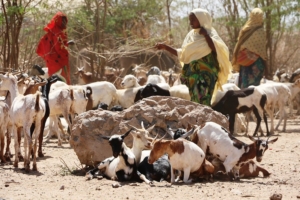 Ethiopia launched the Productive Safety Net Program (PSNP) in 2005 to reduce food insecurity and strengthen resilience to climate-related shocks. The program operates through cash transfers, public works and targeted nutrition support. According to the Climate Policy Initiative, the program reaches more than 8 million households each year, representing more than 7% of the population.
Background
The Climate Policy Initiative reports that Phase V of the PSNP began in November 2020 under the Strengthen Ethiopia’s Adaptive Safety Net Project. This project received a $200 million credit and a $312.5 million grant. It also received $430 million from USAID, $281 million from the United Kingdom’s Foreign, Commonwealth and Development Office and $600 million from the Government of Ethiopia.
This phase aims to expand the geographic scope of the program, improve PSNP implementation and strengthen disaster response efforts. These objectives support broader policy goals. According to the European External Action Service, this focuses on reducing extreme poverty in targeted rural areas and strengthening household resilience to recurrent shocks.
It also aims to prevent harmful coping mechanisms, promote sustainable livelihoods and improve food security and access to essential services for vulnerable populations.
Project Components
The PSNP includes a range of components and policies. The European External Action Service reports that this program provides cash or food payments to about seven million people who participate in public works initiatives. Participants receive benefits for up to six months while engaging in community-building tasks.
One million people identified as chronically impoverished or unable to work receive unconditional benefits for 12 months. The program implements public works projects in both livestock-based and non-livestock-based areas to protect residents from resource losses linked to poverty and disasters. These projects focus on strengthening infrastructure, improving soil and water conservation and supporting environmental protection efforts.
Some policies include developing roads and schools, planting seedlings for reforestation, preventing soil erosion and creating or rehabilitating irrigation systems. PSNP provides financial and social services to beneficiaries. This program facilitates grants and loans for farming and nonfarming activities to support poverty reduction.
This program connects beneficiaries to social support services across nutrition, health and education. The Shock Responsive Safety Net administers assistance to beneficiaries facing food insecurity, particularly those affected by droughts and other shocks.
Environmental Shocks
Environmental policy plays a key role in the PSNP. As stated by the European External Action Service, integrating climate shift adaptation into public works projects helps minimize the impact of climate shocks on food insecurity. For example, watershed rehabilitation and area closures can promote vegetation growth for livestock feed.
In addition, environmental management efforts can lessen the risk of landslides, floods and soil erosion. According to the World Bank, a significant portion of Ethiopia’s population depends on rain-fed agriculture. The country has endured recurrent droughts in previous decades, historically occurring every three to five years.
While the frequency of environmental shocks has varied over the years, they remain a consistent concern that has shaped Ethiopia’s social protection response. The World Bank further states that droughts and famines have affected millions of people over multiple periods. Environmental degradation, weak resource management and shrinking landholdings driven by constraints in policy implementation have worsened the effects of droughts.
These factors have led to the degradation of productive assets and the erosion of household and community resilience.
Economic Impacts
Programs like the Productive Safety Net Program help stabilize incomes and productive assets, enabling households to participate in local and regional markets. By reducing financial uncertainty connected to recurrent shocks, PSNP helps create a predictable economic environment that supports trade and investment. Over time, these factors can expand consumer markets and reinforce supply chains, creating trade opportunities for companies based in the U.S. and the U.K.
– Sasha Banaei
Sasha is based in San Diego, CA, USA and focuses on Business and New Markets for The Borgen Project.
Photo: Flickr
