Educational Reform in Egypt: Successes and Setbacks
 Educational reform in Egypt has encompassed various projects, collaborations and strategies aimed at achieving multiple objectives to improve the well-being of Egypt and its people. In 2012, USAID and Egypt partnered with World Learning on a $25 million project, which was later extended to $30 million in 2016, according to a 2018 USAID audit report. This project has involved a collaboration between the Egyptian Ministry of Education (MOE) and USAID to advance STEM education in Egypt.
According to Egypt’s government, Egypt established Strategic Vision 2030 in 2016, a national agenda for sustainable development across social, economic and environmental dimensions. A key intention of the strategy is to enhance the quality of life for Egyptian citizens and achieve inclusive, sustainable economic growth. In 2018, the Egyptian government introduced an educational reform program as part of Vision 2030.
Egypt’s reform program was backed by the World Bank in 2018, with a $500 million project between the two. Egypt has also established an Education Sector Plan for 2023-2037, a strategy outlined to effectively transform Egypt’s educational system.
Reform Goals
The investment and prioritization of educational reform in Egypt underscores the intrinsic importance of education within the broader context of sustainable development, enhancing lives and reducing poverty. According to 2021 World Bank Data, the poverty rate (the percentage of the population that lives below the national poverty line) in Egypt is 33.5%. According to the World Bank, education is “one of the strongest instruments for reducing poverty and improving health, gender equality, peace and stability.”
By working to improve educational outcomes, Egypt enhances the country’s economic and social standing, as well as that of its population. Egypt’s educational reform occurs within the context of a contemporary job market where employees require skills that traditional education systems have been unable to provide. A major goal of the project is to transform the examination system into one that fosters analytical and critical thinking skills, better equipping students for career success.
A feature story published by the World Bank includes testimony from a secondary student in Egypt. They say the new examination system has given them a greater sense of personal responsibility for their education and the ability to apply their learning to real-world situations. The student states, “My father is ill; sometimes my biology readings enable me to help him.”
Other goals of educational reform in Egypt include improving access to and the quality of early childhood education, expanding access and use of education technology and “enhancing the capacity of teachers and education leaders.”
Persistent Challenges
While there have been several victories for educational reform in Egypt, challenges endure as well. According to Egypt’s 2023-2027 Education Sector Plan, some of the setbacks include: overcrowding and insufficient infrastructure in schools, a shortage of fully trained and qualified teachers and gaps in educational participation across different demographic groups. According to the report, Egyptian students rank low in foundational knowledge and skills internationally.
These setbacks underscore the need for ongoing reform and adaptable strategies. Though challenges may prove persistent, Egypt’s strides in educational reform show the potential of such reform projects.
Project Successes
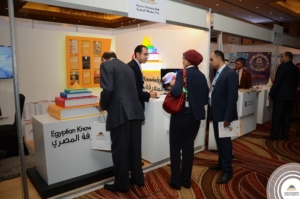
University of Illinois professor Linda Herrera documented the ongoing reform of Egypt’s educational system, recognizing the digital transformation of education in Egypt. According to Herrera, in 2016, the Egyptian Knowledge Bank was established, featuring 120 databases, videos, books and other materials. The online library is accessible free of charge to anyone with an Egyptian ID.
Herrera notes the significance of this reform when considering Egypt’s greater context: it is the largest country in the Arab world by population, with a major influence on other Arab countries. According to Herrera, Egypt is an exporter of teachers, learning materials and ideas to its Arab neighbors. What Egypt does to bolster its own education system can have a reverberative effect across an entire region.
Summary
The successes of the educational reform in Egypt have been a result of several projects and partnerships, including with the U.S. According to the 2018 USAID audit report, USAID’s collaboration with MOE resulted in nine STEM schools being established in Egypt by 2016, surpassing the initially expected three to five schools. The report states that this is a testament to MOE’s capability not only to implement but also to advance and replicate the STEM model.
In 2017, numerous STEM students in Egypt participated in local and international science competitions and many received international scholarships or were placed in exchange programs. The fact that there had been no students achieving such things previously shows the impact of Egypt’s advancements in STEM education. Subsequently, the Egyptian Government planned to open more STEM schools in each of the 27 governorates, indicating the program’s staying power and potential for expansion.
– Emma Kelsey
Emma is based in St. Paul, MN, USA and focuses on Good News and Global Health for The Borgen Project.
Photo: Wikimedia Commons
