 Coffee consumers are all around the world. Currently, the United Kingdom (U.K.) consumes about 95 million cups daily. Globally, the demand for coffee is increasing by 2.2% per year. Presently, the import of coffee is soaring. This is especially seen with the quantity of coffee beans.
A main coffee-producing country is Indonesia. Indonesia’s reliance on the coffee industry is crucial. It exported a total of $1.58 billion of coffee in 2024. Indonesia’s biggest buyer is the United States (U.S.). With a total of $302 million made, this shows the popularity of the coffee industry. This is seen significantly in North America.
Indonesia’s coffee trade originated in 1711. This started when the Dutch East India Company sent its first export from Java to Europe. From this, it made significant profits. Therefore, this influenced the rise of the coffee industry. Currently, Indonesia is ranked as the fifth-largest coffee provider globally.
Background on Poverty in Indonesia
The problem of inequality has put many in poverty. There is a large wealth gap between the rich and the general population of Indonesia. Increasing inequality hinders economic development. Wealthier individuals often have better access to basic services, while others do not.
Rural areas suffer more than urban areas. Alongside women who earn low wages, they also suffer from inadequate basic services. Rural areas have limited availability of electricity and insufficient roads. The education system faces challenges through barriers and restricted funds. Consequently, this increases challenges within the agricultural sector.
Positives and Negatives in the Production of Palm Oil
Palm oil is an important point in Indonesia’s agricultural production. Around 57% of its production comes from Indonesia. It is also found in vegetable oil, cosmetics, processed food and more. Economically, this has helped the wealth of Indonesia. However, this has had some negative impacts.
This has pressured some children in Indonesia into child labor. Besides this, they suffer from unequal conditions. The increase in child labor is due to them being paid less. Although Indonesia has child labor restrictions, it is estimated that 1.01 million children participated in labor.
Another factor that is impacting this is the rural setting and private farming. This restricts education and increases poverty. Agriculture is a hard career in which to control child labor. Although Indonesia was one of the first countries in Asia to have restrictions and create national legislation. The minimum age of employment is 15 years old.
Indonesia’s Importance in Agriculture
Indonesia relies heavily on agriculture. This is seen to be rising in popularity. Through reaching $29.6 billion in 2024, higher than in 2022, it presents its dependence on this trade. Many agricultural products are becoming more popular.
Indonesia’s variety of sources is vital worldwide. More than 60% of the sector is involved with the agricultural industry. This therefore shows the reliance of the agriculture sector on its income.
Agriculture is needed globally. This helps countries worldwide and the economic development of Indonesia. It provides food security and job opportunities. Agriculture provides many positive effects. This also provides growth in industrial development and builds closer communities. A main part of this trade is farming, which is the main source of agriculture.
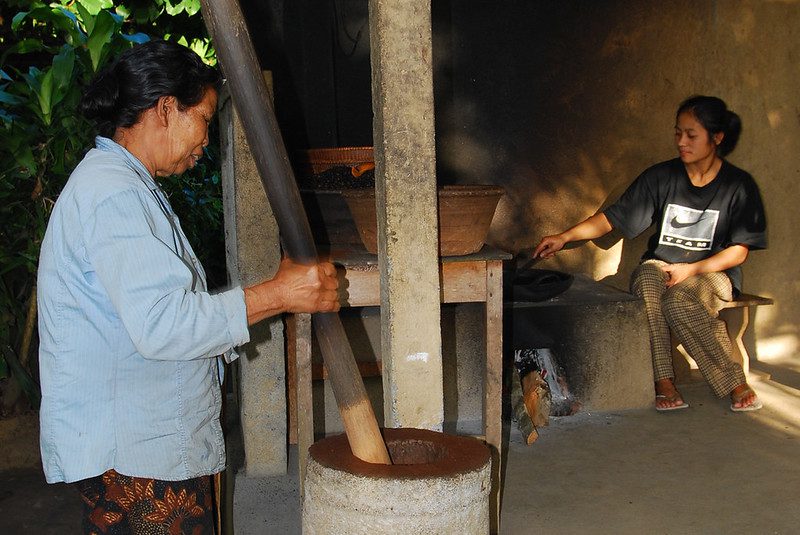
A hidden step before the craft of coffee is the production of coffee beans. Although the people working are not always treated fairly. Indonesia’s reliance on the coffee industry is crucial, as it supports 1.8 million families. However, they do not even earn $0.50 per cup.
Mainly in the “bean belt,” coffee production occurs in more than 50 countries. Even with this major working industry, many people suffer. With 17 countries having recorded child labor, this highlights some negatives. Through the threat of poverty, people are pressured to work. Alongside this, the production of coffee and agriculture can be challenging. This also has implications for the environment.
Another downfall is the hardships farmers face. Factors such as irregular weather patterns, the threat of pests and the sensitive nature of coffee plants make the growth of coffee more challenging. Coffee production and agriculture depend on the quality of their environment. However, there are some ways to solve these difficulties.
Physical Solutions
Even with some hardships, there are some physical solutions. This helps with agriculture, especially regarding the production of coffee.
Improving soil quality is an important factor. This is done by cover cropping and applying compost. By protecting soil quality and growth, this allows a sustainable environment for crops.
Agroforestry integration is another solution. This is when trees play a role in farming. Trees would provide shade, control temperature and support biodiversity. Not only would this help crops, but it would also help surrounding species.
Increasing biodiversity is crucial. From maintaining plants to supporting living organisms, these act as natural pest control. This environmentally friendly method is beneficial because pests are a consistent challenge. Water control is fundamental. This helps to stabilize soil, increase infiltration and control surface runoff. The management of water will help crops grow healthier and stronger.
Practical Solutions to Help Coffee Farmers
Indonesia’s coffee consumption has grown significantly. Tripling since before the pandemic shows Indonesia’s important role in the industry. There are practical solutions that buyers can follow to support farmers more. Some simple steps, such as choosing, donating and educating are key ways to implement this.
Choosing fair trade coffee is a small change, but it helps ensure a fairer wage. This helps provide a more stable income for farmers. A fairer wage would increase the quality of life for many families. About 37,000 products are sold in more than 140 countries, showing its success.
Donating to organizations is another step that can support equality in communities and human rights. Funds donated can support training and bring more job opportunities. This is supported by fair trade programs, where approximately 2 million farmers are involved.
Education is also vital. Knowledge about the hardships farmers face can increase advocacy. This helps improve policies and influences fair trade. This can support a healthier future for farmers and the economy.
– Daisy Sheena
Daisy is based in Manchester, UK and focuses on Technology and Solutions for The Borgen Project.
Photo: Flickr

Indonesia’s Reliance on the Coffee Industry
A main coffee-producing country is Indonesia. Indonesia’s reliance on the coffee industry is crucial. It exported a total of $1.58 billion of coffee in 2024. Indonesia’s biggest buyer is the United States (U.S.). With a total of $302 million made, this shows the popularity of the coffee industry. This is seen significantly in North America.
Indonesia’s coffee trade originated in 1711. This started when the Dutch East India Company sent its first export from Java to Europe. From this, it made significant profits. Therefore, this influenced the rise of the coffee industry. Currently, Indonesia is ranked as the fifth-largest coffee provider globally.
Background on Poverty in Indonesia
The problem of inequality has put many in poverty. There is a large wealth gap between the rich and the general population of Indonesia. Increasing inequality hinders economic development. Wealthier individuals often have better access to basic services, while others do not.
Rural areas suffer more than urban areas. Alongside women who earn low wages, they also suffer from inadequate basic services. Rural areas have limited availability of electricity and insufficient roads. The education system faces challenges through barriers and restricted funds. Consequently, this increases challenges within the agricultural sector.
Positives and Negatives in the Production of Palm Oil
Palm oil is an important point in Indonesia’s agricultural production. Around 57% of its production comes from Indonesia. It is also found in vegetable oil, cosmetics, processed food and more. Economically, this has helped the wealth of Indonesia. However, this has had some negative impacts.
This has pressured some children in Indonesia into child labor. Besides this, they suffer from unequal conditions. The increase in child labor is due to them being paid less. Although Indonesia has child labor restrictions, it is estimated that 1.01 million children participated in labor.
Another factor that is impacting this is the rural setting and private farming. This restricts education and increases poverty. Agriculture is a hard career in which to control child labor. Although Indonesia was one of the first countries in Asia to have restrictions and create national legislation. The minimum age of employment is 15 years old.
Indonesia’s Importance in Agriculture
Indonesia relies heavily on agriculture. This is seen to be rising in popularity. Through reaching $29.6 billion in 2024, higher than in 2022, it presents its dependence on this trade. Many agricultural products are becoming more popular.
Indonesia’s variety of sources is vital worldwide. More than 60% of the sector is involved with the agricultural industry. This therefore shows the reliance of the agriculture sector on its income.
Agriculture is needed globally. This helps countries worldwide and the economic development of Indonesia. It provides food security and job opportunities. Agriculture provides many positive effects. This also provides growth in industrial development and builds closer communities. A main part of this trade is farming, which is the main source of agriculture.
A hidden step before the craft of coffee is the production of coffee beans. Although the people working are not always treated fairly. Indonesia’s reliance on the coffee industry is crucial, as it supports 1.8 million families. However, they do not even earn $0.50 per cup.
Mainly in the “bean belt,” coffee production occurs in more than 50 countries. Even with this major working industry, many people suffer. With 17 countries having recorded child labor, this highlights some negatives. Through the threat of poverty, people are pressured to work. Alongside this, the production of coffee and agriculture can be challenging. This also has implications for the environment.
Another downfall is the hardships farmers face. Factors such as irregular weather patterns, the threat of pests and the sensitive nature of coffee plants make the growth of coffee more challenging. Coffee production and agriculture depend on the quality of their environment. However, there are some ways to solve these difficulties.
Physical Solutions
Even with some hardships, there are some physical solutions. This helps with agriculture, especially regarding the production of coffee.
Improving soil quality is an important factor. This is done by cover cropping and applying compost. By protecting soil quality and growth, this allows a sustainable environment for crops.
Agroforestry integration is another solution. This is when trees play a role in farming. Trees would provide shade, control temperature and support biodiversity. Not only would this help crops, but it would also help surrounding species.
Increasing biodiversity is crucial. From maintaining plants to supporting living organisms, these act as natural pest control. This environmentally friendly method is beneficial because pests are a consistent challenge. Water control is fundamental. This helps to stabilize soil, increase infiltration and control surface runoff. The management of water will help crops grow healthier and stronger.
Practical Solutions to Help Coffee Farmers
Indonesia’s coffee consumption has grown significantly. Tripling since before the pandemic shows Indonesia’s important role in the industry. There are practical solutions that buyers can follow to support farmers more. Some simple steps, such as choosing, donating and educating are key ways to implement this.
Choosing fair trade coffee is a small change, but it helps ensure a fairer wage. This helps provide a more stable income for farmers. A fairer wage would increase the quality of life for many families. About 37,000 products are sold in more than 140 countries, showing its success.
Donating to organizations is another step that can support equality in communities and human rights. Funds donated can support training and bring more job opportunities. This is supported by fair trade programs, where approximately 2 million farmers are involved.
Education is also vital. Knowledge about the hardships farmers face can increase advocacy. This helps improve policies and influences fair trade. This can support a healthier future for farmers and the economy.
– Daisy Sheena
Photo: Flickr
How Job Training for Refugees in Turkey Strengthens Communities
Many refugees in Turkey face significant barriers when they try to enter the formal labor market, including limited access to certified vocational training, challenges with skills recognition and work permit requirements. The International Labor Organization (ILO) reports that regulatory and structural obstacles push many refugees into informal employment, increasing their vulnerability and limiting long-term stability. At the same time, rising inflation and labor market instability have placed growing economic pressure on Turkish citizens, particularly workers in lower-income sectors. In response, policymakers and development organizations design programs that align vocational training with employer demand and encourage businesses to hire workers formally.
Aligning Skills With Industry Demand
From November 2022 to January 2025, the United Nations Development Programme (UNDP) implemented a workforce initiative focused on Turkey’s textile sector. The project aimed to expand employment pathways for Syrian refugees and members of host communities through targeted vocational training.
The initiative, titled “Decent and Sustainable Job Opportunities for Refugees and Host Communities in the Turkish Textile Sector,” aligned training directly with labor market needs. Turkey’s textile industry remains one of the country’s major export sectors and a significant source of employment across manufacturing and supply chains. The Government of the Republic of Korea funded the project with $178,620. In 2023 alone, the program directed $131,522 toward training and implementation activities.
Rather than offering generalized training, the program developed sector-specific curricula in collaboration with textile industry partners to address identified labor market needs. It provided on-the-job training at employer premises, strengthening participants’ practical skills and increasing their chances of securing formal, sustainable employment. By working closely with private-sector actors, the project connected skills development directly to hiring pathways.
Promoting Shared Economic Participation
The project targeted both Syrian refugees and vulnerable Turkish citizens, aiming to strengthen social cohesion by expanding access to vocational training and formal employment pathways.
Access to formal employment plays a key role in economic stability. Formal jobs often provide regulated wages, safer working conditions and access to social protection systems. For displaced individuals, stable employment can reduce reliance on informal labor markets, which frequently offer inconsistent income and limited worker protections.
In addition to UNDP’s textile sector initiative, the International Labor Organization (ILO) has implemented broader employment and vocational training programs to improve refugees’ access to formal labor markets in Turkey. The ILO works with government institutions, employers and worker organizations to expand skills development, promote formal hiring and strengthen labor market governance.
Economic Integration and Long-Term Impact
The World Bank emphasizes that integrating refugees into labor markets can contribute to long-term economic growth when programs align skills development with employer demand. Workforce initiatives that connect vocational education to employer needs can reduce reliance on short-term assistance while strengthening national economies.
Beyond employment-focused initiatives, international agencies have also invested in strengthening the textile sector itself. The United Nations Environment Programme’s InTex Programme trained 230 industry representatives and supported 32 small and medium-sized enterprises in adopting eco-innovation and circular production practices in its first phase. By building technical capacity within the textile value chain, such programs demonstrate how skills development can improve both environmental sustainability and economic competitiveness in refugee-hosting countries.
Employment programs are increasingly recognized as a key component of refugee response strategies. International development agencies note that long-term displacement requires economic solutions that move beyond short-term humanitarian assistance. When refugees gain access to skills training and formal employment, they contribute to local consumption, industrial productivity and broader economic activity. Host countries may also benefit from addressing labor shortages in specific sectors.
Concluding Thoughts
The UNDP textile sector project concluded in January 2025 after completing its planned activities. By combining targeted skills training, industry partnerships and inclusive enrollment, the initiative demonstrated how job training for refugees in Turkey can contribute to poverty reduction, economic resilience and shared prosperity in refugee-hosting countries.
– Isil Ertas Senturk
Photo: Flickr
Smallholder Farmers in India: How Unilever Reduces Poverty
While India’s mortality rate from hunger and disease is statistically declining, the country still records the highest number of deaths from these causes.
The Influence of Smallholder Farmers
Although smallholder farmers account for a large share of India’s food production, numerous challenges restrict their ability to maximize output. There is very little support for improving farming practices among smallholder farmers in India. They have very little access to the necessities for growing crops: quality seeds, fertilizers and irrigation.
Many of India’s smallholder farmers are living in poverty, earning less than $2.15 a day. Regardless, they still face pressure to feed those in poverty while also navigating their own obstacles. In response, Unilever is creating partnerships, prioritizing investment in smallholder farmers and creating a lasting impact.
Tea Farmers in India
Tea farmers face various obstacles across India. A decline in tea prices has led to financial instability for workers and their livelihoods. Small tea growers depend on Bought Leaf Factories (BLFs) to sell their leaves immediately after plucking. These BLFs, which account for 54% of total tea production, prioritize quantity over quality.
Much of the tea is sold while still of low quality. As a result, the price at which tea is purchased also decreases. To address this, since 2013, Unilever has supported smallholder tea farmers in India in producing high-quality, climate-resilient crops.
This is critical as stronger crop yields that withstand climate impacts lead to higher tea sales, increasing income and improving financial stability for smallholder farmers in India. The organization helps between 7,000 and 10,000 Indian tea farmers each year.
Coffee Farming in India
Coffee has been a major part of India’s agricultural industry since the 1600s. However, the coffee farming industry in India is facing diseases and pests that are affecting coffee yields. With additional days of heat harming crop development, yields have declined and bean quality has decreased.
As coffee production is important to India’s economic value and overall financial stability, Unilever is teaching smallholder farmers in India regenerative agriculture practices. These include using natural fertilizers, conserving water and intercropping. Unilever is also investing in changing social norms by improving women’s livelihoods, offering them field-facilitator positions and creating livelihood programs. By 2027, Unilever aspires to support 50,000 coffee farmers.
Final Remarks
As a sustainable company, Unilever plans to create stable, long-lasting farms in India, leading to long-term improvements in the livelihoods of smallholder farmers and reducing overall poverty. Smallholder farmers will receive higher incomes, creating a more stable living environment.
– Freya Bryers
Photo: Flickr
Progress Toward Universal Health Coverage
Universal Health Coverage: Goals and Challenges
Universal Health Coverage has been recognized as an important component of the 2015 Sustainable Development Goals (SDGs), a set of 17 goals adopted by United Nations (U.N.) member states for attainment by 2030. SDG 3 aims to ensure health and promote well-being for all people. According to the report, “UHC means that all people receive the health services they need without facing financial hardship.”
According to the WHO, as of 2021, 4.5 billion people (more than half of the global population) were not covered by essential health services. Even those who do receive essential coverage may experience financial hardship when using it, partly due to high out-of-pocket (OOP) costs. These costs are often catastrophic for households already struggling with or threatened by poverty.
According to the 2025 monitoring report, low-income countries have made the fastest progress towards UHC. However, these countries still have the furthest to go before reaching UHC goals. Low and middle-income countries are especially vulnerable to noncommunicable diseases (NCDs), which, according to the WHO, pose a significant threat to health in countries without adequate health care.
Common NCDs include cardiovascular diseases, cancers and chronic respiratory diseases. According to the WHO estimates, nearly three-quarters of NCD deaths occur in low and middle-income countries.
Progress Persists
Several countries have made significant progress toward UHC. A 2023 article in Exemplars in Global Health (EGH) reports on the steps countries such as Thailand, Ethiopia and Ghana have taken toward achieving UHC. These case studies suggest that adopting UHC is only one step toward equitable, affordable and accessible health care for all.
They underscore the importance of an integrative, holistic approach when reforming an entire health care system.
Thailand’s Investments in Primary Health Care Pay Off
Thailand’s journey with health care reform has illustrated the importance of strengthening primary health care systems alongside the adoption of a UHC program. When the country launched its UHC program in 2002, it responded to rising demand by investing heavily in its public health workforce, sharply increasing the number of doctors, midwives and nurses.
WHO Director-General Dr. Tedros Adhanom Ghebreyesus has emphasized the central role of primary health systems (PHS) in achieving UHC. He says investments in PHS are “the most inclusive, equitable and efficient path to UHC.” PHS can improve the distribution of care across both rural and urban areas.
In contrast, heavy investment in hospital-based care can concentrate health workers in cities. A collaborative study by the World Bank and the Government of Japan supports this finding. The study surveyed 11 countries at different stages of progress toward UHC.
It found that progress is typically incremental and highly context-specific, with shared challenges and a need for sustained political commitment and tailored policies to expand coverage.
Ethiopia Commits to Equity in Health Care
Ethiopia’s gains toward UHC have come with a commitment to equity, as reflected in its recognition of women’s specific health care needs. This has been realized through the development and expansion of services and resources. These include family planning, prenatal care, birthing facilities and qualified women’s health professionals such as birth attendants and obstetric care providers.
These areas of care were a key focus of the country’s 2003 Health Extension Program. According to the World Bank, the program has played a central role in the country’s strong progress in improving health outcomes and expanding coverage.
Decreasing OOP Costs in Ghana
Ghana offers another example of progress toward UHC. The country’s National Health Insurance Scheme (NHIS), which is heavily subsidized by taxes and a national health insurance levy, makes care free at the point of service. According to the EGH, NHIS has reduced OOP costs for insured individuals.
However, the scheme covers less than 70% of the population. The poorest households remain the most vulnerable to OOP expenses that can be financially catastrophic. The article also notes that medical bills are not the only factor straining households.
Other costs, such as transportation, diagnostic tests and lost income from time away from work, can also undermine a family’s financial stability and overall well-being.
Final Remarks
These case studies show what health care reform can achieve when there is a commitment to equitable care, practical and integrated approaches and a willingness to adopt and adapt new strategies.
– Emma Kelsey
Photo: Unsplash
From Opium to Opportunity: Reducing Poverty in Northern Thailand
To address this, the Thai government has worked to reduce poverty in the region and promote alternative livelihoods through agriculture, coffee cultivation and tourism. The Royal Project Foundation, launched as the Royal Hill Tribe Assistance Project in 1969, has fundamentally transformed the way of life for the hill tribes and villages. Today, visitors can explore villages in provinces such as Chiang Mai and Chiang Rai to see how indigenous communities and migrant ethnic groups have embraced the government’s initiative.
Poverty in Northern Thailand
In recent years, Thailand has made notable progress in reducing poverty. Measured against the $8.30-per-day upper middle-income poverty line, the country’s poverty rate was 9.9% in 2023. However, high income inequality and regional disparities remain persistent challenges.
Poverty disproportionately affects agricultural communities due to the country’s reliance on farming jobs. According to the World Bank’s “Rural Income Diagnostic,” 79% of Thailand’s impoverished population lives in rural areas. Northern Thailand, in particular, continues to face heightened poverty levels; in 2013, the rural poverty rate in the region was around 17.8%, compared to 6.7% in central Thailand.
Within this context, the region’s hill tribes and villages continue to navigate economic challenges.
The King’s Vision: Peaches and Agriculture
In 1969, His Majesty King Bhumibol Adulyadej visited Doi Pui, a mountainous village in Chiang Mai and home to the Hmong tribe. Like many rural communities at the time, the Hmong were heavily involved in growing drug crops and participating in the opium trade, resulting in low incomes and poor living conditions. Recognizing these challenges, the King proposed a new agricultural model focused on fruit trees, specifically peaches.
This shift aimed to address the legal issues surrounding opium production, reduce local poverty and curb deforestation. “One of the reasons underlying the creation of the project was humanitarianism,” stated the King. The visit to Doi-Pui gave the King a vision he could apply to northern Thailand as a whole. He promptly initiated the Royal Project to help alleviate poverty across the region.
Obstacles and the Royal Project Foundation Today
Nearly 60 years later, the Royal Project Foundation continues to operate across five northern provinces, benefiting as many as 37,561 farming families. Its progress was far from linear, as the project faced significant obstacles in its early years. The first attempts to grow fruit trees failed, requiring collaboration with experts from Taiwan and experiments to adapt to northern Thailand’s unique climate before successful cultivation could be achieved.
As the project has progressed, tourism has become an integral part of the initiative, with visitors coming to see the cultivation of tea, fruit and coffee, as well as reforestation projects. Today, the project has transformed the incomes of its people and has significantly reduced poverty in northern Thailand.
Conclusion
The King’s blueprint for a prosperous countryside in northern Thailand, one where the people could work in tandem with the earth to support themselves, is an exceptional example of vision yielding tangible change. The lives of those who once relied on opium production to survive have been fundamentally transformed by a targeted poverty reduction project centered on sustainable agriculture and economic opportunity. Northern Thailand stands as an exemplary global showcase of what effort and initiative can achieve.
– Polly Laws
Photo: Flickr
EU Anti-Poverty Strategy: Ending Structural Poverty in Cyprus
A New European Framework To Tackle Poverty
In 2025–26, the European Commission began drafting the EU’s first Anti-Poverty Strategy. It launched a public consultation to guide the policy. The initiative aims to “provide essential protection to people [who] need it the most and tackle the root causes” of poverty.
The strategy forms part of a wider social investment agenda based on the European Pillar of Social Rights. The EU has set a target to reduce the number of people at risk of poverty or social exclusion by at least 15 million by 2030, including five million children. Cyprus has supported this agenda at the EU level.
The government has advocated coordinated policies on child poverty, access to services and social inclusion. These priorities align with domestic policies such as free school meals and education support for vulnerable children.
Has the EU Strategy Been Effective?
The EU has not yet finalized the Anti-Poverty Strategy. Implementation will begin after formal adoption. However, recent EU data shows gradual progress in reducing poverty risks. A European Parliament briefing reports that the number of people at risk of poverty or social exclusion declined slightly from 95.3 million in 2022 to 94.6 million in 2023.
Despite this progress, poverty still affects about 21% of the EU’s population; children remain especially vulnerable. In 2024, about 24.2% of children in the EU were at risk of poverty or social exclusion. This trend highlights the need for targeted policies such as the EU Anti-Poverty Strategy and the European Child Guarantee.
Civil society groups support the strategy’s direction. Many organizations are urging EU institutions to secure strong funding and ensure clear, enforceable implementation. They also call for policies that address housing, education, health care and social exclusion alongside income support.
Advocates stress that poverty policy must tackle structural drivers, not just provide short-term relief. This approach aligns with The Borgen Project’s emphasis on long-term poverty reduction.
Poverty in Cyprus
For Cyprus, the EU Anti-Poverty Strategy provides policy coordination and financial support that strengthen national programs. Cyprus has already reduced child poverty rates, including a decline from 16.7% in 2023 to 14.8% in 2024. The country has also expanded school meal programs and education support initiatives.
These policies align with EU priorities that emphasize early intervention and access to essential services. The European Child Guarantee strengthens this approach by ensuring that children in need have access to health care, education and adequate nutrition. The EU strategy also reframes poverty as a structural challenge rather than only a lack of income.
It promotes policies that support social protection, quality employment and access to essential services. Cyprus has increasingly adopted this approach through ongoing social policy reforms that prioritize long-term social investment.
Looking Forward
The EU has committed to eradicating poverty by 2050, placing long-term structural reform at the center of its social policy agenda. The strategy’s success will depend on sustained funding, effective implementation and strong coordination among member states. The initiative signals a clear shift in EU policy.
European institutions are advancing poverty reduction through coordinated strategies that prioritize inclusion, dignity and structural change. Cyprus appears increasingly aligned with this direction as it continues to expand its social investment policies.
– Demetra Mykoniatis
Photo: Flickr
A Race for Economic Stability at the Bahrain Grand Prix
During its first decade, a single race weekend generates hundreds of millions of dollars in tourism revenue, filling hotels, restaurants and transport services. Each year, race week creates around 3,000 jobs across sectors such as hospitality, logistics and event management.
This is alongside permanent positions in logistics, catering and circuit management. For a country of 1.4 million people, whose dependency is on volatile oil revenues, these numbers matter to ensure a future of economic stability.
A Balanced Perspective
Despite this macroeconomic growth, poverty remains a pressing issue. According to ESCWA, one in 13 Bahrainis (7.5%) live below the poverty line or approximately 54,000 citizens. The spending of the poorest 10% of families is 10 times lower than that of the richest 10%.
These figures also highlight deep inequality. However, Formula 1’s arrival has delivered tangible, though often short-term, solutions. One of the country’s most lucrative sporting and entertainment events now serves as a strategic tool in Bahrain’s poverty-reduction efforts. The Bahrain International Circuit has driven development in Sakhir, attracting new hotels, entertainment venues and real estate investment. These projects create employment beyond race week and help diversify the economy away from oil dependence.
However, important caveats remain. To ensure that global events like Formula 1 translate economic gains into inclusive growth, policymakers must link revenues directly to community programs, invest in workforce training and create targeted employment pathways for vulnerable job seekers.
Across the world, governments increasingly pair sporting mega-events with community development frameworks. Bahrain, with its global visibility and financial inflows, holds the platform to do the same. Before COVID-19, global extreme poverty fell below 10%, down from more than 35% in 1990. Although recent crises reversed some of those gains, history shows that sustained and intentional policy choices can drive real progress.
Looking Ahead
Bahrain’s story reflects a broader truth: economic branding alone does not eliminate poverty, but economic growth paired with inclusive financial strategies can drive meaningful change.
With sustained investment in fair employment expansion and responsible global partnerships, Bahrain can turn Formula 1’s global spotlight into long-term opportunity. When the checkered flag falls, the real race becomes the pursuit of inclusive economic stability and growth – and that race continues.
– Demetra Mykoniatis
Photo: Wikimedia Commons
Eradicating Extreme Poverty in Brazil: Brasil Sem Miséria
Poverty in the Northeast of Brazil
The Northeast of Brazil is the largest region in Latin America suffering from rural poverty. According to the World Bank, 5.4 million of the 45 million people living in the Northeast live on around $1 a day. The area suffers from geographical struggles, such as frequent severe droughts and unequal distribution of land, causing individuals to be reluctant to engage in social programs and government assistance.
It comprises nine states, including Maranhão, Piauí, Ceará, Rio Grande do Norte, Paraíba, Pernambuco, Alagoas, Sergipe and Bahia, as well as Fernando de Noronha. According to ScienceDirect, more than 70% of farmers in the Northeast Region are classed as poor or extremely poor. The agricultural sector is a significant income generator for a large number of people in rural areas. Farmers, especially, are reliant on their income from agricultural work, and climate change and prolonged periods of drought have and continue to result in fluctuating markets due to the unpredictability of price, supply and demand.
Brasil Sem Miséria
Brazil Without Extreme Poverty, also known as Brasil Sem Miséria, consists of various social programs to lift Brazil from extreme poverty. Created in 2011 by President Dilma Rousseff, the program was designed to support a large number of individuals. Some targets include:
Accomplishments So Far
Looking Ahead
Extreme poverty in the Northeast rural region of Brazil remains and continues to impact a large proportion of the population. However, government social programs, like Brasil Sem Miséria, have and will continue to lift various individuals out of poverty. Young children, farmers and rural families have already experienced progress by stabilizing healthier lives for the future.
– Zara Ashraf
Photo: Unsplash
Ethical Fashion and Poverty Reduction
Poverty and Unsafe Conditions in Garment Supply Chains
The wages of garment workers in key manufacturing countries like Bangladesh and Cambodia are insufficient to cover their basic living expenditures. Women make up the majority of workers, and because they typically lack bargaining power, they are vulnerable to exploitation.
The 2013 Rana Plaza collapse in Bangladesh killed 1,134 people and injured thousands more, highlighting the deadly consequences of unsafe workplaces and weak supply chain management. Despite this tragedy, fast fashion businesses continue to seek lower prices, resulting in low wages and risky working conditions.
The Clean Clothes Campaign documents these ongoing challenges, noting that many factories remain unsafe and underpaid even a decade after Rana Plaza.
Ethical Fashion as a Direct Poverty-Reduction Strategy
Manufacturing workers benefit from ethical certification programs that ensure fair pay, safe working conditions and a voice at work. Since its start in 2010, Fair Trade USA’s Factory Program has worked with more than 100 accredited manufacturers throughout the world, each meeting more than 100 social and environmental standards. This criterion provides fair wages, safer working conditions, economic opportunities, strong environmental policies and Community Development Funds that employees can utilize as they see fit.
Community Development Funds support local infrastructure, cultural activities, health clinics and scholarships. Fair Trade USA has distributed $100 million in these subsidies so far, directly improving livelihoods and protecting communities. Employees report greater community involvement, financial stability and opportunities for professional and personal growth. Brands like Boll & Branch, e.l.f., Eileen Fisher and Terra Thread demonstrate how ethical certification empowers employees while ensuring accountable, transparent supply chains.
Government and Multilateral Solutions
The Influence of Celebrity Advocacy on Consumer Behavior
Celebrities such as Emma Watson and Zendaya make sustainable fashion more appealing by highlighting ethical brands on social media and red carpets. According to McKinsey’s State of Fashion 2026 analysis, 46% of fashion executives expect conditions to worsen in 2026, up from 39% the previous year, suggesting that the industry is still undergoing considerable transition. Despite the challenging climate, 25% of CEOs believe that business conditions will improve, highlighting opportunities for organizations that adapt to changing consumer needs.
Demand for sustainable and ethical fashion remains strong, particularly among younger consumers, as brands respond to shifting trade dynamics and consumer behavior. Celebrity visibility encourages companies to adopt fair labor standards and normalize responsible purchasing decisions, reinforcing the connection between consumer influence and ethical fashion and poverty reduction.
Looking Ahead
Celebrity clothing alone cannot eliminate poverty among textile workers. When combined with legally enforceable agreements and NGO-led initiatives, ethical fashion can contribute to improved pay and safer working conditions. Companies can commit to paying living wages and sourcing products transparently, consumers can support responsible brands and policymakers can strengthen labor law enforcement. Together, these efforts may contribute to structural improvements in the global apparel sector.
– Madison Brown
Photo: Flickr
Updates on SDG 1 in South Sudan
A 2022 South Sudan Household Budget Review discovered that only 24% of the South Sudanese live above the national poverty line. Poverty has a firmer grip on the children and women of South Sudan. About 40% of South Sudanese refugees are adults. The remaining 60% are under age 18. Females, juveniles and children make up the majority of those living in displacement camps. Here are updates on SDG 1 in South Sudan, which is the goal of no poverty.
Sustainable Development Goals (SDGs)
Located in northeastern Africa, South Sudan is the world’s newest country. Seceding from Sudan in January 2011, it was admitted as a new Member State by the United Nations General Assembly on July 14, 2011. It aligned its development with the United Nations 2030 Agenda for Sustainable Development Goals.
As an appeal to end poverty and ensure everyone on the globe enjoys peace and prosperity, the United Nations adopted 17 Sustainable Development Goals in 2015. All 17 goals are integrated, recognizing that improvements in one area will have a positive impact on the outcomes of others.
Updates on SDG 1 in South Sudan
UNICEF reports that conflict, flooding and access constraints have deepened severe hunger and undernourishment across large areas of South Sudan. Millions of children continue to face the possibility of starvation in 2026.
While very little progress has been made on SDG 1, institutional efforts have been ongoing. South Sudan’s Voluntary National Review (VNR), addressed the government’s intent to align national policies with the 2030 Agenda. Although the VNR mentioned intense challenges — including lack of quantitative progress on poverty reduction — it recognized the country’s commitments to bolster social protection and support the vulnerable.
Although the poverty statistics in South Sudan can feel deflating, efforts are in place to address this crisis. The United Nations Country Team and South Sudanese government collaborated on development cooperation programs to increase food security and improve livelihoods.
In addition, agricultural initiatives supported by the United Nations have expanded food production from 800,000 to more than 1.1 million metric tons in 2024. More than 3 million people benefited from support through agriculture, fisheries and livestock, enhancing both food security and resilience.
Non-Government Organizations Supporting SDG 1 in South Sudan
Action Against Hunger has been addressing poverty in South Sudan for over 40 years. The focal points of its programs are water, sanitation, hygiene and food security. It collaborated with local lawmakers and community organizations to raise the budget for Health and Nutrition categories. South Sudan’s first National Nutrition Policy was a big win in 2024.
The Sudanese American Physicians Association (SAPA) offers humanitarian aid in South Sudan. Since 2019, the mission of these American physicians of Sudanese-descent has been to provide health care, food security, sanitation, water and other life saving efforts to the vulnerable experiencing poverty. SAPA’s key achievements include availability to primary health care for 4 million people. Mobile clinics and hospital services have been arranged to serve the internally displaced, at no cost.
Oxfam has been supporting the impoverished people of South Sudan for more than 30 years. Its goals are to help women and provide them with safe spaces where they can receive medical attention. In addition, it collaborates with local officials to promote accountability inside the institutions and systems, set in place, to save lives. It has been successful in building resilience by ensuring children have access to education. Oxfam has helped people get into trades and rebuild their livelihoods. It has also backed communities by arranging infrastructure, including water treatment facilities.
Looking Ahead
These are just a few of the NGOs busy employing strategies to address poverty in the world’s youngest country. To some, it may seem that No Poverty is an elusive goal for South Sudan but with local and global support, advocacy and improved governance, achieving SDG 1 over the next decade is still within reach.
– Erin Sian Mongillo
Photo: Flickr