5 Facts on the Current State of Education in Cyprus
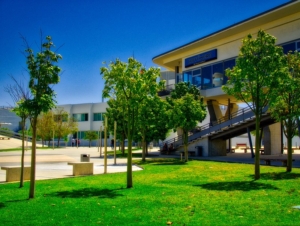 Cyprus, the third‑largest island in the eastern Mediterranean, has long viewed education as a critical driver of socioeconomic growth. The Republic of Cyprus (recognized by the EU) and the Turkish Republic of Northern Cyprus (recognized only by Turkey) operate separate systems, making accurate, island‑wide educational figures hard to obtain. Yet, within the Republic of Cyprus, adult literacy now exceeds 98% and tertiary attainment among those aged 25-34 is almost at 47%, the highest rate in the EU. Public schools deliver primary through secondary education, while three public and five private universities provide higher learning.
In the Republic of Cyprus, education is structured as a 6‑6 system: six years of compulsory primary education starting near age 6, followed by six years of secondary (divided into junior and senior cycles), and then tertiary or vocational pathways. Technical and vocational education and training (TVET) usually lasts two years post-secondary and is overseen by the Human Resource Development Authority (HRDA).
Public spending on education is robust, historically around 6-7% of GDP, significantly above the EU average. In 2022, education expenses made up about 4.9% of total GDP and 13% of the government budget (approximately €1.446 billion). These numbers position Cyprus among Europe’s top spenders in education quality and support.
Performance and Learning Outcomes
Cypriot students take part in the OECD’s PISA assessments. In 2022, their average scores fell to about 418 in mathematics, 411 in science, and 381 in reading—all well below the OECD averages of 472, 485, and 476, respectively. This marks a sharp decline from 2018 and shows Cyprus falling behind many of its EU peers in core academic skills.
Adult learning engagement is another concern: in 2022, only 28.3% of adults participated in education or training, well below the EU average of around 39.5% – with participation among women at just 20.4% versus 36.7% for men. There is a marked gap between higher‑educated individuals (35.5% participation) and those with lower qualifications (10.9%).
Challenges, Reforms and the Road Ahead
Despite high levels of investment, Cyprus’ reliance on inconsistent teacher-assigned school grades, which account for 70% of final marks, can undermine fairness. To make matters worse, university admissions rely almost entirely on centralized exams, disadvantaging students from less privileged schools or socio-economic backgrounds. Additionally, adult learning participation has sharply decreased since 2016, particularly among older populations and non-workers.
In 2015, the government launched an Agency of Quality Assurance and Accreditation in Higher Education to standardize and improve university quality across all institutions. It has evaluated nearly 300 study programs and multiple universities since then, helping hundreds of thousands of students. The HRDA continues to finance vocational training through payroll-based fees and generous subsidies, helping bridge skills gaps in Cyprus’s economy. Technical cooperation with EU partners and UNESCO supports further reforms aimed at expanding adult training and improving early‑grade performance.
Overall, education in Cyprus remains a high‑priority sector, with solid funding, strong tertiary completion, and a national commitment to quality. However, recent declines in PISA performance and adult learning participation signal the need for greater policy involvement, particularly on lifelong learning and transparency in grading. As reforms increase, Cyprus has a chance to bolster its reputation as one of Europe’s education success stories while ensuring that all learners benefit.
– Jeff Zhou
Photo: Flickr
