Since October 2023, the French Ministry of Europe and Foreign Affairs has collaborated with 300 professionals to help foster the growth of creative industries in 33 African countries. This is part of their Création Africa program, which focuses on connecting young African entrepreneurs with funding opportunities to help their creative businesses grow. The Colloque Scientifique International Conference in September 2026 is their latest venture and will spotlight the Congolese fashion movement, La Sape.
Création Africa
Expanding from 16 to 33 eligible countries in 2024, Création Africa has connected 300 African and French professionals to open doors for creatives. By fostering the growth of the art sector, Création Africa hopes to stimulate economic and cultural flourishing across Africa.
The program operates in three key stages:
- Online networking through its website, where creatives can connect with both each other and sponsors. By streamlining resources and communication, Création Africa’s website increases businesses’ visibility.
- A tailored mentoring scheme for a dozen individuals at a time to aid their structuring and development plans. This includes insight into Création Africa’s work mapping, which has traced the emerging trends across the continent. Individuals leave with future-oriented business models backed by professional guidance.
- International partnerships through ties to French and European experts. This allows creatives to develop both regional and international prominence.
Roundabout is one organization that has benefited from Création Africa’s work. Following the 2025 Création Africa Forum where their project “Heritage in Motion” was spotlighted, the zero-waste collective engaged with over 500 guests and six cross-continental collaborators. Roundabout was one of 27 creative organizations from Lesotho, South Africa and Malawi showcased at the two-day event, where high-profile guests, including President Emmanuel Macron, were spotted.
The 2026 Colloque Scientific International Conference in the DRC hopes to follow on from this success, bringing together experts in sociology, history, economics, technology and art to see the work of Congolese organizations. This will coincide with the opening of Kinshasa’s permanent exhibition on Congolese fashion and La Sape.
What is La Sape?
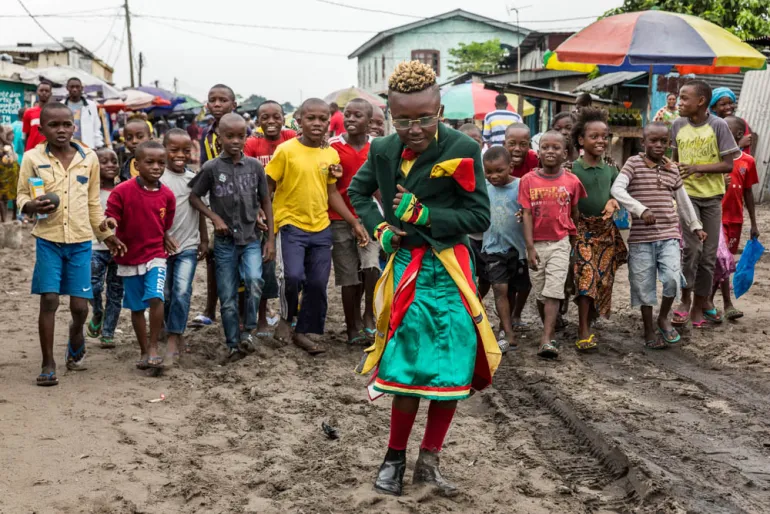
La Sape stands for the “Société des Ambianceurs et des Personnes Élégantes” (Society of Ambiance Makers and Elegant People) and is a fashion subculture in Brazzaville, Republic of Congo and Kinshasa, Democratic Republic of Congo (DRC).
Clad in colorful and boldly styled suits, the Sapuers and Sapueses are taxi drivers, laborers and shopkeepers. They are the everymen and women who turn the streets into catwalks worthy of the finest fashion houses.
Emerging in the mid-20th century, La Sape originated from Congolese sailors, workers and traders who returned from sea with European suits. Traditionally for the colonial elite, the suits were paired with personal pieces and reinterpreted to assert a distinct Congolese Creole identity.
This identity extends into a code of honor, politeness and pacifism where clothing is shared and the whole community is lifted up through innovation.
The Kobo Hub highlights this innovation potential as founder Sidonie Latere is providing technical training to Sapeur designers so they can streamline their supply chains. For the textile brand Kilubukila, this enables them to supply their Kasai velvet to Monoprix in France and export designs across Europe and the U.S.
Latere is working alongside Création Africa and the Kinshasa exhibition and has highlighted how this will honor La Sape’s role in shaping the two nations’ history and future. She shows how investment into the Congolese fashion industry can create an upward spiral of economic growth alongside individual empowerment.
The World Cup
The DRC’s national team drew further attention to La Sape at the 2026 World Cup when they landed in Houston impeccably dressed in leopard-print suits. The designer, Alvin Junior Mak, drew heavily from La Sape’s visuals and described how he wanted to promote the artistic identity of the DRC.
Prior to the World Cup, Mak’s personal Instagram had only 8,000 followers and his brand, Jmakxparis, fewer than 4,000. However, following the World Cup and coverage from magazines such as Vogue and Forbes, the accounts grew to more than 40,000 and 12,000 followers respectively. One post featuring the national team, the Leopards, exceeded 79,000 likes.
The widespread attention also saw an influx of pre-orders from across the world, with Jmakxparis predicted to exceed €100,000 in revenue.
For Mak, this success extends beyond a viral moment and is a step toward solidifying a legacy that can create jobs and opportunities for others in the Congo.
Looking Ahead
The World Cup highlights how Congolese fashion innovation fosters international connection and can create opportunities for both economic growth and cultural understanding. Where many have historically recognized Europe for its fashion prowess, the DRC and Ivory Coast teams drew attention to Africa’s artistry, both past and present. Through programs like Création Africa, this talent can continue to be under a spotlight and opens the door for further investment.
– Elizabeth Holden
Elizabeth is based in London, UK and focuses on Business and New Markets, and Politics for The Borgen Project.
Photo: Wikimedia Commons
 “Fast fashion” reflects the rapid production, consumption and often disposal of clothing garments. It has become